Getting the word about Book week out. We have asked the kids to bring in food that has a book theme. They will be judged and then prizes awarded before selling them to raise money for the Pajama Foundation. We had a lovely student bring in some a few days early to drum up support. So far we have had 40 students agree to bring in something delectable for next week.
I am not sure about you but I found both those books dull, dry and depressing as a teen; and I will say they have not improved with age!
Our graduate English teachers were struggling with the rampant disengagement with those two novels. The indifference was causing the teachers great distress as they were concerned how the students were going to submit their essay assessment task if they would not engage with the book. More experienced teachers were able to forge through the disengagement but our newest recruits were finding teaching the text challenging.
It then occurred to me that memorial boxes could be the answer!
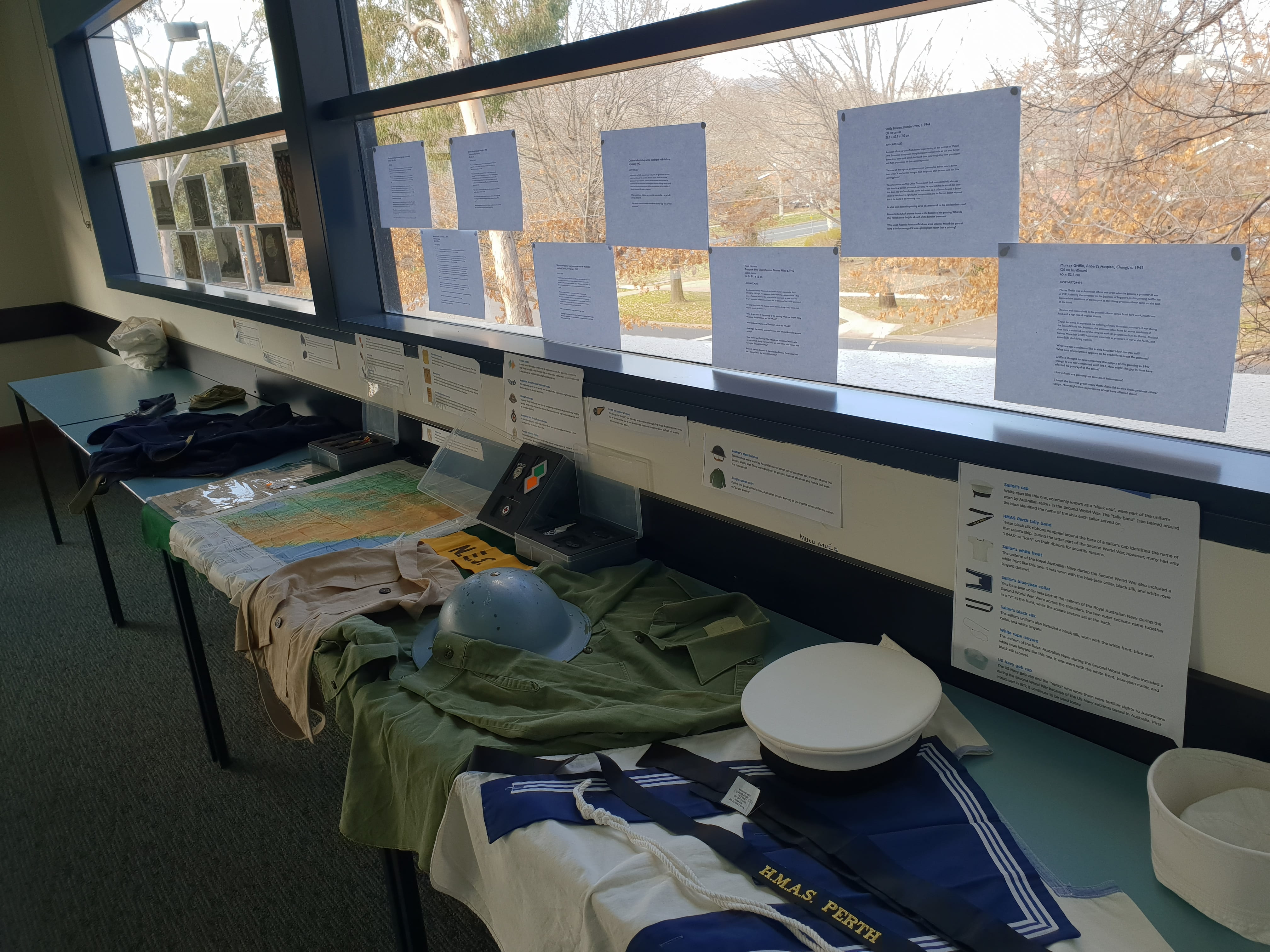
WW2 Memorial Box set up
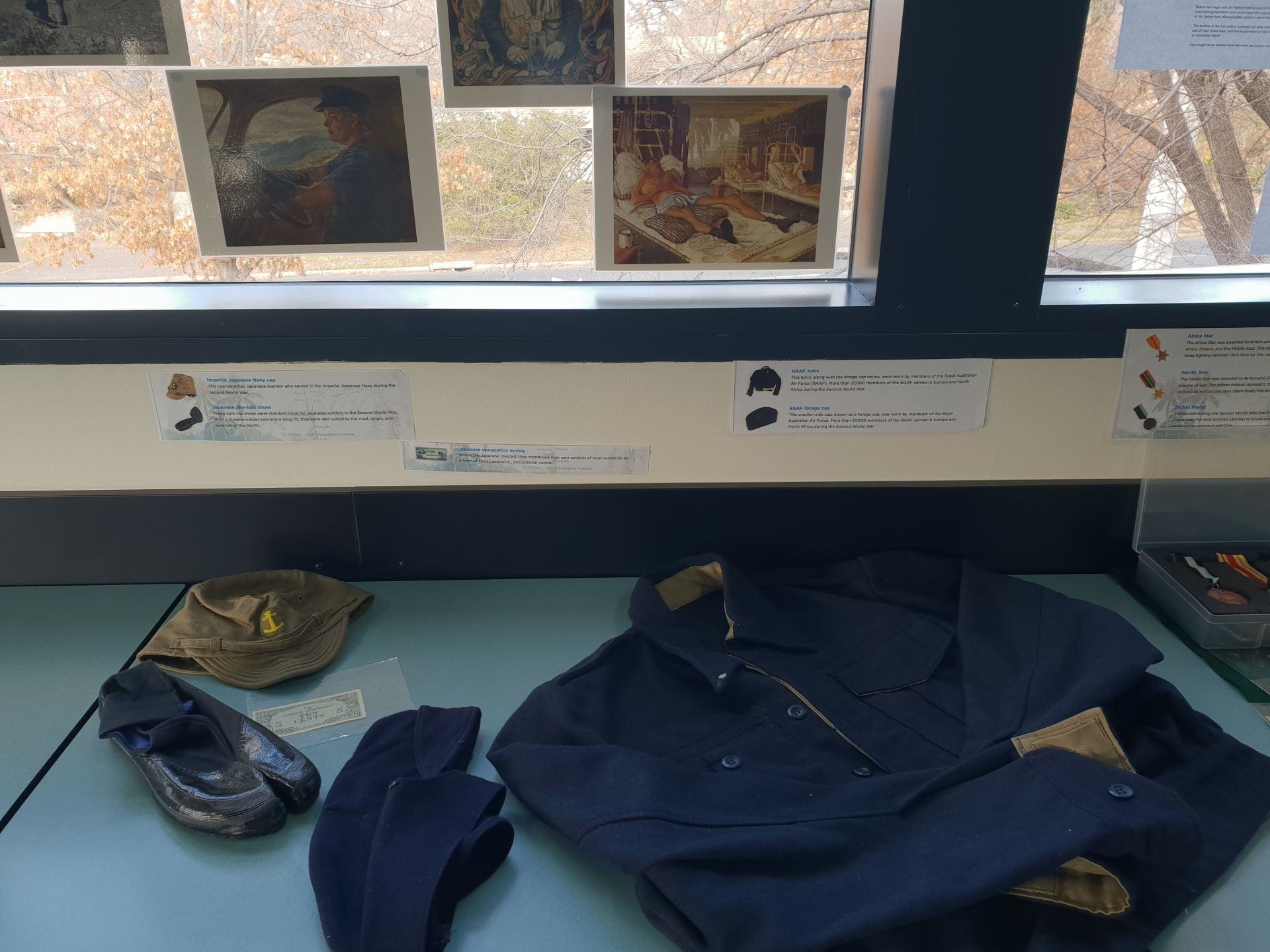
I had discovered that the Australian War Memorial had a whole host of educational resources available for loan to schools in the form of memorial boxes. These boxes contain genuine artifacts from various military events in Australian history. I had requested a box for our 10 History classes earlier this semester as a ‘hook’ factor to engage and elicit interest at the commencement of their World War 2 unit.
Artifacts from the memorial box
My cognitive connection between our great English dilemma and the memorial box was very much delayed! It wasn’t until I was unpacking the resources in our library seminar room that it occurred to me that the same artifacts that were engaging our Year 10 history students could also stimulate our year 7 and 10 English students.
I had an epiphany of sorts!
I was so happy my HOD agreed with my madcap proposal about using the memorial box as a stimulus for English. The scheme was simple. The students would come to our ‘library museum’ and view the various artifacts displayed within. Then in pairs, the students would interview each other to create a podcast with an accompanying transcript. A very clever English teacher quickly whipped up a worksheet and then, just like that… our immersive experience had begun.
Pictures and Memorabilia
Now I would love to tell you it was all a huge success, but I would be lying.
The memorial boxes were a great triumph with our 10 History students but success was variable with our English classes. This lackluster response could be attributed to the inadequate time for the students to complete the activity. The classes that visited the library twice had more success than ones that came just once.
What we did discover was that students were stirred out of the apathetic stance towards the books because they began to understand the context surrounding it. The memorial box activity connected the students to the mileu of the books and engaged them in the character’s turmoil. As the worksheets were collected at the end of the session, the teachers were able to use those responses to formatively assess student literacy and other learning goals.
The in class essays are all occurring this week for year 7 and next week for year 10. I would be very intrigued to know if the memorial boxes assisted in increasing student engagement with the books and the outcome of the assessments. I would also like to analyse the results of the English classes that declined to attend our library museum and compare them to the classes that did come. If there is a significant difference, then I would have sufficient evidence to run this activity for more teachers and students.



 Learning through the Library