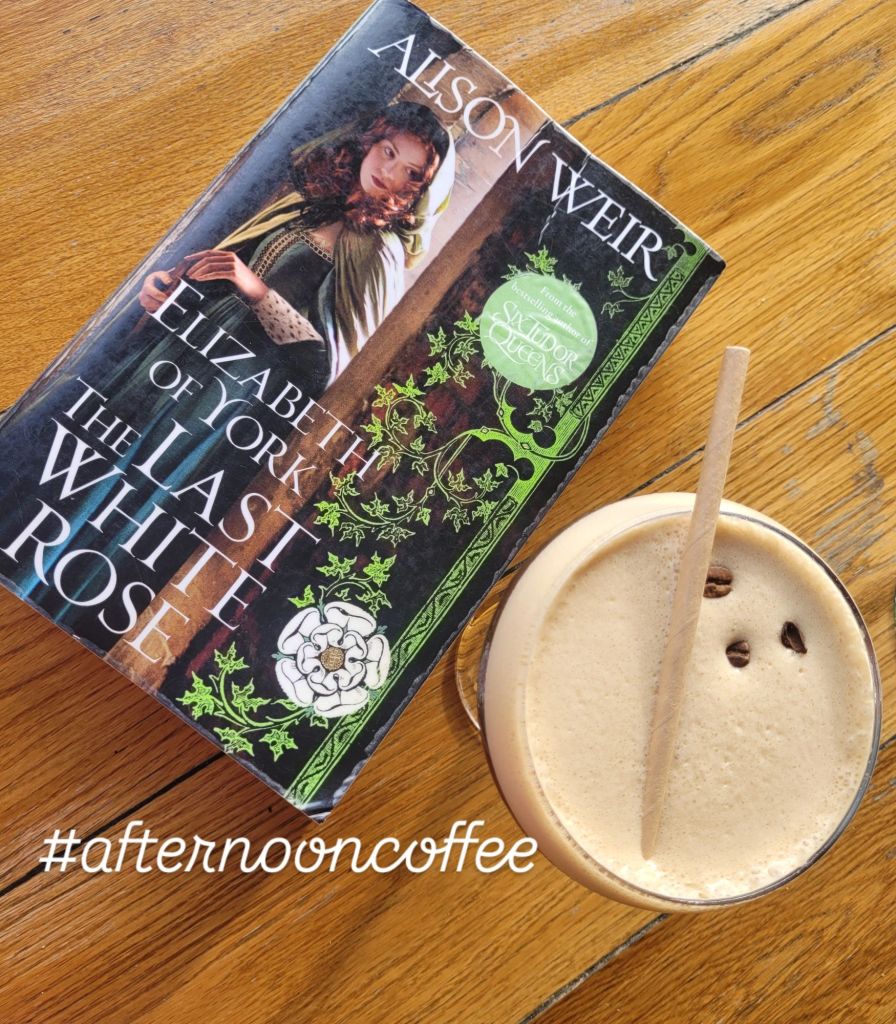
Last week I went back to work. It was very difficult to swap my afternoon naps for faculty meetings and my long lunches for a quick bite on the go. It was also very difficult to not indulge in my favourite early evening activity of a cocktail with a book.
Like with many people returning to work, the common question was..
“how was your break?” Or “what did you do?”.
Well… at first, I mentioned hanging with my family, visiting friends, travelling for Christmas. But the reality, the actual reality of my holidays was that I read books.
I read a lot of books.
I read every spare moment I had. Between lunch dates, on the bus, in the car, waiting for friends at coffee shops. I even had my book with me on late nights out for my 2.30am bus ride home. I stayed up late and woke up early just to finish my latest novel. At one point, my husband was getting frustrated with my late nights… but to no avail. I needed to read! As Maverick and Goose once said in a quote that I am going to appropriate…
I feel the need, the need to read…
January Reads
As teachers we know it is very hard to read what we want during the term. We are often reading class novels, essays, assignments, emails and meeting notes that should have been emails. I knew, that to fill my bucket of prose, I needed to read till my heart was full before I started the new academic year.
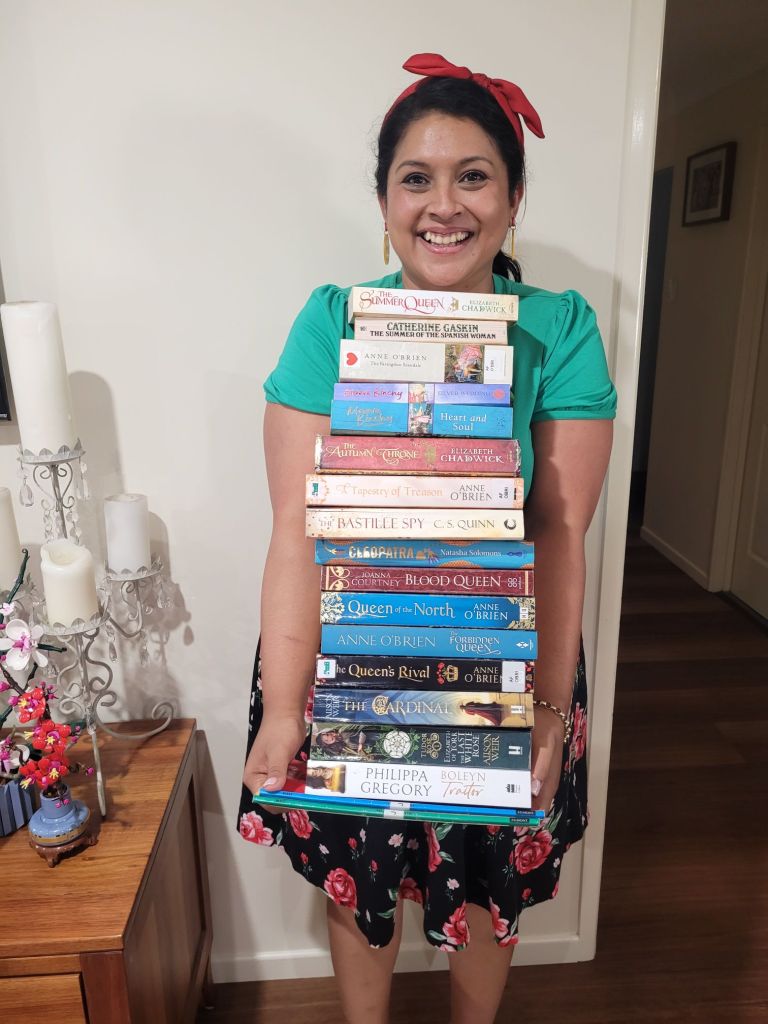
So, over the six weeks of summer holidays I did just that- I read 34 physical books, 4 eBooks and 2 comics. I am still on the mission to finish the rest of the Tintin series over the next few weeks – but for now, this particular book dragon is exceedingly happy.
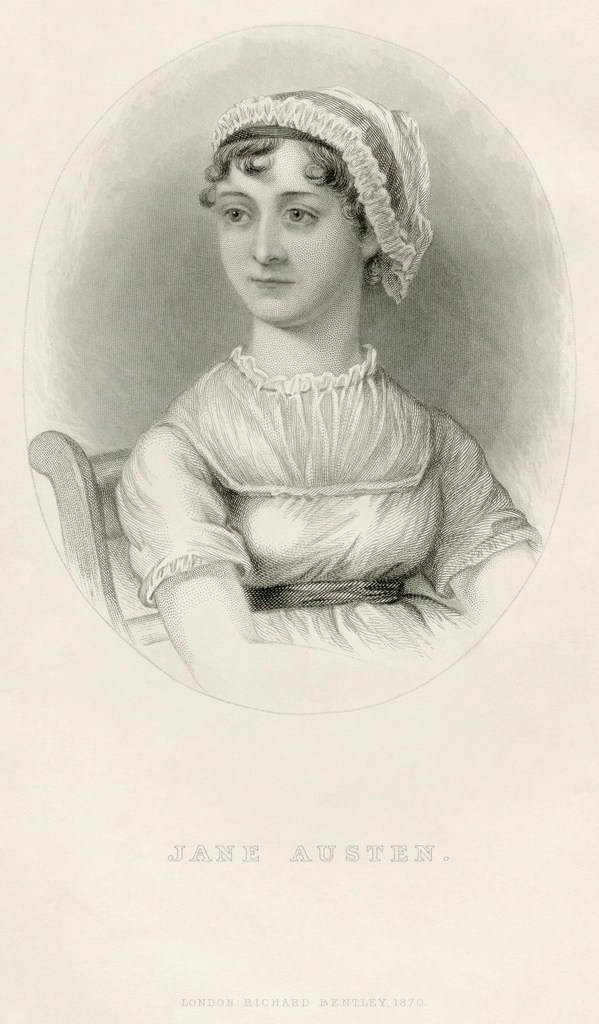
Jane Austen was born on 16 December 1775 in Steventon, Hampshire, into a lively and book loving family. She grew up surrounded by stories, plays and the gentle chaos of a household that valued reading as much as conversation. Her early writing began in childhood and by her early twenties she had drafted the novels that would later become some of the most beloved works in English literature. Although she published anonymously during her lifetime, her six completed novels have secured her place as one of the most influential writers in the world. Austen died in 1817 at the age of forty one, leaving behind a body of work that continues to shape literary culture.
Reflecting on her two hundred and fiftieth birthday invites us to consider the extraordinary reach of her writing. Austen’s novels have had a profound impact on literature, particularly on the development of female authorship. At a time when women were discouraged from publishing and often expected to remain silent in public life, Austen wrote with clarity, wit and a sharp understanding of social structures. Her success opened doors for generations of women who saw in her work a model of intellectual authority and creative independence. As Penguin Books notes, Austen herself was shaped by earlier women writers such as Frances Burney and Charlotte Lennox, which strengthens her place in a long lineage of female creativity.
Austen’s influence is not limited to literary technique. Her novels have offered women across three centuries a way to see themselves reflected in fiction. Readers in the nineteenth century found in her characters a quiet rebellion against restrictive social norms. Women in the twentieth century embraced her work as part of a broader feminist reclamation of female voices in literature. Today, readers around the world continue to find comfort, humour and insight in her stories. Her heroines navigate love, family and society with a blend of vulnerability and strength that feels remarkably contemporary.
Part of Austen’s enduring appeal lies in her ability to capture universal human experiences. Themes of love, pride, misunderstanding and personal growth transcend time and geography. Whether read in Sydney, Seoul or São Paulo, her novels resonate because they speak to the complexities of relationships and the desire for self determination. Modern readers still recognise the awkwardness of a poorly timed remark, the sting of social judgement and the joy of finding connection with someone who truly understands you.
This year, as part of celebrating Austen’s two hundred and fiftieth birthday, I have been sharing my love of her work with my children. My eldest and I set ourselves the gentle challenge of spending the year reading Austen’s novels together, dipping into their many adaptations and enjoying the film versions along the way. It has been a joy to watch them discover the sharp humour of Elizabeth Bennet, the quiet resilience of Anne Elliot and the mischievous charm of Emma Woodhouse. While the BBC’s 1995 Pride and Prejudice remains the gold standard in our household, the vibrant 2006 film Bride and Prejudice has become a close second, its colour and music adding a new dimension to a familiar story.
Among her works, Pride and Prejudice remains the most widely adapted and reimagined. First published in 1813, the novel has inspired countless reinterpretations across literature, film and television. From the beloved 1995 BBC series to the energetic 2006 Bollywood inspired adaptation, from contemporary retellings like Bridget Jones’s Diary to genre bending works such as Pride and Prejudice and Zombies, the story of Elizabeth Bennet and Mr Darcy continues to evolve with each generation.
This week’s celebratory texts.
To celebrate this ongoing creative legacy, here are several modern novels inspired by Austen’s work.
Longbourn by Jo Baker
Eligible by Curtis Sittenfeld
The Austen Project series
The Mysterious Death of Miss Jane Austen by Lindsay Ashford
The Jane Austen Contest by Samantha Adkins
Miss Austen by Gill Hornby
Recipe for Persuasion by Sonali Dev
Being Mrs Bennet by Alexa Adams
The Jane Austen Book Club by Karen Joy Fowler
The Jane Austen Project by Kathleen A. Flynn
The Lost Memoirs of Jane Austen by Syrie James
Jane and the Waterloo Map by Stephanie Barron
First Impressions by Charlie Lovett
The sheer number of adaptations speaks to the novel’s flexibility and its emotional power. Each version highlights different aspects of the story, whether it is the tension between individual desire and social expectation or the transformative power of self reflection. For many readers and viewers, these adaptations serve as an entry point into Austen’s world, leading them back to the original text and deepening their appreciation for her craft.
As someone with a librarian’s heart, I cannot help but smile at the thought of trying to catalogue every adaptation of Pride and Prejudice. The varied formats alone would fill shelves upon shelves. There are novels, films, television series, graphic novels, web series, audiobooks, retellings set in different eras and even reinterpretations that place the characters in entirely new genres. The challenge of organising these interconnected works is both daunting and delightful. It is the kind of bibliographic puzzle that makes a catalogue shimmer with possibility.
Austen’s two hundred and fiftieth birthday is more than a milestone. It is a reminder of the lasting power of storytelling and the importance of women’s voices in literature. Her novels continue to inspire readers, writers and scholars. They invite us to reflect on our own lives and relationships. They remind us that wit and empathy can coexist, that social critique can be delivered with elegance and that love stories can be both romantic and intellectually rigorous.
As we celebrate her legacy, we honour not only the writer she was but the generations of women who have found courage, companionship and creative spark in her pages. Austen’s work remains a testament to the idea that stories can shape the world and that a quiet voice can echo across centuries.
References
Adichie, C. N. (2014). We should all be feminists. Fourth Estate.
As the scholastic year draws to a close, children and teenagers eagerly anticipate the long summer holidays filled with play, family time and relaxation. While this break is important for wellbeing, research consistently shows that it can also lead to what is known as the summer reading slump. This phenomenon refers to the decline in literacy skills that many children experience during extended school breaks. Studies have found that children can lose up to a month of learning over summer, particularly in reading and spelling, with the effect most pronounced among children from lower socio-economic backgrounds who may have limited access to books and literacy-rich environments (National Library of New Zealand, n.d.).
Evidence from New Zealand highlights the importance of structured literacy teaching in preventing this decline. A study published in the New Zealand Journal of Educational Studies determined that the impact of explicit phonics, phoneme awareness and decoding strategies can embed foundational skills deeply enough to withstand the summer gap (Vosslamber, Walker, Millar-Swan, Motha, & Gillon, 2025). This reinforces the idea that strong classroom instruction can provide a buffer against learning loss.
Alongside structured teaching, regular reading at level is critical. When children engage with texts that match their ability, they reinforce vocabulary, comprehension and decoding skills while building confidence and motivation. Reading at level prevents cognitive decline associated with long breaks from literacy activities. Research also shows that children who participate in summer reading programs are more likely to maintain or improve their literacy skills. Benefits include increased motivation, improved comprehension and stronger connections between home and school learning (Reading Eggs, n.d.).
Governments and councils are aware of the risks posed by summer learning loss, which is why many have invested in free summer reading programs. These initiatives encourage children to keep reading for pleasure and skill development during the holidays. The Brisbane City Council Summer Reading Program, for example, offers fun challenges, rewards and community engagement to keep children motivated throughout the break (Brisbane City Council, n.d.). Programs like these not only support literacy but also foster a love of reading that lasts well beyond the summer months.
At my school, we have taken this one step further by setting up a summer reading challenge for both staff and students in the form of bookmarks. Students were given bookmarks that encouraged them to read a funny book, a book with a hero, a book by an Australian author and a book with an animal character.
Staff were challenged to read a book that made them laugh, one that made them cry, a book that gave hope and one recommended by a friend. This shared challenge not only promotes literacy but also builds a sense of community, with staff and students alike engaging in conversations about their reading choices and discovering new perspectives together.
The summer holidays should be a time of joy, but they do not have to mean a setback in learning. With structured teaching approaches, regular reading at level, community programs that make books accessible and fun, and school-based initiatives like reading challenges, children and adults alike can return to school inspired and ready to thrive. The evidence is clear: consistent engagement with reading is one of the most effective ways to prevent the summer slump and ensure that literacy skills continue to grow.
Suggestions for Teachers and Parents
Encourage children to read daily, even for short periods, with books that match their reading level.
Provide access to a variety of texts, including humorous stories, adventure tales, and culturally relevant works.
Model reading behaviour by sharing your own reading experiences and discussing books together.
Participate in local library programs or community reading initiatives to maintain motivation.
Create family reading routines, such as bedtime stories or shared reading times, to embed literacy into everyday life.
Celebrate reading achievements with small rewards or recognition to sustain enthusiasm.
Vosslamber, A., Walker, J., Millar-Swan, A., Motha, J., & Gillon, G. (2025). The impact of Better Start Literacy Approach teaching on the retention of children’s early literacy skills over the summer holidays. New Zealand Journal of Educational Studies, 60(3), 435–449. https://doi.org/10.1007/s40841-025-00405-2
As the school year wrapped up last week, I found myself reflecting on the many moments that shaped our library community in 2025. There have been challenges, yes, but also plenty of reasons to celebrate.
One of the brightest sparks has been our book clubs. What started as a simple idea, a few snacks and a chance to talk about stories, has grown into something much bigger. My secondary Book Club stands out. At the beginning of the year they were a small group, some unsure of what to read, others firmly attached to their favourite genres. Over time, though, their borrowing soared. They began exploring fantasy, contemporary fiction and graphic novels, and while one dedicated manga reader still resists branching out, the group as a whole has broadened its horizons. More importantly, they began to see reading as part of who they are. They recommend titles to each other, debate endings, and even suggest new books for the library. Watching that transformation has been a joy.
Research reminds us that this is exactly what book clubs are meant to do. They make reading social, they build confidence, and they help young people see themselves as readers. The secondary Book Club Boys proved that in the most authentic way, showing how a community of peers can turn reading from a solitary task into something shared and celebrated.
From a whole school review, borrowing levels across the school have also risen, returning to pre COVID rates. Much of this growth has come from our younger readers, whose enthusiasm has been infectious. Their excitement has created a vibrant culture of reading in the primary years, and their participation in activities has been a highlight of the year.
Of course, there are challenges we cannot ignore. Very few of our Year 10 to Year 12 students are reading recreationally, and this is concerning. Intertextuality, the ability to connect ideas across texts, is vital for analysis and for building strong cognitive connections. Without regular reading, those skills are harder to develop. We also continue to see limited engagement from Years 7 to 10 English classes, despite enthusiastic promotion. There seems to be a reluctance to lose curriculum time.
Our team dynamic has shifted too, with members coming and going. Change always brings adjustment, but it has also brought fresh perspectives and energy. We have expanded our digital resources, and while uptake has been slow, steady gains are being made as students and staff grow more comfortable with these platforms.
Perhaps the greatest success of all has been the way the library has become recognised as a social space where everyone is welcome. It is not only a place for books, but a hub for connection, collaboration and belonging. That sense of community is something we can all be proud of.
We closed the year with our Books & Bites Christmas party, a joyful celebration of new releases and Christmas treats. Each student received a reading journal with a challenge to read four books over the summer, along with handmade gifts, ornaments, bookmarks, and pen holders, sewn over the past few weeks. These tokens were a way of honouring the shared love of reading that binds us together.
As we finish the 2025 chapter, I am reminded that reading is not just about borrowing books, it is about building minds, fostering empathy and preparing students for the complexities of the world.
“As we finish this chapter and look ahead to the new year, I am reminded that Christmas is a season not only of rejoicing, but of reflection. May the joy of stories, the warmth of community, and the promise of new beginnings carry us into the year ahead.”
Women, Memory and Exile: A School Library Reflection
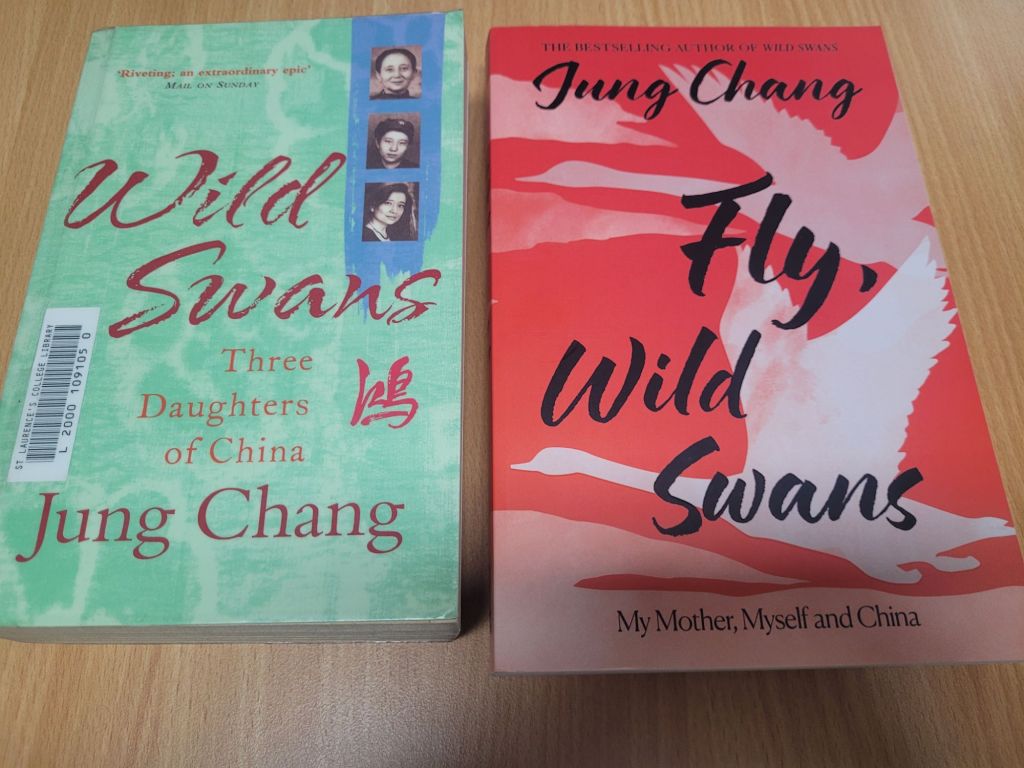
Adding Fly Wild Swans to our school library felt like a natural continuation of a legacy. Wild Swans has long stood as a canonical piece of literature, a book that captures the struggles of three generations of women against the backdrop of China’s political upheavals. In her second publication Fly Wild Swans, Jung Chang turns her gaze inward, reflecting on the cost of telling that story and the way truth can estrange a writer from her homeland. It is a pensive work that reminds us how women across centuries have shouldered familial and societal expectations, carrying memory and resilience even when nations would rather forget.
Jung Chang and her canons of literature
For students, these books are more than history. They are lessons in courage, in the power of memory and in the resilience of women who endured both familial duty and political oppression. Wild Swans explores the tension between tradition and rapid government‑driven progress. What was presented as modernisation often meant the destruction of customs and the breaking of family bonds as the Cultural Revolution tore families apart and demanded loyalty at the expense of tradition. Her story gave voice to three generations of women living through the upheavals of Mao’s China and this new work is written not only of her mother and her homeland, but of the burden of truth itself, and the cost of bearing witness when a nation would rather forget.
Fly Wild Swans reveals the aftermath of telling that truth, showing how a writer can be celebrated abroad yet silenced at home. Jung Chang turns her gaze inward, reflecting on the cost of telling that story and the way truth can estrange a writer from her homeland. Unlike Wild Swans, which focused on her mother and grandmother, this new work is more personal. It explores how writing Wild Swans changed her life, both opening doors in the West and closing them in China. There is a deep melancholy in her reflections on being unable to freely return to her birthplace. The success of Wild Swans brought her recognition abroad but estrangement at home. This tension between belonging and exclusion mirrors the broader story of women in history, who have often been celebrated for their endurance yet denied the freedom to define themselves.
I chose to buy Fly Wild Swans for my school library because it is a book that students should encounter, not only for its historical insight but also for its profound exploration of resilience, identity and the role of women in shaping and surviving history. Adding Fly Wild Swans to our collection ensures that the conversation continues, allowing readers to see how the legacy of truth‑telling reverberates across generations.
By placing both works on our shelves, we invite students to consider how politics, family and identity intersect, and how women across centuries have borne the burden of expectation while still finding ways to endure. These books remind us that literature is not static. It evolves, it questions and it carries forward the weight of generations.
At the end of each school day, I wander through the library and notice the gaps and blank spaces. Why? It is because the shelves never lie about the books that are loved the most. These are the ones that stack tall on our return trolleys. To be fair, they are also the ones that leave with another student almost instantly. They are the ones with worn spines, grubby covers and suspicious stains on the pages. Yet all of them tell me a story. They all tell me something about our school community.
Non‑fiction loans follow the interests of the boys themselves, whether it be cars, music, military equipment, or funnily enough… anatomy. These choices show me that curiosity is not confined to the classroom but stretches into the interests, curiousities, passions, and fascinations that shape their lives outside the school grounds.
The sports shelves mimic the seasons almost perfectly. Footy fades as winter ends, and suddenly, cricket biographies and fiction surge forward, especially anything tied to the upcoming Ashes. It is as if the rhythm of the sporting calendar beats through the borrowing habits of our students, reflecting not just their interests but the pulse of the wider culture around them.
The novels tell another kind of story. Fantasy sagas rarely rest long before they are whisked away again, dragons, quests and magical lands offering both escape and courage. Contemporary stories about identity and belonging circulate steadily too, often returned with dog‑eared pages. Those books feel like companions, helping students navigate questions of who they are and where they fit.
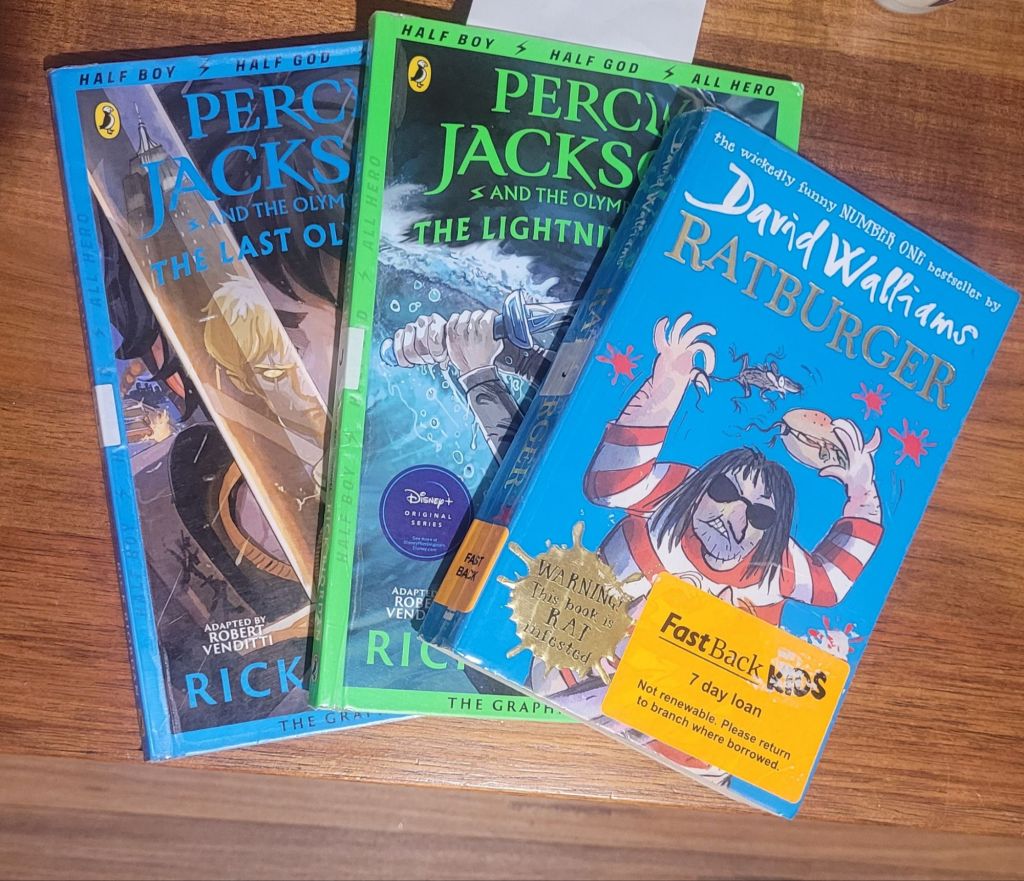
Certain authors move faster than most. This year we have seen a sharp update in request for Orwell’s works that seemed to be borrowed by students who want to think critically, because his sharp observations on society still resonating decades later. King’s novels vanish quickly from the shelves too, his blend of horror and humanity appealing to readers who crave both thrills and reflection. Griffiths brings laughter and lightness, his quirky humour and imaginative plots offering relief from the seriousness of school life. Kinney’s books are snapped up by younger readers, his diary‑style storytelling capturing the awkwardness and comedy of growing up. Walliams adds another layer of fun, his playful characters and outrageous scenarios proving irresistible to students who want a quick, joyful read. Bancks, with his Australian voice and relatable themes, connects directly to the local experience, showing students their own world reflected back at them. Heath’s stories move quickly too, often chosen by readers who enjoy adventure and fast‑paced plots. And then there is Rowling. Her magical universe remains evergreen, with titles borrowed again and again by students who want to lose themselves in a world of spells and friendship. Dashner’s dystopian tales race through the library as well, his fast‑moving plots and high stakes gripping readers who love suspense.
And then there are the comfort reads. During exam season, familiar series, lighthearted tales and joke books fly off the shelves, as if students are reaching for something steady and reassuring when stress runs high. When headlines outside the school walls grow louder, books on social issues suddenly become popular, showing me how our community is engaging with the wider world.
Over time, these borrowing trends become a mirror. They reflect curiosity, resilience, joy and sometimes vulnerability. They remind me that the library is not just a place to find information, it is a living record of what matters most to our students at any given moment. Each book borrowed is a quiet signal, a way of saying, this is what I need right now.
Together, these authors form a chorus of voices that shape the identity of our school community. Orwell challenges us to question, King dares us to feel fear and empathy, Griffiths and Kinney make us laugh, Walliams and Heath keep us entertained, Bancks grounds us in our own backyard, Rowling invites us into magic, and Dashner pushes us to imagine futures both thrilling and uncertain. Their collective presence on our shelves is more than entertainment, it is a reflection of the many ways our students seek to learn, to grow and to belong.
And as the year turns, the shelves whisper back, carrying the heartbeat of our community in every borrowed book.
On Sundays, our family has a rhythm. We go to church in the morning, then its off to our local library. The kids scatter to their favourite corners, borrowing books and settling in to read whatever strikes their fancy. The only rule is, that for every book that is a re-read, there must be one you have not read before.
This week’s book haul – mine.
Whilst my children scurry to their favourite genres, I grab a coffee and wander the shelves, letting my eyes land on whatever catches my eye. My husband always chuckles at this part. “You work in a library,” he says, amused. He’s right, of course. I do. But I work in a boys’ school library, and let’s just say the collection doesn’t quite float my boat. We then settle down for 30-45min of quiet reading together, but all on individual journeys.
There’s something different about being in a space where reading is chosen, not assigned. Where stories are picked for pleasure, not performance. That contrast has been sitting with me lately, especially after reading Loh et al.’s 2025 report on the decline in volitional reading and a recent piece in The Conversation about the new Children’s Booker Prize. Both paint a sobering picture: young people are reading less, and they’re enjoying it even less than that.
Loh, C. E. et al. (2025) The Decline in Volitional Reading: Evidence-Informed Ways Forward. National Institute of Education, Nanyang Technological University, Singapore.
Loh’s recommendations to improve literacy success.
agency
access to literature
time in daily routines
reflection and connection
social interaction
developing a positive reading identity
What struck me most in Loh’s report was what wasn’t there. None of the key principles mention curriculum reform. None suggest that testing is the answer. Instead, the focus is on joy, choice, and connection. Reading for pleasure is framed not as a luxury, but as a necessity. It’s a stronger predictor of reading attainment than socioeconomic status. That’s huge. It means that if we want to close literacy gaps, we need to open up space for enjoyment.
In my school library, I see the tension. Boys who associate reading with assignments, comprehension questions, and accelerated reader points. Not with curiosity or escape. Not with laughter or awe. And I wonder: what would happen if we let go of the scaffolds and trusted them to choose? The Conversation article makes a similar point. Awards like the Children’s Booker are lovely, but they won’t shift the culture on their own. What we need is a reimagining of reading in schools. Less about outcomes, more about experience. Less about control, more about trust.
Furthermore, parents need to remember that they are their children’s first educators. Is reading and literacy your household value? One of the key findings in Loh’s research is that children need access to literature and to see it modelled by the adults around them. Do parents take their kids to the library? Do they read in front of their children? Or do they presume that schools will take care of it? Do they even ask their children how often they visit the school library? These questions matter. Because when reading is visible and valued at home, it becomes part of a child’s identity, not just a school subject.
So here’s my quiet Sunday reflection: maybe the best thing we can do as educators is to make room and provide time. Room for stories that speak to our students. Room for browsing, for borrowing, for reading without a worksheet attached. Room for libraries that float their boats and time to lie back and float away.
Because when reading becomes a choice again, it becomes a joy again. And that’s where the magic lives.
I recently attended the QSLA conference at the beautiful State Library of Queensland. It was a fantastic day for school informational professionals to gather, share emerging news, identify new trends and trade in good old fashioned work chit chat.
Andy Griffiths – author of the famous Treehouse series, was our keynote speaker. I have known of Andy’s work for almost a decade. Whilst I have admired his works, I hadn’t fully appreciated his philosophy until now. His words, much like his books, were playful on the surface but deeply subversive underneath. They invited us to reconsider not just how children read, but why they need stories that break the rules.
Griffiths and his co-creator, illustrator Terry Denton have created the inventive, imaginative chaos that is the Treehouse series. I found it amusing that they named the main characters after themselves. Their fictional versions live in an ever expanding treehouse that defies logic and gravity, expanding with each book to include ludicrous additions like a marshmallow machine, a tank of man-eating sharks, and even a volcano. Their adventures are reckless, absurd, and often dangerous. But that danger is never real. It’s theatrical. It’s safe. It’s fiction.
… and that is the point. It is fiction as Andy pointed out last week to a large group of educators and informational professionals.
This was so true. In a world increasingly obsessed with safety, structure, and supervision, Griffiths’ books offer a counterbalance. They don’t just entertain their readers… they liberate them! They allow children to imagine running across six lanes of traffic or jumping into a volcano, not because they should, but because they can. In fiction, the consequences are exaggerated, the outcomes are ridiculous, and the lessons are embedded in laughter. Griffiths uses humour to engage the reader and builds into that playful sense that children have. As Griffiths said last week, “Reading is a game between the reader and the author. Authors make black marks on pages. Readers use these marks to make an image in their heads.”
I then thought about all the other books that ‘helped me break rules’. Darryl and Sally hosting midnight feasts at Mallory Towers, Matilda using her brain to solve problems, Trixie Belden and Nancy Drew resolving mysterious events. Each of these characters and books gave me option I may not have thought of previously.
Leaving the conference, I felt a renewed appreciation for the role of literature in childhood. Not just as a tool for literacy, but as a sanctuary for wild thought. Griffiths reminded us that imagination isn’t just fun. It’s vital. It’s how children rehearse life, test boundaries, and build resilience.
And maybe, just maybe, it’s how they learn to be free.
There are books I return to not because I’ve forgotten the plot, but because I remember how they made me feel. Like Serena Bourke’s thoughtful reflection on why students reread the same book, I too find comfort in the familiar pages of my favourite titles. These books have become more than stories. They are companions. They are constants. They are friends.
When I’m happy, I reach for books that mirror my joy. Stories that sparkle with wit and warmth. They amplify the moment like music that makes you dance even harder. But when sadness creeps in, I turn to different titles. Not necessarily ones that cheer me up but ones that understand. Books that sit quietly with me, offering solace without demanding anything in return. They don’t fix the sadness inside, but they make it feel seen.
And when I feel unsettled, adrift in the chaos of life, I go back to books that anchor me. Their words are familiar. Their rhythms soothing. I know what’s coming next and that predictability is a balm. It’s like rewatching a movie you’ve seen a dozen times. You’re not watching it for the plot. You’re watching it to relive the feeling you had the first time. The laughter, the tears, the quiet awe. But some books have become emotional landmarks. I remember where I was when I first read them. The scent of the room. The season outside. The version of myself that turned each page. Rereading them is like visiting an old friend. You pick up right where you left off. No explanations needed.
There are specific titles I reach for depending on how I feel. I reach for something like Anne of Green Gables when I’m happy. It’s full of whimsy, imagination, and the kind of joy that makes you want to skip down a pathway and play hopscotch. When I’m sad, maybe The Little Prince or The Secret Garden. There’s something quietly profound about their simplicity, gentle wisdom, and a strong reminder that what’s essential is invisible to the eye. I read Jane Eyre when I’m feeling overwhelmed. Brontë’s classic coming-of-age novel inspires me to have faith, to persevere with hope and most of all, to believe in myself. I reread Harry Potter when I feel mischievous or want to relive some childhood nostalgia. It’s like slipping into a world that once felt limitless and magical. And when I’m ready to disappear into bygone days, I turn to The Sunne in Splendour or When Christ and His Saints Slept. These historical epics transport me to another time, another rhythm of life, where the stakes are grand and the stories rich with legacy.
Serena Bourke writes about how students reread books because they offer safety, familiarity and emotional resonance. I think that’s true for all of us. In a world that changes too fast, books stay. They wait patiently on shelves, ready to welcome us back. And each time we return, we bring a new version of ourselves to the story. The book hasn’t changed but we have. And somehow it still fits.
So yes, I reread. Not because I’ve run out of new titles but because some books are more than books. They’re friends. They’re mirrors. They’re memory keepers. And in their pages, I find pieces of myself again and again.
I’ve just returned from a wedding overseas. It was a beautiful celebration, and between the flights and lounges, I had time to catch up on some reading. Normally, I’d pack a couple of paperbacks, but this time, I decided to travel light and for the first time, go digital only.
This was not a lightly made decision! Before I left, I logged into eWheelers through my school account and downloaded a few titles I’d been meaning to read and others for my children. I also used BorrowBox via my Brisbane City Council library membership. I accessed both platforms on my phone, which made it incredibly easy to dip in and out of books whenever I had a spare moment. One of the great things about eWheelers is that it works across multiple devices, so whether you’re on a tablet, laptop, or mobile, your library is always within reach. It can also be read offline, as can books on Borrowbox which makes it perfect for when WiFi is not available.
Pool side reads
Ebooks are brilliant for travel. They offer the flexibility to read whatever you fancy without the bulk. It’s quick, convenient, and surprisingly satisfying to flick through pages with just a tap. For students, ebooks and or audiobooks, are becoming an increasingly valuable library resource. Many prefer them because they’re easy to access, allow for tech engagement, and offer features that physical books simply can’t.
Digital reading platforms often include options to change font sizes, switch to dyslexia-friendly fonts, or even translate texts into different languages. This makes eBooks especially helpful for students with vision impairments, learning differences, or those studying in multilingual environments. It’s a more inclusive way to read, and it’s reshaping how libraries support diverse learning needs.
And let’s be honest, eBooks also preserve a bit of anonymity. I’ll admit, I indulged in a cheeky bit of romantasy and adult fiction on the plane, the kind of titles that might raise eyebrows if I were carrying the physical copy around in public or completely mortify my children next to me! For young people, this privacy is gold. It allows them to explore genres they might be embarrassed to share with peers, especially when it comes to romance or identity-focused narratives.
This ties into a broader issue: many teens feel pressure to conform to social norms, especially around gender expectations. Ebooks offer teens a quiet refuge—a way to read without the gaze of others. For students navigating the delicate terrain of romance, identity, or emotionally expressive stories, this privacy matters. These genres, often unfairly stigmatised among peers, can feel too vulnerable to carry in plain sight. Smith and Wilhelm (2002) observed that boys, in particular, are more inclined to engage with emotionally rich narratives when the fear of judgement is lifted. In this way, digital reading becomes more than convenience, it becomes a gentle permission to explore, reflect, and connect with stories that might otherwise remain untouched.
eBooks also allow for customisation, changing fonts, adjusting layouts, and even switching languages, which makes reading more accessible and less intimidating for students with dyslexia, vision impairments, or those learning English as an additional language. For teens navigating identity, peer pressure, and personal growth, digital reading can be a quiet revolution, one page at a time.
That said, I do miss the tactile joy of a real book. The smell of the pages, the feel of the spine, and the quiet ritual of turning each leaf offer a kind of bibliotherapy that digital formats can’t replicate. There’s something grounding about physically interacting with a book that screens just don’t deliver. This feeling is evident from what the research tells us and what my experience has been as a teacher librarian in high schools because teenagers still express a strong preference for physical books despite the popularity of digital reading platforms. This inclination is often tied to the sensory and emotional experience that printed books provide such as the feel of the pages, the smell of the paper, and the visual satisfaction of seeing progress through a tangible object. Young readers, in particular, report screen fatigue and eye strain from prolonged digital use, making physical books a welcome reprieve from their tech-saturated lives (World Economic Forum, 2023). Additionally, cultural trends like #BookTok have reignited enthusiasm for printed books, with teens embracing the aesthetic and social aspects of owning and sharing physical copies (Literary Hub, 2023). Research also shows that teens retain information better and concentrate more effectively when reading print, especially in academic settings (ResearchGate, 2024). These findings suggest that while ebooks offer convenience and accessibility, physical books continue to hold a meaningful place in teen reading habits.
Still, for this trip, convenience won. And who knows, maybe next time I’ll sneak a paperback in for old time’s sake.
Smith, M. W., & Wilhelm, J. D. (2002). Reading don’t fix no Chevys: Literacy in the lives of young men. Heinemann.
University of Edinburgh. (2024). Supporting teenagers’ reading enjoyment and engagement: A guide for teachers and librarians. https://blogs.ed.ac.uk/literacylab





 Learning through the Library