Walk into the library this week and you might think something dramatic has occurred.
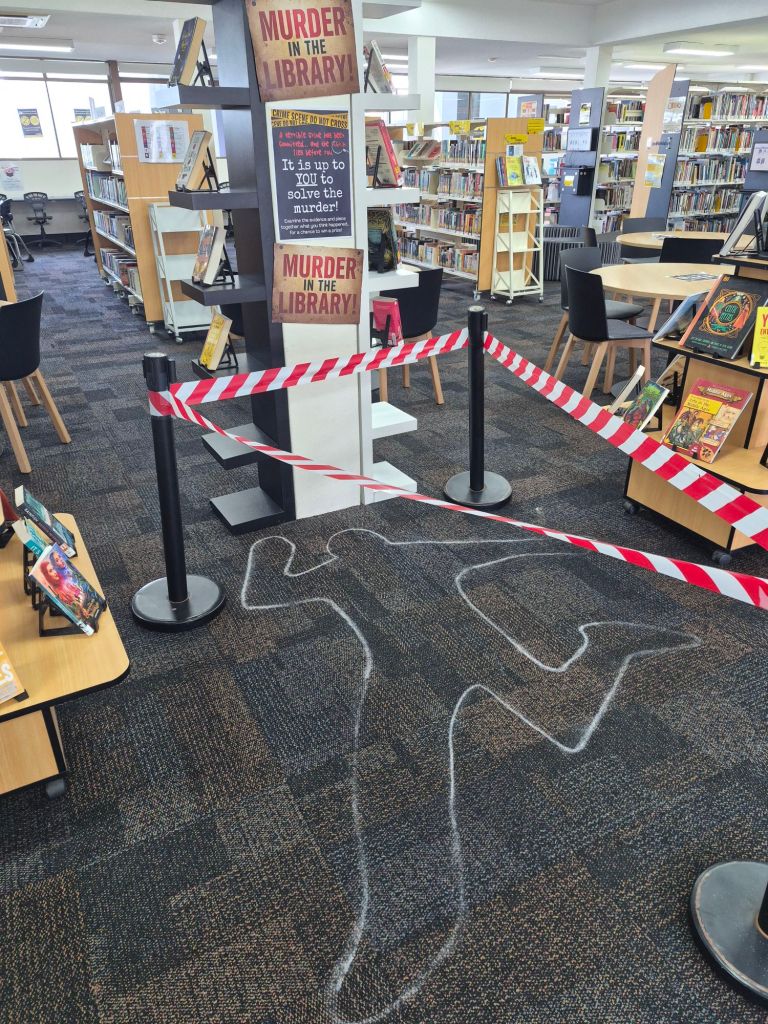
A chalk outline stretches across the floor. Crime scene tape blocks off the area. Pieces of evidence lie scattered nearby. Questions hang in the air. What happened? Who was involved? Why did it occur?
Thankfully, no crime has actually taken place.
Instead, our Library team has created an immersive “Whodunnit?” display designed to spark something just as exciting: imagination.
One of the ongoing challenges for young writers is finding a starting point. Faced with a blank page, many students struggle to know what to write about, how to begin a story, or where their ideas might come from. Creative library displays can help overcome this barrier by providing a rich stimulus that encourages curiosity, questioning and storytelling.
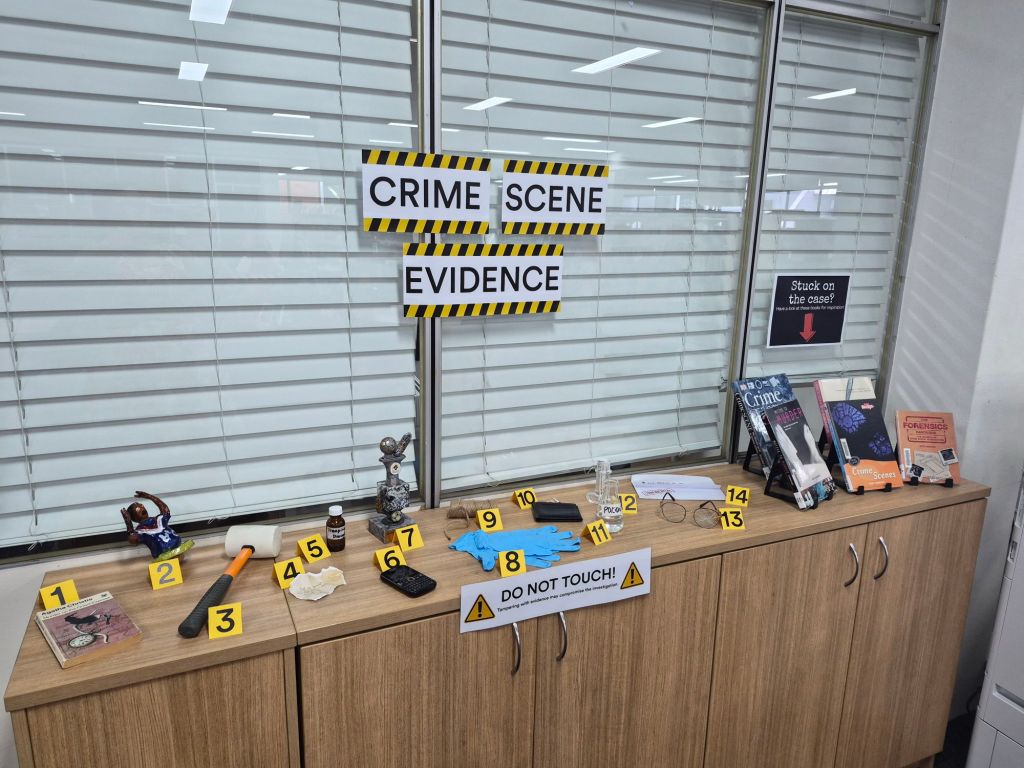
Our mystery display invites students to become detectives. As they examine the evidence, study the scene and discuss possible explanations, they naturally begin constructing narratives in their minds. Every clue raises new possibilities. Every object suggests a backstory. Every unanswered question creates an opportunity for creativity.
What makes activities like this so powerful is that there is no single correct answer.
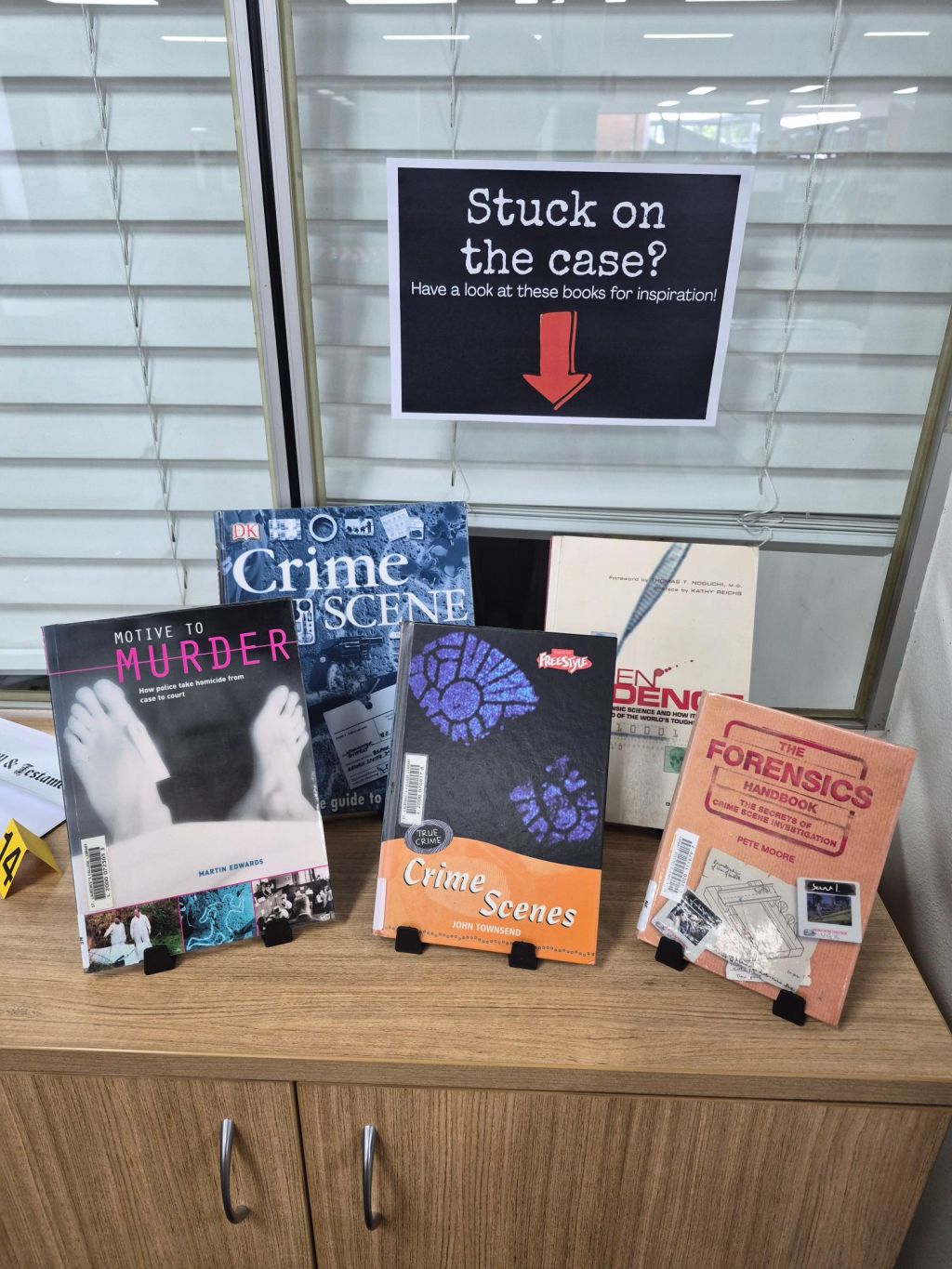
One student might imagine an international jewel thief fleeing the scene. Another might create a tale involving mistaken identity, secret agents or a long-lost family treasure. Some may choose a humorous approach, while others may craft suspenseful mysteries or dramatic adventures. The same collection of clues can generate dozens of unique stories, allowing students to explore their own interests, voices and writing styles.
These experiences also demonstrate an important principle of reading and writing: stories are everywhere.
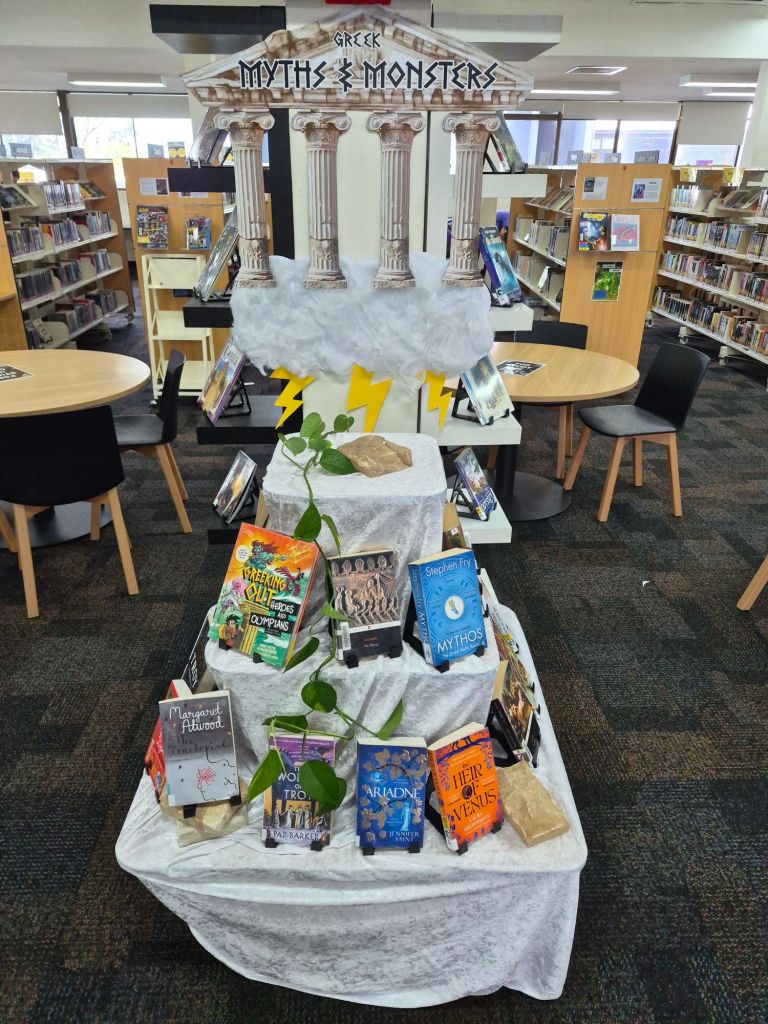
Libraries are often associated with books and research, but they are also places where creativity can flourish. A carefully designed display can prompt discussion, encourage observation and inspire students to think like authors. In many ways, the display becomes a story waiting to be written.
This type of creative engagement offers benefits beyond writing itself. Students practise critical thinking as they analyse evidence and make connections. They collaborate as they share theories with friends. They develop communication skills as they explain their ideas. Most importantly, they experience the joy of imaginative play, a vital ingredient in both literacy development and lifelong learning.
Displays can be powerful tools for fostering a culture of creativity within a school. Whether they feature a mystery scene, a historical artefact, a mythical creature, a secret message or an unusual object, they encourage students to stop, wonder and ask questions. These moments of curiosity are often the first step towards meaningful writing.
The enthusiastic response from students has shown just how effective immersive experiences can be. Conversations have sprung up around the display, theories have multiplied and imaginations have been captured. The mystery has become more than a visual attraction; it has become a catalyst for storytelling.
As a school library, our goal is not simply to provide access to books but to create opportunities for students to engage with stories in a variety of ways. Sometimes that means introducing them to a great novel. Sometimes it means helping them discover the writer within themselves.
And sometimes, it starts with a piece of chalk, a strip of crime scene tape and a mystery waiting to be solved.
Because every great story begins with a question: What happened here?