Reflection – Reviewing Digital Literature for a High School Library.

Reviewing Digital Literature for a High School Library.

congerdesign / Pixabay


A teacher librarian (TL) is tasked with ensuring the collection development and management policy (CDMP) suits the needs of the curriculum and the school community (Johnson, 2018).  

Whilst the curation of the physical collection is well established, the rapidly evolving nature of digital resources makes the selection of digital literature (DL) more challenging.  This complexity arises from the variety of emerging DL trends and their integration into the library management system (LMS) (Johnson, 2018, p.128; Hughes-Hassell & Mancall, 2005).   

geralt / Pixabay

There has been much controversy regarding the efficacy of digital literature (DL) in education.  Jeon (2012) suggests that DL has lower rates of comprehension in comparison to print, but Ross et al., (2017) believes that there is no notable difference between print, screen and tablet.  The discrepancy is based upon the role digitisation plays in comprehension.  Keen (2016) believes that digitisation increases engagement, improves learning outcomes and addresses the behavioural, cognitive and developmental needs of teenagers.  Whereas Mitchell (2011) points out that not all digital texts are superior to print texts, and that DL needs to be evaluated  against a set criteria to ensure that the enhancements promote the learning of literacy and language.  

A printed text requires:

  •  a single literacy to gain access to the information.   

However, DL needs the reader to be:

  • masterful with multiliteracies,
  •  competent with computation and 
  • dexterous with devices (Rettberg, 2012).  

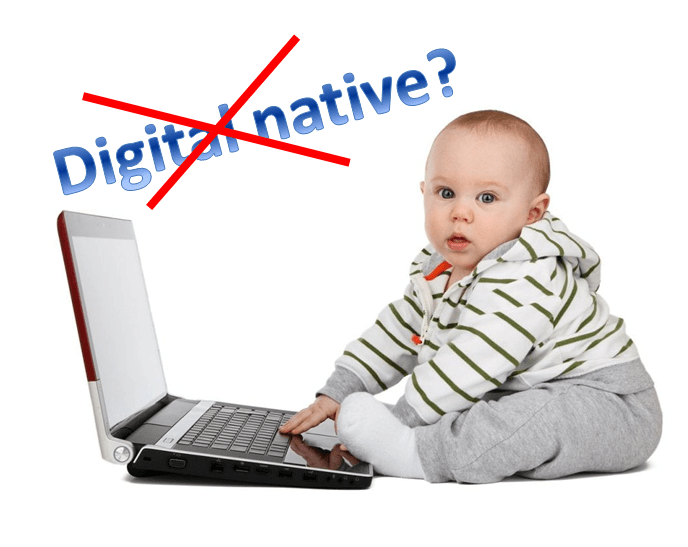
These skill requirements indicate that poor traditional literacy will translate to poor digital literacy because technology virtuosity and digital aptitude are not intuitive  (Moore & Cahill, 2016, p.5; Brown & Czerniewicz, 2011).  This necessity of explicit instruction has thoroughly debunked the myth of the digital native.  
 

ACARA (2018) has included DL in the Australian Curriculum in an effort to address the multimodal and multiliteracy needs of the 21st century.  The embedding of DL allows students to use these new technologies to connect to the curriculum, develop multiliteracies and competencies, which are essential for active citizenship in a digital society (MCEETYA, 2008; Cullen; 2015).  Importantly, DL acknowledges students’ learning needs, the shift in the reading paradigm as well as the presence of participatory culture in modern society (O’Connell, Bates & Mitchell, 2015; Moore & Cahill, 2016, p.6). 

There are several pedagogical implications of utilising DL in teaching practice.  Visual ergonomics and information overload have significant impacts on the reader (Mangen, Walgermo & Bronnick., 2013).  Print texts have strong visual permanence which aids comprehension, but in nonlinear hypertext narratives such as After 6/4, the inability to ‘flip back’ is a hindrance.  However, both Schreuder’s digital novel and the Bible app provide linearity and a sequential storyline which facilitates text comprehension for low ability and literacy students (Gonzales, 2016; Botzakis, 2018).   

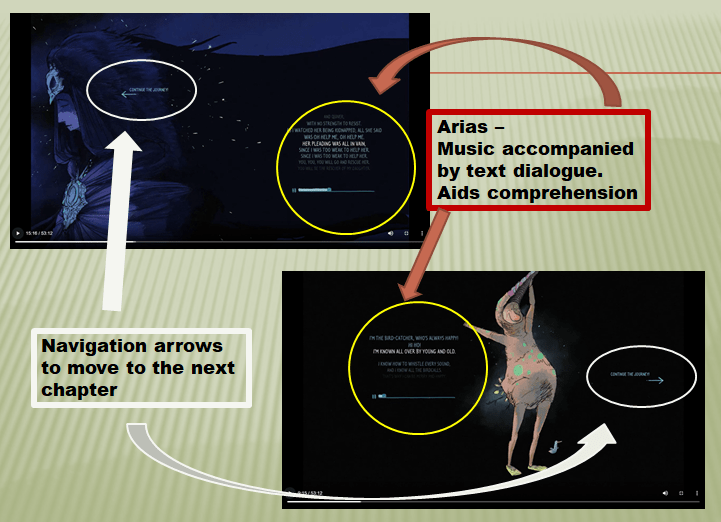
Information overload is an issue in After 6/4 and Land of the Magic Flute.  The multimodality of these resources require readers to critically evaluate the images, text and audio simultaneously, and this can overwhelm some students.   But in Schreuder’s digital graphic novel, the arias give the reader time to process the multimodal information, whereas in After 6/4, the format enables the reader to navigate at their own pace.

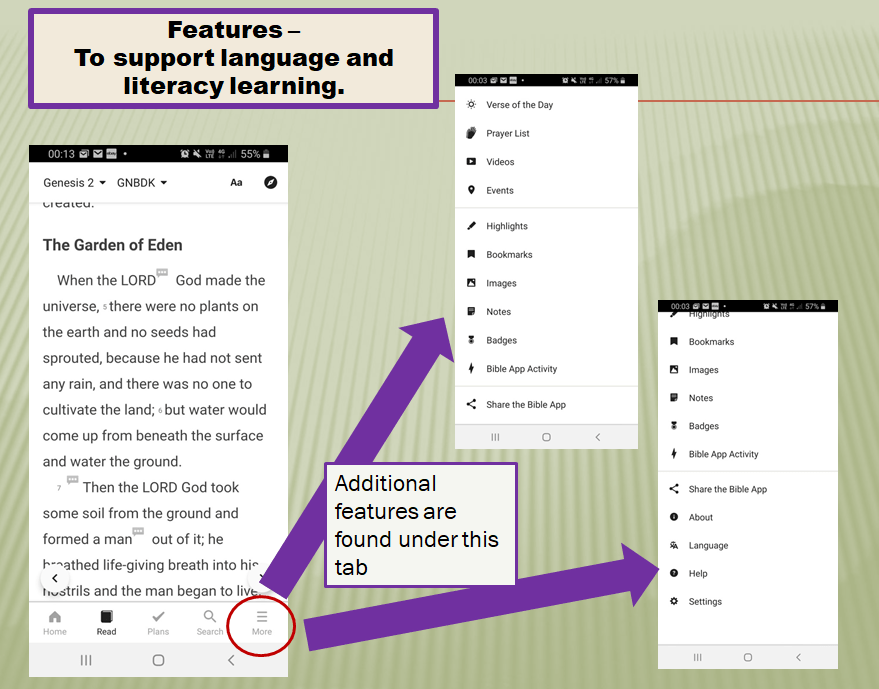
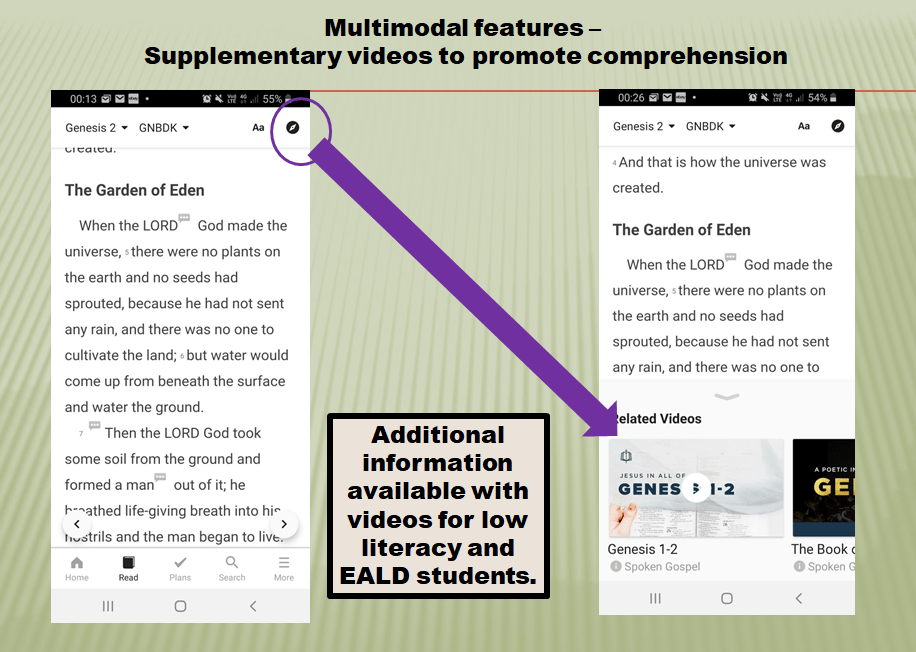
Peggy_Marco / PixabayFrom a pedagogical perspective, app based learning such as the YouVersion Bible app are ideal for teenagers in a Catholic High school  as it promotes engagement, increases motivation, provides access to online communities, allows for text anonymity and acknowledges the importance of a personal devices to a teenager’s social capital (Cullen, 2015; Vidales-Bolanos & Sadaba-Chalezquer, 2017; Yokota & Teale, 2014; Dickenson, 2014; Hashim & Vongkulluksn, 2018).  This app also satisfies the requirement of enhancing the learning of language, and the supplementary videos assist in decoding and comprehension for EAL/D and learning needs students  (Gonzales, 2016).  

The major hurdle to implementing this app across the school is that it is an app.  My school has a strong mobile phone policy due to persistent disciplinary issues (Selwyn, 2019).  The current criteria does not permit its inclusion even though this app meets the educational, behavioural and behavioural needs of the students, as well as addressing the content requirements.  This exclusion of this resource should question the validity of the CDMP and its selection criteria in this digital age (Johnson, 2018).

The reality is that teachers are very confused about young people and their literary preferences.  Dickenson (2014) and Earp (2017) both agree that teens favour print, whereas Twenge et al., (2019) suggests that the internet and interactive media are the preferred medium due to the prevalence of participatory culture.  But this preference does not always translate to successful classroom practice.  Whilst students may have a strong inclination for DL, not all formats aid the learning of literacy and language.   It would be poor professional practice to promote DL that impedes learning, just like its poor practice to exclude excellent resources due to an impediment in the CDMP.  

But then… I did just that. 

But then… I did just that. 

Sometimes our practice is as only good as the policies that frame it. 

References: 

Australian Curriculum, Assessment and Reporting Authority. (2018). Literacy. In Australian Curriculum. Retrieved from http://www.australiancurriculum.edu.au/generalcapabilities/literacy/introduction/introduction

Brown, C., & Czerniewicz, L. (2010). Debunking the ‘digital native’: beyond digital apartheid, towards digital democracy.  Journal of Computer Assisted Learning 26(5). DOI: https://doi.org/10.1111/j.1365-2729.2010.00369.x

Dickenson, D. (2014). Children and reading: Literature review. Australia Council 2014. Retrieved from https://www.australiacouncil.gov.au/workspace/uploads/files/research/children-and-reading-literatur-5432557e418db.pdf.

Earp, J. (2017). Infographic – Teen reading habits. Teacher Magazine. Australian Council for Educational Research.  Retrieved from https://www.teachermagazine.com.au/articles/infographic-teen-reading-habits

Botzakis, S. (2018). Comics in the classroom: Using graphic novels for content learning. In D. Wooten, B. Cullinan, L. Liang & R. Allington (Eds).  Children’s literature in the reading program: Engaging young readers in the 21st century, (5th ed., pp. 140-152). Retrieved from Proquest Ebook Central.

Cullen, M. (2015, December 21). How is interactive media changing the way children learn. In EducationTechnology. Retrieved from https://educationtechnologysolutions.com.au/2015/12/how-is-interactive-media-changing-the-way-children-learn/

Gonzalez, J. (2016, October 9). Graphic novels in the classroom: A teacher roundtable. Cult of Pedagogy. Retrieved from https://www.cultofpedagogy.com/teaching-graphic-novels/

Hashim, A & VongKulluskn, V. (2018). E reader apps and reading engagement: A descriptive case study. Computers and Education, 125, pp.358-375. Retrieved from https://www.journals.elsevier.com/computers-and-education

Hughes-Hassell, S., & Mancall, J. C. (2005). Collection management for youth : Responding to the needs of learners. Retrieved from https://ebookcentral.proquest.com

Jabr, F. (2013). The reading brain in the digital age: The science of paper versus screens. Scientific American. Retrieved from https://www.scientificamerican.com/article/reading-paper-screens/

Jeon, H. (2012). A comparison of the influence of electronic books and paper books on reading comprehension, eye fatigue, and perception. The Electronic Library, 30(3), 390-408. doi: 10.1108/02640471211241663 

Johnson, P. (2018). Chapter 4 – Developing Collections. Fundamentals of Collection Development 4th Edition. ALA Editions. Chicago. Retrieved from EBSCOhost Books.   

Keen, N. (2016). Stopping the slide: improving reading rates in the middle school. Connections, 99. Retrieved from https://www.scisdata.com/connections/issue-99/stopping-the-slide-improving-reading-rates-in-the-middle-school/

Mangen, A., Walgermo, B. R., & Bronnick, K.A. (2013). Reading linear texts on paper versus computer screen: Effects on reading comprehension. International Journal of Educational Research, 58, 61-68.doi:10.1016/j.ijer.2012.12.002 

Mantei, J., Kipscombe, K., & Kervin, L. (2018). Literature in a digital environment (Ch. 13). In L. McDonald (Ed.), A literature companion for teachers. Marrickville, NSW: Primary English Teaching Association Australia (PETAA).

MCEETYA. (2008). Melbourne Declaration on Educational Goals for Young Australians. Curriculum Corporation. Australia. Retrieved from http://www.curriculum.edu.au/verve/_resources/national_declaration_on_the_educational_goals_for_young_australians.pdf

Mitchell, P. (2011). Resourcing 21st century online Australian Curriculum: the role of school libraries. FYI: The Journal for School Information Professionals 15(2). Retrieved from CSU Library. 

Moore, J., & Cahill, M. (2016). Audiobooks; Legitimate ‘reading’ material for adolescents? Research Journal of the American Association of School Librarians. Retrieved from www.ala.org/aasl/slr/volume19/moore-cah

Moorefield-Lang, H., & Gavigan, K. (2012). These aren’t your father’s: the new world of digital graphic novels. Knowledge Quest, 40(3), 30-35. Retrieved from http://web.b.ebscohost.com.ezproxy.csu.edu.au/ehost/detail/detail?vid=0&sid=b349502e-3dd2-48d3-9d9a-6beed7db31cc%40pdc-v-sessmgr05&bdata=JnNpdGU9ZWhvc3QtbGl2ZQ%3d%3d#AN=82563984&db=lih

O’Connell, J., Bales, J., Mitchell, P. (2015). [R]Evolution in reading cultures: 2020 vision for school libraries. The Australian Library Journal, 63(3), 194-208. DOI: 10.1080/00049670.2015.1048043

Rettberg, J.W. (2012). Electronic literature seen from a distance: the beginnings of a field. Retrieved from http://www.dichtung-digital.org/2012/41/walker-rettberg.ht

Ross, B., Pechenkina, E., Aeschliman, C., & Chase, A. (2017).  Print versus digital texts: understanding the experimental research and challenging the dichotomies. Research in Learning Technology 25. DOI: https://doi.org/10.25304/rlt.v25.1976. Retrieved from https://journal.alt.ac.uk/index.php/rlt/article/view/1976/pdf_1

Selwyn, N. (2019). Banning mobile phones in schools: Beneficial or risky? SBS News. Retrieved from https://www.sbs.com.au/news/banning-mobile-phones-in-schools-beneficial-or-risky-here-s-what-the-evidence-says

Teen Reading In a Digital Era. (2017). Report at a glance – Teen Reading in a digital era. Murdoch University & Deakin University.  Retrieved from https://teenreadingdotnet.files.wordpress.com/2017/04/teen-reading-folio-report_email.pdf

Twenge, J., Martin, G., & Spitzberg, B. (2019). Trends in U.S. adolescents’ media use, 1976-2016: the rise of media, the decline of tv, and the (near) demise of print. Psychology of Popular Media Culture 8(4). p.329-345. Retrieved from https://www.apa.org/pubs/journals/releases/ppm-ppm0000203.pdf

Vidales-Bolanos, M., & Sadaba-Chalezquer, C. (2017). Connected Teens: Measuring the Impact of Mobile Phones on Social Relationships through Social Capital. Media Education Research Journal 53(25). Retrieved by https://files.eric.ed.gov/fulltext/EJ1171085.pdf

Yokota, J., & Teale, W. (2014). Picture books and the digital world. The Reading Teacher 67(8), pp.577-585.    DOI:  10.1002/trtr.1262   


Reviewing Digital Literature – The Land of the Magic Flute

Resource 3 – The Land of the Magic Flute

Summary:

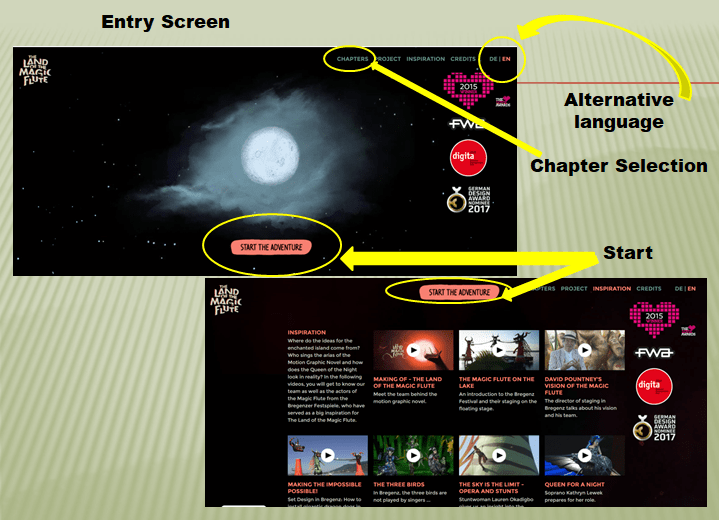
The Land of the Magic Flute is a convergence of music, narrative and digital media and can be described as a modern opera.  Based upon a famous Mozart & Schikaneder Singspiel, Die ZauberFlote (1791) , this graphic novel (GN) adaptation is a quest for enlightenment, knowledge, justice and truth that is conveyed through haunting imagery, text, sound and Mozart’s arias.  The colour and images are very evocative of two main settings, with the modern world in bright colours, and the fantastical world in sombre shades with harsh angles.  This resource would appeal to fans of classical music, graphic novels and multimodal literature. 

Curriculum Links:

  1. Year 7 English – ACHHS214 
  2. Year 8 English – ACHHS157
  3. Year 9 English – ACELT1637/ ACELY1739 / ACHHS175
  4. Year 7 & 8 Music – ACAMUR097
  5. Year 9 & 10 Music – ACAMUR104

Learning, Literacy and Language:

Graphic novels (GN) offer great opportunities for promoting language, literacy and learning, but are often underestimated because of their non traditional format (Laycock, 2019; Gonzales, 2016).  The Land of the Magic Flute uses clever combinations of prose, poetry, film, imagery and music to convey the storyline and this makes it a valuable resource for content delivery, as well as improving multimodal and critical cultural literacies (Laycock, 2019).  GN are predominantly used within language arts courses, but can also be utilised effectively across other content areas to support literary learning.  For example Maus (1991), Auschwitz (2004) and Bag of Marbles (1973) are frequently used in studying the Holocaust as the visual nature of the GN allow readers to relate to the sensitive issues within the text without being overwhelmed (Gonzales, 2016).  

Digital graphic novels (DGN) promote emerging literacies and critical thinking, because the narrative structure and complex storyline provides the reader with cultural history and context (Karp, 2011; Maniace, 2014; Brenner, 2015).  Readers are able to identify emotions from the variance in facial expressions, body language and physical metaphors present.  The sequential imagery, linearity of narrative and visual permanence facilitate text comprehension for reluctant readers, visual learners, low literacy and EALD students (Gonzales, 2016; Brenner, 2015; Botzakis, 2018; Karp, 2011).   The features such as embedded music and computer graphics, were used successfully to enhance the storyline  (Kirtz, 2014). 

 The embedding of the seven Mozart arias during pivotal points in the narrative gives the reader time to contemplate the storyline and the value of that modality at that point in the story.  The arias  are supported by subtitles and emphasise the tension in the story, allow the reader time to analyse the words in conjunction with the graphics and this combined effect provides context for increased comprehension and independent reading (Botzakis, 2018; Leu, 2005).   The inclusion of fantastical creatures meets the needs of adolescents who seek fantasy stories as a method in which to understand and investigate the difference between good and evil in humanity (Kole, 2011). 

 DGN have great capacity for innovative teaching, but educators are disinclined to utilise GN because of the assumed lack of literary qualities and that they require the same explicit instruction and scaffolding as traditional texts for comprehension and literacy development (Phelps, 2011; Botzakis, 2018; Hallman & Schieble, 2012).  The reality is that  that explicit instruction and the effective teaching of multimodal literacies utilising DGN can lead to a transference of ability to other texts and disciplines (Hallman & Schieble, 2012). 

Trends:

Digital GN is the convergence of two major literary trends: sophisticated graphic narratives and digital literature (Moorefield-Land & Gavigan, 2012; Walsh, 2013).    The recent plethora of DGN is due to its lowered publication costs and this allows emerging artists and authors increased opportunities for self publication  (Moorefield-Lang & Gavigan, 2012).   Whilst GN collectors prefer print editions, avid readers tend to prefer digital versions as they are often cheaper and can be purchased on the release date (Wilson, 2019).  

 Technology:

The Land of the Magic Flute is accessible on all devices with internet access and Flash or Javascript installations, but the digitisation effect is more pronounced on tablets (Wilson, 2019).   Authentic learning requires students to be in their third place, and integrating GN and DGN into the curriculum narrows the strong dichotomy between student choice and curriculum canon (Grazotis, 2017; Phelps, 2011; Laycock, 2019) .  

Resource integration:

GN are traditionally classified within Dewey at 741.5 but most school libraries merge all titles to a single location and whilst DGN cannot be physically stored in a particular location, it can be catalogued and linked into the library management system (LMS) (Kan, 2020).  The Land of the Magic Flute can be integrated into the LMS, LibQuests and class intranet pages as well as accessible from most devices, which makes it an excellent teaching tool.  Like other interactive websites, there is no guarantee of longevity and as the resource requires internet access to work. It would be recommended that this DGN is used for classroom practice to limit the digital demand on rural, remote and low income households (DIIS, 2016).  

Recommendation:

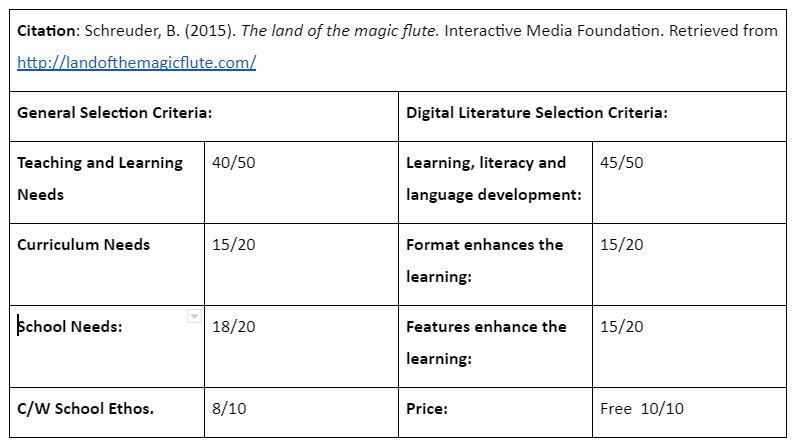
The Land of the Magic Flute successfully meets the needs of the curriculum, as well as addresses the developmental, literacy and critical thinking needs of the modern teenager.  It would make a valuable addition to a school library collection.  


References:

Brenner, R. (2015).  A guide to using graphic novels with children and teens. Graphix. Scholastic Teachers. Scholastic. Retrieved from https://www.scholastic.com/teachers/lesson-plans/teaching-content/guide-using-graphic-novels-children-and-teens/

Graphic Novels in Education [Blog]. American Libraries. Retrieved from https://americanlibrariesmagazine.org/2011/08/01/the-case-for-graphic-novels-in-education/

Graphix. (2018). A guide to using graphic novels with children and teens. Scholastic Australia. Retrieved from https://www.scholastic.com/content/dam/teachers/lesson-plans/18-19/Graphic-Novel-Discussion-Guide-2018.pdf

Grazotis, J. 2017, ‘Unlocking the third space – Activating your library’, Scan 36(4), pp. 34-35. Retrieved from https://education.nsw.gov.au/teaching-and-learning/professional-learning/scan/past-issues/vol-36–2017/unlocking-the-third-space-activating-your-library

Hallman, H., & Schieble, M. (2012). Dimensions of young adult literature: Moving into “New Times”. The ALAN Review 39 (2). DOI: https://doi.org/10.21061/alan.v39i2.a.5

Kan, K. (2020). Cataloguing graphic novels [Blog]. Diamond Bookshelf. Diamond Comic Distributions. Retrieved from https://www.diamondbookshelf.com/Home/1/1/20/181?articleID=37812

Kirtz, J.L. (2014). Computers, comics and cult status: A forensics of digital graphic novels. Digital Humanities Quarterly 8 (3). Retrieved from http://www.digitalhumanities.org/dhq/vol/8/3/000185/000185.html

Kole, K. (2018). The role of fairy tales in affective learning: Enhancing adult literacy and learning in FE and community settings. Australian Journal of Adult Learning, 58(3), 365-389. Retrieved from https://search-proquest-com.ezproxy.csu.edu.au/docview/2250950746?accountid=10344

Maniace, E. (2014). Reading process comparison between graphic novels and traditional novels.  Education and Human Development Master’s theses. Retrieved from https://digitalcommons.brockport.edu/cgi/viewcontent.cgi?article=1539&context=ehd_theses

Mozart, W.G. (Composer) & Schikaneder, E. (Librettist). (1791). Die ZauberfloteA Singspiel in 2 Acts. Vienna, Austria. 

Phelps, V. (2011). Pedagogy of graphic novels. Master Theses & Specialist Projects – American Popular Culture Commons. Retrieved from https://digitalcommons.wku.edu/cgi/viewcontent.cgi?article=2070&context=theses

Schumacher, J. (2014). More ways to pitch graphic novels [Blog]. Literacy Now. International Literacy Association. Retrieved from https://www.literacyworldwide.org/blog/literacy-now/2014/08/12/more-ways-to-pitch-graphic-novels

Walsh, M. (2013). Literature in a digital environment (Ch. 13). In L. McDonald (Ed.), A literature companion for teachers. Marrickville, NSW: Primary English Teaching Association Australia (PETAA).

Wilson, J. (2019). Everything you need to know about digital comics. PC Magazine News. Retrieved from https://au.pcmag.com/features/12330/everything-you-need-to-know-about-digital-comics


Reviewing Digital Literature – YouVersion Bible Mobile Application


Resource 2 – YouVersion Bible Mobile Application 

Summary:

The YouVersion Bible mobile application (Bible app) contains a range of Bible versions, which make it a suitable resource for aspects of the national curriculum and in all schools that teach Religious Education.   In the ACT, RE is taught at Catholic and independent schools, and is a BSSS certified senior course (ACT BSSS, 2020).   All these courses require a Bible, but many students refrain from reading traditional Bibles due to the associated stigma and peer pressure (Lipsett, 2008).  Therefore this digital option allows students to access the Catholic Good News bible and gain access to both the Old and New Testaments, highlight and take notes electronically, as well as participate in associated online communities such as sharing verses online via social media whilst maintaining their social capital.  

Curriculum Links: 

  1. Religious Education Yrs 7-12
  2. World Religions Yrs 11-12
  3. Study of Religion Yrs 11-12
  4. Year 7 Curriculum:
    1. Civics and Citizenship (HASS) – ACHCK051, ACHCK053, ACHASSK196
  5. Year 8 Curriculum:
    1. Civics and Citizenship (HASS) –  ACHCK065 
  6. Senior Ancient History curriculum 
  7. Unit 1 – ACHAH084, ACHAH085.
  8. General Capabilities – 
    1. Literacy –
    2. ICT – 


Learning, Literacy and Language:

The inclusion of a Bible mobile application (Bible app) into schooling engages disinterested students, promotes new literacies, social reading, online communities and assists students that desire text anonymity (Li & Wu, 2017, Dickenson, 2014; Singleton et al., 2018).  This app has immense capacity to promote literacy through text enhancement, narration and videos, which supports language disorders, as well as a lack of skeuomorphic features which reduces the cognitive load (James & DeKnock, 2013).  An important point to make is that this Bible app’s format is consistent to the traditional text, and this symmetry allows teachers to scaffold learning to improve both online and offline reading (Leu et. al, 2015).   The only unfortunate issue is that the narrator’s voice is more appropriate to Adams’ Hitchhiker’s Guide to the Galaxy than a sacred text.  

There are other benefits of including this app, such as the promotion of social reading, online communities and development of digital literacy (Hashim & Vongkulluksn).  The  social strategies are underpinned by Vygotsky’s sociocultural development theory and work towards increasing motivation, shaping reading behaviour and improving text comprehension (Hashim & Vongkulluksn, 2018; Li & Wu, 2017, p.257).  Mobile apps require gestural manipulation for navigation and this physical operation is essential to digital literacy  (Hashim & Vongkulluksn, 2018; Heckman & Bouchardson, 2012).  Students that use this app for personal or educational purposes, are able to gain access to content, participate in collaborative reading, online communities as well as develop their language and literacy skills (Leu et al., 2011; Hashim & Vongkulluksn, 2018).   

Technology:

The inclusion of mobile apps in schools is often fraught by disagreement (Selwyn, 2019).  James and DeKnock (2013) point out that smartphones and tablets have a greater capacity for the amplification and presentation of literary works, but many schools restrict the use of personal devices citing issues with discipline, distraction and cyberbullying (Selwyn, 2019).   Unfortunately, the refusal to include smartphones in schooling inhibits students from learning how to regulate their metacognitive processes, and further promotes the dichotomy between classroom instruction and the real world (Hashim & Vongkulluksn, 2018; Edwards, 2013).  

Trends:

Literacy is dependent on language, technology and the cultural practices of society (Sargeant, 2015).  It is clearly apparent that mobile phones are an essential aspect of a teen’s social capital, and need to be a stronger presence in education (Leu et al., 2011; Vidales-Bolanos & Sadaba-Chalezquer, 2017; Yokota & Teale, 2014).   The implementation of this app as part of pedagogical practices means educators are meeting the needs of their students, the current reading paradigm, as well as providing access to learning in a social environment and extending literature to beyond the school perimeter (Combes, 2016; Edwards, 2013; Valenza & Stephens, 2012).  Educators who fail to integrate mobile technology into pedagogy limit the development of new literacies that are essential for citizenship in a digital world.  

Resource Integration: 

Mobile applications cannot be curated and catalogued in the same manner as other digital resources, and this impacts how a resource can be managed and utilised (ASLA & VCTL, 2018).   This Bible app is available from Google and Apple play stores and can be downloaded on most newer devices without any cost to the user which minimises any impact from the digital divide (DIIS, 2016).   Unfortunately there is a slight difference between the Apple and android versions of this text, and this may cause some difficulty for schools that have a BYOD program.  

Recommendation:

This resource meets the curriculum, cognitive and behavioural needs of the students, however, the integration of mobile apps is contraindicatory to the school smartphone policy and it does not meet the school’s requirements of LMS integration.  The recommendation is to find an alternative resource. 


REFERENCES:

ACARA. (2014a). Literacy Learning Continuum. General Capabilities. Educational Services Australia. Retrieved from https://www.australiancurriculum.edu.au/media/3596/general-capabilities-literacy-learning-continuum.pd

ACARA. (2014b). Information & Communication Technology. General Capabilities. Educational Services Australia. Retrieved from https://www.australiancurriculum.edu.au/media/1074/general-capabilities-information-and-communication-ict-capability-learning-continuum.pdf

ACARA. (2014c). Civics and Citizenship. F-10 Curriculum – HASS. Educational Services Australia. Educational Services Australia. Retrieved from https://www.australiancurriculum.edu.au/f-10-curriculum/humanities-and-social-sciences/civics-and-citizenship/

ACARA. (2014d). Ancient History. Senior Secondary Curriculum. Educational Services Australia. Retrieved from https://www.australiancurriculum.edu.au/senior-secondary-curriculum/humanities-and-social-sciences/ancient-history/?

ACT Board of Secondary School Studies. (2020). BSSS A/T/M/C/V Courses. ACT Senior Secondary Curriculum. Retrieved from http://www.bsss.act.edu.au/curriculum/courses

ASLA & VCTL (2018). A manual for developing policies and procedures in Australian school library resources centres 2nd Edition.  ALIA. Retrieved from https://asla.org.au/resources/Documents/Website%20Documents/Policies/policies-procedures-manual_ed2.pdf

Combes, B. (2016). Digital literacy: A new flavour of literacy or something different? Synergy, 14(1). Retrieved from https://www.researchgate.net/publication/303663805_Digital_literacy_A_new_flavour_of_literacy_or_something_different

Department of Industry, Innovation and Science. (2016). Australia’s digital economy update. Retrieved from https://apo.org.au/sites/default/files/resource-files/2016/05/apo-nid66202-1210631.pdf

Dickenson, D. (2014). Children and reading: Literature review. Australia Council Research. Retrieved from https://www.australiacouncil.gov.au/workspace/uploads/files/research/children-and-reading-literatur-5432557e418db.pdf

Edwards, J. (2013). Chapter 9 – Reading beyond the borders: Observations on digital ebook readers and adolescent reading practices. In Whittingham, J., Huffman, S., Rickman, W., & Wiedmaier, C. (2013). Technology tools for the Literacy Classroom. SCOPUS. DOI: 10.4018/978-1-4666-3974-4.ch009

Hashim, A & VongKulluskn, V. (2018). E reader apps and reading engagement: A descriptive case study. Computers and Education, 125, pp.358-375. Retrieved from https://www.journals.elsevier.com/computers-and-education/

Heckman, D., & Bouchardson, S. (2012). Digital manipulation and digital literature. Electronic Book Review. Retrieved from http://electronicbookreview.com/essay/digital-manipulability-and-digital-literature/

Ibacache, K. (2019). Use of language learning apps as a tool for foreign language acquisition by academic libraries employees.  Information Technology and Libraries 38(3):22-33. Retrieved from DOI: 10.6017/ital.v38i3.11077

James, R., & de Knock, L. (2013). The digital David and the Gutenberg Goliath: The rise of the enhanced e-book. English Academy Review 30(1), p.107-123. DOI: 10.1080/10131752.2013.783394

Leu, D.J, Forzani, E.,Timbrell, N., & Maykel., C. (2015) . Seeing the forest, not the trees: Essential technologies for literacy in primary grade and upper elementary grade classroom. Reading Teacher 69 (2):139-145. Retrieved from https://eric.ed.gov/?id=EJ1073399

Leu, D., McVerry, J. G., O’Byrne, W. I., Kiili, C., Zawilinski, L., Everett-Cacopardo, H., Kennedy, C., & Forzani, E. (2011). The new literacies of online reading comprehension: Expanding the literacy and learning curriculum. Journal of Adolescent & Adult Literacy, 55(1):5-14. DOI: 10.1598/JAAL.55.1.1

Li, W., & Wu, Y. (2017). Adolescents’ social reading: motivation, behaviour, and their relationship. The Electronic Library 35(2):.246-262. Emerald Publishing. DOI: 10.1108/EL-12-2015-0239. 

Lipsett, A. (2008). Children bullied because of faith. The Guardian. Retrieved from https://www.theguardian.com/education/2008/nov/17/bullying-faith

Prahani, B., Jatmiko, B., Hariadi, B., Sunarto, D., Sagirani, T., Amelia, T., & Lemantara, J. (2020). Blended web mobile learning (BWML) model to improve student’s higher order thinking skills. International Journal of Emerging Technologies 15 (11). pp. 42-55. doi:http://dx.doi.org/10.3991/ijet.v15i11.12853

Rowe, E. (2017). Religion in Australian Schools: an historical and contemporary debate [Blog]. The Conversation. Retrieved from https://theconversation.com/religion-in-australian-schools-an-historical-and-contemporary-debate-82439

Sargeant, B. (2015). What is an ebook? What is a book app? And why should we care? An analysis of contemporary picture books. Children’s Literature in education, 46, 454-466. doi: 10.1007/s10583-015-9243-5

Selwyn, N. (2019). Banning mobile phones in schools: Beneficial or risky? SBS News. Retrieved from https://www.sbs.com.au/news/banning-mobile-phones-in-schools-beneficial-or-risky-here-s-what-the-evidence-says

Singleton, A., Halafoff, A., Bouma, G., & Rasmussen, M.L. (2018). New research shows Australian teens have complex views on religion and spirituality [Blog].  The Conversation. Retrieved from https://theconversation.com/new-research-shows-australian-teens-have-complex-views-on-religion-and-spirituality-103233

Valenza, J.K., & Stephens, W. (2012).Reading Remixed. Educational Leadership, 69 (6), p.75-78. Retrieved from https://www.researchgate.net/publication/262967094_Valenza_J_K_Stephens_W_2012_Reading_Remixed_Educational_Leadership_696_75-78

Vidales-Bolanos, M., & Sadaba-Chalezquer, C. (2017). Connected Teens: Measuring the Impact of Mobile Phones on Social Relationships through Social Capital. Media Education Research Journal 53(25). Retrieved by https://files.eric.ed.gov/fulltext/EJ1171085.pdf

Yokota, J., & Teale, W. (2014). Picture books and the digital world. The Reading Teacher 67(8), pp.577-585.    DOI:  10.1002/trtr.1262  


Reviewing Digital Literature – After 6/4


RESOURCE 1 – After 6/4

Summary: 

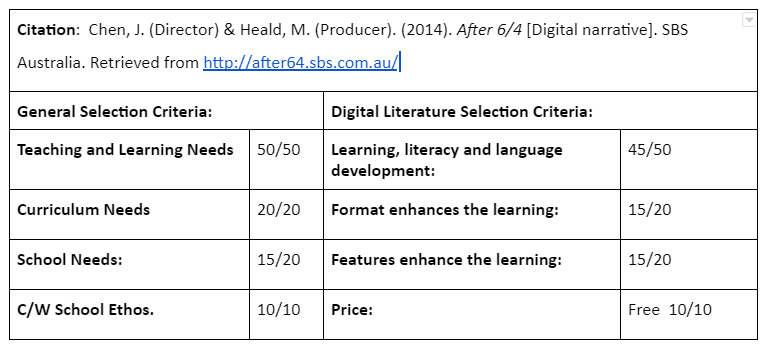
After 6/4 is a collation of differing viewpoints of the Tiananmen Square event in Beijing 1989.  Created as an anniversary tribute, After 6/4 contains a range of primary sources, news headlines, videos and personal anecdotes using VR, animation, audio, 360 video and other archival storytelling (Chen & Heald, 2014).  This digital assemblage of  primary sources remains a valuable teaching tool about persuasive texts, multimodal media literacy, and even more so in the light of the recent Hong Kong protests.   

Curriculum Links:

  1. Asia and Australia’s Engagement with Asia:  (OI: 5 and 7)
  2. Year 8 English (ACELA1543)- Main value to collection.
  3. Year 9 Media Arts (ACAMAM073, ACAMAR078, ACAMAR079
  4. Year 9  History –  (ACDSEH146)
  5. Senior History curriculum – Unit 4.

Learning, Literacy and Language:

After 6/4 provides a vibrant learning experience as readers navigate their way through varied perspectives on a non-linear timeline.  The reader is required to assimilate the primary sources, make an evaluative decision and interact with the text.  This complex navigation requires higher-order thinking as students explore the multimodal perspectives, and correlate them to the state-sanctioned or author’s bias (Kopka, 2014).  After 6/4 clearly accentuates the power of persuasive language and its impact on the reader.  It also highlights the dichotomy of free press versus state sanctioned media, and requires the reader to develop their own conclusion about the complexity of historical and media partisanship that is pervasive in modern society (Lamb, 2011, p.15).  This transmedia resource challenges students to develop their multiliteracies, critical thinking skills, and understand essential media conventions (Kopka, 2014).  

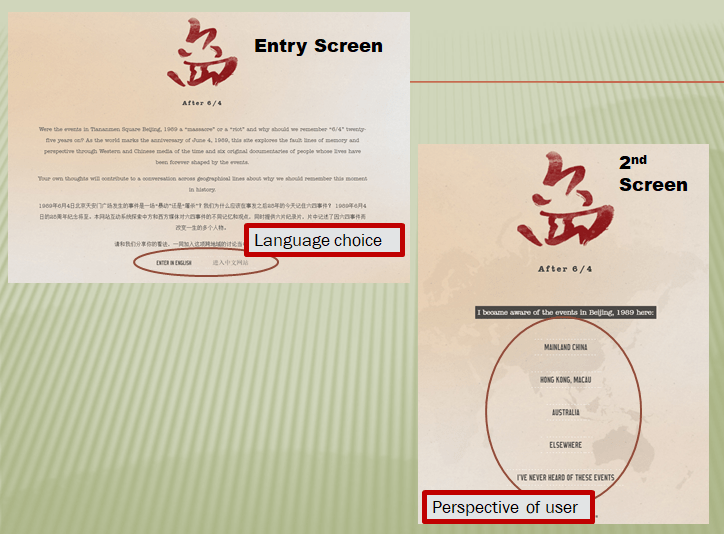
It is popular knowledge that video and computer gaming are very popular with teenagers, and After 6/4  challenges young people to utilise their transliteracy expertise for educational needs (Kopka, 2014).  After 6/4 elicits the reader’s interest by requesting them to select their country of origin then linking to a range of multimodal media texts.  Readers are further rewarded by additional information as they ‘click’ through the timeline.  By offering language choices in both English and Mandarin, After 6/4 allows the reader to interact with the text without the need for a translator.  The resource is further supported by subtitles which promotes literacy development and helps lower literacy students engage with the content material. 

Interactive resources such as After 6/4 are useful in engaging disengaged learners and reluctant readers into subject matter than may normally be of limited interest to them (Kopka, 2014; Raja & Kumar, 2010).  The appeal arises from the rhetoric of grasping and gamification theory prevalent in many interactive websites, which has a positive correlation to motivation (Heckman & Bourchardon, 2012; Kopka, 2014). 

After 6/4 requires the reader to physically manipulate the screen making the interaction more maningful and further immersing the reader into the text.  This is because interactive and hypertext media allow the reader to encounter and practise both efferent and aesthetic reading practices,  which is essential for the development of both online and offline reading skills (Pietschmann, Volker & Ohler, 2014). Unfortunately, this immersive experience  and features such as, parallax scrolling, non linearity and lack of visual permanence require the teacher to provide  extensive scaffolding for students with learning disabilities (Raja & Kumar, 2010; Botzakis, 2018).  


Technology Trends:

The inclusion of interactive websites into classroom practice, advocates for the presence of technology as part of modern societal practices (Ross Johnston, 2014b, p.633).  Transmedia resources promote 21st century skills such as, experiential learning, critical thinking, as well as the development of trans-literacies (Cullen, 2015; Pietschmann, Volker & Ohler, 2014; Kopka, 2014; Leu et al., 2015).   Interactive media is a rapidly emerging digital format and needs to be part of education to ensure students develop the necessary skills for life in the 21st century (Leu et al., 2015). 

Resource Integration: 

After 6/4 is a locally produced interactive website and is freely available online with no licencing limitations, making it a very thrifty resources.  Interactive websites can be integrated into the library management systems, LibQuests and class intranet pages, as well as embedded into class documents, and accessible from a range of devices.  This makes After 6/4, a valuable teaching tool for digital and media literacy.  The only caveats are that this DL requires the internet to access and interact with, and this could be an issue for rural, remote and low income households (DIIS, 2016).  Therefore it would be recommended that After 6/4 is used in the classroom for teaching and learning rather than being tasked for homework.  Additionally, as the resource is found on the internet, there is no guarantee it will be freely available indefinitely so caution is required when unit planning.  

Recommendation: 

After 6/4  would be a suitable addition to a school collection.   

References:

ACARA. (2019). Cross curricular priorities – Asia and Australia’s engagement with Asia. F-10 Curriculum. Educational Services Australia.  Retrieved from https://www.australiancurriculum.edu.au/f-10-curriculum/cross-curriculum-priorities/asia-and-australia-s-engagement-with-asia/

ACARA. (2014a). English Curriculum. F-10 Curriculum. Educational Services Australia. Retrieved from https://australiancurriculum.edu.au/f-10-curriculum/english/?strand=Language&strand=Literature&strand=Literacy&capability=ignore&priority=ignore&elaborations=true

ACARA. (2014b). The Arts – Media Arts Curriculum. F-10 Curriculum. Educational Services Australia. Retrieved from https://www.australiancurriculum.edu.au/f-10-curriculum/the-arts/media-arts/

ACARA. (2014b). HASS – History Curriculum – Unit 4. F-10 Curriculum. Educational Services Australia. Retrieved from https://www.australiancurriculum.edu.au/f-10-curriculum/humanities-and-social-sciences/history/

ACARA. (2014c). Modern History – HASS. Senior Secondary Curriculum. Educational Services Australia. Retrieved from https://www.australiancurriculum.edu.au/senior-secondary-curriculum/humanities-and-social-sciences/modern-history/

Botzakis, S. (2018). Comics in the classroom: Using graphic novels for content learning. In D. Wooten, B. Cullinan, L. Liang & R. Allington (Eds).  Children’s literature in the reading program: Engaging young readers in the 21st century, (5th ed., pp. 140-152). Retrieved from Proquest Ebook Central.

Briggs, S. (2016). Using gaming principles to engage students. InformED [Blog]. Retrieved from https://www.opencolleges.edu.au/informed/features/using-gaming-principles-to-engage-students/

Cullen, M. (2015, December 21). How is interactive media changing the way children learn. In EducationTechnology. Retrieved from https://educationtechnologysolutions.com.au/2015/12/how-is-interactive-media-changing-the-way-children-learn/

Department of Industry, Innovation and Science. (2016). Australia’s digital economy update. Retrieved from https://apo.org.au/sites/default/files/resource-files/2016/05/apo-nid66202-1210631.pdf

Heckman, D., & Bouchardon, S. (2012). Digital manipulation and digital literature.  Electronic Book Review.  Retrieved from https://electronicbookreview.com/essay/digital-manipulability-and-digital-literature/

Kopka, S. & Hobbs, R., (2014). Transmedia & Education: Using Transmedia in the Classroom with a Focus on Interactive Literature [Blog]. SeKopka. Retrieved from https://sekopka.wordpress.com/2014/05/07/transmedia-education-using-transmedia-in-the-classroom-with-a-focus-on-interactive-literature/

Lamb, A. (2011). Reading re-defined for a transmedia universe. Learning & Leading with Technology 39(3), p.12-17. Retrieved from https://eric.ed.gov/?id=EJ954320

Leu, D.J, Forzani, E., Timbrell, N., & Maykel., C. (2015) . Seeing the forest, not the trees: Essential technologies for literacy in primary grade and upper elementary grade classroom. Reading Teacher 69: (2), p.139-145. Retrieved from https://eric.ed.gov/?id=EJ1073399

Pietschmann, D., Volkel, S., & Ohler, P. (2014). Limitations of transmedia storytelling for children: A cognitive development analysis. International Journal of Communication 8, p.2259-2282. Retrieved from https://www.researchgate.net/publication/279323387_Limitations_of_Transmedia_Storytelling_for_Children_A_Cognitive_Developmental_Analysis

Raja, B.W.D., & Kumar, S.P. (2010). Do multimedia applications benefit learning disabled children? Journal of Educational Technology 6 (4). Retrieved from https://eric.ed.gov/?id=EJ1098361

Ross Johnston, R. (2014a). Chapter 23 – Literature, the curriculum and 21st-century literacy. In G. Winch, R. Ross Johnston, P. March, L. Ljungdahl & M. Holliday (Eds.), Literacy: Reading, writing and children’s literature (5th ed., pp. 472-489). Melbourne: Oxford University Press. 

Ross Johnston, R. (2014b). Chapter 30 – Visual literacy: Reading the world of signs. In G. Winch, R. Ross Johnston, P. March, L. Ljungdahl & M. Holliday (Eds.), Literacy: Reading, writing and children’s literature (5th ed., pp. 618-636). Melbourne: Oxford University Press.