Augmented Reality in the Classroom – Part 6 – Role of the TL

Bit of a hiatus since the last post… I decided to go on holidays.


ROLE OF TEACHER LIBRARIAN

The library and the teacher librarian hold a central position in the school learning and teaching dynamic and thus are ideally positioned to engage in collaborative planning and teaching across the curriculum.  Like libraries, the role of the teacher librarian has evolved in response to the metamorphosis of repository spaces to information gateways.  ASLA (2016) clearly defines the foci of a modern teacher librarian to; learning and teaching, resourcing the curriculum, management of the library and its resources, providing leadership, collaborating with their peers and engaging with the school community.  

Even though libraries and the role of the teacher librarian has evolved, their main purview in a school has not changed.  Information seeking is the core of each school library, and the main point of the teacher in teacher librarian is  information literacy and the explicit teaching of ICT (ALIA & ASLA, 2004).  This teaching role extends to both staff and students, as teacher librarians are required to model good practice, and explicitly teach information seeking behaviour and information literacy to everyone in the school community (ALIA & ASLA, 2004; ALIA, 2014).  

All teachers in Australia are required to integrate technology into their teaching and learning, but many classroom educators are unaware of the benefits of emerging technologies such as AR and VR (AITSL, 2017).  Consequently, the task of educating staff about emerging technologies falls onto the teacher librarian.  This is because teacher librarians are required by ALIA & ASLA (2014), ALIA (2014) and ASLA (2014) to be familiar with emerging technologies, provide access to and integrate them into library practice, programs as well as support the school community in using them effectively.  

There are many traditional ways of introducing these technologies, such as staff emails or meetings, but there are innovative ways of introducing emerging technologies to the school community.  Townsdin & Whitmer (2017) suggested AR embedded library marketing as an effective way of promoting the library and its services whilst improving information literacy, whereas Wolz (2019) points out that using AR in information seeking covertly introduces colleagues to the technology whilst they overtly search the catalogue.  Pope (2018a) proposes that AR can be introduced through team building exercises, and Zak (2014) suggests the use of AR embedded resources as an effective method of introducing AR into classroom practice.   

Whilst all those listed are valid methods of introducing the school community to new technologies, the most effective manner is by using AR embedded classroom resources.  By using emerging technologies in teaching resources, students and staff are gaining access to high quality information that meets curriculum needs and student development.  The secondary and almost furtive asset is that students gain access to these new technologies and are given opportunities to experiment in a low stakes environment.  This tactic also gives classroom teachers an opportunity to experiment and play with the technology themselves, so that they can effectively use them in their classrooms (Zak, 2014).   From a library management position, teacher librarians are required to regularly evaluate their strategies and services to ensure that it meets the needs of their community, and this extends to AR programming and resourcing  (Zak, 2014).  This evaluation must also broaden to include any mobile applications, 3D image repository or hardware that the library choses to maintain as part of their collection and digital technologies program (Zak, 2014). 

Augmented Reality in the Classroom – Part 4

Continuing with the series….

More ways in which AR can be applied in a school dynamic. 

6. NUMERACY

Numeracy skills can be enhanced using AR.  Wu et al. (2013) suggest that students can learn geometry, trigonometry, spatial relationships and collaborative problem based learning by using AR to supplement their learning.  Technologies such as the combination of TinkerLamp and Kaleidoscope are popular in Europe and can be used to explore symmetries and congruence.  Whereas the mobile application – AR Measure kit is useful in measuring distances, trajectories, angles, height and estimating volume  (Cuendet, Bonnard, Do-Lenh & Dillenbourg, 2013).  

7. SUPPORT LITERARY ARTS

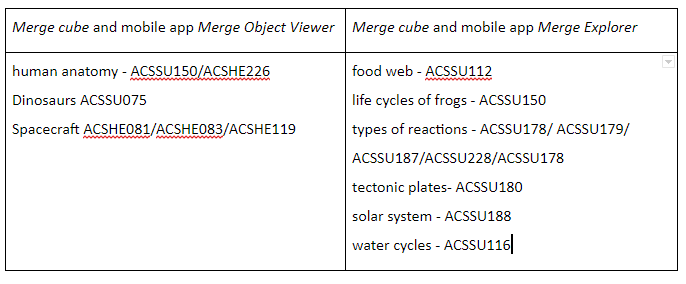
Hannah et al. (2019) cited several methods in which AR can support the literary arts curriculum.  Students are able to create or visit real or fictional sites using the digital interfaces such as Merge cubeso that connections between the content and the real world can be made.  For example, Shakespeare comes alive with a tour of Verona, Japanese medieval history can be taught by analysing the structure of Kokura Castle, and students can investigate the structure of a steam engine, all with a single mobile app, a smartphone or tablet and a Merge cube.  

8. VISUAL ARTS

A very interesting use of AR is the ability to access and engage in an authentic exploration of real objects in an artificial space (Wu et al. 2013).  Many art galleries and museums around the world already have embedded AR to allow users access to additional information about the display, for example, some places use QR codes to inform the user of additional information about the artist or exhibit (Coates, 2020).  From a classroom perspective, students can support their own creative pieces by embedding their rationale using Thinglink, Padlet or Metaverse, and use QR codes on their paintings, sculptures, photographs or collages to link it to their rationale (Zak, 2014) .  

9. LOCATION BASED LEARNING

Wu et al., (2013) suggests that location based learning, such as field trips and excursions, can be augmented by the use of AR.  As previously mentioned, many museums, galleries and other institutions have already adopted the use of AR in their spaces (Coates, 2020; Townsdin & Whitmer, 2017).   Some of them use the technology to provide additional information to the user about the collection, whereas other places use AR in their maps or tours  (Townsdin & Whitmer, 2017).  By including relevant information within the augmented space, it encourages more authentic learning, which in turn improves student engagement and learning outcomes (Wu et al., 2013). 

Emerging technologies have also been adopted by some council reserves and state national parks as a means to inform users about local flora and fauna.  Visitors are able to use their devices and their inbuilt GPS systems to access pertinent information about the site they are accessing (Townsdin & Whitmer, 2017).  Some sites also offer remote access and this can be very useful for excursion preparation or for revision purposes.  Remote access would also be of great assistance when students are unable to attend excursions or field trips due to illness or pandemics. 

10. ASSISTING STUDENTS WITH DIVERSE LEARNING NEEDS

Technology has often been cited as an effective intervention method for students with autism spectrum disorder (ASD) and educators seek methods in which to meet cognitive, behavioural and developmental needs (Sahin, Keshav, Salisbury & Vahabzadeh, 2018).  Digital methods are often favoured  for ASD students, as they tend to have a preference for electronic media due to their predilection as visual learners (Mahayuddin & Mamat, 2019, p.2176-2177).  Additionally AR offers them an environment that supports the tangible manipulation of abstract ideals, as well as a visual image of the learning content, and standardised and predictable outcomes as routine and predictability is very important to students with ASD (Mahayuddin & Mamat, 2019, p.2176-2177; Sahin et al., 2018, p.1).   

AR and VR are also able to assist ASD students in developing their socio-emotional skills.  This technology allows students to experience the world and its environmental hazards as well as engage and interact with their peers in a socially controlled environment (Sahin et al., 2018, p.2; Riva, Banos, Botella, Mantovani & Gaggioli; 2016).   Whilst tablets and smartphones can be used, Sahin et al. (2018) suggests the use of SmartGlasses as they can be preloaded with social and behavioural coaching software.  Another benefit is that AR experiences can be tailored and adapted to suit student’s diverse needs, which is important as many experience high levels of anxiety when there is disruption to their learning plan.  


Augmented Reality in the Classroom – Part 3

Continuing on the series….

Here are few ways in which AR can be applied in a school dynamic.

  1. STUDENT ENGAGEMENT 

Technology has often been cited as a tool to increase student engagement.  Bonascio (2017) and  Magana, Serrano & Rebello (2019) theorise that AR is able to prolong attention and focus, as when multimodal resources and haptic devices are used, higher levels of enjoyment are experienced.  This gratification is significantly reduced in students that do not comprehend the mechanics of the technology and indicated that whilst utilising AR can improve digital literacy, explicit teaching is required to ensure that all students are able to interact successfully with the technology (Magana, Serrano & Rebello, 2019). 

               2. INQUIRY LEARNING

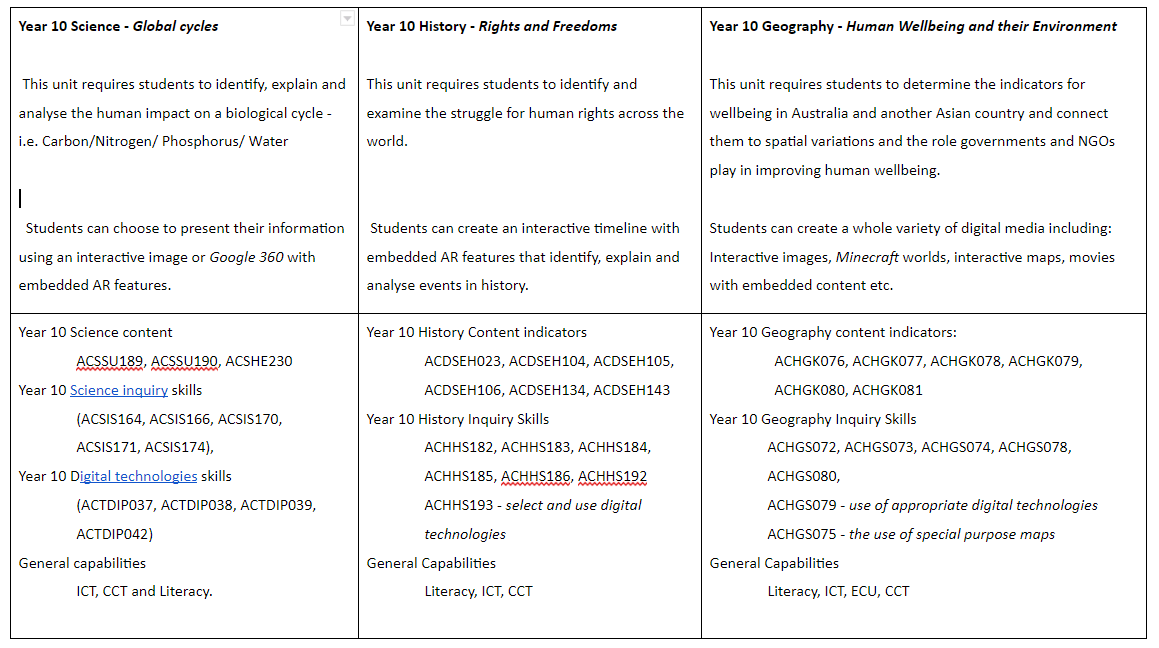
Oddone (2019) and Foote (2018) both suggest that greater educational benefits arise from students creating their own interactive images and overlays rather than using supplied ones.  Apps such as Metaverse or Augment can be used by students to construct their own interactive content and would be an ideal cross curricular inquiry task across any discipline, but have curriculum value within the Science, History and Geography inquiry skills section. Examples of inquiry tasks include:


3. ABSTRACT CONCEPTS & STEM SUBJECTS

Magana, Serrano & Rebello (2018, p.526) believe that there is a positive effect to using multimodal resources and active learning for science and its related fields. This is because students often need assistance with visualising complex and abstract concepts (Saidin, Abd Hali & Yahaya, 2015; Riva, Banos, Botella, Mantovani & Gaggioli, 2016).  Abstract concepts can be problematic for many students because of the difficulty students can have in visualising theoretical postulations (Furio, Fleck, Bousquet, Guillet, Canioni & Hachet, 2017, p.2-3 ).  This struggle can negatively influence a student’s perception of the content material and lead to adverse learning outcomes (Furio et al., 2017, p.2-3 ).   AR technology allows students to visualise the concept, albeit in animation, and increase comprehension which leads to improved outcomes  (Saidin, Abd Hali & Yahaya, 2015, Wu et al., 2013).  This is because haptic devices allow students to manipulate and utilise their sensory faculties when they are constructing knowledge. Large and small phenomena, as well as anatomical figures, can be visualised using AR technology (Wu et al. 2013). 


High school curriculum linked examples include:


4. READING – RECREATIONAL & INFORMATIONAL

AR books is the largest growing trend in children’s publishing and that many publishers are supplementing traditional texts with AR embedded resources (Levski, 2018; Zak, 2014). This is because AR books are seen as more innovative and able to improve flagging reading rates in children and adolescents (Levski ,2018, Zak, 2014).  Many young readers find the interactivity extremely engaging and the use of technology appeals to digital natives (Magana, Serrano & Rebello, 2019).

5. LITERACY

Mayahayuddin & Mamat, (2019) point out that the multimodal nature of AR improves literacy because the audio visual cues assist students in decoding.   Additionally,  AR enables students that have low focus or attention to enhance their learning as it grants access  to language in both formal and informal contexts, which is very useful for students with ADD, ADHD and those with social anxiety (Rafiq & Hashim, 2018, p.31; Mayayuddin & Mamat, 2019.  These benefits are further improved when AR is combined with gaming principles which provides additional interest and intrinsic motivation  (Mayahayuddin & Mamat, 2019; Levski 2018). 


REFERENCES

Foote, C. (2018).  Is it real or is it VR? Exploring AR and VR tools. Computers in Libraries. Retrieved from http://web.b.ebscohost.com.ezproxy.csu.edu.au/ehost/pdfviewer/pdfviewer?vid=0&sid=6093ea4d-06fa-42b1-8400-75e5bd1dd875%40pdc-v-sessmgr03

Furio, D., Fleck, S., Bousquet, B., Guillet, JP., Canioni, L., & Hachet, M. (2017). HOBIT: Hybrid optical bench for innovative teaching. CHI’17 – Proceedings of the 2017 CHI Conference on Human Factors in Computing Systems. Retrieved from https://hal.inria.fr/hal-01455510/file/HOBIT_CHI2017_authors.pdf

Levski, Y. (2018). 10 Augmented Reality Books That Will Blow Your Kid’s Mind. AppReal- VR [Blog]. Retrieved from https://appreal-vr.com/blog/10-best-augmented-reality-books/

Mahayuddin, Z., & Mamat, Z. (2019). Implementing augmented reality (AR) on phonics based literacy among children with autism. International Journal on Advanced Science Engineering Information Technology 9 (6). Retrieved from https://core.ac.uk/download/pdf/296918932.pdf

Oddone, K. (2019). Even better than the real thing? Virtual and augmented reality in the school library. SCIS Connections. (110). Retrieved from https://www.scisdata.com/media/1921/scis-connections-110.pdf

Saidin, N. Abd Halim, N., & Yahaya, N. (2015). A review of research on augmented reality in education: Advantages and applications. International Education Studies, 8(13). Retrieved from http://citeseerx.ist.psu.edu/viewdoc/download?doi=10.1.1.730.8456&rep=rep1&type=pd

Rafiq, K., & Hashim, H. (2018) Augmented reality game (ARG), 21st century skills and ESL classroom. Journal o fEducational and Learning Studies. 1 (1) pp29-34. Retrieved from https://journal.redwhitepress.com/index.php/jels/article/view/23/pdf

Riva, G., Banos, R., Botella, C., Mantovani, F., & Gaggioli, A. (2016). Transforming experience: The potential of augmented reality and virtual reality for enhancing personal and clinical change. Frontiers in Psychiatry 7. Retrieved from https://www.ncbi.nlm.nih.gov/pmc/articles/PMC5043228/pdf/fpsyt-07-00164.pdf

Wu, H., Lee, S., Chang, H., & Liang, J. (2013). Current status, opportunities and challenges of augmented reality in education. Computers & Education, 62. Pp41-49. Retrieved from https://doi.org/10.1016/j.compedu.2012.10.024

Zak, E. (2014). Do you believe in magic? Exploring the conceptualisation of augmented reality and its implication for the user in the field of library and information science.  Information Technology and Libraries


Augmented Reality in the classroom – Part 2

AR APPLICATIONS IN CLASSROOMS – Part 2 

The interactive and innovative nature of technology has often been cited as a positive influence on educational outcomes, and this benefit extends to the inclusion of AR in schooling (Oddone, 2019).   AR can be used to improve student engagement, address curriculum outcomes and increase digital literacy skills (Oddone, 2019; Saidin, Abd Hali & Yahaya, 2015).   It can be used in inquiry learning, recreational and informational reading, improving literacy and numeracy standards, developing STEM and ICT skills, supporting literary arts, visual arts and developing social emotional learning (Saidin, Abd Hali & Yahaya, 2015).  Like VR, AR expands learning beyond the textbook and classroom walls, as well as builds those critical digital literacy skills for life beyond the classroom (Wolz, 2019, p.3; Wu et al., 2014). 

The most sizable and unique benefit AR has on educational practices is that it uses 3D images to illustrate complex concepts to students (Zak, 2014).  By creating these images, AR enables the student to feel a sense of immediacy and immersion which fosters a realistic experience (Wu et al., 2013, p.44).  This realistic experience increases the frequency and depth of connections made between the student, the content and the real world (Hannah, Huber & Matei, 2019, p.278; Wu et al., 2013).  AR requires the user to activate the augmented data, therefore it can be described as student centred, contextual to the user and is a constructivist approach to education, and consequently aligns itself along the current prevalent pedagogical theories (Wolz, 2019, p.2; Zak, 2014).   Hence, when combined with holistic and authentic learning practices, AR has an immense capability to inspire affective learning. 

REFERENCES

Hannah, M., Huber, S., & Matei, S. (2019). Collecting virtual and augmented reality in the twenty first century library. Collection Management, 44 (2-4), pp.277-295. DOI: 10.1080/01462679.2019.1587673

Oddone, K. (2019). Even better than the real thing? Virtual and augmented reality in the school library. SCIS Connections. (110). Retrieved from https://www.scisdata.com/media/1921/scis-connections-110.pdf

Saidin, N. Abd Halim, N., & Yahaya, N. (2015). A review of research on augmented reality in education: Advantages and applications. International Education Studies, 8(13). Retrieved from http://citeseerx.ist.psu.edu/viewdoc/download?doi=10.1.1.730.8456&rep=rep1&type=pdf

Wolz, K. (2019). Building faculty competence and self efficacy for using ZSpace virtual reality (VR) software in the classroom. All Regis University Theses. Retrieved from https://epublications.regis.edu/cgi/viewcontent.cgi?article=1930&context=theses

Wu, H., Lee, S., Chang, H., & Liang, J. (2013). Current status, opportunities and challenges of augmented realiy in education. Computers & Education, 62. Pp41-49. Retrieved from https://doi.org/10.1016/j.compedu.2012.10.024

Zak, E. (2014). Do you believe in magic? Exploring the conceptualisation of augmented reality and its implication for the user in the field of library and information science.  Information Technology and Libraries.

Augmented Reality in the classroom- Part 1

zedinteractive / Pixabay

The technology revolution, pervasive use of the internet and plethora of personal devices have changed the way society engages in employment, recreation, education and personal endeavours.

Educators need to keep abreast of emerging technologies so that they can ensure students possess the necessary digital skills and strategies to thrive in the 21st century  (Wolz, 2019).  Emanating software such as augmented and virtual reality are being trialed by many teachers seeking methods in which to improve engagement, bolster ICT acuity and meet the needs of the modern student.  This article seeks to define AR, identify its role in pedagogical practice, role in meeting curriculum outcomes, and inferences of future applications.  

WHAT IS AR 

Augmented reality (AR) is when a computer generated layer of information is placed over a person’s experience of the world (Townsdin & Whitmer, 2017; Oddone, 2019).  Wu, Lee, Chang & Liang (2013) define AR as technology that uses accurate 3D visual representations to combine real with virtual worlds.  Generally viewed using mobile device applications or wearable computers, AR displays the augmented media in the form of images, sounds, videos, graphics or GPS data (Townsdin & Whitmer, 2017; Wu et al. 2013). At this point, AR is already in use within military machinery, theatre, flight navigation, entertainment industry and various mobile applications, i.e. Pokemon Go (Pope, 2018a; Townsdin & Whitmer, 2017).  There are two forms of AR.  The first  form is when an interaction is stimulated between an image and a smart device, and the second is when the GPS triggers the digital information over the user’s location (Oddone, 2019, p.3).  Whereas virtual reality (VR) is when a user is completely immersed into an artificial world with the aid of technology (Oddone, 2019).  This technology has the ability to flood the senses and trick the mind into believing that the user is actually experiencing the event.  

AR resources are activated by an application that ‘reads’ a QR code, image or illustration so that the interactive content is released.   Levski (2018) points out that this added material could be as simple as a hidden photo or video, but could also be animated sequences or even an embedded game.  The addition of these interactive elements is based upon the gamification principle, which relies on positive feedback to keep students motivated.  By supporting interaction between the real and virtual world, AR allows the user to actively manipulate a tangible interface and thus increase the learner engagement and boost information retention (Saidin, Abd Hali & Yahaya, 2015; Wolz, 2019).  This interaction means that AR is self paced, promotes independent learning and allows students to progress at their own cognitive capabilities.  There is great potential for AR in educational practices, it can be embedded into print or digital resources, used across disciplines, and its multimodal nature gives diverse learners multiple entry points into the content (Levski, 2018).  

References:

Levski, Y. (2018). 10 Augmented Reality Books That Will Blow Your Kid’s Mind. AppReal- VR [Blog]. Retrieved from https://appreal-vr.com/blog/10-best-augmented-reality-books/

Oddone, K. (2019). Even better than the real thing? Virtual and augmented reality in the school library. SCIS Connections. (110). Retrieved from https://www.scisdata.com/media/1921/scis-connections-110.pdf

Pope, H. (2018a). Virtual and augmented reality in libraries. Library Technology Reports – American Library Association, (54)6.

Saidin, N. Abd Halim, N., & Yahaya, N. (2015). A review of research on augmented reality in education: Advantages and applications. International Education Studies, 8(13). Retrieved from http://citeseerx.ist.psu.edu/viewdoc/download?doi=10.1.1.730.8456&rep=rep1&type=pdf

Townsdin, S., & Whitmer, W. (2017). Technology. Public Services Quarterly. 13. Pp190-199. DOI: 10.1080/15228959.2017.1338541

Wolz, K. (2019). Building faculty competence and self efficacy for using ZSpace virtual reality (VR) software in the classroom. All Regis University Theses. Retrieved from https://epublications.regis.edu/cgi/viewcontent.cgi?article=1930&context=theses

Wu, H., Lee, S., Chang, H., & Liang, J. (2013). Current status, opportunities and challenges of augmented realiy in education. Computers & Education, 62. Pp41-49. Retrieved from https://doi.org/10.1016/j.compedu.2012.10.024

Location Learning – Virtual reality in the classroom.

When COVID-19 ruins your plans!

The group of Year 8 students had just finished a unit of work on the history of the Catholic Church from the fall of Rome to the Reformation as part of their Religious Education subject (Curriculum link – ACDSEH052/ ACDSEH054).  At the culmination of the semester, they were supposed to go on an excursion to explore the various different Christian churches and analyse how their structure, design, and use of symbols support faith based practices (Curriculum link – ACAVAM119/ACHASSK198). 

However, the COVID-10 pandemic and resulting restrictions prevented that adventure.  Therefore, in an effort to address the gap in their learning, the teacher librarian and classroom teacher collaborated to create a lesson that would virtually explore various churches by introducing emerging technologies in the form of virtual reality to the classroom with Google Cardboard and Google Streetview.  In the process students would learn essential note taking skills using a graphic organiser and paragraph writing skills.   Evidence of learning would be the written TEXAS or TEEL paragraph illustrating their analysis of the building structure and design and how it supports faith practices and community. 

Rosenblatt’s reader response theory was the underlying pedagogical principle for this activity (Woodruff & Griffin, 2017, p.110).  Commonly used in literature circles, Rosenblatt’s constructivist theory acknowledges each student’s contribution as valid, which enables them to become active agents in their own learning, and the activity appropriate for a diverse classroom (Woodruff & Griffin, 2017, p.109-110).  However, instead of investigating texts in a literature circle, the students investigated and analysed religious sites in a similar immersive experience.  This virtual exploration required them to combine the new visual information to their own prior experience in order to create new knowledge (Woodruff & Griffin, 2017, p.111).  The collaborative atmosphere allows students to have an equal exchange of ideas, increases their problem solving skills as well as developing interpersonal skills and promotes collegian discussion  (ACARA, 2014a; Tobin, 2012, p. 41).  

The students were given a choice of six different churches to visit and had to select three for comparison purposes.  As location was no longer an issue, the TL identified a variety of churches from different Christian denominations across the world that were suitable.  It is important that careful research be undertaken to ensure that the sites are accessible freely via Google Streetview and the associated images provide relevant information.  

The students were requested to note down the similarities and differences between the different types of churches using a triple venn diagram.  This part of the task involved student collaboration and ideally students would have selected a different church site each and then shared their information through discourse.  However this did not happen as the students all looked at sites sequentially rather concurrently, which was a poor use of time from a teacher perspective, but did increase the length and breadth of discourse.  

Teaching note taking and the use of graphic organisers simultaneously was a pedagogical strategy.  Note taking is an essential skill that needs to be explicitly taught across the curriculum as the style of note taking and vocabulary choice will vary depending on the discipline.  Good note takers have generally higher academic outcomes because they are able to succinctly summarise ideas, concepts and information using their own vernacular, and then use their notes to create content to communicate their understanding and analysis (Stacy & Cain, 2015).  Graphic organisers have been proven to improve learning outcomes because it increases connections between ideas, and organises information in a visual and spatial manner (McKnight, n.d.; Mann, 2014).  By utilising the two strategies together, the students are given an opportunity to explore different methods of learning which they can use throughout their learning both in and outside classroom walls.  

Good notes lead to a strong author’s voice and content in paragraphs.  The culmination of the task required students to create a paragraph identifying and describing the structure of the church and its alignment to faith based practices, as well as evaluating how the design of the church’s spiritual and aesthetic design holds value to their congregation and society.   The question was created using Bloom’s taxonomy of cognitive domains so that all the diverse learning needs of the class would be catered for appropriately (Kelly, 2019b). 

Questions are an intrinsic and ancient practice of teaching (Tofade, Elsner & Haines, 2013).  Carefully designed questions are all features of good pedagogical practice and are able to, stimulate thinking, promote discourse, further connections between prior and new knowledge as well as encourage subject exploration. (Tofade et al., 2013).  Teachers that stage questions in order of Bloom’s taxonomy are addressing all the cognitive domains, as well as building students to achieve that higher order thinking (Tofade et al., 2013).  

The virtual exploration of churches around the world was designed to compensate students for their inability to connect their learning to the real world to the pandemic.  The task overtly sought to get students to experiment with emerging technologies, work in collaborative groups and communicate their learning in written form.  In addition students covertly learned to note take using graphic organisers, engage in collegial discourse and use Bloom’s taxonomy to work toward higher order thinking.  These skills are in addition to the content learning outcomes and even if the students did not learn any new content, they had a good crack at learning some valuable skills!  

Curriculum links:

Overall content outcomes:

  • ACDSEH052Dominance of the Catholic Church and the role of significant individuals such as Charlemagne
  •  ACDSEH054Relationships with subject peoples, including the policy of religious tolerance 
  • ACAVAM119Analyse how artists use visual conventions in artworks
  • ACTDIP026 – Analyse and visualise data using a range of software to create  information, and use structured data to model objects or events 
  • ACHASSK198 – Identify the different ways that cultural and religious groups express their beliefs, identity and experiences
  • ACELA1763 – writing structured paragraphs for use in a range of academic settings such as paragraph responses, reports and presentations. 
  • ACELY1810 – Experimenting with text structures and language features to refine and clarify ideas and improve text effectiveness. 

                   (ACARA, 2014h; ACARA, 2014i; ACARA, 2014j)

Using VR

  • GC – ICT -Locate, generate and access data and information  
  • GC – CCT –  Identify and clarify information and ideas
  • GC – Literacy – Understanding how visual elements create meaning (ACARA, 2014c; ACARA, 2014b; ACARA, 2014h)

Graphic organisers

  • GC – CCT – 
    • Organise and process information
    • Imagine possibilities and connect ideas                (ACARA, 2014b)

Collaborative Learning groups

  • GC – PSC
    • Appreciate diverse perspectives
    • Understand relationships
    • Communicate effectively
    • Work collaboratively
    • Negotiate and resolve conflict

                                   (ACARA, 2014d)

TEXAS Paragraph

GC – IC – 

  • Investigate culture and cultural identity
  • Explore and compare cultural knowledge, beliefs and practices

GC – Literacy 

  • Compose spoken, written, visual and multimodal learning area texts
  • Use language to interact with others
  • Use knowledge of text structures
  • Express opinion and point of view
  • Understand learning area vocabulary

(ACARA, 2014f; ACARA, 2014c)

REFERENCES

ACARA. (2014a). Personal and social capability. General Capabilities Curriculum.  Educational Services Australia. Retrieved from https://www.australiancurriculum.edu.au/f-10-curriculum/general-capabilities/personal-and-social-capability/

ACARA. (2014b). Creative and critical thinking continuum.  F-10 Curriculum – General Capabilities Curriculum. Educational Services Australia.  Retrieved from  https://www.australiancurriculum.edu.au/media/1072/general-capabilities-creative-and-critical-thinking-learning-continuum.pdf

ACARA. (2014c). Literacy continuum. F-10 Curriculum – General Capabilities Curriculum. Educational Services Australia. Retrieved from https://www.australiancurriculum.edu.au/media/3596/general-capabilities-literacy-learning-continuum.pdf

ACARA. (2014d). Personal and social capabilities continuum. F-10 Curriculum – General Capabilities Curriculum. Educational Services Australia. Retrieved from https://www.australiancurriculum.edu.au/media/1078/general-capabilities-personal-and-social-capability-learning-continuum.pdf

ACARA. (2014e). Ethical understanding continuum. F-10 Curriculum – General Capabilities Curriculum. Educational Services Australia. Retrieved from https://www.australiancurriculum.edu.au/media/1073/general-capabilities-ethical-understanding-learning-continuum.pdf

ACARA. (2014f). Intercultural understanding continuum. F-10 Curriculum – General Capabilities Curriculum. Educational Services Australia. Retrieved from https://www.australiancurriculum.edu.au/media/1075/general-capabilities-intercultural-understanding-learning-continuum.pdf

ACARA. (2014h). Information and communication technology capability learning continuum. F-10 – General Capabilities Curriculum. Educational Services Australia. Retrieved from https://www.australiancurriculum.edu.au/media/1074/general-capabilities-information-and-communication-ict-capability-learning-continuum.pdf

ACARA. (2014h). English. F-10 – General Capabilities Curriculum. Educational Services Australia. Retrieved from https://www.australiancurriculum.edu.au/f-10-curriculum/english/?strand=Language&strand=Literature&strand=Literacy&capability=ignore&priority=ignore&year=11582&elaborations=true&el=15718&searchTerm=TEEL+paragraph#dimension-content

ACARA. (2014i). History Curriculum. F-10 Curriculum – Humanities and Social Sciences Curriculum. Educational Services Australia. . Retrieved from https://www.australiancurriculum.edu.au/f-10-curriculum/humanities-and-social-sciences/history/

ACARA. (2014j). Visual Arts Curriculum. F-10 Curriculum – Humanities and Social Sciences Curriculum. Educational Services Australia. . Retrieved from https://www.australiancurriculum.edu.au/f-10-curriculum/the-arts/visual-arts/

Kelly, M. (2019a). Organising compare-contrast paragraphs. ThoughtCo [Blog]. Retrieved from https://www.thoughtco.com/organizing-compare-contrast-paragraphs-6877

Kelly, M. (2019b). Bloom’s taxonomy in the classroom. ThoughtCo [Blog]. Retrieved from https://www.thoughtco.com/blooms-taxonomy-in-the-classroom-8450

Mann, M (2014). The effectiveness of graphic organisers on the comprehension of social studies content by students with disabilities. Marshall University Theses, Dissertations and Capstones. Retrieved from https://mds.marshall.edu/cgi/viewcontent.cgi?referer=&httpsredir=1&article=1895&context=etd

McKnight, M. (n.d.). Use graphic organisers for effective learning. TeachHUB.com. Retrieved from https://www.teachhub.com/teaching-graphic-organizers

Stacy, E., & Cain, J. (2015). Note taking and handouts in the digital age. American Journal of Pharmaceutical Education (79) 7. Retrieved from https://www.ncbi.nlm.nih.gov/pmc/articles/PMC4812780/

Tobin, M. (2012). Digital storytelling: Reinventing literature circles. Fischer College of Education. 12. NSU. Retrieved from https://nsuworks.nova.edu/cgi/viewcontent.cgi?article=1000&context=fse_facarticles

Tofade, T., Elsner, J., Haines, S. (2013). Best practice strategies for effective use of questions as a teacher tool. American Journal of Pharmaceutical Education 77 (7). Retrieved from https://www.ncbi.nlm.nih.gov/pmc/articles/PMC3776909/.

Woodruff, A., & Griffin, R. (2017). Reader response in secondary settings: Increasing comprehension through meaningful interactions with literary texts. Texas Journal of Literacy Education (5) 2 pp.108-116. Retrieved from https://files.eric.ed.gov/fulltext/EJ1162670.pdf


Literary Learning – Shifting from ‘Learning to Read’ to ‘Reading to learn’.

Language and literature has always been part of educational practices. 

This is because language is central to cognition and therefore needs to be implemented in all areas of thinking and learning.  Literary learning is the use of literature across the curriculum.  It is based upon genre theory as language is learned in context and a variety of genres and formats should be made available for all students to (Derewianka, 2015).  Whilst the emotive and behavioural benefits of literature are well documented, some teachers may believe that a variety of genres in teaching and learning are unnecessary.  Cornett (2014) points out the many cognitive values of literary arts in the curriculum such as promoting literacy, supporting active meaning construction and provoking inquiry, lifelong learning, problem solving and increasing critical thinking skills.  The  role of the teacher librarian and educator is to increase the implementation of the various forms of literature, such as narratives, expositions, discussions and recounts, in order to increase student exposure to the heterogeneity of discourses available in their subject area.  

GDJ / Pixabay – Code breaker to text analyser.

Literacy for learning is when a student moves from simply being codebreakers and text participants, to using text for learning and analysing.  The basis of literary learning is genre theory and programs such as ‘reading to learn’ places an emphasis on students using a variety of literature formats in schooling (Derewianka, 2015).  Genre theory has had a great influence on education practices in Australia.  It is an extension of Vygotsky’s and Halliday’s theory of language development occurring in social contexts (Derewianka, 2015).  The extension is based upon the view that students need access to a variety of genres within their subject matter in order to be able to engage in discourse (Derewianka, 2015).  Since each genre has its own identifiable format, it is important that educators offer a variety of genres to maintain equity (Derewianka, 2015).  Derewianka (2015) also elucidates the pertinent fact that each key learning area has a particular vocabulary, and that students need to understand and develop experience with this specific language and various formats in order to achieve academic success. 

ACARA places great emphasis on literacy, language and literature in the curriculum.  It requires students to use language as a method of participating in the learning process (Derewianka, 2015).  I have previously elucidated on the importance of literacy, so I will not go into any more detail about that now.  But within the General capabilities curriculum, there is a requirement for students to be able to make meaning and critically analyse.  Therefore, the use of a variety of genres within teaching and learning practices ensures students are able to meet the learning outcomes set by the standards within the curriculum.  

From a pedagogical perspective, literary learning is a child centred approach to teaching and learning. Derewianka (2015) points out that the shift from teacher to child centric pedagogy requires student’s engagement in order for them to participate in the learning.  Literature can be used as a method to learn about subject matter as it provides a increased engagement for students and also has a higher recall compared to expository texts (Cornett, 2014, p. 151).  Besides being a mode of conveying information, the use of good quality literature has been proven to support construction of meaning, deepen understanding of complex social issues and meet the aesthetic needs of students (Cornett, 2014, p. 151).  The latter is very important as motivation is a commitment to extend the reader’s aesthetic experience (Cornett, 2014).  

 There are some educators that are skeptical of the need to implement literature across the curriculum, even though the implementation of language, literature and literacy across key learning areas has been part of teaching practice for the last few decades.  One of the arguments against the implementation of literature, is that some students would struggle against having to negotiate meaning from the text.  Students with low literacy and those who speak a second language could find some genres more problematic than others.  But Cornett (2014) refuted this argument by determining that literature based learning is beneficial to students combating aliteracy or illiteracy.  This is because students that have literature at the core of their learning improve their overall reading levels in comparison to those that do not  (Cornett, 2014).  Ironically, the use of  standarised tests have been proven to have no benefit in improving literacy outcomes but they still happen at regular intervals (Cornett, 2014).  But whilst literature have been proven to address  cognitive, emotional and developmental needs, not all students (and teachers) like  all aspects such as narrative literature.  Since choice is an essential aspect of engagement and motivation, it is important to implement a variety of genres and resources in educational practices when planning a unit of work.  Astute educators will know that it makes sense to balance pragmatism with literature.  

Literary learning is the implementation of literature across the curriculum.  By using literature as a method of conveying subject specific information, teachers are improving the learning outcomes of the students.  From an evidence based perspective, literature based learning is the better option for students as it allows students to construct their own bank of knowledge from information which is more easily read, understood and comprehended.  It allows students to put into context the subject specific vocabulary they have learned and use correctly the variety of formats and genres that are applicable to their discipline.  Students no longer just learn to read… they read so that they can learn. 


References:

Cornett, C. E. (2014). Integrating the literary arts throughout the curriculum. In Creating meaning through literature and the arts: arts integration for Classroom teachers (5th ed,) (pp144-193) USA

Derewianka, B. (2015). The contribution of genre theory to literacy education in Australia. In J. Turbill, G. Barton & C. Brock (Eds.), Teaching Writing in Today’s Classrooms: Looking back to looking forward (pp. 69-86). Norwood, Australia: Australian Literary Educators’ Association. Retrieved from https://ro.uow.edu.au/cgi/viewcontent.cgi?article=2620&context=sspapers


Academic integrity – more than just plagiarism.

Tumisu / Pixabay – Right or Wrong?


Academic integrity is often espoused and bandied about across educational institutions, especially in the first few weeks of every scholastic year. 

La Trobe university describes it as shared values and behaviour that includes but is not exclusive to honesty, fairness and responsible practices. This concept of honesty in academia is a two way street.  Educational institutions such as schools and universities are obliged to award credit and acknowledge honestly conducted work. Students are responsible for ensuring that their work meets the required standards mandated (LaTrobe, 2019).  The onus of practices that promote academic honesty need to be equally addressed by students, staff, executive and organisations. It is not simply the role of a student to avoid plagiarism, but also the role of education to provide them with the skills and knowledge to do so.  Additionally, society needs to realise that academic integrity does not start and finish with plagiarism.  Plagiarism is just an aspect of authentic academia. Other practices include the creation of assessment tasks that limit the risk of dishonest practices and organisations to adequately address infringements in their policies with appropriate levels of censure that are age and stage appropriate.  The role of teacher librarian is multifaceted when it comes to academic integrity. Due to their dynamic position, a TL is able to address academic honesty from a student and classroom teacher (CT) lens and from a department and school perspective.   

Academic honesty starts with the classroom teacher.  If teachers continuously utilise reputable sources in their teaching and learning, as well as consistently reference them correctly; then they are modeling good practice. Students (and teachers) need to be aware that academic honesty is not just for assessment tasks.  Its for all tasks. Like all skills, good research behavioural practices such as using databases, encyclopaedias and journal articles are essential in formulating evidence based assertions. Using disreputable sources does not bode well for your postulations. W. Edwards Deming was quoted in Forbes (2016) that “without data you’re just a person with an opinion”.  My experience as a scientist holds me in good authority in championing this point. In the fields of science and mathematics, opinions hold little value. It is the data from rigorously run experiments that define our thinking process. Poorly run experiments with inconclusive data have no value; as do opinions with no justification and evidence. Opinions are fine when limited to coffee preferences but not in academics. 

The other aspect of academic integrity within the TL’s and or CT’s realms, is the explicit teaching of information literacy.  Information literacy is defined by the ability to find, seek, use and create information and traditionally the domain of TL area of expertise (Kuhthau et al, 2012).  IL needs to be taught and then subsequently assessed in order for students to reach proficiency (Jacobson et al. 2018; Qayyum & Smith, 2018, p257; McGrew et al. 2018).  It is not passively acquired by the act of completing a research task – but rather, these skills need to be integrated into daily practice to boost competency (Kong, 2014).  Part of these practices include the direct instruction of correct referencing techniques.  As mentioned before, plagiarism is AN aspect of academic honesty, it is not the entirety.

Whilst it teaching information literacy and the finer points of referencing is essential, it is important to note that the assessment task itself can be a liability to honest practice.   Introducing mandatory evidence of progress, drafts and log books are other useful methods in ensuring authenticity of work. Assessment tasks that are repeated at yearly intervals for indefinite periods of time are also very problematic.  This is due to the fact that its simplistic to assume that students do not try to seek aid from older siblings and or cousins. Having a maximum time frame of 2 years allowed for a particular task reduces the likelihood of younger relatives plagiarising from older siblings.  Another point to note is that nuances of language in assessment task construction can reduce the likelihood of plagiarism. Requesting students to analyse, justify and relate to their community requires higher order thinking skills and is harder to successfully pass off as own work due to the nature of the questions.  TL can be of great assistance to teachers in the construction of assessment tasks. Ezard (2019) pointed out that co-creation and collective capacity is the fundamental basis of true collaborative practice (cited in Templeton, 2019). Collaboration between departments and the library can result in a positive sharing of expertise and knowledge resulting in tasks that elicit deep understanding and truly engage the student. 

Departmental heads and school administrators have the last word on academic honesty in a school situation.  The school policies are the framework in which the academic integrity of the staff and students is based upon.  Therefore it is up to the executives to ensure the policies are current with contemporary practices which includes the rapid evolution of technology and the challenges that it brings.  They are also responsible to clearly define what constitutes minor, moderate and major infringements and their appropriate consequences. Staff need to realise that a major infringement in middle school is not the same as a major infringement in senior school.  A suggestion would be construct a hierarchy of violations that is clearly distributed to students and teachers. This transparency reduces the likelihood of students citing ignorance in their defence. An example of such a hierarchy from ANU, Canberra and Andrews University in Michigan are available for your perusal.   

Much has been said so far about how teaching staff can do to promote academic honesty.  But in all honesty, students need to also be aware of their role in this dual relationship.  Students need to follow the referencing guidelines set by their institution. Whether it be APA, Harvard or MLA citation styles, students need to conform.  They also need to refrain from reusing earlier work and badging it as new work. Many students feel that this cannot be plagiarism as its their own material.  But what they are unaware of is that they can reference previous works. The most common ways in which students are academically dishonest is collusion and unequal group work.  Collusion as Monash University (2019) points out is the “unauthorised collaboration on assessable work with other people”. Frequently unauthorised partners include parents, older siblings, tutors and friends.  It is dishonest to present the collaborative efforts of multiple people off as individual work. Group work is a minefield where academic honesty is concerned. It is very common for one or two people in a group to carry the team.  This unequal distribution of work is often due to a participant’s absenteeism and or disinterest. Unfortunately, there is no suggestion I can offer as I have been guilty of doing too much in past group assessments in order to pass/complete a task.  In my opinion, (no facts), I believe that group tasks should not be used for summative assessments tasks due the inequitable nature of collaborative groups.  

Academic honesty is not just for students to follow when submitting their assignments.  Rather it is a mindset, a code of conduct, developed during schooling years and manifested in adulthood.  As a code of conduct, infringements of this nature need to be treated similarly to infringements of other conduct related behaviour.  Simply assigning punitive measures is not conducive to learning and reducing future occurrences.  Instead, it is more productive to create a situation in which academic integrity is the norm and best practice for both students and teachers.  Academic honesty is more than just plagiarism.  Its is the authenticity of your work and the extension of self. 

References

Ezard, T., (2019) Leading the Buzz in your school. ASLA 50th Conference. Canberra

Jacobsen, R., Halvorsen, A., Frasier, A., Schmitt, A., Crocco, M., and Segall, A. (2018). Thinking deeply, thinking emotionally; how high school students make sense of evidence. Theory & Research in Social Education. 46, 232-276. DOI 10.1080/00933104.2018.1425170


Jones, M. & Silberzahn, P. (2016) Without an opinion, you’re just another person with data. Forbes – Media and Entertainment. Retrieved from https://www.forbes.com/sites/awsmediaandentertainment/2019/09/12/how-to-thrive-in-todays-disrupted-media-markets/#7862807770ed


Kuhlthau, C., Maniotes, L. & Caspari, A. (2012). Guided inquiry design: A framework for inquiry in your school. Libraries Unlimited. USA.


Kong, S. (2014). Developing information literacy and critical thinking skills through domain knowledge learning in digital classrooms: An experience of practicing flipped classroom strategy. Computers & Education. 78, pp.160-173,  DOI: https://doi.org/10.1016/j.compedu.2014.05.009


Latrobe University (2019). Academic Integrity. Student Administration. Retrieved from https://www.latrobe.edu.au/students/admin/academic-integrity


Monash University (2019). Academic integrity, plagiarism and collusion. Student Administration. Retrieved from https://www.latrobe.edu.au/students/admin/academic-integrity


McGrew, S., Breakstone, J., Ortega, T., Smith, M., and Wineburg, S. (2018). Can students evaluate online sources? Learning from assessments of civic online reasoning. Theory & Research in Social Education. 46, 165-193, DOI 10.1080/00933104.2017.1416320


Qayyum, M., &  Smith, David. (2018). Changing research behaviours of university students with progression through a course. Journal of the Australian Library and Information Association. 67: 3 pp256-277 DOI: 10.1080/24750158.2018.1502243

Templeton, T. (2019). Co-existing or co-operating. Trish’s trek into bookspace [blog]. Retrieved from https://thinkspace.csu.edu.au/trish/2019/04/18/co-existing-or-co-operating/


Breaking down the barriers

Breaking down the barriers


Break out boxes are a fabulous activity that engage and excite students of all ages.  These boxes mirror how an escape room works in that students puzzle their way through to find the code that will unlock the box and obtain their prize! 

These boxes were amazing all throughout book week!! My fabulous colleague Jordan is a whiz at creating activities that stimulate the brain, evoke critical thinking, creativity, collaboration and communication.   Using the Critical and creative thinking continuum from the General capabilities, the puzzles were selected to address the various strands at the appropriate stage for each class.  Our students were thoroughly engaged in the pursuit of a grand prize.  TBH, the grand prizes were lollies as that was what the budget permitted.  

The boxes were such a hit that we have been clamoured with requests to repeat them with other classes.  The 2IC of RE has asked the boxes be available for Year 8 RE to sum up their World Religions unit at the end of next term as well as 7 RE for their unit on ‘Gospels, Parables and Miracles’.  9 History wants it for exam preparation in two weeks. 10 English want it next week to reinvigorate the flagging interest in ‘Lord of the flies’ that I have previously grumbled about.   We even managed to get an elusive science class requesting it – 11 Biology is going to trial one to introduce the next unit of work.  

So what does this mean for us as a TL?

Besides embedding the Gen Caps into the teaching and learning, breakout boxes draw in the skeptical teachers by breaking down barriers.  We all know there are teachers in every school that have strong aversions to libraries and teacher librarians.  There are ones that are not sure of what a TL can contribute to the classroom, and others that avoid the library like its a contagious disease.  Some are not even sure why we are there at all!

We have found that breakout boxes are so captivating that its plainly obvious how it can work in the classroom teacher’s favour.  But this indulgence comes at a cost…  They need to book a TL to do this activity either in the library or their classroom.  And maybe then they will see, we aren’t all that scary.  And then… maybe then, they will come back, to borrow books, request teaching spaces and most importantly, collaborate together in planning units of work.  

Maybe then they will understand what we do, and who we are.

Now who is feeling smug?

(my HOD…  this whole concept wasnt my idea, but as my HOD and colleagues are not going to blog about it. I might as well)

Where was that green sheep (cake)?

Can you see the green sheep (cake)?


Getting the word about Book week out.  We have asked the kids to bring in food that has a book theme.  They will be judged and then prizes awarded before selling them to raise money for the Pajama Foundation.  We had a lovely student bring in some a few days early to drum up support.  So far we have had 40 students agree to bring in something delectable for next week.

stay tuned …