

Percival Everett’s James is a profound act of literary reclamation. Shortlisted for the 2024 Booker Prize, the novel reimagines Adventures of Huckleberry Finn from the perspective of Jim—now James—a character whose voice was historically muffled by the hidden curriculum of Twain’s original novel. In Twain’s version, Jim is viewed as a sympathetic bystander, sidelined. His views filtered through Huck’s lens, his speech distorted to fit white expectations. The novel taught generations to empathise with Jim, but not to truly hear him. Because why would the slave Jim, have anything important to say?
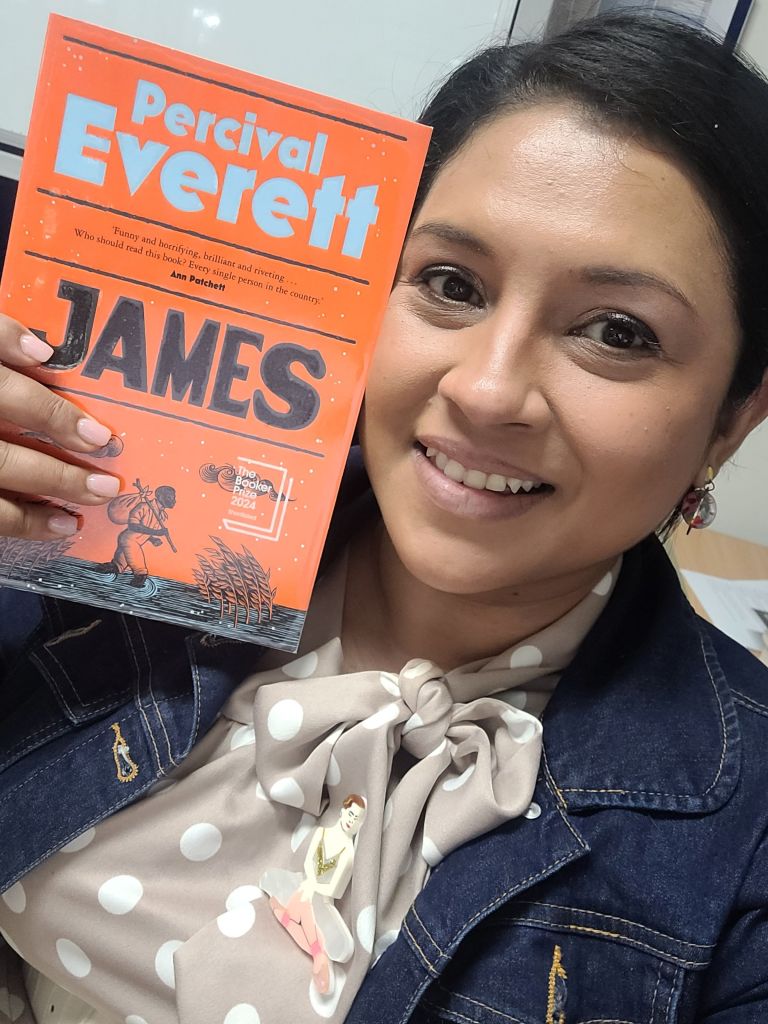
Everett changes that. In James, the enslaved man is literate, philosophical, and quietly radical. He reads Locke and Voltaire, not as a literary flourish, but as a declaration of intellectual agency. He is articulate, intelligent and his perspicuity makes him a clear hero. James performs the dialect expected of him not because he lacks education, but because survival demands performance. Exposing his intelligence would have only led to his downfall. This inversion is powerful—it exposes the performative nature of race in literature and life and reminds us how often people of colour have been forced to speak in ways that comfort white audiences.
The novel also speaks to a broader truth: for much of literary history, the voices of people of colour have been excluded from the mainstream. The canon has long been shaped by a narrow lens—English-speaking, white, and often male. Even today, the global literature market remains dominated by English-language publishing and a WASP-centric worldview, making it difficult for diverse stories to break through. James stands out not only for its literary brilliance but for its bold challenge to that status quo. This is especially resonant in the current socio-political climate in the United States, where history itself is being rewritten based on political ideologies. School curricula are being reshaped, books banned, and narratives sanitised. In this context, Everett’s decision to retell Huckleberry Finn from James’s perspective is not just literary—it’s political.
It’s a reminder that storytelling is power, and that reclaiming voice is an act of resistance.
Everett’s prose is sharp, lyrical, and laced with irony. He doesn’t just give James a voice—he gives him agency, complexity, and dignity. James is not a corrective to Twain’s novel, but a conversation with it. It invites readers to reconsider not just the stories we read, but the structures that decide which stories are told, and which are silenced.
 Learning through the Library