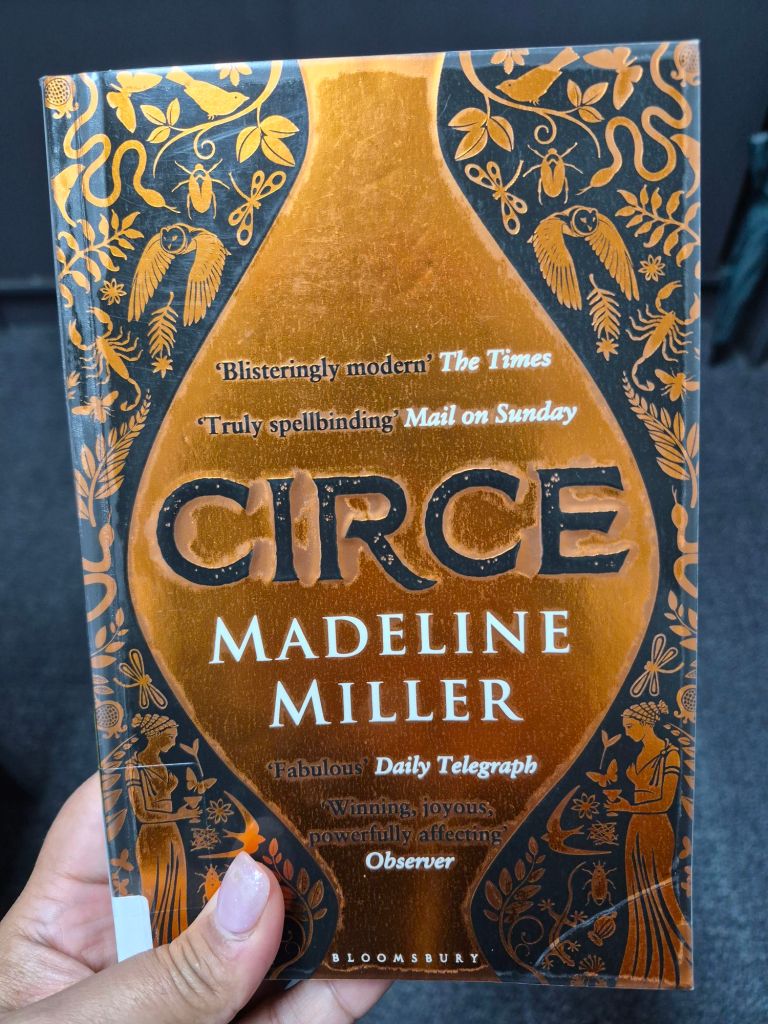
I first read Circe when it was released back in 2019, but I am revisiting it years later, armed with a deepening obsession with Greek mythology (and after tumbling headlong down countless mythological rabbit holes). I found myself reading it through an entirely different lens. Previously, the novel read like a tragedy, a demigod, exiled for an unasked-for superpower and unrequited love, now reads as a meditation on agency, power and survival. Miller asks readers to reconsider whose stories have been told, whose voices have been silenced, and what happens when a woman refuses to accept the narrative written for her by others.
Of the many mythology retellings currently flooding bookshelves, Circe remains one of the standouts. It is, at its heart, one of the finest stories of a woman reclaiming her power and redefining her place in the world. Circe’s triumph is not found in conquest or revenge, but in her refusal to be constrained by the expectations of gods, men or fate itself. The novel’s enduring appeal lies in this journey of self-determination and redemption. Beautifully written, fiercely intelligent and deeply human, Circe is more than a story about gods and monsters. It is a story about finding one’s voice, claiming one’s identity and forging a future on one’s own terms.
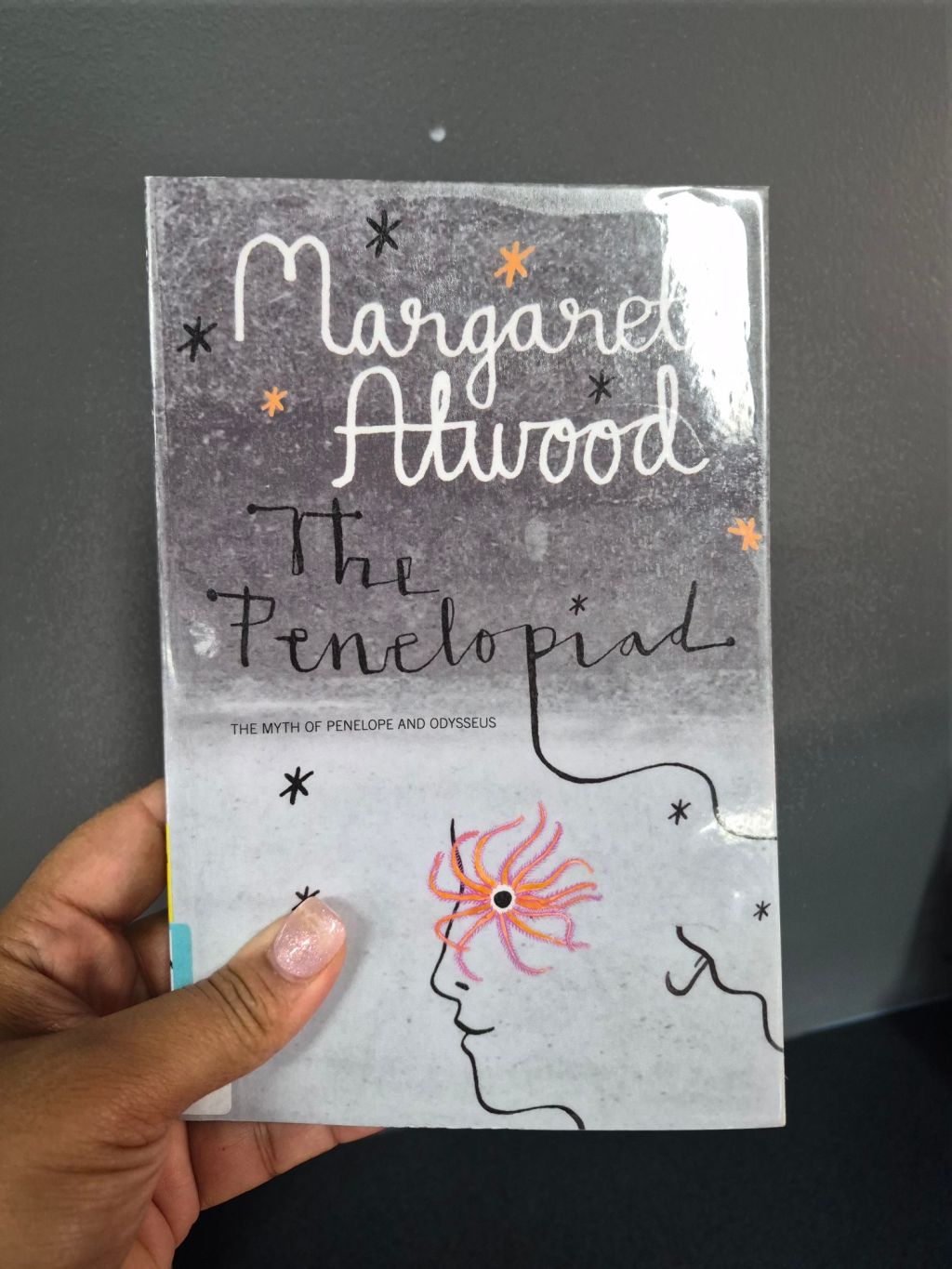
Still firmly entrenched in my Greek mythology phase, Margaret Atwood’s The Penelopiad stands out among the many retellings I have read. This brilliant novella blends prose and poetry to create a story that is as provocative as it is entertaining, reminding readers how much of history and mythology exists in the gaps, silences and omissions. Penelope has long been cast as mother, matron and martyr, defined by her loyalty to Odysseus, yet Atwood challenges readers to look beyond the familiar narrative and question who benefits when women’s stories are reduced to waiting and suffering.
What makes this retelling so powerful is its relevance to modern womanhood. Atwood draws clear parallels between Penelope’s task of keeping the home fires burning while her husband is away and the reality faced by many women today, who are expected to manage households, build careers, carry emotional labour and often navigate the consequences of male choices. The irony is impossible to miss: while Odysseus earns glory through war and adventure, Penelope shoulders the responsibility of holding an entire kingdom together. Atwood’s prose continually invites readers to connect these ancient expectations with contemporary conversations about gender, responsibility and loneliness.
Equally compelling is Atwood’s treatment of the twelve maidservants executed by Odysseus upon his return. Traditionally little more than a footnote in The Odyssey, Atwood gives these young women a voice and exposes the brutality of their deaths. They are condemned not because of proven guilt, but because of rumour, perception and the narratives imposed upon them by others. Here, Atwood’s recurring theme rings loudest: women so often pay the price for the actions, decisions and failings of men. Their chorus haunts the novella and transforms what might have been a clever retelling into something far more confronting and memorable.
There is also a wry humour running through the novel. Modern readers cannot help but note that if a husband disappeared for twenty years today, most legal systems would simply declare him dead rather than celebrate his prolonged absence as heroic adventure. Yet beneath the humour lies a serious examination of whose stories survive, whose voices are heard and who bears the burden when legends are created.
Intelligent, sharp and deeply thought-provoking, The Penelopiad is one of the finest Greek mythology retellings I have encountered. Atwood demonstrates that the most interesting stories are often found not in the heroic deeds themselves, but in the people left behind to live with their consequences. Recommended for older teens and adults who enjoy mythology, feminist literature and stories that challenge long-held assumptions.
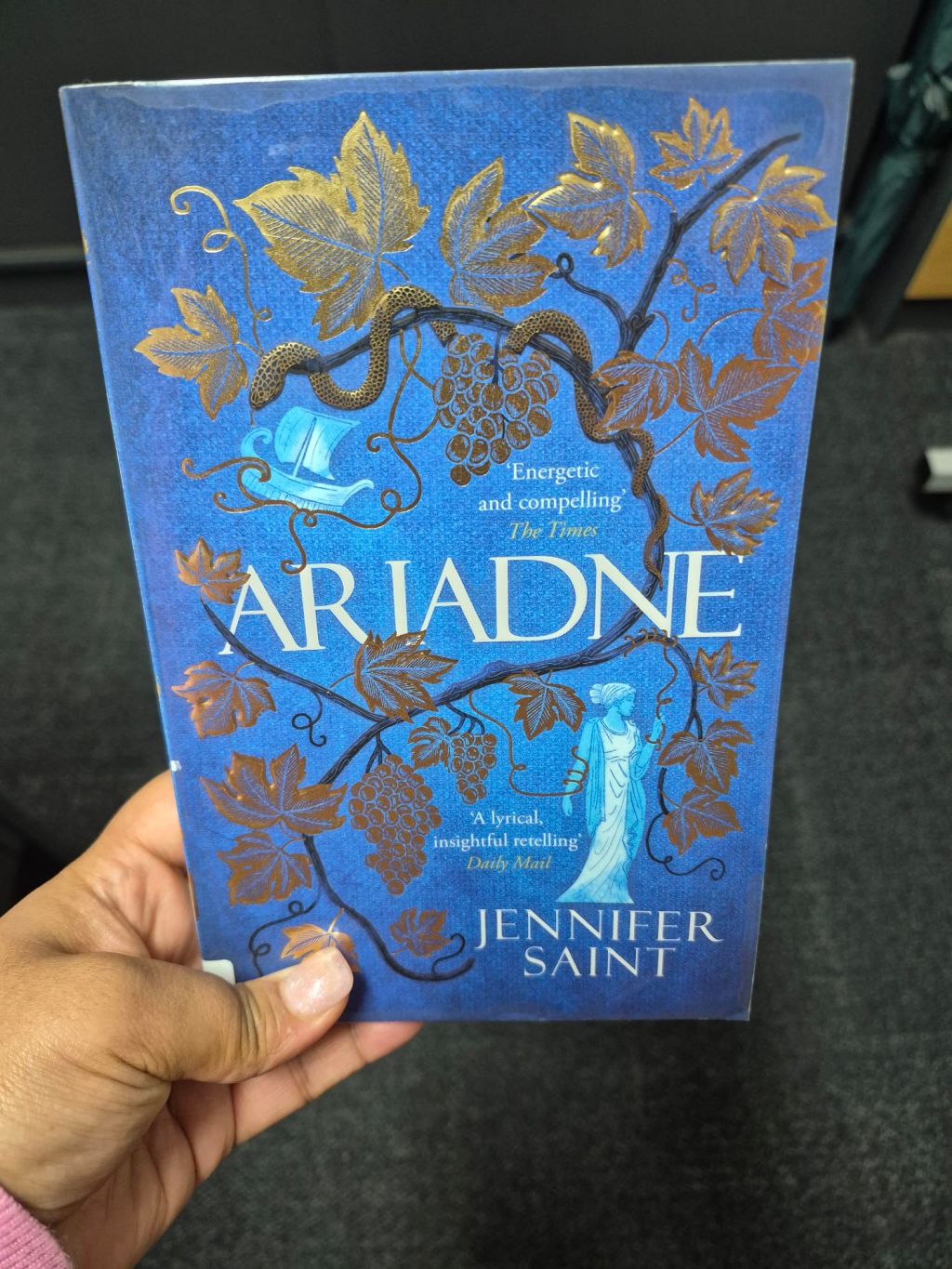
Ariadne continues my Greek mythology phase, but unfortunately it never quite reaches the heights of Clytemnestra. While Ariadne lends her name to the title, she often feels more like a passenger in the story, with her sister Phaedra emerging as the far more compelling and complex character. At times, it feels as though the novel should have been named after Phaedra instead.
That said, the book offers an engaging retelling of the myths surrounding Theseus and the Minotaur. Reading it transported me back to my own visit to Knossos in Crete, wandering through the ruins of the Minoan palace with its maze-like rooms and winding passageways. Standing there years ago, it was easy to imagine how stories of a labyrinth and a monster at its heart might have emerged.
Whilst mythology offers various explanations for why Theseus abandoned Ariadne on Naxos, Jennifer Saint absolutely captures the hero’s arrogance. One can almost see it radiating from the page. This is a man who seems convinced of his own greatness, perhaps viewing himself as the human successor to Hercules, destined for glory and admiration. Saint’s portrayal strips away much of the traditional heroic sheen and reveals a figure whose pride and self-importance often overshadow the people around him.
More importantly, Ariadne continues a theme that Saint explores throughout her mythological retellings: women paying the price for men’s actions. Again and again, Greek mythology tells stories in which male pride, ambition and hubris set tragedy in motion, while women bear the consequences. Just as Medusa is transformed into a Gorgon by Artemis after Poseidon’s violation… or as Scylla monstrous fate because of Glaucus, Ariadne ultimately becomes collateral damage in Dionysus’s war against Argos. Throughout the novel, Saint reminds readers that the destruction wrought by men rarely falls upon men alone. Instead, it is often women who suffer, endure and die because of decisions they never made.
Greek mythology is full of stories where male pride is paid for in female blood. Just ask Hera. Time and again she is forced to bear the consequences of Zeus’s infidelities, directing her wrath not at the god responsible but at the mortal women and children caught in his wake. Saint highlights this recurring pattern across the myths, encouraging readers to look beyond the celebrated deeds of heroes and gods to the women left to clean up the devastation they create.
While Ariadne did not captivate me as completely as Clytemnestra, it remains an enjoyable read for anyone interested in Greek mythology and fresh perspectives on familiar legends. My main takeaway is that Ariadne herself never feels quite as fully realised as her sister Phaedra. However, I will say that Saint succeeds in shining a light on the women who stand in the shadows of heroes and gods, reminding us that their stories deserve to be heard as well.
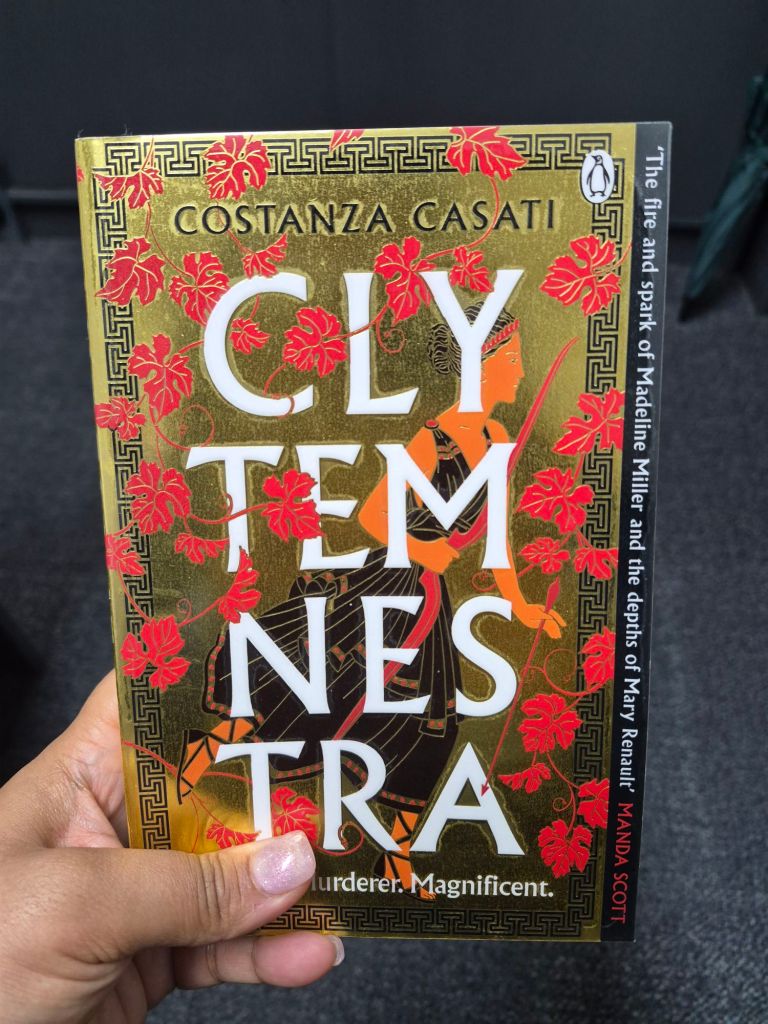
Clytemnestra is a brilliant retelling of Greek mythology that reclaims one of the most maligned women in Homer’s world. History remembers Clytemnestra as the murderous wife who killed Agamemnon on his return from Troy, yet that version conveniently overlooks the sacrifice of their daughter, Iphigenia, and the grief and rage that followed. Costanza Casati transforms a supposedly minor character into a compelling, complex heroine who must fight for power, agency, and survival in a society shaped and controlled by men. Richly written and emotionally charged, this is a story of loss, revenge, resilience, and the cost of being a woman who refuses to remain silent.
While not a book for children, Clytemnestra is highly recommended for older teens and adults interested in mythology, historical fiction, and strong female protagonists. The novel contains graphic depictions of violence, both domestic and political, reflecting the brutal realities of the ancient world. Rather than glorifying this violence, Casati uses it to explore the devastating consequences of power, ambition, and vengeance. One of the finest mythological retellings I have read.
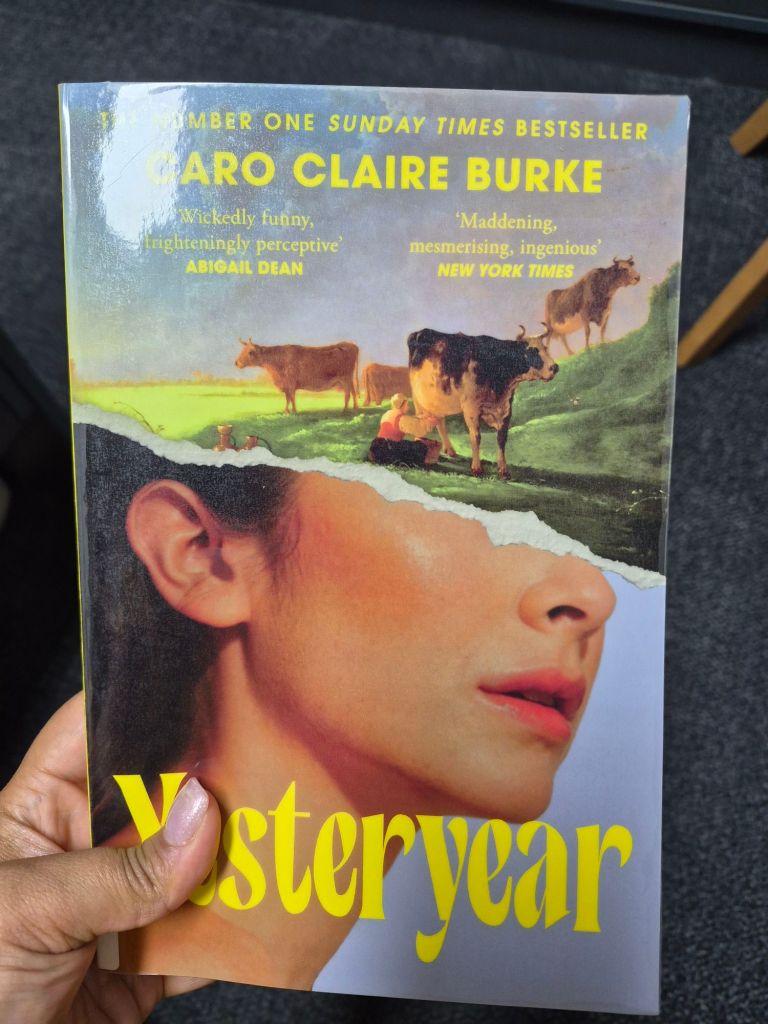
Yesteryear made me ragey, and I mean that as a compliment.
At the centre of the novel is Nattie, a self-proclaimed “trad wife” influencer whose social media presence is built on an idyllic vision of domesticity. Online, she presents herself as a woman living naturally on her organic farm, homeschooling her children, cooking wholesome meals, and embracing traditional family values. She sells custom homewares, champions organic living, and suggests that modern society has lost its way. Nattie’s social media posts glorify the past, or as she calls it, yesteryear.
The reality is rather different. Nattie lives on a farm owned not by her, but by her trust-fund husband. The property is tied up entirely in his name through his wealthy father. Her carefully curated social media image conceals pesticides stored in the shed and kitchenware that falls well short of the wholesome aesthetic she promotes. She romanticises a lifestyle that exists largely because of privilege while dismissing anyone, especially the angry women, as she calls those that choose to live differently. Burke deftly skewers the contradictions at the heart of influencer culture. Nattie profits from selling an image rather than a reality, and the novel exposes how easily social media can transform performance into perceived authenticity.
However, the plot suddenly twists when Nattie seems to be suddenly transported back into the real yesteryear pioneer times. Suddenly, the traditional lifestyle she has spent years glamourising ceases to be content and becomes reality. There are no labour-saving devices, no social media sponsorships, and no carefully staged photographs. The work is relentless, exhausting, and often dangerous. More importantly, Nattie is faced with what “traditional values” actually meant for many pioneer women. She does not own property. She cannot vote. She has little legal protection if her husband becomes violent. Her reproductive choices are not her own. The freedoms and protections she has enjoyed in the modern world, while simultaneously criticising why women even need them, disappear overnight for her. There is another plot twist… but I will leave it for you to find. I had to re-read the last few chapters three times to fully absorb it!!
What makes Burke’s Yesteryear so effective is that it refuses to offer an easy caricature. Instead, it asks readers to confront the gulf between romanticised nostalgia and historical reality. The novel challenges the fantasy promoted by some tradwife influencers: that a return to an earlier era would somehow solve modern problems. Burke reminds us that while the past may appear charming through a filtered Instagram reel, it was often profoundly unequal, particularly for women.
Infuriating and surprisingly thought-provoking, Yesteryear is both an entertaining time-slip novel and a sharp critique of influencer culture. It left me frustrated with its protagonist, the trad wife movement, influencers in general, but also wrathful that so many women today lack equal rights. This book clearly captures the delusion that so many right wing people advocate fo4. Yesteryear is a clever and timely reminder that nostalgia is often easiest to sell to people who have never had to live it.
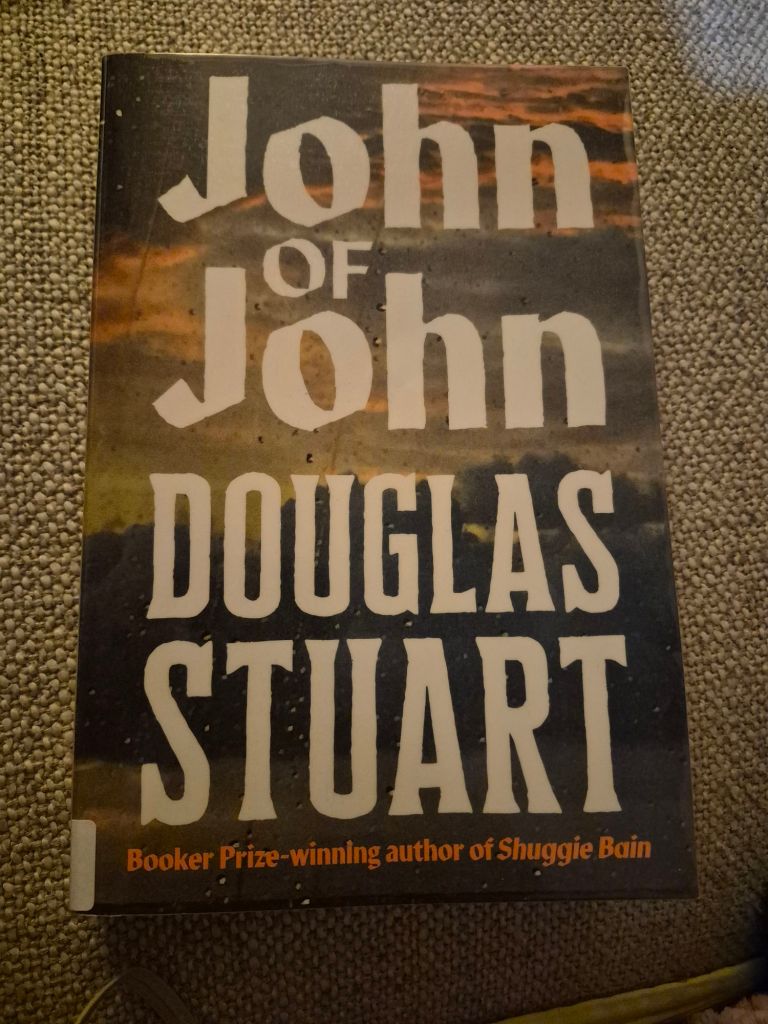
Douglas Stuart’s John of John is not an easy novel to love, but it is impossible to ignore. Set amid the wind-scoured isolation of the Outer Hebrides, Stuart delivers a bleak and unflinching portrait of a father and son trapped not only by poverty and place, but by faith, shame and silence. The novel follows John-Calum MacLeod, known as Cal, an unemployed university graduate summoned home by his father to farewell his dying grandmother. Cal returns reluctantly to an island he had hoped to escape, only to find that the tensions, resentments and secrets that drove him away remain as potent as ever.
At its heart, John of John is a story about two men hiding the same truth from one another. Cal conceals his sexuality from his deeply religious father, John, while John harbours his own forbidden desires beneath the mantle of Presbyterian respectability. Stuart builds much of the novel’s emotional tension from this cruel irony: father and son are separated by lies and bitterness while sharing the very secret that might have allowed them to understand each other. Their relationship is fraught, often hostile, shaped by years of disappointment, judgement and emotional repression.
The novel’s portrayal of Free Presbyterian life is particularly powerful. Stuart captures a culture where duty outweighs happiness and where suffering appears almost sanctified. Prayer, hard work and endurance are treated as virtues, while joy feels suspect, even sinful. There is a palpable sense that pleasure is an affront to God, something to be distrusted rather than embraced. The result is a community weighed down by stoicism and self-denial, where affection is rationed and emotional honesty seems impossible. Stuart never caricatures these beliefs, but he shows with painful clarity the damage they inflict on those who cannot conform.
Just as oppressive as faith is the landscape itself. The Hebrides emerge almost as another character in the novel, magnificent yet desolate. Stuart’s descriptions of the islands evoke a place battered by wind, rain and isolation. The stark beauty of the landscape mirrors the emotional lives of its inhabitants: harsh, lonely and resistant to change. The loneliness that permeates the novel is not simply personal but geographical, a product of a community cut off from the wider world and fiercely protective of its traditions.
One of the novel’s quieter strengths lies in its depiction of John’s traditional tweed weaving which sustains many island families and has become a symbol of continuity and cultural survival. Stuart clearly admires the skill and craftsmanship required, yet he is equally aware of its limitations. Weaving keeps traditions alive but offers little economic security. Throughout the novel, poverty hangs over every household. Employment is scarce, opportunities limited, and resignation often replaces ambition. The craft may preserve heritage, but it cannot spare its practitioners from hardship.
This is ultimately a novel saturated with sadness. Unhappiness seems woven into the fabric of daily life, passed down through generations alongside faith and tradition. Yet Stuart’s achievement lies in finding humanity within that bleakness. His characters long for connection even when they lack the language to express it. Beneath the bitterness between John and Cal is a shared yearning to be known and accepted… and dare I say it… a yearning to be loved.
John of John is a sombre, often heartbreaking novel about the cost of living behind masks. It is a story of fathers and sons, faith and desire, and a community where suffering is valued more highly than happiness. Stuart’s vision of the Hebrides is beautiful but unforgiving, and his characters inhabit a world where love is constantly constrained by duty, religion and fear. The result is a powerful and deeply affecting novel that lingers long after the final page.
Women, Memory and Exile: A School Library Reflection
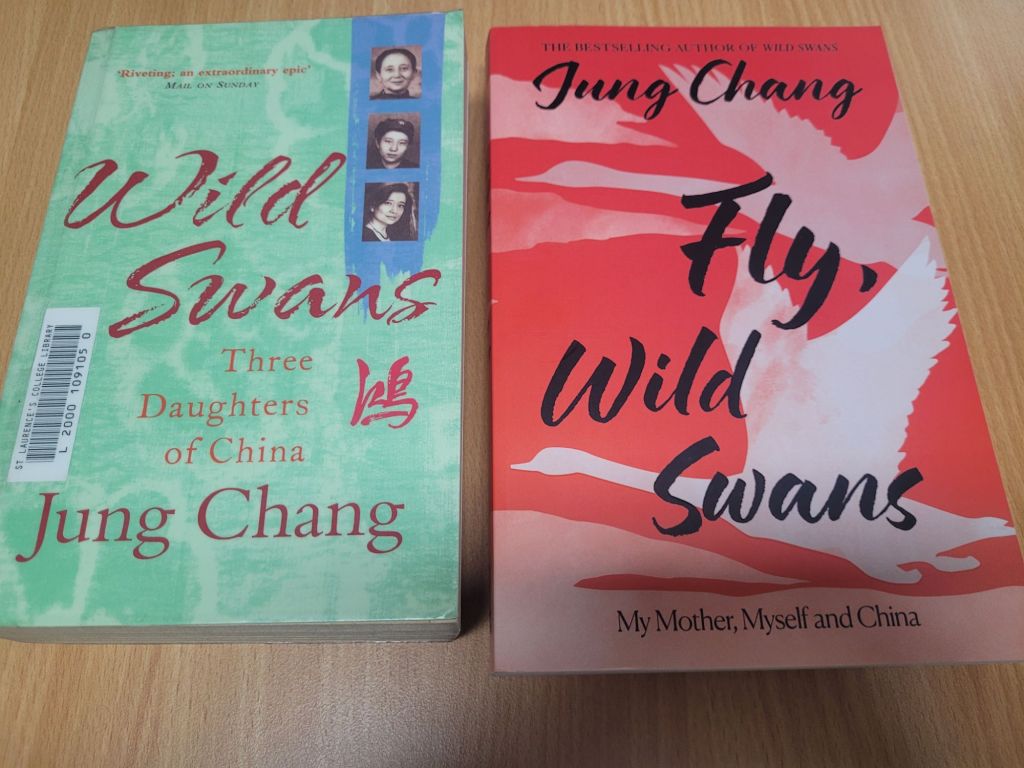
Adding Fly Wild Swans to our school library felt like a natural continuation of a legacy. Wild Swans has long stood as a canonical piece of literature, a book that captures the struggles of three generations of women against the backdrop of China’s political upheavals. In her second publication Fly Wild Swans, Jung Chang turns her gaze inward, reflecting on the cost of telling that story and the way truth can estrange a writer from her homeland. It is a pensive work that reminds us how women across centuries have shouldered familial and societal expectations, carrying memory and resilience even when nations would rather forget.
Jung Chang and her canons of literature
For students, these books are more than history. They are lessons in courage, in the power of memory and in the resilience of women who endured both familial duty and political oppression. Wild Swans explores the tension between tradition and rapid government‑driven progress. What was presented as modernisation often meant the destruction of customs and the breaking of family bonds as the Cultural Revolution tore families apart and demanded loyalty at the expense of tradition. Her story gave voice to three generations of women living through the upheavals of Mao’s China and this new work is written not only of her mother and her homeland, but of the burden of truth itself, and the cost of bearing witness when a nation would rather forget.
Fly Wild Swans reveals the aftermath of telling that truth, showing how a writer can be celebrated abroad yet silenced at home. Jung Chang turns her gaze inward, reflecting on the cost of telling that story and the way truth can estrange a writer from her homeland. Unlike Wild Swans, which focused on her mother and grandmother, this new work is more personal. It explores how writing Wild Swans changed her life, both opening doors in the West and closing them in China. There is a deep melancholy in her reflections on being unable to freely return to her birthplace. The success of Wild Swans brought her recognition abroad but estrangement at home. This tension between belonging and exclusion mirrors the broader story of women in history, who have often been celebrated for their endurance yet denied the freedom to define themselves.
I chose to buy Fly Wild Swans for my school library because it is a book that students should encounter, not only for its historical insight but also for its profound exploration of resilience, identity and the role of women in shaping and surviving history. Adding Fly Wild Swans to our collection ensures that the conversation continues, allowing readers to see how the legacy of truth‑telling reverberates across generations.
By placing both works on our shelves, we invite students to consider how politics, family and identity intersect, and how women across centuries have borne the burden of expectation while still finding ways to endure. These books remind us that literature is not static. It evolves, it questions and it carries forward the weight of generations.
Richard Osman’s fifth novel in the Thursday Murder Club series, The Impossible Fortune, kicks off with a wedding—Joyce’s daughter Joanna is finally getting married. But the celebration takes a sharp turn when best man Nick announces that someone is trying to kill him. From that moment, the familiar crew of pensioners is drawn into yet another mystery, this time involving a hidden Bitcoin fortune, a car bombing, and a tangled web of suspects. It is nice to read a novel where the main characters are not in their flush of youth. Gives someone who is quite frankly set in their middle age, some hope for age appropriate literature.
One of the first things that stood out to me was the large print. Compared to other novels I’ve read recently, this one is an absolute breeze to get through. It’s easy on the eyes and makes for a more relaxed reading experience, especially if you’re dipping in and out over a few days. The chapters are also cleverly titled by days of the week, which helps anchor the plot and gives a sense of progression—especially useful given the shifting perspectives between characters.
The emotional tone of the book is a little more poignant than previous instalments. Elizabeth is still reeling from the loss of her husband Stephen, and Osman handles her grief with sensitivity and depth. It adds a layer of introspection to the story without slowing down the pace. Ibrahim continues to be the group’s voice of reason, offering advice to friends and foes alike, including the ever-scheming Connie Johnson, who ironically saves Ron’s bacon eventually.
Joyce remains a delight, and her relationship with Joanna is given more attention here, adding warmth and humour to the narrative. The mystery itself is well-paced, with enough twists to keep you guessing but not so many that it becomes convoluted. Osman’s trademark wit is present throughout, and the characters continue to evolve in ways that feel authentic and earned.
I particularly enjoyed the plot line of Suzi, Jason, and Ron trying to evade the evil machinations of horrid wife beating Danny. The perspective of Kendrick reminded me once again that the biggest victims of domestic violence are children and their lost childhoods. Osman manages rather cleverly to use Kendrick’s internal monologue to reveal his childhood trauma to the reader.
Overall, The Impossible Fortune is a satisfying continuation of the series—accessible, emotionally resonant, and full of charm. It’s not literature by any means but rather a pleasant holiday read as it requires very little cognitive processing. However, it is a story about friendship, ageing, and the thrill of solving a good puzzle, all wrapped up in Osman’s signature style.
Annie Garthwaite’s The King’s Mother is her second book about an incredible woman, and this sequel is a masterful and emotionally resonant portrait of Cecily Neville, a woman whose strength, ambition, and heartbreak shaped the course of English history. Set against the backdrop of the Wars of the Roses, this novel brings to life a matriarch who was far more than the mother of kings; she was a strategist, a survivor, and a power in her own right.
I was first introduced to Cecily in Sharon Penman’s The Sunne in Splendour, where she stood as a dignified and commanding presence amid the chaos of civil war. Garthwaite’s novel deepens that impression, giving Cecily center stage and allowing her voice to ring out with clarity, courage and conviction. As a daughter of the royal House of Neville, cousin to the Kingmaker and wife to highest ranking Lord of York, Cecily was indeed a lady of influence—but she earned her place in history through grit, determination and sacrifice.
Garthwaite’s storytelling is rich and immersive, capturing the political intrigue and emotional toll of a woman who saw her husband, cousin, and sons die in pursuit of their house’s claim to the throne. Cecily’s love for her children is both her greatest strength and her most painful vulnerability. Her devotion to George, Duke of Clarence, is especially poignant, as his betrayal and eventual death (drowning in a butt of malmsey wine, no less) is rendered with tragic inevitability. Garthwaite doesn’t flinch from the irony or the heartbreak, and neither does Cecily.
What sets The King’s Mother apart is its portrayal of female agency in a world dominated by men. Cecily is no passive observer; she is a political operator, a negotiator, and a woman who understands power and how to wield it. Garthwaite’s prose is elegant and sharp, balancing historical detail with emotional depth. The novel doesn’t just recount events—it explores the cost of ambition, the weight of legacy, and the quiet resilience of a woman who endured more than most.
Cecily Neville emerges as a complex and unforgettable figure, proud, calculating, loyal, and deeply human. Garthwaite gives her the voice she deserves, and in doing so, reclaims a vital piece of history too often overshadowed by the men around her.
Cecily is a bold and brilliant reimagining of one of the most overlooked power players of the Wars of the Roses, Cecily Neville, Duchess of York. In this incredible novel, Garthwaite resurrects a woman who was relegated to the margins of history and gave her a voice as commanding and complex as the times she lived through.
Kindle edition
History tells us that Cecily must have been a woman of great character. As the wife of a high ranking noble in the English court and a daughter of the house of Neville, Cecily is not merely a noblewoman, she is a strategist, a political operator, and a survivor. In a time where women were relegated to the distaff and the cradle, Cecily held her own among the peers of England and France. I love how Garthwaite has portrayed Cecily. Her use of language and semantics is unapologetically fierce. Cecily is driven, calculating, and deeply loyal to her family’s cause. She is also flawed. Her love for her sons, her only weakness and ultimately will cost her dearly.
The novel spans decades of turmoil, from the fall of her husband Richard, Duke of York, to the rise and reign of her sons Edward IV and Richard III. Through it all, Cecily remains at the heart of the action, not as a passive observer, but as a woman who shapes events from behind the scenes. Garthwaite’s prose is taut and evocative, capturing both the grandeur of court politics and the intimate griefs of a mother watching her family unravel.
What sets Cecily apart is its refusal to romanticise the brutality and heartbreak of medieval motherhood. The heartstrings are definitely pulled when youthink about the number of pregnancy losses, stillbirths and infant losses she experienced. In a time where the childbed was a path paved to the graveyard; Cecily used it to wield power. This is not a tale of damsels and chivalry—it’s a story of power, survival, and the brutal cost of ambition. Garthwaite’s Cecily is a woman of her time, but also ahead of it: she understands the game, and she plays it better than most men around her.
For readers who first met Cecily in Sharon Penman’s The Sunne in Splendour, Garthwaite’s novel offers a deeper, more personal exploration. It’s a fantastic story about a strong woman who lived through unimaginable loss—husband, cousin, sons—all sacrificed for the Yorkist cause. And while her greatest weakness may have been her love for her children, it’s also what makes her so achingly human.
Cecily is historical fiction at its finest: vivid, uncompromising, and utterly absorbing. Garthwaite doesn’t just resurrect a forgotten duchess—she reclaims her legacy.
No surprises that after I read this one, I had to read the sequel.