
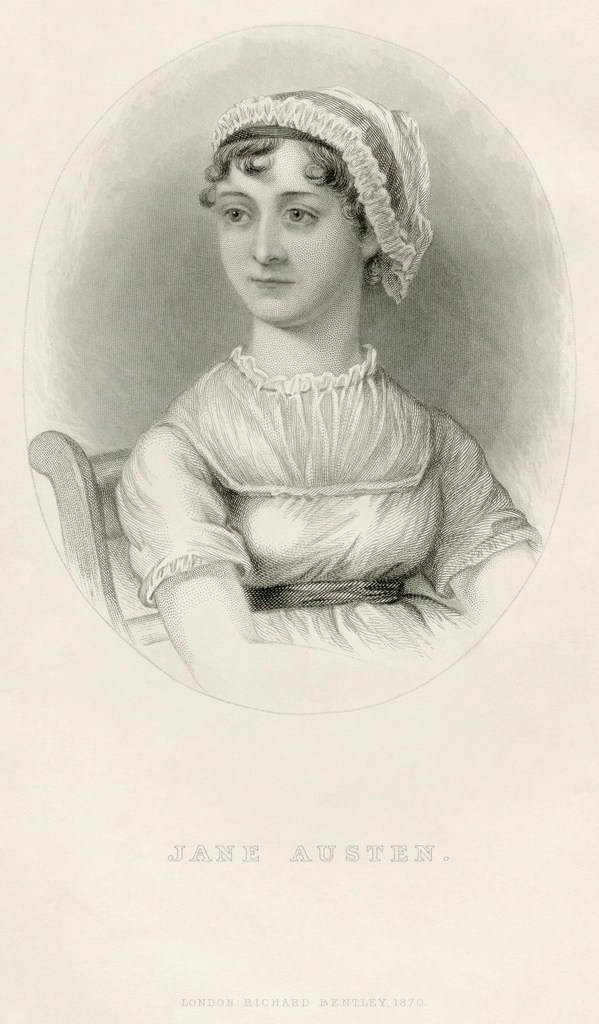
Jane Austen was born on 16 December 1775 in Steventon, Hampshire, into a lively and book loving family. She grew up surrounded by stories, plays and the gentle chaos of a household that valued reading as much as conversation. Her early writing began in childhood and by her early twenties she had drafted the novels that would later become some of the most beloved works in English literature. Although she published anonymously during her lifetime, her six completed novels have secured her place as one of the most influential writers in the world. Austen died in 1817 at the age of forty one, leaving behind a body of work that continues to shape literary culture.
Reflecting on her two hundred and fiftieth birthday invites us to consider the extraordinary reach of her writing. Austen’s novels have had a profound impact on literature, particularly on the development of female authorship. At a time when women were discouraged from publishing and often expected to remain silent in public life, Austen wrote with clarity, wit and a sharp understanding of social structures. Her success opened doors for generations of women who saw in her work a model of intellectual authority and creative independence. As Penguin Books notes, Austen herself was shaped by earlier women writers such as Frances Burney and Charlotte Lennox, which strengthens her place in a long lineage of female creativity.
Austen’s influence is not limited to literary technique. Her novels have offered women across three centuries a way to see themselves reflected in fiction. Readers in the nineteenth century found in her characters a quiet rebellion against restrictive social norms. Women in the twentieth century embraced her work as part of a broader feminist reclamation of female voices in literature. Today, readers around the world continue to find comfort, humour and insight in her stories. Her heroines navigate love, family and society with a blend of vulnerability and strength that feels remarkably contemporary.
Part of Austen’s enduring appeal lies in her ability to capture universal human experiences. Themes of love, pride, misunderstanding and personal growth transcend time and geography. Whether read in Sydney, Seoul or São Paulo, her novels resonate because they speak to the complexities of relationships and the desire for self determination. Modern readers still recognise the awkwardness of a poorly timed remark, the sting of social judgement and the joy of finding connection with someone who truly understands you.
This year, as part of celebrating Austen’s two hundred and fiftieth birthday, I have been sharing my love of her work with my children. My eldest and I set ourselves the gentle challenge of spending the year reading Austen’s novels together, dipping into their many adaptations and enjoying the film versions along the way. It has been a joy to watch them discover the sharp humour of Elizabeth Bennet, the quiet resilience of Anne Elliot and the mischievous charm of Emma Woodhouse. While the BBC’s 1995 Pride and Prejudice remains the gold standard in our household, the vibrant 2006 film Bride and Prejudice has become a close second, its colour and music adding a new dimension to a familiar story.
Among her works, Pride and Prejudice remains the most widely adapted and reimagined. First published in 1813, the novel has inspired countless reinterpretations across literature, film and television. From the beloved 1995 BBC series to the energetic 2006 Bollywood inspired adaptation, from contemporary retellings like Bridget Jones’s Diary to genre bending works such as Pride and Prejudice and Zombies, the story of Elizabeth Bennet and Mr Darcy continues to evolve with each generation.

To celebrate this ongoing creative legacy, here are several modern novels inspired by Austen’s work.
- Longbourn by Jo Baker
- Eligible by Curtis Sittenfeld
- The Austen Project series
- The Mysterious Death of Miss Jane Austen by Lindsay Ashford
- The Jane Austen Contest by Samantha Adkins
- Miss Austen by Gill Hornby
- Recipe for Persuasion by Sonali Dev
- Being Mrs Bennet by Alexa Adams
- The Jane Austen Book Club by Karen Joy Fowler
- The Jane Austen Project by Kathleen A. Flynn
- The Lost Memoirs of Jane Austen by Syrie James
- Jane and the Waterloo Map by Stephanie Barron
- First Impressions by Charlie Lovett
The sheer number of adaptations speaks to the novel’s flexibility and its emotional power. Each version highlights different aspects of the story, whether it is the tension between individual desire and social expectation or the transformative power of self reflection. For many readers and viewers, these adaptations serve as an entry point into Austen’s world, leading them back to the original text and deepening their appreciation for her craft.
As someone with a librarian’s heart, I cannot help but smile at the thought of trying to catalogue every adaptation of Pride and Prejudice. The varied formats alone would fill shelves upon shelves. There are novels, films, television series, graphic novels, web series, audiobooks, retellings set in different eras and even reinterpretations that place the characters in entirely new genres. The challenge of organising these interconnected works is both daunting and delightful. It is the kind of bibliographic puzzle that makes a catalogue shimmer with possibility.
Austen’s two hundred and fiftieth birthday is more than a milestone. It is a reminder of the lasting power of storytelling and the importance of women’s voices in literature. Her novels continue to inspire readers, writers and scholars. They invite us to reflect on our own lives and relationships. They remind us that wit and empathy can coexist, that social critique can be delivered with elegance and that love stories can be both romantic and intellectually rigorous.
As we celebrate her legacy, we honour not only the writer she was but the generations of women who have found courage, companionship and creative spark in her pages. Austen’s work remains a testament to the idea that stories can shape the world and that a quiet voice can echo across centuries.
References
- Adichie, C. N. (2014). We should all be feminists. Fourth Estate.
- Art in Fiction. (n.d.). Novels inspired by Jane Austen. https://www.artinfiction.com/blog/novels-inspired-by-jane-austen
- Austen, J. (1813). Pride and prejudice. T Egerton.
- Baker, J. (2013). Longbourn. Doubleday. Penguin Books UK. (2025, October 22). Jane Austen’s literary influences. https://www.penguin.co.uk/discover/articles/jane-austen-favourite-books-authors-influences
- Sittenfeld, C. (2016). Eligible. Random House.
- Woolf, V. (1925). The common reader. Hogarth Press.
 Learning through the Library