
There is something wonderful about finding yourself in a bookshop in a different part of the world. For me, visiting bookshops is one of the pleasures of travelling, and this summer has been no exception. I am currently in Mumbai, enjoying an extended summer break, and one of the first places I visited, the day after arriving, was a bookshop. It was an experience that left me feeling unexpectedly proud, inspired and a little overwhelmed.
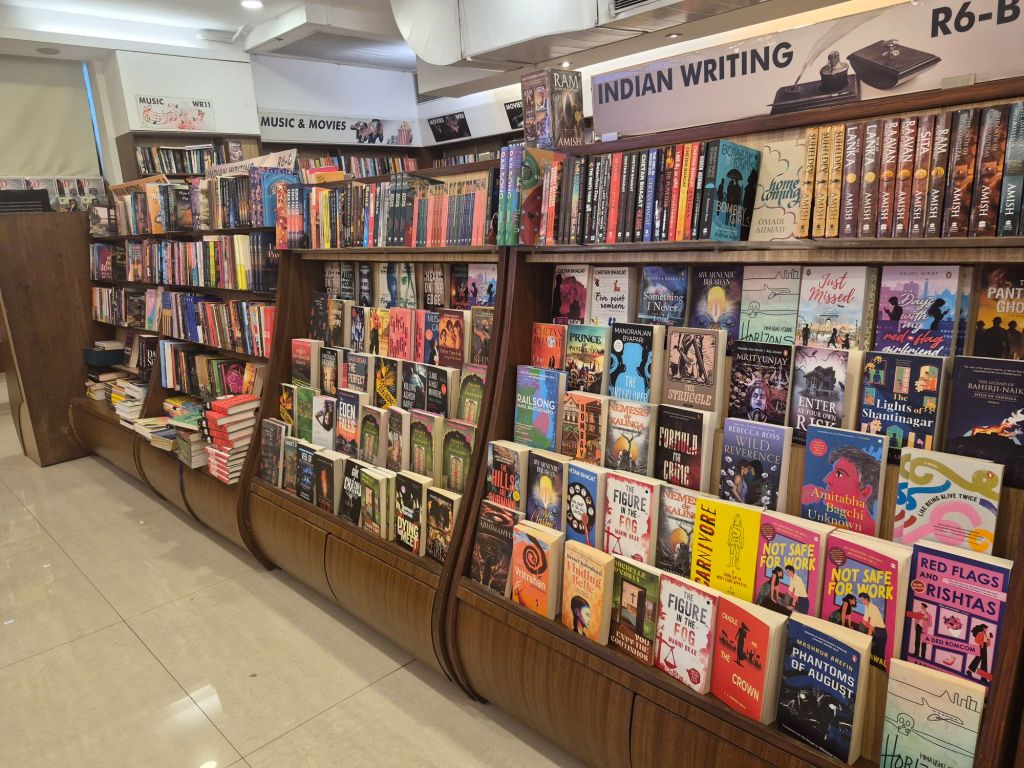
As I wandered through the shelves, I was struck by the extraordinary range of books written by Indian authors. There were novels, historical fiction, contemporary stories, crime thrillers, mythology, romance and literary fiction, alongside an equally impressive selection of international titles. What caught my attention was not simply the number of books, but the diversity of voices, perspectives and styles represented.
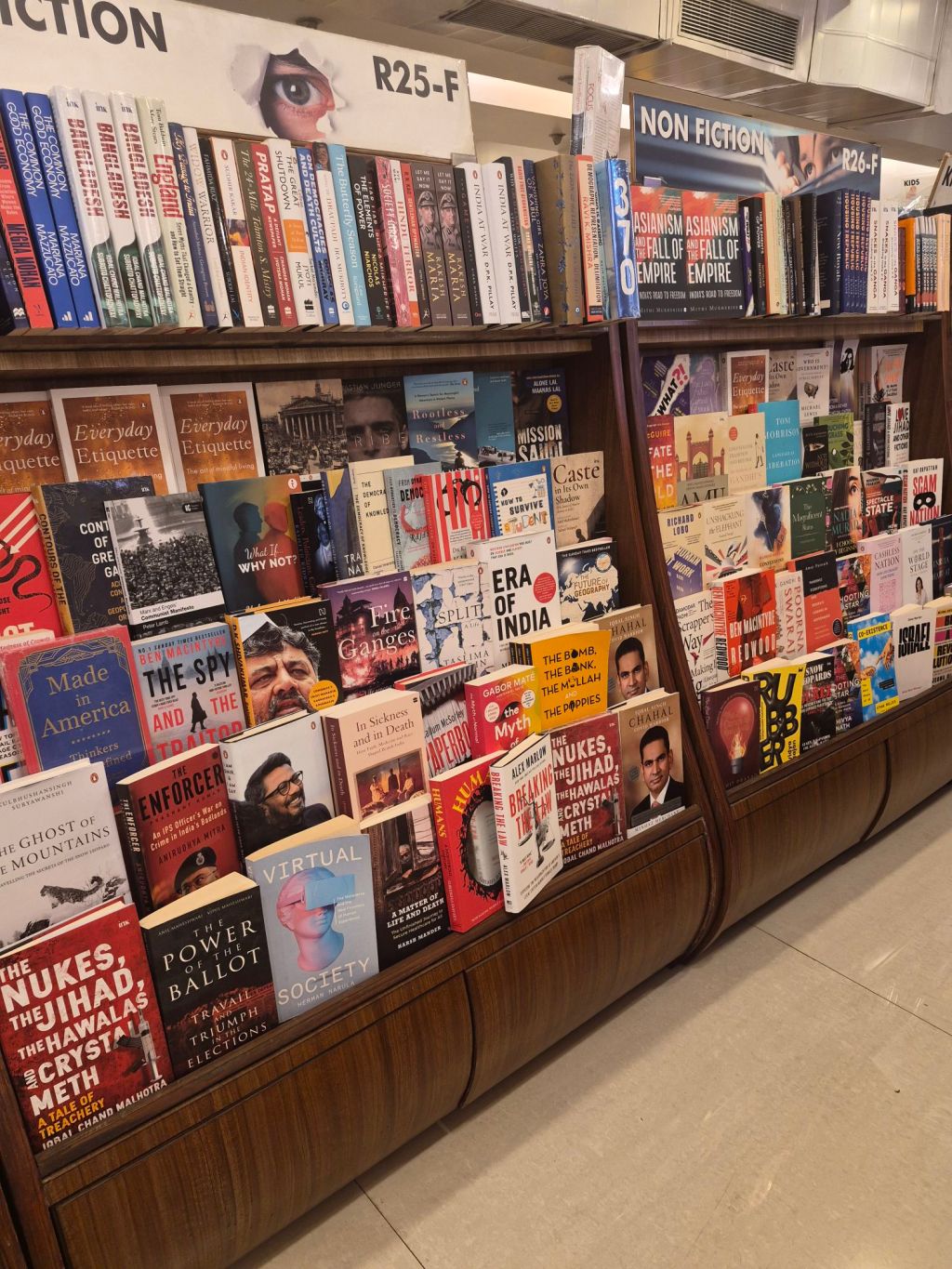
Living in Australia, I rarely encounter such an extensive collection of Indian literature in one place. Indian authors are certainly represented in our bookshops and libraries, but often through a relatively small selection of internationally recognised names. Here, I was surrounded by writers I knew, writers I had heard of and many whose work I had never encountered.
There was a genuine sense of wonder in that discovery. I also felt a sense of pride in seeing so many Indian stories occupying shelf space, not as a small specialist collection, but as part of a vibrant and flourishing literary culture.
India has a rich literary heritage that stretches back thousands of years, encompassing oral storytelling traditions, poetry, religious texts, epics and literature written in numerous languages. However, the development of India’s modern publishing industry, particularly since independence in 1947, has created new opportunities for Indian writers to tell their stories and reach wider audiences.
In the decades following independence, literature became an important means of exploring national identity, cultural change, the legacy of colonialism and the complexities of a newly independent nation. Indian writers increasingly examined the tensions between tradition and modernity, the experiences of ordinary people and the diversity of a country shaped by many languages, religions and cultural traditions. Over time, Indian publishing expanded beyond established literary fiction and academic writing. The growth of regional-language publishing, commercial fiction, children’s literature and new publishing models has helped create a more varied literary landscape.
Today, that growth is particularly striking. According to the India Book Market Report 2026–30, discussed in Publishing Perspectives, India is now the world’s third-largest publishing market, behind the United States and China. The report projects that the Indian book market could reach US$21 billion by 2030–31. Importantly, growth is occurring across several areas, including trade publishing, children’s literature, Indian-language publishing and digital formats. The range of genres available is also expanding. Shashwat Publication identifies contemporary romance, historical fiction, mythology, crime, fantasy, science fiction and young adult literature among the genres attracting Indian readers. Traditional publishing is now complemented by self-publishing and hybrid models, creating additional opportunities for emerging writers to find an audience.
What I found particularly encouraging was the sense that Indian literature is not confined to stories about India written for an international audience. Indian writers are creating stories for Indian readers, exploring familiar experiences, experimenting with genres and contributing to a literary culture that is both distinctly Indian and increasingly global.
Of course, the history of Indian literature is far more complex than a story of growth since independence. India has always been home to multiple literary traditions, and access to publishing and readership has never been equal across languages or communities. Nevertheless, the range of books I encountered offered a wonderful reminder of how much there is to discover.
This experience also brought me back to something I wrote about last year in my blog post, Beyond the Bookshelf: Why Diverse Stories Belong in Every School Library.

In that post, I reflected on growing up in Australia and rarely encountering characters in books who looked like me or shared my cultural background. I also recalled an earlier visit to Mumbai when seeing an Indian Vogue cover featuring women who reflected my heritage left me with an unexpected sense of recognition and pride.
Walking into this bookshop brought back those same feelings, although this time it was the books themselves that prompted them. Seeing shelves filled with Indian authors, writing across such a wonderful range of genres, reminded me how powerful representation can be, even as an adult.
It also reinforced something I have believed for a long time: diverse literature is not simply about introducing readers to different cultures. It is equally about giving people the opportunity to see their own lives, experiences and identities reflected in the stories available to them.
Last year, I wrote about the importance of ensuring our school library collections reflect the diversity of the communities we serve. This visit reminded me that representation is not just a professional consideration for me as a teacher librarian. It is something I continue to experience personally.
And perhaps that is why those shelves in Mumbai meant so much. I left that bookshop in Mumbai with more than a few titles added to my reading list and a renewed appreciation for the extraordinary diversity of literature available to us. What stayed with me, however, was that initial feeling of pride and wonder, something so deeply satisfying about seeing Indian authors represented across so many genres and styles. That their (and by extension… my) stories are able to occupy the same space alongside those of writers from around the world. It reminded me that literature is at its richest when many voices are heard. Reading widely does not mean abandoning the authors or genres we already love. It means remaining curious, being willing to explore unfamiliar perspectives and recognising that wonderful stories can come from anywhere.
Perhaps that is one of the greatest gifts of reading. Every new voice offers another way of seeing the world, and every unfamiliar story provides an opportunity to understand it a little differently.
And sometimes, all it takes to be reminded of that is an afternoon wandering through a bookshop on the other side of the world.
Sources and Further Reading
- Albanese, A. R. (2026, September 4). New report explores India’s growing publishing market. Publishing Perspectives. https://publishingperspectives.com/2026/09/new-report-explores-indias-growing-publishing-market/
- Shashwat Publication. (2026, April 17). Fiction publishing in India: Genre trends and publishing paths. https://shashwatpublication.com/blog/fiction-publishing-india
- India at 75: Fiction. (2022). Frontline. https://frontline.thehindu.com/books/india-at-75-frontline-50-books-to-read-fiction/article65720028.ece
- Templeton, T. (2025, August 14). Beyond the bookshelf: Why diverse stories belong in every school library. Learning through the Library. https://literacylearningliterature.com/2025/08/14/beyond-the-bookshelf-why-diverse-stories-belong-in-every-school-library/

