Book Week – Making reading fun!

Book week.  

Two simple words.

Two words that can excite little kid hearts, big teacher hearts and terrify parents who have to organise costumes for their kids’s parades. These are also two words that hold little excitement for those teen hearts.  

Why?

Oh please, ask me why? 

Never mind I will just tell you.

It may come as no great surprise to you – but teens don’t read…

Well they do not read as much as they used to and they certainly do not read the variety and depth of texts that their parents and grandparents read. To put it mildly, many teens do not read for recreational purposes.  A modern teen is overwhelmed by the variety of recreational activities they could choose from including the persistent lure of technology and glitzy apps, which as we all know, hold far more appeal than stodgy texts. For a bibliophile like me and an emerging Teacher librarian, this dilemma has coined a phrase known as ‘reluctant readers’ which means people, both adults and children that do not read for pleasure. 

Why does this occur?  We are all aware of how important literacy and reading are in primary school.  Students have readers that come home weekly and library visits as a class. Parents are constantly bombarded to read to their children by advocates from both the health and educational faculties.  Reading is fun! Schools run literacy activities that boost skills as well as point out the pleasure in reading, such as the CBCA book week. Within this week, teachers and other educational providers seek to promote books and the love of reading to children of all ages.  It is thrilling to see little children so excited by costumes and parades. Their faces light up when they hold up their favourite book against their outfit with happy eyes and grins to match. Primary schools across the country go through great lengths to set up parades. Teachers get dressed up in elaborate costumes and there is a general feeling of goodwill and happiness to all.  But when does this joy with reading decline? 

The answer sadly is high school.  

The same attitude for recreational reading does not translate into the latter years of schooling.  High school students are not encouraged to find pleasure in reading. There are multiple reasons for this decline.  Arguably the primary reason is that teenagers are often plagued by compulsory texts that hold little appeal for them.  Texts that have endured generations of disengaged students. I know from my own memory of high school two decades ago, and the apathy that quickly follows William Golding’s “Lord of the Flies”.  But yet the text’s presence in the curriculum continues. Yes, I agree that it has valuable social commentary. But I am sure that there are more engaging texts exist- “Hunger Games” by Suzanne Collins is plausibly a good replacement for Goldings dry and dismal story.  But forcing students to read books that they have no interest in only elicits anger and disgust for the text and its taint spreads to even the activity of reading.  

Douglas (2013) prescribes that an ability to read for pleasure as a teen is an indication of an ability to thrive in social environments. He goes on to explain that children that derive intrinsic pleasure and joy from reading are also the ones who end up being life-long learners.  This could simply be because those that find that inherent motivation to read are also the ones that have that immanent drive to succeed. Or it could be that those, even when cajoled, bribed and begged to read, with no innate motivation, are guided into the habit of reading, which over time could develop into something that brings great joy’ as Marie Kondo is often quoted.   Either way, the importance of reading is no longer just an educational issue but rather a social issue
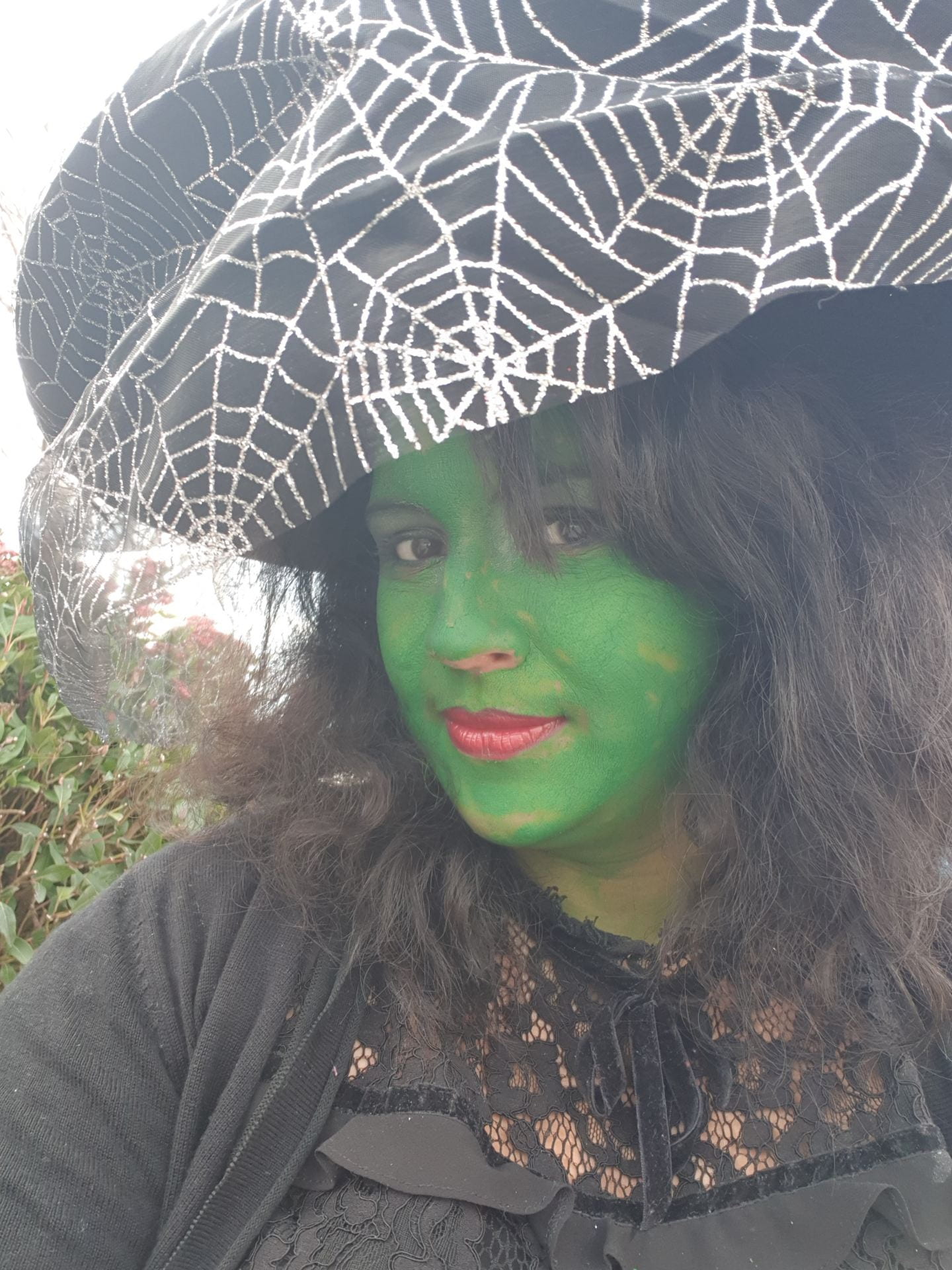
Elphaba, 2018

Douglas (2013) elucidates that the demise of recreational reading in teens is based upon gender, attitude and societal expectations.  I can only tell you how many times I have rolled my eyes backwards when I hear parents and occasionally some teachers excuse reluctant readers with the banal phrase ‘boys will be boys’.  In some circumstances, my eyes have rolled back so hard they have gotten stuck against the back of my head! But I digress!! This gender based preference for reading is societal in origin rather than biological as Wong (2018) points out, “the brain is a unisex organ”.  But first world nations such as Britain, US and UK, the disparity in reading statistics between boys and girls is no longer just a fable, a myth. It is a disturbing statistic that affects half our student body. This inability to read translates to less dexterity in processing words, less sophistication in communication, and a consistent decline in educational outcomes.  On the note of societal disparity – in developing countries, the gender gap is primarily based upon unequal access to education. 

Queen of Hearts – 2018

 The other problem lies in that once a student is considered to be a competent reader in upper primary school, the focus changes from ‘learning to read’ to ‘read to learn’.  Ill informed parents believe that their children can now read and after years of being forced to read “Where is the green sheep” (by Mem Fox), (#mylife!), they dance their way from having to read to their children.  I must include myself with this charge. I too stopped reading to my eldest once she could read and have had only re-started after seeing the research. my Netflix time can wait a little longer. 
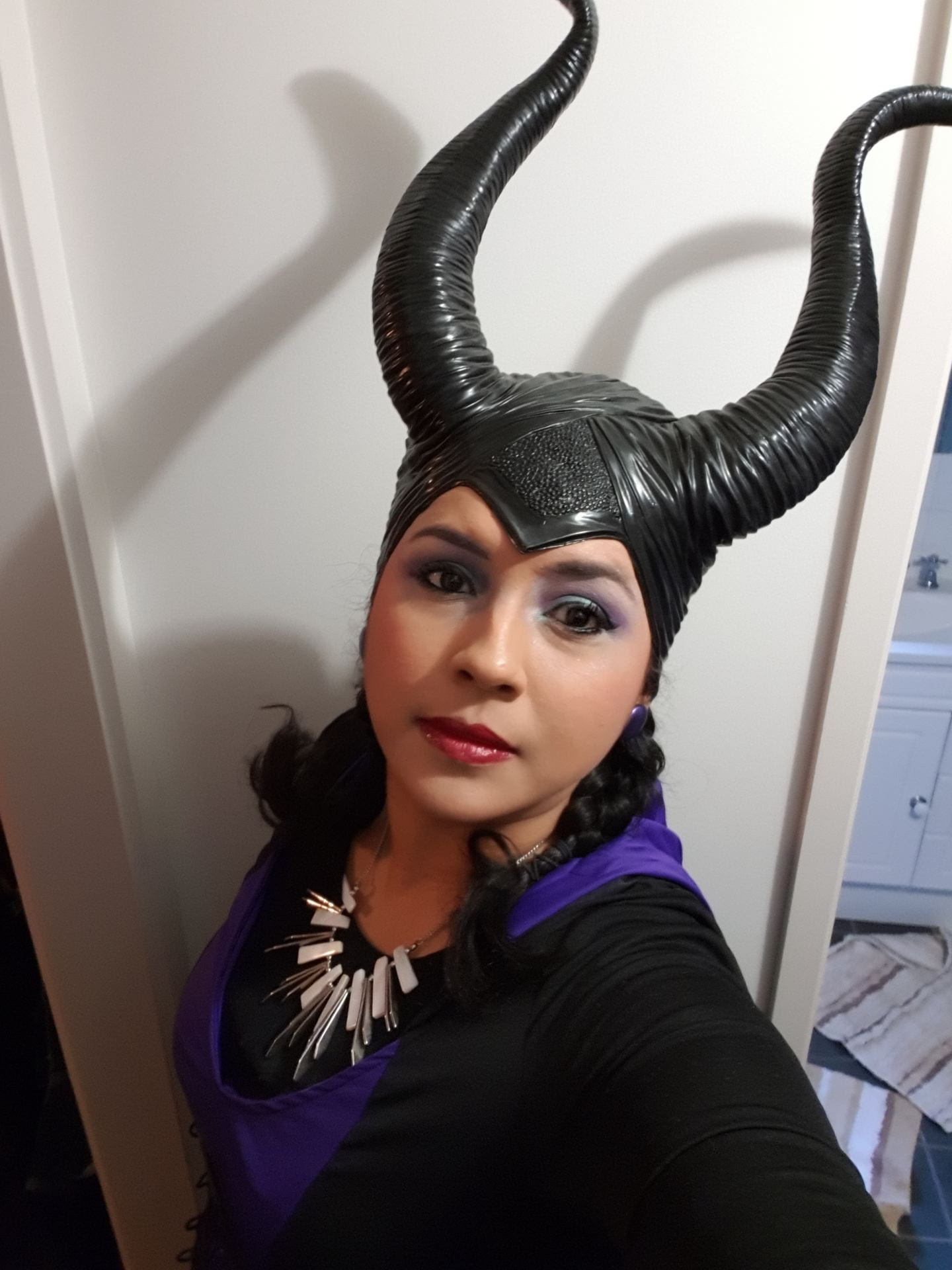
Malificient – 2018


As educators and as teacher librarians, we need to make reading FUN for our high school students.  We need to remind them of when a book character could make you laugh, cry and fall in love. We need to show them how reading books is not just about school work and assignments, but rather reading can be the quickest escape from it all. 


Cruella 2018

I am going all out for book week this year.  I am going to make a complete idjit of myself and show my students that reading is FUN! That reading books you are interested in brings great joy!  Most of all, I am going to show my colleagues that recreational reading is still important for teenagers.  And I am going to show them that whilst looking FABULOUS!


This year’s theme!

Douglas, J. (2013) The importance of instilling a need to read. The Telegraph UK. Retrieved from https://www.telegraph.co.uk/education/educationopinion/10035473/The-importance-of-instilling-a-need-to-read.html


Wong, A. (2018) Boys don’t read enough. The Atlantic- Education. Retrieved from https://www.theatlantic.com/education/archive/2018/09/why-girls-are-better-reading-boys/571429/

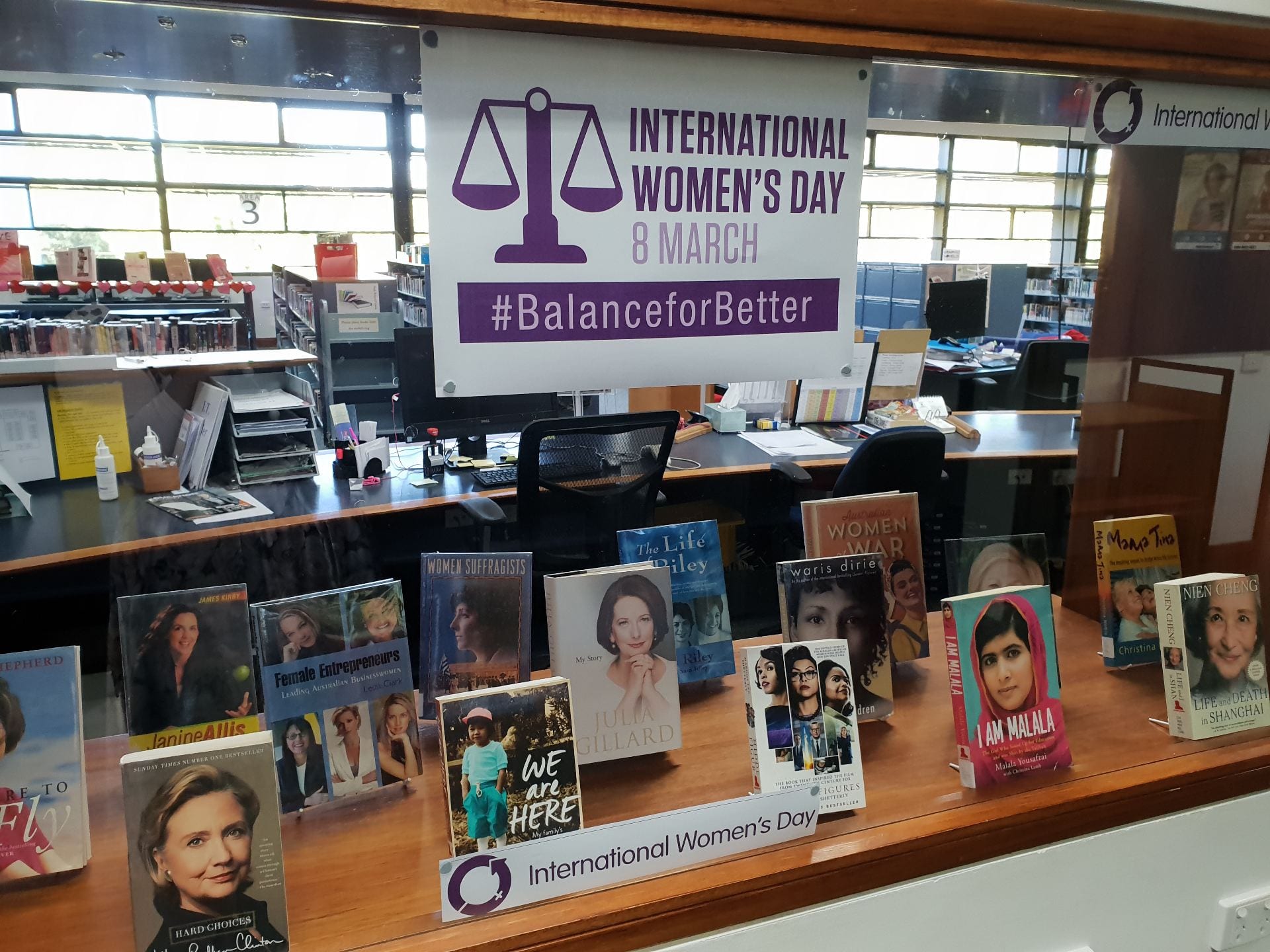
#IWD2019 #Balanceforbetter

#IWD2019

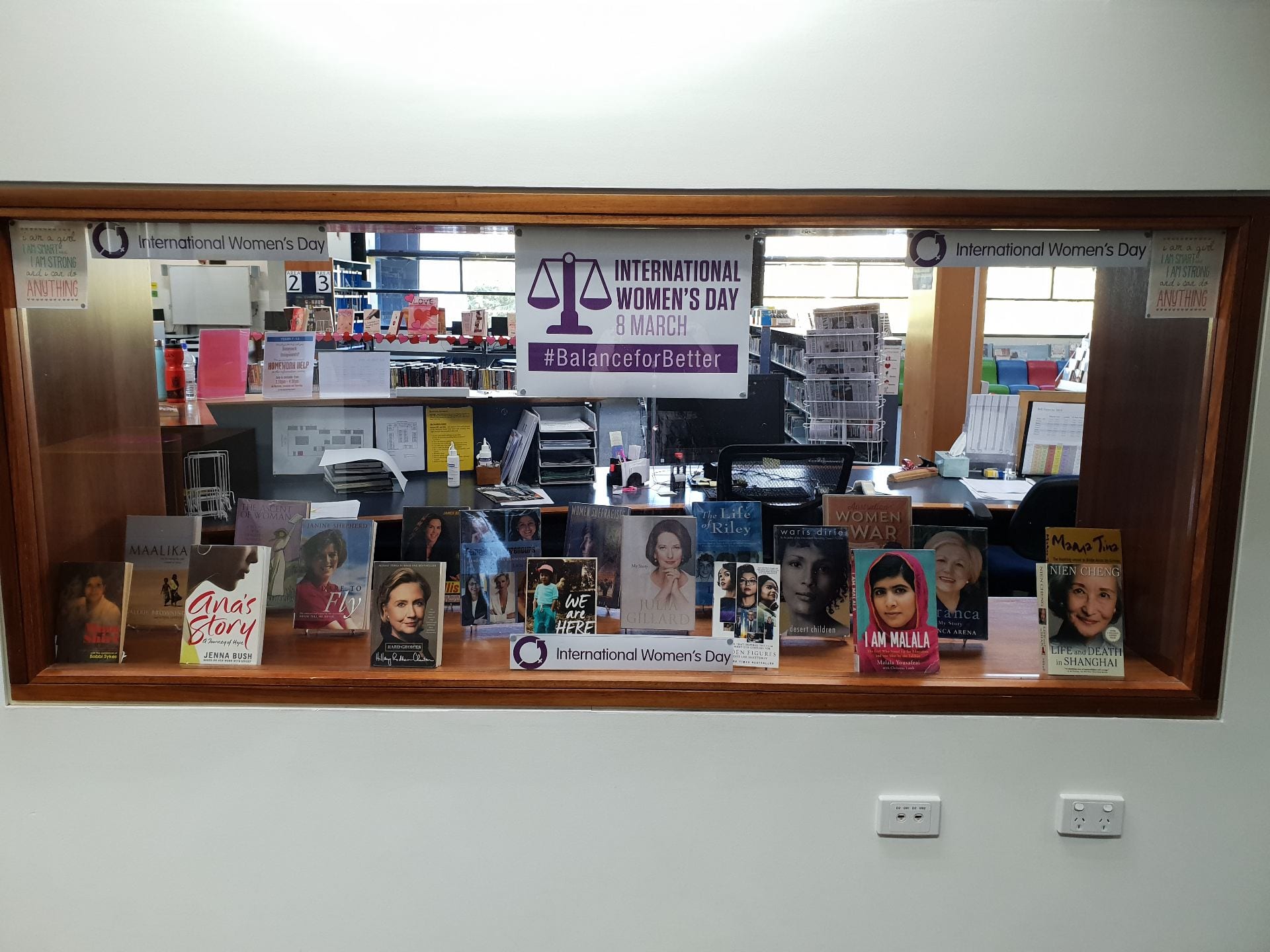
This years theme is #BalanceforBetter, a summon to seek equal rights for both sexes in in all aspects of life.  Notionally, Australia does have significantly better equality among the sexes compared to countries such as Yemen or Saudi Arabia (Haines, G. 2017).  But out of the top twenty countries listed, Australia does not get a mention but oddly enough Rwanda is in the top 5, which one could speculate that both sexes suffer equally in this war torn nation.  Before I digress too much from the reliability of this source, in land down under, we as women are encouraged to hold gainful employment, permitted to vote and drive as well as have access to health care in comparison to Jordan and Pakistan.  All reliable indicators of an equal opportunity. But as the Australian Human Rights Commission image in Figure 1 illustrates, women are still trailing behind in wages and in positions of power. The AHRC (2018) and Haines, G (2017) depict women in Australia at a high risk of personal safety. AIHW (2018) finds that that biggest risk factor for illness, injury and death for Australian women aged between 25-44 is not childbirth or war crimes, but rather just the presence of a partner in their lives.  This fact is horrendous and continues to be a major issue across all Australian states and territories. One only needs to recall the tragedy of Dr Preeti Reddy’s brutal murder in Sydney this week as a frightening reminder of the brutality that can occur behind closed doors ( Gooley G., & Stewart S., 2019).

Figure 1 – Infographic AHRC (2018)

I was musing these thoughts as I was setting up my display for #IWD2019 and one of my regular lunch time visitors interrupted me.  *Rick (name changed) could not understand why I was setting up the book display as “I had it good”. Whilst I was inclined to roll my eyes and tell him to shuffle off, I refrained.  For those that know me, tact and discretion ARE NOT one of my strong suites so this was an unusual occurrence for me. Instead I asked him to help me with the rest of the display and racked my brain with what I was going to say.  

#IWD2019 display

It then occurred to me that out of the roughly ten thousand items we have in our library, I struggled to find biographies of modern women to put in my display.  Granted we have a few books about Elizabeth I, Boadicea, Mary MacKillop, Cleopatra and Florence Nightingale; but our collection of biographies about strong successful MODERN women was limited.  Even though the majority of our regular readers are girls and young women, we seem to have a plethora of books about male sports stars, political leaders, heroes and inventors, but scanty sources solely dedicated to women and their successes.  

I recalled this video I saw a few years ago that illustrated the lack of book choices for our girls that portray strong female protagonists aka rebellious girls.  Then it made me realise that unless our young girls are given the option to imagine being intelligent and tenacious, they will continue to shoebox themselves into the roles of damsels in distress or tire women of great men.  Magras, D (2019) in her article  surmises that strong female characters in books and movies show our young girls that their voices matter and that gender stereotypes can be challenged. It is common knowledge that books stretch the imagination, and it would amazing if books could challenge and inspire our girls.  

Back to Rick* and his statement… Well in true Trish form, I plonked him on my chair, showed him the infographic I had put aside for this blog and then played him the youtube clip.  Once it was over, I asked him what he thought of the video. He hummed and tried to vacillate but eventually settled for “guess you may be right Miss”. I have not have convinced him to become a feminist but maybe I challenged a stereotype in his mind about the need to push for a #BalanceforBetter future.


References

Australian Human Rights Commission (2018) Face the facts: Gender Equality 2018.  Retrived from https://www.humanrights.gov.au/education/face-facts/face-facts-gender-equality-2018   accessed 6/3/19

AIHW (2018) New national statistical report sheds light on family violence.  Family, domestic and sexual violence in Australia, 2018 Retrieved from https://www.aihw.gov.au/news-media/media-releases/2018/february/new-national-statistical-report-sheds-light-on-fam accessed 6/3/19

Gooley, C & Stewart, S., (2019) Sydney dentist Preethi Reddy’s body found in suitcase, ex-boyfriend dies in fiery car crash. ABC News.  Retrieved from https://www.abc.net.au/news/2019-03-06/body-of-sydney-dentist-preethi-reddy-found-in-suitcase/10874212 accessed 6/3/19

Haines G., (2017) Mapped: The best (and worst) countries for gender equality. The Telegraph UK.  Retrieved from  https://www.telegraph.co.uk/travel/maps-and-graphics/mapped-the-best-and-worst-countries-for-gender-equality/ accessed 6/3/19

Magras D., (2019) Feminist AF: Hearing Their Voices: Supporting Female Empowerment in Middle Grade Fiction for Tweens and Teens. School Library. Journal.   Retrieved from http://www.teenlibrariantoolbox.com/2019/03/feminist-af-hearing-their-voices-supporting-female-empowerment-in-middle-grade-fiction-for-tweens-and-teens-a-guest-post-by-author-diane-magras/ accessed 6/3/19

Rebel Girls (2017) The ugly truth about children’s books.  Retrieved from https://www.youtube.com/watch?v=Z1Jbd4-fPOE&t=10s accessed 6/3/19

Saner E., (2017) Books for girls, about girls: the publishers trying to balance the bookshelves. The Guardian. Retrieved from https://www.theguardian.com/books/2017/mar/17/childrens-books-for-girls-publishers-writers-gender-imbalance accessed 6/3/19.

The Academy Award goes to….


The Academy Award goes to….

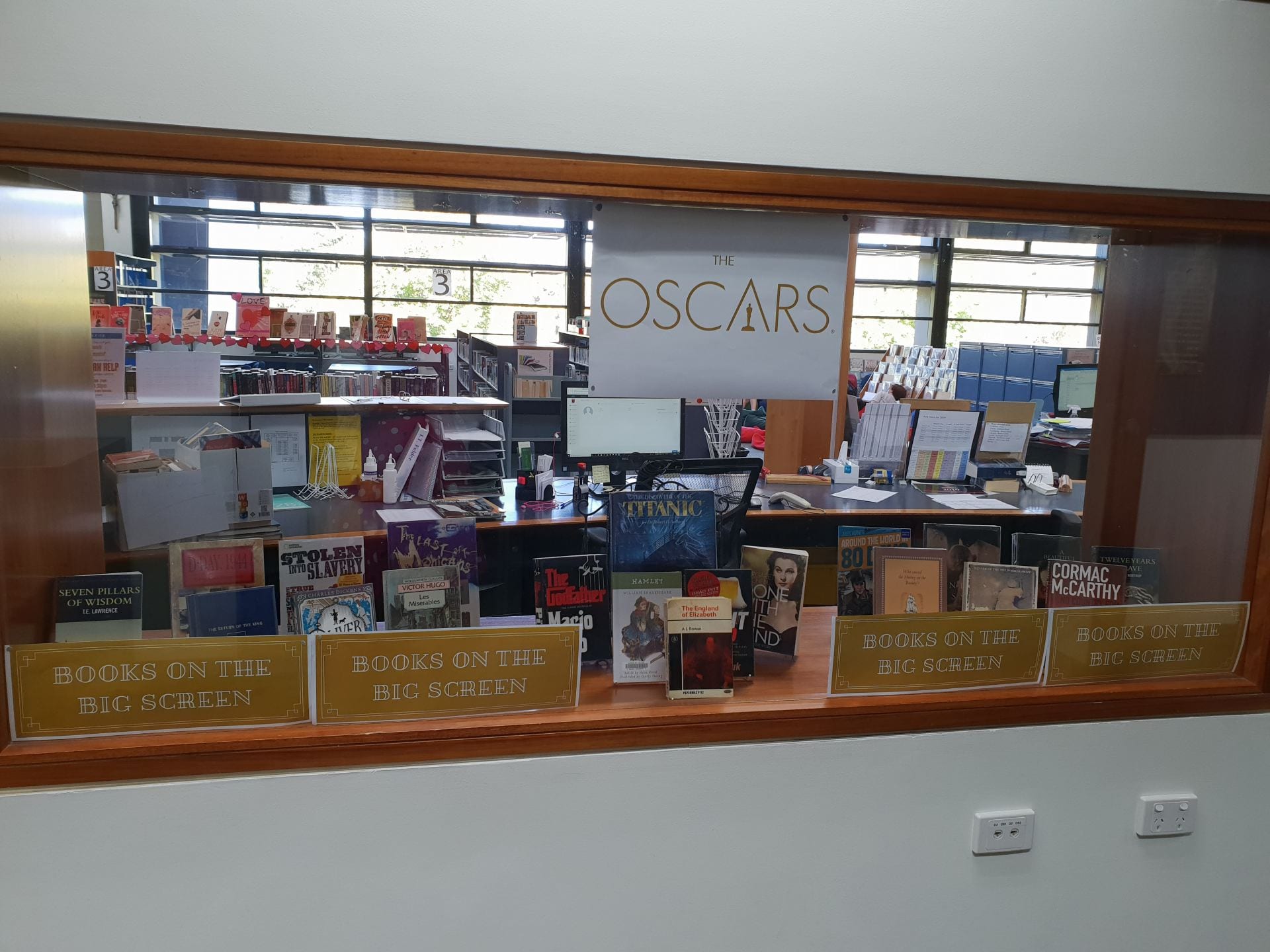
To commemorate the Academy Awards that were held this morning, this display of books illustrating movies that have won an Oscar was assembled.

The reasoning behind this display and other similar ones I assemble is twofold. Firstly, the displays try and mimic the events in the outside world. Secondly, it supports our theme that the library is promoting this year, which is “Read the Movie”.

Unfortunately there are a large number of reluctant readers at my school and this idea was one I floated at my interview last year to increase reading for pleasure which in turn improves literacy and long term educational learning outcomes.

We’ve also noticed that rather than reading a book prior to watching a movie, the current generation of teens will often read a book only if the movie or Netflix has appealed to them.

In keeping with this promotion, we’ve decorated the library with movie posters and regularly show feature films in our seminar room over a week during lunchtimes.

We will have to wait to see the results in a few years.