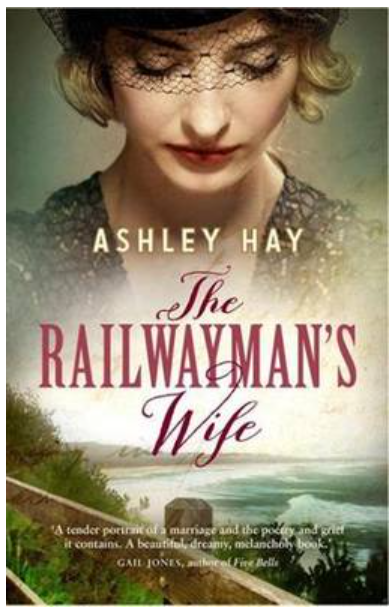
Book Review – The Railway Man’s wife by Ashley Hay

Ashley Hay’s The Railwayman’s Wife is a beautifully written, contemplative novel set in a small Australian coastal town in the aftermath of World War II. The story follows Anikka Lachlan, a librarian grappling with the sudden loss of her husband in a railway accident—a personal tragedy that echoes the broader national grief still hanging over Australia after the war.

Hay uses the quiet town of Thirroul as a microcosm of post-WWII Australia, capturing a society caught between mourning and rebuilding. Characters wrestle with physical and emotional scars, survivor’s guilt, and the search for meaning in a world forever altered by conflict. Through Ana’s growing connection to literature and community, the novel reflects how ordinary people coped with extraordinary loss during this time.

Heart warming, poignant, delicate, elegiac, and steeped in place, The Railwayman’s Wife is not just a story of personal grief, love and hope, but also, a portrait of a country learning to heal—one quiet moment at a time.

Book review – Upside down Inside out by Monica McInerney

In Upside Down Inside Out, Monica McInerney gives us the story of Eva Kennedy—a talented artist who, naturally, is stuck in a dead-end admin job and hiding from her past. When a last-minute trip to Dublin drops into her lap (as life-changing international trips so often do), she jumps at the chance to escape her carefully controlled life in Melbourne.

What follows is a whirlwind of mistaken identity, quirky new friendships, and just the right amount of romantic confusion. McInerney has a knack for blending humor and heart, and while some twists are more predictable than surprising, the charm of the characters—and the lush Irish setting—make it an enjoyable ride.

If you’ve ever wanted to abandon your job, jet off to another country, and magically stumble into self-discovery, this one’s for you.

It’s part escapist fantasy, part emotional reset, with a wink to the idea that maybe, just maybe, the universe knows what it’s doing.

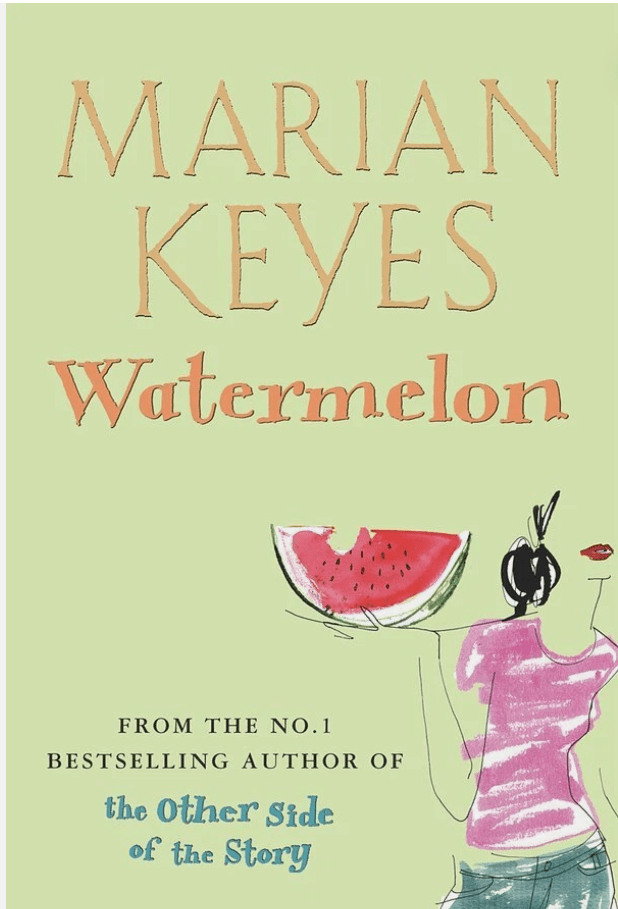
Book review – Watermelon by Marion Keys

 Watermelon was the first book published by Marian Keys. To be honest, it is not my favourite book of hers as it is stilted and very cliche.  

However, it is a lovely, light hearted romance set in Ireland. Very similar to Maeve Binchy, Keyes writes about how a husband leaves his wife after the birth of their baby. The main character Claire does make you want to slap her silly, but she does eventually realise how toxic her marriage was and moves forward in her life.  

The book is predictable and occasionally nauseating but I did like how it highlights that women are gaslit in relationships and often around childbirth and motherhood.

For those interested – Last Chance Saloon is my favourite #mariankeyes novel.

Reading for Meaning: Strategies to Enhance Literacy

The use of complex texts in education is crucial, as relying solely on traditional textbooks can hinder diverse learners due to varying literacy levels. Implementing text sets alongside explicitly taught reading strategies fosters better comprehension and learning outcomes by providing multiple access points for students to engage with the material effectively.

Reading between the lines – Supporting literacy text sets and explicit instruction.

The use of complex texts for learning is a well-established pedagogical practice, and therefore, the selection of appropriate texts is an integral part of teaching and learning.  Traditionally, textbooks and single origin resources have been a staple in classrooms, but the use of a singular resource can be problematic in an environment with significant variation in literacy levels and background knowledge (Cervetti & Hiebert, 2019; Lupo et al., 2019).  This concern is because disparity between various students’ abilities can limit learning outcomes because access is an issue.  As a constructivist approach to learning and an extension of literary learning, text sets are an effective pedagogical practice that supports student learning and develops literacy capacity in a diverse classroom.  The efficacy of this classroom practice can be further supported with explicitly taught ‘reading for meaning’ strategies as it increases the number of access points students have to the text and therefore, positively impacts literacy, reading comprehension and learning outcomes.

Read more of what my presentation was centred on at the National Education Summit (Brisbane).

https://www.nationaleducationsummit.com.au/nes-blog/reading-between-the-lines
Read more: Reading for Meaning: Strategies to Enhance Literacy