Choice matters.

I just read a fabulous article on Facebook that was shared by another TL about how much choice matters in recreational reading.  Korbey in her Edutopia article “The reading wars; choice vs canon” presents various perspectives to this scholastic issue.

qimono / Pixabay – which will you choose?

The problem lies in that if students are forced to read particular texts, then there can naturally be a resentment towards the task, the book and the activity of reading.  But if a student only ever reads what they want to read then their minds will never be broadened by wider concepts and or cognition stretched.  Korbey goes on to elaborate that leaving all texts to student choice poses challenges.  The obvious challenge is that students are less able to ascertain which reading material is best suited to their abilities.  They often return to old childhood favourites rather than allow their reading material to grow with them.

But what is the happy medium?  In this article Korbey talks about teacher lead explicit instruction and the impact it is having on students.  The answer seems elusive.

One idea is for teachers to select a general theme and or moral objective and then find books that address that theme in a variety of genres and text types.  This way student choice is addressed as well as the need to expand and challenge their growing minds.

This is a definite change in direction but I do think that George Orwell can work with Suzanne Collins; Mark Zusack with John Boyne and Jackie French.  But that also calls on English teachers to be brave and well supported by their colleagues.

Is your school brave?

Institutionally Yours.

8300 / Pixabay – Institution – School or prison?


Reading is a vital skill for learning at school and success in later life.  There is multitudes of research to show that an early exposure to books has a direct correlation to literacy success.  This success during formative schooling years often translates to ameliorated schooling outcomes in primary and high school, increased self esteem and overall positive well being.  Unfortunately, substandard literacy skills often convert to poor education outcomes, decreased earnings and lower health outcomes. Thus it seems fairly obvious that literacy needs to be the forefront of the education system to ensure that our young citizens have the best chance at a successful and happy future.

But the statistics are dreadful.  ABS (2013) reports that over 40% of Australian adults lack sufficient literacy skills to cope with daily life.  This is astounding! For a first world nation this is unacceptable. How does this even happen in Australia?

Softlink (2011) research indicates that literacy levels are proportional to the presence of a school library and a qualified teacher librarian.  This is further corroborated by UNESCO (2016), that libraries are the keystone in which literacy is built and promoted upon. By this token, it seems plausible that all educational facilities have a library and librarian.  

Australian correctional centres have embraced this life long learning challenges by mandating that all prisons, jails, correctional facilities and detention centres have a library on site (ALIA, 2015). These libraries serve three main causes, to provide information for personal development; to improve educational outcomes and for recreational purposes (ALIA, 2015).  Bevan (1984) takes the point further to ensure that detainees are encouraged to read and to have access to the library.


StockSnap / Pixabay


What a marvelous thing this is?  I wish our children had the same access.

Yes, it is true.  All inmates of correctional centres have the right to access a library which is run by a qualified librarian.    Yet in Tasmania less than 50% of schools have a teacher librarian. Victoria has seen the numbers of qualified teacher librarians drop significantly over the past decade (Better Beginnings, n.d.).  Well meaning but unqualified teachers and or assistants are resourcing the library and implementing literacy goals for our students, and it is not working out.

Once again, society bemoans the inadequacies of our children in their reading and writing without actually thinking as to the cause of it.  Blame is flung eagerly at social media, inattentive parents, flying pigs and the like. But the real reason why our children’s literacy levels are deteriorating is because the information expert is  absent from the school context.

The 2011 House of Representatives inquiry into schools and their libraries detailed the importance that teacher librarians bring to schools and their community.   UNESCO (2016) Institute for Lifelong Learning published a policy dictating how libraries support lifelong literacy. Even the Bevan (1984) Institute of Criminology has mandated that prisoners get access to a library and books in order to improve well being and increase their chance of re-entering society.


Why can’t we give our children the same chance as we give the incarcerated? 


References

ABS (2013) Programme for the International Assessment of Adult Competencies, Australia, 2011-12. Retrieved from http://www.abs.gov.au/ausstats/abs@.nsf/Lookup/4228.0Main+Features202011-12

ALIA (2015) Australian Library and Information Association Minimum Standard Guidelines for Library Services to Prisoners.  Retrieved from https://www.alia.org.au/about-alia/policies-and-guidelines/alia-policies/prison-guidelines

Better Beginnings (n.d.) Research about Literacy and reading. Retrieved from https://www.better-beginnings.com.au/research/research-about-literacy-and-reading

Bevan, C., (1984) Minimum standard guidelines for Australian prisons 1978 (Editor), Australian Institute of Criminology. Retrieved from https://aic.gov.au/publications/archive/min-standard-guidelines-prisons

House Standing Committee on Education and Employment (2011) School libraries and teacher librarians in 21st century Australia. Retrieved from https://www.aph.gov.au/parliamentary_business/committees/house_of_representatives_committees?url=ee/schoollibraries/report.htm

Peschers, G (2011) Books Open Worlds for People Behind Bars: Library Services in Prison as Exemplified by the Münster Prison Library, Germany’s “Library of the Year 2007”. Library Trends 59:3 pp520-543

UNESCO (2016) Libraries and literacy using libraries support nation literacy efforts. UNESCO Institute of life long learning. Retrieved from http://uil.unesco.org/literacy/libraries-and-literacy-using-libraries-support-national-literacy-efforts-uil-policy-brief-6

The Hub (n.d.) Statistics available on school libraries in Australia Softlink’s Australian School Library Survey 2011. {Blog} Quality school libraries in Australia. Retrieved from https://hubinfo.wordpress.com/background/few-statistics/

Modules 2 & 6 -13 reasons why – censorship and selection

Student: “Miss, why don’t we have the book ‘13 reasons why’?”

Me: Err…. well. It was not deemed suitable for this library.  

Student: Why?”

Me: Well it promotes suicide and that goes against the moral and ethical values of the school.

Student:“Thats dumb miss.  Oh well, I will just watch the series on Netflix”.

13 reasons why – a popular series on Netflix and was based upon a book by Jay Asher that highlights the controversial topics of suicide, bullying and consent.  The book was released in 2007 but did not reach widespread usage till the series aired on streaming channel Netflix in 2017 (Goodreads 2017). Suddenly the world exploded into anarchy because the children were reading such content.  Would somebody please Think of the children!

Gomez (2018) found that the popularity of the book and series was precisely because it caused such controversy among communities.  It is understandable that concerned parents and well meaning bureaucrats were worried that this show would promote suicide in a sub section of society already plagued by mental health concerns (youthbeyondblue.com) but the blanket ‘Ban the book’ is not useful.

 Arguably,  the book is contentious and also contains other morally debatable issues such as “drug and alcohol use, sexual content, suicide” and is definitely inappropriate for younger children (Gomez 2018). Many schools in the USA banned the book citing unsuitability for their readers and its promotion of self harm (McMahon 2018).  Granted I would not give my 9 year old this book as she is definitely too young for its content but I feel like just banning a book based upon fear is nonsensical. Personally, I would keep the books like these in a restricted section for our older readers and place it on a ratings continuum that corresponds to age and maturity levels.

Banned books often highlight controversial issues that society fears or tries to hide (McMahon 2018).  The banning of books in itself is very disquieting. Besides the simple fact that it stifles expression of thought and the exploration of ideas, it is simply censorship.  In a world where minorities still rarely get heard, and injustices occur worldwide, the banning of such books just move to hide these issues from the rest of the world. The American Library Association have established an annual event “Banned book week” to celebrate the inherent right for readers to have a choice.  Besides promoting freedom of choice of reading material, this week also promotes the value of access to information to all. It seems foolhardy to restrict access to book choices for older readers if maturity is not in question (bannedbooksweek.org).

So in the spirit of this post, I am going to list 13 books that have been banned and explain why I think they provide value to a collection within a high school library.

  1. Thirteen Reasons Why written by Jay Asher
    Australia has shockingly high statistics about teen mental health.  With suicide the most common outcome for death in the 14-24 age group and supersede car accidents, I think we need to talk about suicide more.  (ABS 2014)
  2. Drama written and illustrated by Raina Telgemeier
    A graphic novel about a transgender child.  Well, considering we have a transgender child within our school community, I think this book needs to be included in our school collection.  Part of our library development policy is to ensure we have addressed the needs of our all learning community.  (ALIA 2017)
  3. The Kite Runner written by Khaled Hosseini
    This book is amazing.  The senior students do study this book as part of their Senior English course and whilst it does highlight sexual violence, it is exceedingly well written.  It does also comment on that boys can be victims of sexual assault and that just being a spectator does not absolve you from guilt. It definitely plays a role in acknowledging the #metoo movement.
  4. George written by Alex Gino
    Another book that was banned because it included a transgender child. Urgh, such drivel! Transgender children are already at a much higher rate of mental disease and are also more likely to commit suicide compared to the cis-gender counterparts (lgbtihealth.org.au).  Isolation and social exclusion is commonly cited as reasons to this so it seems ludicrous to ban a book because of a character in the book. Transgender children need to feel normal and included across all aspects, even as characters in books.
  5. Sex is a Funny Word written by Cory Silverberg.     Oh wow. Lets stifle all normal dialogue about sex with children and leave it to Playboy and the internet.  I feel frustrated as sex was and always will be a integral aspect of life. Rather than leaving children to gain their information elsewhere, mostly wrong and often inappropriate, this book talks about sex in a fun joyful manner.  Sex is more than just ‘birds and the bees’. It is about consent, boundaries, emotional and physical connections (www.corysilverberg.com).  
  6. To Kill a Mockingbird written by Harper Lee
    A classic story and has been well read and loved across the world as it highlights injustice and inequality before the law.  But get this… This book IS STILL BANNED AT SOME SCHOOLS even in 2017 because it promotes immorality (Bellot 2017). Thankfully here in Australia, this book is often studied in Year 10 as a school text.  Phew!
  7. The Hate U Give written by Angie Thomas    Inspired by the movement #blacklivesmatter this book highlights racial prejudice, activism, police brutality and media misrepresentation.    Yes there is swearing, violence, sex and drugs. But its 2019 and most of us know that our young people are already aware of these topics. I think many indigenous students would resonate with this book considering the prejudice many of them face themselves in their dealings with the law.
  8. And Tango Makes Three written by Peter Parnell and Justin Richardson and illustrated by Henry Cole
    Based upon a beautiful story of two male penguins who love each other and raise a chick together from an abandoned egg.  Banned because of its same sex relationship storyline, the censors feared that penguins would rampage their blatant sexuality in our sensitive faces. Can you feel my sarcasm?  Well it is 2019, and even Australia has legalised same sex marriage so this should not even be an issue within our country. Morris (2016) in her article in the SMH pointed out that the iconic children’s TV show Playschool was featuring same sex couple as part of their families segment.  Unfortunately the same TV program aired a similar storyline back in 2004 and was slammed by the then PM John Howard as “foolish” (Morris 2016).  Thankfully times have changed and we as a society are more accepting.
  9. I Am Jazz written by Jessica Herthel and Jazz Jennings and illustrated by Shelagh McNicholas
    Another book banned because it highlights gender issues. Enough said.  
  10. Great Gatsby by F Scott Fitzgerald                           This book was and still is often challenged because of the sex, alcohol consumption, violence and language content.  Lombardi (2019) points out that the story challenges the fairy tale of ‘the American dream’ where wealth and fame does not always have a positive outcome.  A bit of a slur against a nation that prides itself on capitalism.
  11. Alice in wonderland by Lewis Carrol                                                                                       I struggled to recall what part in this book would lead to censure from various societal groups.  But it appears the book contains references to sexual fantasies which was actually based upon the author’s lifestyle vs actual content in the book.  The story also has animals that talk which has caused subsections of Chinese society to believe that it brings animals up to the level of humans and thus cause great disharmony in the minds of unsuspecting children. Bah! Drivel! The last reason is that the book promotes drug use as a hookah is present in a scene, well it has a talking animal using a hookah (Melendez 2018).  Considering this book is based on literary nonsense, I find these reasons to be just that.. Nonsense.
  12. Harry Potter by J K Rowling.                                    Well, the ALA’s Office of Intellectual Freedom has definitely seen enough challenges to this book series with calls to have it banned and even burned (Peters 2017).  Challenged for its tales of sorcery and witchcraft, it is mostly religious zealots that feel that this book series is an affront to their world. But considering I was one of the early faithful and so far have not yet been burned at the stake nor have had my broom stolen, I think I can dismiss their angst. J K Rowling inspired so many children, teens and adults with her books and HP was the driving force of an entire generation of readers.  A brilliant story of the fight between good and evil, friend and foe, individual and society where it is love that conquered all, has such meaning in our world today (McMahon 2018).
  13. Hunger games by Suzanne collins                                    Violent it is.  This book series is truly terrifying.  Not in the violence it portrays but rather the dystopian society it highlights.  The disparity between the different districts shows symmetry between the haves and have nots in our real world and the way the elite feed off the suffering from the lowest members in society. The point of the ‘hunger game’ is to defeat your opponents at all cost even if they are more vulnerable than you is what I struggle with.  Whilst this series is distasteful on a personal level, it is an important addition to the collection due to the critical thinking and ethical discussion it invokes with critics and readers (McMahon 2018) .

References

ABS Causes of Death, Australia, 2012 (2014). Underlying causes of death (Australia) Table 1.3. Retrieved from https://www.abs.gov.au/ausstats/abs@.nsf/mf/3303.0

ALIA (2017) A manual for developing policies and procedures in Australian school library resource centres. 2nd Ed. Retrieved from alia.org.au

Commonsense Media (2015) And Tango makes three. Retrieved from https://www.commonsensemedia.org/book-reviews/and-tango-makes-three

Bellott, G. (2017) Why are schools still banning To kill a mockinbird still banned in 2017? Shondaland Retrieved from https://www.shondaland.com/inspire/books/a13971188/to-kill-a-mockingbird-banned/

Beyondblue (N.D) Stats and facts. Retrieved from https://www.youthbeyondblue.com/footer/stats-and-facts

http://www.coreysilverberg.com (N.D)  Sex is a funny word. Retrieved from https://www.corysilverberg.com/sex-is-a-funny-word

Goodreads (2017) The hate u give. Retrieved from https://www.goodreads.com/book/show/32075671-the-hate-u-give

Goodreads (2017) 13 reasons why Retrieved from https://www.goodreads.com/book/show/29844228-thirteen-reasons-why

Invaluable (N.D) 15 Banned books and the reasons for their censorship. Retrieved from https://www.invaluable.com/blog/banned-books/

Lombardi, E (2019) Why was the Great Gatsy controversial? Thought co. Retrieved from https://www.thoughtco.com/why-was-great-gatsby-controversial-739960

McMahon, R. (2018) Why your kid should read banned books? Commonsense media. Retrieved from https://www.commonsensemedia.org/blog/why-your-kid-should-read-banned-books

Melendez, D. (2018) Why Alice in wonderland was banned throughout the 20th century. Entertainment Retrieved from https://www.hercampus.com/school/uprm/why-alice-wonderland-was-banned-throughout-20th-century

Morris, L. (2016) Playschool segment to feature gay fathers. SMH. Retrieved from www.smh.com.au/entertainment/play-school-segment-to-feature-gay-fathers-20160204-gmlko0.html

National LGBTI Alliance (2016) The Statistics at a glance: The mental health of lesbian, gay, bisexual, transgender and intersex people in Australia. Retrieved from https://lgbtihealth.org.au/statistics/


Module 1 – Library Collections

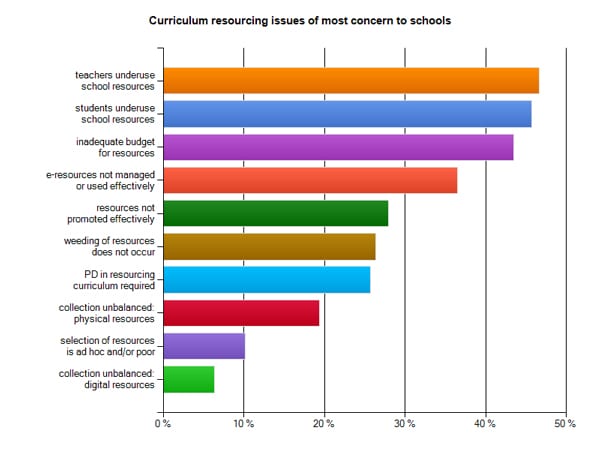
I discovered a new word today. Tsundoku, according to Macmilland Dictionary (2017) is the habit of purchasing and piling up books that never get read.  This seems rather wasteful when most libraries are suffering major budgetary concerns to waste precious funds on resources that are rarely used. Unfortunately in many school libraries the two biggest curriculum resourcing issues are that staff and students under utilise the resources followed quickly by funding pressures  (SCIS 2014).

I know at my school, we have an impressive 100 000 print copies of books plus additional eResources such as Wheelers ebooks, online databases, newspaper subscriptions and access to Clickview for interactive videos.  It is disappointing that even though our library is so well resourced, teachers and students seem to prefer to use google and youtube instead of accessing information from our library catalogue.  It seems preposterous to me that many of the school community were unaware we even had a library management system.  Their ignorance of the platforms we have in place, could extrapolate to acknowledging that lack of resource usage is proportional to the ability of the staff and students to use the OPAC system to identify and select resources.  

Something needs to change.  But what? The library collection development policy at the school endeavours to create a balanced collection that promotes teaching and learning as its primary goal.  Other aspects such as catering to diverse learners and fitting into the budget are also relevant. All the physical and digital assets meet the policy guidelines, which is why we have this policy but what is the point if they are under utilised? What else can we do in the library to promote our resources to the staff and students?  What can we do to remind them that we are not practitioners of Tsundoku?

I was musing about this problem when it occurred to me that many libraries fail in promoting their resources and capabilities.  How were the staff and students going to know about new or fabulous resources in the school library? How would we remind them of what is held within and what can be accessed?  It was then i remembered this post from Hamm (2016) who sends newsletters out to the faculty regularly advising them of the new and popular resources within the library. This idea seems magnificent to me as our school has several teachers who had no idea that we even subscribed to databases.  Their looks of pleasure and interest peaked when I explained how they could access with ease them from both work and home with just their device and password.  A quarterly newsletter published on the staff page of the school intranet would greatly improve our circulation at little cost to the library itself.  

So with these thoughts in mind I thought that for my particular independent high school library in the ACT there needs to be certain parameters necessary before a resources are added to the collection.

Firstly the information source MUST match the needs of the learning community.  It seems superfluous to point out that a resource is unlikely to be used if it is not relevant to the teaching and learning needs and must meet learning outcomes.  The next step is to ensure that the learner traits are accounted for. We have a wide range of student learning ‘attributes’ ranging from varied literacy levels, physical and mental handicaps that need to be catered for in a variety of formats to ensure equity is maintained for the entire student body.  One thing in particular our school library has done is acquire graphic novels of most of the major literature texts.  With many students of varying literacy levels and acknowledging our ‘reluctant’ readers still need to be able to engage with the text, we are trialing out graphic novels in print forms in several titles including classics such as Macbeth, Hamlet, To Kill a mockingbird and the Diary of Anne Frank with the student body.  Our Inclusive Education Team informs the library staff which students have been identified with low literacy levels and then these students are provided with audio books on an iPod as well as the physical text for their class work.  For our reluctant readers, graphic novels are popular as the combination of the text and imagery holds greater appeal. The inclusion of these texts has bolstered up our borrowing rates and appears to help students understand the task ahead.  We have also recently added Wheelers elibrary to our catalogue.  This has not been as popular as predicted but has provided access to resources for our vision challenged students.  Due to the nature of the licensing, only two ‘copies’ of a book can be ‘borrowed’ out at any particular time and this is restrictive with class texts.  The last consideration mentioned by Hughes-Hassel, S & Mancall (2005) is budget. Resources must fit within the budget in order it to be a viable purchase for the school.  We are very lucky in our school to have a principal that values education and our library budget is consistent.

We need a shift in attitude from Tsudonku.

References

Australian School Library Association / Australian Library and Information Services Association. (2001). Learning for the future. (2nd ed). Carlton South, Vic.: Curriculum Corporation.

BBC News (2018) Tsundoku: the art of buying books and never using them. Retrieved from https://www.bbc.com/news/world-44981013

Department of Education and Children’s Services, Government of South Australia. (2004). Choosing and using teaching and learning materials: guidelines for preschools and schools. Hindmarsh, South Australia : DECS Publishing

Hamm, S (2016) Library newsletters. Retrieved from https://www.teenservicesunderground.com/library-newsletters/

Hughes-Hassell, S. & Mancall, J. (2005). Collection management for youth: responding to the needs of learners Retrieved from http://ebookcentral.proquest.com.ezproxy.csu.edu.au/lib/csuau/detail.action?docID=289075

Johnson, P. (2009). Fundamentals of collection development and management [American Library Association version]. Retrieved from http://ezproxy.csu.edu.au/login?url=http://search.ebscohost.com/login.aspx?direct=true&db=nlebk&AN=267756&site=ehost-live

SCIS ( 2014) Survey of school library collections. Retrieved from ://www2.curriculum.edu.au/scis/connections/issue_88_2014/articles/school_library_collections_survey_2013.html

Resources for School Librarians () School library promotion through advocacy, special events and bulletin reports. Retrieved from http://www.sldirectory.com/libsf/resf/promote.html

Lawhimsy.com (2015) Word Nerd: Tsundoku. Retrieved from https://lawhimsy.com/2015/10/14/word-nerd-tsundoku/

Macmilllian Dictionary (2027)  https://www.macmillandictionary.com/dictionary/british/tsundoku


Dr Seuss Week

Happy birthday Doc!

He is one of the world’s most famous children’s book authors. Loved by millions across the globe. This week is Dr Seuss aka Theodor Geisel’s birthday.

And quite frankly I don’t care.

I was never much into the man and his talking animals.  Whilst I did love Hugh Lofting’s ‘Doctor Dolittle’ and his charming adventures with the animal kingdom, I failed to be engaged with the Seuss.

So it surprised me when I saw this article pop up in my Feedly. Maybe I didn’t engage with Seuss because I didn’t relate as a person of colour. Or maybe I just do not like rhyming stories. Or, just maybe I felt they were weird. But then my personal library is filled with other weird and wonderful stories, so they may be in fact, no logical explanation. Just a whim, an idiosyncrasy, a foible of mine.

Either way happy birthday Doc!

Dr. Seuss Books Can Be Racist, But Students Keep Reading Them