Literacy, learning and literature are at the heart of excellent teacher librarian practice.

The learning capacity of a library is dependent on the efficiency of the librarians to maintain the functionality of its spaces, collection robustness and program variety so that the needs of the community are met (Hughes, 2013). This efficacy is essential in academic and school libraries as they are linked to improved student learning outcomes (ACT Education Directorate, 2019).
Lewins Library has a well designed physical space that enables users to browse, read, use the wifi and opportunities to work individually or in small groups. It also has a virtual environment that connects users to digital resources, course materials, referencing assistance, as well as information literacy sessions. It is within this space that users get access to Primo, a federated search engine, which makes the library webpage the point of information access and retrieval in both the physical and virtual environments.
The extensive ACU library virtual environment is rarely mimicked in schools because online learning is not the desired format for many children and teenagers. This reluctance was made clear during 2020’s remote learning as the pandemic highlighted the difficulties students faced, such as a lack of devices, poor internet access and an overall lack of digital literacy, with students from Indigenous, rural, remote and low socioeconomic areas were even more likely to be at risk of marginalisation. This means that libraries need to be flexible in their delivery of resources, services and programs so that students can interact successfully with online learning (Templeton, 2020b).
ALs use LG to connect students to pertinent materials. Reviewing the LGs identified that whilst they were all similar in structure and format, there were differences in volume of content and frequency of use. However, there were significant differences in volume of content and frequency of use between the LG with the Health Sciences ones most frequently used. Those elevated statistics could be due to high student numbers in Nursing, Midwifery or Paramedicine courses, or it could be because other LG were complex and caused information overload.
Upon reflection, it would have been more efficient if the statistics compared resource access between the LG, course pages and reading lists, because then the ALs could identify which pathway is most effective with students. This would then mean that the ALs could target delivery of course materials and directly influence student learning through that mode (Hicks, White & Behary, 2021, p.2). Additionally, it was interesting to see little uptake on the “How To” and “other” guides, which lead to the quandary if students are generally disinterested in using LG, or if there is a larger level of disinterest about information disseminating from the university about non-academic topics.
An environmental scan is an effective tool to identify relevant course resources (Hicks, White & Behary, 2021, p.3). The Paramedicine LG environmental scan showed that ACU’s database list was comparable to other institutions, however had fewer books, no weblinks and lacked an Australian-centric resource such as Informit. Unfortunately, as Informit currently directs all users to its landing page rather than the individual database, excluding this resource was a tactical decision to minimise student access issues.
Theology LG was analysed using usage statistics because ACU is the only institution to offer Theology from a Catholic perspective. Digital texts from the collection were suggested to replace poorly used resources, but unlike other faculties, a ‘digital first’ policy is not essential because providing the right source is more important. This is because accessing appropriate Australian-centric digital theology texts is very difficult. Additionally, most students study on campus therefore the presence of print texts is possible.
I did review CSU’s Theology LGs to determine which resources both institutions valued and to seek additional resources for my school library. As a Catholic high school, we need to hold theology texts and this task has made me realise that I am not the only one struggling to find Australian-centric resources.
Librarians are responsible for developing the information literacy capabilities of their communities and remote learning has required them to expand their programs online (ACU Library Directorate, 2020; Dewey, 2017, p.26; Mallon, 2018, p. 115). Although some argue that reducing physical presence makes outreach more difficult, ACU library statistics show that technology can be sufficiently harnessed to deliver an efficient virtual program because it allows all the ALs to assist in the learning, not just the ones at the local campus (ACU Library Directorate, 2020; Perini, 2016, p.65). Analysis of the LLT program usage data determines which delivery modes resonates the most with the students and can also assist the ALs in guiding staffing and future practice so that the LLT continues to meet the needs of their community.
University and school based information literacy differs in that ACU students are required to self navigate through the program. However, in schools information literacy is embedded into teaching and learning because students require repeated practice to develop competency. This means that Teacher librarians need to make a more concerted effort to collaborate with their peers so that they can teach these essential skills across the curriculum within classroom practice.
ACU. (2020). ACU strategic plan 2020-2023. Office of Planning and Strategic Management. https://www.acu.edu.au/-/media/feature/pagecontent/richtext/about-acu/strategic-plan-2020-2023/v3_ritm0083397-strategic-plan-2020-2023_b5.pdf?la=en&hash=EB3EDA6C3B6448FCBAE24E29126BCD2B
ACU Library Directorate. (2020). ACU Library learning and teaching framework. Library Learning and Teaching Team. https://library.acu.edu.au/teaching/library%20learning%20and%20teaching/library%20learning%20and%20teaching%20framework
ACU. (2018). Organisational structure. Leadership and Governance. https://www.acu.edu.au/-/media/feature/pagecontent/richtext/about-acu/leadership-and-governance/_docs/organisational-structure-chart.pdf?la=en&hash=E358CE0B18ABAE0FE69911F921269D1A
Dewey, B. (2017). Chapter 2: College and University Governance. In Gilman, T. (Ed.). (2017). Academic librarianship today. ProQuest Ebook Central. CSU Library
Forbes, C. & Keeran, P. (2017). Chapter 6: Reference, instruction and outreach. In Gilman, T. (Ed.). (2017). Academic librarianship today. ProQuest Ebook Central. CSU Library
German, E. (2017). Information literacy and instruction: LibGuides for instruction: A service design point of view from an academic library. Reference & User Services Quarterly 56(3). pp162-167. https://journals.ala.org/index.php/rusq/article/view/6257/8146
Gilman, T. (Ed.). (2017). Academic librarianship today. ProQuest Ebook Central. CSU Library.
Hicks, S., White, K., & Behary, R. (2021). The correlation of Libguides to print and electronic book usage: A method of assessing LibGuide usage. Journal of Web Librarianship 15(1), pp1-13. DOI: 10.1080/19322909.2021.1884927
Higgins, S. (2016). Managing academic libraries: Principles and practice [ebook]. Amsterdam. Chandos Publishing. ISBN: 9781780633114
Hossain, M. J. (2016). Determining the key dimensions for evaluating service quality and satisfaction in academic libraries. The International Information & Library Review 48(3), p.176-189. CSU Library.
Logan, J. & Spence, M. (2021). Content strategy in LibGuides: An exploratory study. The Journal of Academic Librarianship 47(1). https://doi.org/10.1016/j.acalib.2020.102282
Mallon, M. (2018). The pivotal role of academic librarians in digital learning. ProQuest Ebook Central. CSU Library.
Perrin, J.M., Yang, L., Barba, S. and Winkler, H. (2017), “All that glitters isn’t gold: The complexities of use statistics as an assessment tool for digital libraries”, The Electronic Library, Vol. 35 No. 1, pp. 185-197. https://doi-org.ezproxy.csu.edu.au/10.1108/EL-09-2015-0179
Perini, M. (2016). The academic librarian as blended professional: Reassessing and redefining the role [ebook]. Cambridge, MA. Chandos Publishing.
Schaub, G., McClure, H. A., & Bravender, P. (2015). Teaching information literacy threshold concepts: Lesson plans for librarians. Association of College and Research Libraries.
Showers, B. (Ed.). (2015). Chapter 3: Using data to demonstrate library impact and value. In Library analytics and metrics : Using data to drive decisions and services. ProQuest Ebook Central https://ebookcentral.proquest.com
Swiatek, C. (2019). European academic libraries Key Performance Indicators (KPI): How comparison helps decision making. Performance Measurement and Metrics 20(3),pp. 143-158. https://doi-org.ezproxy.csu.edu.au/10.1108/PMM-08-2019-0041
Templeton, T. (26th April 2020a). The implications of using digital literature in secondary schools. Trish’s trek into bookspace. https://thinkspace.csu.edu.au/trish/2020/04/26/the-implications-of-using-digital-literature-in-a-secondary-schools/
Templeton, T. (29th July, 2020b). Digital divide or digital elite? What is the cause of the digital divide? Trish’s trek into bookspace. https://thinkspace.csu.edu.au/trish/2020/07/29/digital-native-or-digital-elite-what-is-the-cause-of-the-digital-divide/
Walters, W. H. (2016). Evaluating online resources for college and university libraries: Assessing value and cost based on academic needs. Serials Review 42(1). Pp10-17. DOI: 10.1080/00987913.2015.1131519
Practice: The ACU Libraries directorate is under the guidance of the Deputy Vice-Chancellor as Figure 1 indicates. However, it would make more sense for Libraries to be part of the teaching and learning team under the Provost because the Library is intrinsic to academic success.
Theory: ETL504 highlighted the importance of embedding the library into teaching and learning in order to improve student learning outcomes. If the library and the Teacher Librarian (TL) are considered separate from the learning process, it is then much harder to embed programs such as inquiry learning, school wide reading programs and information literacy into pedagogical practice. However, at ACU the library is essential because reading lists must be submitted to the ALs to ensure sufficient access is available to the students and that copyright laws are adhered to.
Practice: The Library Learning and Teaching (LLT) Framework (2020) is aligned to the university’s mission statement and divides information literacy into two components; seeking and accessing relevant information, and the ethical use of information. It uses ability rather than level of study as a differentiation tool because the framework supports self-navigation from foundation to advanced, through the relevant LLT Libguides, videos, instant chat, facilitated teaching sessions as well as online consultations and drop in help desks. The ALs evaluate the effectiveness and efficacy of these programs and sessions to guide future practice so that students can continue to get the assistance that they need in the format that they prefer.
Theory : ETL 401 pointed out that information literacy is an intrinsic aspect of educational librarianship because it is essential for critical thinking, research success, and academic integrity (Mallon, 2018, p.1). Information literate students are also more adept at using the collection and have increased knowledge of how to ethically use that information. However, the delivery of information literacy differs as information literacy sessions occur sporadically within universities and additional support is student initiated. Whereas, ETL401 clearly elucidated the importance of embedded information literacy in classroom practice and that inquiry learning is the most efficient instructional method because the guided inquiry design can be adapted to suit any age or unit of work. However, it was ETL504 that highlighted the importance of leadership so that these programs can be effectively facilitated into pedagogy practices across the curriculum.
Practice: The key role of an academic library is to actively participate in the education of students and LibGuides (LG) are commonly used to connect users to services and other relevant academic materials for specific units of work, classes or course (Walters, 2016; German, 2017, p.163; Hicks, White & Behary, 2021). The quality of sources is more important than the amount, therefore it is essential that these LGs only link to the most relevant resources to minimise information overload (Logan & Spence, 2021). Additionally, ALs are required to regularly verify LG links to ensure that they function and retain their user friendliness (Logan & Spence, 2021; Walters, 2016; German, 2017, p.165).
Theory: The fundamental principle of ETL503 is that a library’s collection and services’ primary purpose is to meet the needs of its community. Therefore any LG created needs to match the learning outcomes of the course, the numbers of students and their relevant learning needs and comply with copyright. It is also important that resources are prioritised from the collection before acquiring new materials. However, whilst ACU has a distinct ‘digital first’ motto with their resources, this is not a viable plan for schools due to the lower lower digital literacy competency of children and teenagers. ETL402 and INF533 both explained the increased cognitive load that digital literature places on low literacy students. Therefore, whilst digital resources are ideal in a digital society, there needs to be consideration for students with diverse learning needs.
Practice: LibGuides from 2019-2021 were analysed to examine their usage statistics. The Law LG was the most complex with multiple subsections and had the largest number of resources with minimum ‘clicks’. Whereas Nursing, Midwifery and Paramedicine LGs were concise and their resources were accessed more frequently by students.
Theory: The collection can be successfully evaluated for its value to the curriculum and students by running analytics to determine LG usage. This process highlights which LG and corresponding resources are valued and which are not. ETL503 pointed out the importance of regular collection evaluation to ensure that it still holds its value. However, analytics often do not discriminate between faculty and student visitors, nor do they always identify accidental and meaningful interactions (Perrin et al., 2017). This means that high results should be viewed with caution, however low data can be correctly inferred to be low use.
Lewins Library is the main information repository for the Australian Catholic University (ACU) Signonou campus and supports its community’s search for knowledge through academic inquiry and intellectual discovery. As part of the wider Catholic society, the library facilities and resources are also used by the constituents of the Catholic Archdiocese of Canberra and Goulburn, for their theological, educational and academic pursuits.
ACU has multiple campuses and it is imperative that the libraries directorate embrace technology to deliver services and programs across all the locations. Some of these strategies include, a ‘digital first’ policy on collection maintenance and development, a framework for information literacy with a multimodal delivery, as well as providing support for academics and researchers in their practice and ensuring copyright compliance (ACU, 2020). However, whilst members of ACU have unfettered access to both the physical and digital collections, the general public is limited to the physical collection due to licencing requirements. Unfortunately, access to the physical collection has been limited due to the ongoing COVID-19 pandemic and stay-at-home edicts.
The core purpose of academic libraries is to support independent inquiry, develop critical thinking and actively assist in the pursuit of knowledge construction (Higgins, 2017, Ch.1). Nevertheless, the capacity of an academic library to provide information access is proportional to the value the educational institution sees in them (Gilman, 2017, p.7; Higgins, 2017, Ch.1). Therefore it is important that the library continues to illustrate its capacity and efficacy to maintain that value. This means that as part of its evaluation process, the library’s collection and services need to be examined regularly. This is because a rarely used resource, albeit a book or a service, holds no value to the user and ends up just being a liability. However, whilst analytics can determine the number of times a resource is accessed or a service is used, it cannot determine the productivity of that interaction, nor can it determine if that interaction translates to increased learning outcomes (Walters, 2016). Nevertheless, it can be inferred that low usage means low use and thus that resource or service needs to be re-examined for its value to the community.
Lewins Library academic librarians (AL) are passionate about the vital role they play in the academic success of their community. Their role includes research development, information literacy development, faculty assistance, and client interaction which requires regular interaction with multiple stakeholders (Forbes & Keeran, 2017; Perini, 2016, p.65). However, ACU is a multicampus university and this means that the ALs are challenged to meet the dual needs of their own library and the needs of multiple campuses through the introduction of consortia collection building, digital reference services and campus wide information literacy skill development (Higgins, 2017, Ch.1). However, in order to complete these range of services effectively, regular evaluation of programs, collection and services must be undertaken to ensure that the ALs and the library continues to meet the dynamic needs of their institution (Perini, 2016, p.65; Hossain, 2016).

As a practicing teacher librarian in a large Catholic high school, I have chosen to complete my placement at a nearby campus of the Australian Catholic University. There were several reasons for this choice. The main reason is that it is a library in an educational institution and therefore as an information agency seeks to assist staff and students in developing their knowledge and skills. As such it mirrors similar roles and responsibilities to what I undertake daily as a teacher librarian. Another pertinent point is that there is a strong continuum of academic integrity, information literacy and pursuit of knowledge between the two educational institutions because many students from my school pursue a tertiary education at the ACU campus. Therefore it would be interesting to see the success of our school’s implementation of information literacy within the tertiary setting, as this would encourage a professional analysis of my own efficacy as a teacher librarian. On the other hand, understanding the information literacy and academic integrity needs of tertiary students would incentivise a ‘backwards by design’ approach to develop and implement appropriate information literacy strategies at a high school level. This process would increase my efficacy as a high school teacher librarian as it would allow for the creation of a more appropriate information literacy continuum between both educational institutions.
The final reason for selecting ACU Library for my placement is that its mission statement and values are similar to the school I am currently employed at, and as such, endeavours to value everyone as one who is loved by Christ. The ACU mission of acting in truth and love in the pursuit of knowledge, the dignity of the human person and the common good, complements my school’s ethos. Therefore a placement at ACU Library would benefit and improve my ability to support my own practice as a teacher librarian in a Catholic school as well as allow me to plan and implement a more robust information literacy program.
My Professional goals:
ASLA & ALIA (2004) Teacher librarian standards are a framework that indicate the necessary attributes of an effective teacher librarian, as well as providing emerging TLs with professional goals. Therefore the standards indicate the parameters of a teacher librarian practice within a school context. This includes the development of a positive learning environment, provision of resources that support the curriculum, as well as collaboratively planning and creating programs that embed information literacy across all areas of learning (ASLA & ALIA, 2004).
The standards have provided a scaffold for my professional goals as they delineate the caliber of an effective teacher librarian. In my current role as a high school teacher librarian, I am mainly focused upon embedding information literacy in pedagogical practices, integrating digital technologies into classroom teaching, and resourcing the curriculum. Therefore I have a strong interest in observing and understanding how information specialists at a university library develop and support the information literacy needs of their community. I would also like to develop an understanding of how the physical and digital collections support the needs of staff and students, as well as how academic integrity programs are promoted through all levels of learning.
ASLA & ALIA. (2004). Australian professional standards for teacher librarians. ALIA. https://asla.org.au/resources/Documents/Website%20Documents/Policies/TLstandards.pdf
How will my learning from this subject inform my practice to build my leadership capacity?
The teacher librarian’s (TL) efficacy is dependent on the principal’s leadership, school culture and their own leadership capacity (Templeton, 2021c). Under the right circumstances, TLs can thrive, exert their prowess and become innovators of pedagogy and technology (ASLA & ALIA, 2004). However, if the stars are misaligned or the school is a quagmire of silos and entrenched bureaucracy, TLs can become stifled, bored, ignored or irrelevant. Therefore it is essential that TLs identify the circumstances that impact their ability tobecome future focused leaders.

I had assumed leadership was managerial in nature, occurred at the top and directives went down the chain of command (Templeton, 2021b). Therefore I was astounded that transformational leadership supports middle school leaders, teacher librarians and teacher leaders implementing changes (Templeton, 2021c; Templeton, 2021d; Templeton, 2021e). As the modules progressed, I learned that TLs thrive best under transformation leadership, as this style cultivates a positive learning culture, promotes team building, advocates professional growth and builds leadership capacity in others so that they can be instruments of change in their departments (Longwell-McKean, 2012, p. 24).

This video connects leadership to culture.
As teachers we all know that a positive learning culture is essential for optimum student learning outcomes, but there seems to be uncertainty if teachers are included in this learning paradigm (AITSL, 2017). Ambivalent or negative learning cultures directly impact implementation of school wide practices, however, TLs are able to make the library space a positive environment by supporting learning in their community through instituting professional development, modelling best practice, provision of resources and mentoring (Bourne, 2021; Templeton, 2021a; Sharman, 2021).
The single most important fact I gained from this course is that rapidly mandated change fails because there is lack of consultation, insufficient processing and integration time, lack of education and inadequate practical support for teachers (Armstrong, 2021b; Cherkowski, 2018; Dilkes et al., 2014). For change to succeed, it must be perceived to be valuable, effectively implemented and practical support during transition freely offered (Kim et al., 2019). Australian teachers are in a change crisis because the introduction of the national curriculum, standardised testing, shift to constructivism and digital learning has led to extreme change (Dilkes et al., 2014; Stroud, 2017). As a result, teachers often manifest disinterest or disinclination because of their reluctance to experiment with new ideas or technologies stemming from feelings of being undervalued, fear of failure, reprisals and even the transitory nature of those changes (Riveros et al., 2013, p.10). Change fatigue is a valid concern and needs to be effectively mitigated before any school wide changes are expected to succeed.
TLs often work independently and many lack clear expectations of their position and the moral confidence to pursue leadership roles (De Nobile, 2018, p.401; Lipscombe et al., 2020, p.419).
Whilst many TLs use the standards set by ASLA & ALIA (2004) and (AITSL) 2017 to frame their practice, it is recommended that AITSL’s Australian Professional Standard for Principals (2014) is used to future practice and develop leadership capacity (Lipscombe et al., 2020, p.412). However, many TLs may find these standards daunting, but it is important to remember that leadership is the use of social influence to exert others to achieve a goal or vision and is not restricted to just the top of an organisation.
The future focused TL has four main arenas that support the school vision, responsible resourcing, innovative pedagogies, formal and informal professional development opportunities to mitigate change fatigue, and development of information literacy (Armstrong, 2021a; Bourne, 2021; Stiles, 2021). By combining practical support with coaching or mentoring, the TL is able to slowly change the school’s groundswell. It is through these arenas of focus that TLs can support their colleagues and the principal in achieving the vision of active and engaged citizens who can problem solve effectively, work collaboratively as well as think critically and creatively (MCEETYA, 2008).
References:
AITSL. (2017). Australian professional standards for teachers. Education Services Australia. australian-professional-standards-for-teachers.pdf (aitsl.edu.au)
Armstrong, K. (2021a, March 14). Module 3 ICT integration. [Online discussion comment]. ETL 504 Discussion Forums. CSU – Interact 2
Armstrong, K. (2021b, May 4). Stress in schools: Is it optional? Musings and Meanderings. https://thinkspace.csu.edu.au/karenjarmstrong/category/etl-504/
AITSL. (2014). Australian professional standard for principals and the leadership profiles. Education Services Australia. https://www.aitsl.edu.au/docs/default-source/national-policy-framework/australian-professional-standard-for-principals.pdf?sfvrsn=c07eff3c_6
ASLA & ALIA. (2004). Australian professional standards for teacher librarians. ALIA. https://read.alia.org.au/alia-asla-standards-professional-excellence-teacher-librarian
Bourne, H. (2021a, May 22). Module 6: Week 11/12 – AITSL professional learning. ETL 504 Discussion Forums. CSU – Interact 2
Cherkowski, S. (2018). Positive teacher leadership: Building mindsets and capacities to grow wellbeing. International Journal of Teacher Leadership, 9(1). EJ1182707.pdf (ed.gov)
De Nobile, J. (2018). Towards a theoretical model of middle leadership in schools. School Leadership & Management 38(4). pp 395-416, DOI: 10.1080/13632434.2017.1411902
Dilkes, J., Cunningham, C., & Gray, J. (2014). The new Australian curriculum, teachers and change fatigue. Australian Journal of Teacher Education. 39(11). https://files.eric.ed.gov/fulltext/EJ1047053.pdf
Kim, S., Raza, M., & Seidman, E. (2019). Improving 21st-century teaching skills: The key to effective 21st-century learners. Research In Comparative And International Education, 14(1), 99-117. https://doi.org/10.1177/1745499919829214
Lipscombe, K., Grice, C., Tindall-Ford, S., & DeNobile, J. (2020). Middle leading in Australian schools: Professional standards, positions, and professional development. School Leadership & Management 40(5) pp.406-424. DOI: 10.1080/13632434.2020.1731685
Longwell-McKean, P.(2012). Restructuring leadership for 21st century schools: How transformational leadership and trust cultivate teacher leadership. UC San Diego. https://escholarship.org/uc/item/6746s4p9
MCEETYA. (2008). Melbourne declaration on educational goals for young Australians. Curriculum Corporation. Australia. http://www.curriculum.edu.au/verve/_resources/national_declaration_on_the_educational_goals_for_young_australians.pdf
Riveros, A., Newton, P., & da Costa, J. (2013). From teachers to teacher leaders: A case study. International Journal of Teacher Leadership 4(1). EJ1137376.pdf (ed.gov)
Stroud, G. (2017). Why do teachers leave? ABC News – Opinion. https://www.abc.net.au/news/2017-02-04/why-do-teachers-leave/8234054
Templeton, T. (2021a, February 28). Module 1 – culture. ETL 504 Discussion Forums. CSU – Interact 2
Templeton, T. (2021b, March 1). Leadership – The beginning of ETL504. Trish’s Trek into Bookspace.
Templeton, T. (2021c, March 14). Leading from the middle – Teacher Librarian as a middle leader at school. Trish’s Trek into Bookspace.
Templeton, T. (2021d, March 6). Transformational leadership. Trish’s Trek into Bookspace.
Templeton, T. (2021e, May 7). Teacher leaders. Trish’s Trek into Bookspace.
Sharman, S. (2021, March 22). Module 3 ICT integration. ETL 504 Discussion Forums. CSU – Interact 2
Stiles, Y. (2021, April 27). Module 4.3-4.3. ETL 504 Discussion Forums. CSU – Interact 2 .
Introduction:
Leaders and leadership traits are found all throughout a learning organisaiton’s stratums. However, the difference between the hierarchies is how leadership is exhibited. The principal and their executive team are the traditional leaders in schools as they are the ones that hold formal roles and any decision they make has the weight of that authority behind them. These upper leadership styles are often directive and or distributive in nature to ensure a learning organisation is effective at improving student outcomes (Supovitz, D’Auria & Spillane, 2019, p.8). However, leadership activity regularly occurs outside the executive team as there are many instances of classroom teachers exhibiting leadership traits within their spheres of influence (De Nobile, 2018). They are known as teacher leaders, and they have a great capacity to influence a school system and improve learning outcomes because they base their leadership upon the relationships they have with their colleagues, and their communities (Uribe-Florez, Al-Rawashdeh & Morales, 2014, p.1). Their efficacy is framed upon the simple fact that these teacher leaders are primarily situated in the classroom, have a thorough understanding of student learning and thus have a greater impact on student success (Consenza, 2015, p.80).
Defining teacher leaders:
Teacher leaders are predominantly classroom teachers who use their social influence and leadership capacity to effect educational change in their school (Uribe-Florez, Al-Rawashdeh & Morales, 2014, p2). They often hold a variety of roles and their influence can stem from two main sources, a desire to seek career advancement through investigating appropriate professional challenges, or by building relationships and trust with their peers to create a professional network (Fairman & Mackenzie, 2015; Cosenza, 2015, p.79; Riveros, Newton & da Costa, 2012, p.2). Either way, teacher leaders do not hold any formal positions within the school, but instead use their expertise, professional knowledge and practice to inspire and motivate their peers.
Historically teacher leaders were perceived as more of a managerial position. But it soon became evident that their expertise was more suited to improving pedagogy, and thus the second wave of leadership saw teacher leadership focused upon instruction and curriculum development before finally evolving into leaders of modern pedagogical practice (Fairman & Mackenzie, 2015, p61). Riveros, Newton & da Costa, (2013) suggest that teacher leader efficacy is based upon the fact they are process orientated and have significant knowledge and understanding of the curriculum and classroom teaching strategies (p.2-3). Interestingly, both Fairman & Mackenzie (2015), and Riveros, Newton & da Costa (2013) theories that the efficacy of teacher leaders is due to informal leadership positions having a far greater potential to impact pedagogical practices and change management because influence is gained through relationships rather than stemming from a power base.
Teacher leaders and their role in teaching and learning:
There are several advantages to developing teacher leaders in schools but the predominant benefit is the indirect improvement of student learning outcomes through the direct impact of improving pedagogical practice (Riveros, Newton & da Costa, 2013, p.2). These pedagogical improvements can be implemented by the teacher leader using servant leadership, such as modelling best practice, mentoring emerging teachers, sharing new ideas, as well as taking action and collaborating on school wide initiatives (Riveros, Newton & da Costa, 2013, p.2; Cosenza, 2015). Whilst some teacher leaders have specific roles such as teacher librarian, ICT leader, digital coach, literacy leader or even just be known as the ‘math guru’, they are predominantly classroom teachers who are seeking to improve their own professional practice (Riveros, Newton & da Costa, 2013, p.2). The commonality between the various roles and practices is that these teacher leaders have the ability to effectively collaborate with their colleagues for the benefit of all the school’s stakeholders (Cosenza, 2015, p.93).
Teacher leaders and change management:
The efficacy of a teacher leaders’ ability to be a change agent and implement school wide improvements is framed upon their leadership abilities, and their capacity to collaborate effectively with their peers horizontally across the learning organisation. Leadership traits such as having a strong sense of purpose, developing robust relationships, and advocating collaboration to improve teaching and learning beyond the walls of their classroom are essential to improve school wide practice (Riveros, Newton & da Costa, 2013, p.2). It is through these behaviours and attributes that teacher leaders are able to directly influence change by initiating professional conversations, promoting collegial discussions, mentoring emerging teachers, sharing innovative ideas as well as by collaborating with their colleagues on curriculum, assessment and reporting (Fairman & Mackenzie, 2015, p72). They can also indirectly influence how change is implemented by promoting a positive learning environment and by developing teams to facilitate the change management process (Fairman & Mackenzie, 2015, p. 73).
As teacher leaders are defined by their skills and actions rather than a formal role or position, they can arise from any faculty across a school (Consenza, 2015, p.80). This means that they are able to have an immediate impact on their sphere of influence, and when they collaborate with their colleagues, their spheres of guidance expands and as such, their activity becomes a collaborative exercise (Fairman & Mackenzie, 2015, p 63). These spheres of activity and corresponding impact allows teacher leaders to become innovators of pedagogy because they are able to use their positive relationships with their peers to influence teaching practices in their schools, and build collegial environments in their professional communities (Fairman & Mackenzie, 2015, p.68).
Teacher librarian as a teacher leader:
Teacher librarians can be considered as teacher leaders because their professional practice requires them to have a comprehensive understanding of curriculum, use evidence to support pedagogy, advocate lifelong learning, demonstrate leadership, promote collaborative practices and create an environment that promotes participation and learning (Johnston, 2015, p. 40; ALIA & ASLA, 2004). In fact these requirements correlate closely to the qualities described in AITSL (2019) Highly Accomplished and Lead Teacher domains, therefore confirming teacher librarians as teacher leaders. In fact, many teacher librarians are distributed the role of leadership of information literacy, innovative pedagogies and emerging technologies as part of shared leadership because they are best suited to that role (Johnston, 2015, p.40).
Through their capacity as teacher leaders, teacher librarians are able to develop positive relationships with their peers, and are able to effectively implement innovative pedagogies as well as embed emerging technologies into teaching and learning (Lipscombe et al., 2020, p.412). These behaviours are made possible because the relationships are based upon a shared professional identity, and a reciprocal of trust which creates the library as a safe place for teachers to experiment without fear of any reprisals (Riveros, Newton & da Costa, 2013, p.10).
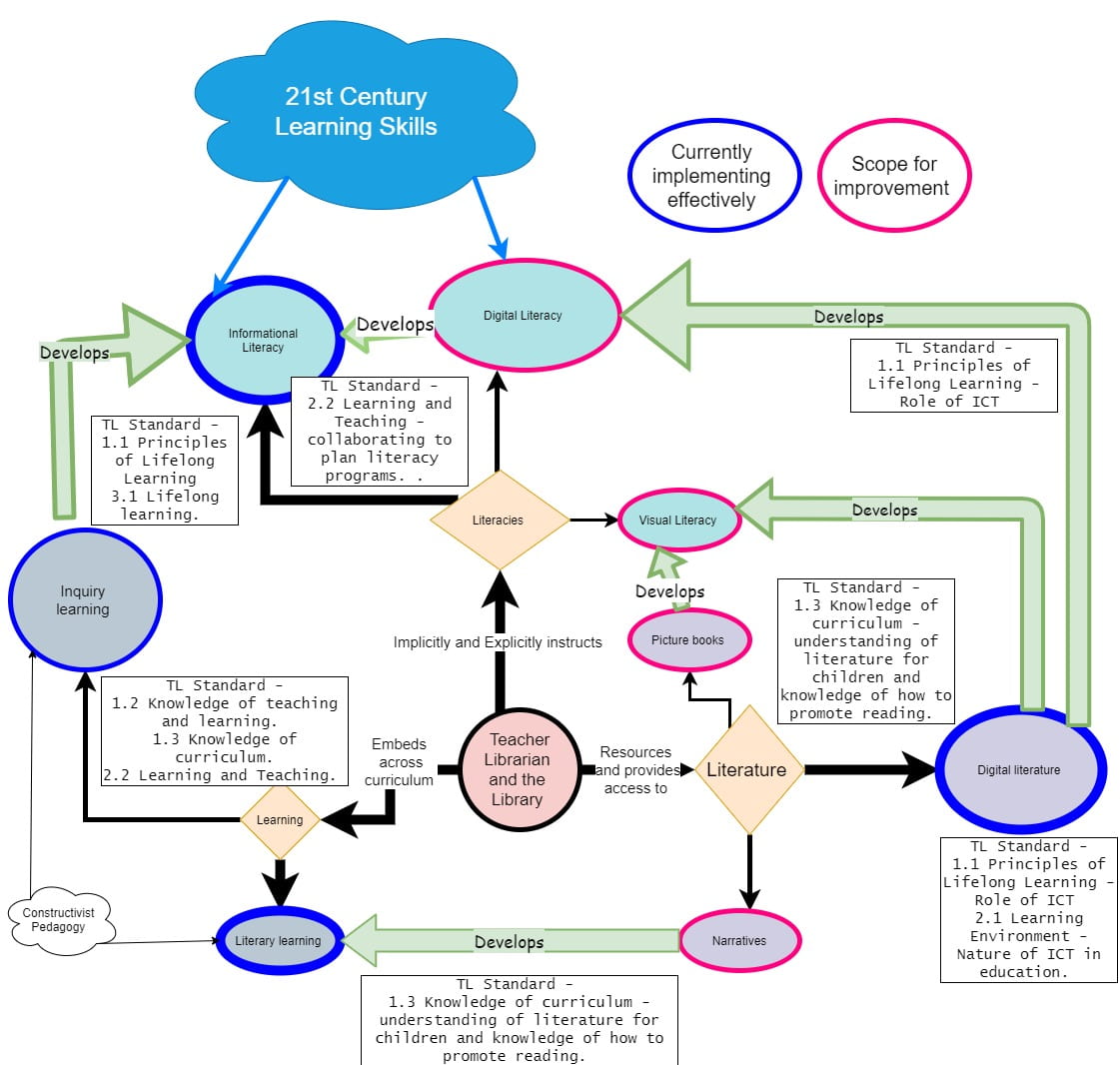
Teacher leaders often use servant leadership such as modelling good practice, sharing ideas, as well as coaching and collaborating with their peers to influence the pedagogical practices of their learning organisation (Fairman & Mackenzie, 2015, p68). Examples of such practice include working collaboratively with their colleagues to create inquiry units that develop important 21st century skills, or model literary learning through text sets, or literature circles as a viable alternative to textbook work, or share ideas of how to integrate emerging technologies such as AR and VR into their practice. Besides directly impacting pedagogical practice, teacher librarians are also tasked with being the information specialists of their school. This means that they are required to model and teach information literacy skills, provide a physical and digital learning space that is conducive to learning for all members of the community, and ensure the curriculum is resourced appropriately with access to print and digital material (ASLA & ALIA, 2004).
Support and limitations of teacher leadership in schools.
Even though it is widely acknowledged that classroom teachers have the greatest impact upon student learning and that collective teacher leadership is an effective method to implement school wide improvement, the capacity of a teacher leader is not being universally actualised (Cosenza, 2015, p.80; Lowery-Moore, Latimer & Villate, 2016, p.2). The efficacy of teacher leaders is often hampered from both the executive and from their colleagues through covert and overt behaviour. Some executives may view teacher leadership with disfavour as it infringes on their formal roles within a school (Isabu, 2017, p.149). Others may fail to endorse teacher leadership activity because they find the idea of pedagogical reform from the classroom unpalatable compared to reforms rolled out from the boardroom (Cosenza, 2015, p.81). Whereas, collegial reluctance is often due to resentment because an individual teacher leader’s strive for improving professional practice could increase the benchmark and change the status quo of acceptable teacher practice (Fairman & Mackenzie, 2015, p. 71).
Teacher leaders need the support from the executive leadership team in their school to succeed. Without their obvious support, the capacity of teacher leaders to thrive is limited. Executive leaders can overtly limit professional development opportunities to reduce the likelihood of teacher leader initiated reforms and covertly hinder their efficacy by exhibiting disinterest and apathy (Uribe-Florez, Al-Rawashdeh & Morales, 2014, p.11). Whilst disinterest from formal leaders limits the scope of a teacher leader to lead, apathy has significant implications towards teaching and learning in general. Organisations like schools will always take the path of least effort and if there is executive apathy, it can quickly stagnate school wide initiatives and limits a positive learning culture which directly impacts the value of learning for both students and teachers (Dinsdale, 2017, p. 43; Patel, 2019).
Conclusion
Teacher leaders are pivotal to school-wide improvement initiatives because they are able to effectively use the positive relationships that they have with their colleagues to improve professional practice. As teacher leaders most frequently use servant leadership to influence their colleagues, they are able to integrate and embed innovative teaching practices by leading others through explicit actions and through modelling good practice. Since teacher leaders can arise from any faculty across a learning organisation, they are able to impact change horizontally across the curriculum and as such, have a collective impact upon teaching and learning. However, the scope of teacher leadership is dependent on the actions of their leadership team. Effective teacher leaders thrive in schools with a positive learning culture and where they are empowered by their principal.
References:
AITSL. (2019). Certification of Highly Accomplished and Lead Teachers in Australia. National Policy Framework https://www.aitsl.edu.au/docs/default-source/national-policy-framework/certification-of-highly-accomplished-and-lead-teachers.pdf?sfvrsn=227fff3c_8
ALIA & ASLA. (2004). Standards of professional excellence for teacher librarians. Australian School Library Association. https://read.alia.org.au/alia-asla-standards-professional-excellence-teacher-librariansCosenza, M. (2015). Defining teacher leadership: Affirming the teacher leader model standards. Issues in Teacher Education 24(2). Pp79-99. EJ1090327.pdf (ed.gov)
Cherkowski, S. (2018). Positive teacher leadership: Building mindsets and capacity to grow wellbeing. International Journal of Teacher Leadership 9(1). EJ1182707.pdf (ed.gov)
De Nobile, J. (2018). Towards a theoretical model of middle leadership in schools. School Leadership & Management 38 (4). pp 395-416, DOI: 10.1080/13632434.2017.1411902
Dinsdale, R. (2017). The role of leaders in developing a positive culture. BU Journal of Graduate Studies in Education 9(1). Pp. 42-45. https://files.eric.ed.gov/fulltext/EJ1230431.pdf
Isabu, M. (2017). Causes and management of school related conflict. African Educational Research Journal 5(2). Pp.148-151. https://files.eric.ed.gov/fulltext/EJ1214170.pdf
Johnston, M. (2015). Distributed leadership theory for investigating teacher librarian leadership. School Libraries Worldwide 21 (2). doi: 10.14265.21.2.003
Lipscombe, K. Grice, C. Tindall-Ford, S., & DeNobile, J. (2020). Middle leading in Australian schools: professional standards, positions, and professional development. School Leadership & Management 40 (5) pp.406-424. DOI: 10.1080/13632434.2020.1731685
Lowery-Moore, H., Latimer, R., & Villate, V. (2016). The essence of teacher leadership: A phenomenological inquiry of professional growth. International Journal of Teacher Leadership 7(1). EJ1137503.pdf (ed.gov)
NSW Department of Education. (2020, February 12). Policy library: Library policy – schools. NSW Government. https://policies.education.nsw.gov.au/policy-library/policies/library-policy-schools
Patel, P. ( 1st April, 2019). Leadership – valuing dissonance. The Teacherist. https://theteacherist.com/2019/01/04/leadership-valuing-dissonance/
Riveros, A., Newton, P., & da Costa, J. (2013). From teachers to teacher leaders: A case study. International Journal of Teacher Leadership 4(1). EJ1137376.pdf (ed.gov)
Supovitz, J., D’Auria, D., & Spillane, J. (2019). Meaningful and sustainable school improvement with distributed leadership. CPRE Research Papers. University of Pennsylvania Scholarly Commons. Retrieved from https://files.eric.ed.gov/fulltext/ED597840.pdf
Uribe-Florez, L., Al-Rawashdeh, A., & Morales, S. (2014). Perceptions about teacher leadership: Do teacher leaders and administrators share a common ground? Journal of International Education and Leadership 4(1). EJ1136038.pdf (ed.gov)
Weisburg, H. K. & Walter, V.A. (2010). Being indispensable: A school librarian’s guide to becoming an invaluable leader. American Library Association.
The virtual study visits were a fascinating way for an emerging teacher librarian to gain insight into the daily operations of various information agencies, understand how they dealt with the COVID 19 lockdowns and identify the strategies they used to promote literacy development. All the educational institutions had similar goals of promoting learning and providing access to reliable and accurate information. These goals were evident through the presence of specifically curated collections, provision of various forms of learning technology and the furnishing of various spaces to meet the needs of teaching and learning.

A central theme from these sessions was how institutions adapted their library services to remote learning. Victoria University, University of Newcastle and William Angliss TAFE used innovative technologies to transform the processes in which their libraries provided information to their students offsite. The creation of online videos, LibChats and virtual help desks gave students the synchronous assistance they needed to navigate the digital resources in lieu of on site help. These services obviously met a great patron need and their uptake showed that it WAS the provision of assistance that is important, rather than the method in which it is delivered. But whilst digital technologies proved useful in developing student information literacy, especially in a digitally centric collection, my experience as a teacher librarian has shown me that there is definitely scope for more explicit instruction so that students have the skills to seek, find, access and use information in a digital context!
This instruction is essential especially with University of Newcastle’s strategic goal to have a digital focus to their collection. Whilst this correlates to the cognitive needs of tertiary students, it did not meet the developmental and behavioural needs of high school students. Strong digital literacy requires a base of strong print literacy, yet it was astounding to see that none of the educational institutions had a robust fiction collection. From a literacy perspective, this lack of fiction and promotion of recreational reading is contrary in communities that promote literacy and lifelong learning.

Libraries, information centres and learning commons are all places associated with information seeking, access and usage (IFLA, 2015). However, the COVID-10 pandemic and resulting lockdowns have changed how libraries meet the needs of their patrons, resulting in new and different ways information agencies are using to meet the needs of their users in a rapidly evolving environment. This is important as it is the efficacy of these connections that strengthen the relationship libraries have with their patrons now and into the future (Cordova et al., 2021, p.82-83). Therefore, educational institutions such as TAFEs and universities embraced technology to meet these needs by addressing how patrons seek, access and create information, as well as developing the information literacy skills of their community (Landgraf, 2021, p.32).

Technology assisting information seeking:
The use of technology is ubiquitous in information seeking as digital learning management systems are commonly used to catalogue and organise information. However, since the pandemic, some educational institutions have discerned the difficulty that remote users have with information seeking programs and therefore have embedded technologies to offer synchronous assistance in their strategic plans. The University of Newcastle’s (UoN) strategic plan acknowledges the importance of virtual library spaces mirroring the physical using innovative technologies to support students seeking resources both on and off site (Turbitt, 2021). This was replicated in Victoria University’s (VU) decision to use Zoom and LibChat to mimic that personal interaction via a virtual service desk because Zoom’s screen share function enabled staff members to assist students more effectively (Muir & Anele, 2021). Additionally, Victoria University (2021) strategic plan aims to ensure content and learning resources are integrated on the same webpage meeting the modern student need for both usability and utility from their information retrieval (Landgraf, 2021, p.30). These institutions strove to use technology in innovative methods to ensure that their students could successfully seek information whilst remote learning (Kloppenborg, 2021; Muir & Anele, 2021; Turbitt, 2021).
Technology assisting information access:
Whilst technology has been within the realms of information seeking for some time, its role in information access has significantly increased with the COVID-19 pandemic and subsequent lockdowns. The shift to remote learning has emphasised the need for libraries to use technology as a conduit to physical and digital collections. The past year has seen William Angliss (WA), VU, and UoN all report statistical increases in digital content access, especially with online databases (Kloppenborg, 2021; Muir & Anele, 2021; Turbitt, 2021). This increase was significant enough to warrant UoN to develop a ‘digital first policy’ in their collection development and management plan to ensure continued access to digitally curated content in a post pandemic world (Turbitt, 2021; Howes et al., 2021, p44). WA endeavoured to further support remote student learning by developing their patron driven ebook collection and digitising their special collection (Kloppenborg, 2021). This meant that that library was able to meet the needs of their students more effectively within the parameters of local government restrictions.
Technology and information literacy:
Educational libraries such as VU, WA and UoN all used digital programs and technology to assist students in developing their information literacy skills (Kloppenborg, 2021; Muir & Anele, 2021; Turbitt, 2021). These institutions offered synchronous on site information literacy programs through physical workshops with liaison or teacher librarians. Unfortunately, the commencement of remote learning identified a lack of synchronous digital information literacy programs to assist students in learning off site (Kloppenborg, 2021; Muir & Anele, 2021; Turbitt, 2021; Cordova et al., 2021, p.83). In order to address this skill deficit, information literacy frameworks were addressed within both UoN’s and VU’s current strategic plans (Muir & Anele, 2021; Turbitt, 2021). UoN advocates for the implementation of a digital capabilities framework for students, whilst VU’s vision is to offer information literacy training to staff and students in order to develop their digital capacity now and into the future (Muir & Anele, 2021; Turbitt, 2021). Their belief is that there is a greater impact upon student learning if the teaching staff are also digitally literate.
Technology and knowledge creation:
Technology is often used to create an environment that encourages the acquisition of new skills, information creation and knowledge construction, through the use of adaptive technology, varied learning spaces, availability of out of hours access and presence of makerspaces. WA offers adaptive services within disability services as part of its equitable access to resources, and their ‘learning pods’ allow students to access AV and other technologies individually or in small groups (Kloppenborg, 2021). Whereas VU’s online digital space known as VU Collaborate was heavily used during the recent lockdown and its success ensures that this virtual space will be continued even when onsite learning resumes, clearly indicating that off-site collaborative learning has proven beneficial (Muir & Anele, 2021; Murphy & Newport, 2021, p.39). This virtual space allowed students to connect at any time, from varied locations and met the strategic goal of using innovative technologies to develop a robust digital capacity (Victoria University, 2021; Howes et al., 2021, p46). This off-site virtual library was complemented by out of hours library access available at VU, WA and UoN, as it is a direct attempt to minimise the effect of the digital divide, as well as ensure students with diverse learning needs are given more opportunities to engage with the library, its resources and programs (Kloppenborg, 2021; Muir & Anele, 2021; Turbitt, 2021; Murphy & Newport, 2021, p.39; DIIS, 2016). The use of makerspaces in educational libraries allows students to actively develop their creativity and engage with a variety of technology for personal or academic purposes (Cordova et al., 2021, p.86). The UoN makerspace contains a variety of resources including, ‘high tech’ equipment such as 3D printers, ‘low tech’ materials such as lego, as well the presence of online digital videos the students can use to troubleshoot any technical issues (Turbitt, 2021).
Conclusion
Libraries are physical and virtual spaces where knowledge is sought, accessed, used and created. The information society requires technology integration into practices that extend the learning experience and facilitate meaningful relationships between information agencies and their patrons. Fostering relationships is essential for a library’s success as COVID-10 changed how libraries connect with their patrons when physical access is limited. This change in physical access has affected how educational libraries are able to meet the needs of their patrons at the point of need. William Angliss TAFE, Victoria University and University of Newcastle all use various formats of technology to facilitate relationships that are centred around the needs and purpose of their community. Their use of technology has enhanced their patrons ability to access the collection and as such, ensure the purpose of the library is met.
Cordova, L., Jasmin, H., Nelson, T., Strahan, K., & Wu, L. (2021). Rapidly remote: Providing seamless library support during a pandemic. Journal of Hospital Librarianship, 21(1), 82-92. CSU Library.
Department of Industry, Innovation and Science. (2016). Australia’s digital economy update. https://apo.org.au/sites/default/files/resource-files/2016/05/apo-nid66202-1210631.pdf
Howes, L., Ferrell, L., Pettys, G., & Roloff, A. (2021). Adapting to remote library service during COVID-19. Medical Reference Services Quarterly, 40(1), 35-47. CSU Library.
International Federation of Library Associations and Institutions. (2015). International Federation of Library Associations and Institutions School library guidelines 2nd Edition. International Federation of Library Associations and Institutions. https://www.ifla.org/files/assets/school-libraries-resource-centers/publications/ifla-school-library-guidelines.pdf
Kloppenborg, P. (2021, April 13). William Angliss Institute: Learning and information services [Recorded presentation]. ETL507, Interact 2. https://charlessturt.zoom.us/rec/share/IhJ3v7Kt_nqj35Y3BPbrZmfGaOlqTyeQ0NAxp-DnmtxKs_him4V4wuZeR29Gr9hq.xrASrXydXlTwi_95
Landgraf, G. (2021). How friendly is your website? American Libraries. https://americanlibrariesmagazine.org/authors/greg-landgraf
Muir, R., & Anele, E. (2021, April 14). Victoria University: Libraries West [Recorded Presentation]. ETL507, Interact 2. https://charlessturt.zoom.us/rec/share/sPvHo3Ut_mNtN-qVtV_IjfRY8xxS6f3RNLmWYqBEp73gai2hpMMgIdG0WfEMjMeu.4eDYHq4PQuTGkb3f
Murphy, J., & Newport, J. (2021). Reflecting on pandemics and technology in libraries. Serials Review 47(1), 37-42. CSU Library
Turbitt, S. (2021, April 21). University of Newcastle: Ourimbah Campus [Recorded Presentation]. ETL507, Interact 2. https://charlessturt.zoom.us/rec/share/GeSI2jmxO8KOLZebTwrPWz4CMvt4EO9k–LkcIzpQSFSjKdEsMp8KBNrfciJMfI.B6pBPZnv-YnKIGlg
Victoria University. (2021, April 14). Virtual study visit to Victoria University [PowerPoint]. ETL507, Interact 2. PowerPoint Presentation (blackboardcdn.com)

The selection of texts is an intrinsic part of education, yet finding appropriate and authentic resources that meet the needs of a diverse classroom can be very challenging for classroom teachers (Cervetti & Hiebert, 2019; Lupo et al., 2019). This difficulty arises from a combination of poor literacy skills, reading reluctance and academic disinterest, which has forced teachers to seek additional methods to facilitate learning (Elish-Piper et al., 2014, p.565). Theoretically similar to literary learning, text sets are collated using learning outcomes, curriculum links or themes and seek to develop literacy, language and learning in a social context (Derewianka, 2015). This strategy is an effective literacy tactic that addresses teacher concerns as well as meets the needs of a diverse classroom, develops critical thinking, promotes multimodal literacy, collaborative learning, and can be successfully integrated across the curriculum.
Definition
Text sets are a range of resources that is designed for collaborative learning and is specifically curated to address a learning outcome for a cohort of students (Beck, 2014, p. 13). At its most basic form, text sets are composed of four different textual elements and can be physical, digital or multimodal in nature (Hoch, et al., 2018, p. 701). The efficacy of text sets is increased in social learning environments as it is designed for collaborative learning groups (Beck, 2014, p.13). Like literary learning, text sets use a variety of genres to give students a diverse perspective, but their difference is in that literary learning uses entire pieces of literature to facilitate learning, whereas text sets are collated extracts that will vary in length, literacy level and structure (Beck, 2014, p.13). The first element, or main text, is aimed at the median class cohort literacy and contains most of the relevant information, with the remaining sets used to support the targeted text’s comprehension (Lewis & Strong, 2020, p.47). These sets should include a motivation component in a digital, visual or interactive format; an informational portion that provides additional background knowledge; and an accessible element drawn from popular culture (Lewis & Strong, 2020, p.47). It is important to note that for teenagers, it is the accessible text that the students use to make connections between themselves, the text and their world, thus placing the learning in that essential third space (Elish-Piper, 2014, p.565; Lewis & Strong, 2020, p.47).
Theory
Text sets and literary learning are an extension of Vygotsky’s and Halliday’s theory that language, literacy and learning develops in a social context (Derewianka, 2015). This theory, known as genre theory acknowledges that each genre has its own format and thus will showcase different aspects so that students are able to discourse in greater depth on the subject matter (Derewianka, 2015). Historically single class texts have been used as a foundation for student learning in the form of textbooks and class novels. But this dynamic is problematic in a modern classroom as the average Australian classroom contains a range and breadth of abilities and needs and textbooks are generally aimed at a specific year level (Beck, 2014, p.12). The other pertinent issue is that students are unable to perceive multiple perspectives from a single text viewpoint and this is particularly salient for the teaching and learning of history and science, where bias and perspectives can have significant impact on the reader (Beck 2014, p.12).
Benefits
There are several literacy benefits to the incorporation of text sets in pedagogical practices. These include, increasing reading volume, improving text diversity, the provision of covert scaffolding, as well as expanding perspectives and connections (Lewis & Strong, 2020, p.41; Lupo et al., 2019; Elish-Piper et al., 2014). A notable positive of text set usage is that it increases the reading volume. Many teachers minimise reading by providing textless information in the form of powerpoints to reduce the cognitive load of their students. Unfortunately, the removal of texts is detrimental to literacy development, as reading volume is correlated to comprehension, vocabulary knowledge, disciplinary literacy as well as reading stamina (Lewis & Strong, 2020, p.41).
Text diversity is a natural consequence of text sets as the inclusion of literary fiction and fictional narratives introduce students to new and complex concepts and perspectives in a storytelling format; whereas informational texts scaffold students with additional background information for understanding challenging concepts (Derewianka, 2015; Elish-Piper et al., 2014, p. 567). Diversity in texts also exposes students to varying forms of literature that they may not normally experience, which in itself promotes literacy development (Lupo et al., 2019, p.514). Another merit is that text sets increase the number of connections a student will make with the text and thus increase their overall comprehension and understanding of the content within the text (Lewis & Strong, 2020, p.43).
Impact
Text sets align with Australian educational values as they are child centred and constructivist in nature as students are required to utilise a span of literacy strategies to construct and compose their own meaning (Elish-Piper et al., 2014, p. 567). This construction of meaning occurs in two steps. Firstly, the variety and range of texts increase the number of connections between students and the texts, and thus allows them to go past the alphabet and construct their own knowledge (Lewis & Strong, 2020, p.44). Secondly, the explicit instruction of literacy strategies before, during and after reading the texts promotes analysis and coalescence of the information within the texts. Teachers can facilitate reconciliation of prior and new knowledge by requiring students to compose their own analysis, discussions, evaluation, or summarisation (Lewis & Strong, 2020, p.49). These compositions allow students to engage in low stake writing which increases their ability to make connections and construct their own meaning from the texts (Werder, 2016). They also offer valuable opportunities for formative assessment and student feedback. In fact the greatest educational benefit arises from the explicit instruction of literacy strategies whilst using the text sets in a student centred manner (Lewis & Strong, 2020, p.41; Lupo et al., 2019, p.520). This shows that text sets can be effectively administered and utilised across the curriculum to effectively teach content and bolster literacy and improve learning outcomes.
Example 1: SCIENCE
The use of text sets in science classrooms has significant benefits for teaching and learning (Manie, Mabin & Liebenberg, 2018, p.389). Science textbooks often contain information at a superficial level and their format does not take into concern the developmental age of students (Lewis & Strong, 2020, p. 43). Their information overloaded pages often overwhelm low ability students, and the lack of varied viewpoints minimise opportunities for critical thinking (Lewis & Strong, 2020). The inclusion of text sets in classroom practice provides the students with a range of viewpoints and experiences, as well as engaging disinterested students, developing critical thinking, connecting students to the curriculum and improving disciplinary literacy (Lewis & Strong, 2020; Mania, Mabin & Liebenberg (2018).
Critical thinking in particular is increased when literary texts are used because it encourages students to develop empathy, use their imaginations to explore various perspectives and challenge what is considered normal (Mania, Mabin & Liebenberg, 2018, p.391). In particular, the use of science fiction text extracts allows teachers to combine storytelling with factual science to increase student engagement with the content, provide information in diverse formats and encourage students to envisage future scientific possibilities and their effect on society (Mania, Mabin & Liebenberg, 2018, p.391; Creighton, 2014). This is because science fiction highlights the human response and how science and technologies can be used and misused. The most famous of all these science prophets was Jules Verne who imagined space, underground and underwater exploration in the mid 1800’s. His fictional journeys to the bottom of the ocean, centre of the earth and other space broke social norms and spurred others into creating innovative machines over the past two centuries. Kay (2012) points out that Verne’s scientific calculations in his journey to the moon were only marginally different from the correct calculations of Apollo 11. Whereas, non fiction narratives such as Shetterly’s Hidden Figures (2016) shows how women can challenge racial and gender stereotypes in STEM courses.


Example 2: English
Novel studies in English could be greatly advantaged by the inclusion of text sets. A single class text for a novel study can be simultaneously daunting to low literacy and low ability students, and great frustration to advanced and adept readers. The other issue is that many students lack sufficient background knowledge to fully understand the author’s intent, themes and storyline. Text sets have the ability to put the novel and author’s intent into context as well as provide important background information that allows the student to make sense of the textual components. Harper Lee’s “To kill a mockingbird’’ and Shakespeare’s “Macbeth” can be very challenging for students to comprehend, but the inclusion of text sets allows students to develop that prior knowledge and make those valuable connections to improve overall engagement and understanding of the novel (Lewis & Strong, 2020, p.46). Including information about segregation in the American south or Jim Crow’s laws, a brief biography of Rosa Parks or even an extract from Martin Luther King Jr’s “I have a dream” speech would help place Lee’s novel in context. Likewise, using Woodward and Bernstein’s “All the President’s men” with “Macbeth” would help put the classic text into context of political power and corruption and interestingly, Howell (2016) suggests that embedding nonfiction such as the science of psychosis, hallucinations and sleepwalking, as well as Jacobean era misogyny with further support students trying to understand the plot to a deeper level.
Whilst there is evidence illustrating the efficacy of text sets in the study of literature, there are some teachers who believe that the study of an individual text is in itself a developmental milestone and an important reading experience. Whilst this is true, Lewis and Strong (2020) do point out that a single viewpoint reduces the number of meaningful connections made, and therefore minimises the variety of human perspectives that can be experienced (p.43). Therefore, the use of text sets in an English classroom allows the teacher to use more complex and challenging texts for their practice, as they are able to scaffold them appropriately and thus ultimately improve the overall literacy ability of their students.
Novel Study Year 10 Learning outcomes:
Text analysis: Biographies and Memoirs
Year 10 Learning outcomes:
This text set was constructed very differently. Most of the students selected a biography or memoir and were asked to analyse the way the text empowered the reader and how it conveyed meaning about the individual’s life and values. However, there were several students with low literacy and therefore did not have the skills to sufficiently interact with the text in a meaningful manner. The decision was made to curate a booklet with collated extracts from a biography of their choice and supported with additional resources for greater understanding of the text.
Example 3:
The humanities or social studies would greatly benefit from the inclusion of text sets. This is because many expository texts can be very dry and unappealing for the modern student that craves narratives and visualisation (Batchelor, 2017, p.13). As literary learning is already a part of this learning area, teachers are more receptive to utilising text sets as part of pedagogical practices. In particular the inquiry component of the History curriculum scope and sequence allows for the inclusion of information through disciplinary and inquiry sources because they promote critical analysis and evaluation (Lupo et al., 2019, p. 519). Picture book extracts are useful in text sets for History classrooms as they provide meaning through illustrations and imagery. This is especially useful for EALD (English as an additional language or dialect) students and those with low literacy as they are able to use the illustrations to make connections with the content and increase comprehension of the information presented (Batchelor, 2017; NSW DET, (2020).
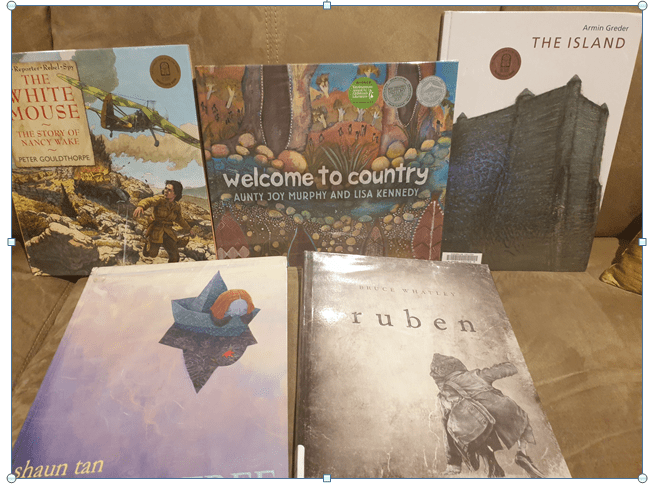
There is a plethora of literary texts that can be effectively used within text sets. Picture book examples include, Pascoe’s Young Dark Emu (2019), Barbara Knox’s Forbidden City (2006), Gouldthorpe’s The White Mouse (2015), and Zee & Innocenti’s Ericka’s Story (2013), whereas Spiegelman’s Maus (1991) is a fantastic Holocaust source for teenagers about the Holocaust. Other texts of value include Anne Franks’ Diary (1947), Kokoda (2004) by Peter FitzSimons, Simpson and his donkey (2008) by Greenwood, The Rabbits (2008) by Marsden and Pemulway, and The Rainbow Warrior (1988) by Willmot to name a few. Interestingly, Lannin (2020) suggests the use of poetry in text sets as it asks students to look beyond the text and into the imagery that it offers. This means that plays, songs and poems such as Manning’s Close to the bone (1994), Roach’s Took the Children away (1989) and Mackella’s My country (1904) would be useful additions to multidimensional text sets (Lannin et al., 2020).
Contraindications:
Even though there is sufficient information available as to the efficacy of utilising text sets as part of pedagogical practices for a diverse classroom, there are detractors with their concerns. These reluctant teachers feel that there is insufficient time to use literature and literacy strategies due to pressing and continuous assessment (Balkus, 2019, p.25). But their fears are misplaced. Students are still able to gain content knowledge from literary sources and at the same time, bolster their own literacy abilities and cognitive processes (Derewianka, 2015; Balkus, 2019, p.25).
Conclusion:
The inclusion of text sets has many benefits within a diverse classroom. It utilises a compilation of resources to heighten background knowledge, improve student engagement, ameliorate literacy and increase textual comprehension (Lewis & Strong, 2020, p.41). Whilst the benefits are easily visible with text diversity, the greatest educational benefit arises from the explicit instruction of literacy strategies whilst using the text sets in a student centred manner (Lewis & Strong, 2020, p.41; Lupo et al., 2019, p.520). This shows that text sets can be effectively administered and utilised across the curriculum to effectively teach content and bolster literacy and improve learning outcomes.
REFERENCES:
Balkus, Brenna C. (2019). Utilizing Text Sets To Teach Critical Literacy: Bringing Literacy Into The Social Studies Middle School Classroom. School of Education Student Capstone Projects. Retrieved from https://digitalcommons.hamline.edu/hse_cp/309
Batchelor, K. E. (2017). Around the world in 80 picture books: Teaching ancient civilizations through text sets. Middle School Journal, 48(1), 13–26. https://doi-org.ezproxy.csu.edu.au/10.1080/00940771.2017.1243922
Beck, P. (2014). Multigenre Text Set Integration: Motivating Reluctant Readers Through Successful Experiences with Text. Journal of Reading Education, 40(1), 12–19. CSU Library.
Cervetti, G.N., & Hiebert, E.H. (2019). Knowledge at the center of English language arts instruction. The Reading Teacher, 72(4), 499–507. https://doi.org/10.1002/trtr.1758
Creighton, J. (6th February, 2014). Isaac Asimov: Science fact and science fiction. Futurism. https://futurism.com/isaac-asimov-science-fact-and-science-fiction
Derewianka, B. (2015). The contribution of genre theory to literacy education in Australia. In J. Turbill, G. Barton & C. Brock (Eds.), Teaching Writing in Today’s Classrooms: Looking back to looking forward (pp. 69-86). Norwood, Australia: Australian Literary Educators’ Association. Retrieved from https://ro.uow.edu.au/cgi/viewcontent.cgi?article=2620&context=sspapers
Elish-Piper, L., Wold, L., & Schwingendorf, K. (2014). Scaffolding High School Students’ Reading of Complex Texts Using Linked Text Sets. Journal of Adolescent & Adult Literacy 57 (7). DOI: 10.1002/jaal.292 © 2014 International Reading Association (pp. 565–574). CSU Library
Hoch, M., McCarty, R., Gurvitz, D. & Sitkoski, I. (2019). Five key principles: guided inquiry with multimodal text sets. The Reading Teacher 72 (6) pp701-710. International Reading Association CSU Library.
Howell, H. (2016). Embedded nonfiction ideas for Macbeth. Teach like a champion [Blog]. Retrieved from https://teachlikeachampion.com/blog/helen-howell-shares-embedded-nonfiction-ideas-macbeth/
Kay, J. (23rd February, 2012). Prophets of science fiction: Jules Verne Recap. ScienceFiction.com. https://sciencefiction.com/2012/02/23/prophets-of-science-fiction-jules-verne-recap/
Lannin, A., Juergensen, R., Smith, C., Van Garderen, D., Folk, W., Palmer, T., & Pinkston, L. (2020). Multimodal text sets to use literature and engage all learners in the science classroom. Science Scope, 44(2), 20–28.
Lewis, W., & Strong, J. (2020). Chapter 3 – Designing content area text sets. In Literacy Instruction with Disciplinary Texts: Strategies for Grades 6-12. Guildford Publications. CSU Library.
Lupo, S., Berry, A., Thacker, E., Sawyer, A., & Merritt, J. (2019). Rethinking text sets to support knowledge building and interdisciplinary learning. International Literacy Association 73 (4). Pp. 513-524. CSU Library. DOI:10.1002/trtr.1869
Lupo, S., Strong, J., Lewis, W., Walpole, S., & McKenna, M. (2017). Building background through reading; Rethinking text sets. Journal of Adolescent and Adult Literacy 61(4), p.433-444. https://doi-org.ezproxy.csu.edu.au/10.1002/jaal.701
Pennington, L. K., & Tackett, M. E. (2021). Using Text Sets to Teach Elementary Learners about Japanese-American Incarceration. Ohio Social Studies Review, 57(1), 1–14.
Mania, K., Mabin, L.K., & Liebenberg, J. (2018). ‘To go boldly’: teaching science fiction to first-year engineering students in a South African context. Cambridge Journal of Education 48 (3), pp389–410, https://doi.org/10.1080/0305764X.2017.1337721
NSW Department of Education. (2020). Planning EAL/D support. Multicultural Education. https://education.nsw.gov.au/teaching-and-learning/curriculum/multicultural-education/english-as-an-additional-language-or-dialect/planning-eald-support
Parker, G. (2018). The top 20 scientific breakthroughs in history. MoneyInc.com. https://moneyinc.com/top-20-scientific-breakthroughs-history/