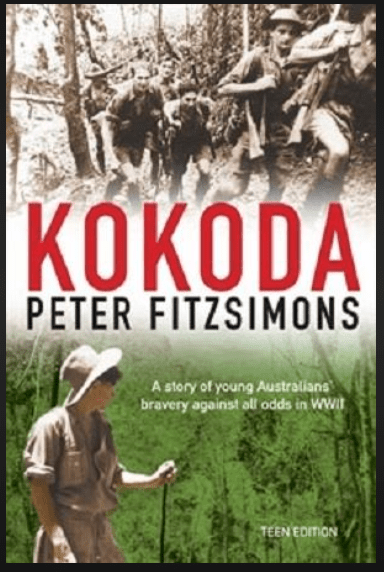
THE BOOK: Kokoda (Teen Edition) by Peter Fitzsimons.
Published by Hachette Australia in 2016
Cover reproduced with permission from Kokoda: Teen edition by Peter FitzSimons, Hachette Australia, 2016.
The Summary: Kokoda is a well written narrative non fiction book by an acclaimed Australian writer Peter Fitzsimons. The story is about a group of young Australian men, most still teenagers, trying to make a stand against the much stronger Imperial Japanese Army in the treacherous terrain of Papua New Guinea. The story of the Kokoda trail is eerily similar to Gallipoli, and for many people this historical event builds upon the ANZAC legend. Aimed at readers over 12 years old, this book is ideal for teenagers to read for recreational and academic purposes.
The Good: Fitzsimons captures the essence of the young Australian men magnificently. His use of colloquial language and casual references to Sydney strests gives the reader confidence in the author’s authenticity and veracity. Kokoda is a well written text that describes the events of 1942 in superb detail. Battle scenes and forced marches are brought to life vividly. His use of language was subtle, allowing the reader to become engaged with the story but at the same time not overwhelming them with military jargon and complex sentences. This book’s storyline and prosaic style would suit teenage boys very well.
The Bad: The format of the book was consistent with other expository texts with the inclusion of a contents page, maps, photographs, reference list and index. But unlike many other information texts, this book did not have any other additional resources, such as links to further reading or websites such as the Australian War Memorial Kokoda Collection.
The Interesting: It was interesting reading Fitzsimons’ perspective on the Kokoda campaign as his stance differs from the viewpoints of other war writers and journalists. Unlike the official war reports, Fitzsimons is quite scathing of the military hierarchy’s competency. He is very blunt in the way he points out that Australians died in New Guinea because of mismanagement. He also points out the conflict between the celebrated MacArthur’s battle plan and Pott’s frontline perspective. Fitzsimons is just short of scathing in the way he refers to MacArthurs’s speaking of battle tactics whilst safely ensconced in his office over 2000 km away from the jungles of New Guinea. He also discusses the Battle of Milne and points out the manner in which MacArthur claimed the victory as part of his plan rather than the effort of Australian boots on the ground.
The Verdict:Kokoda meets content standards within the Year 10 History Curriculum – Experiences of Australians during World War 2. It is an excellent resource for teenagers as it contains both facts and figures, yet written in a narrative style. This style allows the reader to become engaged with the text and have an increased recall of the information within. Intermixing prose and factual information requires the reader to become more analytical and thus improves critical thinking skills. The conflicting views that Fitzsimons offers about MacArther gives the reader a chance to question bias in texts. The book also allows the reader to connect their prior knowledge of the Gallipolli digger to the story of the Kokoda trekker and build their knowledge of Australian history. Additionally, as the book is classified as a non fiction resource, more classroom teachers are comfortable using them as resources for teaching and learning. This is because some educators have an unconscious bias towards the implementation of literature outside the language arts curriculum. Kokoda would be an asset for high school library collections and a useful literacy resource.
The books we read out loud are the ones that resonate the most within us and are the ones we remember most clearly.
Reading out aloud to children is an effective way of improving literacy and picture books are ideally suited to the task. The whole concept of reading out loud is very familiar to students. Most children understand the notion of a bedtime story or just story time in general and do not view it as a threatening experience. As the text themselves are quite brief and usually accompanied by illustrations, students who have learning needs and or have low literacy, are more likely to participate willingly. Jewett, Wilson & Vanderburg (2011) reminds us that literacy is a dynamic interaction between the reader and the text. Discussion groups can be used to increase the relationship between the two as comprehension of the text increases if there are connections made between real life and the text (Jewett, Wilson & Vanderburg, 2011).
From a pedagogical perspective, there are several benefits to reading out aloud to students of all ages. One reason is that the practice of reading to children (and teenagers), increases fluency and improves comprehension (Winch & Holliday, 2012, p.120; Allington & Gabriel, 2012). This is because the proficient reader models pronunciation, tone and inflexion of the text, allowing the children to piece the visual images, text and sounds together to create a multimodal experience. Other reasons include, increasing vocabulary, improving visual literacy as well as the ability to broach sensitive social issues in a delicate manner. But the greatest benefit that arises from read aloud sessions is the discussion that occurs before, during and afterwards (Allington & Gabriel, 2012; McDonald, 2013). Fisher & Frey (2018) point out that discussions have a very strong influence on student learning as it is based upon the central concept of shared reading or common reading experience (Jewett, Wilson & Vanderburg, 2011).
Discussions can be done as a whole class or small groups, in a book club or literature circle (Fisher & Frey, 2018, p.92). The point of the discussion is to allow students to collaborate with their peers and have a free exchange of ideas in order to critically evaluate the text (Fisher & Frey, 2018, p.92). The role of the teacher and or teacher librarian in these discussions is not to lead the conversation but rather facilitate the collaboration by creating a safe space and implementing strategies that encourage lateral thinking (Fisher & Frey, 2018, p.92).
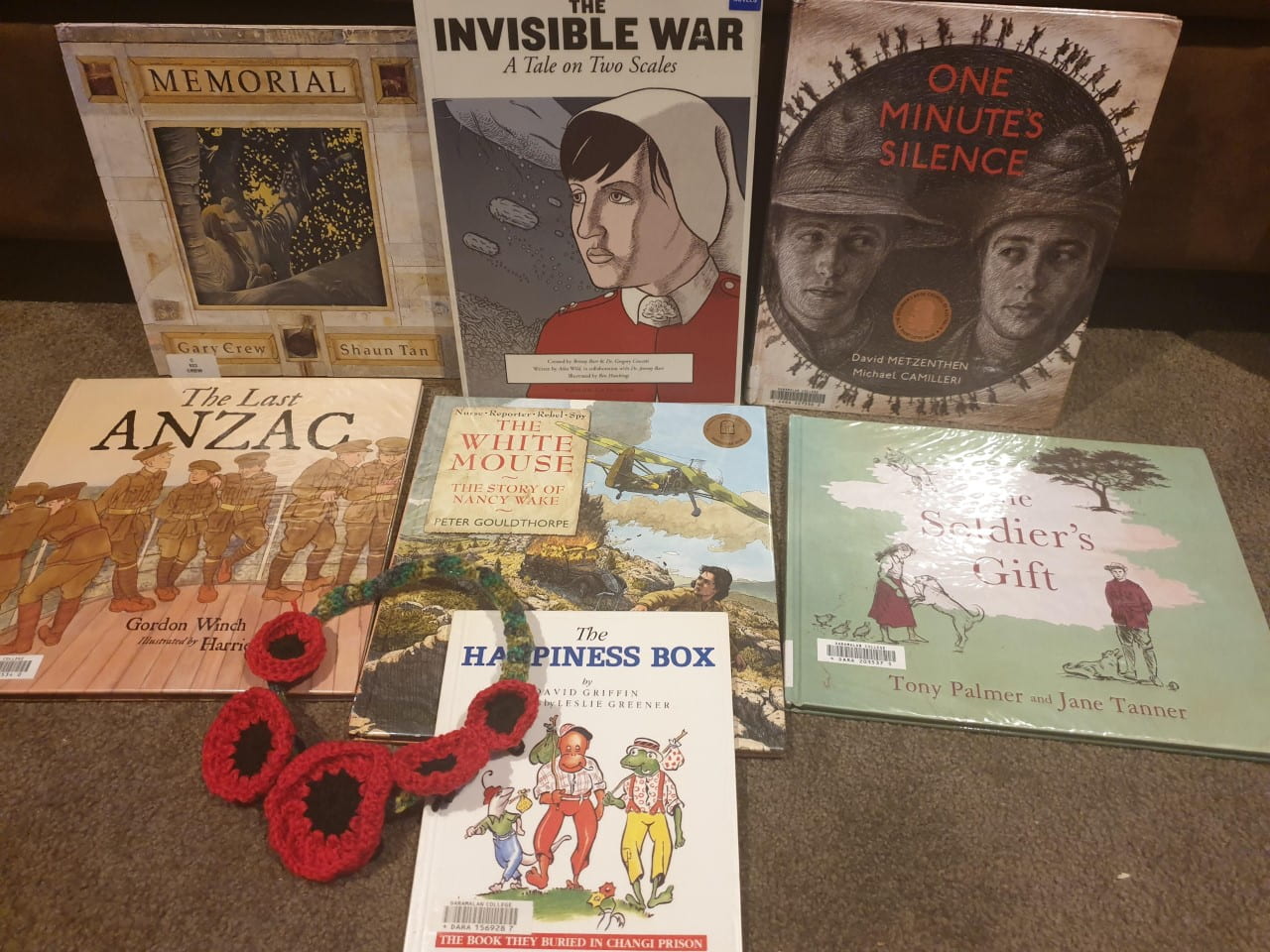
Good narrative nonfiction picture books are able to give students the same pleasurable experiences and cognitive change as fiction (Kiefer & Wilson, 2010; Morris, 2013). Their use of narrative techniques such as theme, character and plot are cleverly intertwined with factual information to create a format that is appealing and instructive (Morris, 2013; Cornett, 2014, p.151). The picture books listed up above are all cleverly crafted and have the ability to increase cognition in the reader. This cognitive change causes increased self awareness and actualisation within the student (Morris, 2013; Kiefer & Wilson, 2010).
Non fiction picture books are also capable of increasing critical thinking skills. I have previously mentioned the benefit of narrative nonfiction in my book review of “After Auschwitz”, so I will just briefly summarise the following. The interweaving of factual information and prose forces the reader to sieve through the text to determine the critical information. This sieving, analysis and evaluation of text increases critical thinking and promotes good media literacy.
In a world full of medicinal bleach, fake news and click bait, critical thinking and media literacy are important!!
There are many aspects within the role of a teacher librarian. One of these roles is to advocate the role of fiction in the teaching and learning. The reason for this is simple. Fiction, or aka storytelling, is an innate part of being human (Cornett, 2014). It is the simplest and most efficient way humans have of learning about ourselves, our identity, our history, society and language (Cornett, 2014). By implementing narratives and narrative non fiction into the curriculum, educators are increasing the zone of proximal development between the student and the curriculum, which in turn increases engagement with the content (Hashim & VongKulluksn, 2018).
What does this mean for teachers and educators?
It means that there needs to be a more assertive role for narratives in pedagogical practice.
Cornett, C. E. (2014). Integrating the literary arts throughout the curriculum. In Creating meaning through literature and the arts: arts integration for Classroom teachers (5th ed,) (pp144-193) USA
Jewett, P. C., Wilson, J. L. & Vanderburg, M.A. (2011). The unifying power of a whole school read. Journal of Adolescent & Adult Literacy, 54(6), 415-424. doi:10.1598/JAAL.54.6.3
Keifer, B. & Wilson, M. I. (2010). Nonfiction literature for children: Old Assumptions and new directions. In S. Wolf, , K. Coats, , P. A. Enciso & C. Jenkins (Eds). InHandbook of research on children’s and young adult literature (pp. 290-301). Retrieved from Proquest Ebook Central.
Winch, G., & Holliday, M. (2014). Chapter 6 – The reader and the text. In G. Winch, R. Ross Johnston, P. March, L. Ljungdahl & M. Holliday (Eds.) Literacy: Reading, writing and children’s literature (5th ed., pp.109-128). Melbourne: Oxford University Press.
One girl lived. The other died. Eva Schloss survived the Holocaust. She survived Auschwitz. Her step-sister Anne Frank did not.
Eva’s autobiography, “After Auschwitz” is an excellent example of narrative non fiction. Beautifully written, this book encapsulated the heartache, loss and survivor’s guilt that Eva felt in the years after the war. The inclusion of narrative techniques such as theme, plot and character development, allows the reader to engage deeply with the text and the author. The story beautifully interweaves factual information with prose, causing the reader to undergo a cognitive and emotional shift towards self actualisation of themselves, their community and greater society.
“After Auschwitz” uses storytelling as a method of affecting the cognitive and emotional development of the reader. From an anthropological perspective, human beings are ingrained to respond to stories as a method of conveying folklore, information and heritage. Literary nonfiction, also known as narrative nonfiction, is a sub genre of literary work that uses fictitious elements to convey important data. Many educators advocate the implementation of literature within the curriculum as a method to engage and inform students. Most commonly seen in art, history and science disciplines, literary nonfiction is often used by educators to impart pertinent information in a captivating format across all levels of schooling. Schloss’ autobiography fulfills Year 10 English and History curriculum as well as the General capabilities in Literacy and Ethical Considerations (ACARA, 2014a; ACARA, 2014b; ACARA, 2014c; ACARA, 2014d). Therefore, from a secondary school perspective, this piece of narrative nonfiction addresses the needs of the students and the curriculum.
Literary nonfiction (NF) is an eminent method of introducing facts to students of all ages as the use of storytelling to convey information is an ancient one. From the time of oral traditions, narratives have been used to instruct and inform (Gill, 2009). Storytelling has the ability to convey social values, improve recognition of self, and increase tolerance and empathy (Comer-Kidd & Castano, 2013). According to Cornett (2014), narrative non fiction allows readers to engage with the narrative overtly and covertly comprehend and understand the facts (p.161). Most commonly seen in the fields of arts, science and history, literary nonfiction has subgenres of exposition, argument and functional (Morris, 2013). Non fiction picture books, biographies such as “After Auschwitz”, autobiographies and memoirs are excellent examples of narrative non fiction texts commonly found in secondary school libraries.
Good narrative NF is designed to give the same pleasure and enlightenment as fiction, using techniques of theme, character and plot development to impart factual information (Kiefer & Wilson, 2010; Morris, 2013). This storytelling execution connects carefully researched factual elements into a structure that is appealing and memorable to the student (Morris, 2013; Cornett, 2014, p.151). Schloss’ heartfelt retelling of her time in Auschwitz is remarkably vivid. Her memories and descriptions of the death camps are carefully crafted together to create a literary work that increase self awareness in the reader, leading to a change in cognition, self awareness and actualisation about the way the reader thinks about themselves, their society and the world in general (Morris, 2013; Kiefer & Wilson, 2010).
Literary NF such as biographies are easier for students to engage with as their structure is familiar and raises less resistance from reluctant readers and students with low literacy (Gill, 2009). Schloss’ text increases vocabulary with subject specific language such as ‘concentration camp’ and ‘Gestapo’ in a non threatening manner (Gill, 2009). Additionally Cornett (2014) found recall of information is higher from narrative non fiction than information texts (p.151). This is shown by the way the reader engages with Eva. This personal engagement with the character increases their cognitive and developmental change and therefore improves their recall of pertinent information.
Narrative NF increases critical thinking skills because the factual information within the text is woven into the storyline (Morris, 2013). This means the reader has to critically analyse the text to infer, evaluate and make their own conclusions. Eva’s survivor guilt manifested by the time and effort she poured into the Anne Frank Centre with her step-father Otto Frank. But this guilt is not explicit in the text. It is implicit and needs to be deduced from the language used within the text and from prior knowledge of other survivors. Students who engage with narrative NF on a regular basis improve their critical thinking skills, which in turn translates to increased ability to comprehend information texts in other disciplines. Literary nonfiction is also an excellent resource for stimulating class discussions, inquiry and other collaborative learning groups (Morris, 2013).
An unlikely benefit of increasing literary non fiction into secondary school collections is meeting the literacy needs of reluctant readers. Many students prefer non fiction texts to fiction, specifically young adolescent males preferring factual texts to fiction as they view fiction as ‘unrealistic’ and ‘unnecessary’ as well as ‘unconnected’ to the real world (Harper, 2016; http://www.k12reader.com). This disinclination is often visible when students are required to read prescribed texts as part of their teaching and learning. The inclusion of narrative NF means that students who are disinclined to read fictitious texts can be offered a suitable narrative NF as an alternative and thus are able to meet the learning outcomes. It is also important to point out that biographies, autobiographies and memoirs are excellent examples of narrative nonfiction. These texts have all the literary features to placate the soul as well as provide opportunities for students to envision any life long passions and career choices (National library of NZ, 2014).
One of major issues with using literary NF in classrooms is that some students struggle to see the difference between narrative NF and fiction (Kiefer & Wilson, 2010). It is possible that students confuse fictitious texts such as Boyne’s ‘the boy in the striped pajamas’, Zusak’s ‘Book Thief’ and Zail’s ‘The wrong boy’ with Schloss’ biography. But is this not due to a lack of critical literacy? By encouraging the use of narrative NF in classrooms, teachers and teacher librarians are able to explicitly teach students how to analyse the text, make inferences and draw conclusions. It is only by practicing these skills at regularly can students practice their critical thinking skills.
From a collection and curriculum perspective, there is a strong push from curriculum leaders to implement the use of informational texts such as textbooks, with their facts, figures and images rather than narrative NF (McNeil, 2015). This is under the false assumption that texts with clear curriculum links have more value than resources that are aesthetically pleasing and address emotional development (Barone, 2011, p.18). Teacher librarians and educators need to combat this misinformation by using evidence based practice to integrating literature across the curriculum.
Narrative nonfiction is an excellent source of literary text in secondary school classrooms. Their dual functionality of information and prose are able to engage students, provide them with relevant and pertinent information, as well as increasing their cognitive and emotional development. Any fan of Anne Frank’s diary would engage deeply with this biography. “After Auschwitz” addresses the curriculum appropriately, engages deeply with the reader and addresses the emotional, cognitive and behavioural development of adolescents. It would make an excellent resource in high school library collections.
Comer Kidd, D. & Castano, E. (2013). Reading literary fiction improves theory of mind. Science, 342(6156), 377-380.This article reports experimental evidence that reading passages of literary fiction, in comparison to nonfiction or popular fiction, enhances the reader’s performance on theory of mind tasks.
Cornet, C. E. (2014). Integrating the literary arts throughout the curriculum. In Creating meaning through literature and the arts: arts integration for Classroom teachers (5th ed,) (pp144-193) USA
Keifer, B. & Wilson, M. I. (2010). Nonfiction literature for children: Old Assumptions and new directions. In S. Wolf, , K. Coats, , P. A. Enciso & C. Jenkins (Eds). In Handbook of research on children’s and young adult literature (pp. 290-301). Retrieved from Proquest Ebook Central.
Change is inevitable and society has seen great changes to the way it functions. The current technology revolution has changed the way people earn, communicate, work, live, study and recreate. According to Vygotsky’s socio-cultural theory, reading and learning work symbiotically together with strong influences from language and technology (Hashim & VongKulluksn, 2018). Therefore by this theory, changes in technology resonates how learning, language and literacy manifests in communities. This is evident in the way the definition of literacy has expanded. Previously the term ‘literate’ was used to describe individuals who were able to read and write. But the current definition includes the skills and knowledge required to access, use, understand and express ideas, thoughts and feelings, across multiple modalities, and in all contexts of life (ACARA, 2014). The broadening of the definition is directly related to the evolving nature of technology and its impact upon the way literature and books are read, comprehended and evaluated (Sargeant, 2015; Jabr, 2015).
The concept of the book changes with every technology revolution and corresponding societal change. From prehistoric stone tablets, to Ancient Egyptian papyrus and Roman vellum scrolls, to the innovative Gutenberg printing press, books have evolved with technology, and at each transformation, the reading paradigm changes (Mangen, Walgermo & Bronnick, 2013). The modern definition of a book can include the traditional paper form, as well as electronic versions that can be read on devices such as mobile phones, tablets and laptops along with audiobooks, online books, and other digital products such as applications and websites (Springen, 2010). This emergence of these new digital texts require additional skills and strategies in order for the reader to comprehend the narrative (Jabr, 2015; Mangen et al., 2013; Sekeres & Watson, 2011). As part of evidence based practice, secondary school teachers are encouraged to adapt their pedagogical practices to address these technological and societal changes to ensure that their students possess the relevant skills and strategies to become active participants in society.
Reading has often been characterised as the product of an individual’s ability to decode and comprehend the text and is viewed as a fundamental human skill (Moore & Cahill, 2016, p.4). Engagement in reading is linked to improved student learning and long term academic success (Moore & Cahill, 2016; Hashim & VongKulluksn, 2018). Unfortunately many teenagers and young adults are reluctant to read and this reluctance can impact their education as well as their social capital and identity formation (Moore & Cahill, 2016). Many education departments across the world have increased funding for technology in schools to boost literacy and reading rates in an effort to halt declining literacy (Keen, 2016). In turn, educators seek to identify pedagogical practices that will increase student motivation for reading and in turn, improve overall literacy.
Technology has been often cited for its ability to improve educational outcomes due to its engaging format. Morris & Cahill (2016) has determined that technology has a stronger preference in secondary compared to primary aged students. Since motivation to read and cognitive experiences when reading works via a positive feedback mechanism, it makes sense that digital literature should lead to increased reading rates and improved literacy (Hashim & VongKulluksn, 2018). Furthermore, Taylor (2018) suggests that the complex nature of digital storytelling is suitable for teenagers as they are familiar with using devices and are comfortable switching between screens and print.
Technology in literature, also known as digital literature, encompasses ebooks, audiobooks, interactive media and mobile applications. Each of these technologies, delivers narratives in their own individual way and requires a variety of skills and strategies for decoding and comprehension. Many teachers and teacher librarians are tasked with identifying technology based literature in an effort to increase engagement and improve educational outcomes.
Sargeant (2015) defines an ebook as the static digitised version of a print text with its familiar features of virtual pages, book gutters and page turning animation. Access to ebooks can occur both onsite and offsite as they can be retrieved and delivered digitally to mobile devices with embedded features (Hashim & VongKulluksn, 2018). Examples include Kindle application, where ebooks purchased from Amazon can be accessed through, or BorrowBox and Wheelers, that allow for borrowing of titles and are often affiliated with public and school libraries. Some ebooks for older readers have various levels of interactivity, such as hyperlinks and in built media are commonly found in secondary expository or information texts such as text books (Sargeant, 2015). Their increased popularity with older readers is due to portability and ability to retain text anonymity (Dickenson, 2014). But ebooks that are designed for younger and less literate readers have lower levels of interactivity and contain more skeuomorphic features to reduce distraction from the main point (Sargeant, 2015) .
Jeon (2012) promotes the use of ebooks in schools as they support academic instruction, are time efficient as well as provide a dynamic and cost effective way of managing a collection. Ebooks can also be integrated into library management systems and thus are available for to be borrowed by students at any time, including in times of pandemics and forced isolation (Jeon, 2012). These apps are designed to assist readers in retaining anonymity in title choice, as well as allow access to a wide range of reading levels which encourages independent reading and promotes bibliotherapy (Hashim & VongKulluksn, 2018).
Audiobooks are increasing in popularity with readers from all generations (Moore & Cahill, 2016). The most prevalent use of audiobooks in schools are, students with low literacy and learning difficulties as well as second language learners (Moore & Cahill, 2016, p.5). Hiebert, as cited in Moore & Cahill (2016) argued that language and the fundamentals of narratives can be conveyed through auditory processes, as language-comprehension system in the brain permits text engagement and comprehension (p.3-4). Other benefits to the implementation of audiobooks in teaching and learning processes include, improving vocabulary, promoting oral language, as well as strengthening links between oral and written literacies (Moore & Cahill, 2016, p.4). Audiobooks can be easily accessed on personal devices and offer the same level of anonymity as achieved by ebooks. Anonymity is very important in secondary schools, particularly for students with low literacy who need to access ‘different’ texts (Dickenson, 2014).
Whilst there are many different reasons why students struggle to read, the most common reasons in secondary schools include, insufficient vocabulary, incorrect decoding and a lack of fluency (Moore & Cahill, 2016, p.5). Access to audiobooks allows students who struggle with the aforementioned inadequacies to engage with the text and develop their reading accuracy as well as potentially improving any behavioural management that arises from disengagement and disenfranchisement (Moore & Cahill, 2016, p.6). Audiobooks address these needs and therefore it is possible to surmise that this technology is able to provide the reader the same rich experience that is afforded by print text.
Interactive media (IM) has exploded in recent years and this is impacting teaching and learning (Cullen, 2015). Some examples of interactive media include digital books, online books, book applications and websites. Lamb & Johnson (2010) argue that IM causes readers to shift from being passive receivers to active participants. This is because IM is able to engage students in the content via multiple entry points and therefore encourages learning through experience and experimentation (Lamb & Johnson, 2010; Cullen, 2015). IM narratives are able to tell dual stories, as well as bring the images to life whilst providing a brilliant way to connect emerging technologies to the curriculum (Cullen, 2015; Taylor, 2018).
One example of IM are book applications (apps). Book apps are software programs that are designed to engage students by delivering high levels of interactive media rich content (Sargeant, 2015). They integrate multiple modes of communication so that the text and visuals are fused to create a story that requires the reader to transform into a user by their interaction in the narrative with a touch screen (Sargeant, 2015). This process of action and outcome is based upon gamification principles already present in the rewards based system currently practiced across most school systems. Gamification uses extrinsic motivation in learning and teaching practice. But Briggs (2016) cautions the use of gamification in assessment. The reason for this caution is that the motivation to succeed arises from the low personal stakes the reader has with the text, as well as the elusive but reachable goals.
IM has the capacity to cater to the needs of a varied classroom because of a student’s ability to work at an individual pace and the multiple entry points allows for differentiation. There is also a possibility for educators to use IM to create scenarios, as a mechanism to introduce students to new units of work, or introduce assessment pieces in an engaging format (Lamb & Johnson, 2010). Cullen (2015) believes that application led learning bolsters motivation and engagement in students, which is essential for improved learning experiences and positive outcomes.
There are valid contraindications to the use of technology in educational settings. Studies have shown comprehension is lower in narratives and expository texts when a device is used (Jeon, 2012; Mangen et al., 2013). Jeon (2012) believes that within some forms of technology, the complex nature and formatting of the text causes too great a cognitive load on students and thus it negatively affects comprehension. Hashim & VongKulluksn (2018) concur and point out that students often become distracted in their attempt to multitask on devices, which leads to decreased metacognitive regulation and reduces text completion.
The format of text is also important for comprehension. Digital literature in all forms have lower comprehension rates in comparison to traditional texts (Jeon, 2012; Mangen et al., 2013). One of the other main reasons for this unfavourable comparison is visual ergonomics. Visual ergonomics, such as lowered spatial stability, leads to a negative mental representation of the text (Mangen et al., 2013, p.66). Good readers have a high mental recall of information positioning in text. Consequently, limited mental representation restricts recall and makes it harder for students to construct new banks of knowledge from individual pieces of information. One suggestion to combat this limitation and to promote a more equitable approach in classrooms is to limit digital reading to short extracts only, and it to be of low stakes value rather than summative assessment (Mangen et al., 2013, p.66).
I obviously have not taken my own advice and have written an epic instead of a synopsis!
Hashim & VongKulluksn (2018) suggests that whilst e-readers provide context and analysis, it lacks the social factor that discussion groups and literature circles provide. There is also an implication that educators fail to treat e-readers like they treat print texts, and therefore provide less scaffolding to students leading to lower comprehension rates. This failure could be due to a lack of personal knowledge to the functionality of e-readers, or simply that teachers are not physically able to see how much of the text the student has engaged with and thus forget to offer assistance (Hashim & VongKulluksn, 2018). Therefore, in the interests of equity, it is important that ebooks are scaffolded in the same way as a print books because, as students gain mastery in their reading, scaffolding can be adjusted to help their progress from a low to a higher mental function (Hashim & VongKulluksn, 2018).
There are other obstacles to using ebooks in educational settings. Primarily, students are not motivated to use e-readers for learning. This could be due to the fact that e-readers are no longer considered a novelty, that devices themselves are commonplace, and lastly, that traditional texts actually provide greater enjoyment than digital literature (Hashim & VongKulluksn, 2018). Ebooks have also been known to cause eye irritation which in turn reduces surface legibility, and increases eye strain and mental fatigue (Jeon, 2012). These physical demands lead to an increased error rate and reduces overall comprehension, which in turn leads to a lower perception of ereaders and ebooks (Jeon, 2012). Other than diminishing comprehension, ebooks can also be seen as tedious in comparison to other entertainment found on devices (Jeon, 2012). Though there is some suggestion that digital natives are resistant to these issues as they are more familiar with technology (Jeon, 2012).
Some educators are reluctant to provide audiobooks to their students in lieu of print texts as they can be viewed as ‘cheating’. But Dahl (2016) disagrees with and finds that audiobooks provide the same learning experience as reading after a certain level of literacy has been reached. This is based upon the theory that the decoding specific to reading becomes instinctive after a certain point in literacy is achieved (Dahl, 2016). The reasoning is that ‘reading comprehension’ is similar to ‘auditory comprehension’ and that echoic memory is comparable to the visual system of eye regression, though the concept of ‘flipping back’ is a bit more problematic in an audiobook (Dahl, 2016).
The current predominate argument surrounding school is that digital media will engage reluctant readers and therefore improve learning outcomes (Springen, 2010; Cullen, 2015). But some educators argue that these alternative texts lack equity as they are limited to students and schools with digital access and financial security (Sekeres & Watson, 2011). Sekeres & Watson (2011) even go further to suggest that educators need to be aware that children are often targeted as consumers in their own right and therefore teachers need to be circumspect when they select digital literature that it actually leads to learning and not just entertainment.
From a school collection perspective there are significant issues with ebooks and audiobooks, namely access and cost (O’Connell, Bates & Mitchell, 2015). This is due to the fact that both ebooks and audiobooks require a personal device such as a mobile phone or tablet and many younger students do not have that level of access. They also require a financial contribution and or a library membership, which again can be limiting for younger students to practice their digital literacy skills. One suggestion to address the rising cost of digital literature is to promote public library memberships in schools. Students who have library memberships at school, local and state libraries, have access to a wide range of texts in both print and digital formats. Some larger institutions also offer electronic access to databases and periodicals which is very useful for secondary students. This reduces the cost to the individual and school systems without limiting access to information.
Licencing and leasing are problematic when it comes to digital literature. Physical books are bought by the library, require no device to use, and are useful till the book gets lost, deselected or falls into disrepair. Ebooks in comparison, are either downloaded (purchased), or borrowed and both require a device and the internet to be used. These devices, such as iPods, ereaders, laptops and tablets can be quite expensive for school libraries and students to purchase and maintain (Gray, 2017). Additionally, if a school library chooses to use a platform such as Borrowbox or Wheelers as their access point for ebooks and audiobooks, they are limited by that publisher’s collection as to what titles meet the developmental needs of the students and curriculum requirements (Gray, 2017). Teacher librarians need to be cautious when selecting platforms for digital literature that they are not limiting their readers to resources based upon publishing contracts and nepotism. Furthermore, the school may not own ‘loaned titles’ and may have to pay a leasing or access fee on a yearly basis. So whilst there seems to be great flexibility, especially with regards to remote access, there can be some stringent financial restraints for schools when it comes to building a robust ebook and audiobook collection.
O’Connell, Bates & Mitchell (2015) suggest that the goal of school libraries is to adapt to the digital needs of the student cohort, which means that the reading culture has to be addressed as well as ensuring a divergence of media is available. Therefore, teacher librarians and school library collections are tasked with ensuring students are given ample access to the different forms of media for teaching and learning across the curriculum as well as for recreational purposes. This means access to both traditional and digital forms of literature. But promotion of wide reading programs and access to emerging literature trends needs to be buttressed by pedagogical practices that support reading and comprehension across the various domains.
The question for teachers, teacher librarians and other educators is that will these new media forms benefit the teaching and learning practices in classrooms, and more specifically, secondary classrooms? It is clearly evident that the information revolution has changed the way society is functioning. Therefore it is important that students gain the skills and knowledge to succeed in this modern world. From the evidence provided, secondary students are more receptive to digital literature because of its engaging format, portability and text anonymity. But many lack the reading and comprehension skills to fully understand the nature of the text and therefore are at a literacy disadvantage. Educators need to recall the importance of culture and tools in Vygotsky’s theory of learning and provide access to a range of literature across the various forms of media. The reading paradigm has changed and teachers must change their teaching and learning to suit this new world.
Gray, M. (2017). Ebooks: To subscribe or not to subscribe? Connections, 101. Retrieved from scis.data.com/connections/issue-101/ebooks-to-subscribe-or-not-to-subscribe
Jeon, H. (2012). A comparison of the influence of electronic books and paper books on reading comprehension, eye fatigue, and perception. The Electronic Library, 30(3), 390-408. doi: 10.1108/02640471211241663
Moore, J., & Cahill, M. (2016). Audiobooks; Legitimate ‘reading’ material for adolescents? Research Journal of the American Association of School Librarians. Retrieved from www.ala.org/aasl/slr/volume19/moore-cah
O’Connell, J., Bales, J., Mitchell, P. (2015). [R]Evolution in reading cultures: 2020 vision for school libraries. The Australian Library Journal, 63(3), 194-208. DOI: 10.1080/00049670.2015.1048043
“First the teachers died, one by one. Then it began to infect the students, turning their bodies strange… left to fend for themselves on their island home, the girls don’t dare wander outside the school’s fence… they wait for the cure they were promised”.
Wilder Girls (2019) by Rory Power is a dystopian novel set in a boarding school on an island off the American seaboard. A strange, body transforming disease that infects all living life, lurks in the forest surrounding the school and has started to infect everything on the island. The authorities, worried about this disease leaking out, have shut down all access to the island leaving the girls to fend for themselves. With an eerie similarity to Golding’s Lord of the Flies, Wilder Girls highlights humanity’s anthropological need to set up a social hierarchy in the absence of an established system. But unlike Golding’s work, Power showcases the strength of human connectedness between the protagonist Hetty and her best friend Byatt. It is this robustness of this connection that spurs Hetty to search for her friend in the disease ridden woods.
Dystopian novels have always been traditionally favoured with teenagers. Marsden’s Tomorrow when the war began, Grant’s Gone, Roth’s Divergent, Dashner’s Maze Runner and Collin’s Hunger Games are just some examples of this genre and are all popular titles. Dystopian fiction has traditionally been based around conflict between an individual and society and often has fantastical elements. Their appeal to teens is based upon their ability to address inner angst in teenagers and rebellious ideologies (Basu, Broad & Hintz, 2013). Additionally, this genre allows the reader to make moral observations about society in general. In Power’s Wilder Girls, Hetty and Byatt have a physical altercation over an orange even though they are best friends. In their mind, it’s perfectly acceptable to resort to violence to obtain food, whereas to my mind, it seems abhorrent and distasteful. But I am not hungry, and in many parts of the world, people DO fight for food. In this way, Power points to the quick demise of social trappings of sophisticated society in times of survival and that actions and circumstances need to be evaluated together rather than in isolation. Remember, people were fighting over toilet paper in February and March 2020.
Alexas_Fotos / Pixabay – Toilet paper gate of 2020
Wilder Girls was outside my comfort zone as I originally picked it up as a bit of a lark due to the current COVID-19 pandemic. But whilst the book’s storyline itself was not to my liking ( pandemic and all, yes, I agree, completely wrong time to read this book!), I loved the way Power showcased the friendship between Hetty and Byatt. The sheer connection between these two girls gave Hetty the will to strike out into the unknown to look for her best friend amazed me and brought cheer to my spirit. It reminded me of the movie, Forrest Gump when Forrest went to look for Bubba in the jungles of Vietnam. I won’t tell you the ending of Wilder Girls but I will say that friendship matters.
Peer relationships are important for teenagers, and for people of all ages. It is our relationships, and conflict within these associations with our friends and family that set up our social and emotional frameworks. Reading fiction covertly teaches the reader about emotional regulation that accompanies conflict. This regulation is essential for social development and human interactions and the ability to regulate such emotions is known as emotional literacy (Laurie, 2016). The reading of Wilder girls did not bolster my belief in #scottyfrommarketing to resolve the current COVID pandemic, but rather instead made me reach for my phone to text my girlfriends and say “Hey, I miss you”.
Every man and his proverbial dog knows the importance of reading in young children and thus the inclusion of picture books into primary school libraries is heavily encouraged.
There is skepticism when it comes to including picture books for a high school library collection. The simple reason for this quizzical brow raise is that many people view picture books as infantile. This is because picture books are by definition, mostly pictures with some text, the purview of the young and or uneducated (Marsh, 2010). Their prevalence in schooling years tends to diminish with age because they are assumed to be less literary or simple in nature (Marsh, 2010). But this is a fallacy.
Welcome to the world of sophisticated picture books.
A version of this article was published in SCAN – a Peer Reviewed journal published by the NSW Department of Education in 2020 – Click here to peruse that version.
Literature has always been the core of schooling (Ross Johnston, 2014). From Seneca to Homer, Chaucer to Fielding, Bronte to Orwell, Dickens to Zusak, literature has formed the framework of teaching and learning from the ancient Greeks to current digital natives. ACARA (n.d.b) points out that the English curriculum is structured with literature, language and literacy at its core. This clearly implies that students need to achieve competency in all three strands in order to be considered proficient.
Literacy has evolved from its traditional stance of reading and writing in this information age. ACARA (n.d.a) believes that literacy is the ability to access, interact with, decode, comprehend, use and present information in a meaningful manner. Ross Johnston (2014) concurs that language is useful in organising thought and thus metacognition is the most profound aspect of literacy. Literacy is no longer limited to text but now includes multiple modalities such as written, oral, visual, print and digital forms of information; as well as non traditional text forms such as Braille, Auslan and other gestural sign language. This plethora of modes means that students need to be proficient across multiple literacies for success in this new world order (Wolf, 2014).
Picture books (PB) are commonly used in teaching and learning for young children. Early childhood and primary school teachers often use picture books to teach literacy, content and concepts to their students. But these books are pushing the boundaries in educational practice. Research has shown that picture books can be used to teach older students multiliteracies, curriculum content and broach sensitive subjects (Marsh, 2010). Their use of illustrations and text provoke the reader to look past the overt narrative and search for the covert message. Picture books’s application in literacy and learning is extensive and therefore should be defined as literature.
Traditional picture books follow a linear movement of text and images. Marsh (2010), believes that both images and texts are required for decoding. Unlike illustrated books, where images are the supporting act to the main text event; picture books require images to be the central feature with text working concurrently with the picture (Barone, 2011). Children are able to follow the story as images are often clear and the tone is developmentally appropriate (Marsh, 2010). Titles such as Mem Fox’s Where is the green sheep and Alison Lester’s Are we there yet are perfect examples of traditional picture books. Their format is ideal for younger children as the illustrations assist the reader in decoding the text.
Conversely postmodern picture books are designed to provoke and stimulate the reader with absent or contradictory text (Aitken, 2007). The absence of text encourages the reader to ‘self author’ and fill in the dialogue (Aitken, 2007), as Wiesner’s Flotsam exhibits. In Flotsam, the reader superimposes their own prior knowledge and understanding of the beach to decode the illustrations (Panteleo, 2018). With most Australians living within an hour of the coast, readers readily identify with the illustrations and corresponding fantasies (ABS, 2017). Older readers are able to see the overt message of escapism and fantastical stories as well as the covert message of tradition and conservation. Whereas another Wiesner’s book, Three Pigs, has several contradictions between words and images, forcing the readers to re-read the page and search for details previously missed (Aitken, 2007).
Compared to traditional picture books where the author’s voice is strong, postmodern picture books allow for a change in narration and perspective (Aitken, 2007). In Flotsam, the reader superimposes their own knowledge onto the narrative. This change allows the reader to engage more deeply with the storyline and characters, and in turn, more likely to experience an emotional or cognitive change in thought.
Sophisticated picture books are also known as picture books for older readers, and they are extremely useful in secondary school classrooms. They have great capability to provide teaching and learning experiences and can be used as a vehicle to teach content, literacies and influence social and emotional development (Pantaleo, 2014). Marsdens The Rabbits’ (1998), Tan’s Red Tree (2001), Whatley’s Ruben (2018)and Wild’s The feather (2018) are all excellent examples of sophisticated picture books. It must be noted that post modern books can be for both younger and older readers, but sophisticated PB are primarily for older readers but can have postmodern elements. Tan’s Red Tree and Marsden’s The Rabbits are both examples of sophisticated PB with postmodern elements.
This ability to decode and make cognitive connections is not inherent. Children and young adults often need to re-read such books multiple times and have a discussion with an adult and peers in order to understand the various nuances within (McDonald, 2013). Additionally, these nuances will manifest differently to readers. The manifestations will depend upon personal cognition and experience. This means that sophisticated picture books are ideal for classrooms with diverse needs as the book itself differentiates the lesson.
There are many advantages to using PB in a secondary classroom. The obvious advantage is their brevity. Brevity in books is a great tool for constructing engaging thematic units of work. It also provides a valid alternative as a class text for disinterested teens, reluctant readers, students with low literacy and those that do not speak English at home. Another advantage is the innocence that surrounds PB (Marsh, 2010). Their familiar structure reassures students as many remember them from their own childhood and early schooling. Consequently, these books are seen as non threatening and student’s resistance is reduced.
The ‘image’ has become essential to daily communication and has supplanted the alphabet in terms of importance (Short, 2018; Ross Johnston, 2014). One only needs to walk through playgrounds to know that tiktok, snapchat and instagram are the preferred social media platforms of teens. Ross Johnston (2014, p.619) is adamant that students need to be competent in image analysis across various contexts. But in order for teens to be able to make successful connections between literacy and comprehension, they need to learn the skills to decode language and symbols.
Since visual culture is proving to be a driving force for the 21st century, visual literacy needs to be explicitly taught and sophisticated picture books are eminently qualified for the task (Harvey, 2015; Short, 2018). Exposure to picture books regularly encourages visual literacy as the reader is encouraged to use both the images and the text to decode and comprehend the story. These skills of decoding and comprehending are the cornerstone of literacy proficiency. As discussed previously, the notion of literacy has evolved over the past century and picture books promote multiliteracy as they are a multimodal form of literature. Picture books connect well with popular culture and the new texts, technologies and literacies that accompany it (Flores-Koulish & Smith- D’Arezzo, 2016).
Haven (2007) reminds us that storytelling is the most basic way humans have sought to understand the complexities of life. Therefore narratives are the base level of understanding and within everyone’s capability. Traditional stories with clear demarcations of beginning, middle and end, allow children to organise information in a logical manner (Haven, 2007). But sophisticated PB with contrary and or absent text, force the reader to make their own connections which promotes critical thinking through their multilayering of overt message and underlying tone (Short, 2018).
Critical media literacy is also enhanced by picture books. In a world filled with fake news and the ‘Toilet paper gate of 2020’, it is patently clear that society needs immediate action regarding media literacy. Flores-Koulish & Smith- D’Arezzo (2016) point out that media is part of the socialisation process and requires skills as it is intrinsic to cultural practice and will differ between societies. Unfortunately media literacy is not addressed appropriately and equally across Australian schools. The combination of the digital divide and lack of appropriately skilled teachers has meant students are not taught the relevant skills, nor have access to technology required to decode and interpret images. The importance of media literacy can never be dismissed, after all, one only has to recall the bizarre result of the 2016 Presidential election to remember that media literacy cannot be treated lightly.
It has been well established that emotional regulation is important for social development and is the basis of human interactions (Laurie, 2016). Laurie (2016) believes that picture books provide an excellent framework to teach humanity about empathy and tolerance which comes under social and emotional intelligence. This regulation, or emotional literacy, is the ability to regulate one’s emotions in social situations. In fact as Laurie (2016) pointed out, humans require skills in emotional regulation prior to social literacy competency. Conflict resolution, common in playgrounds, sports grounds, canteens, boardrooms and bedrooms; all require competence in social and emotional literacy. In fact any positive social interaction between peers needs both parties to be emotionally literate. Reading, discussing and the analysis of literature lures the reader into connecting with the character, which leads to increased levels of sensitivity and empathy. PB are able to broach sensitive issues with ease as their innocent appearance lulls readers into a sense of security (Barone, 2011).
Literature’s strength lies in the fact that readers are able to vicariously experience the character’s conflict and thus develop an understanding of appropriate responses. Sophisticated picture books use the illustrations and text to elicit an emotional response in the reader. Whatley’s Ruben uses monochromatic images to show the harsh dystopian world that the protagonist has to survive in. Wild’s The Feather uses orientation to draw the reader into the image. Marsden’s The Rabbits draws the invaders as pompous, barrel shaped creatures who are oblivious to the presence of the original inhabitants. This allegorical tale uses satire to point out the devastation the colonisers inflicted on the Indigenous peoples and forces the reader to re-evaluate the history book’s version of events. Tan’s story of a forlorn child in Red Tree gives the reader a visual representation of what depression can feel like. The vivid imagery of a monstrous fish, etchings of endless days and drowning gives readers a chance to understand how depression affects people. It also gives students who suffer mental health illness a language to use to describe their mental state.
Short (2018) reiterates literature’s ultimate purpose in identifying the inner humanity of individuals and ensuring fundamental experiences of life are accessible to all. The current trend towards standardised tests and prescribed reading has disengaged students from engaging with books purely for emotional benefit (Flores-Koulish & Smith-DÁrezzo, 2016; Short, 2018, p.291). As mentioned previously, due to brevity, older students can be encouraged to engage with picture books but without the guilt of ‘wasted time’.
Sophisticated picture books are an excellent tool for addressing the various cognitive, behavioural and developmental needs of the reader. Images are superseding text in this modern age, therefore it is important that visual literacy is explicitly taught through the curriculum. But PB’s greatest impact on adolescents is upon the development of emotional literacy in adolescents. Therefore, it can be argued that picture books are literature because they are able to affect the reader so significantly (Ross Johnston, 2014). Picture books are multimodal in nature and their sophistication in addressing issues of a sensitive nature as well as problematic relationships, makes it an important part of a high school collection.
Cornett, C. E. (2014). Creating meaning through literature and the arts: An integration resource for classroom teachers (5th ed.). Upper Saddle River, Prentice Hall. [Available from CSU DOMS Digital Repository]
In days gone by, graphic novels were regarded little more than entertainment for children and young adults. They were regarded as shallow and of no value as literature. I have previously discussed the popularity of graphic novels in my school library, but I have not expounded upon their value to the collection as a source of literature.
A good graphic novel as described by Gonzales (2016) is a literary text in a comic strip format. It should have the same literary features of a prose novel, such as an overarching theme, depth of plot, character development, as well as the standard literary devices of any other piece of literature (Gonzales, 2016). But the added strength of graphic novels is the illustrations. These illustrations support the storyline and seek to enhance the plot for the reader by providing context and additional visual clues.
ACARA (n.d.a) defines a text as a conveyance of communication. It does not discriminate if the text is written, spoken or multi-modal in nature, but rather emphasises the importance in its ability to transmit information. Therefore, as per ACARA (n.d.a), it is perfectly reasonable for graphic novels to be used as part of curriculum literature as well as part of general wide reading. The multi-modal format of graphic novels is suitable for both fiction and non fiction subject matter, and engages students across year levels and contributes to the development of various literacies and higher order thinking skills.
The format of graphic novels strongly promotes literacy; which includes but is not limited to language and visual development as well as critical and cultural literacy (Laycock, 2019). As ACARA (n.d.b) illustrates, the literacy continuum allows for active teaching of graphic novels in the visual knowledge element as well as the comprehension of text elements. These elements clearly indicate that the focus of literature is no longer restricted to prose in print; but that the concept of text has greatly evolved.
Graphic novels have several features that lend itself to teaching and learning practice. Firstly, the transition that is needed between frames makes it necessary for the reader to predict the next action (Botzakis, 2018). This prediction requires the student to utilise higher order thinking skills before they can arrive at that point, using the contextual information present in the imagery. The context of a graphic novel has multiple uses in an educational setting. Besides assisting low literacy and ESL students improving their ability to decode; discordance between images and text can also be used to provoke spirited discussions and analysis (Botzakis, 2018). Lamentably, most students fail to understand such nuances intuitively, therefore explicit pedagogical practice is required to equip students with the necessary skills (Laycock, 2019). Lastly, graphic novels have visual permanence (Botzakis, 2018). This visual permanence means that the reader is able to set their own reading pace and allows for re-reading and further clarification.
In recent years, many classical texts have been reprinted as graphic novels due to their popularity. Complex texts such as Homer’s “Iliad” and Harper Lee’s “To kill a mockingbird” adaptations allow the reader to engage with class texts in a format that they can access more easily. Even popular titles such as “Anne Frank’s Diary” and “Wrinkle in Time”have proven more competitive in a graphic format than the traditional text version with high school students. Laycock (2019) points out that graphic novels increase the literacy alphabet in poor readers as well as offer an additional method in which content can be delivered. The evidence does indicate that as a format, graphic novels have great potential in a classroom setting.
Unfortunately many teachers falter when challenged to use graphic novels in their teaching practice. This is due to a lack of confidence with this format. Authority in explicitly teaching literacy using graphic novels requires the teacher to be familiar with a variety of graphic texts (Gonzales, 2016). Gonzales (2016) suggests that knowledge in film techniques would be useful in analysing the illustrations, as they use frames, colours, angles and word bubbles to convey the covert message; in comparison to the the text, which speaks the overt message. Comprehension is further enhanced by clear teaching of artistic elements such as line, shade, colour, form and depth. Some graphic novels aid comprehension further by the inclusion of character mapping which aids in memory recall (Botzakis, 2018).
The largest benefit to the inclusion of graphic novels in a high school library collection is that reading graphic novels tends to lead to an increased satisfaction with reading, which in turn leads to increased wide reading (Gonzales, 2016; Laycock, 2019). Graphic novels also give poor and reluctant readers a sense of accomplishment due to the increased decoding assistance from the visual clues (Botzakis, 2018).
Regrettably many parents and teachers still believe that graphic novels are unsuitable for classrooms and wide reading due to ingrained prejudices and their own distant memories (Gonzales, 2016; Laycock, 2019). There is an assumption that vintage comics are in the same league as a modern graphic novel. But this thesis would be incorrect. Comics are to graphic novels as Mills & Boon are to traditional literature (Botzakis, 2018). It would be a great miscalculation to designate all graphic novels as entertainment, when one can clearly see their practicality in the classroom and links to the curriculum. Another point to consider is that there is a disconnect between what students want to read and what the curriculum dictates they have to read. This dichotomy cripples literacy development. When school literacy programs prefer only monomodal texts, it creates pedagogical tension for teachers. Adding graphic novels to class literature shifts the voice in the classroom from teacher to the student which leads to higher student engagement.
Graphic novels sales are trending across the literary world. The first graphic novel to win a Pulitzer Prize was “Maus” by Spiegelman in 1992, followed by Aydin’s “March” series that won the National Book Award in 2016. Traditionally favoured with the tween and teen males, graphic novels have become increasingly popular with teenage girls (Gonzales, 2016; Botzakis, 2018). This popularity has led to a sharp increase in the occurrence of female protagonists within this genre (Gonzales, 2016). One could argue that graphic novels are indeed texts of the 21st century as they engage the reader on multiple levels, promoting multiple literacies in a multi-modal world.
Schindler’s Ark by Thomas Keneally was a very dry read. It was drier than the cheapest plonk at the pub during happy hour. Now before anyone starts collecting rocks to stone me, I would challenge them to read the book too and then comment.
I am not denying that the material in the book is powerful. I definitely acknowledge that the book is filled with names, places and intense facts. But it is not prose. Upon thinking this further, I recollect the subject of the book and wonder if there is a reason for that. If the author, in this case Thomas Keneally was aiming for an emotive piece, it would be a character lie. By all accounts, Oskar Schindler was a hard drinking and reckless businessman who cheated on his wife with regularity (Hurvitz & Karesh, 2016). He destroyed his family business, sought to cheat, lie and swindle his way back into a life of comfort. Quite frankly, by all tokens, this man was an immoral and wasteful character. Then Schindler went on to save almost 1300 Jews from the concentration camps during those dark days in Eastern Europe. This man, who by the standards of his time, and now; unworthy of attention; put his own life at risk to save others. His actions have been immortalised in a book, a major Spielberg movie production and the term Schindlerjuden or Schindler’s Jews, which is still used to refer to the descendents of those that were saved.
So when you consider all these facts, the dryness of Keneally’s “Schindler’s Ark” makes sense. It would be a lie if the book was anything other than prosaic. Instead, its matter of fact manner of describing the main character’s traits ensures that the reader does not view him with rose framed lenses. The reader is made fully aware of Oskar’s failings as a man and a husband. It is in viewing these failings that Schindler’s true heroism is seen. The plain language allows the reader to envision the fear hiding between the stalwart words. Conversely, the plain language also allows readers with little imagination to read the book without being overwhelmed.
“Schindler’s Ark” was a very dry read for someone who is a lover of prose. As an avid reader of fiction, I found this novel to be more informative than anything else. I also found it heartbreaking, just like the sadness I feel when the happy hour wine is just awful. But whilst this book was a struggle for me, it would be ideal for reluctant teens who struggle with engaging with fictitious stories. The language, style and format of the book resemble information books and thus may satisfy their need for ‘facts’. But whilst the Guardian review suggests this book as appropriate for 8-12 year old children, I would probably restrict it to students over 14-15 years old. This would then correlate well with the year 10 HASS’s World War 2 and Holocaust unit especially the ACDSEH025 elaboration. It would also work well in the Biographies and memoirs unit in Year 10 English.
Axelrod, A. (2013). Schindler, Oskar. In Encyclopedia of World War II, vol. 2. New York: Facts On File. Retrieved March 16, 2020, from online.infobase.com/Auth/Index?aid=19165&itemid=WE53&articleId=265017.
Hurvitz, M. M., & Karesh, S. E. (2016). Schindler, Oskar. In Encyclopedia of Judaism, Second Edition. New York: Facts On File. Retrieved March 16, 2020, from online.infobase.com/Auth/Index?aid=19165&itemid=WE53&articleId=263928.
I fell in love for the first time with a boy named James Winthrop Frayne II. I was 11 years old and madly in love. He was 16 years old, tall and very smart, with red hair, green eyes and a slightly crooked smile.
Unfortunately for me, James or Jim, as I lovingly referred to him, was a character in my favourite book series “Trixie Belden”. In fact, my love for Jim Frayne was so embedded into my mind that I ended up marrying another lovely redhead (he says honey-blond) who also happened to have James in his name. And whilst I was falling in love with Jim Frayne…
I fell in love with reading books.
Now when I say I love books, I say this as an adult who reads on a daily basis.
I have never spent a day in my life as far as I can remember without reading or food. In fact reading and eating are interwoven rather closely in my life. I have eaten my way through many books and I have read my way through many meals. Even now as a mother of three, dinner table conversations are still second place to a book. So for me, books are a need, like food and water. I indulge that need with classics and new authors; old favourites and popular series. But series fiction holds a dear spot in my heart. As a child, series fiction gave me Jim and Trixie, Harry and Hermoine, Frank and Joe, Nancy and Bess, Laura Ingalls, Anne Shirley, Lucy, Pollyanna, Heidi, George and Timmy, Darryl and Sally. As an adult series fiction brought me Doc Scarpetta, Tempe Brennan, Ayla of no people, Falco, Jamie and Claire plus many others into my life. Whilst I have loved the classics and other stand alone titles, series fiction brought me the greatest joy.
{silence} {crickets} {crashing cups of tea and chairs} {my career as a future TL fading into the sunset}
Yes, as an adult who is also a fledgling teacher librarian, I am voicing out loud my deep and ardent affection for serial stories. Now, once everyone has picked themselves off the floor and righted their tea cups; I will explain my thoughts.
I acknowledge that series fiction, whether for adults or children, has often been regarded as literary rubbish. Often viewed as the ‘Mills & Boon’ of literature, series fiction is derided for its repetitive structure, predictive plot and lack of character development (Westfahl, 2018). Some would even argue that its presence on bookshelves is a betrayal of literary values (Westfahl, 2018). But these people are snobs! Books do not always have to be among the lexicons of literature. Books, especially fiction books, should be able to satisfy cognitive, emotional and the developmental needs of the reader and series fiction definitely addresses the emotional needs of both fledging and proficient readers.
But before I elaborate deeply on how series fiction changed my life; I would like to clarify a few technical issues. There are three main types of series fiction. Firstly, there is the progressive series; where a longer narrative is broken down into shorter novels and the sequence of titles is important to the reader and storyline (Wooldridge, 2015). Then there are the successive series, where the plot repeats itself continuously and lastly, the accidental variety where the author reluctantly writes prequels and sequels to comfort the crazies.
Rowling’s Harry Potter, Marsden’s Tomorrow when the war began, Montgomery’s Anne of Green Gables and Wilder’s Little house books are some examples of progressive series. These book concatenations had a definite end which saw the characters grow and develop along with the reader. I was one of those readers that grew up with Ellie and Harry. I devoured John Marsden’s series in a matter of months. My poor high school teacher librarian was continuously pestered to get the rest of the series once I got hold of the first one. Poor man! Lucky for him, by the time I discovered Harry, I had a job and a library membership! I was 13 when the first HP book was released and as Harry grew up, so did I. Harry, Hermoine and Ron were more than just book characters, for me they were friends.
Successive series examples include the famous Diary of a wimpy kid, Nancy Drew, Hardy Boys, Trixie Belden, Babysitters club, Animorphs, Famous Five, Secret Seven, and Bobbsey Twins. These series have a foreseeable story patterns with comforting characters and obvious plots (Wooldridge, 2015). Whilst these books may seem formulaic (they are!), it is their predictability that makes them popular. Series fiction offers children constancy and security in a world full of upheaval (Wooldridge, 2015). Children develop a sense of trust, an affection with the character and possibly even a relationship with the author (Wooldridge, 2015). So while they themselves grow up through the tumultuous years of puberty, series fiction with its predictability offers an escape, a playdate with an old friend.
I developed this type of relationship with Enid Blyton after being introduced to the Famous Five. The sheer joy received from reading that series led me to trust her writing style and with it I discovered Secret Seven, 5 find outers and it, Mallory Towers, Twins at St Claire’s, Wishing Chair, Enchanted Tree, Amelia Jane and so many more. For an awkward immigrant kid with poor social skills, these books allowed me to escape to places where magic and friendship abounded. My daughter is also a big Blyton fan. Every time she picks up a book authored by Blyton, I know that she will most likely gain the same level of emotional satisfaction that I did and so develop her love of reading. There is also a great deal of enjoyment to share with her the books of my childhood.
The last main type of series fiction is the accidental variety. These are books that the author only planned on one, and then somehow their popularity has meant sequels and prequels were soon requested by adoring fans. George M Martin’s Game of Thrones is such a series, spawning an TV run that lasted several years and ended before the last book has even been published. Diana Gabaldan’s Outlander series is currently stalled at the near publication of its 9th book and only time will tell if the tenth book will ever eventuate (especially since the first book was published almost 20 years ago!). Other accidental series include Baum’s Wizard of Oz, Norton’s The Borrowers and P. L. Traver’s Mary Poppins. Because these series were accidental and not planned, their storylines do not always make sense and can appear a bit jerky at times. Sometimes they abruptly end if the author or readers lose interest.
Series fiction has been around for a long time. As much as some literary snobs would hate to admit, there are some current classics that used to be serials. Dicken’s Pickwick Papers and another seven of his other titles as well as Doyle’s Sherlock Holmes started off as series but then were condensed into a novel several reprints later (McGill-Franzen & Ward, 2018). Even further back to the folklore stories such as mythical twelve tasks of Hercules; the thousand and one stories of Scherazade and adventures of the Round table are varieties of series fiction. So to all those literary snobs that believe series fiction are rubbish… well… pffft to you.
If you think about it from a practical viewpoint it makes sense if you have a recipe that works to use it! Edward Strathmeyer had such a recipe back in the boom days of series fiction. He planned outlines of books and then organised cheap ghost writers to write the stories, and oh boy… did it work! The whole Trixie Belden, Nancy Drew and Hardy Boys production is based upon this magical recipe (Westfahl, 2018). The recipe had some key ingredients. Characters are kept the same age; have the same small town holistic upbringing; go on amazing adventures, travel the world but always come home safely to a loving family. These books allowed children and teens (mainly aimed at Caucausian middle class Americans) an avenue of escape from their groundhog day lives. As these book characters all suffered from perennial Peter Pan syndrome, they have never lost their appeal even in its trillionth reprint nearly ninety years after the first copy (Finnian, 2013). I will mention here that whilst racial demographics and family structure has evolved significantly since the first Stratemeyer book was published in 1927, their popularity has not changed. The plot pattern remains the same but the settings and dilemmas have evolved with the times. Obviously the recipe still works!
So what is the benefit of series fiction? Besides emotional satisfaction, series fiction allows the reader to build their literacy skills. McGill-Franzen & Ward (2018) believes that the predictable plots assist in developing word recognition which in turn boosts vocabulary and reading confidence. The formulaic story pattern allows the reader to easily identify any explicit reading conventions present. This expanded vocabulary and confidence then allows the reader to successfully use their increased literacy skills in other areas.
Series fiction makes it simple for readers to identify titles they are willing to read because they identify with the author. Reluctant readers are more likely to pick a book they are familiar with by the same author; than a title by a new author. They are also more likely to try other titles by that author because of the relationship that was previously established. A great example is John Flanagan, author of the fabulous Ranger’s apprentice series. Teens who enjoy that series often move onto the Royal Ranger series as well as Brotherband because they trust the author. The same can be said for Rick Riordan and the plethora of books he has published.
The impact of series fiction is clear. Children and teens who read more books end up being more adults who read. Remember, committed adult readers were hooked onto reading as children by series fiction (McGill-Franzen & Ward, 2018). And whilst reading of insightful novels that provokes critical thinking complements a wide reading program, it cannot replace it. Pushing the classics onto children and teens before they are ready is unlikely to work. But offering them an opportunity to connect with an author or a series they can engage with may put them onto the pathway towards literature. After all, children do age out of one series and into another (McGill-Franzen & Ward, 2018). They grow from Blyton’s Magic Faraway tree to Rodda’s Rowan of Rin, to Rowling’s Harry Potter to Marsden’s Tomorrow when the war began to Davis’ Falco, Cornwall’s Scarpetta and Reichs’ Bones and Hume’s Arthur and Merlin series and eventually they reach the classics. Why do I know that? Cos I did just that.
I fell in love with reading as a child. I have stayed in love with reading as an adult. Are you in love with reading? If so, when did it happen?
Woolridge, T. (2015). Series fiction and Sallly Rippin’s Billie B Brown series: The ‘Most important continuous reading children do on their own’. mETAphor, 3, 30-35. Retrieved from https://www.englishteacher.com.au/
My knowledge of children’s literature is as extensive as my personal library.
I have shelves groaning with ‘golden books’( a remnant of my childhood), Blyton, Nesbit, Grimm, Anderson, Wilder (another remnant), Montgomery (mine), Alcott (yes… also mine), Lewis (mine), Anh Do (definitely not mine – Child #2), Harvey, Keene, K Kenny (mine), J Kenny ( not mine – Child #1), Dixon and Rowling to just name a few authors. This is not including the shelves full of board and picture books (child #1, #2 and #3) that have appealed to my minions thus far. But as I ponder this, and glance lovingly at my home library, I realise that I went straight from children’s books to the classics and then onto adult fiction. I had completely skipped the YA stage.
A whole series that revolutionised children’s books.
Young adult fiction as Tyle (2014) points out are books that are written for teenagers aged between 12-18 years old and (mostly) have teen protagonists as central characters. Compared to books aimed at children and adults, YA fiction should be able to present a teen’s perspective without sounding condescending or patronising. Pattee (2017) although prefers to call YA as emerging adult fiction or new adult fiction as she feels that this developmental phase could be more applicable to young adults between 18-25 years old. Her reasoning for this shift in age range is based upon when confusion and conflict occurs in identity as per Erikson’s psychological theory. Pattee (2017, p.220) suggests that a true identity crisis occurs later in life than in teen years as per previous theories.
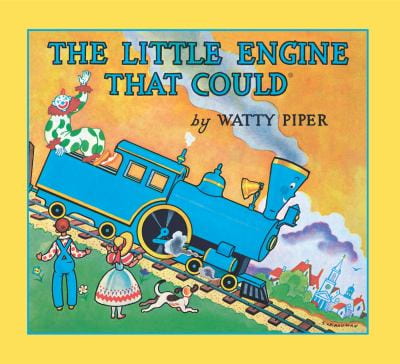
A childhood favourite of mine
This makes sense to me. It’s common knowledge that the brains of young people are not fully grown till their mid-twenties. After all, due to the increased risk of rash decision making, most car insurance companies charge younger drivers a higher excess compared to their older compatriots. Another thought to ponder is the age that modern ‘new adults’ actually start adult-ing (Pattee, 2017). With millennials delaying settling down with a partner and setting up their homes till their late 20’s and early 30’s; the time period for identity conflict and resolution is definitely being delayed.
My first encyclopaedia
When thinking back to my earlier readings I recall that children’s literature should address the behavioural, cognitive and emotional development of children. A good children’s book helps children grow and understand themselves and the world they live in. So a good YA novel should also do the same for young people. It should help them grow into adulthood. It should help them deal with coming of age issues like sexuality and relationships.
So back to my bookshelves of children’s literature. I would be the first to agree that my knowledge of children’s books are dated. But whilst I do feel its part of parenting that we share our favourite authors, soundtracks and movies with our children, we must also keep our minds open to them finding their own favourites. So my children and I have an agreement. Every time we go to the library they borrow whatever books they want to read, and then I get one I have enjoyed and then read that to them. This way they share with me their favourite books, I can share my love of literature, and at the same time expand my repertoire of titles.
Tyle, Leonie. Following the Michael L. Printz award Leonie Tyle muses on the definition of young adult fiction [online]. Magpies: Talking About Books for Children, Vol. 29, No. 4, Sep 2014: 16.













 Learning through the Library