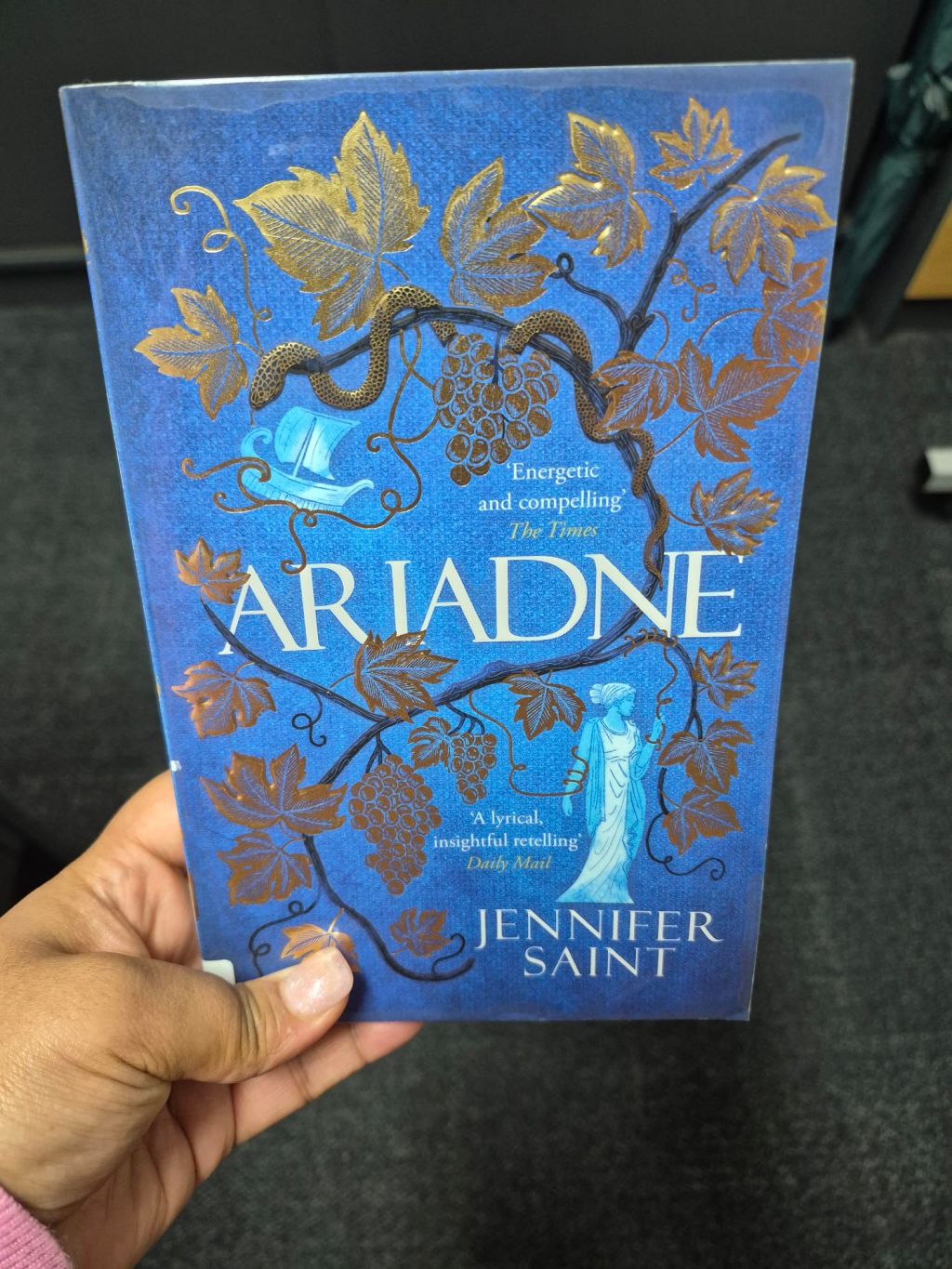
Ariadne continues my Greek mythology phase, but unfortunately it never quite reaches the heights of Clytemnestra. While Ariadne lends her name to the title, she often feels more like a passenger in the story, with her sister Phaedra emerging as the far more compelling and complex character. At times, it feels as though the novel should have been named after Phaedra instead.
That said, the book offers an engaging retelling of the myths surrounding Theseus and the Minotaur. Reading it transported me back to my own visit to Knossos in Crete, wandering through the ruins of the Minoan palace with its maze-like rooms and winding passageways. Standing there years ago, it was easy to imagine how stories of a labyrinth and a monster at its heart might have emerged.
Whilst mythology offers various explanations for why Theseus abandoned Ariadne on Naxos, Jennifer Saint absolutely captures the hero’s arrogance. One can almost see it radiating from the page. This is a man who seems convinced of his own greatness, perhaps viewing himself as the human successor to Hercules, destined for glory and admiration. Saint’s portrayal strips away much of the traditional heroic sheen and reveals a figure whose pride and self-importance often overshadow the people around him.
More importantly, Ariadne continues a theme that Saint explores throughout her mythological retellings: women paying the price for men’s actions. Again and again, Greek mythology tells stories in which male pride, ambition and hubris set tragedy in motion, while women bear the consequences. Just as Medusa is transformed into a Gorgon by Artemis after Poseidon’s violation… or as Scylla monstrous fate because of Glaucus, Ariadne ultimately becomes collateral damage in Dionysus’s war against Argos. Throughout the novel, Saint reminds readers that the destruction wrought by men rarely falls upon men alone. Instead, it is often women who suffer, endure and die because of decisions they never made.
Greek mythology is full of stories where male pride is paid for in female blood. Just ask Hera. Time and again she is forced to bear the consequences of Zeus’s infidelities, directing her wrath not at the god responsible but at the mortal women and children caught in his wake. Saint highlights this recurring pattern across the myths, encouraging readers to look beyond the celebrated deeds of heroes and gods to the women left to clean up the devastation they create.
While Ariadne did not captivate me as completely as Clytemnestra, it remains an enjoyable read for anyone interested in Greek mythology and fresh perspectives on familiar legends. My main takeaway is that Ariadne herself never feels quite as fully realised as her sister Phaedra. However, I will say that Saint succeeds in shining a light on the women who stand in the shadows of heroes and gods, reminding us that their stories deserve to be heard as well.
As part of our Book Week celebrations and this year’s CBCA theme, A Symphony of Stories, students at my school were treated to a memorable author event, A Sound of Storytelling. The event brought together two remarkable Australian authors, Annaleise Byrd and Carla Salmon, who shared their experiences of creativity, imagination, and the transformative power of storytelling.
The idea of a symphony is a fitting metaphor for stories. Just as every instrument contributes its own unique voice to an orchestra, every story offers a different perspective, experience, and adventure. Author visits provide students with the opportunity to hear directly from the creators behind the books they read, helping them understand that stories begin with imagination, curiosity, and a willingness to explore ideas. Research consistently shows that author talks can have a powerful impact on reader engagement, inspiring students to read more widely, connect with books on a deeper level, and see themselves as potential writers and storytellers.
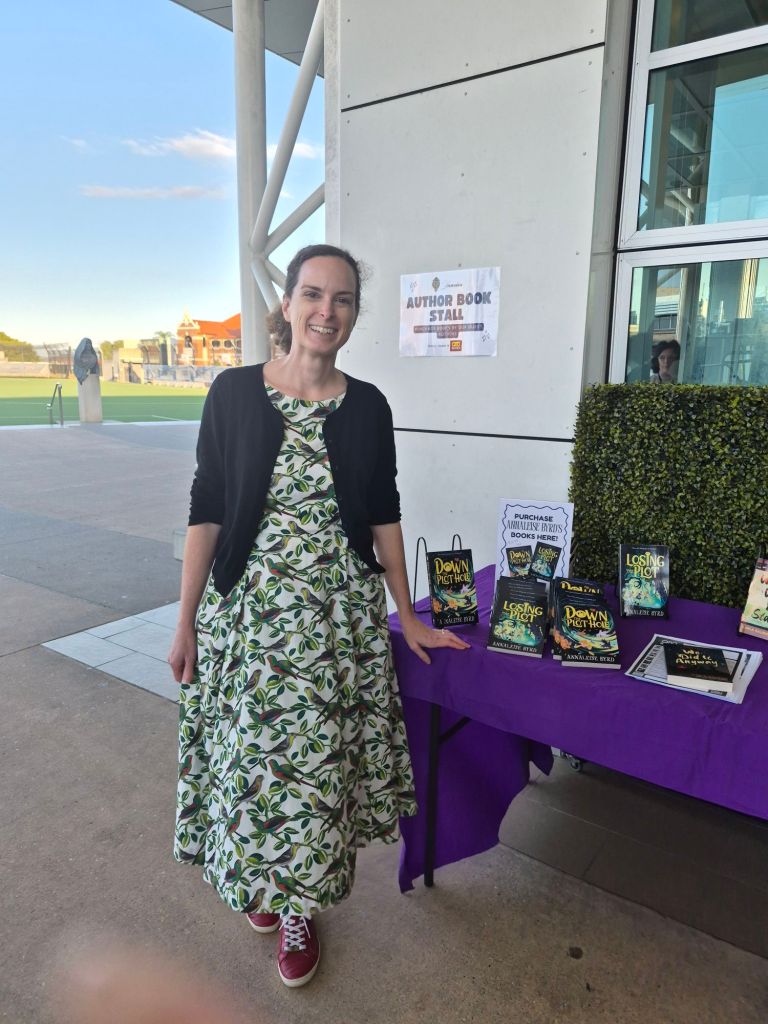
Annaleise Byrd opened the event with her trademark wit and wonderfully droll storytelling. Despite technical issues with laptops undergoing a forced update mid presentation, Annaleise soon had students were laughing as she invited volunteers to the stage to re-enact one of her scenes, bringing her stories vividly to life.
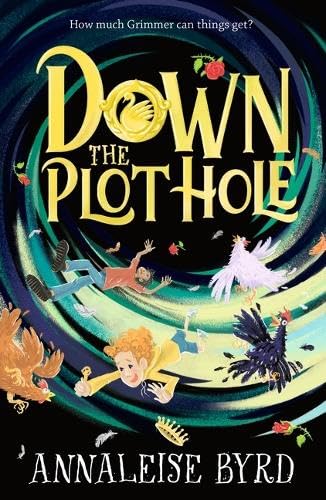
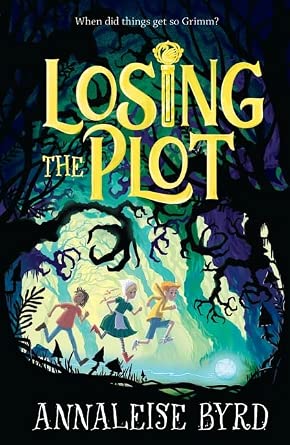
Annaleise shared the inspiration behind her novels Losing the Plot and Down the Plot Hole, transporting students to the magical world of Grimmveldt, or “Grimm World”. Through stories of her visit there, she demonstrated how writers draw on experiences, observations, and a healthy dose of imagination to create rich fictional worlds. Her presentation reminded students that creativity often begins by asking “what if?” and having the courage to follow an idea wherever it leads.
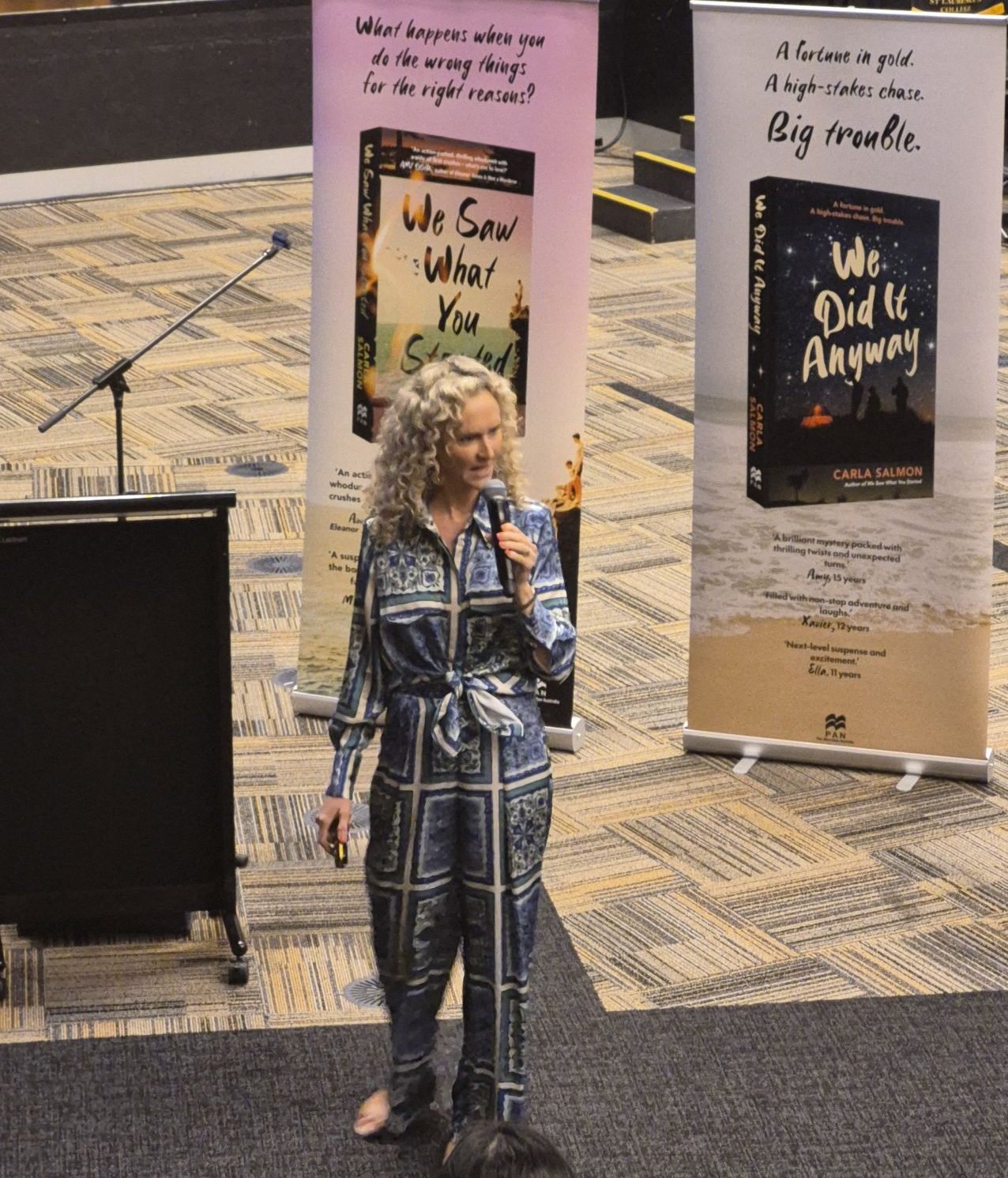
Carla Salmon followed with an equally engaging presentation that showcased her infectious enthusiasm for creative writing. Taking students behind the scenes of her novels, Carla revealed how authors find inspiration in the world around them. She unpacked how places, people, and events from real life can spark fictional narratives, sharing fascinating examples from her own work. Students were particularly captivated by the story of the 3,000-tonne theft of maple syrup, a real-world event that helped inspire aspects of her storytelling. Carla’s session highlighted that writers are keen observers of life, constantly collecting ideas and transforming them into stories that entertain, challenge, and inspire readers.
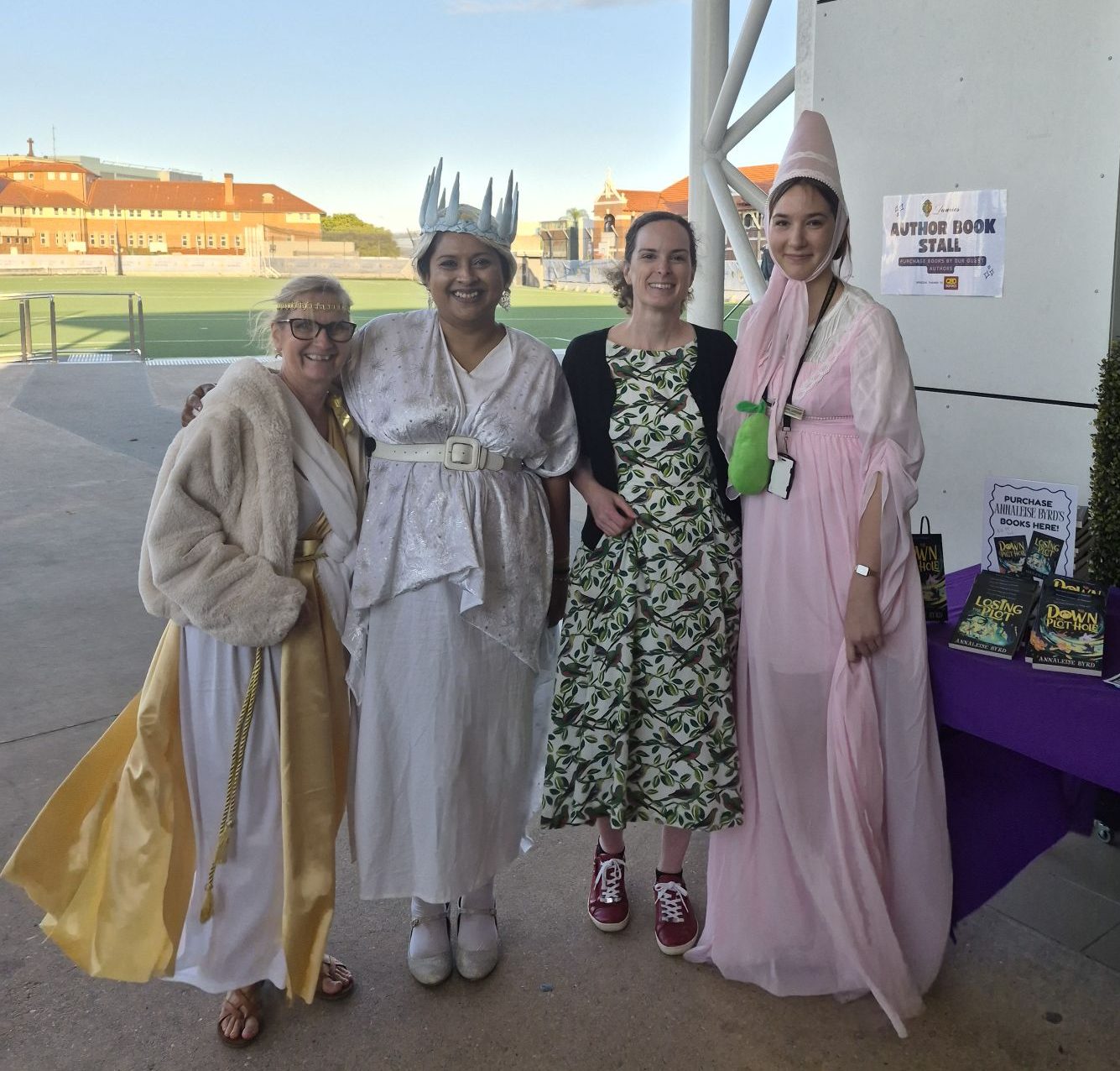
Annaleise and our Library Team. All dressed up for Book Week Celebrations.
Together, both authors demonstrated that storytelling is much like a symphony. Ideas, experiences, emotions, imagination, and words come together to create something greater than the sum of their parts. Their presentations reinforced the important role stories play in helping young people understand themselves and the world around them while encouraging them to think creatively and embrace their own imaginations.
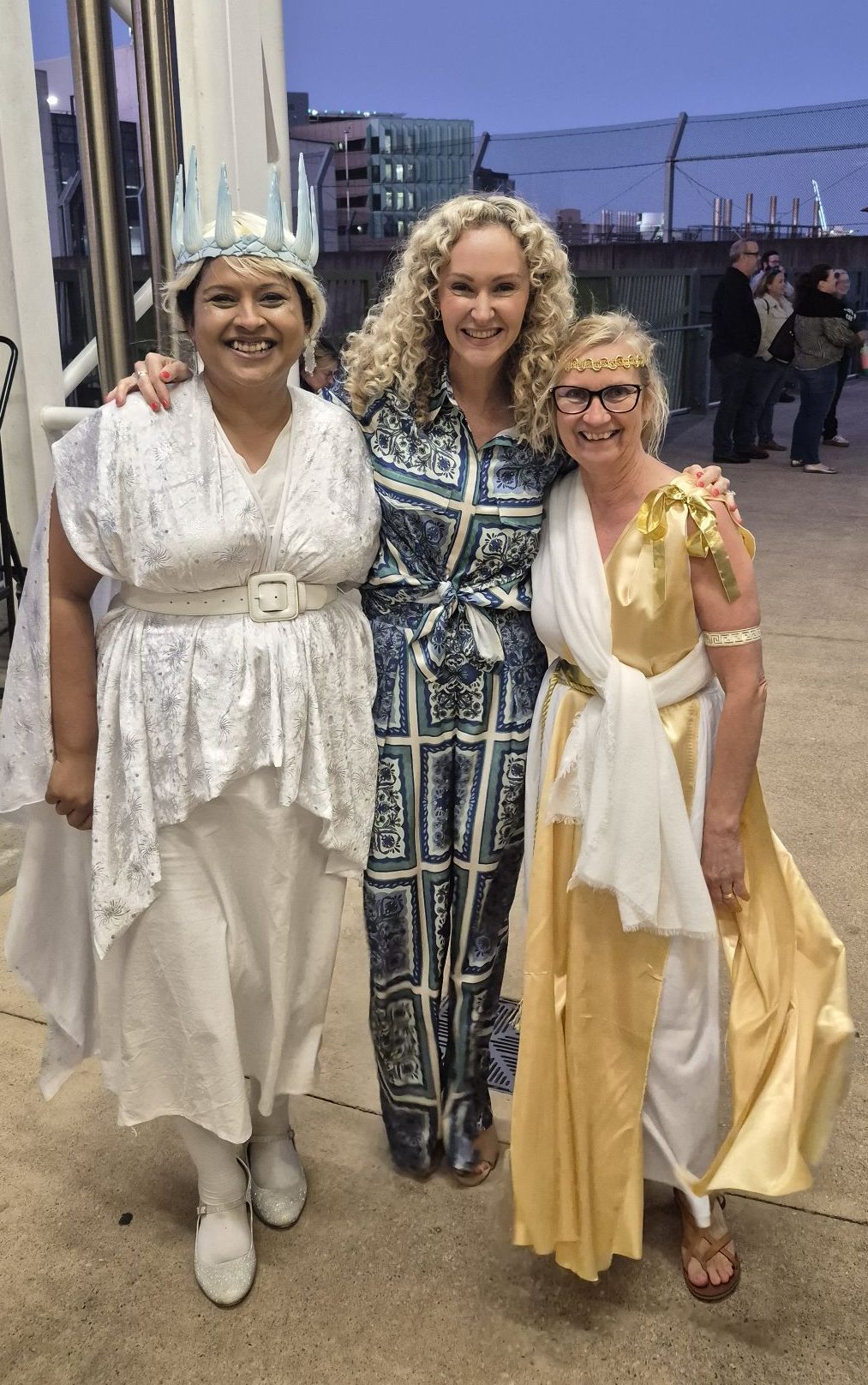
Carla wrapping up the evening with a photo.
As our Book Week celebrations continue, A Sound of Storytelling has been a wonderful reminder of why author events matter. They connect students with the human stories behind books, nurture a love of reading, and inspire the next generation of creators. Judging by the laughter, excitement, and thoughtful questions from our students, both Annaleise Byrd and Carla Salmon struck a powerful chord in our own Symphony of Stories.
Thank you to Annaleise and Carla for sharing their time, expertise, and passion for storytelling. Their voices have added a memorable movement to our Book Week celebrations, and their stories will undoubtedly continue to resonate with students long after the event has ended.
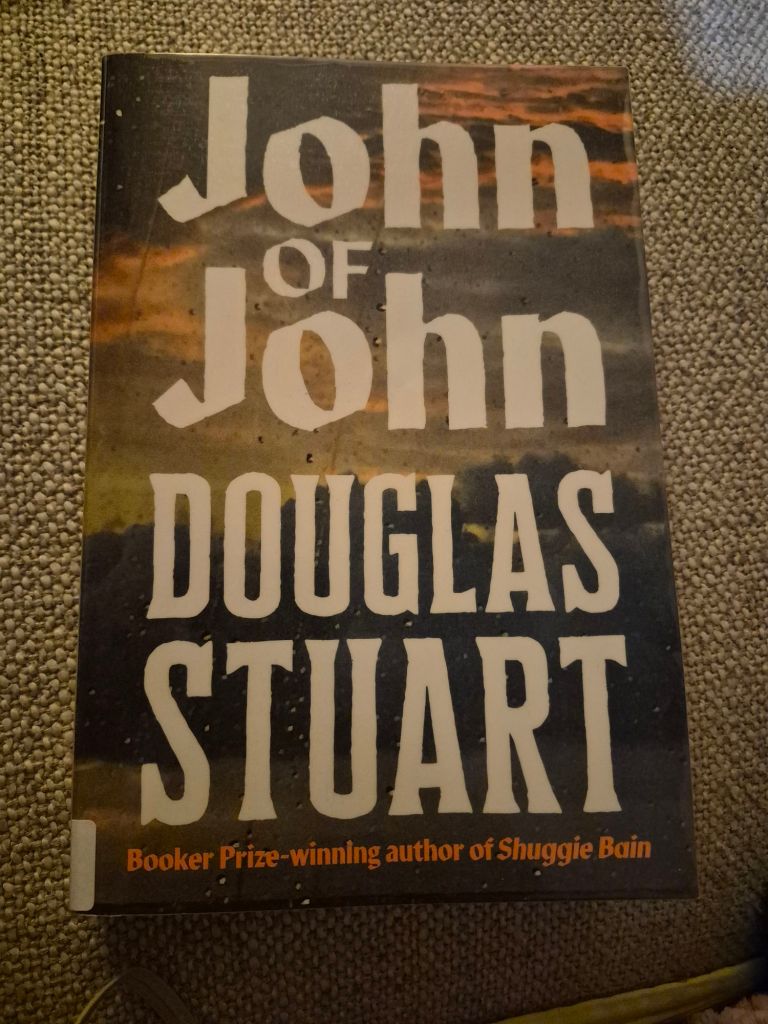
Douglas Stuart’s John of John is not an easy novel to love, but it is impossible to ignore. Set amid the wind-scoured isolation of the Outer Hebrides, Stuart delivers a bleak and unflinching portrait of a father and son trapped not only by poverty and place, but by faith, shame and silence. The novel follows John-Calum MacLeod, known as Cal, an unemployed university graduate summoned home by his father to farewell his dying grandmother. Cal returns reluctantly to an island he had hoped to escape, only to find that the tensions, resentments and secrets that drove him away remain as potent as ever.
At its heart, John of John is a story about two men hiding the same truth from one another. Cal conceals his sexuality from his deeply religious father, John, while John harbours his own forbidden desires beneath the mantle of Presbyterian respectability. Stuart builds much of the novel’s emotional tension from this cruel irony: father and son are separated by lies and bitterness while sharing the very secret that might have allowed them to understand each other. Their relationship is fraught, often hostile, shaped by years of disappointment, judgement and emotional repression.
The novel’s portrayal of Free Presbyterian life is particularly powerful. Stuart captures a culture where duty outweighs happiness and where suffering appears almost sanctified. Prayer, hard work and endurance are treated as virtues, while joy feels suspect, even sinful. There is a palpable sense that pleasure is an affront to God, something to be distrusted rather than embraced. The result is a community weighed down by stoicism and self-denial, where affection is rationed and emotional honesty seems impossible. Stuart never caricatures these beliefs, but he shows with painful clarity the damage they inflict on those who cannot conform.
Just as oppressive as faith is the landscape itself. The Hebrides emerge almost as another character in the novel, magnificent yet desolate. Stuart’s descriptions of the islands evoke a place battered by wind, rain and isolation. The stark beauty of the landscape mirrors the emotional lives of its inhabitants: harsh, lonely and resistant to change. The loneliness that permeates the novel is not simply personal but geographical, a product of a community cut off from the wider world and fiercely protective of its traditions.
One of the novel’s quieter strengths lies in its depiction of John’s traditional tweed weaving which sustains many island families and has become a symbol of continuity and cultural survival. Stuart clearly admires the skill and craftsmanship required, yet he is equally aware of its limitations. Weaving keeps traditions alive but offers little economic security. Throughout the novel, poverty hangs over every household. Employment is scarce, opportunities limited, and resignation often replaces ambition. The craft may preserve heritage, but it cannot spare its practitioners from hardship.
This is ultimately a novel saturated with sadness. Unhappiness seems woven into the fabric of daily life, passed down through generations alongside faith and tradition. Yet Stuart’s achievement lies in finding humanity within that bleakness. His characters long for connection even when they lack the language to express it. Beneath the bitterness between John and Cal is a shared yearning to be known and accepted… and dare I say it… a yearning to be loved.
John of John is a sombre, often heartbreaking novel about the cost of living behind masks. It is a story of fathers and sons, faith and desire, and a community where suffering is valued more highly than happiness. Stuart’s vision of the Hebrides is beautiful but unforgiving, and his characters inhabit a world where love is constantly constrained by duty, religion and fear. The result is a powerful and deeply affecting novel that lingers long after the final page.
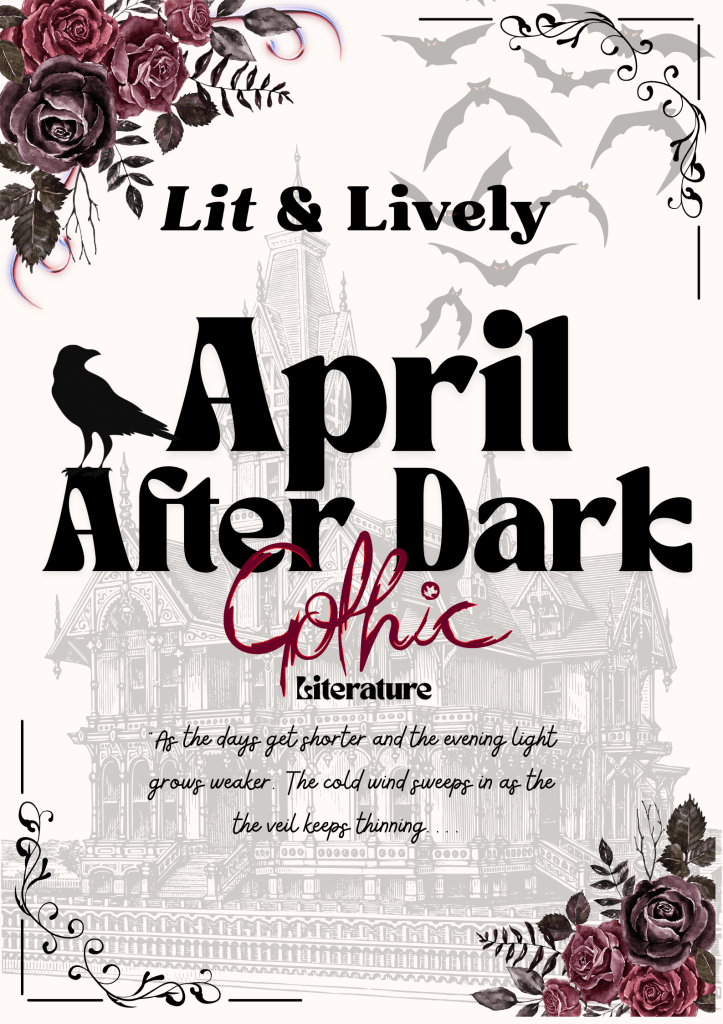
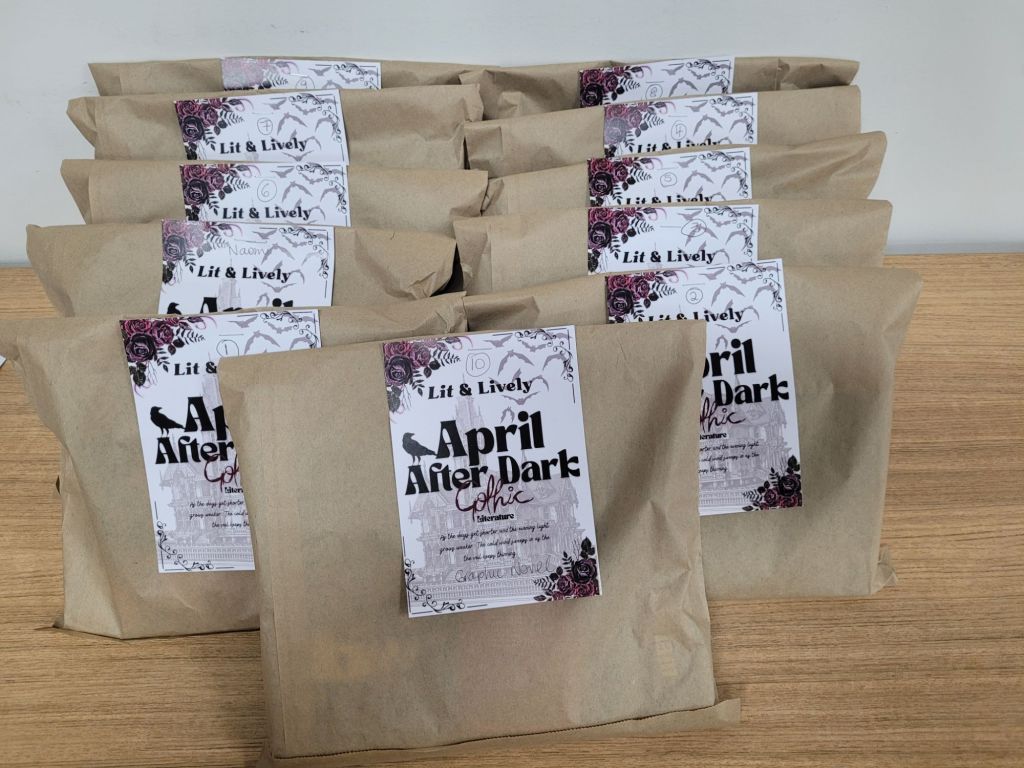
Lit & Lively, the school’s staff book club, is embracing the shadows this month with a gothic themed gathering titled April After Dark. This month’s meeting is centred around gothic literature, inviting staff to explore darker moods, mysterious settings, and stories that linger long after the final page. The format is welcoming and flexible. Staff read one shared text together, giving everyone a common starting point for discussion, before branching out into a range of gothic titles from the library collection. Each participant received a carefully prepared book pack, lovingly packed with the novels, a tea bag, and a chocolate biscuit, turning the reading experience into a small but meaningful indulgence during the autumn break.
April After Dark has also been a practical and creative way of using class sets that usually sit out of season. By repurposing these texts for staff reading, the library is reintroducing overlooked titles and highlighting how versatile the collection can be. Many participants have discovered books and genres they might never have explored without a themed invitation. It also reflects an important part of the Teacher Librarian role, which is not only to support students, but to guide and encourage staff in their own reading journeys and engagement with literature.
Through Lit & Lively, staff are gaining a deeper understanding of the breadth and depth of the school’s collection and reinforces the library as more than a curriculum support space. It is a place for curiosity, enjoyment, and reading for pleasure, modelling the reading culture we encourage in students.
There is also a strong wellbeing element. Reading for pleasure can act as a form of bibliotherapy, offering comfort, escape, and emotional renewal. Teachers often have little opportunity to read during the term, and the autumn break provides a rare pause to do so. Finally, Lit & Lively celebrates the social side of reading. Book clubs create space for conversation, shared reflection, and connection, reminding us that reading is often richest when it is shared.
As April grows darker, April After Dark reminds us that reading together can be restorative, enriching, and deeply human. Lit & Lively continues to affirm that teachers deserve time to read, reflect, and reconnect too.
Reading is widely recognised as a critical skill for young people, supporting the development of strong cognition, mental health and empathy. A growing body of research consistently shows that recreational reading in particular is linked with academic achievement, improved emotional regulation and more nuanced interpersonal understanding. Building a culture of reading, therefore, is not a peripheral task for schools. It lies at the heart of nurturing thoughtful, resilient and socially capable young people.
Yet despite these well established benefits, many children and teenagers do not naturally turn to teachers or teacher librarians for book recommendations (Merga, 2012). To be blunt, young people do not necessarily see adults as cool. Recommendations from teachers, no matter how well intentioned, may lack what adolescents consider to be genuine social credibility. The street cred factor is real, and it is powerful.
Further evidence comes from the work of Dr Margaret Merga, a well respected Australian researcher in literacy and reading engagement. In a mixed methods program examining the influence of social attitudes on reading behaviours, Merga (2012) noted that “perceived friends’ attitudes can have a more significant influence on boys than girls, [therefore] making books socially acceptable for boys should be a priority for educators.” This underscores the idea that book talk among peers is not merely casual chit chat. It is a mechanism of social permission. When books gain traction within a peer group, they gain legitimacy and ethos (Merga, 2012; Merga 2014).
Australia Reads similarly emphasises the importance of social engagement in building sustainable reading habits. Its principles highlight that young people need “positive social reading experiences” and opportunities to “recommend, discuss and share books and other texts in ways that are personally enjoyable and relevant”. In other words, reading thrives when it is relational.
At Lauries, we see these principles in action every day. While staff recommendations certainly have their place, it is peer driven reading culture that most reliably sparks curiosity, especially among reluctant readers. This is why we actively encourage students to reflect on and review the books they read. Their voices matter. Their opinions shape the reading landscape for others. The broader research base supports this emphasis on social recommendation and discussion as a driver of voluntary reading.
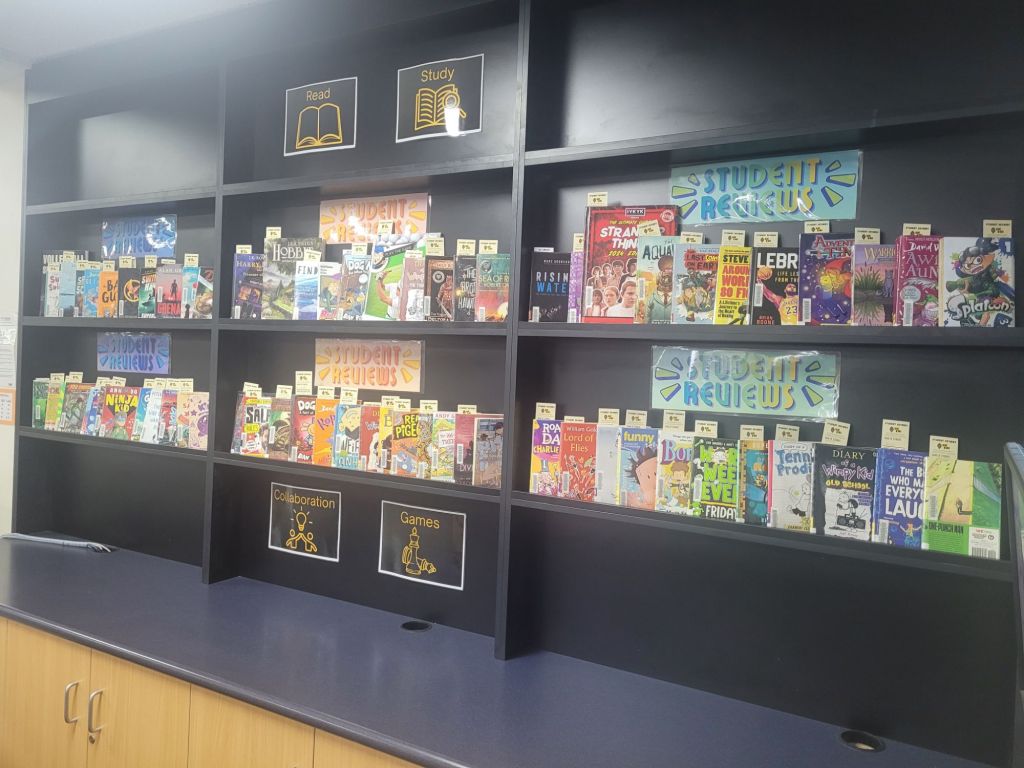
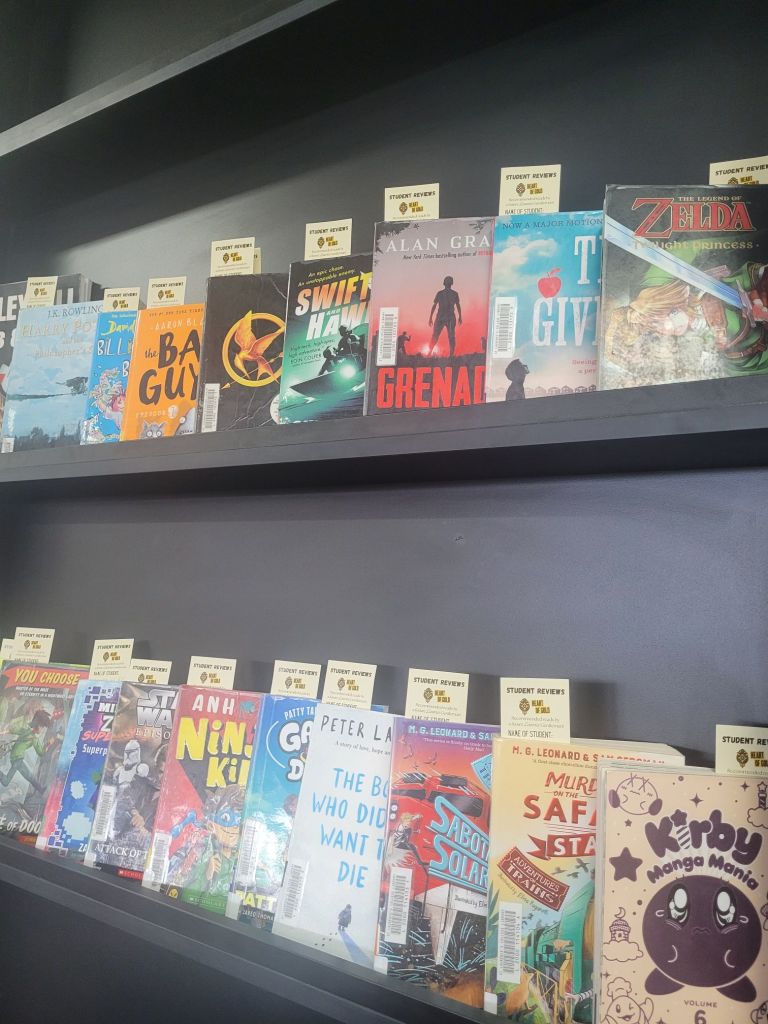
A visible expression of this culture is our wall of Lauries Lads Lit Picks. This growing collection showcases books that our students have personally endorsed. We often see reluctant readers wandering over, flicking through the displayed reviews until they discover a familiar name. That moment of recognition is powerful. When a friend or respected peer has enjoyed a book, the barrier to entry drops dramatically. The book becomes not just a text but a shared experience waiting to happen. The pattern aligns with evidence that peer attitudes and friend recommendations play an outsized role in adolescent book choice.
Cultivating a socially rich reading environment therefore requires more than simply providing access to books. It involves elevating student voice, valuing peer influence and creating spaces where reading is openly shared, discussed and celebrated. The evidence is unequivocal. When young people are given opportunities to recommend books to one another, their engagement deepens and their confidence as readers grows. Reading becomes woven not only into their academic lives but into their friendships, identities and everyday conversations.
By continuing to champion peer driven discovery, we support our students not only to read more but to read with curiosity, connection and purpose. That is a foundation that benefits them far beyond the walls of the library
Rutherford, L., Singleton, A., Reddan, B., Johanson, K., & Dezuanni, M. (2024). Discovering a Good Read: Exploring Book Discovery and Reading for Pleasure Among Australian Teens. Deakin University. https://eprints.qut.edu.au/247629/[eprints.qut.edu.au]
History is often presented as a clean line of dates and deeds, with women’s voices muted or missing. Yet when I read historical fiction, I hear those voices rise. It is in the imagined conversations, the textured inner lives and the careful stitching of research to narrative that women like Eleanor of Aquitaine step out from the margins and take their rightful place at the centre of the story. Historical fiction does not replace the archive. It complements it. It gives shape to the silences and lets Her story speak.
Eleanor of Aquitaine has captivated me for years. She was queen of France, then queen of England, duchess in her own right, patron of culture and mother to kings. Even through the writings of men who often judged powerful women harshly, she still appears intelligent, beautiful, strong of will and frequently labelled as wilful. That tension between what the record says and what it leaves unsaid is exactly where historical fiction does its best work. Through fiction, we can inhabit the rooms where the clerks did not sit, hear the words no chronicler bothered to write, and feel the force of a woman who shaped her world.
Because I am fascinated by Eleanor, I have read widely across authors who approach her life from different angles over my last summer holidays. Each one balances fact and imagination to reveal a fuller portrait. In their hands, Eleanor becomes more than a figure on a timeline. She becomes a person, with agency, complexity and heart. Reading these books has reminded me again and again that history is not only his story. It is also her story, and it deserves to be heard.
Why Historical Fiction Lets Her Story Speak
Historical fiction gives us the space to ask human questions that sources do not answer. What did courage feel like to a woman whose decisions could alter a dynasty. How did she manage loyalty and love in a world that traded both for advantage. What language did she use for her ambitions, her fears and her hopes. Novelists use careful research and responsible imagination to explore these questions. They do not invent the past. They interpret it with empathy, so that readers can understand lives very different from our own.
For women, this matters deeply. The written record often reflects the priorities of men who held the pen. Fiction can step into the gaps and consider the private sphere where much of women’s labour and influence took place. It can restore friendships, mentorships, rivalries and choices that formal chronicles overlook. Reading such stories changes how we see the past. It prompts us to look again at the sources, to notice what was omitted and to seek out voices that were ignored.
This is why I keep returning to Eleanor of Aquitaine through fiction as well as history. Each book adds texture to the tapestry. Each author brings a new hue to the same thread. Together they create a portrait that feels whole. In listening to these imagined yet carefully grounded voices, we are not abandoning truth. We are widening it. We are acknowledging that history is a chorus, and that Her story deserves to sing just as clearly.
Her life reminds us that the past belongs to all of us. Reading and sharing these novels is one way to make sure that our understanding of history includes the women who shaped it. His story has been told for a long time. It is time for Her story to be heard alongside it, fully and without apology.
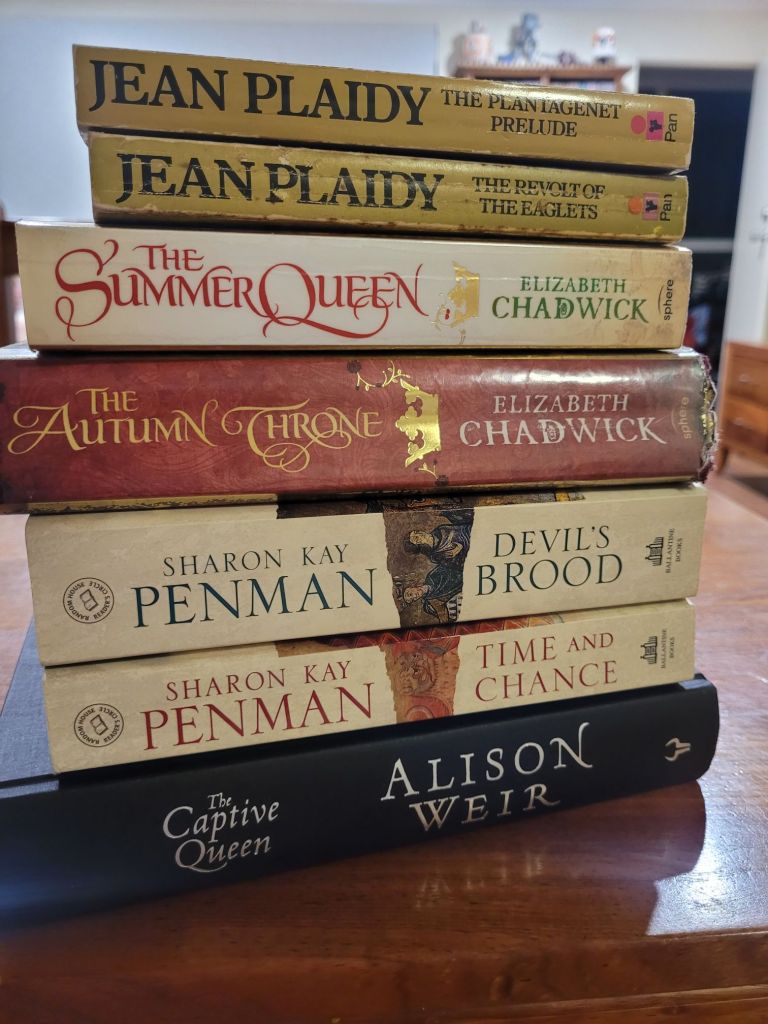
So if you would like to know a bit about Her-Story, here are some of the amazing authors who wrote about Eleanor:
Books by Elizabeth Chadwick featuring Eleanor of Aquitaine The Summer Queen The Winter Crown The Autumn Throne
Books by Jean Plaidy featuring Eleanor of Aquitaine The Courts of Love Eleanor of Aquitaine: The Young Queen Eleanor of Aquitaine: The Rebel Queen
Books by Sharon Penman featuring Eleanor of Aquitaine When Christ and His Saints Slept Time and Chance Devil’s Brood Lionheart A King’s Ransom
Books by Alison Weir featuring Eleanor of Aquitaine Eleanor of Aquitaine: By the Wrath of God, Queen of England (non fiction) Captive Queen (fiction)
As the school year wrapped up last week, I found myself reflecting on the many moments that shaped our library community in 2025. There have been challenges, yes, but also plenty of reasons to celebrate.
One of the brightest sparks has been our book clubs. What started as a simple idea, a few snacks and a chance to talk about stories, has grown into something much bigger. My secondary Book Club stands out. At the beginning of the year they were a small group, some unsure of what to read, others firmly attached to their favourite genres. Over time, though, their borrowing soared. They began exploring fantasy, contemporary fiction and graphic novels, and while one dedicated manga reader still resists branching out, the group as a whole has broadened its horizons. More importantly, they began to see reading as part of who they are. They recommend titles to each other, debate endings, and even suggest new books for the library. Watching that transformation has been a joy.
Research reminds us that this is exactly what book clubs are meant to do. They make reading social, they build confidence, and they help young people see themselves as readers. The secondary Book Club Boys proved that in the most authentic way, showing how a community of peers can turn reading from a solitary task into something shared and celebrated.
From a whole school review, borrowing levels across the school have also risen, returning to pre COVID rates. Much of this growth has come from our younger readers, whose enthusiasm has been infectious. Their excitement has created a vibrant culture of reading in the primary years, and their participation in activities has been a highlight of the year.
Of course, there are challenges we cannot ignore. Very few of our Year 10 to Year 12 students are reading recreationally, and this is concerning. Intertextuality, the ability to connect ideas across texts, is vital for analysis and for building strong cognitive connections. Without regular reading, those skills are harder to develop. We also continue to see limited engagement from Years 7 to 10 English classes, despite enthusiastic promotion. There seems to be a reluctance to lose curriculum time.
Our team dynamic has shifted too, with members coming and going. Change always brings adjustment, but it has also brought fresh perspectives and energy. We have expanded our digital resources, and while uptake has been slow, steady gains are being made as students and staff grow more comfortable with these platforms.
Perhaps the greatest success of all has been the way the library has become recognised as a social space where everyone is welcome. It is not only a place for books, but a hub for connection, collaboration and belonging. That sense of community is something we can all be proud of.
We closed the year with our Books & Bites Christmas party, a joyful celebration of new releases and Christmas treats. Each student received a reading journal with a challenge to read four books over the summer, along with handmade gifts, ornaments, bookmarks, and pen holders, sewn over the past few weeks. These tokens were a way of honouring the shared love of reading that binds us together.
As we finish the 2025 chapter, I am reminded that reading is not just about borrowing books, it is about building minds, fostering empathy and preparing students for the complexities of the world.
“As we finish this chapter and look ahead to the new year, I am reminded that Christmas is a season not only of rejoicing, but of reflection. May the joy of stories, the warmth of community, and the promise of new beginnings carry us into the year ahead.”
I recently attended the QSLA conference at the beautiful State Library of Queensland. It was a fantastic day for school informational professionals to gather, share emerging news, identify new trends and trade in good old fashioned work chit chat.
Andy Griffiths – author of the famous Treehouse series, was our keynote speaker. I have known of Andy’s work for almost a decade. Whilst I have admired his works, I hadn’t fully appreciated his philosophy until now. His words, much like his books, were playful on the surface but deeply subversive underneath. They invited us to reconsider not just how children read, but why they need stories that break the rules.
Griffiths and his co-creator, illustrator Terry Denton have created the inventive, imaginative chaos that is the Treehouse series. I found it amusing that they named the main characters after themselves. Their fictional versions live in an ever expanding treehouse that defies logic and gravity, expanding with each book to include ludicrous additions like a marshmallow machine, a tank of man-eating sharks, and even a volcano. Their adventures are reckless, absurd, and often dangerous. But that danger is never real. It’s theatrical. It’s safe. It’s fiction.
… and that is the point. It is fiction as Andy pointed out last week to a large group of educators and informational professionals.
This was so true. In a world increasingly obsessed with safety, structure, and supervision, Griffiths’ books offer a counterbalance. They don’t just entertain their readers… they liberate them! They allow children to imagine running across six lanes of traffic or jumping into a volcano, not because they should, but because they can. In fiction, the consequences are exaggerated, the outcomes are ridiculous, and the lessons are embedded in laughter. Griffiths uses humour to engage the reader and builds into that playful sense that children have. As Griffiths said last week, “Reading is a game between the reader and the author. Authors make black marks on pages. Readers use these marks to make an image in their heads.”
I then thought about all the other books that ‘helped me break rules’. Darryl and Sally hosting midnight feasts at Mallory Towers, Matilda using her brain to solve problems, Trixie Belden and Nancy Drew resolving mysterious events. Each of these characters and books gave me option I may not have thought of previously.
Leaving the conference, I felt a renewed appreciation for the role of literature in childhood. Not just as a tool for literacy, but as a sanctuary for wild thought. Griffiths reminded us that imagination isn’t just fun. It’s vital. It’s how children rehearse life, test boundaries, and build resilience.
And maybe, just maybe, it’s how they learn to be free.
Fairy tales have long served as cultural touchstones as they passed down through generations to teach values, warn against danger, and reflect the beliefs of the societies that created them. Though often associated with bedtime reading, fairy tales are far more than simple entertainment. They are rich with symbolism, moral lessons, and cultural nuance. Across the world, these tales take many forms and espouse a range of cultural values and traditions. In West Africa, the Anansi stories feature a clever spider who uses wit and trickery to navigate challenges, often blurring the line between hero and villain. In Russia, Baba Yaga, a fearsome witch who lives in a house with chicken legs is a treated as both a threat and a source of wisdom. Japanese tales like Momotaro (Peach Boy) celebrate loyalty and courage, while Indigenous Australian Dreamtime stories embed spiritual and ecological knowledge, linking people to land, ancestry, and community.
Fairy and folk tales are shaped by the values and fears of the cultures that tell them. Take Little Red Riding Hood, for example. In the original French version by Charles Perrault, the story ends with Red being eaten. A stark warning about the dangers of naivety and talking to strangers. Two centuries later, the Grimm brothers added a huntsman who rescues her, softening the tale but still portrays Red as a naive child with no common sense that needs a man to rescue her from her own stupidity. In China’s Lon Po Po, three sisters cleverly defeat a wolf disguised as their grandmother. In West Africa’s Pretty Salma, the story is reimagined with vibrant market scenes and a trickster dog. However, in some modern versions, Red is a sweet girl who outsmarts the wolf and saves her grandmother. Each version reflects different cultural fears, values, and expectations.
Fairy tales offer insight into social norms, gender roles, and moral expectations. However, many students today encounter fairy tales primarily through Western adaptations, for example, Anderson, Perrault, Grimm and more recently, Disney. As we are all aware, the latter often simplifies complex narratives into polished versions where good triumphs, evil is vanquished, and everyone lives happily ever after. However, we all know that life is not a happily ever after scenario. We also know that many of these fairy tales have not aged well and their depictions of women and other minority groups are outdated and sometimes offensive.
Fractured fairy tales offer a powerful way to revisit these traditional stories and challenge the assumptions they carry. By twisting familiar plots, reimagining characters, and shifting perspectives, fractured tales invite students to question stereotypes and explore alternative narratives. These adaptations provide a meaningful way to integrate classic and traditional tales into the curriculum as shared cultural knowledge as these stories are familiar, accessible, and often deeply embedded in popular media and literature. By engaging with them critically, students can recognise the stereotypes they contain, such as passive heroines, villainous outsiders, or heroic princes, and begin to unpack the social messages behind them.
As mentioned previously, traditional tales often portray female characters are passive, villains are irredeemable, and heroes are defined by their ability to rescue others. Fractured versions ask: What if the princess saved herself? What if the villain had a backstory? What if the tale took place in a modern classroom, a refugee camp, or a suburban street?
Fractured fairy tales are re-imaginings of traditional fairy tales and they are more than just creative exercises. They are acts of critical literacy. Fracture tales encourage students to analyse how stories shape our understanding of identity, power, and justice. They also provide space for students to insert their own voices, experiences, and cultural perspectives into the storytelling tradition.
A compelling example is Disney’s Maleficent (2014), which reinterprets Sleeping Beauty through a postmodern lens. Rather than portraying Maleficent as a one-dimensional villain, the film gives her emotional depth and agency. It highlights the impact trauma can have on emotional stability and the ability to make future connections. Maleficent’s loss of her wings to Stefan’s violence triggers a cascade of vengeance. This violent action of Stefan gives the viewer a reason why Maleficent cursed Aurora. It was not a random event, but rather retribution for past actions. Furthermore, Aurora awakens not through a prince’s kiss, but through Maleficent’s maternal love that grew despite the hatred and anger. It assuaged her internal trauma and avoided the trope of romantic salvation. Maleficent uses intertextuality to challenge the “grand narrative” of the original tale, offering a more nuanced and inclusive version of the story.
For educators, fractured fairy tales are a rich tool for both literary analysis and creative writing. They allow students to explore genre conventions, experiment with structure, and reflect on the social messages embedded in familiar texts. By comparing global versions of tales and then reworking them with a modern lens, students learn that storytelling is not fixed. Instead it celebrates how stories continue to be fluid, diverse and deeply personal.
There are numerous fractured fairy tales that can be used effectively for academic and recreational purposes. So… why not use them for your own teaching and learning… And fracture some stereotypes along the way.
Books:
The True Story of the 3 Little Pigs by Jon Scieszka m- Told from the wolf’s point of view, this witty retelling flips the narrative on its head.
The Stinky Cheese Man and Other Fairly Stupid Tales by Jon Scieszka – A collection of absurd and hilarious twists on familiar fairy tales.
The Wide-Awake Princess by E.D. Bakerm – Princess Annie is immune to magic and sets out to rescue her enchanted sister, challenging traditional gender roles.
Peter and the Starcatchers by Dave Barry and Ridley Pearson – A prequel to Peter Pan that adds depth and adventure to the original tale.
The Wishing Spell (Land of Stories series) by Chris Colfer – Two siblings fall into a world where fairy tales are real—and not always as expected
Films
Maleficent (2014) – Reimagines Sleeping Beauty from the villain’s perspective, exploring themes of agency and maternal love.
Shrek (2001) – A satirical mash-up of fairy tale tropes that challenges beauty standards, heroism, and social norms.
Into the Woods (2014) – Intertwines multiple fairy tales with darker consequences, highlighting moral ambiguity and personal responsibility.
Ella Enchanted (2004) – A feminist twist on Cinderella, where the heroine fights against magical obedience and societal expectations.
Enchanted (2007) – A fairy tale princess lands in modern-day New York, confronting real-world complexities and stereotypes.
Hoodwinked! (2005) – A comedic retelling of Little Red Riding Hood as a crime investigation, with multiple unreliable narrators.
Richard Osman’s fifth novel in the Thursday Murder Club series, The Impossible Fortune, kicks off with a wedding—Joyce’s daughter Joanna is finally getting married. But the celebration takes a sharp turn when best man Nick announces that someone is trying to kill him. From that moment, the familiar crew of pensioners is drawn into yet another mystery, this time involving a hidden Bitcoin fortune, a car bombing, and a tangled web of suspects. It is nice to read a novel where the main characters are not in their flush of youth. Gives someone who is quite frankly set in their middle age, some hope for age appropriate literature.
One of the first things that stood out to me was the large print. Compared to other novels I’ve read recently, this one is an absolute breeze to get through. It’s easy on the eyes and makes for a more relaxed reading experience, especially if you’re dipping in and out over a few days. The chapters are also cleverly titled by days of the week, which helps anchor the plot and gives a sense of progression—especially useful given the shifting perspectives between characters.
The emotional tone of the book is a little more poignant than previous instalments. Elizabeth is still reeling from the loss of her husband Stephen, and Osman handles her grief with sensitivity and depth. It adds a layer of introspection to the story without slowing down the pace. Ibrahim continues to be the group’s voice of reason, offering advice to friends and foes alike, including the ever-scheming Connie Johnson, who ironically saves Ron’s bacon eventually.
Joyce remains a delight, and her relationship with Joanna is given more attention here, adding warmth and humour to the narrative. The mystery itself is well-paced, with enough twists to keep you guessing but not so many that it becomes convoluted. Osman’s trademark wit is present throughout, and the characters continue to evolve in ways that feel authentic and earned.
I particularly enjoyed the plot line of Suzi, Jason, and Ron trying to evade the evil machinations of horrid wife beating Danny. The perspective of Kendrick reminded me once again that the biggest victims of domestic violence are children and their lost childhoods. Osman manages rather cleverly to use Kendrick’s internal monologue to reveal his childhood trauma to the reader.
Overall, The Impossible Fortune is a satisfying continuation of the series—accessible, emotionally resonant, and full of charm. It’s not literature by any means but rather a pleasant holiday read as it requires very little cognitive processing. However, it is a story about friendship, ageing, and the thrill of solving a good puzzle, all wrapped up in Osman’s signature style.



 Learning through the Library