Book Review: Darius the Great Is Not Okay

Adib Khorram’s debut novel, Darius the Great Is Not Okay, is a beautifully crafted story that captures the emotional complexity of adolescence with rare sensitivity. At its centre is Darius Kellner, a teenage boy growing up biracial—half Persian, half white—in a world that often demands simple answers to complicated questions about identity.

Darius feels out of place in his hometown of Portland. He doesn’t speak Farsi fluently, struggles to connect with his Persian heritage, and feels alienated from both sides of his cultural background. When he travels to Iran to meet his grandparents for the first time, the story deepens into a moving exploration of belonging. Khorram doesn’t offer easy resolutions. Instead, he shows how identity can be layered, shifting, and deeply personal.

As a parent of biracial children myself, this novel struck a chord. I often worry about how my kids see themselves—whether they feel “enough” of either culture, whether they’ll be accepted, and whether they’ll find peace in the spaces between. Darius’s journey reminded me that these questions don’t always have answers, but they do deserve compassion. The book offers that in abundance.

What also makes this story so powerful is its honest portrayal of mental health. Darius lives with clinical depression, and Khorram treats this with care and authenticity. He very gently reminds the reader that mental health is often not viewed the same way across generations and cultures. I particularly found it endearing when Darius was taking his ‘medicine’ in front of his grandfather and being told that medicine is only for old people. This was said in such a matter of fact tone, you could almost hear the slightly questioning tone of a grandparent’s concern. However, Khorram keeps it calm. There’s no melodrama, just the quiet reality of what it means to live with a condition that many teenagers face but few feel safe talking about. The novel understands that mental health isn’t a side issue—it’s central to how young people experience the world and themselves.

Equally important is the novel’s emphasis on friendship. Darius’s bond with Sohrab, a boy he meets in Iran, is tender, grounding, and transformative. For teenagers, friendships are more than social connections—they’re mirrors through which they begin to see themselves. A good friend can validate your experiences, challenge your assumptions, and offer a safe space to be vulnerable. In Darius’s case, Sohrab becomes that anchor. Their friendship helps Darius feel seen—not as a collection of contradictions, but as someone worthy of love and belonging. For teens navigating identity and self-esteem, these kinds of relationships are vital.

The thing is, I never had a friend like Sohrab before. One who understood me without even trying. Who knew what it was like to be stuck on the outside because of one little thing that set you apart.

This moment captures the emotional core of the novel. For Darius, friendship isn’t just about companionship—it’s about being truly seen. Sohrab’s presence helps Darius begin to accept himself, not in spite of his differences, but because of them. It’s a reminder that for teenagers, especially those navigating identity and mental health challenges, friendship can be a lifeline

Darius the Great Is Not Okay is a fantastic coming-of-age story because it doesn’t rely on dramatic transformations. It’s about small, meaningful moments: a friendship that feels like home, a conversation that bridges generations, a glimpse of self-worth. For young readers—especially those navigating multiple cultures or mental health challenges—it’s a gentle, affirming reminder that being “not okay” doesn’t mean being broken. It means being human.
Chai, Cinnamon, and Childhood Summers: A Whimsical Wander Through Chai Time at Cinnamon Gardens

“The stories we tell are the temples we build. They must not be erased.”

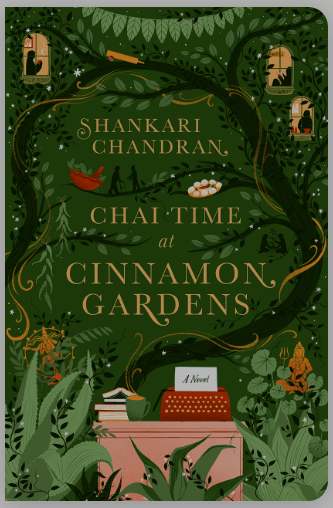
Some books feel like a warm hug. Others feel like a cup of spiced masala chai, comforting, layered, and just a little bit fiery. Shankari Chandran’s Chai Time at Cinnamon Gardens is both. It’s the kind of novel that wraps itself around your heart and whispers stories you didn’t know you needed to hear.

And for me, it was more than just a read. It was a nostalgic journey. You see, I used to spend my summer holidays in Sri Lanka as a child. The scent of cinnamon in the air, the sound of monsoon rain on tin roofs, the laughter over mangoes and mischief. It’s all etched into my memory. So when I opened this book, I wasn’t just reading. I was time-traveling.

Cinnamon Gardens: A Home Full of Stories

Set in a fictional retirement home in Western Sydney, Cinnamon Gardens is run by Shiva and Maya, Tamil immigrants who’ve built a sanctuary for elders from all walks of life. But this isn’t your average aged care facility. It’s a place where stories simmer like pots of curry on the stove. A story that is rich, complex, and full of spice.

When a racially charged attack shakes the community, Maya is forced to confront her past as a survivor of the Sri Lankan civil war. The novel dances between timelines of Sri Lanka’s turbulent history and Sydney’s multicultural present. The dance revealing how trauma, memory, and resilience are passed down like heirlooms.

Each resident has a tale to tell, and Chandran listens with compassion and clarity. It’s a reminder that behind every quiet face is a thunderstorm of experience.

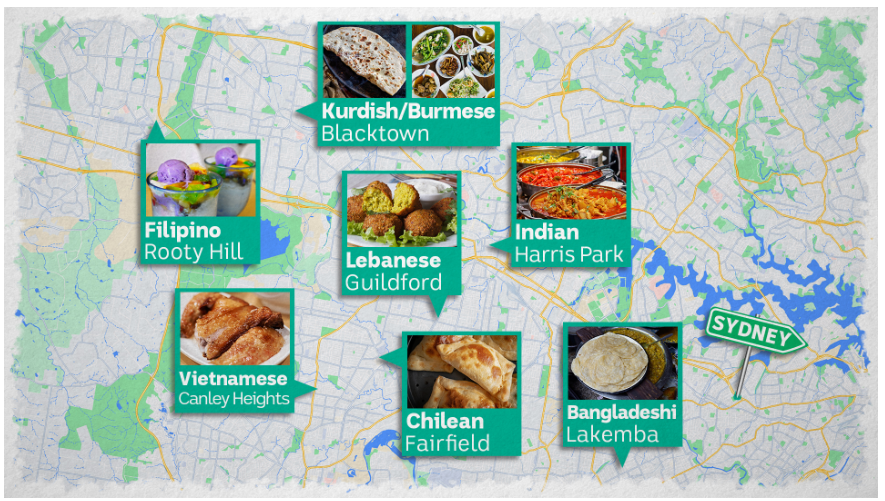
Sydney’s West – A melting pot.

Image from article by Handley (2022).

Let’s talk about Western Sydney, shall we? If you’ve never been, you’re missing out on the most eclectic, electric, and downright delicious food scene in Australia. As Handley (2022) from the ABC pointed out the change that is happening in Western Sydney. One street might offer Sri Lankan hoppers, Lebanese falafel, Vietnamese pho, and Congolese grilled fish, all within walking distance.

Chandran captures this beautifully. The setting isn’t just a backdrop. Instead it’s a character in itself. Western Sydney is where cultures collide, stories unfold, and chai is served with a side of soul.

Why This Book Should Be in Every Senior English Syllabus.

If I were a senior English teacher (and let’s be honest, I’d probably assign mango-eating as homework), I’d put this book front and center in any senior English or EALD classroom. Chai Time at Cinnamon Gardens aligns beautifully with the QCAA English and EALD syllabuses, especially in its exploration of key concepts like identity, cultural perspectives, and representation. The novel’s themes of migration, intergenerational trauma, systemic racism, and the politics of memory offer rich terrain for unpacking how texts shape and reflect social and cultural contexts. Chandran’s use of narrative techniques such as flashbacks, multiple perspectives, and lyrical prose supports deep textual analysis and encourages students to consider how language constructs meaning. Most importantly, the book invites critical and creative responses to the guiding questions of the syllabus: Who gets to tell history? How do we heal through storytelling? It’s a novel that doesn’t just teach a student. It invites them to experience the journey themselves as it asks students to listen, reflect, and maybe even share their own stories, making it a perfect companion for units on perspectives and voices, narratives that shape identity, or texts that challenge social norms.

Reading Chai Time at Cinnamon Gardens felt like sitting down with an old friend over tea. One who’s lived a thousand lives and isn’t afraid to tell you the truth. It reminded me of my childhood summers in Sri Lanka, of the power of memory, and of the quiet strength found in community.

So if you’re looking for a book that’s bold, beautiful, and brimming with heart. This is it. Just don’t forget to brew a cup of chai before you dive in. Trust me, it pairs perfectly.

Rating: 4 out of 5.

Rating