
Reflections from a visit to the Jehangir Art Gallery, Mumbai
One of the joys of being on holidays is having the time to explore, discover and experience things that might otherwise pass us by. Today, that meant a visit to the Jehangir Art Gallery in Mumbai, where we were fortunate enough to see some wonderful exhibitions and, even better, meet several of the artists behind the works.
As a teacher librarian, I spend much of my professional life surrounded by stories. I am fascinated by the ways literature reflects who we are, the societies we live in and the experiences that shape us. Art, I think, does much the same thing. Where an author uses words to create meaning, an artist uses colour, texture, light and form. Both invite us to look beyond what is immediately apparent, to question, interpret and perhaps see the world a little differently.
I am certainly no art expert, but I do enjoy art and appreciate the creativity, skill and individuality that artists bring to their work. What struck me about today’s visit was how differently each artist expressed themselves and how much could be communicated without a single word.
A Riot of Colour: Huma Ullah Khan
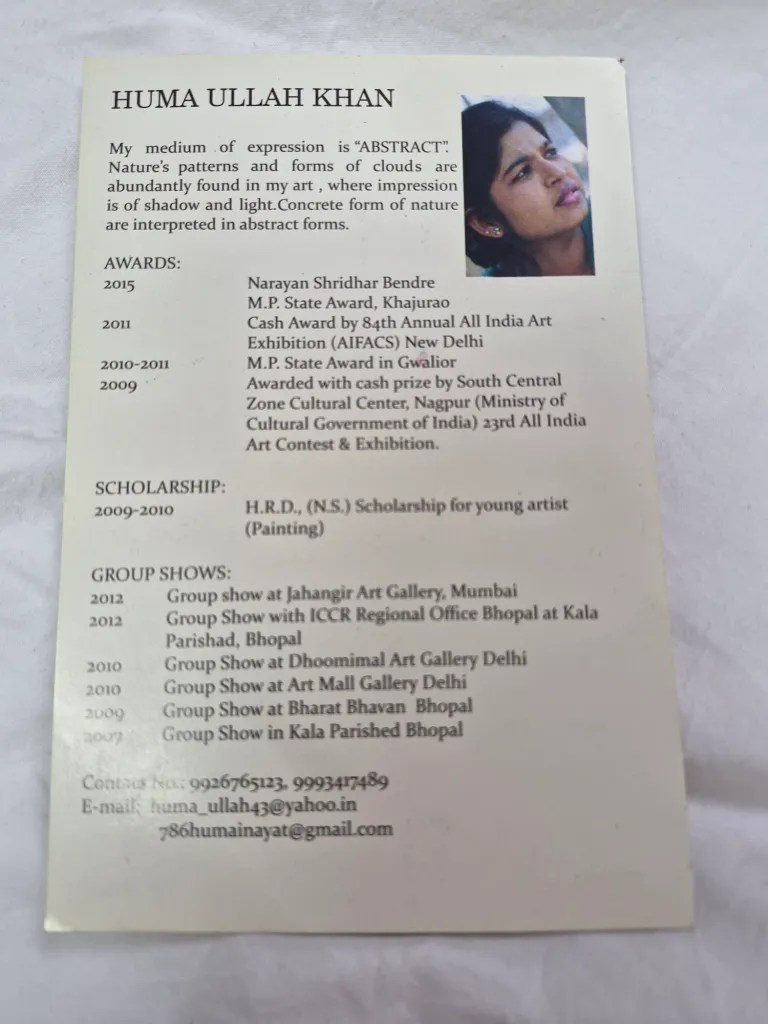
Our first exhibition featured the work of Huma Ullah Khan, a visual artist from Bhopal in Madhya Pradesh, India. Born in 1985, Khan holds a master’s degree in drawing and painting and has spent the past two decades developing and exhibiting her work.
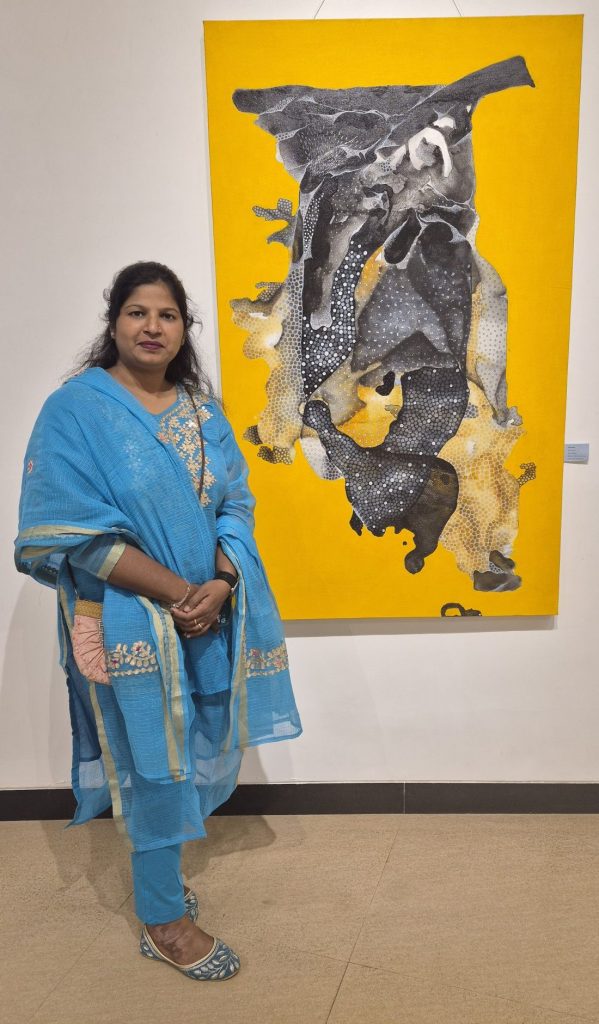
Her abstract paintings were a riot of colour and texture. There was so much movement and energy in them, with colours seemingly competing for attention while somehow working beautifully together. I found myself drawn to the different layers and textures, wondering about the process behind each piece.
We were fortunate to chat briefly with Ms Khan, who shared that she had been painting for 20 years and had exhibited her work across India. She now balances teaching art with exhibitions and private sales.
As a teacher, I particularly enjoyed hearing that she also shares her knowledge and skills with others. There is something wonderful about artists who not only create but also nurture creativity in the next generation.
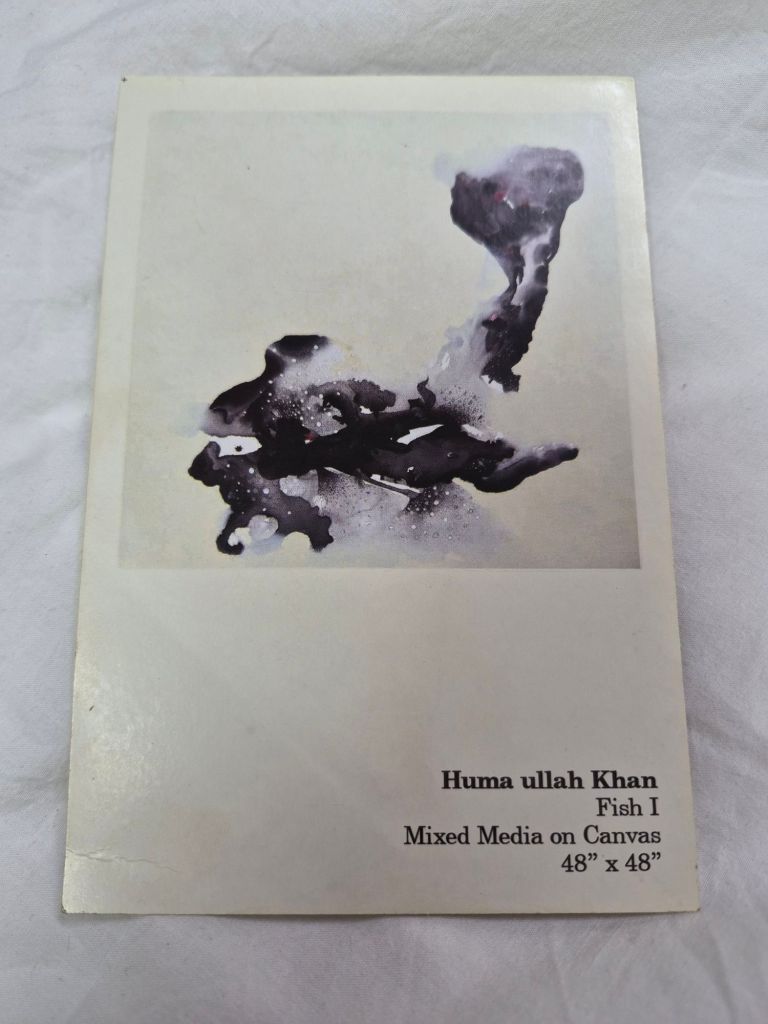
Her work reminded me that not every story needs to be immediately understood. Abstract art, much like poetry, can be experienced differently by each person. What one viewer sees or feels may be entirely different from another’s interpretation, and perhaps that is part of its beauty.
Stories Along the River: B. V. Nalakar
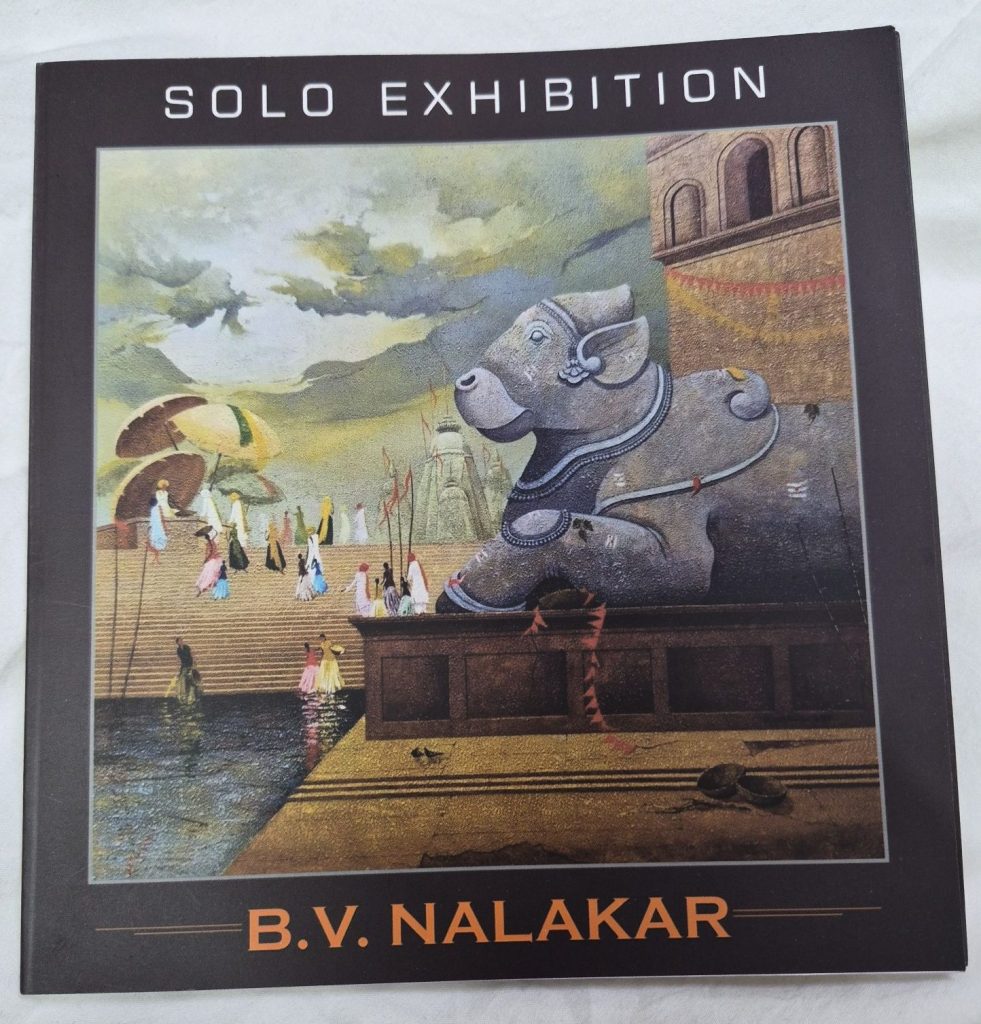
Next, we encountered the remarkable work of B. V. Nalakar (Basavaraj Nalakar), a contemporary Indian artist from Karnataka. Nalakar is known for his paintings of traditional Indian life, particularly his depictions of the ghats of Banaras (Varanasi), the iconic steps leading down to the River Ganges. His work captures both the spiritual significance of these places and the everyday rituals of the people who inhabit them.
What captivated me most was the extraordinary texture of his paintings.
You could almost feel the edges of the bricks and the folds of the women’s saris. The detail was remarkable, giving the paintings a sense of depth and reality that made me want to reach out and touch them. His riverside scenes were particularly beautiful, capturing moments of daily life against the backdrop of a place steeped in history and religious significance.
There was something almost literary about these works. Each painting seemed to contain countless stories: the people gathering by the river, the women in their colourful saris, the buildings that have witnessed generations of change and the river itself, flowing through it all. Like a good historical novel, Nalakar’s paintings offered a glimpse into a world shaped by tradition, culture and the passage of time. I found myself musing to myself about how literature and art both preserve aspects of society. They record the ordinary as well as the extraordinary, reminding us that everyday lives and experiences are worthy of being remembered.
Light, Shadow and Spirituality: Vishnu N. Sonavane
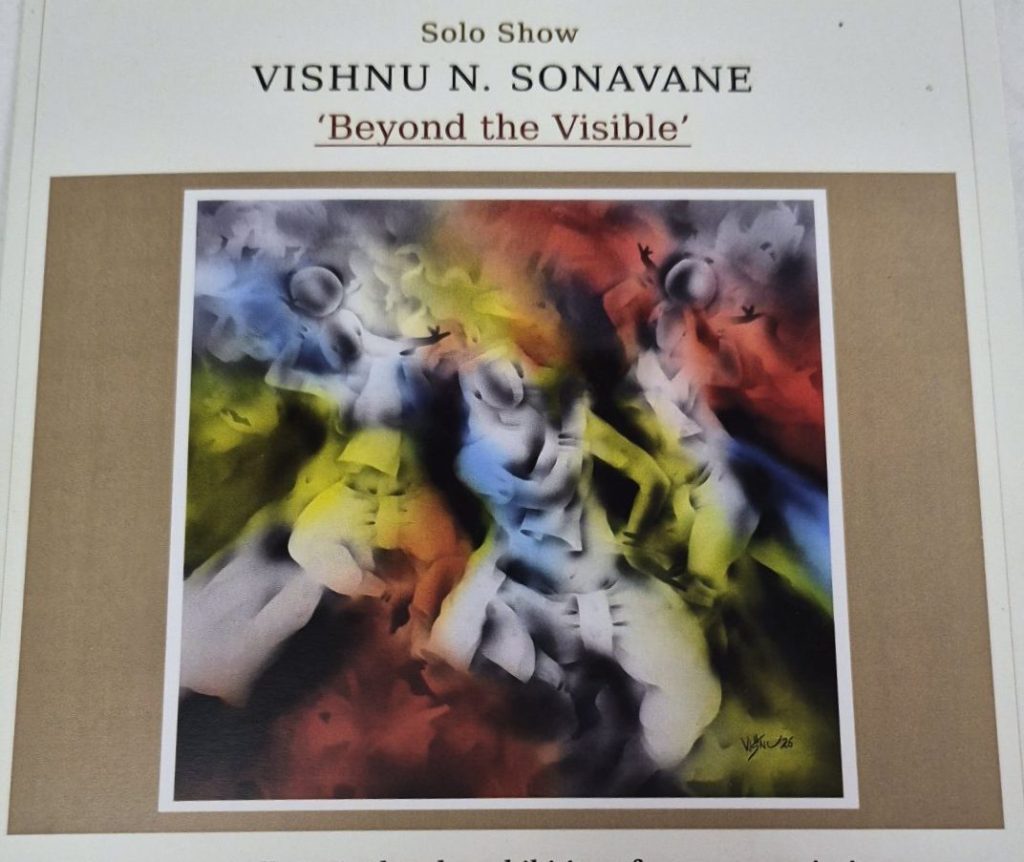
We were also fortunate to meet Vishnu N. Sonavane, an Indian painter and animator whose work draws on religious imagery, expressive colour and the interplay of light and shadow. His paintings of religious deities were particularly evocative. Sonavane’s canvases captured my attention because of their bold use of colour. However, it was his treatment of light that made the images so striking. Through carefully placed highlights and deep shadows, Sonavane gave his subjects an extraordinary sense of depth and presence. The figures seemed to emerge from the canvas, creating an almost luminous quality.
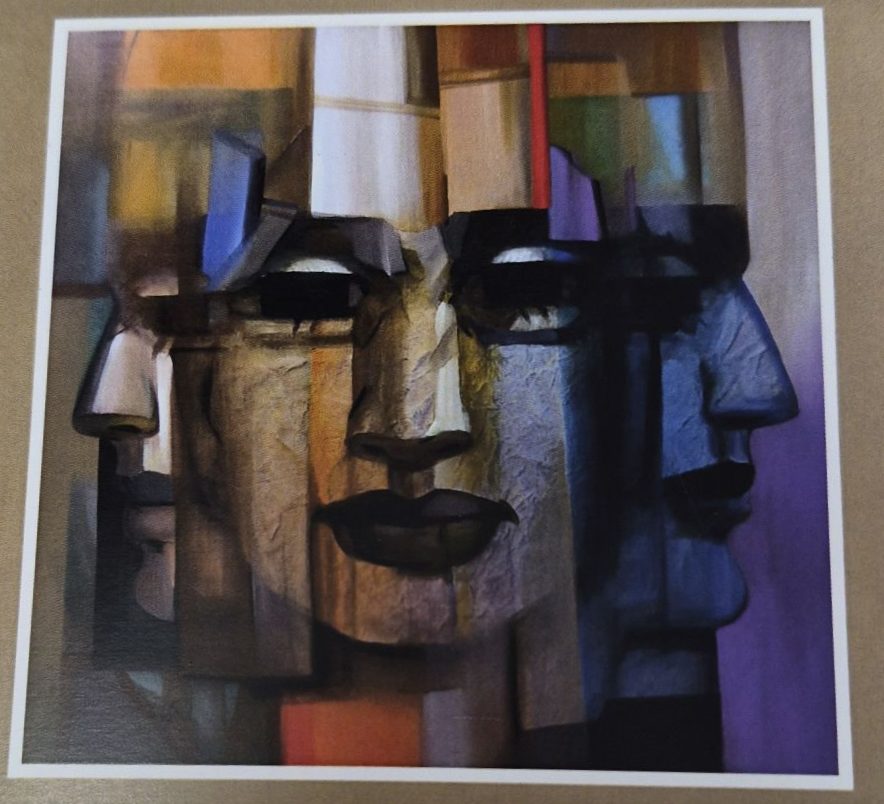
What interested me was the way these paintings communicated spirituality through visual expression. Religious stories and traditions have been shared through literature, oral storytelling and art for centuries. Sonavane’s work seemed to bring these traditions into a contemporary space while retaining their cultural and spiritual significance.
As someone who loves mythology and the retelling of ancient stories, I found this particularly fascinating. Just as writers reinterpret familiar myths for new audiences, artists can offer fresh ways of seeing figures and stories that have been part of cultural traditions for generations.
Raw Expression: Rajbhar Rajest
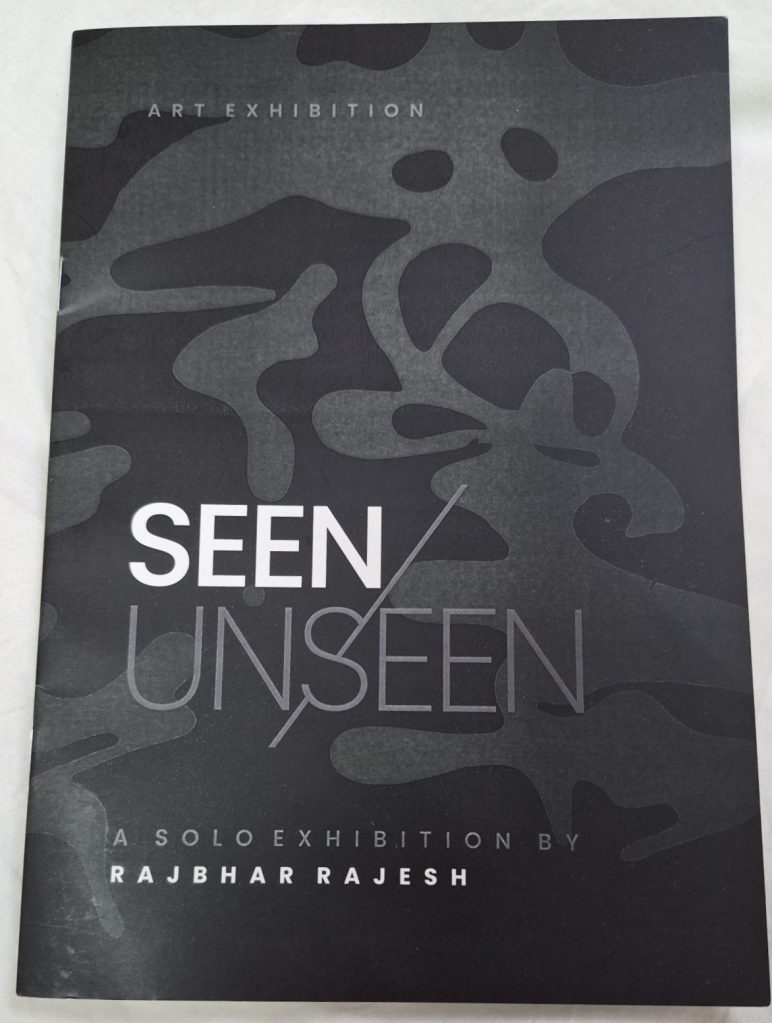
Our final exhibition introduced us to the work of Rajbhar Rajest, whose approach was quite different from the artists we had seen earlier. His paintings featured spontaneous flows of colour, dripping techniques, varied surfaces and mixed media. When we chatted with him, he explained that he used sticks as his painting instruments.
I loved that! For someone who is very artistically challenged… I felt enthralled about this work. as there was something wonderfully unconventional about the idea of using sticks rather than traditional brushes to create art.
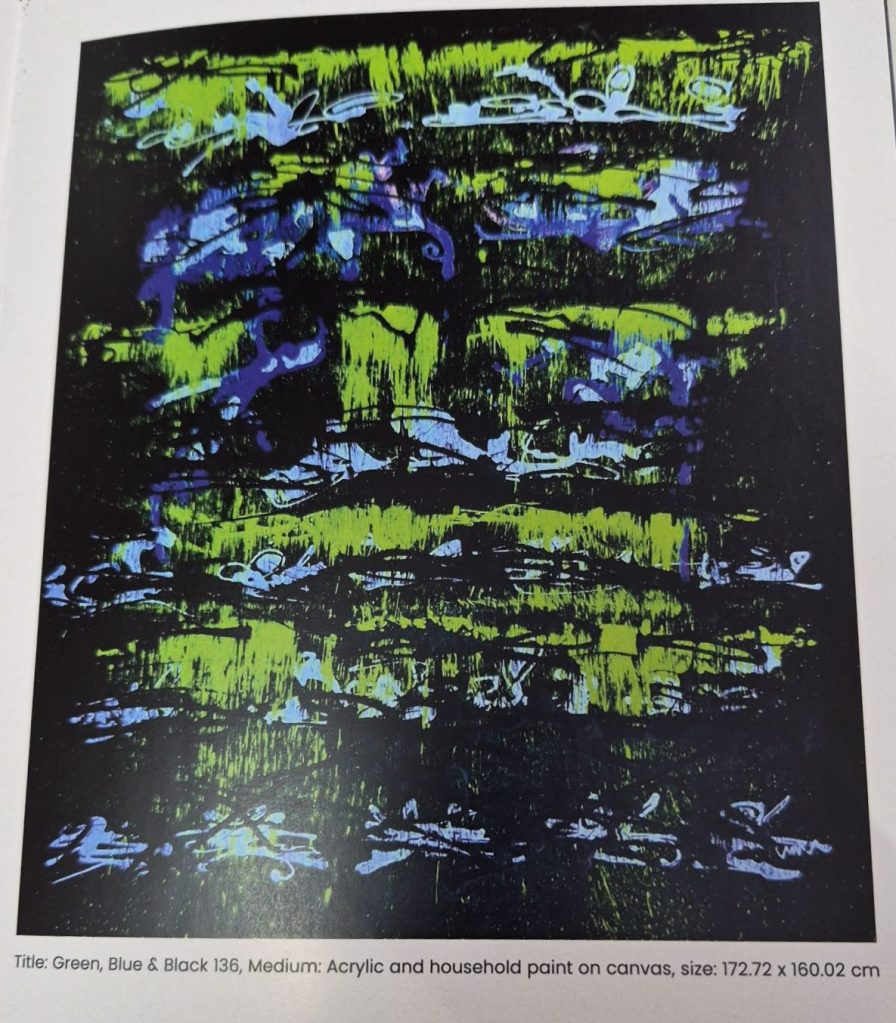
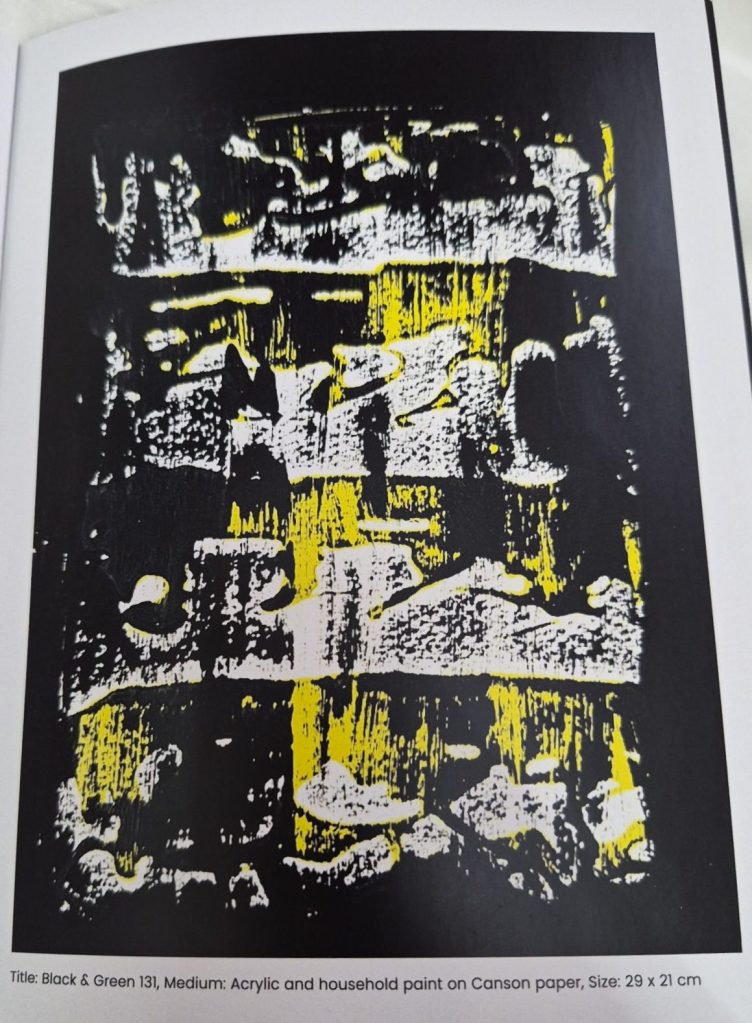
His paintings felt raw. That is probably the best word I can find to describe them. They were expressive, energetic and seemingly unconstrained by the need to create recognisable forms. Where Nalakar’s work drew me in through its intricate detail, Rajest’s paintings made me think about the physical act of creating. The movement, the materials and the freedom of expression all seemed to be part of the story.
It reminded me of experimental writing, where authors play with structure, language and form to challenge our expectations. Sometimes the most interesting creative works are those that refuse to follow familiar conventions. And sometimes, we don’t need to understand every artistic choice to appreciate the work itself.
Art, Literature and the Human Experience
Walking through the gallery today, I kept returning to the relationship between art and literature.
Both are reflections of the individual and the society in which they are created. They are shaped by culture, history, beliefs, experiences and personal perspectives. They can celebrate beauty, challenge assumptions, preserve traditions or encourage us to question the world around us. And most importantly, both require something from their audience.
A reader brings their own experiences and understanding to a novel, just as a viewer brings their own perspective to a painting. The meaning we take from a creative work is influenced not only by the artist or author but also by who we are.
I think this is one of the reasons I value literature so much. A good book allows us to step outside our own experiences and encounter different lives, cultures and perspectives. Art offers that same opportunity, often without the need for language.
Today’s visit also reminded me of the importance of giving students opportunities to engage with different forms of creative expression. We talk a great deal about literacy in education, but being literate is about more than simply reading words on a page. It is also about interpreting meaning, recognising perspectives, understanding context and thinking critically about the messages we encounter. Art provides another wonderful opportunity to develop these skills.
On an aside… Perhaps one of the loveliest aspects of today’s visit was the opportunity to meet the artists themselves.
It is one thing to admire a painting on a gallery wall, but quite another to speak with the person who created it. Those brief conversations added another dimension to the experience. They reminded me that behind every work of art is an individual with their own experiences, ideas and creative journey.
I also appreciated seeing Indian artists celebrated and given the opportunity to share their work with visitors. Each exhibition offered something different, from the vibrant abstraction of Huma Ullah Khan to Nalakar’s detailed riverside scenes, Sonavane’s luminous religious imagery and Rajest’s spontaneous, expressive paintings.
I left the gallery with a greater appreciation of the diversity of artistic expression and a reminder that creativity takes many forms. And while I may freely admit that I do not know much about the technical aspects of art, I do know that I enjoy the way it makes me stop, look, think and feel.
Which, when I think about it, is exactly what I love about a good book.
Perhaps that is the real connection between art and literature. Both tell us something about ourselves, something about others and something about the world we share.
Not a bad way to spend a morning on holidays!

