The action of leading a group of people or an organisation.
Leaders are people with the ability to use social influence rather than formal authority to convince others to follow their vision. Leaders can be appointed or emerge from the ranks, and thus the qualities of leadership are not correlated to seniority, nor a person’s position in an organisation. This is because the ability to inspire others is based upon their ability to influence rather than power or authority (Kruse, 2013).
There are two main objectives of a leader, the first one is to use their influence to convince people to work cohesively together, and the second one is to have a task, vision or goal in mind to focus their influence upon (Mindtools, 2016). This leads to the summation that the type of leader will be dependent upon the vision, the cohort and the environment the leader is working with and that there is no one correct type of leader. Consequently it can be theorised that leaders and leadership style will vary depending on the circumstances in which the organisation finds itself in (Mindtools, 2016). This means that unlike previous years where good leadership was assumed to be within the realms of charismatic individuals, the modern perspective of leadership is instead perceived to be situational and team based (Klingborg et al., 2014; Kruse, 2013; Mindtools, 2016).
Unfortunately, leadership roles and management are often confused for each other. This is a fallacy as leaders are not necessarily managers. Whilst there are similarities between the two roles, there is a difference in the spheres of influence. Both leaders and managers can be appointed to their positions and the efficacy of both can impact an organisation, but in different ways. Ingram (2019) points out that leaders are focused on the future and therefore provide goals and incentives for their team to achieve, whereas managers are focused on the achievements of the day. This means that leaders are required to provide opportunities for personal growth and collaboration in order to promote individual and group performance (Ingram, 2019). Managers are not mandated to provide the same level of access to personal development as their task is to use their legitimately appointed power to ensure tasks get completed on time, whereas leaders are tasked with using their socially influenced power to induce others to engage and participate in their vision or goal over a period of time (Kruse, 2013; Ingram, 2019). Whilst leaders are not always managers, it is helpful for managers to also possess leadership qualities or traits.
Digital storytelling (DST) is the modern adaptation of the ancient art of storytelling, in which visual, audio and textual elements are interwoven together to convey information and develop critical thinking (Ciccorico, 2012; Ohler, 2013, p.94; Maneti, Lipscombe & Kervin, 2018). DST is also an effective conduit of knowledge, and traditions but its primary purpose is to develop language, literacy, and learning (Moran et al., 2020; Ross Johnston, 2014). From an education perspective, DST can improve multimodal literacies, digital competencies and critical thinking, as it requires the reader to interact with the content rather than just passively view it (Hashim & Vongkulluksn, 2018). The issue with utilising DST is that not all DL is transformative, and not all recipients possess the necessary skills to access and engage with the medium (Ross et al., 2017; Jeon, 2012). DST that have minimal gestural manipulation, contradictory modalities, poor layout, and a lack of visual permanence have lower comprehension compared to print texts (Lamb, 2011; Hashim & Vongkulluksn, 2018).
The issues with students:
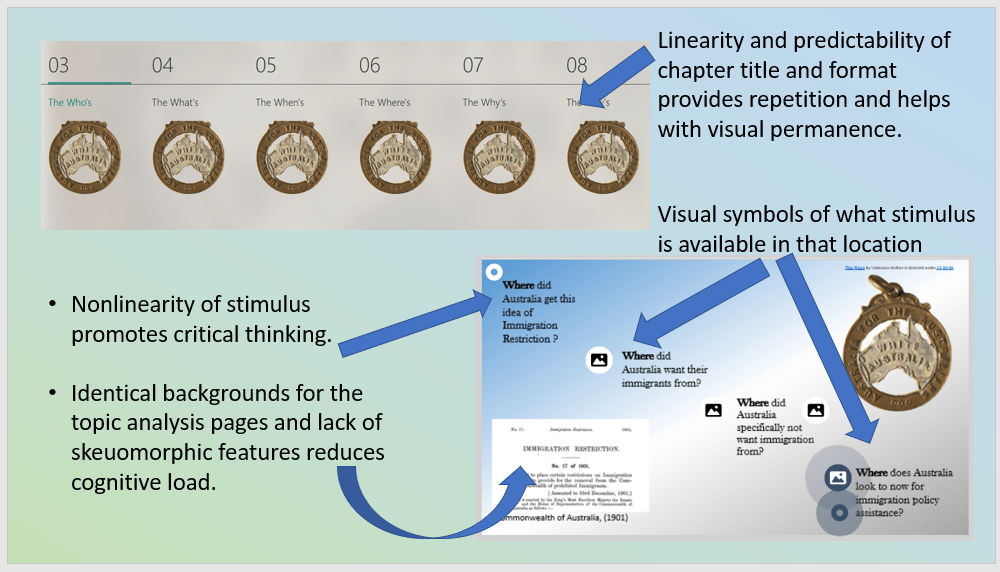
The ability to process information is known as cognitive load. Mayer and Moreno (2005) point out that cognitive overload occurs the amount of information received supersedes the brain’s processing capacity and any excess of stimuli can lead to diminished transfer of knowledge and reduced learning outcomes (CESE, 2017, p.3). Cognitive load is minimised when skeuomorphic features are curtailed, modalities are complementary and when students have appropriate digital literacy skills (Ibrahim, 2012; Mangen et al., 2013). Other factors that increase cognitive load are visual permanence, layout, colour scheme, length of digital text and an appropriate level of content (Mayer & Moreno, 2005; Mangen et al., 2013). The review of my own DST shows how I attempted to meet the needs of my students.
The issues with practitioners:
ACARA (2018) and ATSIL (2017) both require the inclusion of digital literature into classroom practice, but this mandate can cause feelings of inadequacy and can be exacerbated by the volume and variety of technology available (Hyndman, 2018). However, Watson (2019) points out that teachers do not have to become experts in all forms of technology, just the platform they are choosing to use. This resonates as in the first assessment task for INF533, I pointed out that teachers were unlikely to include creation of DST in their practice due to concerns of their own digital competencies (Templeton, 2020). McGarr & McDonagh (2019) suggest that teacher competence should be framed around technology, cognition and ethics, so that professional development can have a focus. Read about my DST journey here.
The issue with copyright:
The integration and implementation of DL has legal ramifications, and whilst educators are familiar with the “10% or one chapter rule”, there is a significant proportion who are unsure of the legalities when it comes to digital resources, Creative Commons and copyright law (Suzor, 2017). Literacy Toolkit (2019) points out that modelling correct academic writing for students with appropriate citations, is an effective way of explicitly teaching academic honesty. An added benefit of using the Office suite is that Creative Commons images can be utilised with ease. It was also fascinating to learn that images from historical and current events do not require permission for reporting purposes, and that transformed resources do not breach copyright law as it is unlikely to affect the creator or harm the market (ALRC report, 2013, p.319; Suzor, 2017). Therefore teachers that create and or transform media to suit the needs of their students, are less likely to breach copyright than educators that just copy resources. I certainly wish I had known this prior to starting and finishing my digital narrative, but that is for another blog on another day.
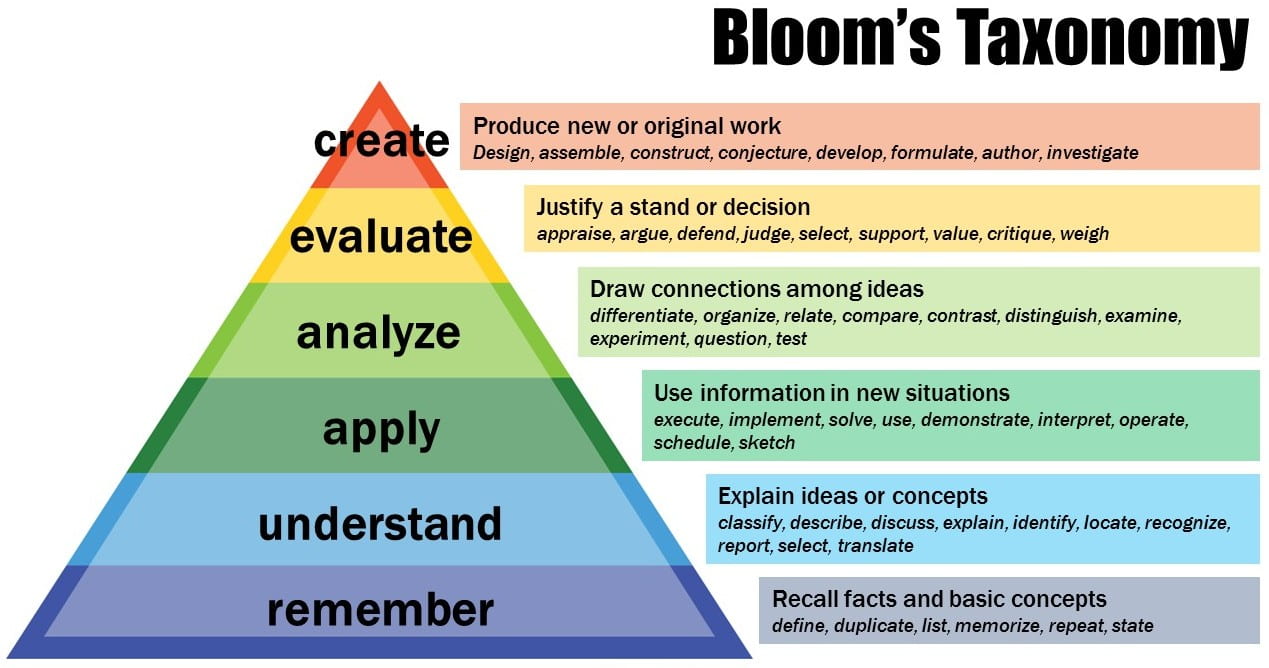
This semester expanded my knowledge of digital literature as indicated by my EVIDENCE of LEARNING hierarchal chart.
In creating this Sway narrative, I was able to build upon understanding gained from previous subjects and solidify new knowledge upon it. I learned about :
Australian Government. (2013). Copyright and the digital economy (ALRC Report 122). Australhttps://www.alrc.gov.au/wp-content/uploads/2019/08/final_report_alrc_122_2nd_december_2013_.pdfian Law Reform Commission.
Brown, C., & Czerniewicz, L. (2010). Debunking the ‘digital native’: beyond digital apartheid, towards digital democracy. Journal of Computer Assisted Learning 26(5). DOI: https://doi.org/10.1111/j.1365-2729.2010.00369.x
Ciccoricco, D. (2012). Chapter 34 – Digital fiction – networked narratives. In Bray, J., Gibbons, A., & McHale, B. (2012). The Routledge Companion to Experimental Literature. Taylor & Francis eBooks. Retrieved from CSU Library.
Hughes-Hassell, S., & Mancall, J. C. (2005). Collection management for youth : Responding to the needs of learners. Retrieved from https://ebookcentral.proquest.com
Ibrahim, M. (2012). Implications of designing instructional video using cognitive theory of multimedia learning. Critical Questions in Education 3(2), p.83-104. Retrieved from https://eric.ed.gov/?id=EJ1047003
Jeon, H. (2012). A comparison of the influence of electronic books and paper books on reading comprehension, eye fatigue, and perception. The Electronic Library, 30(3), 390-408. doi: 10.1108/02640471211241663
Johnson, P. (2018). Chapter 4 – Developing Collections. Fundamentals of Collection Development 4th Edition. ALA Editions. Chicago. Retrieved from EBSCOhost Books.
Mantei, J., Kipscombe, K., & Kervin, L. (2018). Literature in a digital environment (Ch. 13). In L. McDonald (Ed.), A literature companion for teachers. Marrickville, NSW: Primary English Teaching Association Australia (PETAA).
Moore, J., & Cahill, M. (2016). Audiobooks; Legitimate ‘reading’ material for adolescents? Research Journal of the American Association of School Librarians. Retrieved from www.ala.org/aasl/slr/volume19/moore-cah
Ross, B., Pechenkina, E., Aeschliman, C., & Chase, AM. (2017). Print versus digital texts: understanding the experimental research and challenging the dichotomies. Research in Learning Technology 25. Retrieved from https://files.eric.ed.gov/fulltext/EJ1163201.pdf
Ross Johnston, R. (2014a). Chapter 23 – Literature, the curriculum and 21st-century literacy. In G. Winch, R. Ross Johnston, P. March, L. Ljungdahl & M. Holliday (Eds.), Literacy: Reading, writing and children’s literature (5th ed., pp. 472-489). Melbourne: Oxford University Press.
Vidales-Bolanos, M., & Sadaba-Chalezquer, C. (2017). Connected Teens: Measuring the Impact of Mobile Phones on Social Relationships through Social Capital. Media Education Research Journal 53(25). Retrieved by https://files.eric.ed.gov/fulltext/EJ1171085.pdf
Walsh, M. (2013). Literature in a digital environment (Ch. 13). In L. McDonald (Ed.), A literature companion for teachers. Marrickville, NSW: Primary English Teaching Association Australia (PETAA).
Templeton, T. (2020). White Australia Policy [Sway].
The Immigration Restriction Act of 1901 was one of the first pieces of legislation created by the newly formed Australian Federal Government and is the main focus of this digital narrative (DN). Commonly referred to as the White Australia Policy (WAP), the Act was designed to maintain racial homogeneity and the economic value of the Australian man (Fong, 2018). Whilst the Act is addressed in Year 10 History and Senior Modern History, the cognitive and curriculum focus of this DST is aimed at the 9/10 History Unit of work – Australia – From Federation to the Bicentennial (ACARA, 2014a; ACARA; 2014b). The utilisation of a multimodal DN in a flipped classroom (FC) dynamic was a strategic ploy to encourage student ownership of learning, approach sensitive content suitably, promote collegial discussion, and allow the teacher to meet the needs of a diverse classroom (Gonzales, 2016; Schmidt and Ralph, 2016, p.1).
Pedagogy
Digital storytelling (DST) is an emerging pedagogical practice that effectively combines technology and literary work for use in recreational, personal or educational endeavours (Ciccorico, 2012; Ohler, 2013, p.94). It is the modern adaptation of oral traditions, and the use of the narrative structure promotes reflective processes whilst communicating content in a manner that meets the cognitive, behavioural and developmental needs of students (Vidales-Bolanos and Sadaba-Chalezquer, 2017). DST promotes Information Communication Technology (ICT) acuity, competency in digital literacies and a participatory culture, as it encourages students to move beyond passive consumption and into interacting and creating with it (Leu et al., 2011; Hashim and Vongkulluksn, 2018).
A DN created with Microsoft Sway allows students to interact with the different literacies and interactive elements, furthering valuable 21st century skills and improving the quality of transactions between the narrative and the reader (Ciccorico, 2012; Moran et al., 2020). The format allows for the successful integration of visual and audio resources, and the use of personal devices increases teen engagement because technology is intrinsically linked to a teen’s social capital (Moran et al., 2020, p.6; Vidales-Bolanos and Sadaba-Chalezquer, 2017).
Classroom Context
Flipped classrooms (FC) are a transformative student centred teaching strategy with two distinct components, an external technology-based component followed by an interactive section (Ozdamli and Asiksoy, 2016, p.99; Schmidt and Ralph, 2016, p1.). This inverted learning sequence allows students to gain access to the content prior to the lesson, which then allows for the teacher to facilitate discussion and meet the varying needs of the students (Basal, 2015; Schmidt and Ralph, 2016, p.1). Implementing FC also allows student learning and engagement to be observed, documented and any misconceptions clarified (Leask, 2014). As Schmidt & Ralph (2006, p.1) point out, guided discussion is essential for all students but especially for low literacy and ability students. FC are constructivist in nature, self-paced, promote student ownership of learning and build critical study skills which are essential for lifelong learning (Basal, 2015).
Digital Technologies
Digital technologies and multimodal resources (MR) are an integral aspect of DN and other modern classroom pedagogies (Ibrahim, 2020). MR can be static, such as picture books and graphic novels, or dynamic such as Sway, Powerpoint, Thinglink, digital textbooks, and interactive websites (Ibrahim, 2020). This DN utilisesSway and Thinglinkbecause the software programs embed together well, and their combinedinteractivity promotes engagement as well as encourage gestural manipulation to access information (Ibrahim, 2012; Heick, 2017).
The resources themselves do not espouse learning. Instead it is the juxtaposition of media which conveys information at the correct level and the subsequent class discussion that has the greatest impact on student learning (Mayer and Morena, 2005; Ibrahim, 2012). When multimodal information complement and enhance each other, the brain is able to decode, deduce, categorise and construct this new information efficiently upon prior knowledge and thereby reducing the cognitive load (Mayer and Morena, 2005; Ibrahim 2012; David, 2020). But when the varying forms of media have less than optimum layout and delivery, the brain becomes overloaded and processing time increases leading to an increased cognitive load leading to lower comprehension and failure to make meaning (David, 2020). Therefore, it is important that DN created for use in a classroom setting utilise the multimedia principles to ensure cognitive load is maintained for optimum intellectual performance (Ibrahim, 2012; Heick, 2017).
School Context – Students:
Daramalan College is a culturally diverse co-educational high school with many students’ descendants of the post war immigration schemes (ABS, 2016). Therefore, discretion and finesse are required when addressing outdated perceptions of race and ethnic diversity. The utilisation of a DST in a FC allows the student to process the information privately and then engage in discussion to develop further understanding.
School Context – Technology:
Sway was selected due to its inclusion in the school’s subscription to Microsoft Office and that it can be successfully catalogued into the library management system. This meets the requirements dictated by the school’s Collection Management and Development Policy. Other benefits include its intuitiveness, ease of use and ability to integrate multimodal resources.
Basal, A. (2015). The implementation of a flipped classroom in foreign language teaching. Turkish Online Journal of Distance Education 16 (4). DOI::10.17718/tojde.72185
Ciccoricco, D. (2012). Chapter 34 – Digital fiction – networked narratives. In Bray, J., Gibbons, A., & McHale, B. (2012). The Routledge Companion to Experimental Literature. Taylor & Francis eBooks. Retrieved from CSU Library.
Cornet, C. E. (2014). Integrating the literary arts throughout the curriculum. In Creating meaning through literature and the arts: arts integration for Classroom teachers (5th ed,) pp144-193. USA
Ibrahim, M. (2012). Implications of designing instructional video using cognitive theory of multimedia learning. Critical Questions in Education 3(2), p.83-104. Retrieved fromhttps://eric.ed.gov/?id=EJ1047003
Leu, D.J., Forzani, E., Timbrell, N., & Maykel, C. (2015). Seeing the forest, not the trees: Essential technologies for literacy in primary grade and upper elementary grade classroom. Reading Teacher 69: (2), p.139-145. Retrieved from https://eric.ed.gov/?id=EJ1073399.
Ozdamli, F., & Asiksoy, G. (2016). Flipped classroom approach. World Journal on Educational Technology: Current Issues. 8(2), p98-105. Retrieved from https://files.eric.ed.gov/fulltext/EJ1141886.pdf
Vidales-Bolanos, M., & Sadaba-Chalezquer, C. (2017). Connected Teens: Measuring the Impact of Mobile Phones on Social Relationships through Social Capital. Media Education Research Journal 53(25). Retrieved byhttps://files.eric.ed.gov/fulltext/EJ1171085.pdf
This resources was assessed using the guidelines set out by this RUBRIC
Citation:
Templeton, T. (2020). White Australia Policy [Sway].
General Selection Criteria:
Digital Literature Selection Criteria:
Teaching and Learning Needs
50/50
Learning, literacy and language development:
45/50
Curriculum Needs
20/20
Format enhances the learning:
15/20
School Needs:
20/20
Features enhance the learning:
20/20
C/W School Ethos.
8/10
Price:
Free 10/10
Summary:
The White Australia Policy [sway] is an internally created teacher resource for use in conjunction with a flipped classroom setting. Designed as the pre-lesson task for the Year 9/10 History – “From Federation to Bicentennial”, this digital narrative contains a variety of primary sources, news clippings, videos, radio interviews and infographics about the different local and global perspectives surrounding the White Australia Policy. The resource is a valuable teaching tool but needs to be accompanied by a teacher facilitated class discussion in order to gain optimum values.
ACHMH123 & ACHMH125 (Senior Modern History – Unit 3)
ACHMH194 & ACHMH195 (Senior Modern History – Unit 4)
Learning, Literacy and Language:
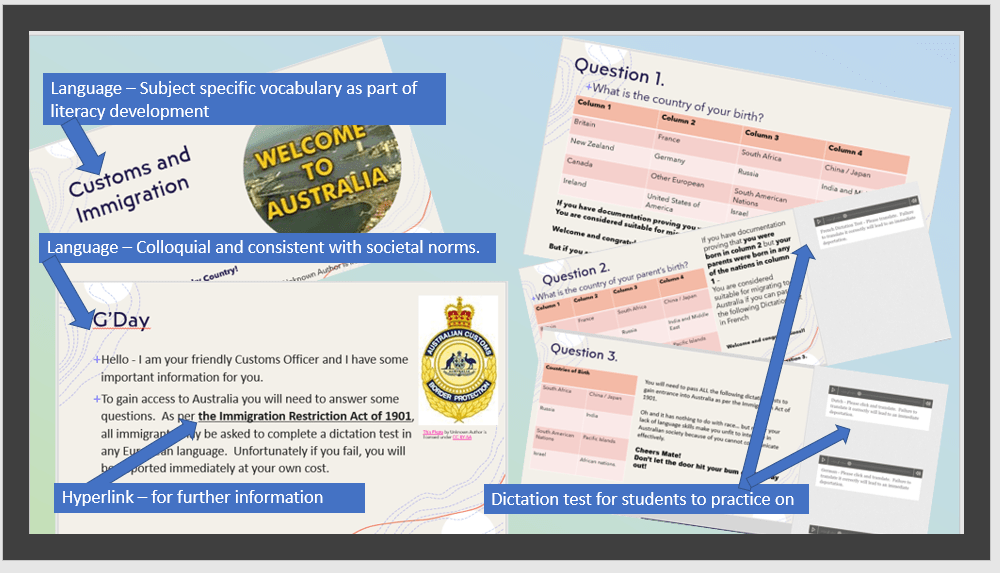
The White Australia Policy [Sway] is a linear interactive digital narrative that has two main purposes. The overt purpose is to assist students through the various perspectives of Australian and world history to understand the reasoning behind the legislation and implementation of this Policy. The variance in viewpoints allow the students to develop their own conclusion about this historical event using the range of primary and secondary sources (Lamb, 2011). The covert purpose of this narrative is to facilitate literacy development by promoting literacy, academic writing and critical thinking.
The narrative facilitates literacy development by the use of complementing images, audio and textual elements, and the integration of the teacher as narrator is a direct attempt to use prior rapport to connect the students to the content (Ibrahim, 2012; Mangen et al., 2013). This congruence of information is more effective at promoting knowledge and comprehension as the complementing audio and textual elements allow the student to experience the benefits of a read aloud in the privacy of their own home (Rhodes, 2019; Ibrahim, 2012). Whilst the language used within the resource is diverse and subject specific, it may be difficult for students with learning or developmental needs to process, and thus it would have been beneficial to have hyperlinks available to assist with comprehension (Fitzsimmons, Weal & Drieghe, 2019).
The Sway’s textual elements with its formal tone, in text citations and use of subject specific vocabulary were designed to provide an archetype of academic writing (Cutler, 2019). Literacy Toolkit (2019) recommends the use of modelled writing as an explicit teaching strategy to address elements of writing such as sequence, linking ideas and vocabulary choice. It allows students who lack confidence in their writing to learn strategies and techniques that they can use in their own writing (Literacy Toolkit, 2019). It also allows those students who lack familiarity with in text citations to experience how citations are intext and referenced.
Digital narratives like this Sway combines emerging technology and literary works in a manner that improves critical thinking and 21st century literacies (Moran et al., 2020; Ciccorico, 2012). As students navigate through the various modalities, they experience a variety of primary sources that would be viewed as discriminatory in modern Australia. The blatant racial stereotyping evident in some of the primary sources may cause some students distress. This transmedia resource will challenge student’s perceptions of Australian history, as well as develop their critical thinking and digital literacies (Kopka, 2014).
Technology trends.
Ross Johnston (2014) and Leu et al., (2015) point out that the inclusion of interactive digital literature into educational practices meets the modern societal paradigm and allows students to develop valuable 21st century skills. The use of transmedia sources such as this Sway would benefit students by developing their critical thinking, experiential learning and their digital literacy (Cullen, 2015; Pietschmann, Volker & Ohler, 2014; Kopka, 2014; Leu et al., 2015).
Resource Integration:
The White Australia Policy [sway] is a teacher created digital narrative and is freely available on the school intranet with no licensing limitations making it a very thrifty resource. It can be integrated into the library management system, class intranet pages and into any of the Microsoft office suite. It is also accessible from all personal devices and can be exported to Word and printed out for students who are disadvantaged by the digital divide (DIIS, 2016).
Recommendation:
The White Australia Policy [sway] would be a valuable addition to the school collection.
Ibrahim, M. (2012). Implications of designing instructional video using cognitive theory of multimedia learning. Critical Questions in Education 3(2), p.83-104. Retrieved from https://eric.ed.gov/?id=EJ1047003
Lamb, A. (2011). Reading re-defined for a transmedia universe. Learning & Leading with Technology 39(3), p.12-17. Retrieved from https://eric.ed.gov/?id=EJ954320
Leu, D.J, Forzani, E., Timbrell, N., & Maykel., C. (2015) . Seeing the forest, not the trees: Essential technologies for literacy in primary grade and upper elementary grade classroom. Reading Teacher 69: (2), p.139-145. Retrieved from https://eric.ed.gov/?id=EJ1073399.
Ross Johnston, R. (2014a). Chapter 23 – Literature, the curriculum and 21st-century literacy. In G. Winch, R. Ross Johnston, P. March, L. Ljungdahl & M. Holliday (Eds.), Literacy: Reading, writing and children’s literature (5th ed., pp. 472-489). Melbourne: Oxford University Press.
Creating a digital narrative for classroom practice requires extensive planning.
Creating a digital narrative for a university assignment that can also be used for classroom practice turns a teetotaler into a wino.
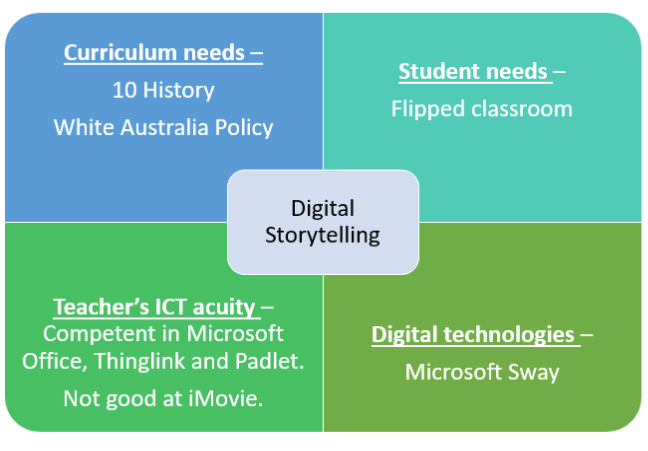
The creation of a digital narrative (DN) for education practice requires the teacher to consider the curriculum content, the needs of the student, the digital technologies available and their own individual ICT acuity.
It requires:
A clear understanding of which parts of the curriculum need to be addressed, content or skills (or both)
The cognitive, behavioural and developmental needs of the students.
The technological capabilities of the school such as BYOD policies and wifi capabilities.
It also requires the educator to acknowledge their own capability and find ways to work within their capacity. This last fact is often crucial as many teachers feel that creation of interactive media is beyond their capability and therefore abstain from using DST in classroom practice (Hyndman, 2018).
Part 1: Curriculum
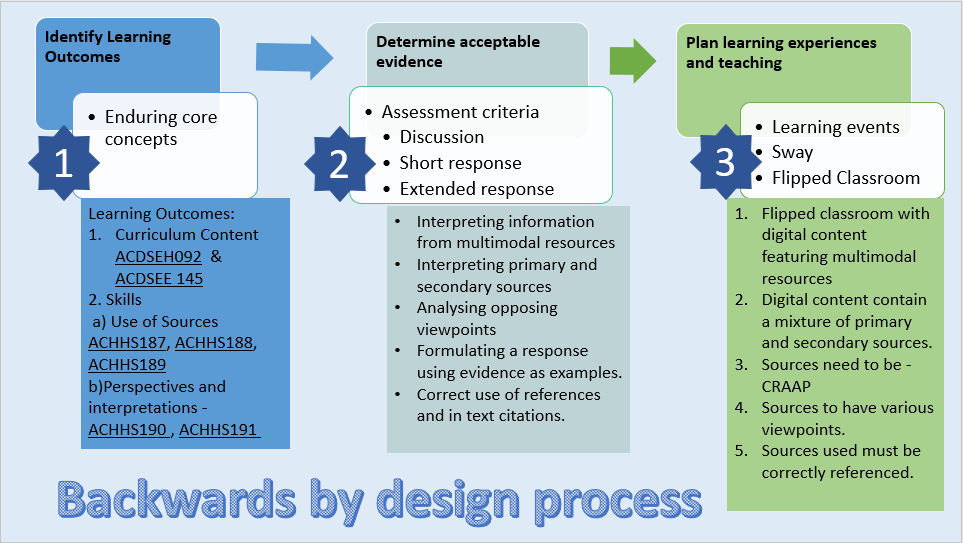
Whilst there are many pedagogical strategies in which an educator can introduce DN or DST into classroom practice, the most effective method for teacher librarians to use is the Backwards Design Process (BPD), or otherwise known as backwards by design. BPD can be utilised across all areas of the curriculum and is often used by teacher librarians as a method of developing information literacy lessons (Gooudzward, 2019). Therefore it seemed like the sensible way to create this DN due to my familiarity with the process.
The identification of the learning outcomes in both content and skills strands of the 10 History curriculum (ACARA, 2014).
Once the learning outcomes were identified, the method and process of evaluating these learning outcomes needed to be determined.
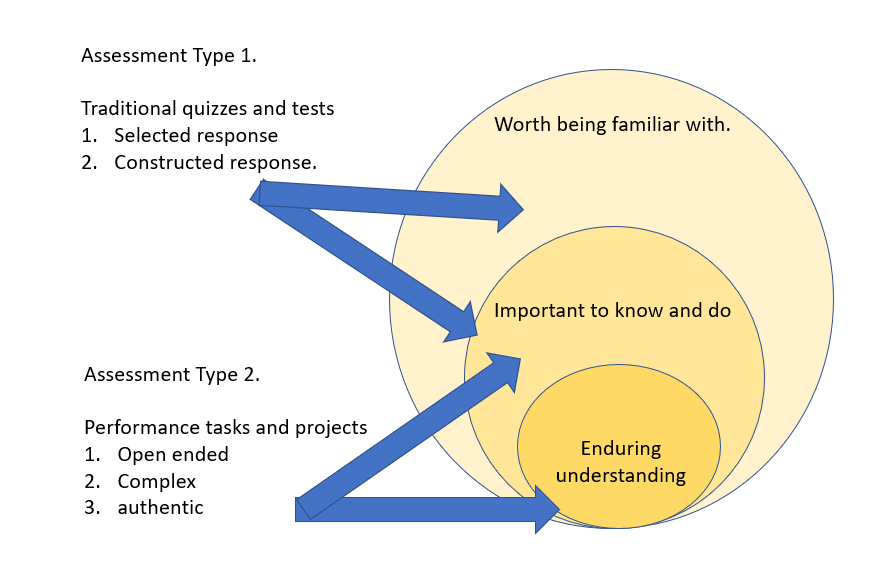
Kurt (2018) and Gooudzward (2019) both point out the importance of ‘ranking’ the outcomes and then correlating them to the complexity of the assessment. The use of Bloom’s taxonomy would be useful here to help differentiate the learning.
Now the learning events can be planned. Considerations should include the type of learning that would suit this unit such as blended learning, explicit instruction, inquiry learning or the use of flipped classroom.
Part B – Student Needs – Pedagogy that works.
When creating or using DST, acknowledging the needs of the students is a fundamental part of pedagogical practice. The White Australia Policy was a very inflammatory legislation and requires finesse and discretion when addressing it in a classroom setting. Students who are recent immigrants or those that were descendants of those restricted by the White Australia Policy may need time and space to process this information. The use of a flipped classroom as a pedagogical strategy allows for the embedding of a DST for students to access prior to the lesson (Schmidt & Ralph, 2016, p.1). This gives the student time and space to process the information privately and the integrated questions promote critical thinking. This strategy also promotes analysis and evaluation of the policy as well as time for the teacher to facilitate class discussion and address the needs of a diverse classroom (Basal, 2015).
Part C: Technological capacities.
The use of Microsoft Sway was based on expediency. My school has a subscription to Microsoft and the students have already engaged with the program in other disciplines. The format allows for the successful integration of images, videos, audio, hyperlinks and Thinglink. It can be accessed from any personal device connected to the internet, is intuitive to use and can be successfully integrated into the school intranet, class pages and can be cataloged into the library management system.
The school has a BYOD policy and excellent wifi, so there should be minimal issues accessing this resource.
Part D: Teacher Competence
Cantabrana et al., (2018) point out that the quality of education in the 21st century is directly linked to teacher education and training. Teachers that have been supported in their professional learning and development to integrate DL into their practice are more likely to use it successfully (Cantabrana et al., 2018). Competence in ICT involves positive attitudes to technology as well as combing conceptual and procedural knowledge (Cantabrana et al., 2018, p.77; McGarr & McDonagh, 2019, p.11). This means that teachers that are reluctant to use ICT from either lack of knowledge or lack of interest are less likely to want to improve their capability and extremely unlikely to create and foster the use of DL and DST in their classroom practice.
McGarr & McDonagh (2019) point out that teacher competence should be framed around three main areas, technological, cognitive and ethical. This makes sense as creating a digital narrative requires the teacher to be competent at combining curriculum with technology, whilst ensuring copyright is addressed appropriately (McGarr & McDonagh, 2019, p.13).
Basal, A. (2015). The implementation of a flipped classroom in foreign language teaching. Turkish Online Journal of Distance Education 16 (4). DOI::10.17718/tojde.72185
Cantabrana, JL., Rodriguez, M., & Cervera, M.G. (2018). Assessing teacher digital competence: the construction of an instrument for measuring the knowledge of pre-service teachers. Journal of New Approaches in Educational Research. 8(1), p73-78. Retrieved from https://files.eric.ed.gov/fulltext/EJ1202957.pdf
I have often wondered how students can appear to be engaged and respond appropriately to a particular topic one day, and then the next day/week/month – look at me perfectly blankly when I bring up the same topic for discussion.
The blank faces and looks of confusion make me want to pull my hair out and develop a dangerous drinking habit. It is very frustrating for teachers when students seem incapable of transferring gained information and knowledge from one class to the next class, let alone another subject or even the real world!
Bang your head just there…
As teachers we query our lesson structure, our pedagogical practice and our sanity for that matter! We wonder what is going on in the heads of our students and in our own!
After all didn’t someone once say…
Well I am not Einstein but I am determined to make a change to my practice.
One theory about this daily dilemma is that the curriculum and associated resources are often constructed with the focus on content rather than outcome (Fuglei, 2020). This means that the learning outcomes of the lesson or unit of work can be missed as they were not explicitly addressed in the teaching and learning.
This then poses the challenging question –
How do we increase the statistical probability of students achieving these learning outcomes?
The answer is…
Backward design process, or commonly known as backward by design (Fuglei, 2020).
The backward design process (BDP) is a strategy that focuses on the learning outcomes to be achieved by the students and then working it backwards to what the assessment criteria will be and then the pedagogical strategies that meet those needs (Ziegenfuss & LeMire, 2020). It is the opposite of forward design that organises learning in the form of content, lessons and then exam. Aviles & Grayson (2017) point out in forward design, student understanding and master is often misdiagnosed as the learning activities do not contain evidence of such learning. BPD is very effective in classroom instruction as its student centered focus allows for the teaching and measuring of established learning outcomes (Ziegenfuss & LeMire, 2020). Wiggins & McTighe (2012) cited in Aviles & Grayson (2017) point out that this student mastery can be observed and documented in discussion groups, formative and summative tasks, or anything that shows metacognitive awareness. As comprehension and understanding is assessed throughout this process, the student is able to connect theory to applications, and this fosters knowledge acquisition, increases reflective practices and therefore becomes constructivist in nature (Ziegenfuss & LeMire, 2020).
Aviles & Grayson (2017) indicate three roles in BPD.
Direct teaching – connecting and engaging students to the lesson.
Coach to student learning – provide feedback and opportunities for independent practice.
The process of BDP makes it very conducive to education and library practices, as it requires the educator to identify the outcomes prior to planning the learning experiences and classroom resources (Gooudzward, 2019). This means that the activities integrated into the teaching and learning are designed to meet the specified learning outcomes and the students cognitive needs(Ziegenfuss & LeMire, 2020). Whilst BDP can be utilised in all curriculum areas, it has great value in the teaching and learning of information literacy (Ziegenfuss & LeMire, 2020; Fox & Doherty, 2012).
Fox & Doherty (2019, p.145) point out that there are three definite stages in BPD.
Identify the results (learning outcomes, curriculum outcomes, general capabilities)
Determine mode/format of evidence (Aviles & Grayson, 2017)
Assessments of learning – Summative
Assessments for learning – Class discussion/Socratic seminars
Assessments as learning – reflective practices/ metacognitive process
Plan teaching and learning activities that meet those needs.
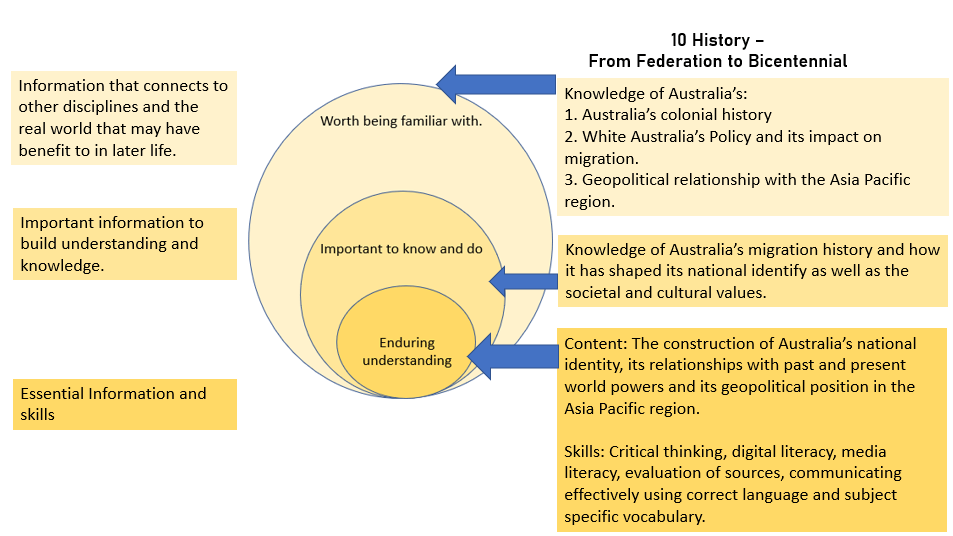
Kurt (2018) and Gooudzward (2019) both indicate that a hierarchical scale needs to be used to determine curriculum content priorities in determining which learning outcomes are crucial and which are just worth being familiar with. Once these outcomes have been determined, assessments or evidence of learning needs to be appropriately linked to them.
As the stages indicate, the primary focus of the BPD is on what the students learn or achieve rather than what the teacher thinks is important. This makes BPD a student centred approach to learning, and as it requires the teacher to understand the student’s level of understanding prior to commencing the lesson. Therefore this process aligns with the constructivist approach to education.
Fox, B., & Doherty, J. (2012). Design to learn, learn to design: Using backward design for informational literacy instruction. Communications in Information Literacy 5 (2). 144-155. Retrieved from https://core.ac.uk/download/pdf/193813175.pdf
Ziegenfuss, D., & LeMire, S. (2020). Information Literacy and Instruction: Backward Design: A Must-Have Library Instructional Design Strategy for Your Pedagogical and Teaching Toolbox. Reference & User Services Quarterly, 59(2), 107-112. doi:http://dx.doi.org/10.5860/rusq.59.2.7275
Technology has become an integral part of education and many teachers have made the conscious decision to integrate emerging technologies inventively within their professional practice. Basal (2015) believes that technology enriched learning environments increase the learning opportunities for students, as it allows them to improve their ICT acuity, increases their engagement with the content and provides valuable classroom discussion time. One such way of integrating technology in a meaningful manner is the use of flipped learning or flipped classrooms.
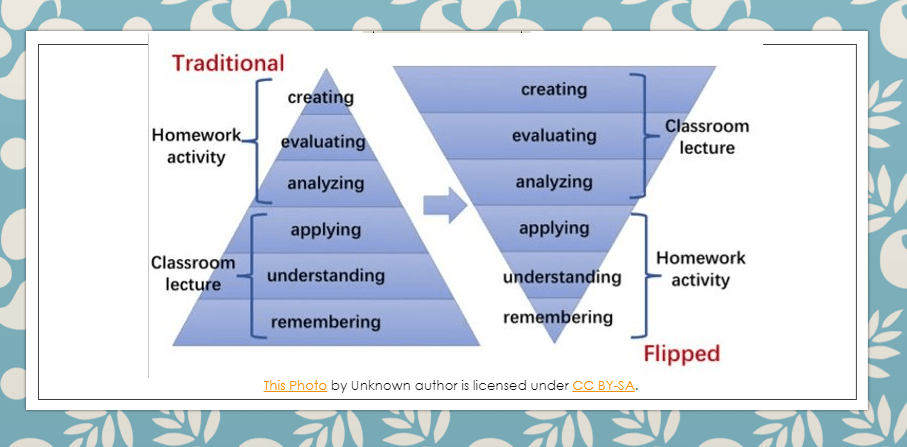
By inverting the learning sequence, students gain access to the content prior to the lesson which allows them to address the understanding in the lesson.
Flipping the classroom means flipping the process of learning.
This access to content occurs in a personalised, student centred manner through a variety of methods, including the reading course notes, and the accessing videos or other multimedia (Basal, 2015). Flipped classrooms follow a constructivist approach to learning as students are required to take ownership by accessing the content in their own time, at their own pace (Basal, 2015). This self paced approach increases the likelihood of students making those valuable connections between new content and prior knowledge, and therefore improving their overall learning outcomes.
Flipped learning student centred approach can be seen clearly during class time, where the student is able to apply their knowledge and understanding to the learning activities. Additionally, as Leask (2014) points out, student engagement and learning is easier to observe and document when teachers are able to view them applying their knowledge. By addressing content earlier, the teacher is able to assist individual students with cementing their understanding and clarifying misconceptions (Schmidt & Ralph, 2016, p.1). The other advantage is that the students are required to take responsibility for their own learning by accessing the content in their own time and prior to the lesson.
Flipped Classrooms changes the role of the teacher from font of knowledge to facilitator of learning.
There are several benefits to using a flipped classroom in pedagogical practice. One benefit to implementing this strategy is that it reduces or eliminates the ineffective lecturing teaching style (Basal, 2015). The lecture format is a very traditional form of teaching and alludes to the illusion that the teacher is the font of knowledge, and the student the receptacle receiving the information in a passive manner. Flipped classrooms, as Basal (2015) points out, requires the teacher to become a facilitator and organiser of content, rather than a font of content. This role reversal changes the classroom dynamics from a teacher centred to a student centred approach.
The student centred approach is visible throughout the strategy. Leask (2014) points out that student engagement and learning is easier to observe and document when teachers are able to view interactions in class discussions and thereby assess the quality of interactions the student has made with the content prior to the lesson. The early delivery of content also facilitates learning as the teacher is able to assist individual students with cementing their understanding and clarifying misconceptions, which is essential for low ability and low literacy students (Schmidt & Ralph, 2016, p.1). This guided class discussion and application is very provident for students that are unable to receive assistance at home for their learning. Flipped classrooms increase learning outcomes as students are required to take responsibility for their own learning and that students gain confidence in class discussions due to the prior access to content material (Basal, 2015, p.32).
An indirect positive consequence of flipped learning is that the creation of videos for students to access prior to the lesson also provides access to content for students who are unable to attend school due to illness or personal circumstances (Schmidt & Ralph, 2016, p.1). Prior to 2020, remote learning and remote access to content was not a priority but with the recent pandemic and resulting lockdown, flexible and adaptable learning have become a concern for many teachers across the country.
Whilst there are many benefits to using flipped classrooms in pedagogical practice, there are concerns. The primary issue is the creation of resources such as videos and other forms of multimedia to deliver the content. Schmidt & Ralph (2016) point out that even though the making of videos can be extremely time consuming, teachers should not divert to mundane Powerpoints and repetitive videos as they can lead to student boredom and disengagement. Another issue is that students can be disinclined to access the coursework prior to the lesson, and this disinclination can affect the vibrancy of the class learning and discussion (Ozdamli & Asiksoy, 2016). Another major concern with implementing flipped learning in pedagogical practice is access to personal devices and reliable internet outside of school. This makes accessing these resources such as online videos and other multimedia texts difficult for First Nations students, learners from lower socioeconomic families as well as rural and remote areas (DIIS, 2016).
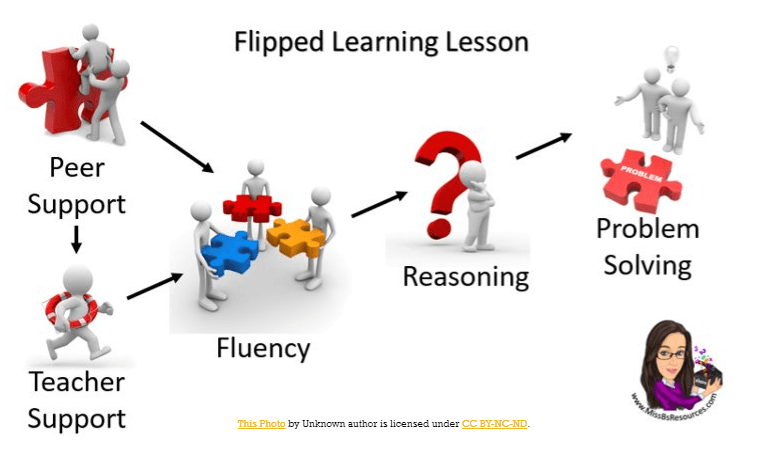
More than just videos – Flipped lessons promote complex reasoning and problem solving.
Successful flipped classrooms are more than just the creation and dispersal of didactic videos outside the classroom. Rather it is the collaborative learning and classroom discussion that is provoked by the content material that occurs in the classroom that makes flipped learning successful (Basal, 2015). It is about the students being able to clarify their understanding and address any misconceptions that they may have. Flipped learning requires both the student and teacher to adapt their perspective of teaching and gives teachers additional class time to focus on making meaning of new information in a student centred manner (Basel, 2015). It requires students to be proactive, engage with the content prior to the class, and in discussion during the class. It requires teachers to be willing to experiment with technologies, and relinquish didacticism in favour for constructivism. Flipped classrooms will not meet the needs of all students and their teachers, but it is will work for the majority.
REFERENCES:
Basal, A. (2015). The implementation of a flipped classroom in foreign language teaching. Turkish Online Journal of Distance Education 16 (4). DOI:: 10.17718/tojde.72185
Ozdamli, F., & Asiksoy, G. (2016). Flipped classroom approach. World Journal on Educational Technology: Current Issues. 8(2), p98-105. Retrieved from https://files.eric.ed.gov/fulltext/EJ1141886.pdf
Multimedia is the convergence of multiple forms of media into one format and is present across all aspects of modern life including classroom practice.
The notion of a multimedia resource may seem to be a more modern construct, but multimedia resources have been associated with educational practices for an extended period of time. Originally appearing in classrooms as annotated drawings, maps, and picture books, these static forms of multimedia appear in many guises, across all learning areas and year levels (Ibrahim, 2020).
The range of multimodal resources found commonly in schools.
Multimodality is cited as a panacea for pedagogical problems, both inside and outside the classroom. In fact, the prevalence of multimodal resources in education has been adduced as more effective at communicating information than when a single modality is used (David, 2020). This is because the information is often delivered in two main literacies, visual and auditory. It is the combination of these literacies that enhances learning, and improves educational outcomes (Ibrahim, 2012). But not all multimedia resources promote learning. The method and delivery of the information is essential to ensure students do not suffer from information overload.
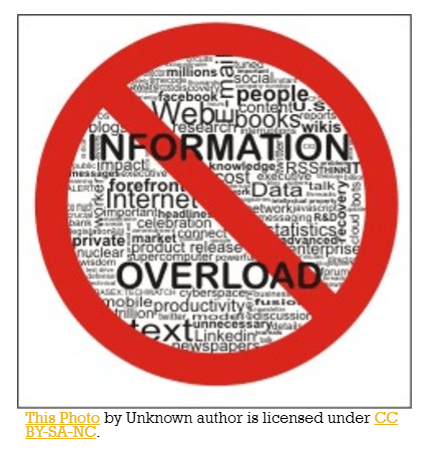
Information overload – when the brain gets inundated with more information that it can process.
A modern classroom is likely to have multimodal resources in a variety of formats, ranging from static formats such as picture books, to illustrated books, graphic novels and anime, to more dynamic forms such as videos, interactive websites and videos (Ibrahim, 2020). The use of common teaching tools such as Powerpoint, digital textbooks, ebooks, websites and databases can all be considered dynamic forms of multimedia (Ibrahim, 2012). The efficacy of multimodal learning is based upon two main theories, Mayer’s cognitive theory of multimedia learning and Sweller’s cognitive load theory (Ibrahim, 2012). These two theories are able to predict which parameters of multimedia lead to optimum intellectual performance (Heick, 2017).
Mayer’s theory pointed out that whilst the brain appears to engage with material simultaneously, it instead selects the information individually and then organises and integrates the data consequently in three distinct cognitive processes (Mayer & Moreno, 2005). The first step in this process is that the learner selects an amount of incoming auditory and visual information to process. This amount is finite and an overload of information can have negative ramifications for the student such as confusion and a distaste for that medium (David ,2020). The next step in this cognitive process is the organisation of that processed information. This is where the user merges the visual and auditory information together (Mayer & Moreno, 2005; David 2020). Both Ibrahim (2012) and David (2020) agree when modalities complement and enhance each other, as the visual imagery allows the brain to use its cognitive strength to work towards constructing working schemas instead of creating a mental image. Creating mental images is cognitively heavy and the construction of schemas decreases the cognitive load on a learner and increases working memory. The last step is where the learner integrates and constructs new knowledge on their own prior learning to make meaning of this new information (Mayer & Moreno, 2005; David 2020). Ibrahim (2012) believes that by constructing their own meaning, the learner is able to increase their overall understanding and comprehension of the content.
Sweller’s cognitive load theory is based upon the structure and process of the human memory system which includes the method in which memories, information and knowledge are stored in a complex and integrated manner (Russell, 2019). When a learner is presented with new information, their working memory has a limited capacity unless it is transferred to their limitless long term memory (Russell, 2019). This finite capacity in the working memory cache, also known as cognitive load, has direct implications on the learning in classrooms. CESE (2017) categorises cognitive load as intrinsic, extraneous and germane. Intrinsic cognitive load is from the inherent complexity of the information, and can be supported by germane load, which are instructions that facilitate the transfer of knowledge from the working memory to the long term memory (CESE, 2017, p.3). Whereas extraneous load inhibits memory transfer and does not contribute to positive learning outcomes (CESE, 2017, p.3). As Russell (2019) points out, the cognitive load theory indicates that explicit instruction is required to transfer learning from the working memory to the long term memory and requires explicit instruction and worked examples to ensure learners are capable of developing their own knowledge base and long term memory (Russell, 2019).
These two theories have a direct implication on the construction and delivery of multimedia and multimodal resources in the classroom. Mayer’s concept of cognitive loading of multimedia uses Sweller’s cognitive load theory to determine the point where retention and comprehension are optimised (Xie et al., 2017, p.14) Mayer’s theory of visual and auditory information being processed separately is an extension of the split attention effect known as the modality effect (CESE, 2017, p.7). Split attention contributes to cognitive loading, as it often requires the learner to process pieces of information simultaneously for integration. Whereas the modality effect actually reduces the load, because the same information is presented in two forms and thus increases the working memory capacity (CESE, 2017, p.7). This fact is further emphasised when students engage in collaborative learning. Kirscher et al, (2018, p.222) argue that when the task is cognitively heavy, collaborative groups are beneficial if the individual members are capable of utilising their combined capacity. Whilst many teachers are familiar with the structure, function and benefits of collaborative learning groups in classrooms, they need to ensure distribution of cognitive loading occurs for optimal learning.
Mayer’s theory of multimodal or multimedia learning is structured around several principles (Walsh, 2017). Whilst the principles do vary in their focus, the overall arching theme is that users or students would statistically learn better if unessential content is removed, clues highlighted or signalled, words and texts are presented simultaneously rather than consecutively (Walsh, 2017; Ibrahim, 2012). Xie et al., (2017) determined that cues are essential in dynamic resources to minimise cognitive load, but that their presence improves knowledge retention and transfer in static and dynamic forms of multimedia. Ibrahim (2012) also points out that the efficacy of multimodal resources is increased dramatically when the format is segmented or promotes self pacing, and if the narrator’s voice uses colloquial language and a conversational style compared to formal structure and tone (Walsh, 2017). These principles help educators in creating and determine which multimedia resources would benefit student learning and which ones inhibit it.
Multimedia, multimodal learning and resources are an essential part of modern pedagogical practices. Their presence in both static and dynamic forms are present in all aspects of teaching practices. Therefore it behooves the educator to understand how the brain interacts with these resources. Resources that cause information or cognitive overload to students impede learning as the user is working against the brain, rather than with the brain (Heick, 2017). Multimedia designed within the parameters of Mayer’s and Sweller’s theories have an increased efficacy with learning outcomes than multimodal resources without it.
Ibrahim, M. (2012). Implications of designing instructional video using cognitive theory of multimedia learning. Critical Questions in Education 3(2), p.83-104. Retrieved from https://eric.ed.gov/?id=EJ1047003
Kirschner, P., Sweller, J., Kirschner, F. & Zambrano, J. (2018). From cognitive load theory to collaborative cognitive load theory. International Journal of Computer Supported Collaborative Learning 13, p.213-233. DOI: https://doi.org/10.1007/s11412-018-9277-y
Lloyd, T., Mitchell, B., & Mayers, R. (2012). Overall, Excellent Work! Assessment Rubric for Learning Theories. Paper Exceptional Satisfactory Developing Inadequate a (90%-100%) B (80%-89%) C (70%-79%) D/f (0-69%).
Xie H, Wang F, Hao Y, Chen J, An J, Wang Y, et al. (2017). The more total cognitive load is reduced by cues, the better retention and transfer of multimedia learning: A meta-analysis and two meta-regression analyses. Public Library of Science ONE 12 (8). DOI: https://doi.org/10.1371/journal. pone.0183884
Proposal topic: Migration, immigration and government policies in Australia.
Curriculum Links:
10 History –
The population movements and changing settlement patterns from 1750-1901 (ACDSEH080)
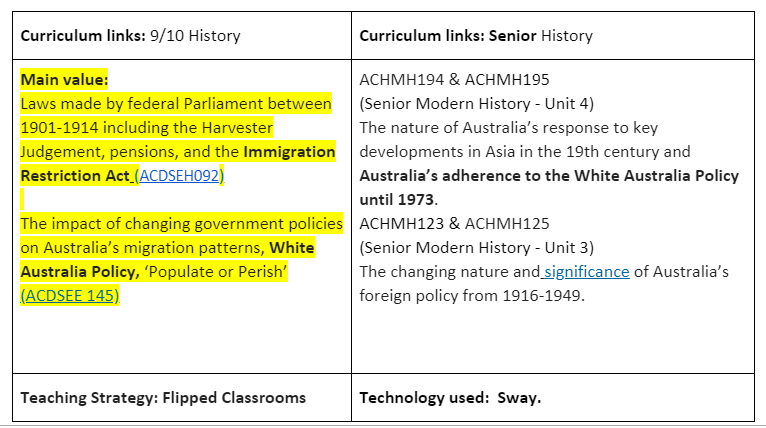
Laws made by federal Parliament between 1901-1914 including the Harvester Judgement, pensions, and the Immigration Restriction Act (ACDSEH092)
The impact of changing government policies on Australia’s migration patterns, including abolition of the White Australia Policy, ‘Populate or Perish’ (ACDSEH145)
The waves of post-World War II migration to Australia, including the influence of significant world events (ACDSEH144)
Senior Modern History
ACHMH123 (Senior Modern History – Unit 3) – The changing nature and significance of Australia’s foreign policy from 1916-1949 (ACHMH123)
ACHMH125 (Senior Modern History – Unit 3) – The key features of post-war reconstruction, including industrialisation, immigration, the provision of social welfare, and attitudes and policies towards Aboriginal and Torres Strait Islander Peoples, and women.
ACHMH194 (Senior Modern History – Unit 4) – The nature of Australia’s response to key developments in the period, including the success of the Communists in China, the Tokyo War Crimes Tribunal, the return of the French to Vietnam, Indonesian claims for independence, Australia’s adherence to the White Australia Policy until 1973, and the implications of Australia’s involvement in the Vietnam War (ACHMH194)
ACHMH195 (Senior Modern History – Unit 4) – The significance of Australia’s immigration policies on regional relationships after World War II, including the reasons for the gradual dismantling of the White Australia Policy in the period 1945-1973 (ACHMH195)
Proposed digital tools – Microsoft Sway
Rationale
The White Australia policy was one of the first pieces of legislation the newly formed Australian Government passed through parliament. The policy had a significant impact on the dynamics and diversity of the fledgling nation. Originally deployed as the Immigration Restriction Act of 1901, the policy was aimed ensuring only those of British ancestry would gain entry into Australia to preserve the sanctity of the British-Australian culture and the economic value of the Australian man. This digital story will seek to investigate the policy, the reason for its introduction, its ramifications on the diversity of the Australian population and the effects of its subsequent removal during the Whitlam administration.
Storytelling has been the predominant method in which humanity has used to convey information, cultural traditions and ideologies for centuries (Cornett, 2014). The advent of emerging technologies and personal devices has led to the formation of digital stories and storytelling. Digital storytelling is an engaging and informative method that combines emerging technologies and literary works for recreational or informative purposes (Ciccorico, 2012). The story itself is a valuable teaching tool as it integrates visual, audio and textual elements together in a manner that enhances the storyline, improves engagement and promotes literacy development (Ohler, 2013, p.94). The inclusion of digital narratives as part of teaching and learning promotes language, literacy and ICT competency.
This Sway project will eventually be part of a larger 3 part digital narrative detailing how migration patterns have influenced the national identity of Australia. Teachers will be able to use this internal resource as part of their teaching practice either as individual Sway links or as part of the series depending on the needs of the students as well as in depth study they are doing. This resource has the capability to be catalogued into the current library management system and thus can be easily accessed by staff.
The three part series will include:
Movements of people – 1750-1901. (Year 9 history and 9 Civics and citizenship)
the nature and extent of the movement of peoples in the period (slaves, convicts and settlers) (ACOKFH015 – Scootle )
The population movements and changing settlement patterns during this period (ACDSEH080 – Scootle )
The influence of the Industrial Revolution on the movement of peoples throughout the world, including the transatlantic slave trade and convict transportation (ACDSEH018 – Scootle )
Experiences of slaves, convicts and free settlers upon departure, their journey abroad, and their reactions on arrival, including the Australian experience (ACDSEH083 – Scootle )
The short and long-term impacts of the movement of peoples during this period (ACDSEH085 – Scootle )
Australia’s migration history (Years 9&10 History)
the nature and extent of the movement of peoples from 1750-1901 (slaves, convicts and settlers) (ACOKFH015 – Scootle )
The population movements and changing settlement patterns from 1750-1901 (ACDSEH080 – Scootle )
Laws made by federal Parliament between 1901-1914 including the Harvester Judgement, pensions, and the Immigration Restriction Act (ACDSEH092 – Scootle )
The impact of changing government policies on Australia’s migration patterns, including abolition of the White Australia Policy, ‘Populate or Perish’ (ACDSEH145 – Scootle )
The waves of post-World War II migration to Australia, including the influence of significant world events (ACDSEH144 – Scootle )
Australia’s National Identity in the 21st Century (Year 10 History and 9 Civics & Citizenship)
How national identity can shape a sense of belonging in Australia’s multicultural society (ACHCK067 – Scootle )
How and why individuals and groups, including religious groups, participate in and contribute to civic life(ACHCK079 – Scootle )
How ideas about and experiences of Australian identity are influenced by global connectedness and mobility (ACHCK081 – Scootle )
Continuity and change in beliefs and values that have influenced the Australian way of life (ACDSEH149 – Scootle
The commemoration of World War I, including debates about the nature and significance of the Anzac legend (ACDSEH097 – Scootle )
REFERENCES
Ciccoricco, D. (2012). Chapter 34 – Digital fiction – networked narratives. In Bray, J., Gibbons, A., & McHale, B. (2012). The Routledge Companion to Experimental Literature. Taylor & Francis eBooks. Retrieved from CSU Library.
Cornet, C. E. (2014). Integrating the literary arts throughout the curriculum. In Creating meaning through literature and the arts: arts integration for Classroom teachers (5th ed,) (pp144-193) USA
















 Learning through the Library