Women, Memory and Exile: A School Library Reflection
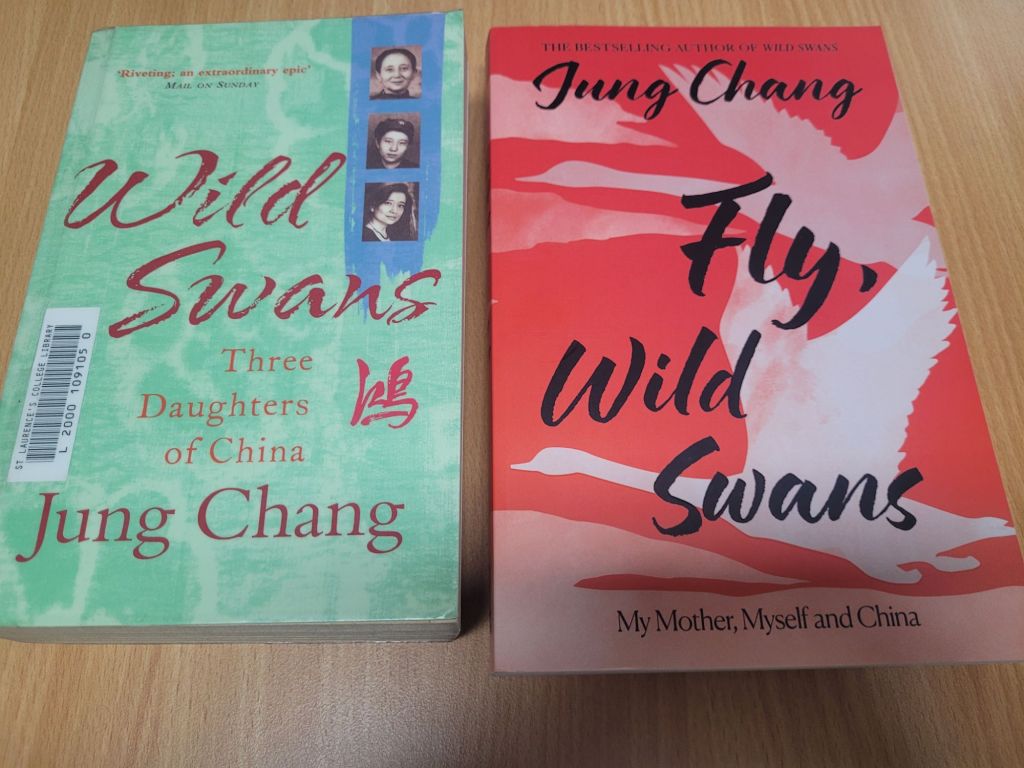
Adding Fly Wild Swans to our school library felt like a natural continuation of a legacy. Wild Swans has long stood as a canonical piece of literature, a book that captures the struggles of three generations of women against the backdrop of China’s political upheavals. In her second publication Fly Wild Swans, Jung Chang turns her gaze inward, reflecting on the cost of telling that story and the way truth can estrange a writer from her homeland. It is a pensive work that reminds us how women across centuries have shouldered familial and societal expectations, carrying memory and resilience even when nations would rather forget.
Jung Chang and her canons of literature
For students, these books are more than history. They are lessons in courage, in the power of memory and in the resilience of women who endured both familial duty and political oppression. Wild Swans explores the tension between tradition and rapid government‑driven progress. What was presented as modernisation often meant the destruction of customs and the breaking of family bonds as the Cultural Revolution tore families apart and demanded loyalty at the expense of tradition. Her story gave voice to three generations of women living through the upheavals of Mao’s China and this new work is written not only of her mother and her homeland, but of the burden of truth itself, and the cost of bearing witness when a nation would rather forget.
Fly Wild Swans reveals the aftermath of telling that truth, showing how a writer can be celebrated abroad yet silenced at home. Jung Chang turns her gaze inward, reflecting on the cost of telling that story and the way truth can estrange a writer from her homeland. Unlike Wild Swans, which focused on her mother and grandmother, this new work is more personal. It explores how writing Wild Swans changed her life, both opening doors in the West and closing them in China. There is a deep melancholy in her reflections on being unable to freely return to her birthplace. The success of Wild Swans brought her recognition abroad but estrangement at home. This tension between belonging and exclusion mirrors the broader story of women in history, who have often been celebrated for their endurance yet denied the freedom to define themselves.
I chose to buy Fly Wild Swans for my school library because it is a book that students should encounter, not only for its historical insight but also for its profound exploration of resilience, identity and the role of women in shaping and surviving history. Adding Fly Wild Swans to our collection ensures that the conversation continues, allowing readers to see how the legacy of truth‑telling reverberates across generations.
By placing both works on our shelves, we invite students to consider how politics, family and identity intersect, and how women across centuries have borne the burden of expectation while still finding ways to endure. These books remind us that literature is not static. It evolves, it questions and it carries forward the weight of generations.
At the end of each school day, I wander through the library and notice the gaps and blank spaces. Why? It is because the shelves never lie about the books that are loved the most. These are the ones that stack tall on our return trolleys. To be fair, they are also the ones that leave with another student almost instantly. They are the ones with worn spines, grubby covers and suspicious stains on the pages. Yet all of them tell me a story. They all tell me something about our school community.
Non‑fiction loans follow the interests of the boys themselves, whether it be cars, music, military equipment, or funnily enough… anatomy. These choices show me that curiosity is not confined to the classroom but stretches into the interests, curiousities, passions, and fascinations that shape their lives outside the school grounds.
The sports shelves mimic the seasons almost perfectly. Footy fades as winter ends, and suddenly, cricket biographies and fiction surge forward, especially anything tied to the upcoming Ashes. It is as if the rhythm of the sporting calendar beats through the borrowing habits of our students, reflecting not just their interests but the pulse of the wider culture around them.
The novels tell another kind of story. Fantasy sagas rarely rest long before they are whisked away again, dragons, quests and magical lands offering both escape and courage. Contemporary stories about identity and belonging circulate steadily too, often returned with dog‑eared pages. Those books feel like companions, helping students navigate questions of who they are and where they fit.
Certain authors move faster than most. This year we have seen a sharp update in request for Orwell’s works that seemed to be borrowed by students who want to think critically, because his sharp observations on society still resonating decades later. King’s novels vanish quickly from the shelves too, his blend of horror and humanity appealing to readers who crave both thrills and reflection. Griffiths brings laughter and lightness, his quirky humour and imaginative plots offering relief from the seriousness of school life. Kinney’s books are snapped up by younger readers, his diary‑style storytelling capturing the awkwardness and comedy of growing up. Walliams adds another layer of fun, his playful characters and outrageous scenarios proving irresistible to students who want a quick, joyful read. Bancks, with his Australian voice and relatable themes, connects directly to the local experience, showing students their own world reflected back at them. Heath’s stories move quickly too, often chosen by readers who enjoy adventure and fast‑paced plots. And then there is Rowling. Her magical universe remains evergreen, with titles borrowed again and again by students who want to lose themselves in a world of spells and friendship. Dashner’s dystopian tales race through the library as well, his fast‑moving plots and high stakes gripping readers who love suspense.
And then there are the comfort reads. During exam season, familiar series, lighthearted tales and joke books fly off the shelves, as if students are reaching for something steady and reassuring when stress runs high. When headlines outside the school walls grow louder, books on social issues suddenly become popular, showing me how our community is engaging with the wider world.
Over time, these borrowing trends become a mirror. They reflect curiosity, resilience, joy and sometimes vulnerability. They remind me that the library is not just a place to find information, it is a living record of what matters most to our students at any given moment. Each book borrowed is a quiet signal, a way of saying, this is what I need right now.
Together, these authors form a chorus of voices that shape the identity of our school community. Orwell challenges us to question, King dares us to feel fear and empathy, Griffiths and Kinney make us laugh, Walliams and Heath keep us entertained, Bancks grounds us in our own backyard, Rowling invites us into magic, and Dashner pushes us to imagine futures both thrilling and uncertain. Their collective presence on our shelves is more than entertainment, it is a reflection of the many ways our students seek to learn, to grow and to belong.
And as the year turns, the shelves whisper back, carrying the heartbeat of our community in every borrowed book.
I’ve just returned from a wedding overseas. It was a beautiful celebration, and between the flights and lounges, I had time to catch up on some reading. Normally, I’d pack a couple of paperbacks, but this time, I decided to travel light and for the first time, go digital only.
This was not a lightly made decision! Before I left, I logged into eWheelers through my school account and downloaded a few titles I’d been meaning to read and others for my children. I also used BorrowBox via my Brisbane City Council library membership. I accessed both platforms on my phone, which made it incredibly easy to dip in and out of books whenever I had a spare moment. One of the great things about eWheelers is that it works across multiple devices, so whether you’re on a tablet, laptop, or mobile, your library is always within reach. It can also be read offline, as can books on Borrowbox which makes it perfect for when WiFi is not available.
Pool side reads
Ebooks are brilliant for travel. They offer the flexibility to read whatever you fancy without the bulk. It’s quick, convenient, and surprisingly satisfying to flick through pages with just a tap. For students, ebooks and or audiobooks, are becoming an increasingly valuable library resource. Many prefer them because they’re easy to access, allow for tech engagement, and offer features that physical books simply can’t.
Digital reading platforms often include options to change font sizes, switch to dyslexia-friendly fonts, or even translate texts into different languages. This makes eBooks especially helpful for students with vision impairments, learning differences, or those studying in multilingual environments. It’s a more inclusive way to read, and it’s reshaping how libraries support diverse learning needs.
And let’s be honest, eBooks also preserve a bit of anonymity. I’ll admit, I indulged in a cheeky bit of romantasy and adult fiction on the plane, the kind of titles that might raise eyebrows if I were carrying the physical copy around in public or completely mortify my children next to me! For young people, this privacy is gold. It allows them to explore genres they might be embarrassed to share with peers, especially when it comes to romance or identity-focused narratives.
This ties into a broader issue: many teens feel pressure to conform to social norms, especially around gender expectations. Ebooks offer teens a quiet refuge—a way to read without the gaze of others. For students navigating the delicate terrain of romance, identity, or emotionally expressive stories, this privacy matters. These genres, often unfairly stigmatised among peers, can feel too vulnerable to carry in plain sight. Smith and Wilhelm (2002) observed that boys, in particular, are more inclined to engage with emotionally rich narratives when the fear of judgement is lifted. In this way, digital reading becomes more than convenience, it becomes a gentle permission to explore, reflect, and connect with stories that might otherwise remain untouched.
eBooks also allow for customisation, changing fonts, adjusting layouts, and even switching languages, which makes reading more accessible and less intimidating for students with dyslexia, vision impairments, or those learning English as an additional language. For teens navigating identity, peer pressure, and personal growth, digital reading can be a quiet revolution, one page at a time.
That said, I do miss the tactile joy of a real book. The smell of the pages, the feel of the spine, and the quiet ritual of turning each leaf offer a kind of bibliotherapy that digital formats can’t replicate. There’s something grounding about physically interacting with a book that screens just don’t deliver. This feeling is evident from what the research tells us and what my experience has been as a teacher librarian in high schools because teenagers still express a strong preference for physical books despite the popularity of digital reading platforms. This inclination is often tied to the sensory and emotional experience that printed books provide such as the feel of the pages, the smell of the paper, and the visual satisfaction of seeing progress through a tangible object. Young readers, in particular, report screen fatigue and eye strain from prolonged digital use, making physical books a welcome reprieve from their tech-saturated lives (World Economic Forum, 2023). Additionally, cultural trends like #BookTok have reignited enthusiasm for printed books, with teens embracing the aesthetic and social aspects of owning and sharing physical copies (Literary Hub, 2023). Research also shows that teens retain information better and concentrate more effectively when reading print, especially in academic settings (ResearchGate, 2024). These findings suggest that while ebooks offer convenience and accessibility, physical books continue to hold a meaningful place in teen reading habits.
Still, for this trip, convenience won. And who knows, maybe next time I’ll sneak a paperback in for old time’s sake.
Smith, M. W., & Wilhelm, J. D. (2002). Reading don’t fix no Chevys: Literacy in the lives of young men. Heinemann.
University of Edinburgh. (2024). Supporting teenagers’ reading enjoyment and engagement: A guide for teachers and librarians. https://blogs.ed.ac.uk/literacylab
Eighteen months ago, a group of misfit boys were introduced to one another in what could only be described as a playdate orchestrated by fate, and a well-meaning informational professional. At first glance, these four boys had little in common. Yet over time, something extraordinary unfolded. They began meeting regularly in the library, and from those gatherings emerged a fully-fledged micronation.
The couch that sparked a nation. As you can see, I have a crown made from paper printed with the Constitution of this micronation.
They appointed ministers: an Archduke, a President, a Minister for Finance who oversees a coffee jar filled with bottle caps, and a Secretary of Defence whose primary qualification is being the tallest. Together, these young men drafted a constitution, designed coinage (featuring my profile, no less), and issued passports and other official documentation. Eventually, I was graciously crowned their Head of State—Her Gracious Imperial Majesty, Empress Trish.
Letter of appeal to voters for the micronation of Lectulus and Cathedra.
Today, this quirky collective has grown to 17 members and is preparing for its first general election on 5 November. What began as a casual connection has evolved into a vibrant community, complete with governance, creativity, and camaraderie—all nurtured within the walls of a school library.
Libraries as Hubs of Wellbeing and Learning
While this story may sound whimsical, it highlights a deeper truth: school libraries are far more than repositories of books. They are sanctuaries of connection, creativity, and wellbeing.
Student wellbeing is increasingly recognised as a priority in Australian schools. Research indicates that poor wellbeing and associated mental health concerns affect between 10–20% of young people (Merga, 2020). In response, the Australian Government launched the “National School Wellbeing Framework” in 2018 to support schools in fostering positive relationships and wellbeing within safe, inclusive, and connected learning communities (Education Council, 2018). Although the framework does not explicitly mention libraries, many of its initiatives can be effectively implemented through a library lens.
School libraries have long served as safe havens for students, offering refuge for a variety of reasons. Merga (2021) notes that contemporary school libraries provide students with a peaceful space to recharge and relax. Similarly, Willis, Hughes, and Bland (2019) affirm that libraries contribute to both physical and emotional wellbeing by enabling vital social connections to flourish.
Merga’s research validates what many educators have long known: school libraries are places where students feel they belong, feel safe, and feel welcome. Some seek sanctuary and solitude; others come to connect and unwind. As school library professionals, our role is to create spaces where young people continue to feel secure—whether they are reading a book, playing a board game or Minecraft, or, as my students do, establishing a micronation on the couch outside my office.
Merga, M. (2020). How can school libraries support student wellbeing? Evidence and implications for further research. Journal of Library Administration, 60(6), 660–673. https://doi.org/10.1080/01930826.2020.1773718
Merga, M. K. (2021). Libraries as wellbeing supportive spaces in contemporary schools. Journal of Library Administration, 61(6), 659–675. https://doi.org/10.1080/01930826.2021.1947056
Willis, J., Hughes, H., & Bland, D. (2019). Students reimagining school libraries as spaces of learning and wellbeing. In J. Franz, H. Hughes, & J. Willis (Eds.), School spaces for student wellbeing and learning: Insights from research and practice (pp. 121–137). Springer. https://eprints.qut.edu.au/126979/
Richard Osman’s fifth novel in the Thursday Murder Club series, The Impossible Fortune, kicks off with a wedding—Joyce’s daughter Joanna is finally getting married. But the celebration takes a sharp turn when best man Nick announces that someone is trying to kill him. From that moment, the familiar crew of pensioners is drawn into yet another mystery, this time involving a hidden Bitcoin fortune, a car bombing, and a tangled web of suspects. It is nice to read a novel where the main characters are not in their flush of youth. Gives someone who is quite frankly set in their middle age, some hope for age appropriate literature.
One of the first things that stood out to me was the large print. Compared to other novels I’ve read recently, this one is an absolute breeze to get through. It’s easy on the eyes and makes for a more relaxed reading experience, especially if you’re dipping in and out over a few days. The chapters are also cleverly titled by days of the week, which helps anchor the plot and gives a sense of progression—especially useful given the shifting perspectives between characters.
The emotional tone of the book is a little more poignant than previous instalments. Elizabeth is still reeling from the loss of her husband Stephen, and Osman handles her grief with sensitivity and depth. It adds a layer of introspection to the story without slowing down the pace. Ibrahim continues to be the group’s voice of reason, offering advice to friends and foes alike, including the ever-scheming Connie Johnson, who ironically saves Ron’s bacon eventually.
Joyce remains a delight, and her relationship with Joanna is given more attention here, adding warmth and humour to the narrative. The mystery itself is well-paced, with enough twists to keep you guessing but not so many that it becomes convoluted. Osman’s trademark wit is present throughout, and the characters continue to evolve in ways that feel authentic and earned.
I particularly enjoyed the plot line of Suzi, Jason, and Ron trying to evade the evil machinations of horrid wife beating Danny. The perspective of Kendrick reminded me once again that the biggest victims of domestic violence are children and their lost childhoods. Osman manages rather cleverly to use Kendrick’s internal monologue to reveal his childhood trauma to the reader.
Overall, The Impossible Fortune is a satisfying continuation of the series—accessible, emotionally resonant, and full of charm. It’s not literature by any means but rather a pleasant holiday read as it requires very little cognitive processing. However, it is a story about friendship, ageing, and the thrill of solving a good puzzle, all wrapped up in Osman’s signature style.
What if you could travel back in time—but only for the duration of a single cup of coffee?
Toshikazu Kawaguchi’s Before the Coffee Gets Cold is a short novel, or novella if you wish to use that term that reminds you about regrets and how they can influence your actions. The novel is about a small, tucked-away Tokyo café where time travel is possible, but with strict rules. You can revisit the past, but you can’t change it. You must sit in a specific seat. And most importantly, you must return before your coffee gets cold. As a teacher and a parent, I am used to drinking cold coffee and how people actually drink warm coffee at work is a mystery to me!
Thank you Julia for the loan
The novel unfolds through four interconnected stories, each exploring themes of love, loss, regret, and reconciliation. The characters—a woman hoping to reconnect with a lover, a sister grieving her sibling, a mother longing for her child—are ordinary people facing emotionally charged moments. Kawaguchi’s writing is simple and understated, allowing the emotional depth of each story to shine through.
Unlike a novel I read recently (will not name names but ole Mate Danny), Kawaguchi uses provoking language and variated sentence structure to evoke emotion in the reader. This book, written with quiet clarity and emotional depth, avoids dramatic flourishes or unnecessary embellishments, instead offering a straightforward, sincere narrative that invites reflection without demanding attention.
If you could revisit a moment, not to change it, but to understand it better—would you?
Books like this remind us that stories have the power to shift our perspective. They can make us pause and reflect on our own choices, relationships, and regrets. Before the Coffee Gets Cold encourages readers to consider how they treat others, how they communicate, and what truly matters in the fleeting moments of everyday life. It’s a quiet nudge to be more present, more thoughtful, and more intentional.
Perfect for readers who enjoy reflective, character-driven stories, Before the Coffee Gets Cold is a gentle reminder that while we can’t rewrite the past, we can reshape how we carry it forward. It’s a book best read slowly, perhaps with a warm drink in hand and a quiet space to think.
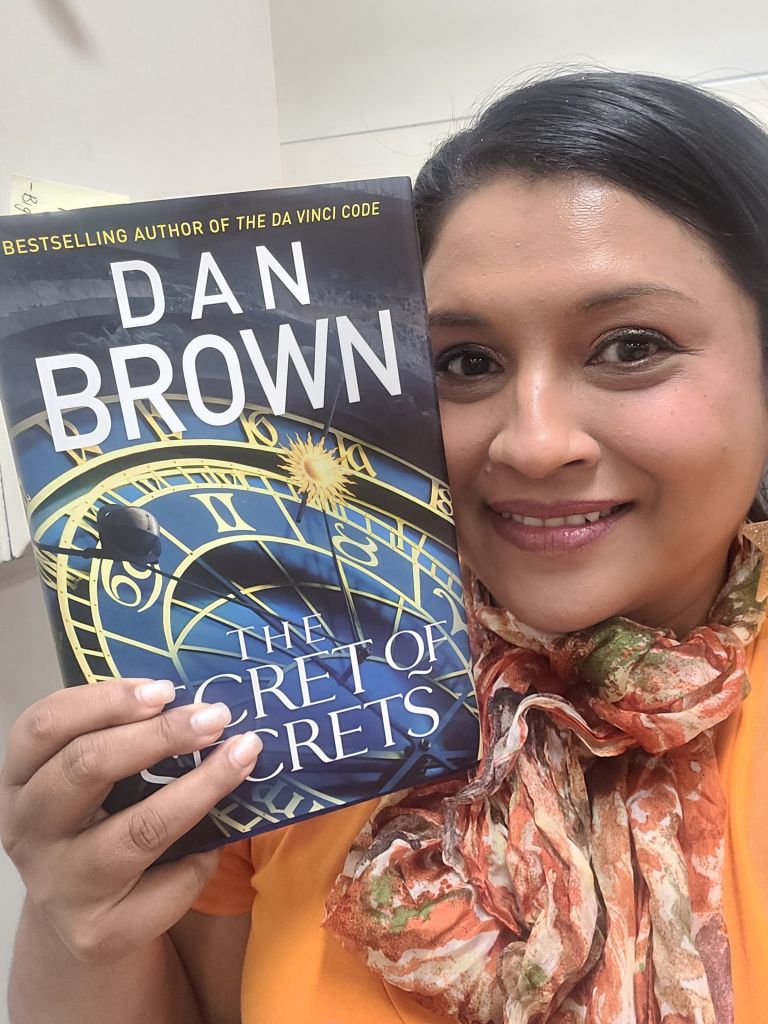
Once again… at 12.01 on the 9th of September, I downloaded the latest Dan Brown novel as I was eagerly awaiting the next installment of the Robert Langdon stories. But urgh…. I even switched to paperback at 5pm in hope that the feel of an actual book would improve the storyline. But alas, it did not. Now I am out $17 for the eBook and $30 for the physical copy with little to show for it.
Dan Brown’s The Secret of Secrets reads more like a glitzy façade than a compelling novel—an elaborate construct designed to dazzle, but lacking any real substance. It’s the literary equivalent of fake veneers: glossy, over-polished, and desperate to be taken seriously. While it promises a deep dive into consciousness and ancient mysteries, what it actually delivers is a recycled thriller dressed up in pseudo-intellectual jargon.
All Shine, No Substance
The story sees Robert Langdon once again caught up in a convoluted plot, this time involving noetic science and a missing manuscript that supposedly holds the key to unlocking human potential. But instead of genuine intrigue, we’re handed a tired formula: cryptic symbols, secret societies, and chase scenes that feel like they’ve been lifted straight from his earlier books or a poorly made James Bond (Yes Timothy Dalton, I am thinking of you!). The pacing is frantic, but not in a good way—it’s like being dragged through a trivia night hosted by someone who’s memorised the answers but lost the passion.
FYI – Noetic comes from the Greek for inner wisdom and intuition—none of which made it into this book. Honestly, I’ve had deeper thoughts staring at the Bunnings sausage sizzle queue.
Prague, one of the novel’s main settings, should be a rich, gothic playground for mystery and intrigue. As one of the oldest cities in Europe, Brown could have leaned into its heritage and legend in a far more effective manner like he did in Angels and Demons. But Brown’s use of it in this novel feels opportunistic. The city’s legends and architecture are reduced to mere backdrop, with little emotional weight or narrative depth. It’s all surface-level spectacle, with historical references thrown in like confetti to distract from the lack of character development.
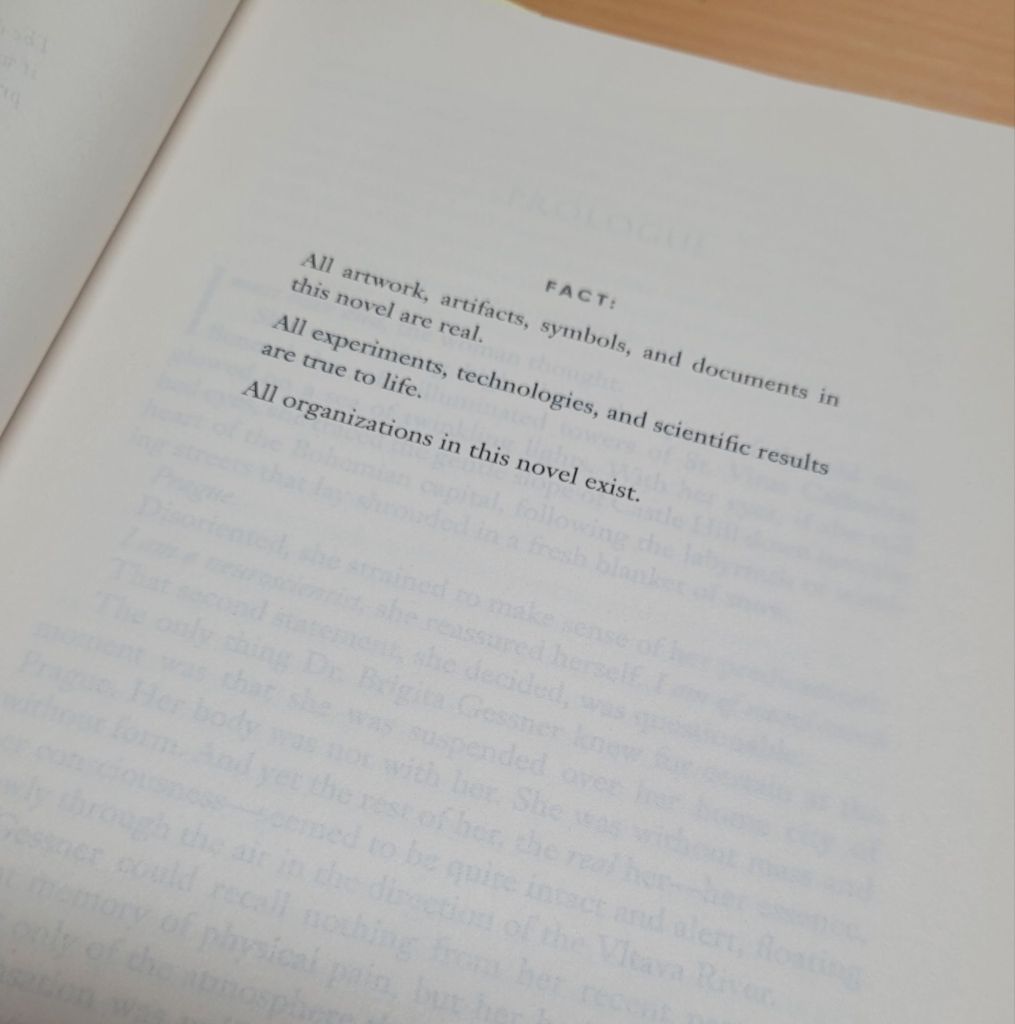
The book’s central theme—consciousness as a cosmic force—could have been fascinating. Instead, it’s treated like a buzzword, tossed around without any real exploration. The science is muddled (and stupid), the philosophy is shallow, and the dialogue often reads like a motivational seminar gone off the rails. Rather than provoking thought, it provoked a significant number of eye-rolls and venting.
Pretentious much? A bit of pomposity from Ole Mate Danny Boy.
Even Langdon, once a likeable and cerebral lead, feels like a parody of himself. His quirks—like the ever-present Mickey Mouse watch—now seem forced, and his reactions to danger border on slapstick. The villains are cartoonish, the twists are predictable, and the stakes never feel authentic.
It’s a far fall from Brown’s earlier works like Angels & Demons and The Da Vinci Code, which—while not perfect—had a sense of urgency and originality that kept readers hooked. His last truly engaging novel was Inferno, which at least attempted to grapple with real-world ethical dilemmas and global stakes. Since then, it feels like Brown has been chasing the shadow of his own success, layering spectacle over substance in hopes of recapturing the magic.
And to be fair, The Secret of Secrets had a tough benchmark to meet—Galbraith’s Hallmarked Man has officially been my best read this year. Compared to that, Brown’s latest effort feels like a pale imitation of depth and drama.
In the end, The Secret of Secrets tries to be profound but lands as pretentious. It’s a book that wants to be taken seriously, but beneath the polished surface, there’s not much going on. If you’re after a thriller that genuinely challenges your thinking, this one might leave you feeling short-changed—like you’ve been sold wisdom in a shiny wrapper, only to find it’s all gloss and no grit.
Hangman by Jack Heath, published in 2018, marks his first foray into adult fiction after a successful career writing young adult novels. Known for fast-paced, clever storytelling in the YA space, Heath takes a bold leap into darker territory with this gripping thriller—and he doesn’t hold back.
The novel is centred around Timothy Blake, a consultant for the FBI with a disturbingly dark secret: he’s a cannibal. Heath crafts a character who is both brilliant and deeply unsettling, challenging readers to grapple with their own sense of right and wrong. One could argue that the end justifies the means. Others would say that the dignity of a person should always be at the forefront of any decision making.
The novel leans heavily into thriller territory, with relentless tension and a breakneck pace. However, it’s also more graphic than many traditional mysteries, featuring scenes that some readers may find unsettling or overly gory. If you’re sensitive to violence or visceral detail, this one might push your limits.
Despite the intensity, Hangman stands out for its originality and daring. It’s a bold start to a series that explores the darker edges of justice and human nature. If you can stomach the gore, it’s a compelling read that redefines what a crime thriller can be.
Mistress of Rome, published in 2010, is the first book in Kate Quinn’s Empress of Rome series. Set during the reign of Emperor Domitian—the last of the Flavian dynasty and arguably the most paranoid—the story plunges readers into a world of opulence, brutality, and political intrigue. Quinn’s Rome is vividly imagined, with strong historical elements woven throughout, though she does take artistic license, particularly in her depiction of gladiatorial combat.
At the heart of the novel are two women whose lives are inextricably linked by rivalry and fate. Thea is a slave of Judean origin, quiet and intelligent, with a traumatic past that fuels her resilience. Lepida Pollia, born into the patrician elite, is vain, manipulative, and cruel. Their relationship is marked by betrayal, jealousy, and a constant struggle for power—both personal and social. Through their contrasting journeys, Quinn explores themes of agency, survival, and revenge in a society where status can mean everything or nothing.
Violence is a dominant theme throughout the novel. From the blood-soaked sands of the gladiatorial arena to the psychological torment inflicted behind closed doors, Quinn does not shy away from the darker aspects of Roman life. These scenes are not gratuitous; rather, they serve to underscore the fragility of life and the brutal cost of ambition in a world ruled by fear and spectacle.
Domitian himself is portrayed as a chilling figure—charismatic yet unstable, capable of both charm and cruelty. His presence adds a layer of tension to the narrative, reminding readers that in Rome, even the favour of an emperor can be deadly. Quinn’s depiction of his court is rich with intrigue, paranoia, and danger, offering a compelling backdrop to the personal dramas unfolding within it.
Mistress of Rome is more than historical fiction—it’s a story of transformation, endurance, and the fight for freedom. Quinn’s prose is accessible yet evocative, and her characters are complex and emotionally resonant. As book one of a gripping series, it lays a powerful foundation for the stories that follow.
In Vanish (2005), Tess Gerritsen delivers a taut, socially conscious thriller that goes beyond the conventions of crime fiction. As the fifth instalment in her Rizzoli & Isles series, the novel showcases her signature blend of forensic realism and emotional intensity—thanks in no small part to her background as a physician and student of anthropology. That scientific lens gives the story a grounded, credible edge, especially in its depiction of evidence collection and trauma response.
The novel centres around two formidable women: Detective Jane Rizzoli and Medical Examiner Maura Isles. In a world dominated by male authority figures, these protagonists stand out not just for their competence but for their resilience and moral clarity. Gerritsen writes from two perspectives—one from the cop, the other from a mysterious victim—which adds layers of suspense and empathy to the narrative. It’s a structure that humanises the crime and gives readers a visceral sense of what’s at stake.
What makes Vanish especially compelling is its thematic ambition. Gerritsen tackles human trafficking head-on, portraying it as a deeply entrenched and horrifying reality of the 21st century. The novel also hints at the unsettling power of military-industrial entities, suggesting that these corporations can manipulate justice and policy in ways that undermine democratic institutions. It’s a bold move for a crime novel, and it pays off.
While Gerritsen’s prose may not reach the literary heights of Patricia Cornwell, her storytelling is sharp, emotionally resonant, and socially aware. In fact, Vanish gives James Patterson a serious run for his money—especially in its ability to weave action, character development, and ethical complexity into a single, gripping narrative.
If you’re looking for a crime novel that’s more than just a whodunit, Vanish is a standout. It’s a page-turner with a conscience, and it proves that thrillers can be both entertaining and enlightening.