
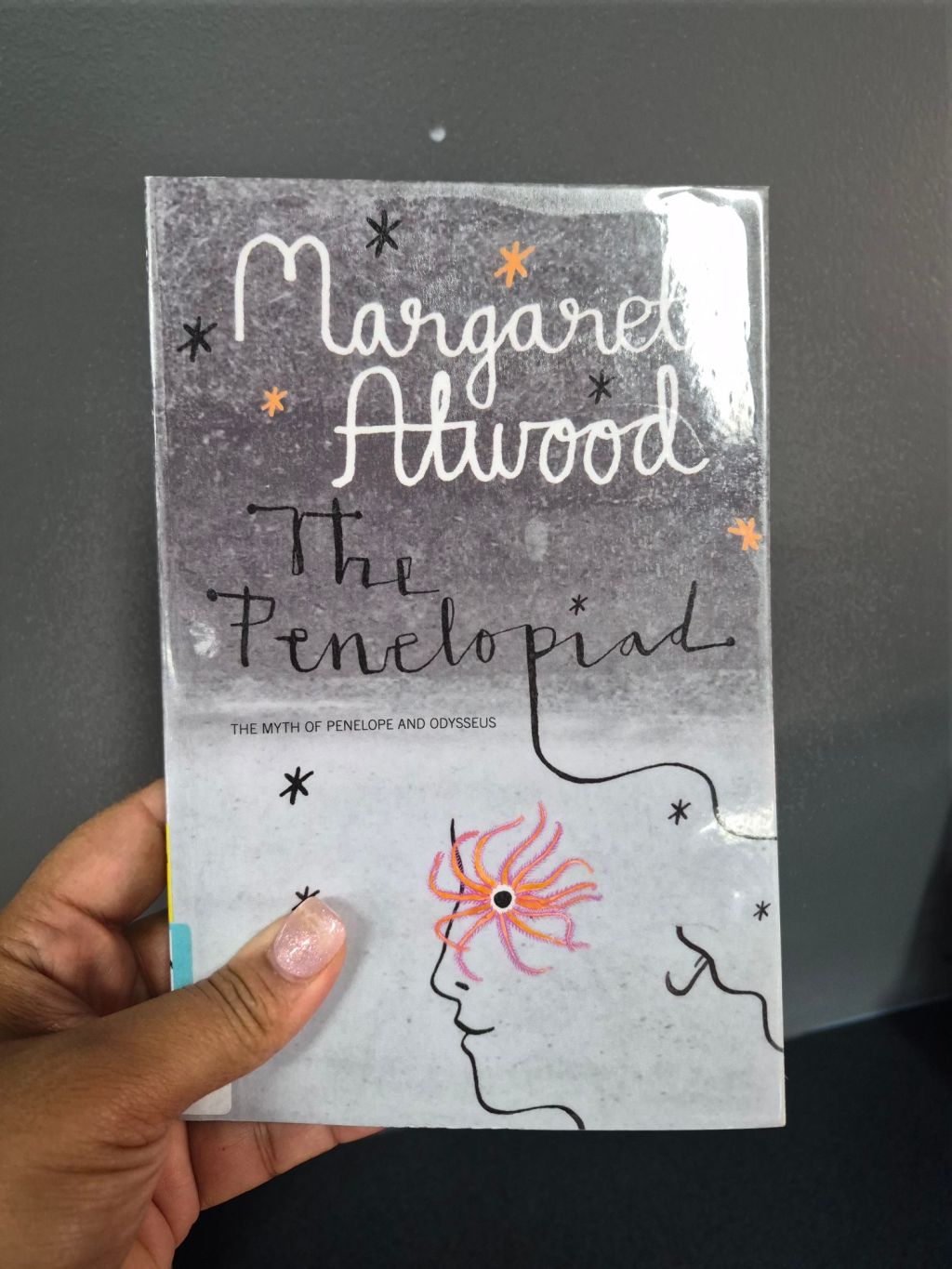
Still firmly entrenched in my Greek mythology phase, Margaret Atwood’s The Penelopiad stands out among the many retellings I have read. This brilliant novella blends prose and poetry to create a story that is as provocative as it is entertaining, reminding readers how much of history and mythology exists in the gaps, silences and omissions. Penelope has long been cast as mother, matron and martyr, defined by her loyalty to Odysseus, yet Atwood challenges readers to look beyond the familiar narrative and question who benefits when women’s stories are reduced to waiting and suffering.
What makes this retelling so powerful is its relevance to modern womanhood. Atwood draws clear parallels between Penelope’s task of keeping the home fires burning while her husband is away and the reality faced by many women today, who are expected to manage households, build careers, carry emotional labour and often navigate the consequences of male choices. The irony is impossible to miss: while Odysseus earns glory through war and adventure, Penelope shoulders the responsibility of holding an entire kingdom together. Atwood’s prose continually invites readers to connect these ancient expectations with contemporary conversations about gender, responsibility and loneliness.
Equally compelling is Atwood’s treatment of the twelve maidservants executed by Odysseus upon his return. Traditionally little more than a footnote in The Odyssey, Atwood gives these young women a voice and exposes the brutality of their deaths. They are condemned not because of proven guilt, but because of rumour, perception and the narratives imposed upon them by others. Here, Atwood’s recurring theme rings loudest: women so often pay the price for the actions, decisions and failings of men. Their chorus haunts the novella and transforms what might have been a clever retelling into something far more confronting and memorable.
There is also a wry humour running through the novel. Modern readers cannot help but note that if a husband disappeared for twenty years today, most legal systems would simply declare him dead rather than celebrate his prolonged absence as heroic adventure. Yet beneath the humour lies a serious examination of whose stories survive, whose voices are heard and who bears the burden when legends are created.
Intelligent, sharp and deeply thought-provoking, The Penelopiad is one of the finest Greek mythology retellings I have encountered. Atwood demonstrates that the most interesting stories are often found not in the heroic deeds themselves, but in the people left behind to live with their consequences. Recommended for older teens and adults who enjoy mythology, feminist literature and stories that challenge long-held assumptions.

