Like many readers of my generation, my first encounters with Greek mythology were through the deeds of men.
I grew up enthralled by the adventures of Theseus, Jason, Hercules, Perseus, Achilles and Hector. These were stories of daring quests, impossible challenges, glorious victories and legendary battles. They were tales of courage and strength, and I gloried in their heroics. Around them stood a supporting cast of women I thought I knew well. Circe was the witch. Penelope was the patient wife. Medusa was the monster. Hera was the jealous goddess whose wrath was to be feared.
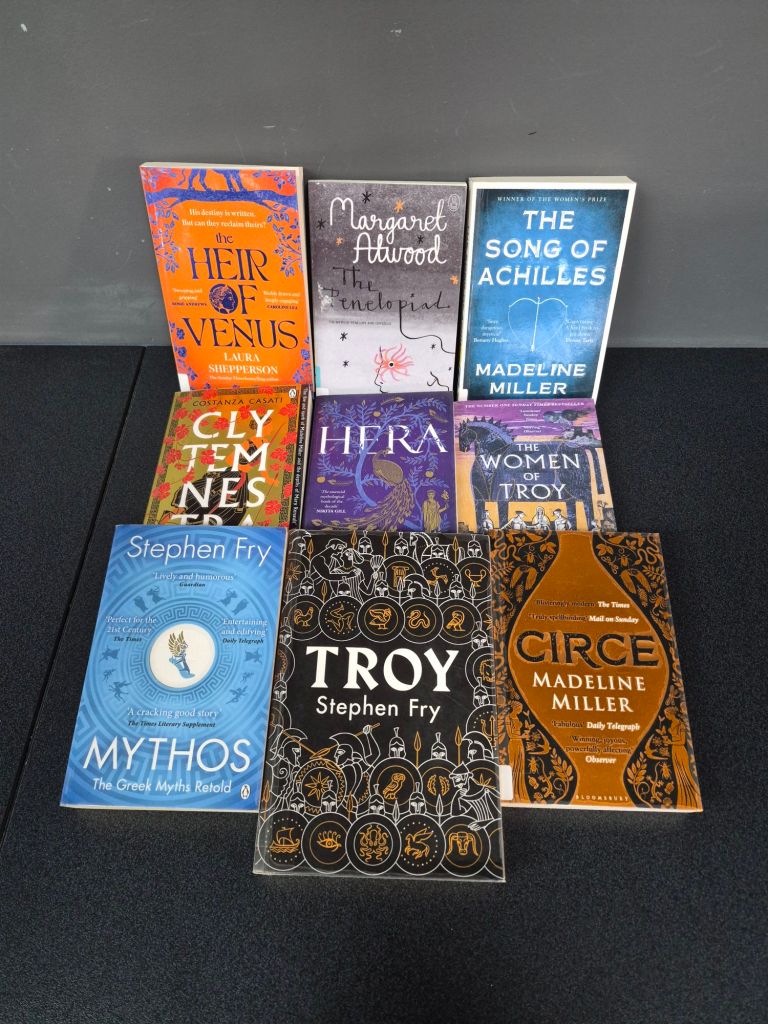
Recently, after watching the latest release of The Odyssey, I found myself revisiting those childhood memories. The film reignited a lifelong fascination with Greek mythology and, like any devoted reader, I immediately reached for Stephen Fry’s Troy and Odyssey. I was ready to immerse myself once again in the familiar stories of heroes and monsters, gods and mortals.
Then a friend and former colleague, Lisa, shared an article from Readings, Feminist Retellings for Fans of The Odyssey. What happened next can only be described as falling down the proverbial rabbit hole.
The article prompted a question that now seems embarrassingly obvious: whose voices had been missing from the stories I thought I knew so well?
The answer, of course, was women’s.
For centuries, the Greek myths that have shaped Western storytelling have largely been told through a male lens. Men embarked on quests, fought wars, outwitted monsters and achieved glory. Women often occupied narrower roles. They were mothers, wives, temptresses, victims or villains. Their stories existed to support the journeys of men.
Once I recognised this, I could not stop reading.
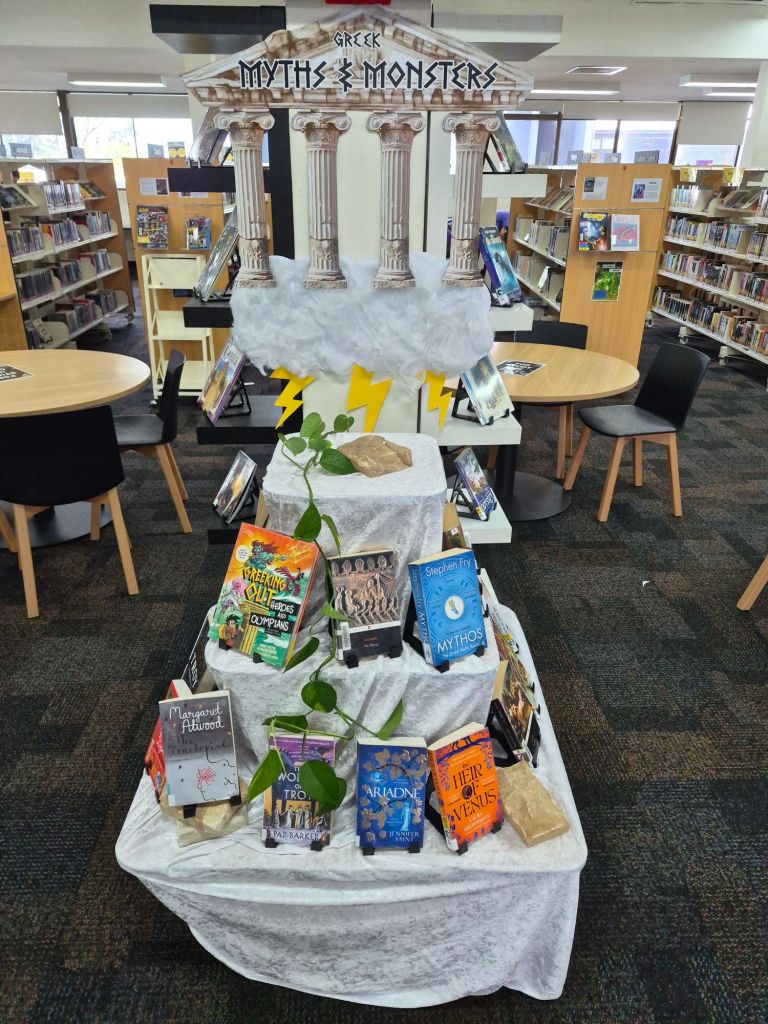
Over the past month I have immersed myself in a remarkable collection of feminist retellings. Margaret Atwood’s The Penelopiad gave voice to Penelope, allowing her to tell her own story rather than simply waiting silently for Odysseus’ return. Madeline Miller’s Circe transformed the feared sorceress into a complex, intelligent and resilient woman searching for autonomy in a world dominated by gods and men. Clytemnestra by Constanza Casati challenged her murderer title for grief-stricken mother. Natalie Haynes’ A Thousand Ships revealed the Trojan War through the experiences of the women left behind, enslaved or silenced by conflict.
Pat Barker’s The Silence of the Girls and The Women of Troy were perhaps the most confronting. These novels force readers to see the Trojan War not through the eyes of Achilles or Agamemnon, but through the women treated as spoils of war. The glory celebrated in traditional tellings becomes far more uncomfortable when viewed from the perspective of those who paid its true cost.
From there I moved on to Ayana Gray’s I, Medusa, Jennifer Saint’s Ariadne and Elektra, and currently Daughters of Sparta waits patiently on my bedside table.
Across all of these books, despite their differences in style and interpretation, a common thread emerges.
Women paid for male hubris.
Men sought glory, and women bore the consequences.
Odysseus’ cleverness may have won the war, but Penelope endured decades of uncertainty and isolation. Paris pursued desire, and Troy’s women suffered slavery and loss. Heroes chased immortality through fame, while mothers buried children, daughters were sacrificed, wives were abandoned and innocent women became collateral damage in the pursuit of honour.
Even Medusa, long remembered as a monster, has been reconsidered by contemporary authors. Modern retellings ask us to question who benefits when women are turned into villains and whose perspectives are preserved in the stories we inherit.
What has fascinated me most is not that these authors are rewriting mythology. Rather, they are restoring missing perspectives. The events themselves often remain unchanged. Troy still burns. Odysseus still journeys home. Ancient prophecies still unfold. Yet by shifting the narrative lens, the meaning of the story changes dramatically.
The heroes become more human.
The villains become more complex.
And the women, often relegated to the margins, become fully realised characters whose experiences matter.
As a reader, this has been both exhilarating and unsettling. Exhilarating because these novels breathe fresh life into stories thousands of years old. Unsettling because they force us to confront how easily we accept a single version of events when it is the only version we have been given.
Perhaps that is why these retellings resonate so strongly today. They remind us that every story depends on who is telling it. History, mythology and literature are not simply collections of facts or events. They are narratives shaped by perspective.
A month ago, I revisited Greek mythology seeking nostalgia. I wanted to relive the adventures of the heroes I had loved since childhood.
Instead, I discovered something far richer.
I found the women.
And in doing so, I realised that some of the most compelling stories from ancient Greece were never about the heroes at all. They were about the women who endured, resisted, survived and, finally, are being allowed to speak.