A Sound of Storytelling

As part of our Book Week celebrations and this year’s CBCA theme, A Symphony of Stories, students at my school were treated to a memorable author event, A Sound of Storytelling. The event brought together two remarkable Australian authors, Annaleise Byrd and Carla Salmon, who shared their experiences of creativity, imagination, and the transformative power of storytelling.

The idea of a symphony is a fitting metaphor for stories. Just as every instrument contributes its own unique voice to an orchestra, every story offers a different perspective, experience, and adventure. Author visits provide students with the opportunity to hear directly from the creators behind the books they read, helping them understand that stories begin with imagination, curiosity, and a willingness to explore ideas. Research consistently shows that author talks can have a powerful impact on reader engagement, inspiring students to read more widely, connect with books on a deeper level, and see themselves as potential writers and storytellers.

Annaleise Byrd opened the event with her trademark wit and wonderfully droll storytelling. Despite technical issues with laptops undergoing a forced update mid presentation, Annaleise soon had students were laughing as she invited volunteers to the stage to re-enact one of her scenes, bringing her stories vividly to life.
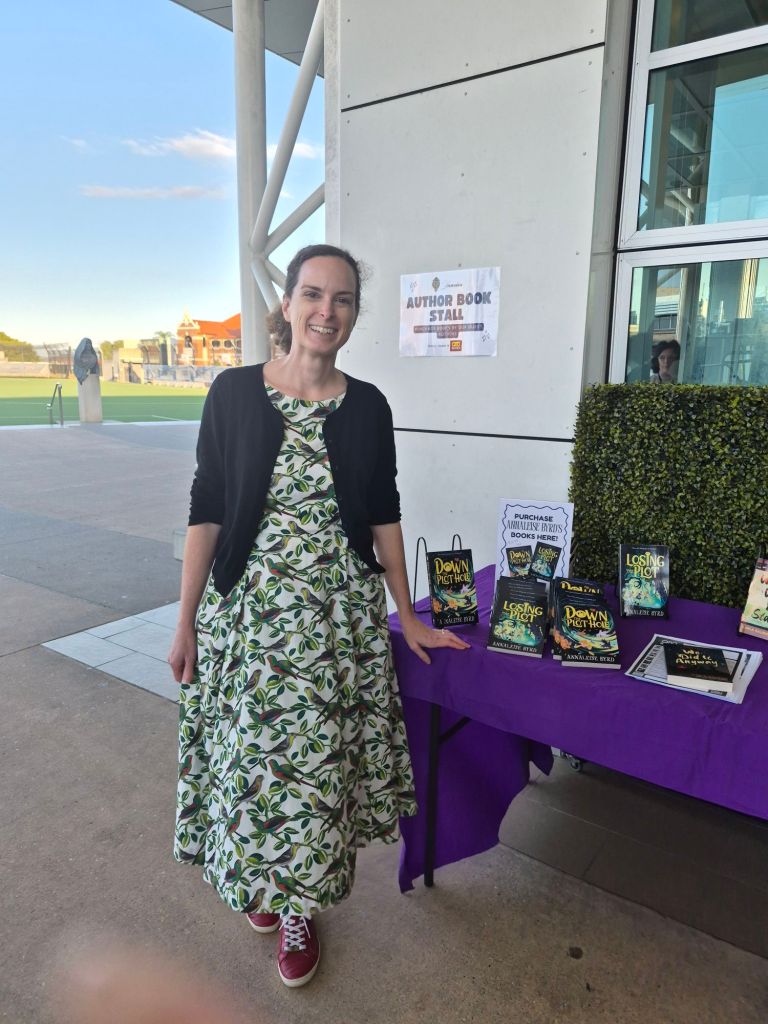
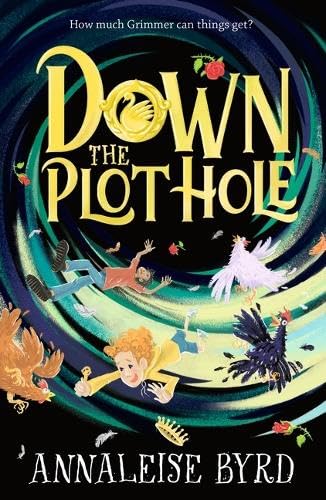
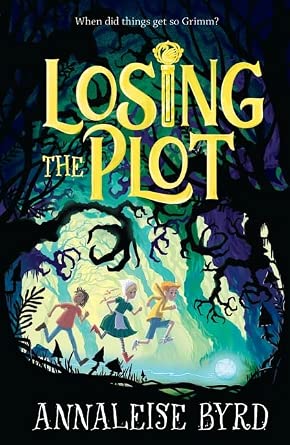
Annaleise shared the inspiration behind her novels Losing the Plot and Down the Plot Hole, transporting students to the magical world of Grimmveldt, or “Grimm World”. Through stories of her visit there, she demonstrated how writers draw on experiences, observations, and a healthy dose of imagination to create rich fictional worlds. Her presentation reminded students that creativity often begins by asking “what if?” and having the courage to follow an idea wherever it leads.
20260827_1650077699463808092197815

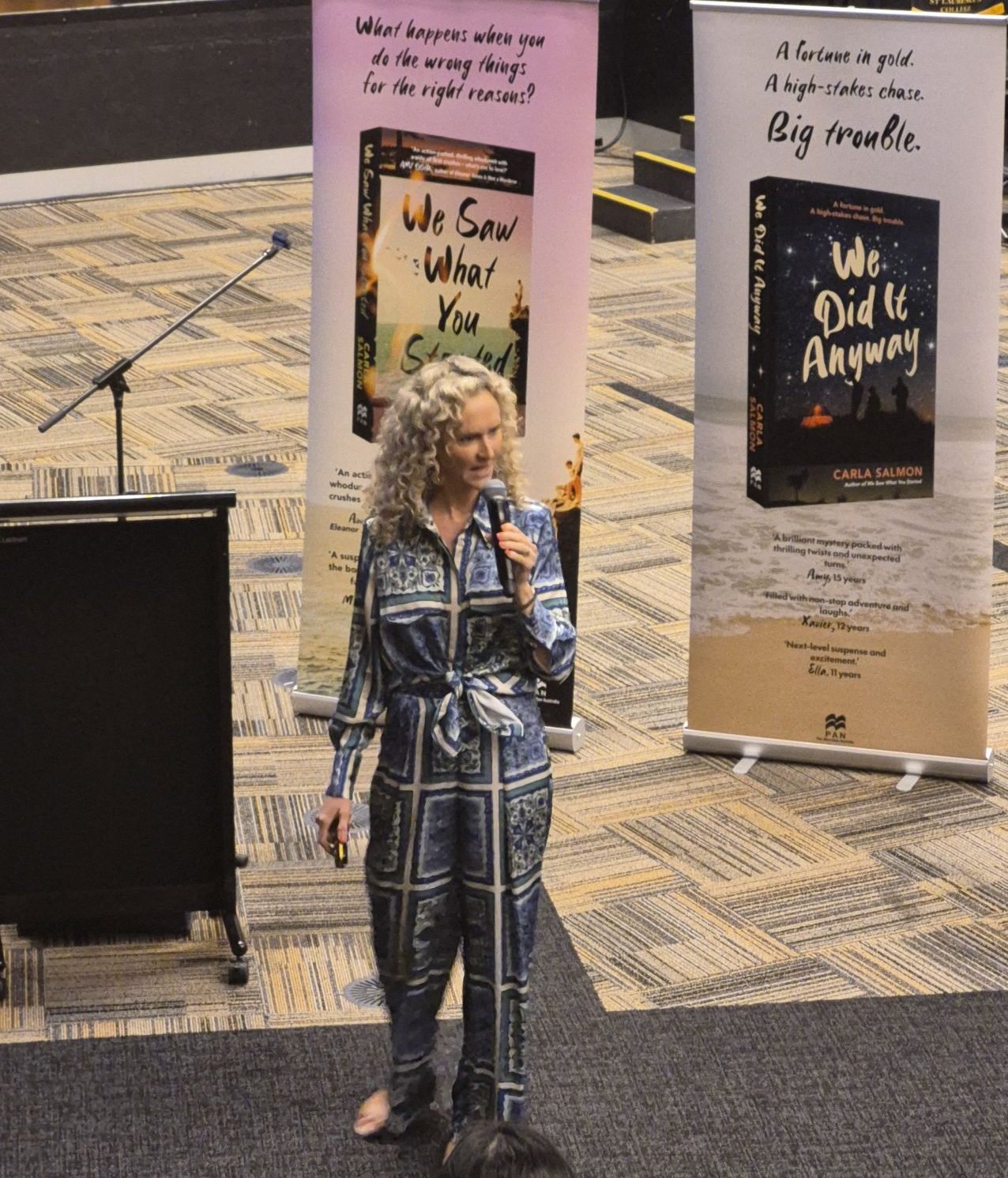
Carla Salmon followed with an equally engaging presentation that showcased her infectious enthusiasm for creative writing. Taking students behind the scenes of her novels, Carla revealed how authors find inspiration in the world around them. She unpacked how places, people, and events from real life can spark fictional narratives, sharing fascinating examples from her own work. Students were particularly captivated by the story of the 3,000-tonne theft of maple syrup, a real-world event that helped inspire aspects of her storytelling. Carla’s session highlighted that writers are keen observers of life, constantly collecting ideas and transforming them into stories that entertain, challenge, and inspire readers.
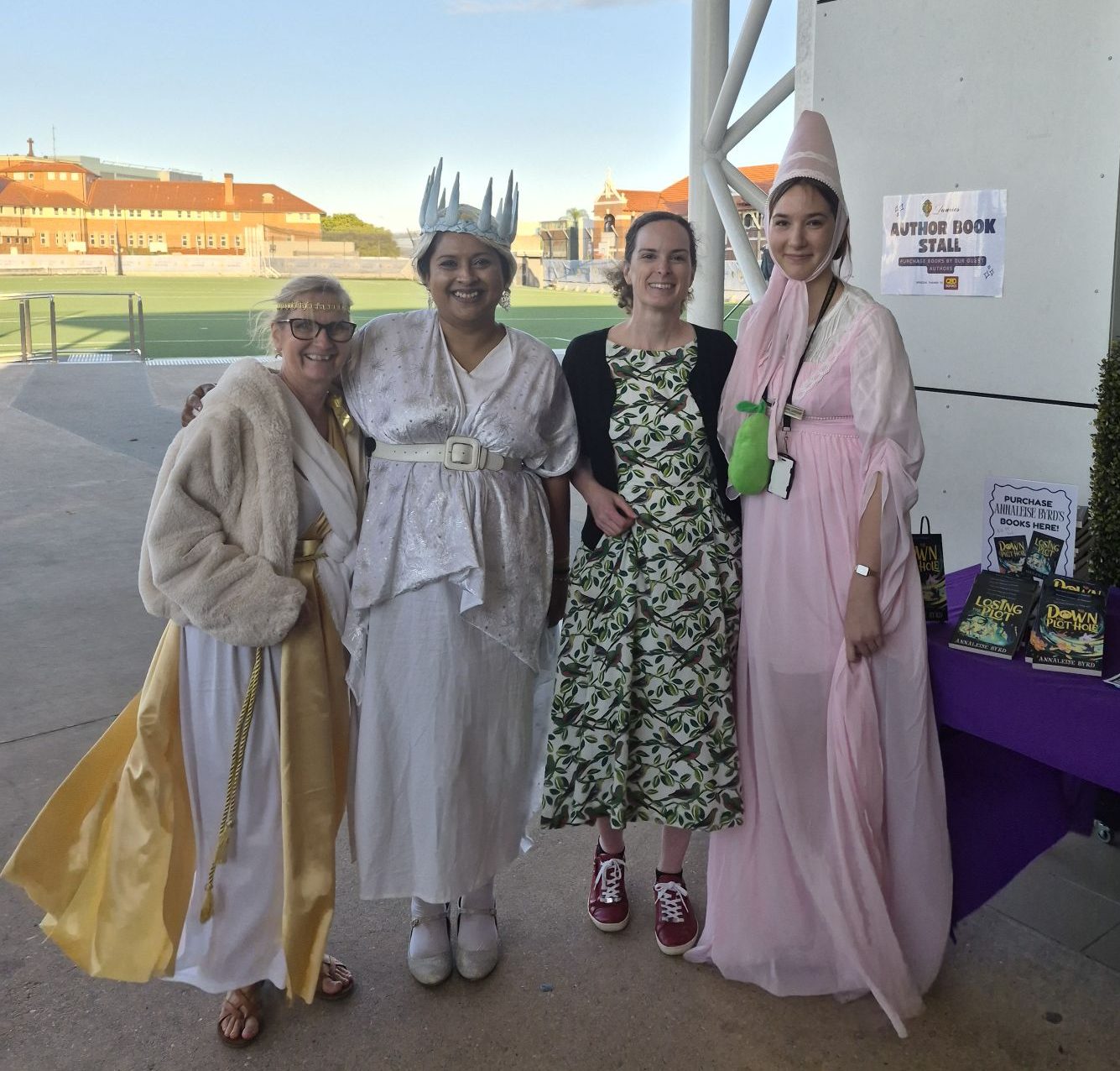
Annaleise and our Library Team. All dressed up for Book Week Celebrations.

Together, both authors demonstrated that storytelling is much like a symphony. Ideas, experiences, emotions, imagination, and words come together to create something greater than the sum of their parts. Their presentations reinforced the important role stories play in helping young people understand themselves and the world around them while encouraging them to think creatively and embrace their own imaginations.
20260827_1749173021592242733342772
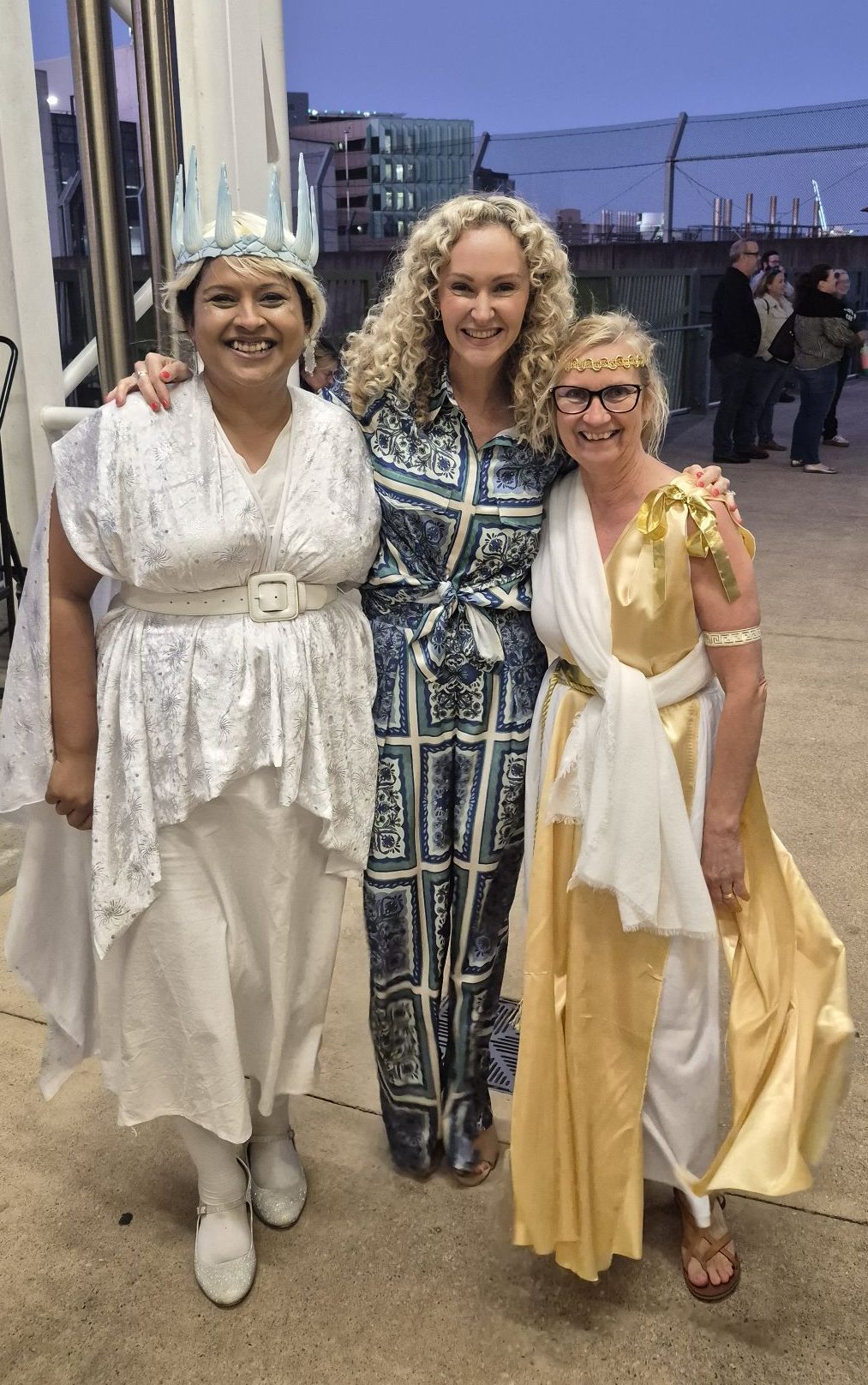
Carla wrapping up the evening with a photo.

As our Book Week celebrations continue, A Sound of Storytelling has been a wonderful reminder of why author events matter. They connect students with the human stories behind books, nurture a love of reading, and inspire the next generation of creators. Judging by the laughter, excitement, and thoughtful questions from our students, both Annaleise Byrd and Carla Salmon struck a powerful chord in our own Symphony of Stories.

Thank you to Annaleise and Carla for sharing their time, expertise, and passion for storytelling. Their voices have added a memorable movement to our Book Week celebrations, and their stories will undoubtedly continue to resonate with students long after the event has ended.
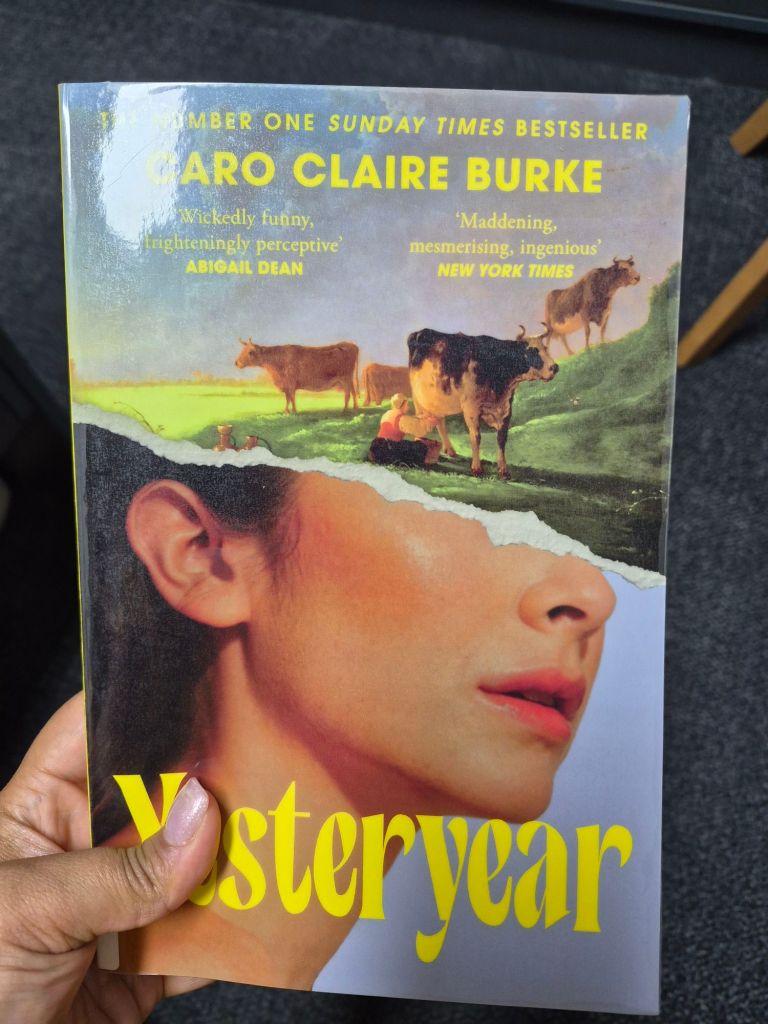
Book review: Yesteryear by Caro Claire Burke

Yesteryear made me ragey, and I mean that as a compliment.

At the centre of the novel is Nattie, a self-proclaimed “trad wife” influencer whose social media presence is built on an idyllic vision of domesticity. Online, she presents herself as a woman living naturally on her organic farm, homeschooling her children, cooking wholesome meals, and embracing traditional family values. She sells custom homewares, champions organic living, and suggests that modern society has lost its way. Nattie’s social media posts glorify the past, or as she calls it, yesteryear.

20260821_1529322780919643695724559

The reality is rather different. Nattie lives on a farm owned not by her, but by her trust-fund husband. The property is tied up entirely in his name through his wealthy father. Her carefully curated social media image conceals pesticides stored in the shed and kitchenware that falls well short of the wholesome aesthetic she promotes. She romanticises a lifestyle that exists largely because of privilege while dismissing anyone, especially the angry women, as she calls those that choose to live differently. Burke deftly skewers the contradictions at the heart of influencer culture. Nattie profits from selling an image rather than a reality, and the novel exposes how easily social media can transform performance into perceived authenticity.

However, the plot suddenly twists when Nattie seems to be suddenly transported back into the real yesteryear pioneer times. Suddenly, the traditional lifestyle she has spent years glamourising ceases to be content and becomes reality. There are no labour-saving devices, no social media sponsorships, and no carefully staged photographs. The work is relentless, exhausting, and often dangerous. More importantly, Nattie is faced with what “traditional values” actually meant for many pioneer women. She does not own property. She cannot vote. She has little legal protection if her husband becomes violent. Her reproductive choices are not her own. The freedoms and protections she has enjoyed in the modern world, while simultaneously criticising why women even need them, disappear overnight for her. There is another plot twist… but I will leave it for you to find. I had to re-read the last few chapters three times to fully absorb it!!

What makes Burke’s Yesteryear so effective is that it refuses to offer an easy caricature. Instead, it asks readers to confront the gulf between romanticised nostalgia and historical reality. The novel challenges the fantasy promoted by some tradwife influencers: that a return to an earlier era would somehow solve modern problems. Burke reminds us that while the past may appear charming through a filtered Instagram reel, it was often profoundly unequal, particularly for women.

Infuriating and surprisingly thought-provoking, Yesteryear is both an entertaining time-slip novel and a sharp critique of influencer culture. It left me frustrated with its protagonist, the trad wife movement,  influencers in general, but also wrathful that so many women today lack equal rights.  This book clearly captures the delusion that so many right wing people advocate fo4.   Yesteryear is a clever and timely reminder that nostalgia is often easiest to sell to people who have never had to live it.

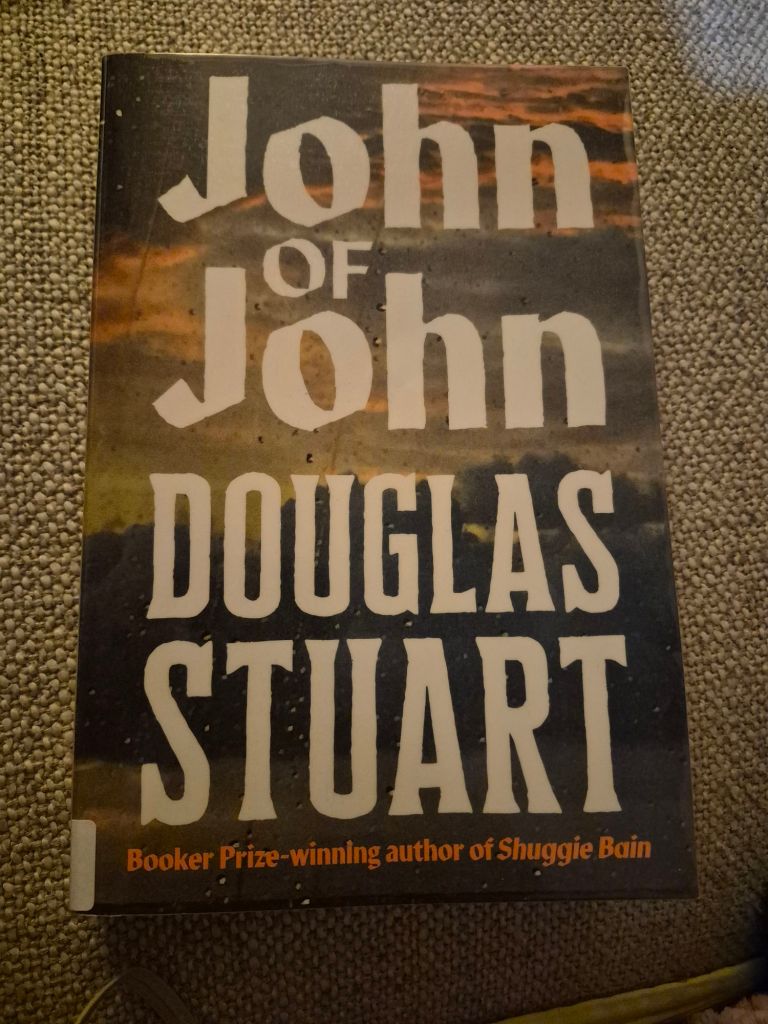
Book Review – John of John by Douglas Stuart

Douglas Stuart’s John of John is not an easy novel to love, but it is impossible to ignore. Set amid the wind-scoured isolation of the Outer Hebrides, Stuart delivers a bleak and unflinching portrait of a father and son trapped not only by poverty and place, but by faith, shame and silence. The novel follows John-Calum MacLeod, known as Cal, an unemployed university graduate summoned home by his father to farewell his dying grandmother. Cal returns reluctantly to an island he had hoped to escape, only to find that the tensions, resentments and secrets that drove him away remain as potent as ever.

20260816_2214157792899122733492067

At its heart, John of John is a story about two men hiding the same truth from one another. Cal conceals his sexuality from his deeply religious father, John, while John harbours his own forbidden desires beneath the mantle of Presbyterian respectability. Stuart builds much of the novel’s emotional tension from this cruel irony: father and son are separated by lies and bitterness while sharing the very secret that might have allowed them to understand each other. Their relationship is fraught, often hostile, shaped by years of disappointment, judgement and emotional repression.

The novel’s portrayal of Free Presbyterian life is particularly powerful. Stuart captures a culture where duty outweighs happiness and where suffering appears almost sanctified. Prayer, hard work and endurance are treated as virtues, while joy feels suspect, even sinful. There is a palpable sense that pleasure is an affront to God, something to be distrusted rather than embraced. The result is a community weighed down by stoicism and self-denial, where affection is rationed and emotional honesty seems impossible. Stuart never caricatures these beliefs, but he shows with painful clarity the damage they inflict on those who cannot conform.

Just as oppressive as faith is the landscape itself. The Hebrides emerge almost as another character in the novel, magnificent yet desolate. Stuart’s descriptions of the islands evoke a place battered by wind, rain and isolation. The stark beauty of the landscape mirrors the emotional lives of its inhabitants: harsh, lonely and resistant to change. The loneliness that permeates the novel is not simply personal but geographical, a product of a community cut off from the wider world and fiercely protective of its traditions.

One of the novel’s quieter strengths lies in its depiction of John’s traditional tweed weaving which sustains many island families and has become a symbol of continuity and cultural survival. Stuart clearly admires the skill and craftsmanship required, yet he is equally aware of its limitations. Weaving keeps traditions alive but offers little economic security. Throughout the novel, poverty hangs over every household. Employment is scarce, opportunities limited, and resignation often replaces ambition. The craft may preserve heritage, but it cannot spare its practitioners from hardship.

This is ultimately a novel saturated with sadness. Unhappiness seems woven into the fabric of daily life, passed down through generations alongside faith and tradition. Yet Stuart’s achievement lies in finding humanity within that bleakness. His characters long for connection even when they lack the language to express it. Beneath the bitterness between John and Cal is a shared yearning to be known and accepted… and dare I say it… a yearning to be loved.

John of John is a sombre, often heartbreaking novel about the cost of living behind masks. It is a story of fathers and sons, faith and desire, and a community where suffering is valued more highly than happiness. Stuart’s vision of the Hebrides is beautiful but unforgiving, and his characters inhabit a world where love is constantly constrained by duty, religion and fear. The result is a powerful and deeply affecting novel that lingers long after the final page.

Beyond “Boy Books”: Reflections from a Teacher Librarian in a Boys’ School

As a teacher librarian in a boys’ school, I read The Conversation article Luke Bateman says boys need books “written for boys” to become readers. But it’s not that simple with mixed emotions. On one hand, I welcomed the discussion about boys, reading and masculinity. On the other, I found myself increasingly frustrated by the persistent notion that boys need “boy books” in order to become readers.

After nearly a decade working with boys and books, I have become wary of explanations that position boys as somehow fundamentally different readers, requiring a separate literary diet from their female peers. The idea often feels uncomfortably close to another familiar refrain: boys will be boys.

While perhaps well-intentioned, these arguments risk excusing boys from engaging with the full richness of literature. They lower expectations rather than broaden horizons. More concerningly, they reinforce a narrow view of what boys are capable of reading, enjoying and understanding.

What I see every day in the library tells a different story.

I have watched boys become absorbed in historical fiction, moved by literary novels, captivated by fantasy worlds, and deeply invested in stories centred on friendship, grief, love and identity. I have recommended books with female protagonists to boys who returned eager for the sequel. I have seen boys passionately discuss character development, moral dilemmas and complex emotional journeys.

The common factor has never been whether a book was “for boys”.

The common factor has been whether a boy felt permitted to read it.

This is where I think the conversation around boys and reading often misses the point. The issue is not a lack of suitable books. School libraries, bookshops and publishers offer extraordinary diversity. The issue is that many boys receive powerful messages about what they should and should not enjoy. Those messages come from peers, families, communities and broader cultural assumptions about masculinity.

Over time, those messages become self-fulfilling.

If boys are continually told that they prefer action, sport and non-fiction, many will come to believe that they do. If they never see male role models discussing novels, poetry or stories that explore vulnerability and emotion, they receive a clear message about which forms of reading are considered acceptable.

The irony is that the research does not support many of these stereotypes. Scholes’ study of Australian Year 3 students found that fiction was actually the most favoured genre among boys. Girls also reported higher levels of enjoyment for non-fiction than boys, challenging one of the most enduring assumptions in reading education. The study concluded that reading enjoyment and frequency were associated with higher achievement and highlighted the importance of supporting students from economically disadvantaged communities.

That last point is particularly important.

Too often, discussions about boys’ reading isolate gender from every other influence. Yet Curtis and Nielsen’s analysis of Australian literacy achievement demonstrates that socioeconomic status exerts a substantial influence on reading outcomes. Their research found that school-average socioeconomic status was a stronger predictor of literacy achievement than individual socioeconomic status, suggesting that broader social and economic contexts matter deeply.

This resonates with what I have observed across my career. Access to books, educational opportunities, family attitudes towards reading, community expectations and social capital often shape reading identity far more profoundly than gender alone.

When we simplify the discussion to “boys need boy books”, we risk ignoring these far more significant factors.

What I appreciated most about the Conversation article was its focus on masculinity rather than reading preferences. The authors argue that societal expectations surrounding masculinity can restrict boys’ engagement with reading and create narrow understandings of what boys should enjoy.

This aligns strongly with my own experience.

Some of the most enthusiastic readers I have worked with have initially apologised for what they liked reading.

They have hidden romance novels inside fantasy covers. They have quietly borrowed books with female protagonists. They have expressed surprise that other boys also enjoyed particular authors or genres.

The challenge was never the book.

The challenge was navigating expectations about masculinity.

This is why I find Luke Bateman’s story compelling. Not because it supports the argument for more books written specifically for boys, but because it reveals the damage caused when reading is viewed as incompatible with masculine identity. His account of hiding his love of books reflects the social pressures many boys continue to face.

As teacher librarians, our responsibility is not simply to match books to perceived gender preferences. Our responsibility is to expand possibilities.

We need boys to see men reading widely. We need to challenge assumptions that empathy, imagination and emotional engagement belong to girls. We need to create spaces where boys can encounter diverse stories without fear of judgement. Most importantly, we need to stop telling boys what they are supposed to like.

Because in my experience, boys do not need a narrower range of books.

They need permission to explore a wider one.

Perhaps the real question is not whether we are providing enough books for boys. Perhaps it is whether we are courageous enough to challenge the social narratives that keep limiting what boys believe reading can be.

References

Curtis, D. D., & Nielsen, P. (2025). Low literacy achievement for some: A persistent and pernicious problem in Australian education. Issues in Educational Research, 35(1), 101-125.

McDonald, S., Schulz, S., & Wescott, S. (2026, July 30). Luke Bateman says boys need books ‘written for boys’ to become readers. But it’s not that simple. The Conversation. https://theconversation.com/luke-bateman-says-boys-need-books-written-for-boys-to-become-readers-but-its-not-that-simple-288602

Scholes, L. (2021). Year 3 boys’ and girls’ enjoyment for reading across economic demographics in Australia: Implications for boys and students from lower SES communities. International Journal of Inclusive Education, 28(5), 509-524. https://doi.org/10.1080/13603116.2021.1941319