Richard Osman’s fifth novel in the Thursday Murder Club series, The Impossible Fortune, kicks off with a wedding—Joyce’s daughter Joanna is finally getting married. But the celebration takes a sharp turn when best man Nick announces that someone is trying to kill him. From that moment, the familiar crew of pensioners is drawn into yet another mystery, this time involving a hidden Bitcoin fortune, a car bombing, and a tangled web of suspects. It is nice to read a novel where the main characters are not in their flush of youth. Gives someone who is quite frankly set in their middle age, some hope for age appropriate literature.
One of the first things that stood out to me was the large print. Compared to other novels I’ve read recently, this one is an absolute breeze to get through. It’s easy on the eyes and makes for a more relaxed reading experience, especially if you’re dipping in and out over a few days. The chapters are also cleverly titled by days of the week, which helps anchor the plot and gives a sense of progression—especially useful given the shifting perspectives between characters.
The emotional tone of the book is a little more poignant than previous instalments. Elizabeth is still reeling from the loss of her husband Stephen, and Osman handles her grief with sensitivity and depth. It adds a layer of introspection to the story without slowing down the pace. Ibrahim continues to be the group’s voice of reason, offering advice to friends and foes alike, including the ever-scheming Connie Johnson, who ironically saves Ron’s bacon eventually.
Joyce remains a delight, and her relationship with Joanna is given more attention here, adding warmth and humour to the narrative. The mystery itself is well-paced, with enough twists to keep you guessing but not so many that it becomes convoluted. Osman’s trademark wit is present throughout, and the characters continue to evolve in ways that feel authentic and earned.
I particularly enjoyed the plot line of Suzi, Jason, and Ron trying to evade the evil machinations of horrid wife beating Danny. The perspective of Kendrick reminded me once again that the biggest victims of domestic violence are children and their lost childhoods. Osman manages rather cleverly to use Kendrick’s internal monologue to reveal his childhood trauma to the reader.
Overall, The Impossible Fortune is a satisfying continuation of the series—accessible, emotionally resonant, and full of charm. It’s not literature by any means but rather a pleasant holiday read as it requires very little cognitive processing. However, it is a story about friendship, ageing, and the thrill of solving a good puzzle, all wrapped up in Osman’s signature style.
Annie Garthwaite’s The King’s Mother is her second book about an incredible woman, and this sequel is a masterful and emotionally resonant portrait of Cecily Neville, a woman whose strength, ambition, and heartbreak shaped the course of English history. Set against the backdrop of the Wars of the Roses, this novel brings to life a matriarch who was far more than the mother of kings; she was a strategist, a survivor, and a power in her own right.
I was first introduced to Cecily in Sharon Penman’s The Sunne in Splendour, where she stood as a dignified and commanding presence amid the chaos of civil war. Garthwaite’s novel deepens that impression, giving Cecily center stage and allowing her voice to ring out with clarity, courage and conviction. As a daughter of the royal House of Neville, cousin to the Kingmaker and wife to highest ranking Lord of York, Cecily was indeed a lady of influence—but she earned her place in history through grit, determination and sacrifice.
Garthwaite’s storytelling is rich and immersive, capturing the political intrigue and emotional toll of a woman who saw her husband, cousin, and sons die in pursuit of their house’s claim to the throne. Cecily’s love for her children is both her greatest strength and her most painful vulnerability. Her devotion to George, Duke of Clarence, is especially poignant, as his betrayal and eventual death (drowning in a butt of malmsey wine, no less) is rendered with tragic inevitability. Garthwaite doesn’t flinch from the irony or the heartbreak, and neither does Cecily.
What sets The King’s Mother apart is its portrayal of female agency in a world dominated by men. Cecily is no passive observer; she is a political operator, a negotiator, and a woman who understands power and how to wield it. Garthwaite’s prose is elegant and sharp, balancing historical detail with emotional depth. The novel doesn’t just recount events—it explores the cost of ambition, the weight of legacy, and the quiet resilience of a woman who endured more than most.
Cecily Neville emerges as a complex and unforgettable figure, proud, calculating, loyal, and deeply human. Garthwaite gives her the voice she deserves, and in doing so, reclaims a vital piece of history too often overshadowed by the men around her.
Cecily is a bold and brilliant reimagining of one of the most overlooked power players of the Wars of the Roses, Cecily Neville, Duchess of York. In this incredible novel, Garthwaite resurrects a woman who was relegated to the margins of history and gave her a voice as commanding and complex as the times she lived through.
Kindle edition
History tells us that Cecily must have been a woman of great character. As the wife of a high ranking noble in the English court and a daughter of the house of Neville, Cecily is not merely a noblewoman, she is a strategist, a political operator, and a survivor. In a time where women were relegated to the distaff and the cradle, Cecily held her own among the peers of England and France. I love how Garthwaite has portrayed Cecily. Her use of language and semantics is unapologetically fierce. Cecily is driven, calculating, and deeply loyal to her family’s cause. She is also flawed. Her love for her sons, her only weakness and ultimately will cost her dearly.
The novel spans decades of turmoil, from the fall of her husband Richard, Duke of York, to the rise and reign of her sons Edward IV and Richard III. Through it all, Cecily remains at the heart of the action, not as a passive observer, but as a woman who shapes events from behind the scenes. Garthwaite’s prose is taut and evocative, capturing both the grandeur of court politics and the intimate griefs of a mother watching her family unravel.
What sets Cecily apart is its refusal to romanticise the brutality and heartbreak of medieval motherhood. The heartstrings are definitely pulled when youthink about the number of pregnancy losses, stillbirths and infant losses she experienced. In a time where the childbed was a path paved to the graveyard; Cecily used it to wield power. This is not a tale of damsels and chivalry—it’s a story of power, survival, and the brutal cost of ambition. Garthwaite’s Cecily is a woman of her time, but also ahead of it: she understands the game, and she plays it better than most men around her.
For readers who first met Cecily in Sharon Penman’s The Sunne in Splendour, Garthwaite’s novel offers a deeper, more personal exploration. It’s a fantastic story about a strong woman who lived through unimaginable loss—husband, cousin, sons—all sacrificed for the Yorkist cause. And while her greatest weakness may have been her love for her children, it’s also what makes her so achingly human.
Cecily is historical fiction at its finest: vivid, uncompromising, and utterly absorbing. Garthwaite doesn’t just resurrect a forgotten duchess—she reclaims her legacy.
No surprises that after I read this one, I had to read the sequel.
Coming up with this list was horrendously difficult. I probably agonised over it for longer than it took to name my children, and with far more existential dread.
What if I forgot a book that changed my life?
What if I picked something too obvious?
Too obscure? Too emotionally manipulative?
Eventually, after much soul-searching, tea-drinking, and dramatic sighing, I settled on ten. I will preface it and say they may not necessarily the “best” books of the century—but they’re the ten books I think are the ‘my‘ books. My literary lifeboats. And because I clearly enjoy suffering, I’ve explained why each one made the cut.
My Brilliant Friend (2011) by Elena Ferrante
A colleague recommended this one to me back in 2019. Book one of a four-part saga that nails the messy magic of female friendship. Elena and Lila are best mates, worst rivals, and emotional sparring partners. Ferrante helped me realise that friendship isn’t always soft—it’s sharp, complicated, and utterly formative.
A Man Called Ove (2012) by Fredrik Backman
My best read of 2018—and the gateway drug to all things Backman. Grumpy old man meets chaotic neighbours, and somehow it’s a masterclass in love, loss, and chosen family. Proof that sometimes, the best family isn’t the one you’re born into—it’s the one that barges in uninvited.
The Tattooist of Auschwitz (2018) by Heather Morris
Heart-wrenching and unforgettable. Based on interviews with Holocaust survivor Lale Sokolov, this novel brings humanity to horror. It’s a story of love, resilience, and survival in the darkest of places—and it left me absolutely gutted. Furthermore, for the non-readers in my life- there is a TV series.
Wolf Hall (2009) by Hilary Mantel
Book one of Mantel’s Tudor trilogy, starring the ever-scheming Thomas Cromwell. This was another recommendation from a colleague. Wolf Hall is lyrical, slyly funny, and so well written it makes other historical fiction feel like homework. A must for history buffs—and anyone who likes their politics bloody and their prose brilliant. TV series available for the non-readers. Different note – Alison Weir just released a title called “Cardinal” based on the life of Thomas Wolsey … so will need to pop that on my list to read soon.
A Thousand Splendid Suns (2007) by Khaled Hosseini
Heartbreaking and beautiful. Set in Taliban-era Afghanistan, it follows two women whose lives collide in tragedy—and transform through love. Their bond, almost mother-daughter, is a testament to resilience, sacrifice, and the fierce power of chosen family. This was an accidental read, I found this book on a plane, left by a forgetful passenger… I still have it on my bookshelf. It has been well read and is still much loved.
Circe (2018) by Madeline Miller
I’m a sucker for Greek mythology, and this feminist retelling hit all the right notes. Circe steps out of the shadows and into her own power—witch, exile, goddess, woman. Strong female themes, lyrical prose, and a fresh perspective on ancient tales. Loved every spellbinding page. This book is far better than Song of Achilles, also by Madeline Miller. I felt like slapping Achilles more times than I could count in that novel.
Go Tell the Bees That I Am Gone (2021) by Diana Gabaldon
Book nine of the Outlander saga, and a rich tapestry of time-travelling drama. Jamie, Claire, Brianna, Roger, Lord John Grey, and William Ransom all get their moment—and it’s beautifully woven together. Such emotion. Jamie and Claire at their best. A love story for the ages. I have included this in the list because it is one of my favourite series, as I couldn’t squeeze in Cross Stitch (wrong century!), but this one carries the torch. BTW – I am waiting desperately for Book 10. Hurry up Diana!!
Burial Rites (2013) by Hannah Kent
A beautifully written fictional take on the life of Agnes Magnúsdóttir, Iceland’s last execution. It forces you to confront 19th-century prejudice, gender roles, and how reputation can be shaped more by rumour than truth. Quietly devastating—and deeply human. This was a senior text when I was teaching in the ACT and I read it as part of my curriculum planning. An absolutely brilliant novel and quite frankly, should be taught more in schools.
Hallmarked Man (2025) by Robert Galbraith (aka J K Rowling)
This one was hard as I nearly shoehorned in Harry Potter, but alas, that was from last century. Then I dithered over Deathly Hallows, but it’s book seven, and I’ve got a “book one” theme going (see Wolf Hall, My Brilliant Friend). Therefore it seemed logical that Cuckoo’s Calling made the list. But in the end, as I selected Book 9 of the Outlander series, I felt that it was OK that Hallmarked Man won out over the other 7 books in the series. Additionally, it is the best book I’ve read this year. .So, it’s in. No regrets. (Okay, maybe a few – I agonised over this one the most).
The Nightingale (2015) by Kristin Hannah
I cried buckets. This heartfelt tale of a woman risking everything to save Jewish children under the Nazi occupation of France. First it was for her best friend’s son… then it was another woman’s son…. and daughter. This book is a gut-punch of love, loss, friendship, and motherhood. It broke me, then stitched me back together.
So there you have it…
Ten books. Ten emotional rollercoasters. And one very frazzled reader. If you’re brave enough to try making your own list, I salute you. Just stock up on tea, tissues, and a sturdy spreadsheet.
Coming-of-age novels have long held a central place in literature, offering rich terrain for both personal reflection and academic exploration. For educators working with adolescents, these texts are more than just stories—they are mirrors and windows into the complex journey of growing up. This post explores why coming-of-age literature resonates so deeply with teenagers, why it matters in the curriculum, and how educators can harness its potential to foster empathy, identity formation, and critical thinking.
Bildungsroman
Adolescence is a period marked by emotional intensity, identity exploration, and social upheaval. Coming-of-age novels, also known as bildungsroman, capture this liminal space with authenticity and nuance. Teen readers often see themselves reflected in protagonists who grapple with similar dilemmas: family conflict, peer pressure, romantic entanglements, and the search for purpose. These narratives validate the adolescent experience, offering reassurance that their struggles are not isolated but part of a universal human journey.
Moreover, the first-person perspective common in young adult fiction allows readers to inhabit the protagonist’s inner world. This immersive quality fosters emotional resonance and encourages teens to reflect on their own values, choices, and aspirations. As Biscontini (2024) noted, coming-of-age literature “provides young people with a relatable experience while offering adults a sense of nostalgia,” and often centres on the loss of innocence, self-discovery, and the struggle to adapt to societal expectations.
Why They Matter in the Curriculum
From a pedagogical standpoint, coming-of-age novels are invaluable tools for teaching literary analysis, thematic exploration, and cultural literacy. These texts often engage with issues such as race, gender, class, and mental health: topics that are both timely and timeless. By studying these works, students develop empathy and gain insight into diverse lived experiences.
Importantly, coming-of-age literature also supports identity development. For students from marginalised backgrounds, seeing characters who reflect their realities can be empowering. For others, these stories offer a chance to understand perspectives different from their own. As such, these novels contribute to a more inclusive and socially aware classroom environment (Federation of Egalitarian Communities, 2024).
Why Choosing the Right Text Matters—Especially for Boys.
“Puberty is merciless. Regardless of who you are,” Becky Albertalli in Simon vs. the Homo Sapiens Agenda
This sentiment that captures the emotional turbulence of adolescence with striking clarity. For boys, this period can be particularly complex, often shaped by conflicting expectations around masculinity, emotional restraint, and identity formation.
Potential reads
Choosing the right coming-of-age texts for boys is not merely about fostering a love of reading. It is about offering them tools for emotional literacy, ethical reasoning, and self-reflection. These stories help boys navigate moral ambiguity, understand the consequences of choices, and appreciate the nuances of human relationships. Crucially, they provide a safe space to explore vulnerability, fear, and belonging, which often occur before boys feel equipped to express these experiences in their own words.
Selecting texts that feature emotionally authentic male protagonists, whether they be sensitive, conflicted, resilient, or flawed; can disrupt narrow stereotypes and expand boys’ understanding of what it means to grow up. When boys see themselves reflected in literature, or encounter perspectives that challenge their assumptions, they are more likely to engage deeply and critically.
Incorporating well-chosen coming-of-age novels into the curriculum also supports literacy outcomes. The relatability of the content increases motivation, while the layered narratives encourage boys to interpret symbolism, character development, and thematic complexity. With the right texts, educators can foster not only stronger readers, but more thoughtful, empathetic young men.
How Students Socially Learn from Narrative Fiction
Recent research by Gasser, Dammert, and Murphy (2022) offers a compelling framework for understanding how children socially learn from narrative fiction. Their integrative review identifies three distinct mechanisms:
Getting the Lesson – where children extract and internalise explicit moral messages from the text.
Simulating Social Worlds – where readers imaginatively engage with fictional characters, enhancing empathy and perspective-taking.
Dialogic Inquiry – where students develop social reasoning through peer dialogue about complex sociomoral issues raised in fiction.
This framework is particularly relevant for educators designing literature programmes that go beyond comprehension and into the realm of ethical inquiry and emotional intelligence. It supports the use of coming-of-age novels as tools for cultivating sociomoral competencies in the classroom.
Key Texts – Australian Coming of Age stories for Boys
Australian literature offers a rich and diverse array of coming-of-age narratives that speak directly to local contexts, landscapes, and cultural tensions. There are wide range of novels that can be utilised effectively in the classroom, however, these texts are particularly valuable for fostering national literary literacy and connecting students with stories that reflect their own communities.
Jasper Jones by Craig Silvey
Boy Swallows Universe by Trent Dalton
I am not really here by Gary Lonesborough
Rowan of Rin by Emily Rodda
Breath by Tim Winton
The first third by Will Kostakis
Scartown by Tristan Bancks
The Sidekicks by Will Kostakis
Ready when you are by Gary Lonesborough
Key Texts: Classic Coming-of-Age Novels
These canonical works have shaped the genre and continue to offer profound insights into the human condition. They are ideal for comparative studies and historical context.
David Copperfield by Charles Dickens
The Picture of Dorian Gray by Oscar Wilde
The Catcher in the Rye by J.D. Salinger
The Adventures of Huckleberry Finn by Mark Twain
To Kill a Mockingbird by Harper Lee
The Outsiders by S. E. Hinton.
Key Texts: Modern Coming-of-Age Novels
Contemporary novels reflect the evolving challenges faced by today’s youth, including cultural identity, mental health, activism, and global conflict. These texts are especially relevant for engaging students in current social discourse.
Gasser, L., Dammert, Y., & Murphy, P. K. (2022). How do children socially learn from narrative fiction: Getting the lesson, simulating social worlds, or dialogic inquiry? Educational Psychology Review, 34(3), 1445–1475. https://doi.org/10.1007/s10648-022-09667-4
Sun, X. (2024). Teaching young adult literature in secondary L2 classrooms: A case study of The Outsiders reading programme. The Language Learning Journal, 52(3), 233–254. https://doi.org/10.1080/09571736.2022.2107694
Adib Khorram’s debut novel, Darius the Great Is Not Okay, is a beautifully crafted story that captures the emotional complexity of adolescence with rare sensitivity. At its centre is Darius Kellner, a teenage boy growing up biracial—half Persian, half white—in a world that often demands simple answers to complicated questions about identity.
Darius feels out of place in his hometown of Portland. He doesn’t speak Farsi fluently, struggles to connect with his Persian heritage, and feels alienated from both sides of his cultural background. When he travels to Iran to meet his grandparents for the first time, the story deepens into a moving exploration of belonging. Khorram doesn’t offer easy resolutions. Instead, he shows how identity can be layered, shifting, and deeply personal.
As a parent of biracial children myself, this novel struck a chord. I often worry about how my kids see themselves—whether they feel “enough” of either culture, whether they’ll be accepted, and whether they’ll find peace in the spaces between. Darius’s journey reminded me that these questions don’t always have answers, but they do deserve compassion. The book offers that in abundance.
What also makes this story so powerful is its honest portrayal of mental health. Darius lives with clinical depression, and Khorram treats this with care and authenticity. He very gently reminds the reader that mental health is often not viewed the same way across generations and cultures. I particularly found it endearing when Darius was taking his ‘medicine’ in front of his grandfather and being told that medicine is only for old people. This was said in such a matter of fact tone, you could almost hear the slightly questioning tone of a grandparent’s concern. However, Khorram keeps it calm. There’s no melodrama, just the quiet reality of what it means to live with a condition that many teenagers face but few feel safe talking about. The novel understands that mental health isn’t a side issue—it’s central to how young people experience the world and themselves.
Equally important is the novel’s emphasis on friendship. Darius’s bond with Sohrab, a boy he meets in Iran, is tender, grounding, and transformative. For teenagers, friendships are more than social connections—they’re mirrors through which they begin to see themselves. A good friend can validate your experiences, challenge your assumptions, and offer a safe space to be vulnerable. In Darius’s case, Sohrab becomes that anchor. Their friendship helps Darius feel seen—not as a collection of contradictions, but as someone worthy of love and belonging. For teens navigating identity and self-esteem, these kinds of relationships are vital.
The thing is, I never had a friend like Sohrab before. One who understood me without even trying. Who knew what it was like to be stuck on the outside because of one little thing that set you apart.
This moment captures the emotional core of the novel. For Darius, friendship isn’t just about companionship—it’s about being truly seen. Sohrab’s presence helps Darius begin to accept himself, not in spite of his differences, but because of them. It’s a reminder that for teenagers, especially those navigating identity and mental health challenges, friendship can be a lifeline
Darius the Great Is Not Okay is a fantastic coming-of-age story because it doesn’t rely on dramatic transformations. It’s about small, meaningful moments: a friendship that feels like home, a conversation that bridges generations, a glimpse of self-worth. For young readers—especially those navigating multiple cultures or mental health challenges—it’s a gentle, affirming reminder that being “not okay” doesn’t mean being broken. It means being human.
If Wednesday Addams were to write her own memoir, it’d probably look a lot like Wednesday: A Novelisation of Season One. This isn’t just a book—it’s a moody, macabre mirror held up to the Netflix series, with all the gothic charm and deadpan sass you’d expect. Written by Tehlor Kay Mejia, the novel dives headfirst into Wednesday’s psyche, offering a peek behind the curtain of her stoic facade. Think of it as the show’s inner monologue, scribbled in black ink and sealed with disdain.
Published in 2024, the plot follows Wednesday’s arrival at Nevermore Academy, a school for supernatural misfits where murder mysteries are part of the curriculum and socialising is a punishable offence. While the series gave us brooding cello solos and a wardrobe that screams “funeral chic,” the book lets us crawl inside Wednesday’s mind—where sarcasm is a survival skill and feelings are best left buried. Mejia nails the tone, balancing Wednesday’s razor-sharp wit with moments of reluctant vulnerability that feel oddly touching (but SHUSHH don’t tell her that).
One of the novel’s most delicious contrasts—and let’s be honest, Wednesday thrives on contrast—is the infamous dorm room split between her and Enid Sinclair. On one side: a monochrome mausoleum of black, grey, and gloom, where even the shadows look depressed. On the other: a rainbow explosion that looks like a unicorn sneezed on a Lisa Frank catalogue. It’s less “cohabiting” and more “cold war with glitter.” The book leans into this absurdity with Wednesday’s internal commentary, which is equal parts horror and reluctant fascination. Sharing a room with Enid is like bunking with a disco ball that talks. Their room becomes a battleground of personality—and somehow, a crucible for growth. It’s eerily reminiscent of Elphaba and Galinda’s dorm at Shiz University in Wicked: one half brooding misfit, the other half pastel chaos, and somehow, against all odds (and taste), it works.
Now, let’s be honest: like most movie tie-ins, this novelisation is fairly true to the source material but ultimately feels like a watered-down echo of the show. It’s a weak parody in places—more shadow than substance. An OK read, sure, but clearly aimed at teens and readers who don’t mind their books light on literary weight. Basically, it’s all frosting and no cake: sweet, stylish, and fun to look at, but don’t expect it to nourish your soul or challenge your brain.
In short, if you loved the series but wished Wednesday would open up just a smidge (begrudgingly, of course), this book is your poison. It’s witty, weird, and wonderfully introspective—like a love letter written in invisible ink and sealed with a spider. Just don’t expect hugs. She’s still Wednesday, after all.
Kenneth Oppel’s Best of All Worlds is a young adult speculative fiction novel centred on Xavier Oak, a Canadian teenager trapped beneath an invisible dome with his father and stepmother. What begins as a short family retreat becomes years of unexplained isolation. The arrival of a second family three years later introduces ideological tension and a mild romantic subplot, consistent with genre expectations.
The narrative is straightforward, with hints of extraterrestrial involvement and surveillance. The prose is accessible, the pacing steady, and the themes—xenophobia, resilience, distrust—are presented in simplified form. The book is fairly true to the tone and structure of the Netflix adaptation it complements, though like most tie-ins, it reads as a diluted version of the original. It is an adequate read, but lacks literary substance.
Unlike Oppel’s other works, such as the Silverwing series, this novel lacks scope and is largely devoid of the symbolism that traditionally enriches his fiction. It trades allegorical depth for surface-level tension and interpersonal drama.
For readers who find classic dystopian texts too demanding, this may serve as a more approachable alternative. However, for those who do not generally enjoy young adult fiction, this novel is unlikely to change that view. It is readable, but ultimately all frosting and no cake—conceptually interesting, but light on depth.
There’s something quietly radical about a group of students gathering to talk about books; in a world of endless scrolls and fleeting attention, the act of sitting together, face to face, page to page, is an act of resistance; it’s also an act of connection. Book clubs are often seen as quaint or optional, but research increasingly shows they are anything but; they are lifelines, especially for boys.
“A space for boys and books is a space for possibility.” — Nichols-Besel et al., 2018
Reading is, by nature, a solitary pursuit; but when we read together, when we discuss, debate, and share, we transform that solitude into community. The National Library of New Zealand (n.d.) emphasizes that social reading increases understanding, introduces diverse perspectives, and fosters authentic engagement; it’s not just about comprehension, it’s about connection. This matters deeply for boys, who often disengage from reading during adolescence. Nichols-Besel, Scharber, O’Brien, and Dillon (2018) found that boys respond positively to book clubs when given access to interest-based reading materials and male role models; their study showed that boys’ engagement and reading outcomes improved significantly in these settings. Similarly, a recent UK study trialed social book clubs across 17 school libraries and found that boys’ reading ages increased by an average of 1 year and 3 months or more than double the expected growth when reading was framed as a social, low-pressure activity (School Library Association, 2025).
“Book clubs create a space where stories become shared experiences, and readers become friends.” — J.N. Polleck (2022)
One of the primary roles of the teacher librarian is to foster a love of reading; this goes beyond managing resources and catalogues, it’s about cultivating curiosity, joy, and lifelong habits. Polleck (2022) argues that youth-led book clubs, especially those facilitated by librarians, are transformative spaces that prioritize student voice, identity, and emotional safety. Book clubs provide opportunities for students to review books, select new titles for the library collection, participate in reading competitions, and model positive reading behaviour for peers; these activities not only build literacy skills but also empower students to take ownership of their reading journey (Cutrer-Párraga & Hall-Kenyon, 2024).
Facilitating book clubs and fostering a love of reading aligns directly with the Australian School Library Association’s (ASLA) Standards of Professional Excellence for Teacher Librarians. Specifically, it reflects the standard that teacher librarians “develop and promote literacy and literature programs that encourage and engage learners” (ASLA, 2004). By creating inclusive, student-led book clubs, supporting reading for pleasure, and modelling positive reading behaviours, teacher librarians demonstrate excellence in both pedagogy and leadership. These practices not only build literacy but also nurture lifelong learning and a strong reading culture within the school community.
For boys, reading can feel like a chore; a subject; a test. But in a book club, it becomes a conversation; a safe space; a place to laugh, question, and be heard. Literacy circles and book clubs allow boys to explore texts in small, student-led groups, which fosters deeper understanding and emotional connection (The Weary Educator, 2024). And yes, food helps; at our school, we’ve learned that no boy can resist a food bribe. Biscuits, humble, crumbly, and beloved, have become our secret weapon; they lure students in, but it’s the stories and the friendships that keep them coming back.
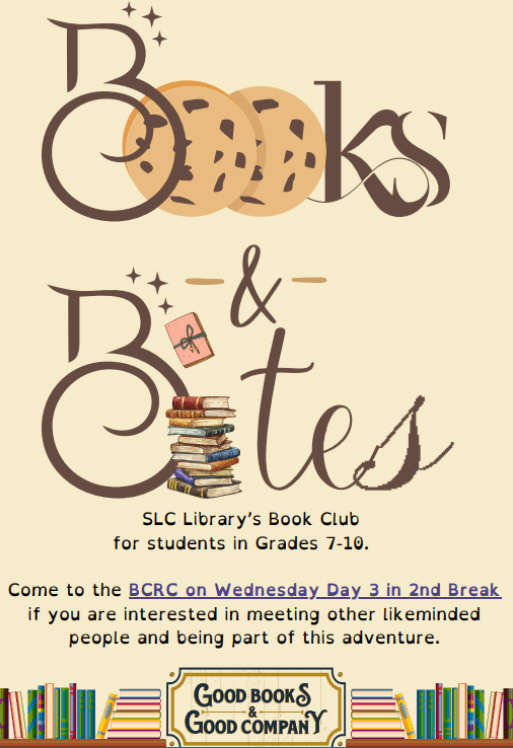
In 2024, our school launched a student book club called Books & Bites for Years 7–9; just six students came. It was small, but it was something. I bribed them with food and with this lure, they came. Now, in 2025, our Years 7–10 club has grown to 28 students; that’s 28 young minds choosing to read, choosing to talk, choosing to belong. Whilst they still come for the biscuits, they stay for the books. Therefore, I felt emboldened with such a strong uptake, and decided to start one for our younger readers. So, this August, we started a primary book club called Lauries Literature Legends. On day one, 15 students turned up. Some came for the biscuits; all stayed for the books. Even more came to the second session… apparently the lure of sitting in the library reading and eating was stronger than playing out in the quad.
Book clubs are not just about literacy; they’re about identity, empathy, and agency. They teach students to listen and to lead; they offer a space where boys can express emotions, challenge ideas, and discover who they are—not just as readers, but as people. In a time when reading is increasingly seen as a subject to learn rather than a joy to experience, book clubs remind us that stories are meant to be shared. So, we’ll keep offering biscuits; we’ll keep making space; because every book club meeting is a quiet revolution, and every student who shows up is part of it.
What if you could travel back in time—but only for the duration of a single cup of coffee?
Toshikazu Kawaguchi’s Before the Coffee Gets Cold is a short novel, or novella if you wish to use that term that reminds you about regrets and how they can influence your actions. The novel is about a small, tucked-away Tokyo café where time travel is possible, but with strict rules. You can revisit the past, but you can’t change it. You must sit in a specific seat. And most importantly, you must return before your coffee gets cold. As a teacher and a parent, I am used to drinking cold coffee and how people actually drink warm coffee at work is a mystery to me!
Thank you Julia for the loan
The novel unfolds through four interconnected stories, each exploring themes of love, loss, regret, and reconciliation. The characters—a woman hoping to reconnect with a lover, a sister grieving her sibling, a mother longing for her child—are ordinary people facing emotionally charged moments. Kawaguchi’s writing is simple and understated, allowing the emotional depth of each story to shine through.
Unlike a novel I read recently (will not name names but ole Mate Danny), Kawaguchi uses provoking language and variated sentence structure to evoke emotion in the reader. This book, written with quiet clarity and emotional depth, avoids dramatic flourishes or unnecessary embellishments, instead offering a straightforward, sincere narrative that invites reflection without demanding attention.
If you could revisit a moment, not to change it, but to understand it better—would you?
Books like this remind us that stories have the power to shift our perspective. They can make us pause and reflect on our own choices, relationships, and regrets. Before the Coffee Gets Cold encourages readers to consider how they treat others, how they communicate, and what truly matters in the fleeting moments of everyday life. It’s a quiet nudge to be more present, more thoughtful, and more intentional.
Perfect for readers who enjoy reflective, character-driven stories, Before the Coffee Gets Cold is a gentle reminder that while we can’t rewrite the past, we can reshape how we carry it forward. It’s a book best read slowly, perhaps with a warm drink in hand and a quiet space to think.





 Learning through the Library