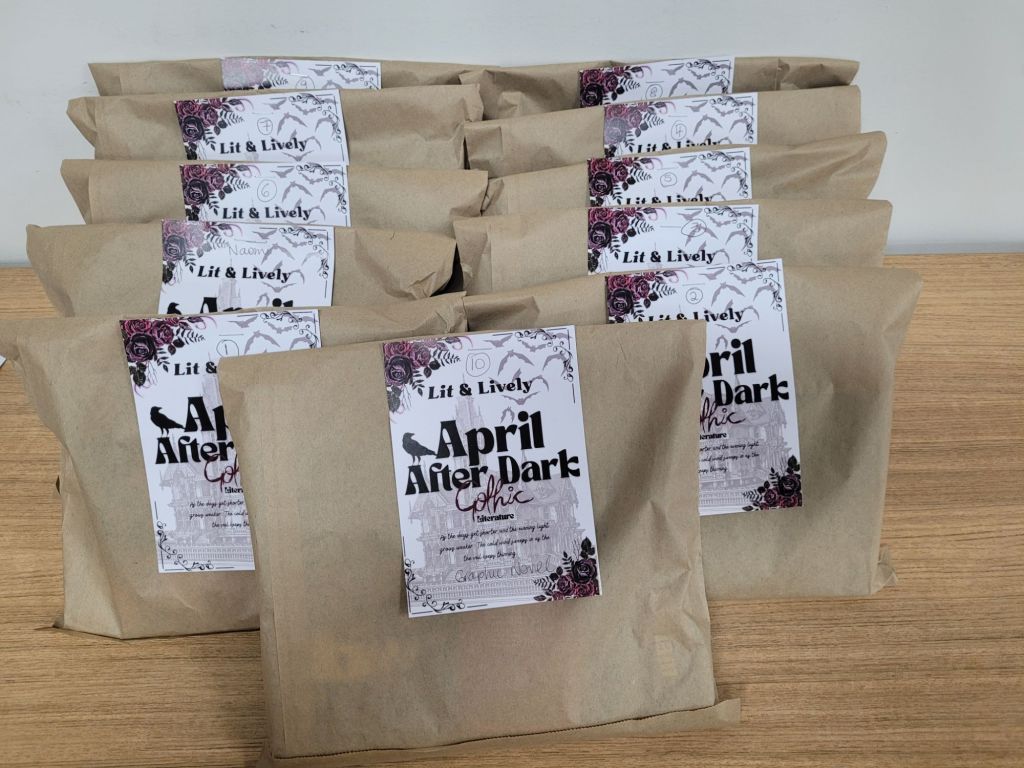
Lit & Lively, the school’s staff book club, is embracing the shadows this month with a gothic themed gathering titled April After Dark. This month’s meeting is centred around gothic literature, inviting staff to explore darker moods, mysterious settings, and stories that linger long after the final page. The format is welcoming and flexible. Staff read one shared text together, giving everyone a common starting point for discussion, before branching out into a range of gothic titles from the library collection. Each participant received a carefully prepared book pack, lovingly packed with the novels, a tea bag, and a chocolate biscuit, turning the reading experience into a small but meaningful indulgence during the autumn break.
April After Dark has also been a practical and creative way of using class sets that usually sit out of season. By repurposing these texts for staff reading, the library is reintroducing overlooked titles and highlighting how versatile the collection can be. Many participants have discovered books and genres they might never have explored without a themed invitation. It also reflects an important part of the Teacher Librarian role, which is not only to support students, but to guide and encourage staff in their own reading journeys and engagement with literature.
Through Lit & Lively, staff are gaining a deeper understanding of the breadth and depth of the school’s collection and reinforces the library as more than a curriculum support space. It is a place for curiosity, enjoyment, and reading for pleasure, modelling the reading culture we encourage in students.
There is also a strong wellbeing element. Reading for pleasure can act as a form of bibliotherapy, offering comfort, escape, and emotional renewal. Teachers often have little opportunity to read during the term, and the autumn break provides a rare pause to do so. Finally, Lit & Lively celebrates the social side of reading. Book clubs create space for conversation, shared reflection, and connection, reminding us that reading is often richest when it is shared.
As April grows darker, April After Dark reminds us that reading together can be restorative, enriching, and deeply human. Lit & Lively continues to affirm that teachers deserve time to read, reflect, and reconnect too.
This blog post builds on ideas introduced in my earlier discussion of disciplinary literacy and vocabulary development in Language Learning and the Power of the Library. The present work extends that discussion by examining semantic mapping as an evidence informed pedagogical strategy and by considering the role of the Teacher Librarian in supporting vocabulary development across curriculum areas.
Image created by Canva.
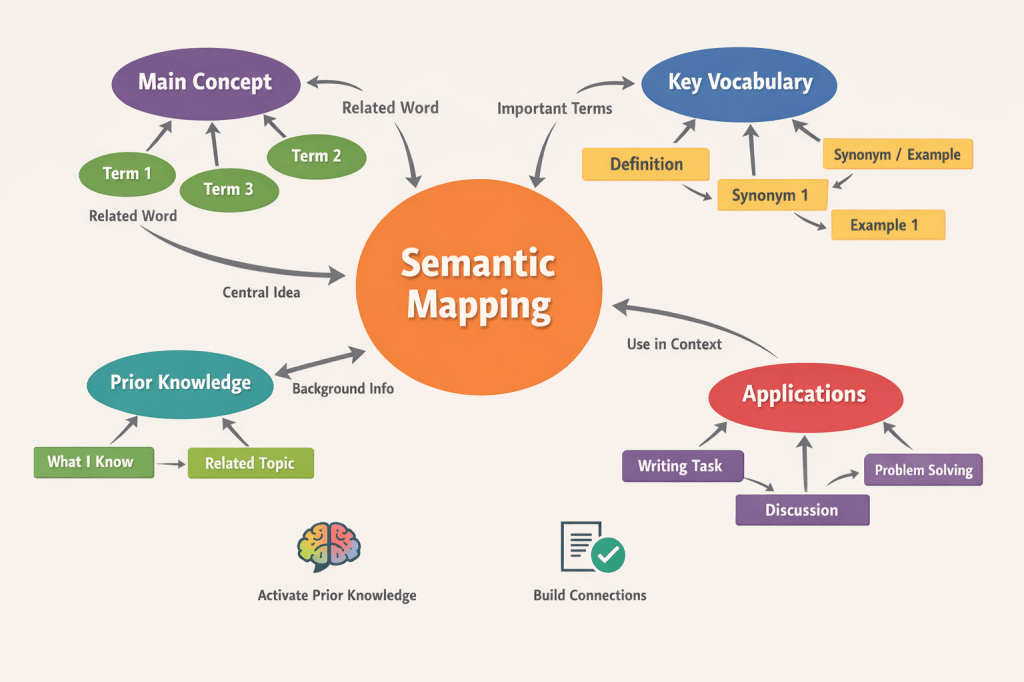
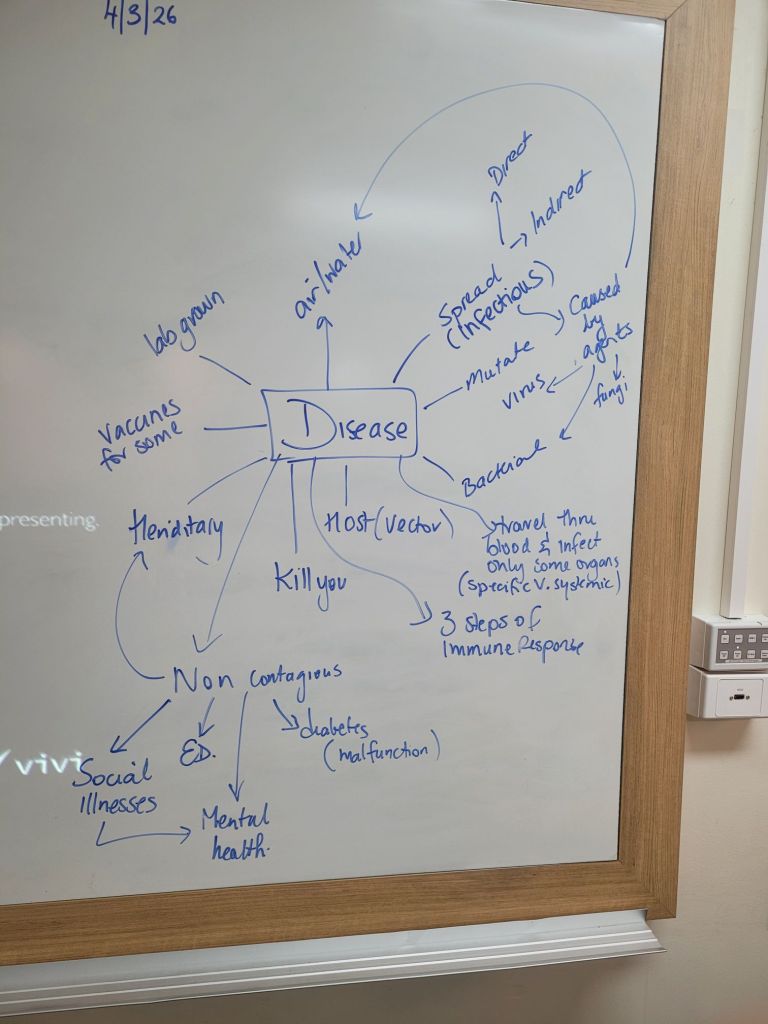
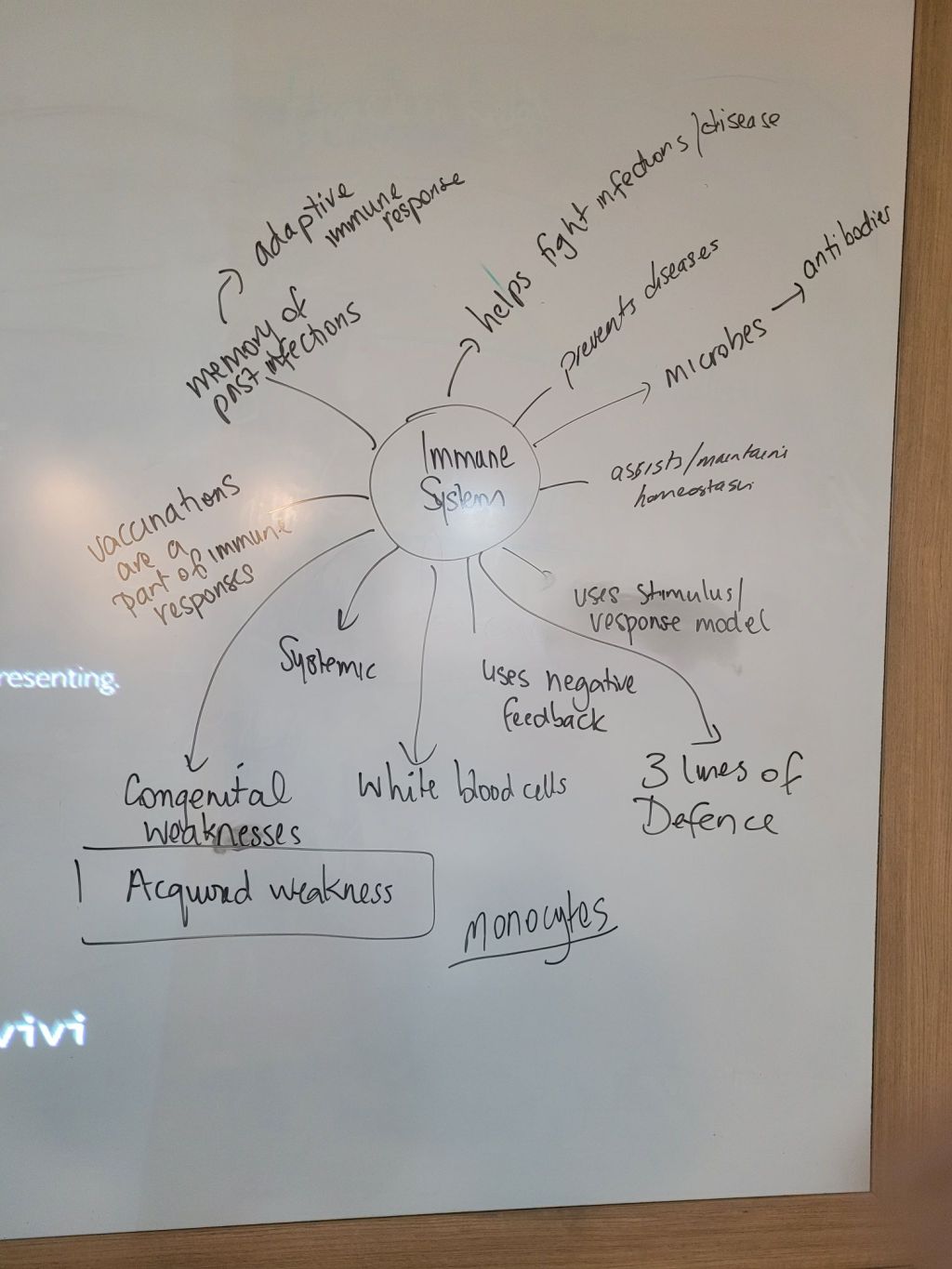
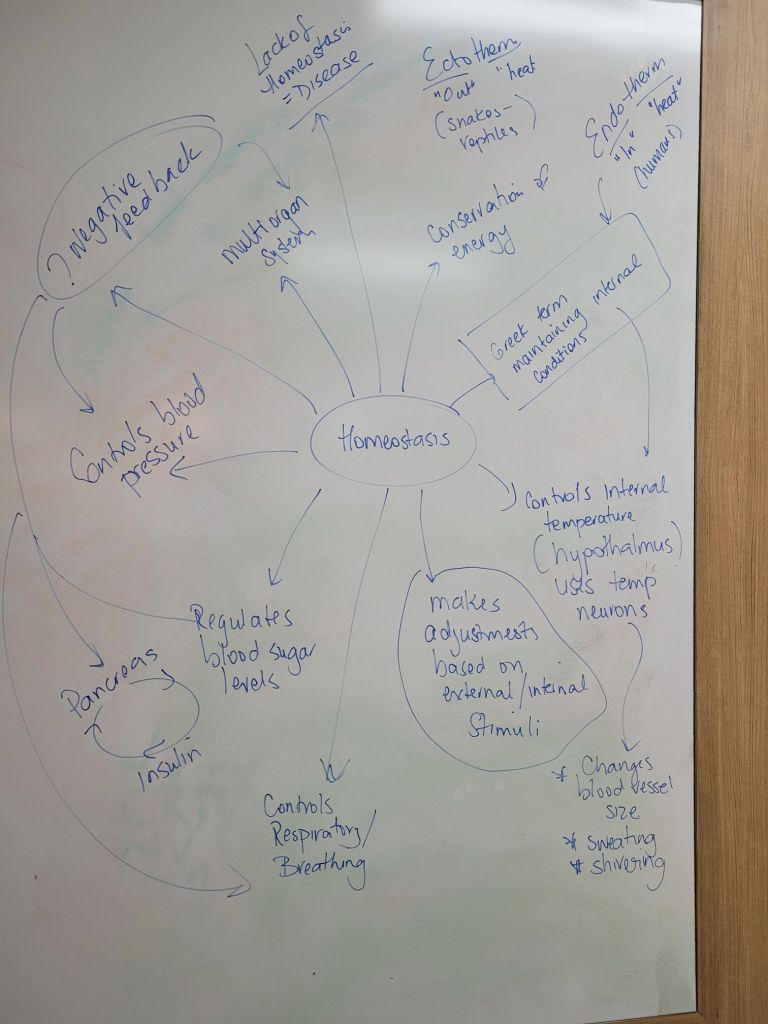
Semantic mapping is a widely recognised pedagogical practice that enables learners to make deliberate connections between words, ideas and concepts using a visual format. Research in educational neuroscience shows that approaches which activate prior knowledge help reduce demands on working memory and support the integration of new information (Mitra and Spence 2023). When students cluster and organise vocabulary around conceptual relationships, they construct deeper and more coherent understandings of disciplinary terminology. Udaya (2022) argues that this relational organisation is central to the effectiveness of semantic mapping, as it encourages students to engage with word meaning in an active, cognitively purposeful manner. Through this process, learners are supported to apply new vocabulary confidently in both written and verbal contexts.
Vocabulary development is a cumulative process that requires repeated encounters with words across varied contexts in order for meaning to be fully understood, applied and retained. Research indicates that students who possess extensive vocabularies are better equipped to access complex academic texts and produce sophisticated analytical responses (Udaya 2022). Semantic mapping contributes to this development by activating relevant schema and creating meaningful connections between new concepts and existing knowledge. These connections facilitate the transfer of information from working memory to long term memory and reduce cognitive load, which is an essential consideration when introducing high volumes of new terminology.
The value of semantic mapping extends across all year levels and curriculum areas. It can be used to elicit prior knowledge at the beginning of a unit, to support structured note taking or to provide formative assessment opportunities that reveal students emerging conceptual understandings. Its importance becomes particularly evident in secondary schooling. Curriculum sequencing in subjects such as Humanities and Science often involves long periods between initial instruction and later revisiting of content. Students may engage with a unit at one point in their schooling and then not encounter that content again for up to two years, often at a more complex cognitive level. During this interval learners typically study numerous unrelated units, which reduces the likelihood that vocabulary from earlier study will be retained. As a result students frequently re enter familiar units with limited recall of key terms and concepts, which can inhibit progress and deepen misconceptions.
Semantic mapping offers a structured and explicit method for re establishing these conceptual networks. Its effectiveness is enhanced when combined with a Lexile levelled text set, which provides multiple texts on the same topic at varying reading levels. This approach ensures that all learners can access essential vocabulary in contexts that match their reading proficiency. By encountering the same terminology across several texts, students strengthen their understanding of word meaning and improve decoding and comprehension skills. This combination of explicit vocabulary instruction and appropriately differentiated reading material contributes to greater confidence and academic resilience in content heavy subjects.
Teacher Librarians play a central role in supporting vocabulary development and curriculum implementation within Australian schools. The Standards of Professional Excellence for Teacher Librarians, developed by ASLA and ALIA, affirm the professional knowledge, pedagogical capability and resource curation expertise that TLs contribute to school learning environments. These standards emphasise the responsibility of TLs to collaborate with teachers, design quality learning experiences and ensure that the school collection provides rich and accurate resources that align with curriculum requirements. ASLA’s work with AITSL further highlights the TL’s leadership in supporting effective teaching strategies, including approaches that foster critical and creative thinking skills (ASLA 2014, Uther and Pickworth 2014).
Within this professional framework, the Teacher Librarian is uniquely positioned to champion evidence informed strategies such as semantic mapping and to curate high quality Lexile levelled text sets that align with disciplinary vocabulary needs. By working in partnership with classroom teachers, TLs ensure that vocabulary instruction is coherent, accessible and pedagogically robust across learning areas and year levels. This collaboration supports a consistent and structured approach to disciplinary language development, which is essential for student success in increasingly complex academic environments.
References
Australian Library and Information Association, & Australian School Library Association. (2004). Standards of professional excellence for teacher librarians. ALIA/ASLA.
Mitchell, P. (2001). Standards for teacher librarians in Australia. Joint Conference of the Australian School Library Association and the Children’s Book Council of Australia.
Mitra, A., & Spence, L. (2023). Educational neuroscience for literacy teachers: Research‑backed methods and practices for effective reading instruction. Routledge.
Udaya, P. (2022). Using semantic maps as a teaching strategy for vocabulary development. European Journal of English Language Teaching, 6(5). https://doi.org/10.46827/ejel.v6i5.4095Uther, J., & Pickworth, M. (2014). Using the AITSL standards to support the TL as a leader. Australian School Library Association (ASLA)
Reading is widely recognised as a critical skill for young people, supporting the development of strong cognition, mental health and empathy. A growing body of research consistently shows that recreational reading in particular is linked with academic achievement, improved emotional regulation and more nuanced interpersonal understanding. Building a culture of reading, therefore, is not a peripheral task for schools. It lies at the heart of nurturing thoughtful, resilient and socially capable young people.
Yet despite these well established benefits, many children and teenagers do not naturally turn to teachers or teacher librarians for book recommendations (Merga, 2012). To be blunt, young people do not necessarily see adults as cool. Recommendations from teachers, no matter how well intentioned, may lack what adolescents consider to be genuine social credibility. The street cred factor is real, and it is powerful.
Further evidence comes from the work of Dr Margaret Merga, a well respected Australian researcher in literacy and reading engagement. In a mixed methods program examining the influence of social attitudes on reading behaviours, Merga (2012) noted that “perceived friends’ attitudes can have a more significant influence on boys than girls, [therefore] making books socially acceptable for boys should be a priority for educators.” This underscores the idea that book talk among peers is not merely casual chit chat. It is a mechanism of social permission. When books gain traction within a peer group, they gain legitimacy and ethos (Merga, 2012; Merga 2014).
Australia Reads similarly emphasises the importance of social engagement in building sustainable reading habits. Its principles highlight that young people need “positive social reading experiences” and opportunities to “recommend, discuss and share books and other texts in ways that are personally enjoyable and relevant”. In other words, reading thrives when it is relational.
At Lauries, we see these principles in action every day. While staff recommendations certainly have their place, it is peer driven reading culture that most reliably sparks curiosity, especially among reluctant readers. This is why we actively encourage students to reflect on and review the books they read. Their voices matter. Their opinions shape the reading landscape for others. The broader research base supports this emphasis on social recommendation and discussion as a driver of voluntary reading.
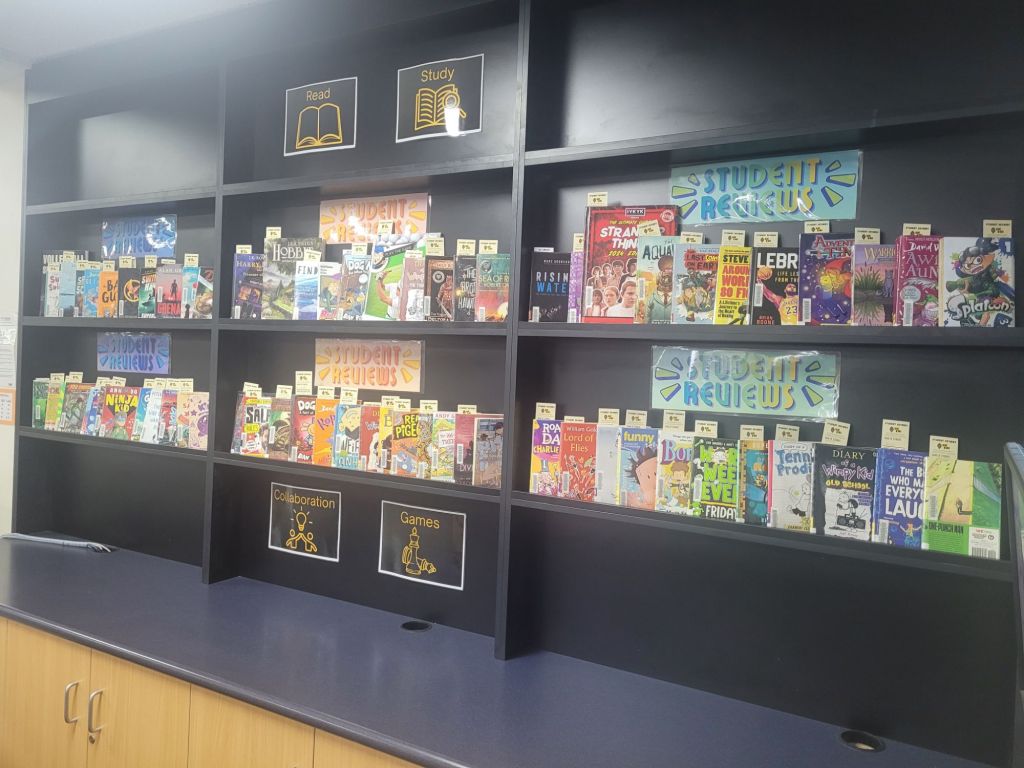
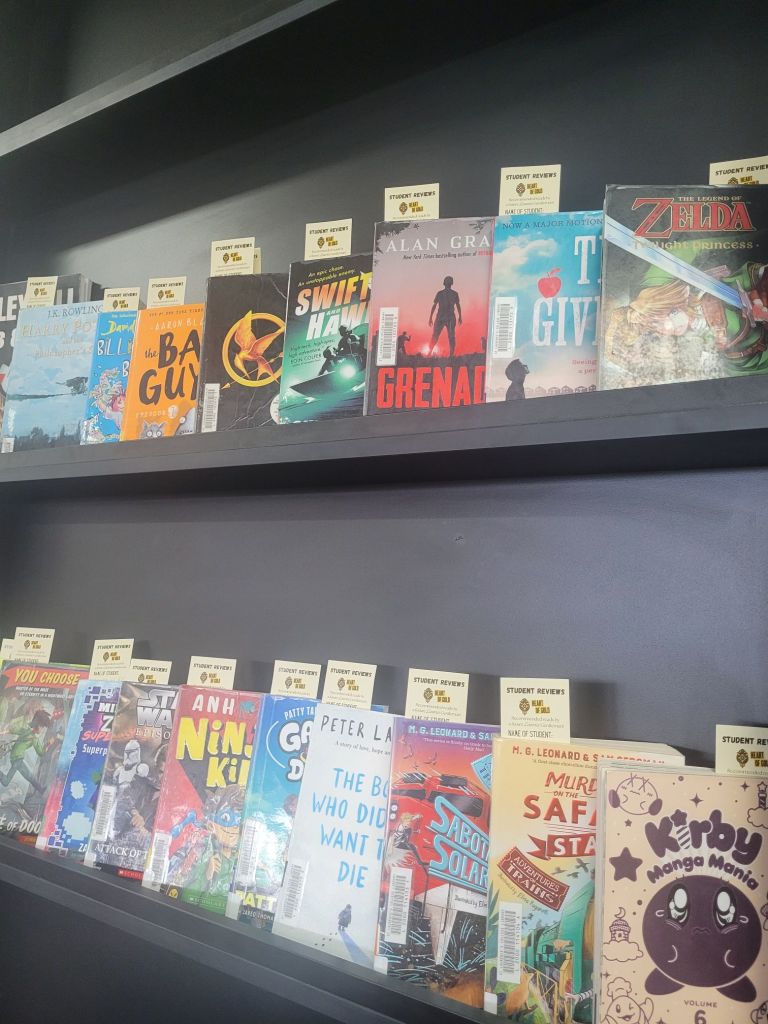
A visible expression of this culture is our wall of Lauries Lads Lit Picks. This growing collection showcases books that our students have personally endorsed. We often see reluctant readers wandering over, flicking through the displayed reviews until they discover a familiar name. That moment of recognition is powerful. When a friend or respected peer has enjoyed a book, the barrier to entry drops dramatically. The book becomes not just a text but a shared experience waiting to happen. The pattern aligns with evidence that peer attitudes and friend recommendations play an outsized role in adolescent book choice.
Cultivating a socially rich reading environment therefore requires more than simply providing access to books. It involves elevating student voice, valuing peer influence and creating spaces where reading is openly shared, discussed and celebrated. The evidence is unequivocal. When young people are given opportunities to recommend books to one another, their engagement deepens and their confidence as readers grows. Reading becomes woven not only into their academic lives but into their friendships, identities and everyday conversations.
By continuing to champion peer driven discovery, we support our students not only to read more but to read with curiosity, connection and purpose. That is a foundation that benefits them far beyond the walls of the library
Rutherford, L., Singleton, A., Reddan, B., Johanson, K., & Dezuanni, M. (2024). Discovering a Good Read: Exploring Book Discovery and Reading for Pleasure Among Australian Teens. Deakin University. https://eprints.qut.edu.au/247629/[eprints.qut.edu.au]
Lunchtime in a library can sometimes be overlooked as a quiet or transitional part of the day. In reality, it is one of the most powerful opportunities libraries have to connect with their community. Lunchtime events turn a regular break into a moment of discovery, drawing people into the space, engaging those who may feel unsure or disconnected, and strengthening the library’s role as a welcoming and active hub.
Library events are vital for building a rapport between a school community and their library because participating in a simple activity can lead to conversations. From there, it becomes easier to talk about books, recommend reading, or explain what the library can offer. This is because for many people, a lunchtime event is someone’s first positive and relaxed experience in the library, helping them feel more confident and welcome. The brilliance lies in the fact that lunchtime events naturally attract foot traffic. Students and staff are already moving around, looking for somewhere to go or something to do. Hosting activities during this time removes barriers to participation. There is no need to stay after hours or commit to a long session. People can simply wander in, take part, and head off again because these activities are flexible and easy to join. Not everyone wants a formal workshop or a structured program during their break. Drop in challenges and creative prompts allow people to engage at their own pace, whether they stay for two minutes or twenty.
Heartfelt Haiku and prizes for winning entries.
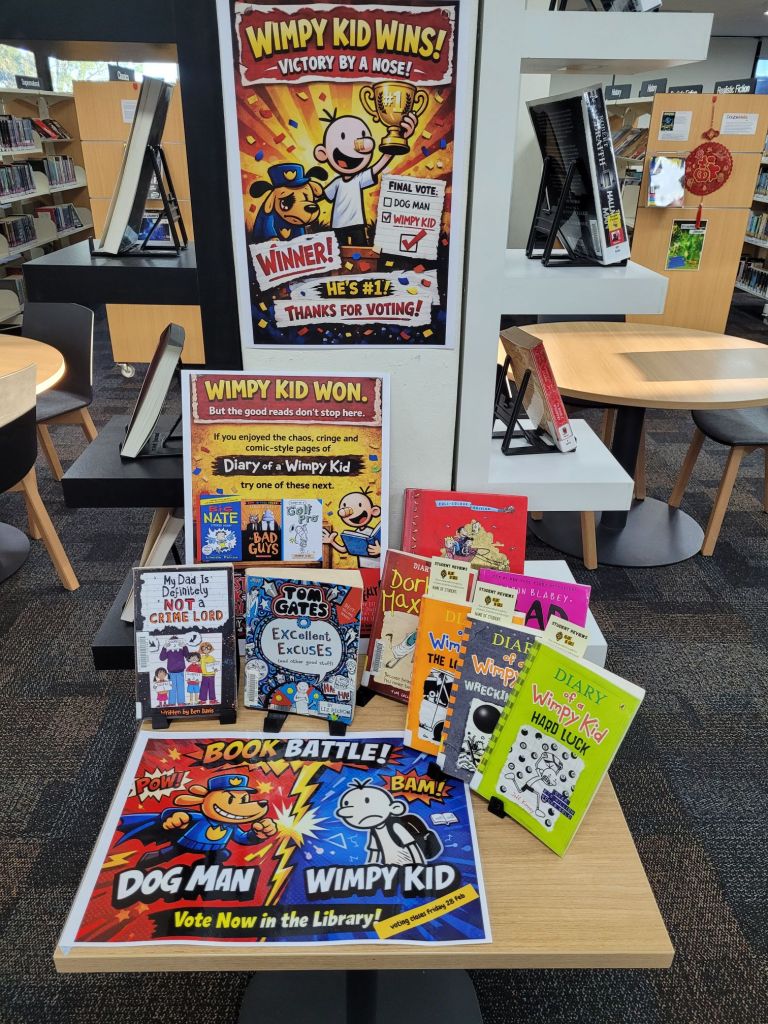
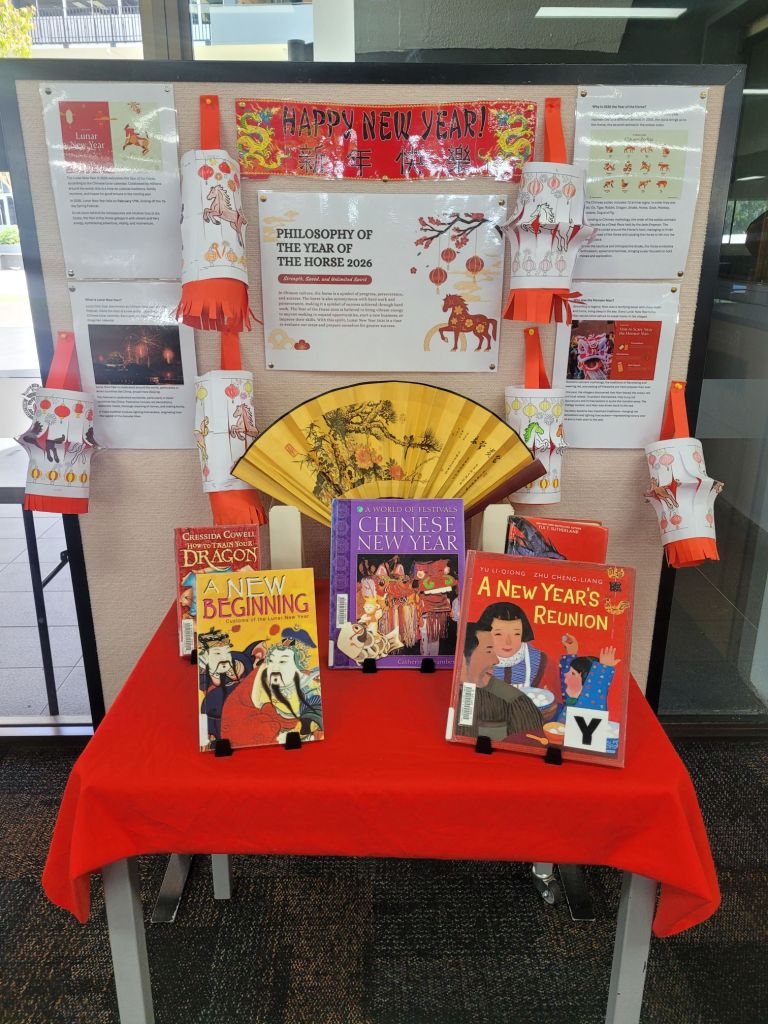
Furthermore, connecting lunchtime challenges to theme days and seasonal events helps keep them fresh and relevant. It gives people a reason to take part right now and adds a sense of fun and anticipation. Over the past few weeks, our library has run challenges such as Heartfelt Haiku for Valentine’s Day and Library Lovers’ Day invited participants to reflect on their love of reading and libraries. Lantern making for Lunar New Year created a hands on way to celebrate culture and tradition. A recent voting challenge between Dog Man and Diary of a Wimpy Kid tapped into popular reading interests and friendly competition. Now, in this past week, the Falling into a Book challenge has encouraged readers to embrace the new season with a new story.
Book Battle: Dogmas V Wimpy Kid
Lunchtime events transform the library into a social and welcoming space. A table set up with a challenge, a craft activity, or a voting station often sparks curiosity. Someone who had no intention of visiting the library may step inside just to see what is happening. Once they do, they are surrounded by books, displays, and friendly faces. Lunchtime events create opportunities for spontaneous engagement that might not happen at any other time of day. They also show that the library values participation in many different forms, not just quiet reading. Afterall, when people participate together, even briefly, they share experiences that build a sense of belonging. Over time, these shared moments help strengthen relationships between library users and staff. The library becomes known not just as a place to borrow books, but as a place where people feel comfortable, included, and valued.
Lunar New Year Display and handmade lanterns.
Lunchtime events quietly demonstrate the broader role of libraries. They show that libraries are dynamic spaces that respond to their communities, encourage creativity, and support wellbeing as well as learning. School libraries that use their lunchtime activities or challenges to build connections and rapport with their communities can turn an ordinary break into a meaningful connection and remind everyone why libraries matter.
A term in the life of a teacher librarian is never a simple, steady journey. It rises and falls in energy and pace, shifting between calm stretches, intense bursts of activity and a mid term crescendo that only those who have stood behind a circulation desk during second break truly understand. Teacher librarians do not just follow the rhythm of the school term. We breathe it, support it and often hold it together with a blend of planning, flexibility and a genuine love of learning.
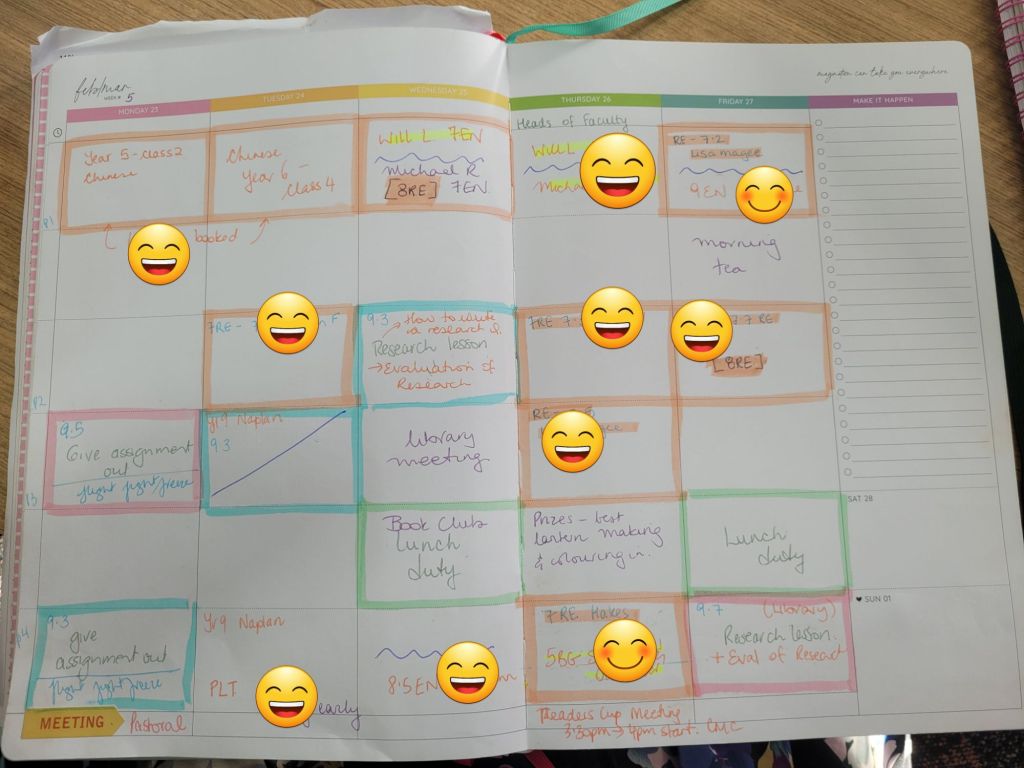
The beginning of the term often appears calm on the surface, but behind the scenes it is a hive of thoughtful planning and collaboration. This early period is spent mapping out programs, updating units, preparing resources and scheduling literacy and information literacy lessons across the curriculum. It is the time for meetings with teachers who bring new ideas for research tasks, nurturing fledging literacy programs or supporting disciplinary literacy through explicit vocabulary instruction. These conversations help shape the curriculum support that will run throughout the term and ensure that every lesson and library experience has purpose and structure. It is also the time for deeper discussions with Heads of Curriculum to align expectations, strengthen research skill development and embed digital and information literacy meaningfully across year levels. The work may be quiet, but it forms the foundation for everything that follows.
By the time the middle of the term arrives, the calm has vanished completely. The library becomes a vibrant and sometimes chaotic hub of constant movement. Students flood through the doors needing books, recommendations or support with upcoming assessments. Borrowing sessions become lively and energetic as classes arrive with armfuls of returns and requests. This is also the busiest teaching period of the term, when the carefully prepared information literacy sessions come to life. Research skills, digital literacy, source evaluation, referencing, note taking and inquiry support all happen at a rapid pace. Teacher librarian roles expand and overlap as we teach back to back lessons, guide students through tasks, troubleshoot technology and support teachers in real time as units unfold.
Amid the flurry, collaboration continues in more practical and immediate ways. Teachers pop in needing quick resources, task sheets are updated on the go and reading groups or book clubs meet regularly. Displays evolve to match what is happening across the school and the flow of students keeps the space buzzing. Moments of humour, curiosity and connection appear constantly, whether it is a student searching for a book they can remember only by its colour or one who is unsure whether reading ten pages a night officially qualifies them as a reader. It is busy and demanding, but it is also the most rewarding time of the term.
As assessment deadlines pass and the term moves into its later weeks, the pace softens again. Students return to the library in search of quiet corners for study, calm spaces for reading or simply a break from the noise of the school day. This slower period allows time to catch up on the larger ongoing projects that were temporarily buried beneath the mid-term rush. There is even the rare moment where a cup of chai stays warm long enough to be enjoyed.
By the final couple of weeks, the library takes on a different kind of energy. Lost books mysteriously reappear from lockers and school bags when billing invoices get sent home. Teachers arrive with last minute requests for resources or holiday reading suggestions. Then there is my own teaching practice, my own classes I have to teach, assess and report on.
Despite the peaks, troughs and everything in between, there is a satisfying sense of purpose in the ebb and flow of library life. Teacher librarians witness students discover stories that inspire them, questions that challenge them and skills that will carry them far beyond the classroom. These moments make every busy break, every full borrowing session and every packed week of information literacy worth it.
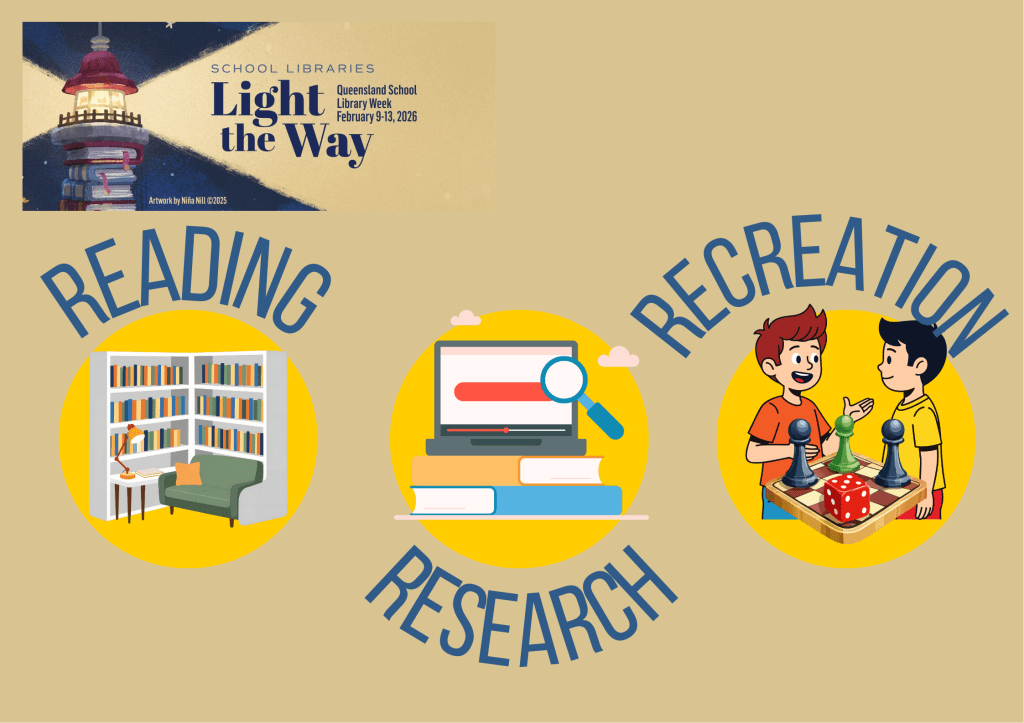
This week we celebrate Queensland School Library Week and this year’s theme, School Libraries Light the Way, perfectly captures what our library aims to do every day. School libraries illuminate pathways to learning, belonging, curiosity and joy. They guide students in reading, research, creativity and personal growth while promoting equity and inclusivity for every learner.
Here is how our library is commenced lighting the way in the first few weeks of 2026.
Lighting the Way for Reading, Research and Recreation
Book Clubs in Full Swing: Our book clubs for primary and secondary students have been meeting since Week 2 and the enthusiasm has been wonderful to see. These groups give students opportunities to read for pleasure, discuss ideas and connect with other readers across the school.
Sharing New Books: We continue to promote new books to staff and students. Whether it is a fresh fantasy adventure, a gripping nonfiction title or the newest young adult novel, we work hard to help every reader find something they will enjoy.
Supporting Teacher Professional Learning: We are also lighting the way for staff by ensuring our digital access to teacher journals is current, reliable and easy to use. We share these resources across school networks so that teachers can stay informed, inspired and connected to current practice.
Library Lessons for Years 5 to 8: Our library lessons support student interest and reading engagement. These sessions are planned to build student efficacy in navigating their own reading journey.
Information Literacy for Years 7 and 8: I collaborated with classroom teachers to deliver information literacy instruction that is authentic and practical. Students are learning to locate information, evaluate sources and use material ethically, which helps prepare them for success in school and beyond.
Lighting the Way for Equity and Inclusivity
Lunar New Year Activities: From this week we will offer Lunar New Year activities during language classes and at lunchtime. These activities build cultural understanding and celebrate the rich diversity of our school community so that every student feels valued and represented.
The Happy Book Dragon: Our library is also home to its resident happy book dragon (aka ME) who lives and breathes book trivia and reading joy. Sometimes lighting the way simply means sharing enthusiasm and creating a space where curiosity thrives.
Lighting the way together
Queensland School Library Week is a reminder of the powerful role a school library plays in the life of a community. From nurturing readers to supporting staff and celebrating cultural diversity, our library is proud to be a guiding light in our school.
Here is to a bright and book filled week and to the many ways libraries continue to light the way every day.
As the scholastic year draws to a close, children and teenagers eagerly anticipate the long summer holidays filled with play, family time and relaxation. While this break is important for wellbeing, research consistently shows that it can also lead to what is known as the summer reading slump. This phenomenon refers to the decline in literacy skills that many children experience during extended school breaks. Studies have found that children can lose up to a month of learning over summer, particularly in reading and spelling, with the effect most pronounced among children from lower socio-economic backgrounds who may have limited access to books and literacy-rich environments (National Library of New Zealand, n.d.).
Evidence from New Zealand highlights the importance of structured literacy teaching in preventing this decline. A study published in the New Zealand Journal of Educational Studies determined that the impact of explicit phonics, phoneme awareness and decoding strategies can embed foundational skills deeply enough to withstand the summer gap (Vosslamber, Walker, Millar-Swan, Motha, & Gillon, 2025). This reinforces the idea that strong classroom instruction can provide a buffer against learning loss.
Alongside structured teaching, regular reading at level is critical. When children engage with texts that match their ability, they reinforce vocabulary, comprehension and decoding skills while building confidence and motivation. Reading at level prevents cognitive decline associated with long breaks from literacy activities. Research also shows that children who participate in summer reading programs are more likely to maintain or improve their literacy skills. Benefits include increased motivation, improved comprehension and stronger connections between home and school learning (Reading Eggs, n.d.).
Governments and councils are aware of the risks posed by summer learning loss, which is why many have invested in free summer reading programs. These initiatives encourage children to keep reading for pleasure and skill development during the holidays. The Brisbane City Council Summer Reading Program, for example, offers fun challenges, rewards and community engagement to keep children motivated throughout the break (Brisbane City Council, n.d.). Programs like these not only support literacy but also foster a love of reading that lasts well beyond the summer months.
At my school, we have taken this one step further by setting up a summer reading challenge for both staff and students in the form of bookmarks. Students were given bookmarks that encouraged them to read a funny book, a book with a hero, a book by an Australian author and a book with an animal character.
Staff were challenged to read a book that made them laugh, one that made them cry, a book that gave hope and one recommended by a friend. This shared challenge not only promotes literacy but also builds a sense of community, with staff and students alike engaging in conversations about their reading choices and discovering new perspectives together.
The summer holidays should be a time of joy, but they do not have to mean a setback in learning. With structured teaching approaches, regular reading at level, community programs that make books accessible and fun, and school-based initiatives like reading challenges, children and adults alike can return to school inspired and ready to thrive. The evidence is clear: consistent engagement with reading is one of the most effective ways to prevent the summer slump and ensure that literacy skills continue to grow.
Suggestions for Teachers and Parents
Encourage children to read daily, even for short periods, with books that match their reading level.
Provide access to a variety of texts, including humorous stories, adventure tales, and culturally relevant works.
Model reading behaviour by sharing your own reading experiences and discussing books together.
Participate in local library programs or community reading initiatives to maintain motivation.
Create family reading routines, such as bedtime stories or shared reading times, to embed literacy into everyday life.
Celebrate reading achievements with small rewards or recognition to sustain enthusiasm.
Vosslamber, A., Walker, J., Millar-Swan, A., Motha, J., & Gillon, G. (2025). The impact of Better Start Literacy Approach teaching on the retention of children’s early literacy skills over the summer holidays. New Zealand Journal of Educational Studies, 60(3), 435–449. https://doi.org/10.1007/s40841-025-00405-2
On Sundays, our family has a rhythm. We go to church in the morning, then its off to our local library. The kids scatter to their favourite corners, borrowing books and settling in to read whatever strikes their fancy. The only rule is, that for every book that is a re-read, there must be one you have not read before.
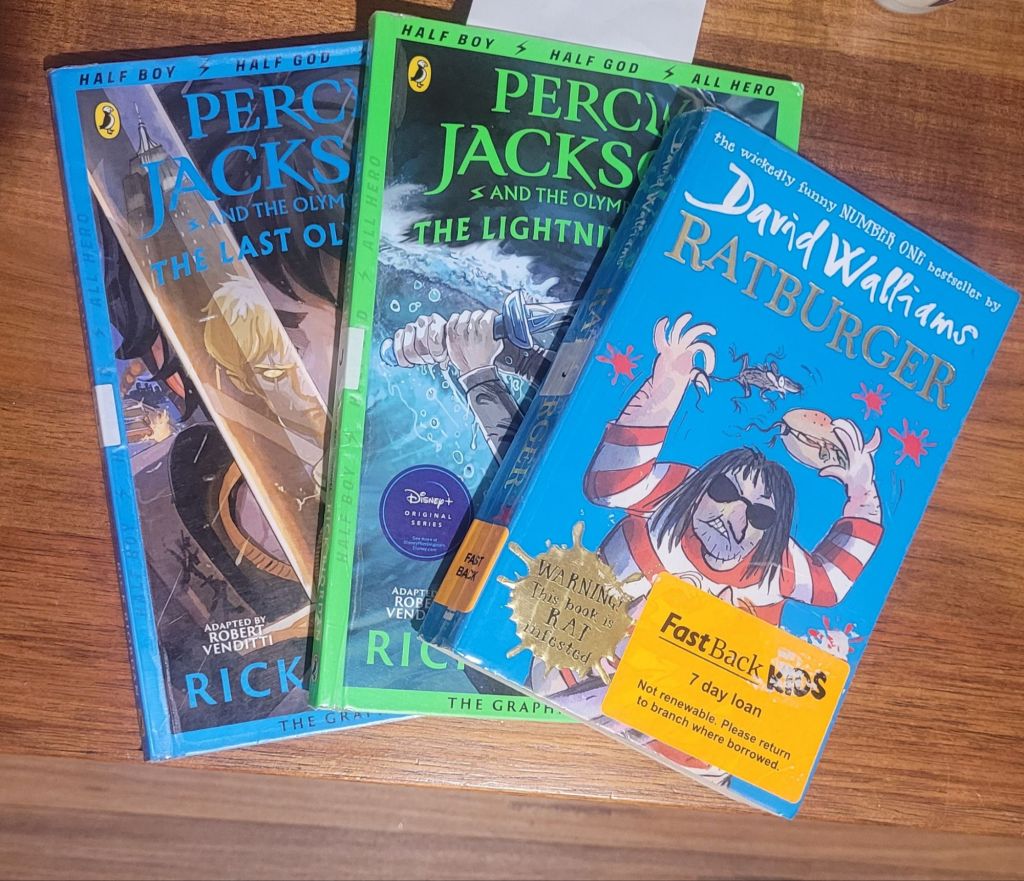
This week’s book haul – mine.
Whilst my children scurry to their favourite genres, I grab a coffee and wander the shelves, letting my eyes land on whatever catches my eye. My husband always chuckles at this part. “You work in a library,” he says, amused. He’s right, of course. I do. But I work in a boys’ school library, and let’s just say the collection doesn’t quite float my boat. We then settle down for 30-45min of quiet reading together, but all on individual journeys.
There’s something different about being in a space where reading is chosen, not assigned. Where stories are picked for pleasure, not performance. That contrast has been sitting with me lately, especially after reading Loh et al.’s 2025 report on the decline in volitional reading and a recent piece in The Conversation about the new Children’s Booker Prize. Both paint a sobering picture: young people are reading less, and they’re enjoying it even less than that.
Loh, C. E. et al. (2025) The Decline in Volitional Reading: Evidence-Informed Ways Forward. National Institute of Education, Nanyang Technological University, Singapore.
Loh’s recommendations to improve literacy success.
agency
access to literature
time in daily routines
reflection and connection
social interaction
developing a positive reading identity
What struck me most in Loh’s report was what wasn’t there. None of the key principles mention curriculum reform. None suggest that testing is the answer. Instead, the focus is on joy, choice, and connection. Reading for pleasure is framed not as a luxury, but as a necessity. It’s a stronger predictor of reading attainment than socioeconomic status. That’s huge. It means that if we want to close literacy gaps, we need to open up space for enjoyment.
In my school library, I see the tension. Boys who associate reading with assignments, comprehension questions, and accelerated reader points. Not with curiosity or escape. Not with laughter or awe. And I wonder: what would happen if we let go of the scaffolds and trusted them to choose? The Conversation article makes a similar point. Awards like the Children’s Booker are lovely, but they won’t shift the culture on their own. What we need is a reimagining of reading in schools. Less about outcomes, more about experience. Less about control, more about trust.
Furthermore, parents need to remember that they are their children’s first educators. Is reading and literacy your household value? One of the key findings in Loh’s research is that children need access to literature and to see it modelled by the adults around them. Do parents take their kids to the library? Do they read in front of their children? Or do they presume that schools will take care of it? Do they even ask their children how often they visit the school library? These questions matter. Because when reading is visible and valued at home, it becomes part of a child’s identity, not just a school subject.
So here’s my quiet Sunday reflection: maybe the best thing we can do as educators is to make room and provide time. Room for stories that speak to our students. Room for browsing, for borrowing, for reading without a worksheet attached. Room for libraries that float their boats and time to lie back and float away.
Because when reading becomes a choice again, it becomes a joy again. And that’s where the magic lives.
I recently attended the QSLA conference at the beautiful State Library of Queensland. It was a fantastic day for school informational professionals to gather, share emerging news, identify new trends and trade in good old fashioned work chit chat.
Andy Griffiths – author of the famous Treehouse series, was our keynote speaker. I have known of Andy’s work for almost a decade. Whilst I have admired his works, I hadn’t fully appreciated his philosophy until now. His words, much like his books, were playful on the surface but deeply subversive underneath. They invited us to reconsider not just how children read, but why they need stories that break the rules.
Griffiths and his co-creator, illustrator Terry Denton have created the inventive, imaginative chaos that is the Treehouse series. I found it amusing that they named the main characters after themselves. Their fictional versions live in an ever expanding treehouse that defies logic and gravity, expanding with each book to include ludicrous additions like a marshmallow machine, a tank of man-eating sharks, and even a volcano. Their adventures are reckless, absurd, and often dangerous. But that danger is never real. It’s theatrical. It’s safe. It’s fiction.
… and that is the point. It is fiction as Andy pointed out last week to a large group of educators and informational professionals.
This was so true. In a world increasingly obsessed with safety, structure, and supervision, Griffiths’ books offer a counterbalance. They don’t just entertain their readers… they liberate them! They allow children to imagine running across six lanes of traffic or jumping into a volcano, not because they should, but because they can. In fiction, the consequences are exaggerated, the outcomes are ridiculous, and the lessons are embedded in laughter. Griffiths uses humour to engage the reader and builds into that playful sense that children have. As Griffiths said last week, “Reading is a game between the reader and the author. Authors make black marks on pages. Readers use these marks to make an image in their heads.”
I then thought about all the other books that ‘helped me break rules’. Darryl and Sally hosting midnight feasts at Mallory Towers, Matilda using her brain to solve problems, Trixie Belden and Nancy Drew resolving mysterious events. Each of these characters and books gave me option I may not have thought of previously.
Leaving the conference, I felt a renewed appreciation for the role of literature in childhood. Not just as a tool for literacy, but as a sanctuary for wild thought. Griffiths reminded us that imagination isn’t just fun. It’s vital. It’s how children rehearse life, test boundaries, and build resilience.
And maybe, just maybe, it’s how they learn to be free.
Eighteen months ago, a group of misfit boys were introduced to one another in what could only be described as a playdate orchestrated by fate, and a well-meaning informational professional. At first glance, these four boys had little in common. Yet over time, something extraordinary unfolded. They began meeting regularly in the library, and from those gatherings emerged a fully-fledged micronation.
The couch that sparked a nation. As you can see, I have a crown made from paper printed with the Constitution of this micronation.
They appointed ministers: an Archduke, a President, a Minister for Finance who oversees a coffee jar filled with bottle caps, and a Secretary of Defence whose primary qualification is being the tallest. Together, these young men drafted a constitution, designed coinage (featuring my profile, no less), and issued passports and other official documentation. Eventually, I was graciously crowned their Head of State—Her Gracious Imperial Majesty, Empress Trish.
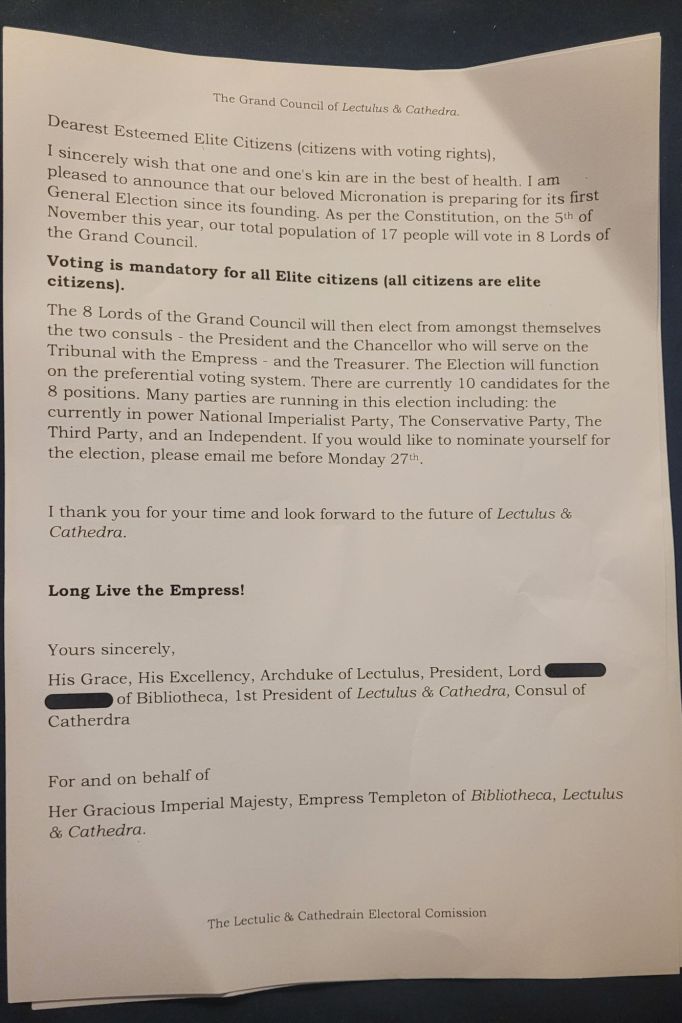
Letter of appeal to voters for the micronation of Lectulus and Cathedra.
Today, this quirky collective has grown to 17 members and is preparing for its first general election on 5 November. What began as a casual connection has evolved into a vibrant community, complete with governance, creativity, and camaraderie—all nurtured within the walls of a school library.
Libraries as Hubs of Wellbeing and Learning
While this story may sound whimsical, it highlights a deeper truth: school libraries are far more than repositories of books. They are sanctuaries of connection, creativity, and wellbeing.
Student wellbeing is increasingly recognised as a priority in Australian schools. Research indicates that poor wellbeing and associated mental health concerns affect between 10–20% of young people (Merga, 2020). In response, the Australian Government launched the “National School Wellbeing Framework” in 2018 to support schools in fostering positive relationships and wellbeing within safe, inclusive, and connected learning communities (Education Council, 2018). Although the framework does not explicitly mention libraries, many of its initiatives can be effectively implemented through a library lens.
School libraries have long served as safe havens for students, offering refuge for a variety of reasons. Merga (2021) notes that contemporary school libraries provide students with a peaceful space to recharge and relax. Similarly, Willis, Hughes, and Bland (2019) affirm that libraries contribute to both physical and emotional wellbeing by enabling vital social connections to flourish.
Merga’s research validates what many educators have long known: school libraries are places where students feel they belong, feel safe, and feel welcome. Some seek sanctuary and solitude; others come to connect and unwind. As school library professionals, our role is to create spaces where young people continue to feel secure—whether they are reading a book, playing a board game or Minecraft, or, as my students do, establishing a micronation on the couch outside my office.
Merga, M. (2020). How can school libraries support student wellbeing? Evidence and implications for further research. Journal of Library Administration, 60(6), 660–673. https://doi.org/10.1080/01930826.2020.1773718
Merga, M. K. (2021). Libraries as wellbeing supportive spaces in contemporary schools. Journal of Library Administration, 61(6), 659–675. https://doi.org/10.1080/01930826.2021.1947056
Willis, J., Hughes, H., & Bland, D. (2019). Students reimagining school libraries as spaces of learning and wellbeing. In J. Franz, H. Hughes, & J. Willis (Eds.), School spaces for student wellbeing and learning: Insights from research and practice (pp. 121–137). Springer. https://eprints.qut.edu.au/126979/








 Learning through the Library