A Sound of Storytelling

As part of our Book Week celebrations and this year’s CBCA theme, A Symphony of Stories, students at my school were treated to a memorable author event, A Sound of Storytelling. The event brought together two remarkable Australian authors, Annaleise Byrd and Carla Salmon, who shared their experiences of creativity, imagination, and the transformative power of storytelling.

The idea of a symphony is a fitting metaphor for stories. Just as every instrument contributes its own unique voice to an orchestra, every story offers a different perspective, experience, and adventure. Author visits provide students with the opportunity to hear directly from the creators behind the books they read, helping them understand that stories begin with imagination, curiosity, and a willingness to explore ideas. Research consistently shows that author talks can have a powerful impact on reader engagement, inspiring students to read more widely, connect with books on a deeper level, and see themselves as potential writers and storytellers.

Annaleise Byrd opened the event with her trademark wit and wonderfully droll storytelling. Despite technical issues with laptops undergoing a forced update mid presentation, Annaleise soon had students were laughing as she invited volunteers to the stage to re-enact one of her scenes, bringing her stories vividly to life.
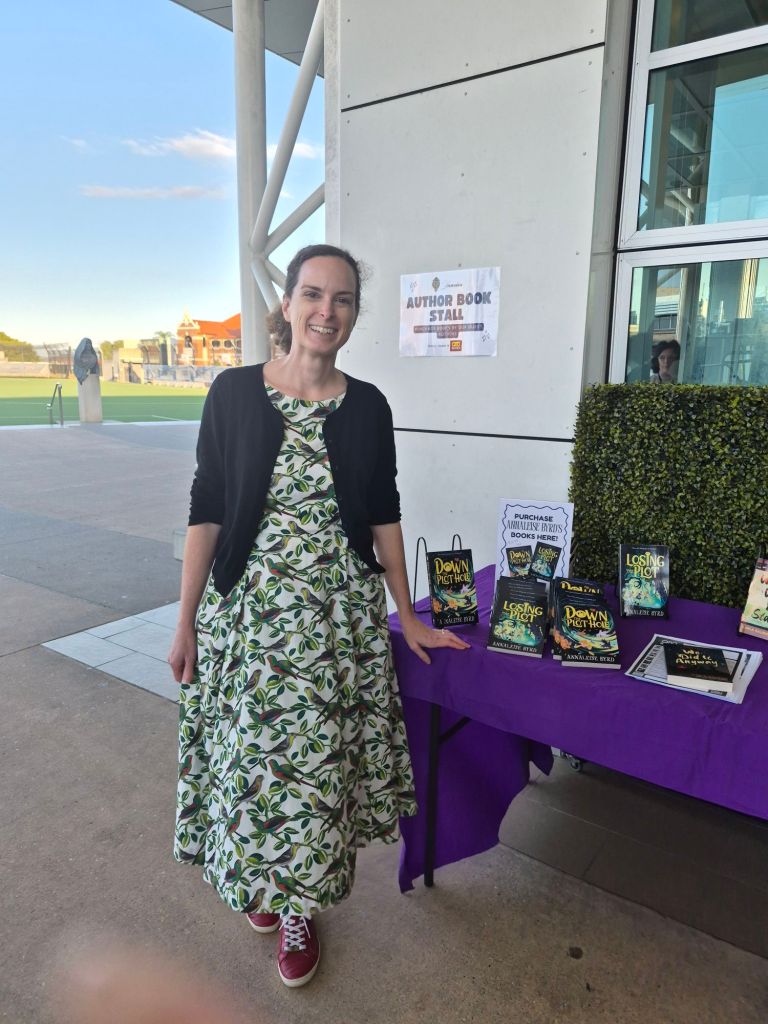
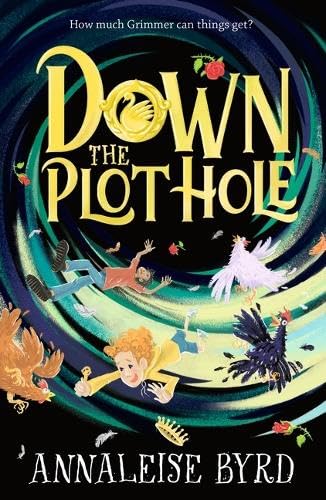
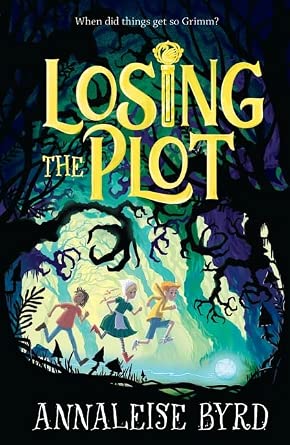
Annaleise shared the inspiration behind her novels Losing the Plot and Down the Plot Hole, transporting students to the magical world of Grimmveldt, or “Grimm World”. Through stories of her visit there, she demonstrated how writers draw on experiences, observations, and a healthy dose of imagination to create rich fictional worlds. Her presentation reminded students that creativity often begins by asking “what if?” and having the courage to follow an idea wherever it leads.
20260827_1650077699463808092197815

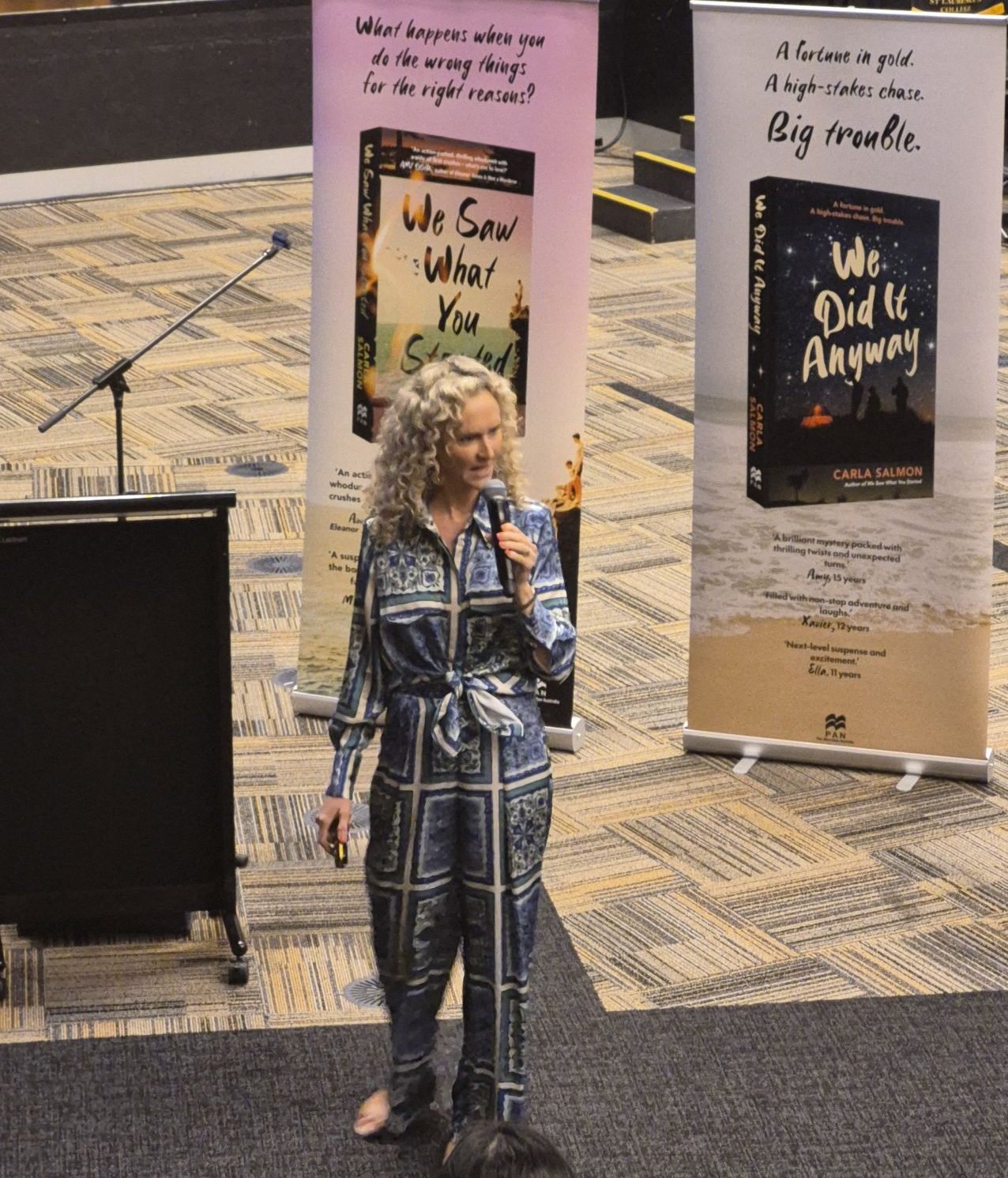
Carla Salmon followed with an equally engaging presentation that showcased her infectious enthusiasm for creative writing. Taking students behind the scenes of her novels, Carla revealed how authors find inspiration in the world around them. She unpacked how places, people, and events from real life can spark fictional narratives, sharing fascinating examples from her own work. Students were particularly captivated by the story of the 3,000-tonne theft of maple syrup, a real-world event that helped inspire aspects of her storytelling. Carla’s session highlighted that writers are keen observers of life, constantly collecting ideas and transforming them into stories that entertain, challenge, and inspire readers.
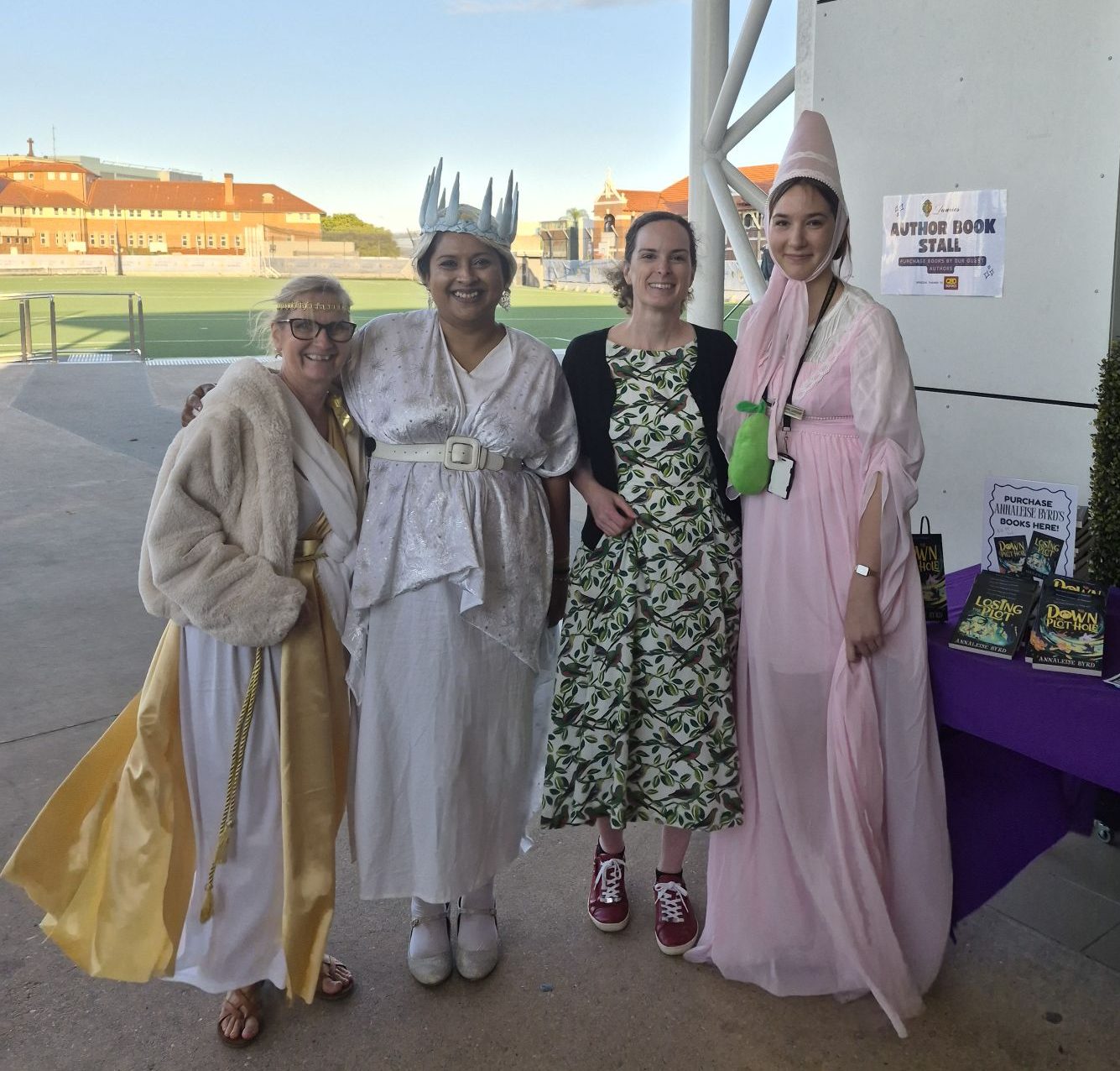
Annaleise and our Library Team. All dressed up for Book Week Celebrations.

Together, both authors demonstrated that storytelling is much like a symphony. Ideas, experiences, emotions, imagination, and words come together to create something greater than the sum of their parts. Their presentations reinforced the important role stories play in helping young people understand themselves and the world around them while encouraging them to think creatively and embrace their own imaginations.
20260827_1749173021592242733342772
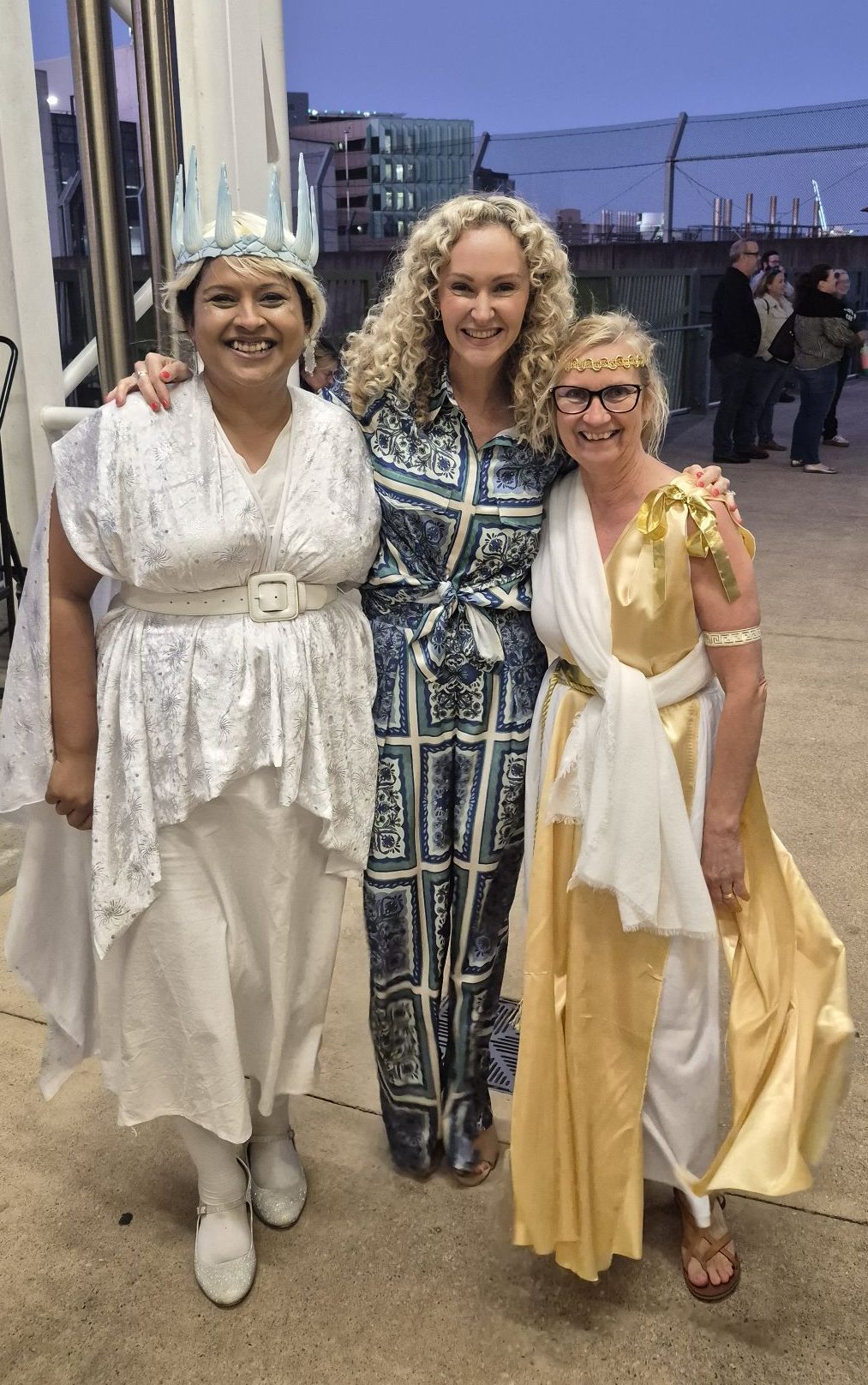
Carla wrapping up the evening with a photo.

As our Book Week celebrations continue, A Sound of Storytelling has been a wonderful reminder of why author events matter. They connect students with the human stories behind books, nurture a love of reading, and inspire the next generation of creators. Judging by the laughter, excitement, and thoughtful questions from our students, both Annaleise Byrd and Carla Salmon struck a powerful chord in our own Symphony of Stories.

Thank you to Annaleise and Carla for sharing their time, expertise, and passion for storytelling. Their voices have added a memorable movement to our Book Week celebrations, and their stories will undoubtedly continue to resonate with students long after the event has ended.

A Season of Reading and Reflection: A Year in Review.

As the school year wrapped up last week, I found myself reflecting on the many moments that shaped our library community in 2025. There have been challenges, yes, but also plenty of reasons to celebrate.

One of the brightest sparks has been our book clubs. What started as a simple idea, a few snacks and a chance to talk about stories, has grown into something much bigger. My secondary Book Club stands out. At the beginning of the year they were a small group, some unsure of what to read, others firmly attached to their favourite genres. Over time, though, their borrowing soared. They began exploring fantasy, contemporary fiction and graphic novels, and while one dedicated manga reader still resists branching out, the group as a whole has broadened its horizons. More importantly, they began to see reading as part of who they are. They recommend titles to each other, debate endings, and even suggest new books for the library. Watching that transformation has been a joy.

Research reminds us that this is exactly what book clubs are meant to do. They make reading social, they build confidence, and they help young people see themselves as readers. The secondary Book Club Boys proved that in the most authentic way, showing how a community of peers can turn reading from a solitary task into something shared and celebrated.

From a whole school review, borrowing levels across the school have also risen, returning to pre COVID rates. Much of this growth has come from our younger readers, whose enthusiasm has been infectious. Their excitement has created a vibrant culture of reading in the primary years, and their participation in activities has been a highlight of the year.

Of course, there are challenges we cannot ignore. Very few of our Year 10 to Year 12 students are reading recreationally, and this is concerning. Intertextuality, the ability to connect ideas across texts, is vital for analysis and for building strong cognitive connections. Without regular reading, those skills are harder to develop. We also continue to see limited engagement from Years 7 to 10 English classes, despite enthusiastic promotion. There seems to be a reluctance to lose curriculum time.

Our team dynamic has shifted too, with members coming and going. Change always brings adjustment, but it has also brought fresh perspectives and energy. We have expanded our digital resources, and while uptake has been slow, steady gains are being made as students and staff grow more comfortable with these platforms.

Perhaps the greatest success of all has been the way the library has become recognised as a social space where everyone is welcome. It is not only a place for books, but a hub for connection, collaboration and belonging. That sense of community is something we can all be proud of.

We closed the year with our Books & Bites Christmas party, a joyful celebration of new releases and Christmas treats. Each student received a reading journal with a challenge to read four books over the summer, along with handmade gifts, ornaments, bookmarks, and pen holders, sewn over the past few weeks. These tokens were a way of honouring the shared love of reading that binds us together.

As we finish the 2025 chapter, I am reminded that reading is not just about borrowing books, it is about building minds, fostering empathy and preparing students for the complexities of the world.

“As we finish this chapter and look ahead to the new year, I am reminded that Christmas is a season not only of rejoicing, but of reflection. May the joy of stories, the warmth of community, and the promise of new beginnings carry us into the year ahead.”

Fiction is a safe place to break the rules

I recently attended the QSLA conference at the beautiful State Library of Queensland. It was a fantastic day for school informational professionals to gather, share emerging news, identify new trends and trade in good old fashioned work chit chat.

Andy Griffiths – author of the famous Treehouse series, was our keynote speaker. I have known of Andy’s work for almost a decade. Whilst I have admired his works, I hadn’t fully appreciated his philosophy until now. His words, much like his books, were playful on the surface but deeply subversive underneath. They invited us to reconsider not just how children read, but why they need stories that break the rules.

Griffiths and his co-creator, illustrator Terry Denton have created the inventive, imaginative chaos that is the Treehouse series. I found it amusing that they named the main characters after themselves. Their fictional versions live in an ever expanding treehouse that defies logic and gravity, expanding with each book to include ludicrous additions like a marshmallow machine, a tank of man-eating sharks, and even a volcano. Their adventures are reckless, absurd, and often dangerous. But that danger is never real. It’s theatrical. It’s safe. It’s fiction.

… and that is the point. It is fiction as Andy pointed out last week to a large group of educators and informational professionals.

Fiction is a safe place to break the rules.

I was mesmerised by this quote. That quote stayed with me. It echoed through the conference halls and followed me home. In an article published by the ABC in 2018, Griffiths argued that fiction as a “last frontier”, a place where children can explore worst-case scenarios without consequence. He said: “Books are the last frontier of freedom and wilderness for kids, for imagining dangerous things, for imagining craziness and worst-case scenarios” (Blau, 2018).

This was so true. In a world increasingly obsessed with safety, structure, and supervision, Griffiths’ books offer a counterbalance. They don’t just entertain their readers… they liberate them! They allow children to imagine running across six lanes of traffic or jumping into a volcano, not because they should, but because they can. In fiction, the consequences are exaggerated, the outcomes are ridiculous, and the lessons are embedded in laughter. Griffiths uses humour to engage the reader and builds into that playful sense that children have. As Griffiths said last week, “Reading is a game between the reader and the author. Authors make black marks on pages. Readers use these marks to make an image in their heads.”

I then thought about all the other books that ‘helped me break rules’. Darryl and Sally hosting midnight feasts at Mallory Towers, Matilda using her brain to solve problems, Trixie Belden and Nancy Drew resolving mysterious events. Each of these characters and books gave me option I may not have thought of previously.

Leaving the conference, I felt a renewed appreciation for the role of literature in childhood. Not just as a tool for literacy, but as a sanctuary for wild thought. Griffiths reminded us that imagination isn’t just fun. It’s vital. It’s how children rehearse life, test boundaries, and build resilience.

And maybe, just maybe, it’s how they learn to be free.

What books set you free?