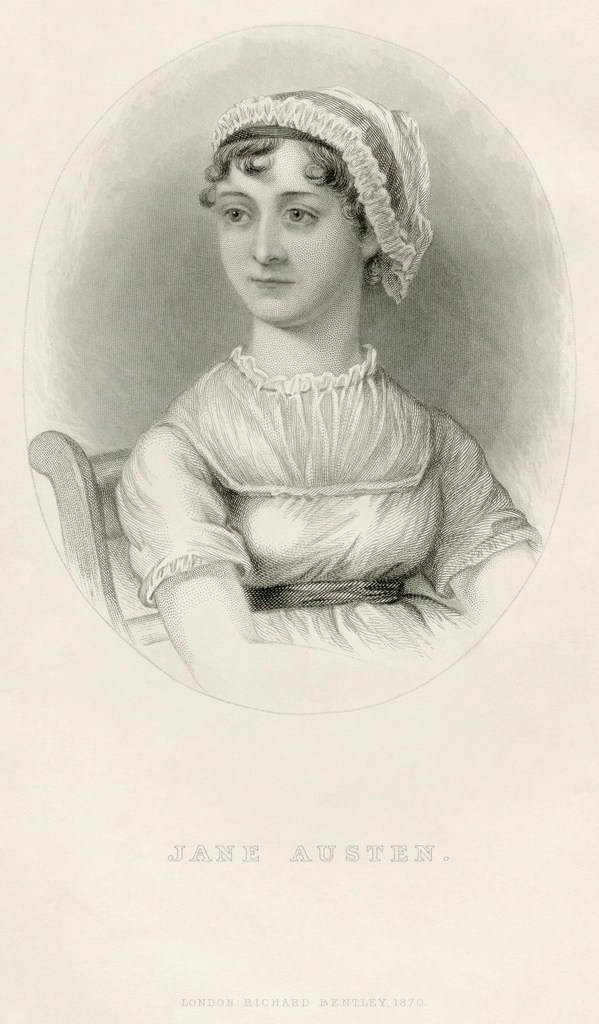
Happy 250th Birthday Jane!

Jane Austen was born on 16 December 1775 in Steventon, Hampshire, into a lively and book loving family. She grew up surrounded by stories, plays and the gentle chaos of a household that valued reading as much as conversation. Her early writing began in childhood and by her early twenties she had drafted the novels that would later become some of the most beloved works in English literature. Although she published anonymously during her lifetime, her six completed novels have secured her place as one of the most influential writers in the world. Austen died in 1817 at the age of forty one, leaving behind a body of work that continues to shape literary culture.

Reflecting on her two hundred and fiftieth birthday invites us to consider the extraordinary reach of her writing. Austen’s novels have had a profound impact on literature, particularly on the development of female authorship. At a time when women were discouraged from publishing and often expected to remain silent in public life, Austen wrote with clarity, wit and a sharp understanding of social structures. Her success opened doors for generations of women who saw in her work a model of intellectual authority and creative independence. As Penguin Books notes, Austen herself was shaped by earlier women writers such as Frances Burney and Charlotte Lennox, which strengthens her place in a long lineage of female creativity.

Austen’s influence is not limited to literary technique. Her novels have offered women across three centuries a way to see themselves reflected in fiction. Readers in the nineteenth century found in her characters a quiet rebellion against restrictive social norms. Women in the twentieth century embraced her work as part of a broader feminist reclamation of female voices in literature. Today, readers around the world continue to find comfort, humour and insight in her stories. Her heroines navigate love, family and society with a blend of vulnerability and strength that feels remarkably contemporary.

Part of Austen’s enduring appeal lies in her ability to capture universal human experiences. Themes of love, pride, misunderstanding and personal growth transcend time and geography. Whether read in Sydney, Seoul or São Paulo, her novels resonate because they speak to the complexities of relationships and the desire for self determination. Modern readers still recognise the awkwardness of a poorly timed remark, the sting of social judgement and the joy of finding connection with someone who truly understands you.

This year, as part of celebrating Austen’s two hundred and fiftieth birthday, I have been sharing my love of her work with my children. My eldest and I set ourselves the gentle challenge of spending the year reading Austen’s novels together, dipping into their many adaptations and enjoying the film versions along the way. It has been a joy to watch them discover the sharp humour of Elizabeth Bennet, the quiet resilience of Anne Elliot and the mischievous charm of Emma Woodhouse. While the BBC’s 1995 Pride and Prejudice remains the gold standard in our household, the vibrant 2006 film Bride and Prejudice has become a close second, its colour and music adding a new dimension to a familiar story.

Among her works, Pride and Prejudice remains the most widely adapted and reimagined. First published in 1813, the novel has inspired countless reinterpretations across literature, film and television. From the beloved 1995 BBC series to the energetic 2006 Bollywood inspired adaptation, from contemporary retellings like Bridget Jones’s Diary to genre bending works such as Pride and Prejudice and Zombies, the story of Elizabeth Bennet and Mr Darcy continues to evolve with each generation.

This week’s celebratory texts.

To celebrate this ongoing creative legacy, here are several modern novels inspired by Austen’s work.

  • Longbourn by Jo Baker
  • Eligible by Curtis Sittenfeld
  • The Austen Project series
  • The Mysterious Death of Miss Jane Austen by Lindsay Ashford
  • The Jane Austen Contest by Samantha Adkins
  • Miss Austen by Gill Hornby
  • Recipe for Persuasion by Sonali Dev
  • Being Mrs Bennet by Alexa Adams
  • The Jane Austen Book Club by Karen Joy Fowler
  • The Jane Austen Project by Kathleen A. Flynn
  • The Lost Memoirs of Jane Austen by Syrie James
  • Jane and the Waterloo Map by Stephanie Barron
  • First Impressions by Charlie Lovett

The sheer number of adaptations speaks to the novel’s flexibility and its emotional power. Each version highlights different aspects of the story, whether it is the tension between individual desire and social expectation or the transformative power of self reflection. For many readers and viewers, these adaptations serve as an entry point into Austen’s world, leading them back to the original text and deepening their appreciation for her craft.

As someone with a librarian’s heart, I cannot help but smile at the thought of trying to catalogue every adaptation of Pride and Prejudice. The varied formats alone would fill shelves upon shelves. There are novels, films, television series, graphic novels, web series, audiobooks, retellings set in different eras and even reinterpretations that place the characters in entirely new genres. The challenge of organising these interconnected works is both daunting and delightful. It is the kind of bibliographic puzzle that makes a catalogue shimmer with possibility.

Austen’s two hundred and fiftieth birthday is more than a milestone. It is a reminder of the lasting power of storytelling and the importance of women’s voices in literature. Her novels continue to inspire readers, writers and scholars. They invite us to reflect on our own lives and relationships. They remind us that wit and empathy can coexist, that social critique can be delivered with elegance and that love stories can be both romantic and intellectually rigorous.

As we celebrate her legacy, we honour not only the writer she was but the generations of women who have found courage, companionship and creative spark in her pages. Austen’s work remains a testament to the idea that stories can shape the world and that a quiet voice can echo across centuries.

References

Fracturing stereotypes in literature: Using fairy tales to transfer cultural knowledge and break assumptions.

Fairy tales have long served as cultural touchstones as they passed down through generations to teach values, warn against danger, and reflect the beliefs of the societies that created them. Though often associated with bedtime reading, fairy tales are far more than simple entertainment. They are rich with symbolism, moral lessons, and cultural nuance. Across the world, these tales take many forms and espouse a range of cultural values and traditions. In West Africa, the Anansi stories feature a clever spider who uses wit and trickery to navigate challenges, often blurring the line between hero and villain. In Russia, Baba Yaga, a fearsome witch who lives in a house with chicken legs is a treated as both a threat and a source of wisdom. Japanese tales like Momotaro (Peach Boy) celebrate loyalty and courage, while Indigenous Australian Dreamtime stories embed spiritual and ecological knowledge, linking people to land, ancestry, and community.

Fairy and folk tales are shaped by the values and fears of the cultures that tell them. Take Little Red Riding Hood, for example. In the original French version by Charles Perrault, the story ends with Red being eaten. A stark warning about the dangers of naivety and talking to strangers. Two centuries later, the Grimm brothers added a huntsman who rescues her, softening the tale but still portrays Red as a naive child with no common sense that needs a man to rescue her from her own stupidity. In China’s Lon Po Po, three sisters cleverly defeat a wolf disguised as their grandmother. In West Africa’s Pretty Salma, the story is reimagined with vibrant market scenes and a trickster dog. However, in some modern versions, Red is a sweet girl who outsmarts the wolf and saves her grandmother. Each version reflects different cultural fears, values, and expectations.

Fairy tales offer insight into social norms, gender roles, and moral expectations. However, many students today encounter fairy tales primarily through Western adaptations, for example, Anderson, Perrault, Grimm and more recently, Disney. As we are all aware, the latter often simplifies complex narratives into polished versions where good triumphs, evil is vanquished, and everyone lives happily ever after. However, we all know that life is not a happily ever after scenario. We also know that many of these fairy tales have not aged well and their depictions of women and other minority groups are outdated and sometimes offensive.

Fractured fairy tales offer a powerful way to revisit these traditional stories and challenge the assumptions they carry. By twisting familiar plots, reimagining characters, and shifting perspectives, fractured tales invite students to question stereotypes and explore alternative narratives. These adaptations provide a meaningful way to integrate classic and traditional tales into the curriculum as shared cultural knowledge as these stories are familiar, accessible, and often deeply embedded in popular media and literature. By engaging with them critically, students can recognise the stereotypes they contain, such as passive heroines, villainous outsiders, or heroic princes, and begin to unpack the social messages behind them.

As mentioned previously, traditional tales often portray female characters are passive, villains are irredeemable, and heroes are defined by their ability to rescue others. Fractured versions ask: What if the princess saved herself? What if the villain had a backstory? What if the tale took place in a modern classroom, a refugee camp, or a suburban street?

Fractured fairy tales are re-imaginings of traditional fairy tales and they are more than just creative exercises. They are acts of critical literacy. Fracture tales encourage students to analyse how stories shape our understanding of identity, power, and justice. They also provide space for students to insert their own voices, experiences, and cultural perspectives into the storytelling tradition.

A compelling example is Disney’s Maleficent (2014), which reinterprets Sleeping Beauty through a postmodern lens. Rather than portraying Maleficent as a one-dimensional villain, the film gives her emotional depth and agency. It highlights the impact trauma can have on emotional stability and the ability to make future connections. Maleficent’s loss of her wings to Stefan’s violence triggers a cascade of vengeance. This violent action of Stefan gives the viewer a reason why Maleficent cursed Aurora. It was not a random event, but rather retribution for past actions. Furthermore, Aurora awakens not through a prince’s kiss, but through Maleficent’s maternal love that grew despite the hatred and anger. It assuaged her internal trauma and avoided the trope of romantic salvation. Maleficent uses intertextuality to challenge the “grand narrative” of the original tale, offering a more nuanced and inclusive version of the story.

For educators, fractured fairy tales are a rich tool for both literary analysis and creative writing. They allow students to explore genre conventions, experiment with structure, and reflect on the social messages embedded in familiar texts. By comparing global versions of tales and then reworking them with a modern lens, students learn that storytelling is not fixed. Instead it celebrates how stories continue to be fluid, diverse and deeply personal.

There are numerous fractured fairy tales that can be used effectively for academic and recreational purposes. So… why not use them for your own teaching and learning… And fracture some stereotypes along the way.

Books:

  • The True Story of the 3 Little Pigs by Jon Scieszka m- Told from the wolf’s point of view, this witty retelling flips the narrative on its head.
  • The Stinky Cheese Man and Other Fairly Stupid Tales by Jon Scieszka – A collection of absurd and hilarious twists on familiar fairy tales.
  • The Wide-Awake Princess by E.D. Bakerm – Princess Annie is immune to magic and sets out to rescue her enchanted sister, challenging traditional gender roles.
  • Peter and the Starcatchers by Dave Barry and Ridley Pearson – A prequel to Peter Pan that adds depth and adventure to the original tale.
  • The Wishing Spell (Land of Stories series) by Chris Colfer – Two siblings fall into a world where fairy tales are real—and not always as expected

Films

  • Maleficent (2014) – Reimagines Sleeping Beauty from the villain’s perspective, exploring themes of agency and maternal love.
  • Shrek (2001) – A satirical mash-up of fairy tale tropes that challenges beauty standards, heroism, and social norms.
  • Into the Woods (2014) – Intertwines multiple fairy tales with darker consequences, highlighting moral ambiguity and personal responsibility.
  • Ella Enchanted (2004) – A feminist twist on Cinderella, where the heroine fights against magical obedience and societal expectations.
  • Enchanted (2007) – A fairy tale princess lands in modern-day New York, confronting real-world complexities and stereotypes.
  • Hoodwinked! (2005) – A comedic retelling of Little Red Riding Hood as a crime investigation, with multiple unreliable narrators.

Book Review – The Hallmarked Man.

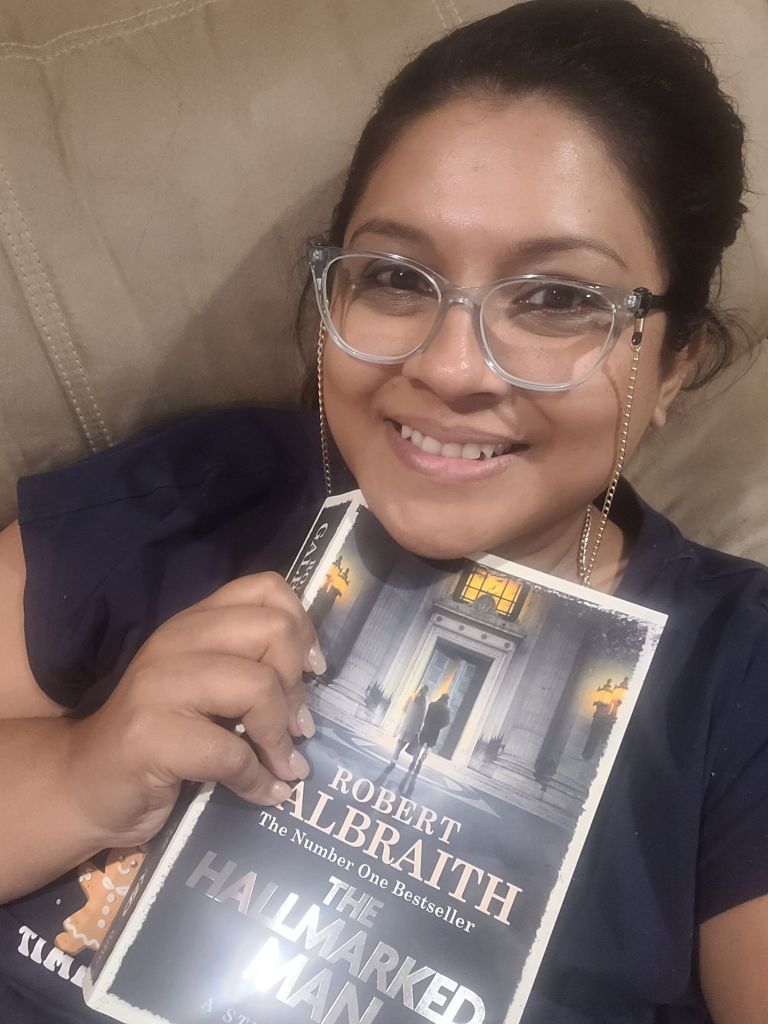
Robert Galbraith’s The Hallmarked Man is a riveting addition to the Cormoran Strike series, delivering a classic whodunnit with a modern edge. Published two years after the last book in the series, avid readers (aka me) were very excited about the release. The Running Grave (Book 7) was easily the best book I read in 2023, so I was very, very excited about this new title which was released today around the world. I excitedly opened up my Kindle edition at 12.01AM and picked up my hardcopy version at 10.15am. The eBook/Kindle version may be portable, but the hardcopy will always win with me!

The story opens with a gruesome discovery—a mutilated corpse whose identity has been deliberately obscured. Strike and Robin Ellacott are tasked with unraveling not just who the victim is, but why someone went to such lengths to erase him. The mystery is layered and atmospheric, steeped in London’s underbelly and the world of antique silver, with plenty of red herrings and unexpected turns.

I found the references in the novel to the Freemasons interesting, and the novel did often allude to the role Freemasons have in public office may be compromised by their own allegiances. This theme of secret societies is rather popular and does seem to appear in several crime and thriller fiction across a range of authors.

As the investigation deepens, Strike finds himself under media scrutiny, with past indiscretions resurfacing and threatening to derail both the case and his reputation. This subplot adds tension and continuity for longtime readers, tying in threads from earlier books and forcing Strike to confront uncomfortable truths.

The novel also tugs at the heartstrings, especially when Strike reflects on the death of his beloved uncle Ted—a man he calls a “proper man”—whose quiet strength and moral compass shaped Strike’s own. In a surprising emotional turn, Strike rekindles a relationship with his estranged father, Jonny Rokeby, adding layers of vulnerability and reconciliation to the narrative.

Ellacot, meanwhile, is navigating her own emotional minefield. Her feelings for Ryan Murphy—a charismatic, Paul Newman lookalike—are complicated by her loyalty to Strike and the unresolved tension between them. She’s also forced to confront the eternal juggle between motherhood and career, a theme that’s handled with nuance and realism, reflecting the pressures many women face in balancing ambition with personal life.

The novel is rich with minor plot twists that add texture without overwhelming the central mystery. Each twist feels earned, contributing to a narrative that’s both intellectually satisfying and emotionally resonant. Galbraith doesn’t shy away from darker realities either—human trafficking of young women is woven into the case, serving as a sobering reminder that this global crisis remains urgent and unresolved.

Galbraith’s prose is sharp, the pacing tight, and the resolution deeply rewarding. The Hallmarked Man is a triumph—gritty, elegant, and impossible to put down.

Book Review – The Vanishing Bride

Bella Ellis’s The Vanished Bride (2019) is more than a historical mystery—it’s a poignant reflection on the constraints and quiet rebellions of women in Victorian England. Set in 1845, the novel imagines the Brontë sisters—Charlotte, Emily, and Anne—as amateur detectives, drawn into the case of a young bride who disappears under violent and mysterious circumstances. While the plot is rich with gothic suspense and clever twists, its emotional core lies in the exploration of female suffering, silencing, and survival.

This book was an unexpected surprise. I have always been a fan of Austen adaptations, but I had never really looked for other works. Then I saw this book. Just sitting on a shelf in Chermside Library…. What drew me in, pulled my eye onto a shelf filled with books, was the cover and the beguiling title – who vanished?

The vanished bride herself becomes a symbol of the countless women whose voices were erased by marriage, patriarchy, and social expectation. Her disappearance from a blood-soaked room is not just a mystery to be solved—it’s a metaphor for how women were often consumed by the institutions meant to protect them. The Brontë sisters, still unpublished and largely dismissed by society, are portrayed as fiercely intelligent and empathetic women who refuse to accept the limitations imposed on them. Their determination to uncover the truth is an act of resistance, a refusal to be passive observers in a world that demands their silence.

Ellis’s depiction of the sisters is deeply respectful of their historical reality. Each woman brings her own perspective shaped by hardship: Charlotte’s yearning for recognition, Emily’s wild defiance of convention, and Anne’s quiet moral clarity. Their investigation is not just about solving a crime—it’s about asserting their right to think, to question, and to act. In doing so, they challenge the rigid gender roles of their time, offering a glimpse into the emotional and intellectual lives of women who were often denied both agency and autonomy.

What makes The Vanished Bride especially compelling is its ability to weave these themes into a gripping narrative without ever feeling didactic. The gothic setting, the eerie clues, and the complex characters all serve to highlight the emotional toll of being a woman in a world that sees you as property, decoration, or burden. Through the Brontës’ eyes, Ellis invites readers to consider not just the mystery of a missing bride, but the deeper mystery of how women endured, resisted, and ultimately reshaped the world around them—often through the power of storytelling itself.

Book Review – The Diabolical Bones

Thank you @Brisbane City Council!

Bella Ellis continues her Brontë Sisters Mystery series with The Diabolical Bones (Book 2 of a 3-part series), a chilling and atmospheric historical whodunit that blends literary homage with gothic suspense. Set in 1846, the novel sees Charlotte, Emily, and Anne Brontë taking on the role of amateur detectives when the bones of a child are discovered bricked up in a chimney at a remote farmhouse. The sisters, driven by compassion and curiosity, unravel a dark tale involving occult symbols, local legends, and sinister secrets buried in the Yorkshire moors.

The book is filled with lots of little hints from the Bronte classics… so much so that I am about to go and re-read Jane Eyre.

Rating:

Rating: 4 out of 5.

The Whimsical Wonder of Readathons: Reading for Joy, for Fun, for Pleasure!

Normally, my annual fundraiser is Frocktober, where for the month of October, I celebrate the gloriousness of frocks whilst fundraising for the Ovarian Cancer Research Fund. But this year, I’m mixing it up with something equally delightful and just a bit more bookish: a readathon! And not just any readathon—The World’s Coolest Readathon, hosted by the Australian Book Foundation. I saw that another wonderful Teacher Librarian Barbara from Bourke High School had signed up and then I thought… why not do it myself?

And what better way to kick things off than with a mystery? My first book for this readathon is Diabolical Bones by Sue Ellis—a Brontë Girls Mystery, borrowed from the ever-wonderful Brisbane City Council libraries. Gothic Yorkshire, clever heroines, and a touch of the macabre? Yes please.

A readathon, I’ve decided, is the perfect sequel to Book Month—like the epilogue where the characters (aka readers) get to celebrate their love of stories with wild abandon. It’s the encore performance, the bonus chapter, the literary afterparty.

Once upon a time, in a land not so far away (okay, it was my bedroom in Brisbane’s Southside), I embarked on a noble quest: the MS Readathon. Armed with a stack of books taller than my bedside lamp and a sponsorship sheet that made me feel like a literary philanthropist, I read my way through mysteries, adventures, and magical lands—all while raising money for a good cause. It was glorious.

Fast forward to today, and I find myself whispering reminders like a mantra: Read for fun. Read for joy. Read for pleasure. Because somewhere between grown-up responsibilities and inbox avalanches, the simple delight of reading can slip through the cracks.

Why Readathons Are Brilliant (and Backed by Science!) 

Readathons aren’t just nostalgic—they’re powerful tools for literacy, wellbeing, and community. Here’s why they’re so magical:

They Spark a Love of Reading: Choosing your own books makes reading feel like breathing—natural and joyful.

“Until I feared I would lose it, I never loved to read. One does not love breathing.

Harper LeeTo Kill a Mockingbird

They Boost Brains and Wellbeing: Reading for pleasure improves mental health and cognitive skills.

“Reading gives us someplace to go when we have to stay where we are.”
— Mason Cooley

They Create Lifelong Readers: Even reluctant readers get swept up in the fun.

“A reader lives a thousand lives before he dies. The man who never reads lives only one.”
— George R.R. Martin

They Build Community: Fundraising through reading turns stories into shared kindness.

“No act of kindness, no matter how small, is ever wasted.”
— Aesop

A Readathon Renaissance

Whether you’re a teacher, parent, librarian, or just a book-loving human, readathons offer a delightful way to reconnect with the joy of reading. They’re flexible, inclusive, and can be tailored to any age or interest. Plus, they’re a fabulous excuse to wear pajamas all day and call it “literary immersion.”

So if you, like me, sometimes need a nudge to read for the sheer pleasure of it, consider joining or hosting a readathon. You’ll be part of a movement that’s not just fun—it’s transformative.

And if you’re ready to dive in, check out The World’s Coolest Readathon. It’s got all the charm of the MS Readathon days, with a modern twist and a mission to make reading joyful again.

References

Real Men Read

Empowering Boys Through the Power of Story

The “Real Men Read” initiative, recently hosted at my school was intentionally held between Book Week and Father’s Day as a event to bring our Primary students and their male caregivers to reinforce the importance of positive male role models in improving literacy outcomes for boys. The event brought together fathers, grandfathers, and male mentors together for a pleasant evening celebrating the positive outcomes from reading. Two dads kindly volunteered to talk about how and why they read. They discussed their own role models and how they support their sons in their literacy journey. We also had a fabulous guest speaker from Brothers and Books – Dylan Conway to talk about the impact reading has on building resilience and reducing stress. The impact was immediate—students were more engaged, more curious, and more eager to pick up a book themselves. In fact, I received an email from a dad that next morning.

Thanks again for all of your efforts last night.  We are lucky to have such wonderful teachers that genuinely care for our sons.  Conor actually got up this morning and said he wants to read his new library book with me tonight.  Success!

This event powerfully demonstrated that when boys see and hear about men they value and respect reading, they begin to associate literacy with strength, intelligence, and emotional depth. In a world increasingly shaped by digital distractions and narrow stereotypes, the presence of caring, literate male figures offers boys a broader vision of what it means to be a man.

The research backs this up! A study by Merga and Ledger (2019) found that boys are more likely to engage with reading when they see male role models actively participating. Furthermore, recent findings by Smith and Taylor (2023) suggest that boys who regularly read with male caregivers demonstrate improved vocabulary acquisition, reading comprehension, and a more positive attitude toward school. These outcomes are not only academic but also social, as reading together fosters empathy and communication.

The National Literacy Trust (2025) further supports this, stating: “Fathers today are more involved in their children’s lives than ever before, and their engagement in early learning activities like playing, reading, singing, drawing and visiting parks or libraries supports children’s emotional, cognitive and educational development, as well as their early language and literacy skills.”

As Dylan Conway pointed out from the not-for-profit organisation Brothers and Books, their campaigns have shown that when boys see men reading, they begin to associate reading with strength, curiosity, and emotional intelligence. Their organisation has championed the cause, encouraging men to read and donate books across Australia.

The Real Men Read event served as a powerful reminder that literacy is not just a school responsibility—it is a community effort. When fathers and male mentors take the time to read with boys, they are investing in a future where literacy is linked to confidence, connection, and lifelong learning.

References

Merga, M., & Ledger, S. (2019). Parents’ perceptions of the importance of reading and the efficacy of reading aloud: Implications for fostering reading engagement in the home. Australian Journal of Education, 63(2), 163–178. https://doi.org/10.1177/0004944119840077

Smith, J., & Taylor, R. (2023). Male role models and literacy development in boys: A longitudinal study. Journal of Educational Research and Practice, 14(1), 45–59.

National Literacy Trust. (2025). Fathers’ engagement in early childhood literacy. https://literacytrust.org.uk

Australian Bibliotherapeutic Society. (n.d.). About us. https://bibliotherapy.org.au

Brothers and Books. (n.d.). Our mission. https://brothersandbooks.org

The Teacher Librarian’s Role in Elevating Literacy Through Quality Literature

Timothy Shanahan’s blog offers teacher librarians a powerful lens through which to re-evaluate long-held assumptions about reading instruction. By challenging the instructional level theory and advocating for the use of complex, grade-level texts, Shanahan equips librarians with evidence-based insights that support the promotion of high-quality literature. His work reinforces the librarian’s role in curating rich collections, scaffolding student engagement, and collaborating with teachers to foster deeper, more meaningful reading experiences.

Timothy Shanahan’s critique of the instructional level theory—and the growing body of research supporting the use of challenging texts—has profound implications for teacher librarians. Far from being custodians of books, teacher librarians are literacy leaders, curriculum collaborators, and champions of equitable access to high-quality literature. Their work sits at the intersection of pedagogy, inquiry, and imagination.

For decades, the instructional level model influenced how books were selected for students. It suggested that matching texts to a student’s reading level would yield the best learning outcomes. However, recent research has challenged this assumption. Studies by Lupo, Strong, and Conradi Smith (2019) and Young, Lagrone, and McCauley (2020) show that students make significant gains when exposed to complex texts, especially when supported by skilled educators. This shift calls for a re-evaluation of how we curate and use literature in schools.

Teacher librarians are uniquely positioned to lead this change. Rather than relying solely on readability formulas or levelling systems, they can advocate for literature that offers rich vocabulary, nuanced themes, and diverse perspectives. Quality literature provides opportunities for deep discussion, critical thinking, and emotional engagement—elements that are often missing from simplified texts. This approach aligns with the Australian Curriculum’s emphasis on engaging students with increasingly sophisticated texts across year levels (ACARA, n.d.).

Beyond curation, teacher librarians play a vital role in scaffolding student engagement with challenging texts. By collaborating with classroom teachers, they help design literature experiences that support comprehension and inquiry. Whether through literature circles, guided reading sessions, or integrated inquiry units, teacher librarians ensure that students are not only exposed to complex texts but are also equipped to understand and enjoy them. Research by Pérez Buelvas (2024) highlights how scaffolding strategies—such as task-based activities and formative assessment—can significantly improve reading comprehension, especially among English language learners.

Moreover, teacher librarians contribute to equity in literacy education. Stocker et al. (2023) argue that integrating the science of reading with behavioural science can address systemic inequities in Australian schools. By ensuring all students have access to high-quality literature and the support to engage with it meaningfully, teacher librarians help close the literacy gap and foster lifelong learning.

Top 3 Ways Teacher Librarians Can Elevate Reading Through Quality Literature

1. Curate and Promote Rich, Diverse Texts Select literature that challenges students intellectually and emotionally—books with layered themes, sophisticated language, and diverse voices. Use displays, flipguids and reading lists to spotlight these titles and spark curiosity.

2. Scaffold Access to Complex Texts Support students as they engage with challenging material through guided reading, literature circles, and strategy instruction. Help them build confidence by modelling how to navigate difficult vocabulary and abstract ideas.

3. Collaborate with Teachers to Embed Literature into Learning Work alongside educators to integrate high-quality texts into curriculum units. Suggest titles that align with learning goals while encouraging deeper thinking and discussion across subjects.

References

ACARA. (n.d.). National Literacy Learning Progression. Australian Curriculum, Assessment and Reporting Authority. https://v8.australiancurriculum.edu.au/resources/national-literacy-and-numeracy-learning-progressions/national-literacy-learning-progression/

Lupo, S. M., Strong, J. Z., & Conradi Smith, K. (2019). Text difficulty and adolescent literacy: A randomized study of challenging texts and instructional supports. Reading Research Quarterly, 54(3), 342–375. https://doi.org/10.1002/rrq.241

Pérez Buelvas, H. G. (2024). Enhancing reading skills through scaffolding strategies in eighth-grade EFL students. HOW Journal, 31(2), 70–88. https://doi.org/10.19183/how.31.2.754

Shanahan, T. (2023, March 15). Why children should be taught to read with more challenging texts. Shanahan on Literacy. https://www.shanahanonliteracy.com/blog/why-children-should-be-taught-to-read-with-more-challenging-texts

Stocker, K. L., Fox, R. A., Swain, N. R., & Leif, E. S. (2023). Between the lines: Integrating the science of reading and the science of behavior to improve reading outcomes for Australian children. Behavior and Social Issues, 33, 504–531. https://doi.org/10.1007/s42822-023-00149-y

Young, C., Lagrone, S., & McCauley, J. (2020). Read Like Me: An intervention for struggling readers. Education Sciences, 10(3), 57. https://doi.org/10.3390/educsci10030057

Grandparents, Migration & The First Third: A Love Letter Across Generations.

Life is made up of three parts: in The First Third, you’re embarrassed by your family; in the second, you make a family of your own; and in the end, you just embarrass the family you’ve made.

The First Third by Will Kostakis.

This year’s Grandparents’ Day hit differently. I now have only one of my four grandparents still with me. I was lucky—lucky to have strong, vivid memories of each of them, and even luckier that my children got to spend time with their great-grandparents. That kind of generational overlap feels rare and sacred, like a living bridge between past and present. And somehow, all of this came rushing back when I remembered reading The First Third by Will Kostakis—a book that, like a well-wrapped souvlaki, is stuffed with heart, humour, and a generous helping of cultural chaos.

It reminded me strongly of my maternal grandmother. A force to be reckoned with. Even now, in her wheelchair, she manages to orchestrate family life like a seasoned general—issuing orders with a raised eyebrow, summoning grandchildren with a single beckoning finger, and somehow getting everyone to do her bidding without ever raising her voice. Her presence is magnetic, her will unshakable, and her love—though sometimes disguised as criticism—is the glue that holds generations together.

📖 The First Third: A Souvlaki of Feels

Will Kostakis’ The First Third is a YA gem that manages to be hilarious, heartfelt, and culturally rich without ever feeling preachy. It follows Billy Tsiolkas, a Greek-Australian teen whose grandmother hands him a “bucket list” of family fixes to complete before she dies. No pressure, right?

Billy’s voice is sharp, self-deprecating, and painfully relatable. He’s caught between being a good grandson and a confused teenager, between Greek traditions and Aussie adolescence. The book is a masterclass in balancing humor with emotional depth—like when you laugh so hard you forget you’re crying.

Why It Resonates:

  • The family dynamics are loud, loving, and layered—just like mine.
  • The cultural identity struggle is real: trying to be two things at once and feeling like you’re failing at both.
  • The grandmother character is the emotional anchor, reminding us that love often comes wrapped in unsolicited advice and home-cooked meals.

👵 My Grandmother: The Matriarch in Motion

Reading Billy’s story brought back some very vivid memories of my own grandmother. My Nana didn’t hand me a bucket list, but she did hand me wisdom—sometimes in words, sometimes in silence, mostly in food. And she did it all with the commanding presence of someone who never needed to stand to be heard.

She’s the kind of woman who could host a feast, direct the seating arrangement, critique the seasoning, and still find time to remind you that your shirt needs ironing. Her strength isn’t just physical—it’s woven into the fabric of our family.

🌍 A Migration of Love

Unlike many who migrated in their youth, my grandmother moved overseas in her seventies. She gave up everything and everyone she knew—her home, her lifelong friends, her familiar rhythms—so she could continue supporting her children and grandchildren. It wasn’t a move for opportunity or adventure. It was a move for love.

What She Gave Up—and What She Gave Us:

  • Her homeland: Leaving behind the place where she’d spent most of her life.
  • Her community: Saying goodbye to friends she’d known for decades.
  • Her independence: Adapting to a new country, new customs, and a new pace of life.

And yet, she never stopped giving. She offered good advice (whether you asked for it or not), gentle admonishments (often not so gentle), and an abundance of love. Her presence became the emotional compass of our family—steady, wise, and always just a little bit intimidating.

She didn’t just migrate; she transformed our home into a sanctuary of tradition, resilience, and unconditional care.

💌 A Tribute Across Pages and Generations

The First Third isn’t just a book—it’s a tribute. To grandmothers who held families together with their bare hands. To those who sacrificed comfort for connection. To the messy, beautiful process of growing up between cultures and generations.

So this Grandparents’ Day, I’m not just remembering my grandmother—I’m honouring her. Through stories, through laughter, through the parts of her that live on in me.

And maybe, just maybe, that’s the final third: carrying forward the love that built us.

Five nights at Freddy – Fazbear frights [Graphic Novel collection].

If you’ve ever wanted to experience the joy of being chased by animatronic nightmares that look like they’ve been assembled by a slightly deranged electrician, this graphic novel is for you. Five Nights at Freddy Fazbear Frights serves up exactly what the title promises: frights, chaos, and enough creepy robots to make your childhood memories of birthday parties instantly terrifying.

The artwork is a delightful mix of “kid-friendly” cartoon and “why is that bear staring at me like it wants to eat my soul?” The story jumps between various creepy tales that all somehow revolve around the absolute worst animatronics you could imagine — and just when you think it’s safe to close the book, boom! More jump scares, more eerie grins, and more malfunctioning metal monsters lurking in the shadows.

If you enjoy your horror with a side of cheesy dialogue and characters making questionable life choices (seriously, who lets these animatronics roam free?), this graphic novel will keep you entertained—and maybe a little paranoid—until the very last page.

Final verdict:
Five nights of fun, fear, and a fresh appreciation for why animatronics should probably be banned from birthday parties forever. I would also not recommend this book for anyone who is over the age of 15! Especially not to 40+ year old women who managed to get a very twitchy eye from reading this series.

Adults

Rating: 1 out of 5.

Teens

Rating: 5 out of 5.