Real Men Read

Empowering Boys Through the Power of Story

The “Real Men Read” initiative, recently hosted at my school was intentionally held between Book Week and Father’s Day as a event to bring our Primary students and their male caregivers to reinforce the importance of positive male role models in improving literacy outcomes for boys. The event brought together fathers, grandfathers, and male mentors together for a pleasant evening celebrating the positive outcomes from reading. Two dads kindly volunteered to talk about how and why they read. They discussed their own role models and how they support their sons in their literacy journey. We also had a fabulous guest speaker from Brothers and Books – Dylan Conway to talk about the impact reading has on building resilience and reducing stress. The impact was immediate—students were more engaged, more curious, and more eager to pick up a book themselves. In fact, I received an email from a dad that next morning.

Thanks again for all of your efforts last night.  We are lucky to have such wonderful teachers that genuinely care for our sons.  Conor actually got up this morning and said he wants to read his new library book with me tonight.  Success!

This event powerfully demonstrated that when boys see and hear about men they value and respect reading, they begin to associate literacy with strength, intelligence, and emotional depth. In a world increasingly shaped by digital distractions and narrow stereotypes, the presence of caring, literate male figures offers boys a broader vision of what it means to be a man.

The research backs this up! A study by Merga and Ledger (2019) found that boys are more likely to engage with reading when they see male role models actively participating. Furthermore, recent findings by Smith and Taylor (2023) suggest that boys who regularly read with male caregivers demonstrate improved vocabulary acquisition, reading comprehension, and a more positive attitude toward school. These outcomes are not only academic but also social, as reading together fosters empathy and communication.

The National Literacy Trust (2025) further supports this, stating: “Fathers today are more involved in their children’s lives than ever before, and their engagement in early learning activities like playing, reading, singing, drawing and visiting parks or libraries supports children’s emotional, cognitive and educational development, as well as their early language and literacy skills.”

As Dylan Conway pointed out from the not-for-profit organisation Brothers and Books, their campaigns have shown that when boys see men reading, they begin to associate reading with strength, curiosity, and emotional intelligence. Their organisation has championed the cause, encouraging men to read and donate books across Australia.

The Real Men Read event served as a powerful reminder that literacy is not just a school responsibility—it is a community effort. When fathers and male mentors take the time to read with boys, they are investing in a future where literacy is linked to confidence, connection, and lifelong learning.

References

Merga, M., & Ledger, S. (2019). Parents’ perceptions of the importance of reading and the efficacy of reading aloud: Implications for fostering reading engagement in the home. Australian Journal of Education, 63(2), 163–178. https://doi.org/10.1177/0004944119840077

Smith, J., & Taylor, R. (2023). Male role models and literacy development in boys: A longitudinal study. Journal of Educational Research and Practice, 14(1), 45–59.

National Literacy Trust. (2025). Fathers’ engagement in early childhood literacy. https://literacytrust.org.uk

Australian Bibliotherapeutic Society. (n.d.). About us. https://bibliotherapy.org.au

Brothers and Books. (n.d.). Our mission. https://brothersandbooks.org

The Teacher Librarian’s Role in Elevating Literacy Through Quality Literature

Timothy Shanahan’s blog offers teacher librarians a powerful lens through which to re-evaluate long-held assumptions about reading instruction. By challenging the instructional level theory and advocating for the use of complex, grade-level texts, Shanahan equips librarians with evidence-based insights that support the promotion of high-quality literature. His work reinforces the librarian’s role in curating rich collections, scaffolding student engagement, and collaborating with teachers to foster deeper, more meaningful reading experiences.

Timothy Shanahan’s critique of the instructional level theory—and the growing body of research supporting the use of challenging texts—has profound implications for teacher librarians. Far from being custodians of books, teacher librarians are literacy leaders, curriculum collaborators, and champions of equitable access to high-quality literature. Their work sits at the intersection of pedagogy, inquiry, and imagination.

For decades, the instructional level model influenced how books were selected for students. It suggested that matching texts to a student’s reading level would yield the best learning outcomes. However, recent research has challenged this assumption. Studies by Lupo, Strong, and Conradi Smith (2019) and Young, Lagrone, and McCauley (2020) show that students make significant gains when exposed to complex texts, especially when supported by skilled educators. This shift calls for a re-evaluation of how we curate and use literature in schools.

Teacher librarians are uniquely positioned to lead this change. Rather than relying solely on readability formulas or levelling systems, they can advocate for literature that offers rich vocabulary, nuanced themes, and diverse perspectives. Quality literature provides opportunities for deep discussion, critical thinking, and emotional engagement—elements that are often missing from simplified texts. This approach aligns with the Australian Curriculum’s emphasis on engaging students with increasingly sophisticated texts across year levels (ACARA, n.d.).

Beyond curation, teacher librarians play a vital role in scaffolding student engagement with challenging texts. By collaborating with classroom teachers, they help design literature experiences that support comprehension and inquiry. Whether through literature circles, guided reading sessions, or integrated inquiry units, teacher librarians ensure that students are not only exposed to complex texts but are also equipped to understand and enjoy them. Research by Pérez Buelvas (2024) highlights how scaffolding strategies—such as task-based activities and formative assessment—can significantly improve reading comprehension, especially among English language learners.

Moreover, teacher librarians contribute to equity in literacy education. Stocker et al. (2023) argue that integrating the science of reading with behavioural science can address systemic inequities in Australian schools. By ensuring all students have access to high-quality literature and the support to engage with it meaningfully, teacher librarians help close the literacy gap and foster lifelong learning.

Top 3 Ways Teacher Librarians Can Elevate Reading Through Quality Literature

1. Curate and Promote Rich, Diverse Texts Select literature that challenges students intellectually and emotionally—books with layered themes, sophisticated language, and diverse voices. Use displays, flipguids and reading lists to spotlight these titles and spark curiosity.

2. Scaffold Access to Complex Texts Support students as they engage with challenging material through guided reading, literature circles, and strategy instruction. Help them build confidence by modelling how to navigate difficult vocabulary and abstract ideas.

3. Collaborate with Teachers to Embed Literature into Learning Work alongside educators to integrate high-quality texts into curriculum units. Suggest titles that align with learning goals while encouraging deeper thinking and discussion across subjects.

References

ACARA. (n.d.). National Literacy Learning Progression. Australian Curriculum, Assessment and Reporting Authority. https://v8.australiancurriculum.edu.au/resources/national-literacy-and-numeracy-learning-progressions/national-literacy-learning-progression/

Lupo, S. M., Strong, J. Z., & Conradi Smith, K. (2019). Text difficulty and adolescent literacy: A randomized study of challenging texts and instructional supports. Reading Research Quarterly, 54(3), 342–375. https://doi.org/10.1002/rrq.241

Pérez Buelvas, H. G. (2024). Enhancing reading skills through scaffolding strategies in eighth-grade EFL students. HOW Journal, 31(2), 70–88. https://doi.org/10.19183/how.31.2.754

Shanahan, T. (2023, March 15). Why children should be taught to read with more challenging texts. Shanahan on Literacy. https://www.shanahanonliteracy.com/blog/why-children-should-be-taught-to-read-with-more-challenging-texts

Stocker, K. L., Fox, R. A., Swain, N. R., & Leif, E. S. (2023). Between the lines: Integrating the science of reading and the science of behavior to improve reading outcomes for Australian children. Behavior and Social Issues, 33, 504–531. https://doi.org/10.1007/s42822-023-00149-y

Young, C., Lagrone, S., & McCauley, J. (2020). Read Like Me: An intervention for struggling readers. Education Sciences, 10(3), 57. https://doi.org/10.3390/educsci10030057

Grandparents, Migration & The First Third: A Love Letter Across Generations.

Life is made up of three parts: in The First Third, you’re embarrassed by your family; in the second, you make a family of your own; and in the end, you just embarrass the family you’ve made.

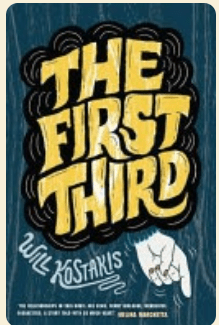
The First Third by Will Kostakis.

This year’s Grandparents’ Day hit differently. I now have only one of my four grandparents still with me. I was lucky—lucky to have strong, vivid memories of each of them, and even luckier that my children got to spend time with their great-grandparents. That kind of generational overlap feels rare and sacred, like a living bridge between past and present. And somehow, all of this came rushing back when I remembered reading The First Third by Will Kostakis—a book that, like a well-wrapped souvlaki, is stuffed with heart, humour, and a generous helping of cultural chaos.

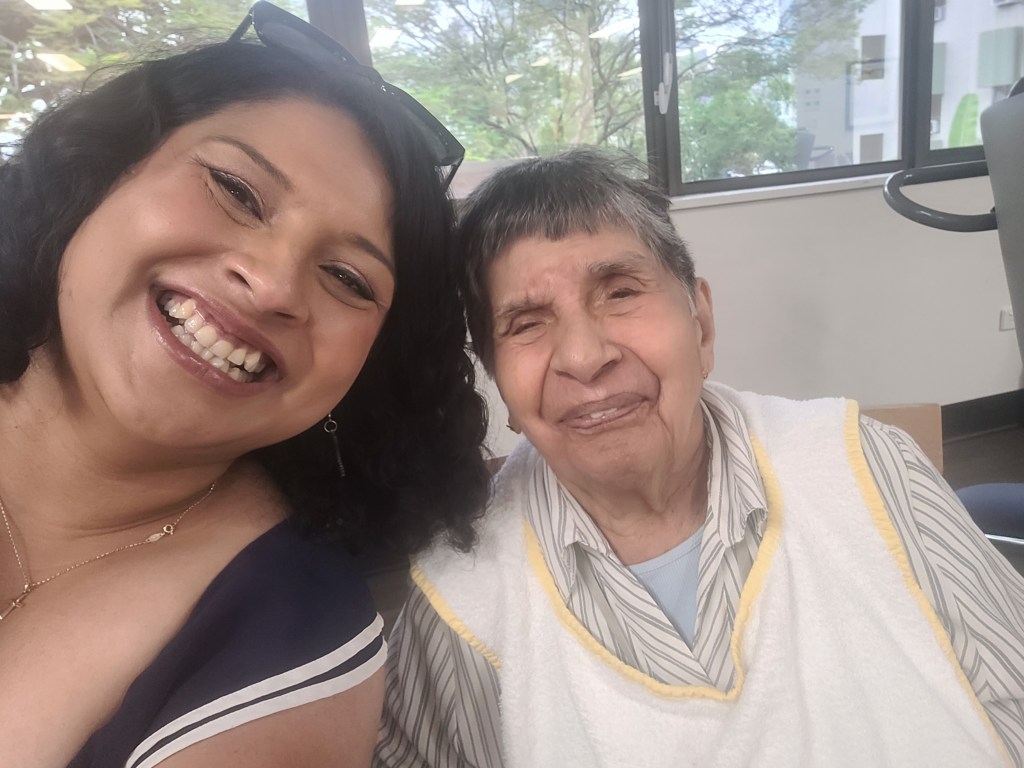
It reminded me strongly of my maternal grandmother. A force to be reckoned with. Even now, in her wheelchair, she manages to orchestrate family life like a seasoned general—issuing orders with a raised eyebrow, summoning grandchildren with a single beckoning finger, and somehow getting everyone to do her bidding without ever raising her voice. Her presence is magnetic, her will unshakable, and her love—though sometimes disguised as criticism—is the glue that holds generations together.

📖 The First Third: A Souvlaki of Feels

Will Kostakis’ The First Third is a YA gem that manages to be hilarious, heartfelt, and culturally rich without ever feeling preachy. It follows Billy Tsiolkas, a Greek-Australian teen whose grandmother hands him a “bucket list” of family fixes to complete before she dies. No pressure, right?

Billy’s voice is sharp, self-deprecating, and painfully relatable. He’s caught between being a good grandson and a confused teenager, between Greek traditions and Aussie adolescence. The book is a masterclass in balancing humor with emotional depth—like when you laugh so hard you forget you’re crying.

Why It Resonates:

  • The family dynamics are loud, loving, and layered—just like mine.
  • The cultural identity struggle is real: trying to be two things at once and feeling like you’re failing at both.
  • The grandmother character is the emotional anchor, reminding us that love often comes wrapped in unsolicited advice and home-cooked meals.

👵 My Grandmother: The Matriarch in Motion

Reading Billy’s story brought back some very vivid memories of my own grandmother. My Nana didn’t hand me a bucket list, but she did hand me wisdom—sometimes in words, sometimes in silence, mostly in food. And she did it all with the commanding presence of someone who never needed to stand to be heard.

She’s the kind of woman who could host a feast, direct the seating arrangement, critique the seasoning, and still find time to remind you that your shirt needs ironing. Her strength isn’t just physical—it’s woven into the fabric of our family.

🌍 A Migration of Love

Unlike many who migrated in their youth, my grandmother moved overseas in her seventies. She gave up everything and everyone she knew—her home, her lifelong friends, her familiar rhythms—so she could continue supporting her children and grandchildren. It wasn’t a move for opportunity or adventure. It was a move for love.

What She Gave Up—and What She Gave Us:

  • Her homeland: Leaving behind the place where she’d spent most of her life.
  • Her community: Saying goodbye to friends she’d known for decades.
  • Her independence: Adapting to a new country, new customs, and a new pace of life.

And yet, she never stopped giving. She offered good advice (whether you asked for it or not), gentle admonishments (often not so gentle), and an abundance of love. Her presence became the emotional compass of our family—steady, wise, and always just a little bit intimidating.

She didn’t just migrate; she transformed our home into a sanctuary of tradition, resilience, and unconditional care.

💌 A Tribute Across Pages and Generations

The First Third isn’t just a book—it’s a tribute. To grandmothers who held families together with their bare hands. To those who sacrificed comfort for connection. To the messy, beautiful process of growing up between cultures and generations.

So this Grandparents’ Day, I’m not just remembering my grandmother—I’m honouring her. Through stories, through laughter, through the parts of her that live on in me.

And maybe, just maybe, that’s the final third: carrying forward the love that built us.

Five nights at Freddy – Fazbear frights [Graphic Novel collection].

If you’ve ever wanted to experience the joy of being chased by animatronic nightmares that look like they’ve been assembled by a slightly deranged electrician, this graphic novel is for you. Five Nights at Freddy Fazbear Frights serves up exactly what the title promises: frights, chaos, and enough creepy robots to make your childhood memories of birthday parties instantly terrifying.

The artwork is a delightful mix of “kid-friendly” cartoon and “why is that bear staring at me like it wants to eat my soul?” The story jumps between various creepy tales that all somehow revolve around the absolute worst animatronics you could imagine — and just when you think it’s safe to close the book, boom! More jump scares, more eerie grins, and more malfunctioning metal monsters lurking in the shadows.

If you enjoy your horror with a side of cheesy dialogue and characters making questionable life choices (seriously, who lets these animatronics roam free?), this graphic novel will keep you entertained—and maybe a little paranoid—until the very last page.

Final verdict:
Five nights of fun, fear, and a fresh appreciation for why animatronics should probably be banned from birthday parties forever. I would also not recommend this book for anyone who is over the age of 15! Especially not to 40+ year old women who managed to get a very twitchy eye from reading this series.

Adults

Rating: 1 out of 5.

Teens

Rating: 5 out of 5.

Book review – Upside down Inside out by Monica McInerney

In Upside Down Inside Out, Monica McInerney gives us the story of Eva Kennedy—a talented artist who, naturally, is stuck in a dead-end admin job and hiding from her past. When a last-minute trip to Dublin drops into her lap (as life-changing international trips so often do), she jumps at the chance to escape her carefully controlled life in Melbourne.

What follows is a whirlwind of mistaken identity, quirky new friendships, and just the right amount of romantic confusion. McInerney has a knack for blending humor and heart, and while some twists are more predictable than surprising, the charm of the characters—and the lush Irish setting—make it an enjoyable ride.

If you’ve ever wanted to abandon your job, jet off to another country, and magically stumble into self-discovery, this one’s for you.

It’s part escapist fantasy, part emotional reset, with a wink to the idea that maybe, just maybe, the universe knows what it’s doing.

Disciplinary Literacy

Disciplinary Literacy is rarely discussed in schools, and this can lead to a significant impact to learning outcomes. The skills required to read a text in Chemistry are very different than the ones required in Literature. However, most schools pigeonhole literacy into the purview of the English Department.

Shanahan & Shanahan (2012) advocate for the explicit instruction of disciplinary literacy across middle and high school classrooms. This approach clearly acknowledges the importance it is the have the ability to ‘create, communicate and use knowledge’ appropriately within each discipline.

Check this link out for more information on how to improve literacy practice in schools. https://www.shanahanonliteracy.com/upload/publications/50/pdf/Shanahan-What-is-Disciplinary-Literacy.pdf

All about me.

Hi – I am Trish and I am a teacher librarian in the ACT. I am keeping a blog because I have found that I gain deeper insights and have a greater personal development if I use the written word to consolidate my thoughts. Some would call it ‘writing for knowledge construction’. Others may refer to it as journaling or even the rants of a cranky old bird. However, I call it my thinking space for reviewing new books, critiquing professional development sessions, reflecting on my teaching practices and evaluating on my own journey as a TL. I hope you enjoy reading my musings and if you would like to subscribe or submit any of your thoughts, that would be great!

Reluctant Readers – Would facts be better than fiction?

Reluctant readers.  I didnt even realise this was a phrase.  As an avid reader myself, and from a family of bibliophiles, the concept of people who choose not to read was astounding.  Teaching and the education profession is my second career.  I spent many years as a practicing scientist and reading both professionally and for recreation was common.  We had many water cooler conversations about recent academic publications along with Oprah’s uncanny knack of turning an average book into a best seller.  So my foray into the world of reluctant readers has been recent and startling.


Reluctant readers as people that “may struggle with reading, not show any interest in reading or simply refuse to read independently” (learningpotential.gov.au). These students in a classroom tasked with silent reading either pretend to read to avoid censure, get easily distracted or flat out refuse to read citing boredom, disinterest or illiteracy (www.k12reader.com).  Some children and young teens chose negative behaviour even if it leads to disciplinary actions just to avoid reading a book.  Such machinations are just a student’s way to avoid doing something they don’t like. When questioned, most of these readers describe reading as a chore and that there is nothing that interests them.    

My school has just implemented a silent reading program for the year 7 and 8 students to improve literacy levels and promote reading for recreational purposes.  The program is still in its infancy and we have noticed that out of the 470 students within these two year levels the majority of the students are complying. We do however, have about 50 students who have on multiple occasions been noted for failing to bring a book to class as well as others being identified as ‘fake reading’.  Fake reading, as I have casually defined it, is pretending to read to avoid censure by having a book in front of them but not actually looking at it. Stereotypically, a vast majority of our reluctant readers are boy as many of them are disinterested in books as they view them as ‘unrealistic’ and ‘unnecessary’ as well as ‘unconnected’ to the real world (www.k12reader.com).  

To combat this trend of disinterest, my fellow TLs and I have been searching our collection for various resources to help them find that connection to a book.  The strategies we have implemented to combat the various hurdles are the following:

Short attention span: these kids are not likely to wish to read big compendiums so we have sourced shorter books that are usually completed in 10-15minutes.  This means that students are more likely to read another book as they feel they have accomplished something in a short amount of time. The Libraries of Doom series have been excellent for this.

Low literacy: our school is an inclusive school and we have a wide range of literacy levels.  Many of our reluctant readers have low literacy and are unable to read the plethora of young adult fiction we have.  But they are also loathe to read the simpler books as they feel they are ‘not cool’ enough and self esteem is important during those teenage years.  Hi-lo books have been useful in this setting.  These books purchased jointly with our Inclusive education team have helped with implementation of our reading program.  Hi-Lo books are intriguing to the students because their topics resonate with our students but the language used is at an appropriate level.  They have been particularly popular with our male cohort of reluctant readers. We also have subscribed to Wheelers elibrary for those that have vision disabilities.  These students can elect books with larger print and or use the audiobook function to participate with the reading program.  In most circumstances we can also provide the print copy to help them follow the words.

Disinterested readers:  these are are most challenging students.  They usually rank highly on their literacy results for NAPLAN but show complete disinterest in reading recreationally as they do not find a purpose for it. Fiction books just hold no interest to them. Harper (2016) very truthfully points out “that fiction isn’t for everyone. Some readers just don’t connect with made up characters and imagined scenarios”.  It was surprising though the unwillingness of the English department to support the reading of non fiction texts in the silent reading program. Granted that non fiction is not literature and will not placate the soul, but non fiction texts do lead to life long passions and career choices (National library of NZ 2014).

The addition of non fiction texts and audiobooks have assisted with most of our disinterested reluctant readers.  Whilst their enthusiasm to read is still low, they are slowly coming around to the idea. The recent purchases of print texts on Formula 1 racing and sporting biographies have helped engage some of them.  Others are still fighting the concept but perseverance from my fellow colleagues is making headway. We discovered with a small cohort of year 8 boys that non fiction was just not ‘cutting it’ and a suggestion from their technology teacher about sourcing dirt bike magazines has been a boon.  These magazines with their glossy pictures and simple language style have had some appeal. Whilst we are unable to currently procure an online subscription to this series, we have a print copy on order. These six young men come to the library each time for silent reading and get a current or back issue and read on the very comfy beanbags in our reading area.  It seems obvious that choice matters for recreational reading.  Its only been a week and there have been hiccups but the future is suddenly full of hope

Sharrock (2009)

References

Australian Government – DET (2018) Reluctant readers, how to help. Learning Potential. Retrieved from https://www.learningpotential.gov.au/reluctant-readers-how-to-help

Harper, H. (2016) Books for reluctant readers. [Blog post] Readings. Retrieved from https://www.readings.com.au/news/books-for-reluctant-readers

K12 reader(2018) Strategies to help engage reluctant readers in reading. Retrieved from https://www.k12reader.com/strategies-to-help-engage-reluctant-readers-in-reading/

National Library of NZ. (2014). Non-fiction. National Library of New Zealand Services to Schools. Retrieved from https://web.archive.org/web/20160729150727/http://schools.natlib.govt.nz/creating-readers/genres-and-read-alouds/non-fiction

Mosle, S. (2012, November 22). What should children read? [Blog post]. Opinionator: The New York Times. Retrieved from https://opinionator.blogs.nytimes.com/2012/11/22/what-should-children-read/?_r=0

Sharrock, J (2009) Interview with Dave Eggers. Mother Jones Magazine. Retrieved from https://www.motherjones.com/media/2009/03/mojo-interview-dave-eggers/