Reflecting on the story of the shelves.

At the end of each school day, I wander through the library and notice the gaps and blank spaces.  Why? It is because the shelves never lie about the books that are loved the most.  These are the ones that stack tall on our return trolleys.  To be fair, they are also the ones that leave with another student almost instantly.  They are the ones with worn spines, grubby covers and suspicious stains on the pages.  Yet all of them tell me a story.  They all tell me something about our school community.

Non‑fiction loans follow the interests of the boys themselves, whether it be cars, music, military equipment, or funnily enough… anatomy. These choices show me that curiosity is not confined to the classroom but stretches into the interests, curiousities, passions, and fascinations that shape their lives outside the school grounds.

The sports shelves mimic the seasons almost perfectly. Footy fades as winter ends, and suddenly, cricket biographies and fiction surge forward, especially anything tied to the upcoming Ashes. It is as if the rhythm of the sporting calendar beats through the borrowing habits of our students, reflecting not just their interests but the pulse of the wider culture around them.

The novels tell another kind of story. Fantasy sagas rarely rest long before they are whisked away again, dragons, quests and magical lands offering both escape and courage. Contemporary stories about identity and belonging circulate steadily too, often returned with dog‑eared pages. Those books feel like companions, helping students navigate questions of who they are and where they fit.

Certain authors move faster than most. This year we have seen a sharp update in request for Orwell’s works that seemed to be borrowed by students who want to think critically, because his sharp observations on society still resonating decades later. King’s novels vanish quickly from the shelves too, his blend of horror and humanity appealing to readers who crave both thrills and reflection. Griffiths brings laughter and lightness, his quirky humour and imaginative plots offering relief from the seriousness of school life. Kinney’s books are snapped up by younger readers, his diary‑style storytelling capturing the awkwardness and comedy of growing up. Walliams adds another layer of fun, his playful characters and outrageous scenarios proving irresistible to students who want a quick, joyful read. Bancks, with his Australian voice and relatable themes, connects directly to the local experience, showing students their own world reflected back at them. Heath’s stories move quickly too, often chosen by readers who enjoy adventure and fast‑paced plots. And then there is Rowling. Her magical universe remains evergreen, with titles borrowed again and again by students who want to lose themselves in a world of spells and friendship. Dashner’s dystopian tales race through the library as well, his fast‑moving plots and high stakes gripping readers who love suspense.

And then there are the comfort reads. During exam season, familiar series, lighthearted tales and joke books fly off the shelves, as if students are reaching for something steady and reassuring when stress runs high. When headlines outside the school walls grow louder, books on social issues suddenly become popular, showing me how our community is engaging with the wider world.

Over time, these borrowing trends become a mirror. They reflect curiosity, resilience, joy and sometimes vulnerability. They remind me that the library is not just a place to find information, it is a living record of what matters most to our students at any given moment. Each book borrowed is a quiet signal, a way of saying, this is what I need right now.

Together, these authors form a chorus of voices that shape the identity of our school community. Orwell challenges us to question, King dares us to feel fear and empathy, Griffiths and Kinney make us laugh, Walliams and Heath keep us entertained, Bancks grounds us in our own backyard, Rowling invites us into magic, and Dashner pushes us to imagine futures both thrilling and uncertain. Their collective presence on our shelves is more than entertainment, it is a reflection of the many ways our students seek to learn, to grow and to belong.

And as the year turns, the shelves whisper back, carrying the heartbeat of our community in every borrowed book.

Book Review – The Impossible Fortune

Richard Osman’s fifth novel in the Thursday Murder Club series, The Impossible Fortune, kicks off with a wedding—Joyce’s daughter Joanna is finally getting married. But the celebration takes a sharp turn when best man Nick announces that someone is trying to kill him. From that moment, the familiar crew of pensioners is drawn into yet another mystery, this time involving a hidden Bitcoin fortune, a car bombing, and a tangled web of suspects. It is nice to read a novel where the main characters are not in their flush of youth.  Gives someone who is quite frankly set in their middle age, some hope for age appropriate literature.

One of the first things that stood out to me was the large print. Compared to other novels I’ve read recently, this one is an absolute breeze to get through. It’s easy on the eyes and makes for a more relaxed reading experience, especially if you’re dipping in and out over a few days. The chapters are also cleverly titled by days of the week, which helps anchor the plot and gives a sense of progression—especially useful given the shifting perspectives between characters.

The emotional tone of the book is a little more poignant than previous instalments. Elizabeth is still reeling from the loss of her husband Stephen, and Osman handles her grief with sensitivity and depth. It adds a layer of introspection to the story without slowing down the pace. Ibrahim continues to be the group’s voice of reason, offering advice to friends and foes alike, including the ever-scheming Connie Johnson, who ironically saves Ron’s bacon eventually.

Joyce remains a delight, and her relationship with Joanna is given more attention here, adding warmth and humour to the narrative. The mystery itself is well-paced, with enough twists to keep you guessing but not so many that it becomes convoluted. Osman’s trademark wit is present throughout, and the characters continue to evolve in ways that feel authentic and earned.

I particularly enjoyed the plot line of Suzi, Jason, and Ron trying to evade the evil machinations of horrid wife beating Danny.  The perspective of Kendrick reminded me once again that the biggest victims of domestic violence are children and their lost childhoods.  Osman manages  rather cleverly to use Kendrick’s internal monologue to reveal his childhood trauma to the reader.

Overall, The Impossible Fortune is a satisfying continuation of the series—accessible, emotionally resonant, and full of charm. It’s not literature by any means but rather a pleasant holiday read as it requires very little cognitive processing.  However, it is a story about friendship, ageing, and the thrill of solving a good puzzle, all wrapped up in Osman’s signature style.

Book Review – Before the Coffee Gets Cold

What if you could travel back in time—but only for the duration of a single cup of coffee?

Toshikazu Kawaguchi’s Before the Coffee Gets Cold is a short novel, or novella if you wish to use that term that reminds you about regrets and how they can influence your actions. The novel is about a small, tucked-away Tokyo café where time travel is possible, but with strict rules. You can revisit the past, but you can’t change it. You must sit in a specific seat. And most importantly, you must return before your coffee gets cold. As a teacher and a parent, I am used to drinking cold coffee and how people actually drink warm coffee at work is a mystery to me!

Thank you Julia for the loan

The novel unfolds through four interconnected stories, each exploring themes of love, loss, regret, and reconciliation. The characters—a woman hoping to reconnect with a lover, a sister grieving her sibling, a mother longing for her child—are ordinary people facing emotionally charged moments. Kawaguchi’s writing is simple and understated, allowing the emotional depth of each story to shine through.

Unlike a novel I read recently (will not name names but ole Mate Danny), Kawaguchi uses provoking language and variated sentence structure to evoke emotion in the reader. This book, written with quiet clarity and emotional depth, avoids dramatic flourishes or unnecessary embellishments, instead offering a straightforward, sincere narrative that invites reflection without demanding attention.

If you could revisit a moment, not to change it, but to understand it better—would you?

Books like this remind us that stories have the power to shift our perspective. They can make us pause and reflect on our own choices, relationships, and regrets. Before the Coffee Gets Cold encourages readers to consider how they treat others, how they communicate, and what truly matters in the fleeting moments of everyday life. It’s a quiet nudge to be more present, more thoughtful, and more intentional.

Perfect for readers who enjoy reflective, character-driven stories, Before the Coffee Gets Cold is a gentle reminder that while we can’t rewrite the past, we can reshape how we carry it forward. It’s a book best read slowly, perhaps with a warm drink in hand and a quiet space to think.

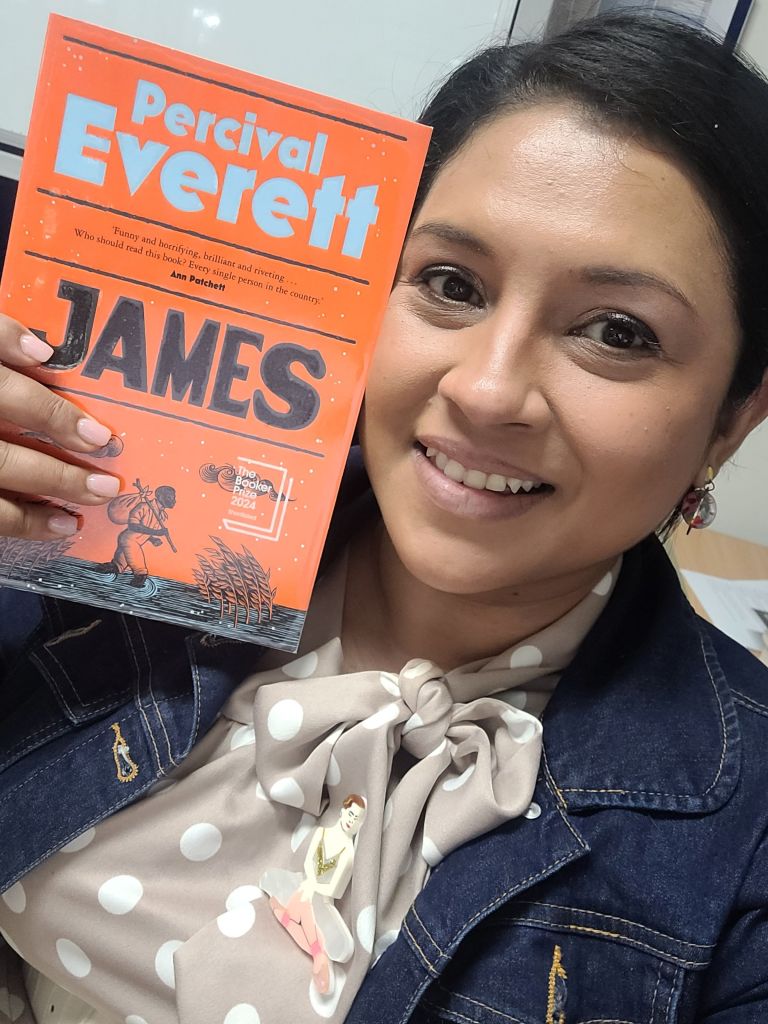
Book Review – James by Percival Everett

Percival Everett’s James is a profound act of literary reclamation. Shortlisted for the 2024 Booker Prize, the novel reimagines Adventures of Huckleberry Finn from the perspective of Jim—now James—a character whose voice was historically muffled by the hidden curriculum of Twain’s original novel. In Twain’s version, Jim is viewed as a sympathetic bystander, sidelined. His views filtered through Huck’s lens, his speech distorted to fit white expectations. The novel taught generations to empathise with Jim, but not to truly hear him. Because why would the slave Jim, have anything important to say?

Everett changes that. In James, the enslaved man is literate, philosophical, and quietly radical. He reads Locke and Voltaire, not as a literary flourish, but as a declaration of intellectual agency. He is articulate, intelligent and his perspicuity makes him a clear hero. James performs the dialect expected of him not because he lacks education, but because survival demands performance. Exposing his intelligence would have only led to his downfall. This inversion is powerful—it exposes the performative nature of race in literature and life and reminds us how often people of colour have been forced to speak in ways that comfort white audiences.

The novel also speaks to a broader truth: for much of literary history, the voices of people of colour have been excluded from the mainstream. The canon has long been shaped by a narrow lens—English-speaking, white, and often male. Even today, the global literature market remains dominated by English-language publishing and a WASP-centric worldview, making it difficult for diverse stories to break through. James stands out not only for its literary brilliance but for its bold challenge to that status quo. This is especially resonant in the current socio-political climate in the United States, where history itself is being rewritten based on political ideologies. School curricula are being reshaped, books banned, and narratives sanitised. In this context, Everett’s decision to retell Huckleberry Finn from James’s perspective is not just literary—it’s political.

It’s a reminder that storytelling is power, and that reclaiming voice is an act of resistance.

Everett’s prose is sharp, lyrical, and laced with irony. He doesn’t just give James a voice—he gives him agency, complexity, and dignity. James is not a corrective to Twain’s novel, but a conversation with it. It invites readers to reconsider not just the stories we read, but the structures that decide which stories are told, and which are silenced.

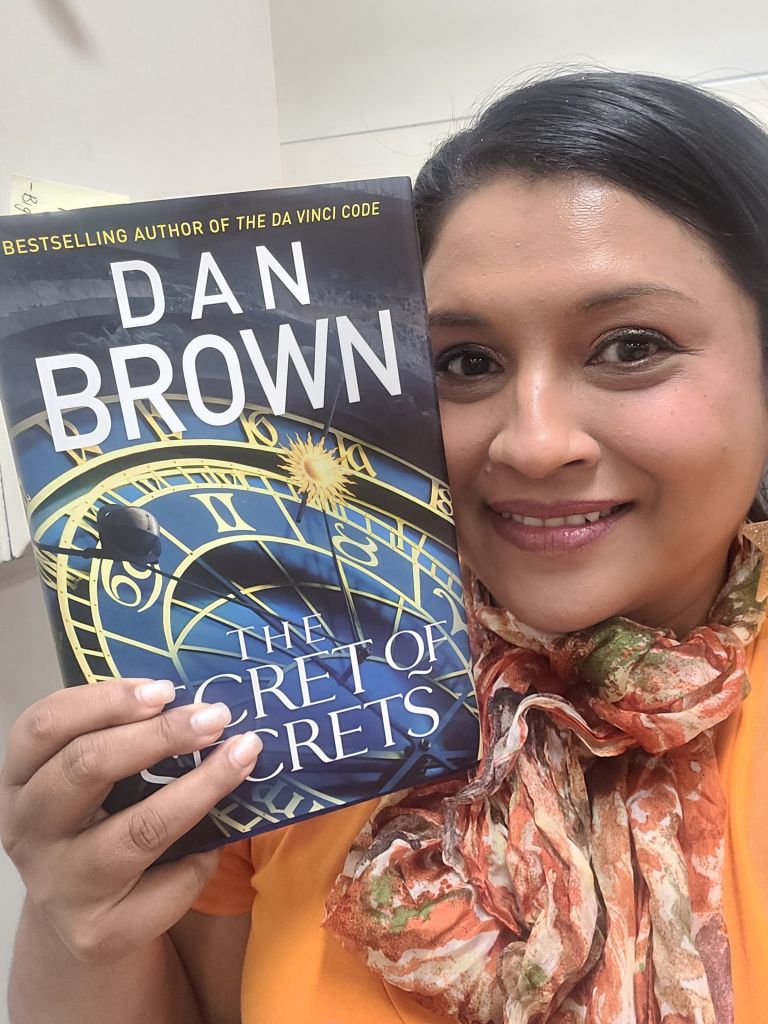
Book Review – The Secret of Secrets

Once again… at 12.01 on the 9th of September, I downloaded the latest Dan Brown novel as I was eagerly awaiting the next installment of the Robert Langdon stories. But urgh…. I even switched to paperback at 5pm in hope that the feel of an actual book would improve the storyline. But alas, it did not. Now I am out $17 for the eBook and $30 for the physical copy with little to show for it.

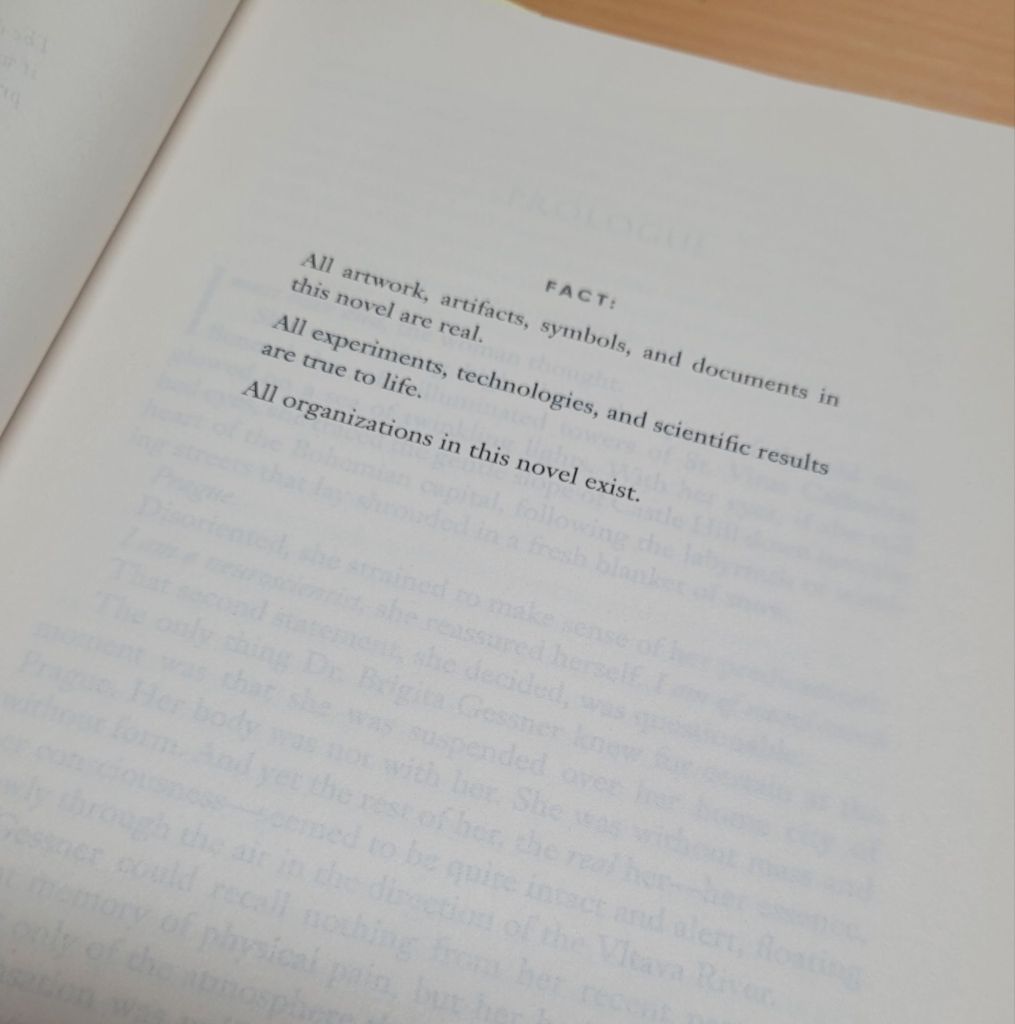
Dan Brown’s The Secret of Secrets reads more like a glitzy façade than a compelling novel—an elaborate construct designed to dazzle, but lacking any real substance. It’s the literary equivalent of fake veneers: glossy, over-polished, and desperate to be taken seriously. While it promises a deep dive into consciousness and ancient mysteries, what it actually delivers is a recycled thriller dressed up in pseudo-intellectual jargon.

All Shine, No Substance

The story sees Robert Langdon once again caught up in a convoluted plot, this time involving noetic science and a missing manuscript that supposedly holds the key to unlocking human potential. But instead of genuine intrigue, we’re handed a tired formula: cryptic symbols, secret societies, and chase scenes that feel like they’ve been lifted straight from his earlier books or a poorly made James Bond (Yes Timothy Dalton, I am thinking of you!). The pacing is frantic, but not in a good way—it’s like being dragged through a trivia night hosted by someone who’s memorised the answers but lost the passion.

FYI – Noetic comes from the Greek for inner wisdom and intuition—none of which made it into this book. Honestly, I’ve had deeper thoughts staring at the Bunnings sausage sizzle queue.

Prague, one of the novel’s main settings, should be a rich, gothic playground for mystery and intrigue. As one of the oldest cities in Europe, Brown could have leaned into its heritage and legend in a far more effective manner like he did in Angels and Demons. But Brown’s use of it in this novel feels opportunistic. The city’s legends and architecture are reduced to mere backdrop, with little emotional weight or narrative depth. It’s all surface-level spectacle, with historical references thrown in like confetti to distract from the lack of character development.

The book’s central theme—consciousness as a cosmic force—could have been fascinating. Instead, it’s treated like a buzzword, tossed around without any real exploration. The science is muddled (and stupid), the philosophy is shallow, and the dialogue often reads like a motivational seminar gone off the rails. Rather than provoking thought, it provoked a significant number of eye-rolls and venting.

Pretentious much? A bit of pomposity from Ole Mate Danny Boy.

Even Langdon, once a likeable and cerebral lead, feels like a parody of himself. His quirks—like the ever-present Mickey Mouse watch—now seem forced, and his reactions to danger border on slapstick. The villains are cartoonish, the twists are predictable, and the stakes never feel authentic.

It’s a far fall from Brown’s earlier works like Angels & Demons and The Da Vinci Code, which—while not perfect—had a sense of urgency and originality that kept readers hooked. His last truly engaging novel was Inferno, which at least attempted to grapple with real-world ethical dilemmas and global stakes. Since then, it feels like Brown has been chasing the shadow of his own success, layering spectacle over substance in hopes of recapturing the magic.

And to be fair, The Secret of Secrets had a tough benchmark to meet—Galbraith’s Hallmarked Man has officially been my best read this year. Compared to that, Brown’s latest effort feels like a pale imitation of depth and drama.

In the end, The Secret of Secrets tries to be profound but lands as pretentious. It’s a book that wants to be taken seriously, but beneath the polished surface, there’s not much going on. If you’re after a thriller that genuinely challenges your thinking, this one might leave you feeling short-changed—like you’ve been sold wisdom in a shiny wrapper, only to find it’s all gloss and no grit.

Real Men Read

Empowering Boys Through the Power of Story

The “Real Men Read” initiative, recently hosted at my school was intentionally held between Book Week and Father’s Day as a event to bring our Primary students and their male caregivers to reinforce the importance of positive male role models in improving literacy outcomes for boys. The event brought together fathers, grandfathers, and male mentors together for a pleasant evening celebrating the positive outcomes from reading. Two dads kindly volunteered to talk about how and why they read. They discussed their own role models and how they support their sons in their literacy journey. We also had a fabulous guest speaker from Brothers and Books – Dylan Conway to talk about the impact reading has on building resilience and reducing stress. The impact was immediate—students were more engaged, more curious, and more eager to pick up a book themselves. In fact, I received an email from a dad that next morning.

Thanks again for all of your efforts last night.  We are lucky to have such wonderful teachers that genuinely care for our sons.  Conor actually got up this morning and said he wants to read his new library book with me tonight.  Success!

This event powerfully demonstrated that when boys see and hear about men they value and respect reading, they begin to associate literacy with strength, intelligence, and emotional depth. In a world increasingly shaped by digital distractions and narrow stereotypes, the presence of caring, literate male figures offers boys a broader vision of what it means to be a man.

The research backs this up! A study by Merga and Ledger (2019) found that boys are more likely to engage with reading when they see male role models actively participating. Furthermore, recent findings by Smith and Taylor (2023) suggest that boys who regularly read with male caregivers demonstrate improved vocabulary acquisition, reading comprehension, and a more positive attitude toward school. These outcomes are not only academic but also social, as reading together fosters empathy and communication.

The National Literacy Trust (2025) further supports this, stating: “Fathers today are more involved in their children’s lives than ever before, and their engagement in early learning activities like playing, reading, singing, drawing and visiting parks or libraries supports children’s emotional, cognitive and educational development, as well as their early language and literacy skills.”

As Dylan Conway pointed out from the not-for-profit organisation Brothers and Books, their campaigns have shown that when boys see men reading, they begin to associate reading with strength, curiosity, and emotional intelligence. Their organisation has championed the cause, encouraging men to read and donate books across Australia.

The Real Men Read event served as a powerful reminder that literacy is not just a school responsibility—it is a community effort. When fathers and male mentors take the time to read with boys, they are investing in a future where literacy is linked to confidence, connection, and lifelong learning.

References

Merga, M., & Ledger, S. (2019). Parents’ perceptions of the importance of reading and the efficacy of reading aloud: Implications for fostering reading engagement in the home. Australian Journal of Education, 63(2), 163–178. https://doi.org/10.1177/0004944119840077

Smith, J., & Taylor, R. (2023). Male role models and literacy development in boys: A longitudinal study. Journal of Educational Research and Practice, 14(1), 45–59.

National Literacy Trust. (2025). Fathers’ engagement in early childhood literacy. https://literacytrust.org.uk

Australian Bibliotherapeutic Society. (n.d.). About us. https://bibliotherapy.org.au

Brothers and Books. (n.d.). Our mission. https://brothersandbooks.org