Sundays, Libraries, and the Quiet Crisis in Reading

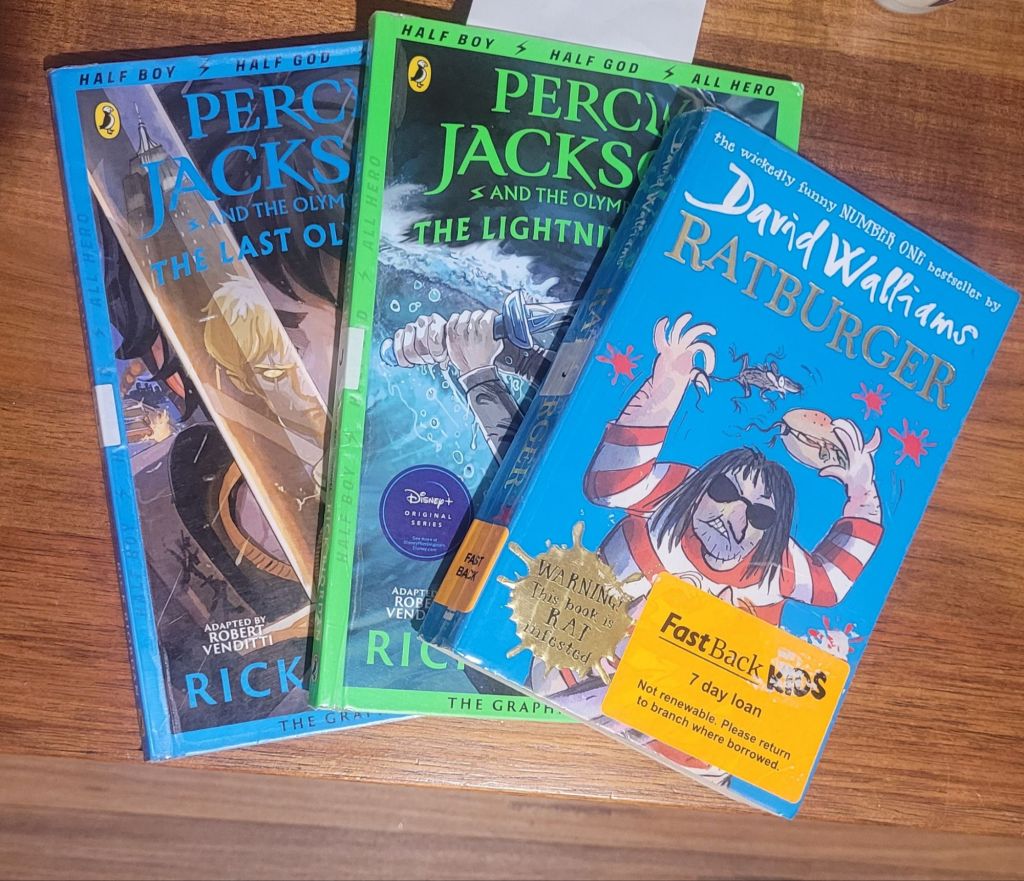
The 10 year old child’s haul.

On Sundays, our family has a rhythm. We go to church in the morning, then its off to our local library. The kids scatter to their favourite corners, borrowing books and settling in to read whatever strikes their fancy. The only rule is, that for every book that is a re-read, there must be one you have not read before.

This week’s book haul – mine.

Whilst my children scurry to their favourite genres, I grab a coffee and wander the shelves, letting my eyes land on whatever catches my eye. My husband always chuckles at this part. “You work in a library,” he says, amused. He’s right, of course. I do. But I work in a boys’ school library, and let’s just say the collection doesn’t quite float my boat. We then settle down for 30-45min of quiet reading together, but all on individual journeys.

Cook, S. (2025, November 5). It will take more than the new Children’s Booker Prize to arrest the dramatic decline in reading enjoyment. The Conversation. https://theconversation.com/it-will-take-more-than-the-new-childrens-booker-prize-to-arrest-the-dramatic-decline-in-reading-enjoyment-268777

There’s something different about being in a space where reading is chosen, not assigned. Where stories are picked for pleasure, not performance. That contrast has been sitting with me lately, especially after reading Loh et al.’s 2025 report on the decline in volitional reading and a recent piece in The Conversation about the new Children’s Booker Prize. Both paint a sobering picture: young people are reading less, and they’re enjoying it even less than that.

Loh, C. E. et al. (2025) The Decline in Volitional
Reading: Evidence-Informed Ways Forward.
National Institute of Education, Nanyang
Technological University, Singapore.

Loh’s recommendations to improve literacy success.

  • agency
  • access to literature
  • time in daily routines
  • reflection and connection
  • social interaction
  • developing a positive reading identity

What struck me most in Loh’s report was what wasn’t there. None of the key principles mention curriculum reform. None suggest that testing is the answer. Instead, the focus is on joy, choice, and connection. Reading for pleasure is framed not as a luxury, but as a necessity. It’s a stronger predictor of reading attainment than socioeconomic status. That’s huge. It means that if we want to close literacy gaps, we need to open up space for enjoyment.

In my school library, I see the tension. Boys who associate reading with assignments, comprehension questions, and accelerated reader points. Not with curiosity or escape. Not with laughter or awe. And I wonder: what would happen if we let go of the scaffolds and trusted them to choose? The Conversation article makes a similar point. Awards like the Children’s Booker are lovely, but they won’t shift the culture on their own. What we need is a reimagining of reading in schools. Less about outcomes, more about experience. Less about control, more about trust.

Furthermore, parents need to remember that they are their children’s first educators. Is reading and literacy your household value? One of the key findings in Loh’s research is that children need access to literature and to see it modelled by the adults around them. Do parents take their kids to the library? Do they read in front of their children? Or do they presume that schools will take care of it? Do they even ask their children how often they visit the school library? These questions matter. Because when reading is visible and valued at home, it becomes part of a child’s identity, not just a school subject.

So here’s my quiet Sunday reflection: maybe the best thing we can do as educators is to make room and provide time. Room for stories that speak to our students. Room for browsing, for borrowing, for reading without a worksheet attached. Room for libraries that float their boats and time to lie back and float away.

Because when reading becomes a choice again, it becomes a joy again. And that’s where the magic lives.

Banned Books Week: Censorship, Selection, and the Role of the Teacher Librarian.

Each year, Banned Books Week invites us to reflect on the importance of intellectual freedom and the dangers of censorship. Around the world, books are challenged or removed from shelves due to content deemed offensive or ideologically inappropriate by local authorities. These decisions often reflect broader societal tensions around race, gender, sexuality, and political beliefs.

In Australia, the free flow of information is protected by legislation such as the Freedom of Information Act, and championed by organisations like the Australian Library and Information Association (ALIA). ALIA upholds core values of open access to knowledge and ideas, ensuring that libraries remain spaces where diverse perspectives can be explored without fear or restriction. Public libraries, in particular, play a vital role in this mission by offering equitable access to information and digital resources for all citizens. Platforms like Trove, hosted by the National Library of Australia, further support this by providing access to a vast and growing collection of digitised newspapers, books, images, and more.

However, the conversation around banned books takes on a different tone in school libraries. Here, the issue is not so much about banning books, but about what to include. School libraries operate within a framework of collection development and management policies, which guide decisions about which resources best support the needs of the school community. The point of a school library is to support student success by providing access to resources that meets the curriculum whilst also fostering skills in reading, research and informational literacy. Therefore, any policies regarding the breadth and depth of a collection will factor in curriculum relevance, age appropriateness, and the diversity of student experiences.

So when I look at the list of most commonly banned books worldwide… I realise we have most of them on the shelves.

Most Commonly Banned Books Worldwide (All-Time)
  1. The Catcher in the Rye – J.D. Salinger
    Banned for profanity, sexual content, and themes of rebellion.
    • We have this title as it is considered a classic as is in our senior collection aimed for sophisticated readers in Grade 10 and above.
  2. To Kill a Mockingbird – Harper Lee
    Challenged for racial themes and language
    • We have this title as it is considered a classic. It currently sits in our Classics collection and is available for students to borrow. It is also a class text and is frequently used as part of novel studies.
  3. 1984 – George Orwell
    Banned for political themes and criticism of totalitarianism
    • We have this title as it is considered a classic. It currently sits in our Classics collection and is available for students to borrow. It is also a class text and is frequently used as part of novel studies.
  4. Harry Potter series – J.K. Rowling
    Challenged for promoting witchcraft and occultism
    • We have numerous copies of this!
  5. The Satanic Verses – Salman Rushdie
    Banned in several countries for blasphemy
    • We don’t have this text as it does address the curriculum.
  6. The Handmaid’s Tale – Margaret Atwood
    Banned for sexual content and perceived anti-religious themes
    • We have this title as it is considered a classic. We do have this novel in our senior collection aimed for sophisticated readers in Grade 10 and above. It is also a class text and has been used as part of novel studies.
  7. Beloved – Toni Morrison
    Challenged for graphic depictions of slavery and violence.
    • We don’t have this text as part of our collection. We do have 12 years a slave, The Colour Purple and Uncle Tom’s Cabin.
  8. Lolita – Vladimir Nabokov
    Banned for being “obscene” in several countries
    • We do not have this novel because it does not meet any curriculum requirements.
  9. Fifty Shades of Grey – E.L. James
    Banned for erotic content and BDSM themes
    • We do not have this novel because it does not meet any curriculum requirements.
  10. The Grapes of Wrath – John Steinbeck
    Banned for political reasons and profanity.
    • We do have this novel in our senior collection aimed for sophisticated readers in Grade 10 and above.

I will point out that one of the challenges of being in a school with students from Grade 5-12 is that what may be appropriate for a senior student to read may not me developmentally appropriate for a younger boy. To manage this, we have further classified the fiction texts into general (all years), middle fiction (Grades 7-9) and senior fiction (Grades 10-12). Students are able to freely access resources within their ‘age range’. However, they require parental permission to access more sophisticated readers. This ‘limiting’ of access is our way of supporting the free movement of information whilst acknowledging that some novel themes could cause distress to an immature brain.

This distinction of inclusion versus exclusion of texts is crucial. While public libraries are bound by principles of universal access, school libraries must balance educational goals with community values. This is where the role of a teacher librarian is imperative because school libraries need staff that are fully trained and qualified. They need someone who is an informational professional and an educator to be able to craft a collection development policy that helps ensure that resource selection is transparent, consistent, and inclusive, rather than reactive or restrictive. It is this combined capacity that empowers teacher librarians to advocate for collections that reflect the richness of student identities and the complexity of the world they inhabit. Unfortunately, here in Queensland, many schools lack a qualified informational professional in their school library, that is if they have a library at all! This an absolute travesty for the children and their wider communities.

Ultimately, Banned Books Week reminds us all why intellectual freedom matters. This week serves as a poignant reminder of the fragile nature of intellectual freedom as it honours the fundamental right to read, to explore ideas from all perspectives, and to seek truth without interference. Each year, the spotlight falls on books that have been challenged or removed because they represent discomfort or dissent for a select few individuals. However, in doing so, we need to think about the deeper cost of censorship: the narrowing of thought, the silencing of voices, and the erosion of a society built on open inquiry and democratic exchange. Whether in public or school libraries, our responsibility is to foster environments where curiosity is encouraged, critical thinking is nurtured, and all voices have the opportunity to be heard.

Boys, Biscuits, and the Book Club Revolution

There’s something quietly radical about a group of students gathering to talk about books; in a world of endless scrolls and fleeting attention, the act of sitting together, face to face, page to page, is an act of resistance; it’s also an act of connection. Book clubs are often seen as quaint or optional, but research increasingly shows they are anything but; they are lifelines, especially for boys.

“A space for boys and books is a space for possibility.”Nichols-Besel et al., 2018

Reading is, by nature, a solitary pursuit; but when we read together, when we discuss, debate, and share, we transform that solitude into community. The National Library of New Zealand (n.d.) emphasizes that social reading increases understanding, introduces diverse perspectives, and fosters authentic engagement; it’s not just about comprehension, it’s about connection. This matters deeply for boys, who often disengage from reading during adolescence. Nichols-Besel, Scharber, O’Brien, and Dillon (2018) found that boys respond positively to book clubs when given access to interest-based reading materials and male role models; their study showed that boys’ engagement and reading outcomes improved significantly in these settings. Similarly, a recent UK study trialed social book clubs across 17 school libraries and found that boys’ reading ages increased by an average of 1 year and 3 months or more than double the expected growth when reading was framed as a social, low-pressure activity (School Library Association, 2025).

“Book clubs create a space where stories become shared experiences, and readers become friends.”J.N. Polleck (2022)

One of the primary roles of the teacher librarian is to foster a love of reading; this goes beyond managing resources and catalogues, it’s about cultivating curiosity, joy, and lifelong habits. Polleck (2022) argues that youth-led book clubs, especially those facilitated by librarians, are transformative spaces that prioritize student voice, identity, and emotional safety. Book clubs provide opportunities for students to review books, select new titles for the library collection, participate in reading competitions, and model positive reading behaviour for peers; these activities not only build literacy skills but also empower students to take ownership of their reading journey (Cutrer-Párraga & Hall-Kenyon, 2024).

Facilitating book clubs and fostering a love of reading aligns directly with the Australian School Library Association’s (ASLA) Standards of Professional Excellence for Teacher Librarians. Specifically, it reflects the standard that teacher librarians “develop and promote literacy and literature programs that encourage and engage learners” (ASLA, 2004). By creating inclusive, student-led book clubs, supporting reading for pleasure, and modelling positive reading behaviours, teacher librarians demonstrate excellence in both pedagogy and leadership. These practices not only build literacy but also nurture lifelong learning and a strong reading culture within the school community.

For boys, reading can feel like a chore; a subject; a test. But in a book club, it becomes a conversation; a safe space; a place to laugh, question, and be heard. Literacy circles and book clubs allow boys to explore texts in small, student-led groups, which fosters deeper understanding and emotional connection (The Weary Educator, 2024). And yes, food helps; at our school, we’ve learned that no boy can resist a food bribe. Biscuits, humble, crumbly, and beloved, have become our secret weapon; they lure students in, but it’s the stories and the friendships that keep them coming back.

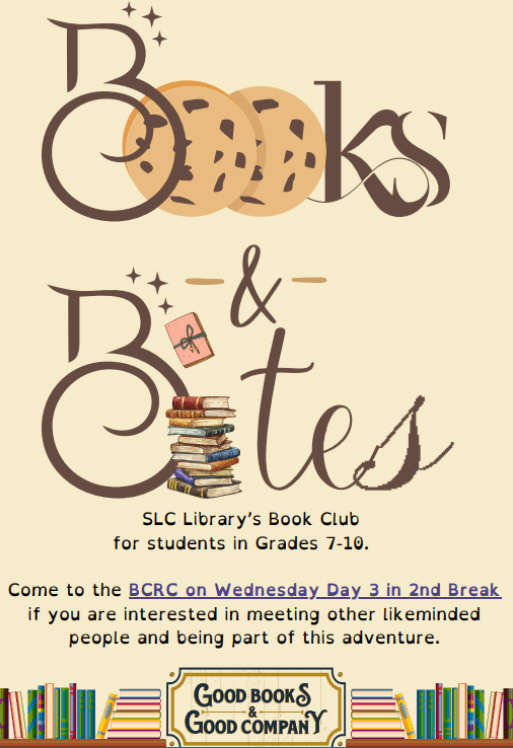
In 2024, our school launched a student book club called Books & Bites for Years 7–9; just six students came. It was small, but it was something. I bribed them with food and with this lure, they came. Now, in 2025, our Years 7–10 club has grown to 28 students; that’s 28 young minds choosing to read, choosing to talk, choosing to belong. Whilst they still come for the biscuits, they stay for the books. Therefore, I felt emboldened with such a strong uptake, and decided to start one for our younger readers. So, this August, we started a primary book club called Lauries Literature Legends. On day one, 15 students turned up. Some came for the biscuits; all stayed for the books. Even more came to the second session… apparently the lure of sitting in the library reading and eating was stronger than playing out in the quad.

Book clubs are not just about literacy; they’re about identity, empathy, and agency. They teach students to listen and to lead; they offer a space where boys can express emotions, challenge ideas, and discover who they are—not just as readers, but as people. In a time when reading is increasingly seen as a subject to learn rather than a joy to experience, book clubs remind us that stories are meant to be shared. So, we’ll keep offering biscuits; we’ll keep making space; because every book club meeting is a quiet revolution, and every student who shows up is part of it.

References

Australian School Library Association. (2004). Standards of professional excellence for teacher librarians. https://asla.org.au/resources/Documents/ASLA%20standards.pdf

Cutrer-Párraga, E. A., & Hall-Kenyon, K. M. (2024). Facilitating youth-led book clubs as transformative and inclusive spaces [Review of the book by J. N. Polleck]. UCL Press. https://journals.sagepub.com/pb-assets/cmscontent/TCZ/Book%20Reviews/2024%20Book%20Reviews/January/Facilitating%20Youth-Led%20Book%20Clubs%20as%20Transformative%20and%20Inclusive%20Spaces-1705521637.pdf

Nichols-Besel, K., Scharber, C., O’Brien, D. G., & Dillon, D. R. (2018). A space for boys and books: Guys Read book clubs. Children and Libraries, 16(2). https://journals.ala.org/index.php/cal/article/view/6682/8971

Polleck, J. N. (2022). Youth-led book clubs and the power of student voice. UCL Press.

School Library Association. (2025). New study shows positive impact of social reading spaces. https://www.sla.org.uk/Services/Public/News/Articles/2025/social-reading-spaces.aspx

The Weary Educator. (2024, July 8). Implementing literacy circles/book clubs in your classroom in 10 steps. https://thewearyeducator.com/2024/07/08/literacy-circles/

National Library of New Zealand. (n.d.). Social reading and book clubs. https://natlib.govt.nz/digital-literacy/stories/projects-to-improve-student-learning/schools/reading-engagement/strategies-to-engage-students-as-readers/book-clubs

The Teacher Librarian’s Role in Elevating Literacy Through Quality Literature

Timothy Shanahan’s blog offers teacher librarians a powerful lens through which to re-evaluate long-held assumptions about reading instruction. By challenging the instructional level theory and advocating for the use of complex, grade-level texts, Shanahan equips librarians with evidence-based insights that support the promotion of high-quality literature. His work reinforces the librarian’s role in curating rich collections, scaffolding student engagement, and collaborating with teachers to foster deeper, more meaningful reading experiences.

Timothy Shanahan’s critique of the instructional level theory—and the growing body of research supporting the use of challenging texts—has profound implications for teacher librarians. Far from being custodians of books, teacher librarians are literacy leaders, curriculum collaborators, and champions of equitable access to high-quality literature. Their work sits at the intersection of pedagogy, inquiry, and imagination.

For decades, the instructional level model influenced how books were selected for students. It suggested that matching texts to a student’s reading level would yield the best learning outcomes. However, recent research has challenged this assumption. Studies by Lupo, Strong, and Conradi Smith (2019) and Young, Lagrone, and McCauley (2020) show that students make significant gains when exposed to complex texts, especially when supported by skilled educators. This shift calls for a re-evaluation of how we curate and use literature in schools.

Teacher librarians are uniquely positioned to lead this change. Rather than relying solely on readability formulas or levelling systems, they can advocate for literature that offers rich vocabulary, nuanced themes, and diverse perspectives. Quality literature provides opportunities for deep discussion, critical thinking, and emotional engagement—elements that are often missing from simplified texts. This approach aligns with the Australian Curriculum’s emphasis on engaging students with increasingly sophisticated texts across year levels (ACARA, n.d.).

Beyond curation, teacher librarians play a vital role in scaffolding student engagement with challenging texts. By collaborating with classroom teachers, they help design literature experiences that support comprehension and inquiry. Whether through literature circles, guided reading sessions, or integrated inquiry units, teacher librarians ensure that students are not only exposed to complex texts but are also equipped to understand and enjoy them. Research by Pérez Buelvas (2024) highlights how scaffolding strategies—such as task-based activities and formative assessment—can significantly improve reading comprehension, especially among English language learners.

Moreover, teacher librarians contribute to equity in literacy education. Stocker et al. (2023) argue that integrating the science of reading with behavioural science can address systemic inequities in Australian schools. By ensuring all students have access to high-quality literature and the support to engage with it meaningfully, teacher librarians help close the literacy gap and foster lifelong learning.

Top 3 Ways Teacher Librarians Can Elevate Reading Through Quality Literature

1. Curate and Promote Rich, Diverse Texts Select literature that challenges students intellectually and emotionally—books with layered themes, sophisticated language, and diverse voices. Use displays, flipguids and reading lists to spotlight these titles and spark curiosity.

2. Scaffold Access to Complex Texts Support students as they engage with challenging material through guided reading, literature circles, and strategy instruction. Help them build confidence by modelling how to navigate difficult vocabulary and abstract ideas.

3. Collaborate with Teachers to Embed Literature into Learning Work alongside educators to integrate high-quality texts into curriculum units. Suggest titles that align with learning goals while encouraging deeper thinking and discussion across subjects.

References

ACARA. (n.d.). National Literacy Learning Progression. Australian Curriculum, Assessment and Reporting Authority. https://v8.australiancurriculum.edu.au/resources/national-literacy-and-numeracy-learning-progressions/national-literacy-learning-progression/

Lupo, S. M., Strong, J. Z., & Conradi Smith, K. (2019). Text difficulty and adolescent literacy: A randomized study of challenging texts and instructional supports. Reading Research Quarterly, 54(3), 342–375. https://doi.org/10.1002/rrq.241

Pérez Buelvas, H. G. (2024). Enhancing reading skills through scaffolding strategies in eighth-grade EFL students. HOW Journal, 31(2), 70–88. https://doi.org/10.19183/how.31.2.754

Shanahan, T. (2023, March 15). Why children should be taught to read with more challenging texts. Shanahan on Literacy. https://www.shanahanonliteracy.com/blog/why-children-should-be-taught-to-read-with-more-challenging-texts

Stocker, K. L., Fox, R. A., Swain, N. R., & Leif, E. S. (2023). Between the lines: Integrating the science of reading and the science of behavior to improve reading outcomes for Australian children. Behavior and Social Issues, 33, 504–531. https://doi.org/10.1007/s42822-023-00149-y

Young, C., Lagrone, S., & McCauley, J. (2020). Read Like Me: An intervention for struggling readers. Education Sciences, 10(3), 57. https://doi.org/10.3390/educsci10030057

Celebrating Australian School Library Day: Why Every School Needs a Library and a Qualified Teacher Librarian

Today, across the country, we celebrate Australian School Library Day—a moment to shine a light on the heartbeat of our schools: the library.

This year’s theme, All the Literacies, reminds us that school libraries are not just about reading. They’re about empowering students with the full spectrum of literacies needed to thrive in a complex world. As educators, this day invites us to reflect on the transformative role libraries play in our schools and to advocate for the qualified teacher librarians who make these spaces come alive.

More Than Just Books: The Role of School Libraries

Modern school libraries are vibrant, inclusive environments that support curriculum delivery, foster independent learning, and build critical and creative thinking skills (ACT Government, 2022). When led by a qualified teacher librarian, these spaces become central to a school’s teaching and learning culture.Yet in Queensland and beyond, many schools still lack a dedicated library space or a qualified teacher librarian—especially in communities where literacy outcomes are already at risk (Queensland Teachers’ Union [QTU], 2023).

Why qualified Teacher Librarians matter?

Teacher librarians are dual-qualified professionals with expertise in both education and information science.

They:

  • Collaborate with classroom teachers to support curriculum goals.
  • Promote reading for pleasure and academic success.
  • Guide students in navigating digital and print resources.
  • Create safe, inclusive spaces that support student wellbeing.

Then there is nothing quite like seeing a student fall in love with reading for the first time. That joy is irreplaceable!

Literacy and Wellbeing: A Powerful Connection

Literacy is foundational and not just for academic achievement, but for emotional and social wellbeing. Research shows that reading and writing can significantly support children’s mental health, especially during times of stress (National Literacy Trust, 2020).

This year’s theme, All the Literacies, highlights the many ways libraries support students, from reading and information literacy to digital, cultural, and wellbeing literacy. A well-resourced library is a launchpad for lifelong learning. Emerging frameworks like wellbeing literacy emphasize the importance of teaching students how to communicate about their emotional and mental states (Oades, Robinson, Green, & Spence, 2021).

The Reading Crisis.

Merga (2017) has revealed a troubling trend: while many adolescents possess basic literacy skills, they are increasingly disengaged from reading for pleasure which is known as aliteracy. Between 2017 and 2021, the percentage of Australians who read books at least once a year dropped from 92% to 75% (Merga, 2022). This decline has serious implications for literacy development, academic performance, and future opportunities. Merga’s findings also underscore the vital role of teacher librarians in reversing this trend. By fostering reading habits and building relationships with students, they help bridge the gap between ability and motivation.

Australian School Library Day – A call to action.

Australian School Library Day was created to celebrate the incredible work of school library staff and to raise awareness of the essential role libraries play in education (Australian Library and Information Association [ALIA], 2025). It’s a day to:

Share appreciation for your library staff.

Showcase student voices and library stories.

Advocate for well-resourced libraries in every school.

If your school doesn’t yet have a qualified teacher librarian or a dedicated library space, today is the perfect time to start the conversation.

After all, every student deserves access to a library that supports all the literacies.

References

Merga, M. K. (2022). Reading engagement in Australian adolescents: Beyond ability. Springer.National Literacy Trust. (2020). Children and young people’s reading in 2020 before and during lockdown. https://literacytrust.org.uk/research-services/research-reports/children-and-young-peoples-reading-2020-before-and-during-lockdown/

Oades, L. G., Robinson, P., Green, S., & Spence, G. B. (2021). Wellbeing literacy: A capability model for wellbeing science and practice. International Journal of Wellbeing, 11(1), 1–27. https://doi.org/10.5502/ijw.v11i1.727

Queensland Teachers’ Union. (2023, May 5). Do you have a qualified teacher-librarian in your school library? Queensland Teachers’ Journal, 128(3), 22. https://www.qtu.asn.au/journal/queensland-teachers-journal-vol-128-2023/queensland-teachers-journal-vol-128-no-3/do-you-have-qualified-teacher-librarian-your-school-library

Beyond the Bookshelf: Why Diverse Stories Belong in Every School Library

In every corner of a school library, stories wait to be discovered. Stories that open minds, build empathy, and reflect the rich tapestry of human experience. But what happens when those stories are missing? When shelves lack the voices of different cultures, identities, and lived experiences?

As an educator and lifelong reader, I’ve come to believe that diverse books aren’t just nice to have in a collection. But rather, that they’re essential. They shape how students see themselves and others, and they help build inclusive communities where every child feels seen and valued.

Representation Matters

Research consistently shows that representation in literature has a profound impact on students’ self-esteem, academic engagement, and social development. When children see characters who look like them, speak their language, or share their cultural background, they feel validated. And when they read about lives different from their own, they develop empathy and understanding.

  • A study by the Cooperative Children’s Book Center found that in 2022, only 33% of children’s books featured characters from diverse backgrounds.
  • According to the Australian Institute for Teaching and School Leadership, inclusive education improves student outcomes and fosters respect among peers.
  • The “Windows, Mirrors, and Sliding Glass Doors” framework by Dr. Rudine Sims Bishop emphasizes how books can reflect our own lives, offer insight into others’, and invite us into new worlds.

Growing up as a teen in Australia, I rarely saw characters in books who looked like me or came from my cultural background. It wasn’t until university that I encountered authors who spoke to my experience, and it was transformative. That moment of recognition made me realize how powerful literature can be in shaping identity and belonging.

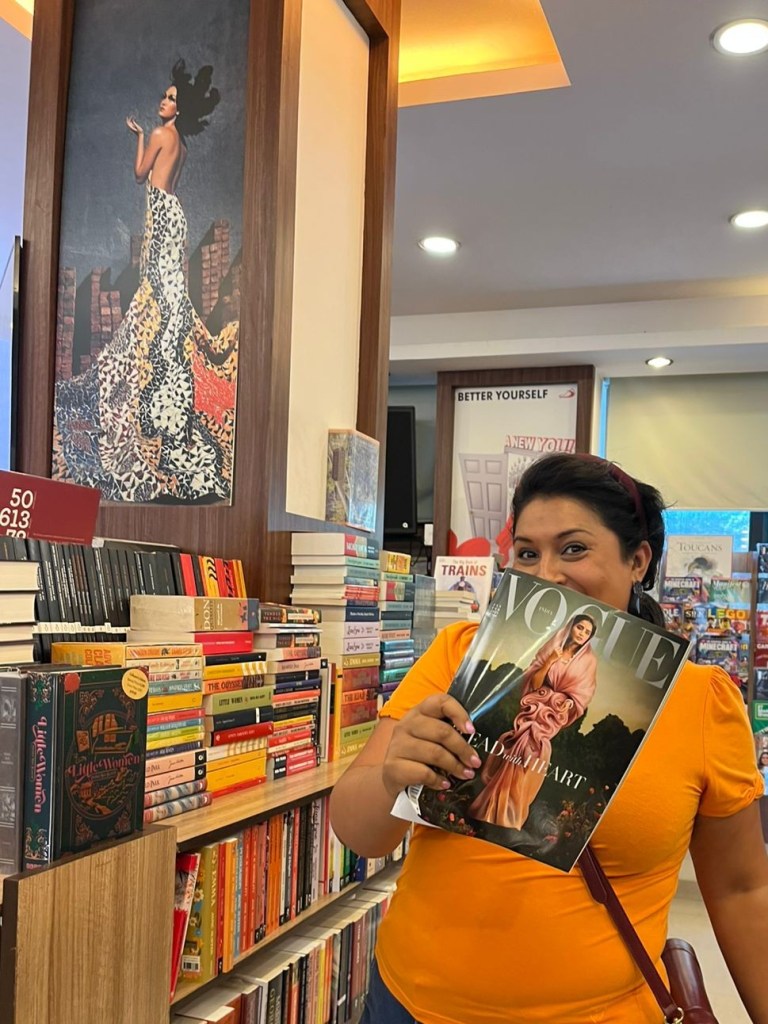
One of the most vivid memories I have of feeling truly represented was during a recent trip to Mumbai. I walked into a bookstore and saw the latest issue of India Vogue. I was drawn to it because the cover featured models who looked like me, wore traditional fabrics with pride, and radiated a beauty that felt familiar. I stood there, overwhelmed. For the first time, I saw my heritage celebrated in a way that was bold, glamorous, and unapologetically authentic. That moment reminded me how powerful visibility can be, not just in fashion, but in every form of storytelling.

Now, as a teacher, I’m committed to curating a library space that reflects the diversity of our world. I’ve seen firsthand how students light up when they find a book that resonates with them. As one Year 9 student told me earlier this year when I handed him The White Tiger by Arvind Adiga, “This book feels like it was written for me.” That’s the magic we should strive for.

🏫 What should Teacher Librarians do?

To ensure every student has access to diverse stories, Teacher Librarians and schools must:

  • Regularly audit their library collections for representation across race, gender, ability, and culture.
  • Partner with local communities and authors to source authentic voices.
  • Provide professional development for educators on inclusive literature.
  • Encourage student-led book clubs and reading initiatives that celebrate diversity.

💬 Final Thoughts

Diverse books aren’t just about ticking boxes, they’re about opening hearts and minds. They help students navigate the world with compassion, curiosity, and confidence. When we fill our shelves with stories that reflect the full spectrum of human experience, we send a powerful message: You belong here. Your story matters.

Let’s go beyond the bookshelf—and make every library a gateway to understanding.

Schools as learning organisations.


The leadership and management of a school is heavily dependent on the organisation’s structure and learning culture. 

Small businesses, large corporations and government agencies tend to have an organisational structure that is easily identifiable.  However, schools and other learning institutions rarely adhere to a single framework and are often a medley of theories and are also heavily influenced by external political, social and economic factors.  This variance in organisational framework and external influences can affect the way schools are managed and overall success achieved. 

mohamed_hassan / Pixabay


Buijs (2005) argues that the way education and teaching is viewed has a direct influence on teaching practices.  Consequently, if education and learning institutions are to be viewed as centres of learning, then the focus of that organisation should be based upon pedagogical practices and the achievement of learning outcomes.  Kools & Stoll (2016) elaborate upon this idea further by suggesting that schools are knowledge based organisations with community as a central focus.  This is because learning and learning outcomes are exponentially  increased when students are emotionally supported in the presence of strong relationships.  Consequently the definition of schools as knowledge based learning organisations is more suitable as there is a shared focus on good pedagogical practice, student welfare and a strong emphasis on meaningful relationships.  This means schools will have different organisational needs and require a very different leadership style.  It is also important to remember that schools are not businesses and cannot be run for a profit from an ethical or moral point of view (Kools & Stoll, 2016).  

The reality is that most local schools are part of larger organisations, such as education departments or charters, and or have strong links to religious affliliations.  This means that as part of larger conglomerates, they are not an independent organisation but are at the behest of the policies and procedures of the parent.  This acknowledgement of a parent organisation confirms the presence of machine theory, which can make some schools inefficient and rigid because they are unable to meet the local community due to the largely bureaucratic nature of the overarching organisation.  This can be fairly common in education department schools that have to follow a central path instead of meeting the needs of their local community. 

Besides the presence of the overarching machine theory, most individual schools are aligned along the classic management format with a clearly defined hierarchy of authority emanating from the principalship down to heads of faculty, team leaders and then classroom teachers (Kokemuller, 2017).  This structure is generally very stable as there are distinct channels of communication and in most circumstances staff are compliant  as this system is often replicated across schools and sectors (Kokemuller, 2017). 

Interestingly, few schools adhere to the professional organisational theory even though the teachers are considered to be highly educated and thus should have volition of their professional practice.  This difference could be due to the difference in how teachers view their own organisation and the way the organisation views teachers.  Classroom teachers view their profession as a student centred and have learning outcomes at the focus of their practice. But as schools are often viewed as public property, the actions and decisions made by school leaders are often influenced by the politics and society.  The presence of national curriculums, state syllabi, standardised testing and performance reviews limit the professional autonomy of practice teachers truly have.  These decisions, such as standardised testing, are often used to measure the efficacy of teachers and schools rather than determining and then resolving inequity between students (Berry, 2018).   It also puts into focus the trust and level of professional courtesy extended to teachers themselves by the governing authority and the greater community.


What influences a school’s decision making?

Whilst schools place a system of caring as its focus is beneficial to students, there are some negatives for teachers.  Kools & Stool (2017) argue that using vision and purpose to bind workers to an organisation is not always in the worker’s best interests as it puts the organisation’s vision above the needs of the employee.  Consistently putting the needs of the organisation above the worker can quickly lead to employee dissatisfaction, reduction in morale and increased attrition rates.  This is glaringly obvious when considering the high attrition of teaching staff  due to disillusionment and a lack of support (Stroud, 2017).  Currently, it is touted that over half of people who hold a teaching degree do not currently work in education and almost a fifth of new graduates do not even register as teachers upon completion of their degree (Stroud, 2017).  These statistics do not bode well for schools as learning organisations in the long term.  Schools are learning organisations and should be focused on the needs of their learning community and the relationships that support that learning for staff and students. 

The unfortunate truth is that the education sector is at the behest of public funds and as such are dependent on governmental policies as well as societal expectations.  This means that till there is a consensus about what the actual focus is of schools and other educational institutions, there will continue to be uncertainty about its outcomes, and for the people that work within the system.

The OECD’s report about schools being a learning organisation acknowledges that student learning needs to be the focus of educational institutions (OECD, 2016).  It points out that as a learning organisation, schools need to have the flexibility to adapt quickly to changing circumstances, as well as having the internal frameworks to embrace emerging technologies and innovative practice (OECD, 2016).  It is evidently clear that for students to receive the necessary skills and knowledge required for the 21st century, schools need to have a shared and collaborative approach to learning.  As such, there is a clear need for schools to have a shared vision, a positive culture of learning, support professional development and collaboration, and be able to exchange information freely with the external environment (OECD, 2016, p.1). This type of organisation values its staff members as professionals, and places importance in building those valuable relationships.

Schools are indeed organisations that promote learning and need to have a strong focus on their learning community which includes staff and students.  Unfortunately, education sectors are at the behest of public funds and as such are dependent on governmental policies as well as societal expectations.  This means that till there is a consensus about what the actual focus is of schools and other educational institutions, there will continue to be uncertainty about its outcomes, and the people that embedded within the system.


References:

Buijs, J. (2005). Teaching: Profession or vocation? Catholic  Education:  A  Journal  of  Inquiry  and  Practice, 8; 3. Pp 326-345. Retrieved from https://ejournals.bc.edu/index.php/cej/article/view/590/579

Berry, Y. (March 20, 2018). Time to drop NAPLAN? We shouldn’t treat school like a competition. The Canberra Times. Retrieved from https://www.canberratimes.com.au/story/6021749/time-to-drop-naplan-we-shouldnt-treat-school-like-a-competition/digital-subscription/

Kokemuller, N. (2017). Mintzberg’s five types of organizational structure. Hearst Newspapers: Small business. http://smallbusiness.chron.com/mintzbergs-five-types-organizational-structure-60119.html

Kools, M. and Stoll L. (2016), “What Makes a School a Learning Organisation?”, OECD Education Working Papers, No. 137, OECD Publishing, Paris. http://dx.doi.org/10.1787/5jlwm62b3bvh-en

Laming, M.M. and Horne, M. (2013) Career change teachers: Pragmatic choice or a vocation postponed? Teachers and Teaching: Theory and Practice, 19 (3). pp. 326-343.

OECD. (2016). What makes a school a learning organisation? A guide for policy makers, school leaders and teachers. UNICEF – Office of Research-Innocenti. Retrieved from http://www.oecd.org/education/school/school-learning-organisation.pdf

Stroud, G. (2017). Why do teachers leave? ABC News – Opinion. Retrieved from https://www.abc.net.au/news/2017-02-04/why-do-teachers-leave/8234054