Book Review – The Impossible Fortune

Richard Osman’s fifth novel in the Thursday Murder Club series, The Impossible Fortune, kicks off with a wedding—Joyce’s daughter Joanna is finally getting married. But the celebration takes a sharp turn when best man Nick announces that someone is trying to kill him. From that moment, the familiar crew of pensioners is drawn into yet another mystery, this time involving a hidden Bitcoin fortune, a car bombing, and a tangled web of suspects. It is nice to read a novel where the main characters are not in their flush of youth.  Gives someone who is quite frankly set in their middle age, some hope for age appropriate literature.

One of the first things that stood out to me was the large print. Compared to other novels I’ve read recently, this one is an absolute breeze to get through. It’s easy on the eyes and makes for a more relaxed reading experience, especially if you’re dipping in and out over a few days. The chapters are also cleverly titled by days of the week, which helps anchor the plot and gives a sense of progression—especially useful given the shifting perspectives between characters.

The emotional tone of the book is a little more poignant than previous instalments. Elizabeth is still reeling from the loss of her husband Stephen, and Osman handles her grief with sensitivity and depth. It adds a layer of introspection to the story without slowing down the pace. Ibrahim continues to be the group’s voice of reason, offering advice to friends and foes alike, including the ever-scheming Connie Johnson, who ironically saves Ron’s bacon eventually.

Joyce remains a delight, and her relationship with Joanna is given more attention here, adding warmth and humour to the narrative. The mystery itself is well-paced, with enough twists to keep you guessing but not so many that it becomes convoluted. Osman’s trademark wit is present throughout, and the characters continue to evolve in ways that feel authentic and earned.

I particularly enjoyed the plot line of Suzi, Jason, and Ron trying to evade the evil machinations of horrid wife beating Danny.  The perspective of Kendrick reminded me once again that the biggest victims of domestic violence are children and their lost childhoods.  Osman manages  rather cleverly to use Kendrick’s internal monologue to reveal his childhood trauma to the reader.

Overall, The Impossible Fortune is a satisfying continuation of the series—accessible, emotionally resonant, and full of charm. It’s not literature by any means but rather a pleasant holiday read as it requires very little cognitive processing.  However, it is a story about friendship, ageing, and the thrill of solving a good puzzle, all wrapped up in Osman’s signature style.

Book Review: The King’s Mother

Annie Garthwaite’s The King’s Mother is her second book about an incredible woman, and this sequel is a masterful and emotionally resonant portrait of Cecily Neville, a woman whose strength, ambition, and heartbreak shaped the course of English history. Set against the backdrop of the Wars of the Roses, this novel brings to life a matriarch who was far more than the mother of kings; she was a strategist, a survivor, and a power in her own right.

I was first introduced to Cecily in Sharon Penman’s The Sunne in Splendour, where she stood as a dignified and commanding presence amid the chaos of civil war. Garthwaite’s novel deepens that impression, giving Cecily center stage and allowing her voice to ring out with clarity, courage and conviction. As a daughter of the royal House of Neville, cousin to the Kingmaker and wife to highest ranking Lord of York, Cecily was indeed a lady of influence—but she earned her place in history through grit, determination and sacrifice.

Garthwaite’s storytelling is rich and immersive, capturing the political intrigue and emotional toll of a woman who saw her husband, cousin, and sons die in pursuit of their house’s claim to the throne. Cecily’s love for her children is both her greatest strength and her most painful vulnerability. Her devotion to George, Duke of Clarence, is especially poignant, as his betrayal and eventual death (drowning in a butt of malmsey wine, no less) is rendered with tragic inevitability. Garthwaite doesn’t flinch from the irony or the heartbreak, and neither does Cecily.

What sets The King’s Mother apart is its portrayal of female agency in a world dominated by men. Cecily is no passive observer; she is a political operator, a negotiator, and a woman who understands power and how to wield it. Garthwaite’s prose is elegant and sharp, balancing historical detail with emotional depth. The novel doesn’t just recount events—it explores the cost of ambition, the weight of legacy, and the quiet resilience of a woman who endured more than most.

Cecily Neville emerges as a complex and unforgettable figure, proud, calculating, loyal, and deeply human. Garthwaite gives her the voice she deserves, and in doing so, reclaims a vital piece of history too often overshadowed by the men around her.

Book Review: Cecily

Cecily is a bold and brilliant reimagining of one of the most overlooked power players of the Wars of the Roses, Cecily Neville, Duchess of York. In this incredible novel, Garthwaite resurrects a woman who was relegated to the margins of history and gave her a voice as commanding and complex as the times she lived through.

Kindle edition

History tells us that Cecily must have been a woman of great character. As the wife of a high ranking noble in the English court and a daughter of the house of Neville, Cecily is not merely a noblewoman, she is a strategist, a political operator, and a survivor. In a time where women were relegated to the distaff and the cradle, Cecily held her own among the peers of England and France. I love how Garthwaite has portrayed Cecily. Her use of language and semantics is unapologetically fierce. Cecily is driven, calculating, and deeply loyal to her family’s cause. She is also flawed. Her love for her sons, her only weakness and ultimately will cost her dearly.

The novel spans decades of turmoil, from the fall of her husband Richard, Duke of York, to the rise and reign of her sons Edward IV and Richard III. Through it all, Cecily remains at the heart of the action, not as a passive observer, but as a woman who shapes events from behind the scenes. Garthwaite’s prose is taut and evocative, capturing both the grandeur of court politics and the intimate griefs of a mother watching her family unravel.

What sets Cecily apart is its refusal to romanticise the brutality and heartbreak of medieval motherhood. The heartstrings are definitely pulled when youthink about the number of pregnancy losses, stillbirths and infant losses she experienced. In a time where the childbed was a path paved to the graveyard; Cecily used it to wield power. This is not a tale of damsels and chivalry—it’s a story of power, survival, and the brutal cost of ambition. Garthwaite’s Cecily is a woman of her time, but also ahead of it: she understands the game, and she plays it better than most men around her.

For readers who first met Cecily in Sharon Penman’s The Sunne in Splendour, Garthwaite’s novel offers a deeper, more personal exploration. It’s a fantastic story about a strong woman who lived through unimaginable loss—husband, cousin, sons—all sacrificed for the Yorkist cause. And while her greatest weakness may have been her love for her children, it’s also what makes her so achingly human.

Cecily is historical fiction at its finest: vivid, uncompromising, and utterly absorbing. Garthwaite doesn’t just resurrect a forgotten duchess—she reclaims her legacy.

No surprises that after I read this one, I had to read the sequel.

Book Review: Best of All Worlds by Kenneth Oppel

Kenneth Oppel’s Best of All Worlds is a young adult speculative fiction novel centred on Xavier Oak, a Canadian teenager trapped beneath an invisible dome with his father and stepmother. What begins as a short family retreat becomes years of unexplained isolation. The arrival of a second family three years later introduces ideological tension and a mild romantic subplot, consistent with genre expectations.

The narrative is straightforward, with hints of extraterrestrial involvement and surveillance. The prose is accessible, the pacing steady, and the themes—xenophobia, resilience, distrust—are presented in simplified form. The book is fairly true to the tone and structure of the Netflix adaptation it complements, though like most tie-ins, it reads as a diluted version of the original. It is an adequate read, but lacks literary substance.

Unlike Oppel’s other works, such as the Silverwing series, this novel lacks scope and is largely devoid of the symbolism that traditionally enriches his fiction. It trades allegorical depth for surface-level tension and interpersonal drama.

For readers who find classic dystopian texts too demanding, this may serve as a more approachable alternative. However, for those who do not generally enjoy young adult fiction, this novel is unlikely to change that view. It is readable, but ultimately all frosting and no cake—conceptually interesting, but light on depth.

Book Review – The Secret of Secrets

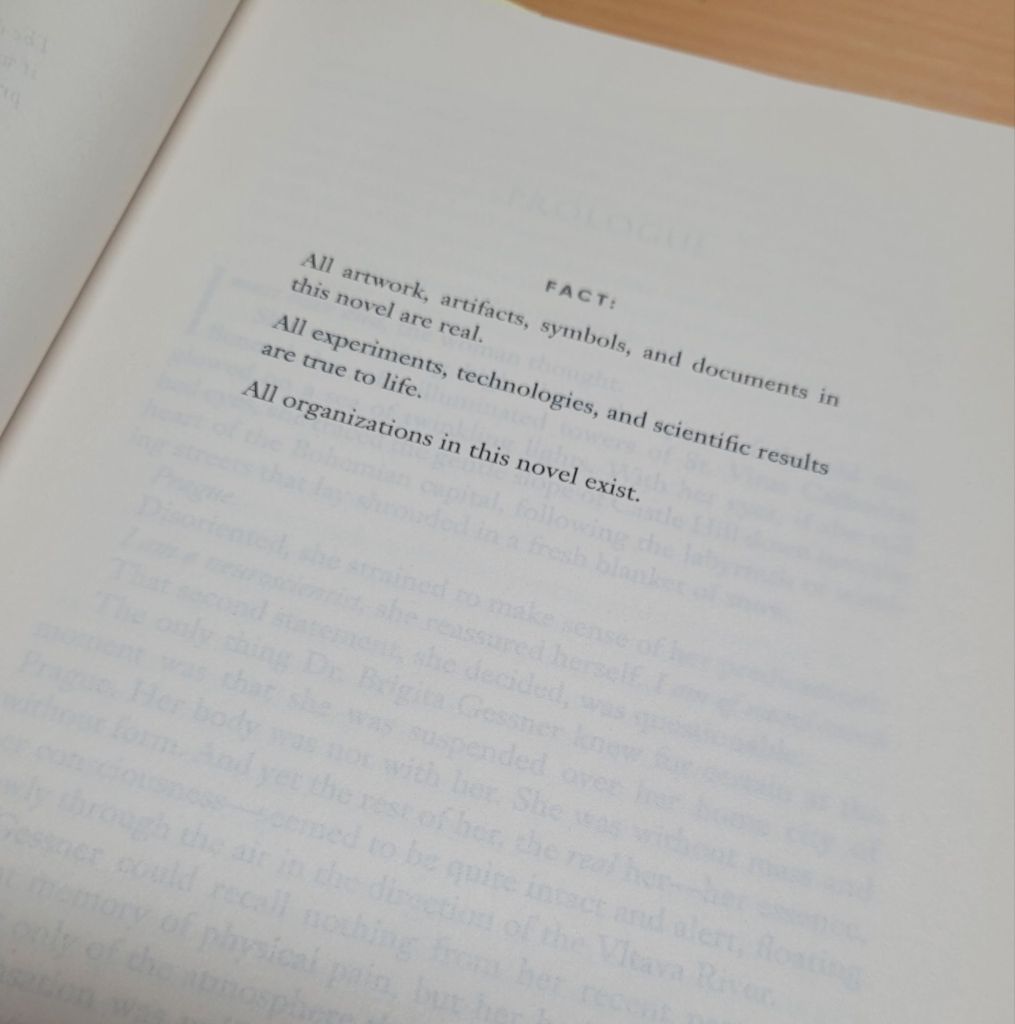
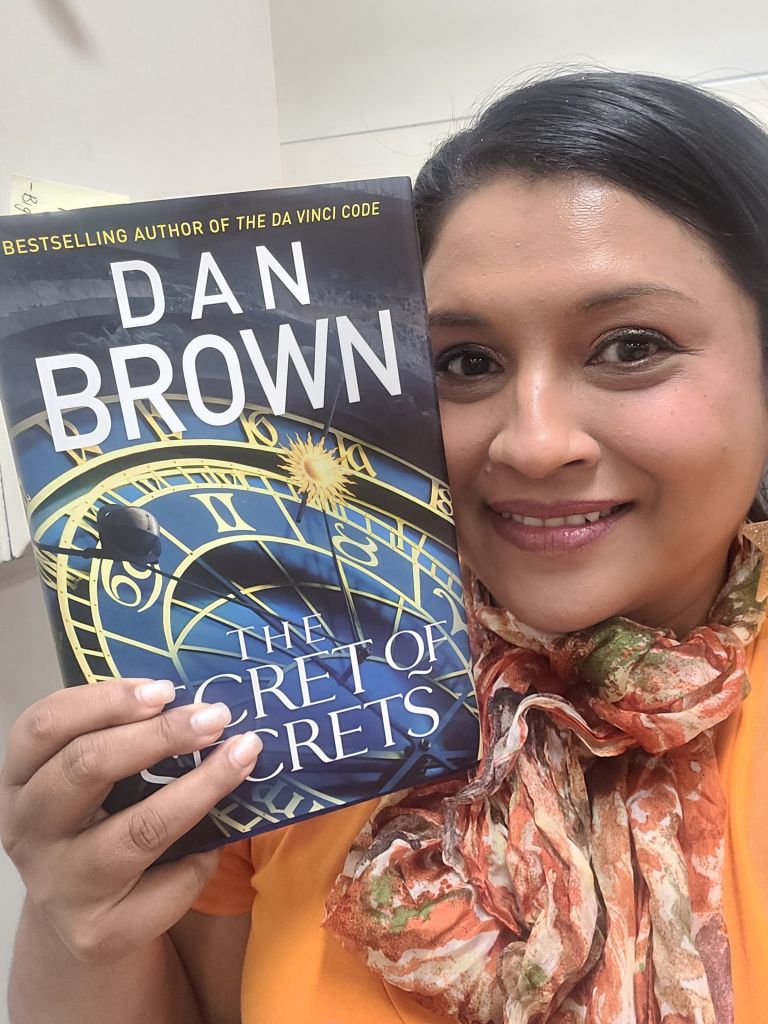
Once again… at 12.01 on the 9th of September, I downloaded the latest Dan Brown novel as I was eagerly awaiting the next installment of the Robert Langdon stories. But urgh…. I even switched to paperback at 5pm in hope that the feel of an actual book would improve the storyline. But alas, it did not. Now I am out $17 for the eBook and $30 for the physical copy with little to show for it.

Dan Brown’s The Secret of Secrets reads more like a glitzy façade than a compelling novel—an elaborate construct designed to dazzle, but lacking any real substance. It’s the literary equivalent of fake veneers: glossy, over-polished, and desperate to be taken seriously. While it promises a deep dive into consciousness and ancient mysteries, what it actually delivers is a recycled thriller dressed up in pseudo-intellectual jargon.

All Shine, No Substance

The story sees Robert Langdon once again caught up in a convoluted plot, this time involving noetic science and a missing manuscript that supposedly holds the key to unlocking human potential. But instead of genuine intrigue, we’re handed a tired formula: cryptic symbols, secret societies, and chase scenes that feel like they’ve been lifted straight from his earlier books or a poorly made James Bond (Yes Timothy Dalton, I am thinking of you!). The pacing is frantic, but not in a good way—it’s like being dragged through a trivia night hosted by someone who’s memorised the answers but lost the passion.

FYI – Noetic comes from the Greek for inner wisdom and intuition—none of which made it into this book. Honestly, I’ve had deeper thoughts staring at the Bunnings sausage sizzle queue.

Prague, one of the novel’s main settings, should be a rich, gothic playground for mystery and intrigue. As one of the oldest cities in Europe, Brown could have leaned into its heritage and legend in a far more effective manner like he did in Angels and Demons. But Brown’s use of it in this novel feels opportunistic. The city’s legends and architecture are reduced to mere backdrop, with little emotional weight or narrative depth. It’s all surface-level spectacle, with historical references thrown in like confetti to distract from the lack of character development.

The book’s central theme—consciousness as a cosmic force—could have been fascinating. Instead, it’s treated like a buzzword, tossed around without any real exploration. The science is muddled (and stupid), the philosophy is shallow, and the dialogue often reads like a motivational seminar gone off the rails. Rather than provoking thought, it provoked a significant number of eye-rolls and venting.

Pretentious much? A bit of pomposity from Ole Mate Danny Boy.

Even Langdon, once a likeable and cerebral lead, feels like a parody of himself. His quirks—like the ever-present Mickey Mouse watch—now seem forced, and his reactions to danger border on slapstick. The villains are cartoonish, the twists are predictable, and the stakes never feel authentic.

It’s a far fall from Brown’s earlier works like Angels & Demons and The Da Vinci Code, which—while not perfect—had a sense of urgency and originality that kept readers hooked. His last truly engaging novel was Inferno, which at least attempted to grapple with real-world ethical dilemmas and global stakes. Since then, it feels like Brown has been chasing the shadow of his own success, layering spectacle over substance in hopes of recapturing the magic.

And to be fair, The Secret of Secrets had a tough benchmark to meet—Galbraith’s Hallmarked Man has officially been my best read this year. Compared to that, Brown’s latest effort feels like a pale imitation of depth and drama.

In the end, The Secret of Secrets tries to be profound but lands as pretentious. It’s a book that wants to be taken seriously, but beneath the polished surface, there’s not much going on. If you’re after a thriller that genuinely challenges your thinking, this one might leave you feeling short-changed—like you’ve been sold wisdom in a shiny wrapper, only to find it’s all gloss and no grit.

Book Review – Hangman

Hangman by Jack Heath, published in 2018, marks his first foray into adult fiction after a successful career writing young adult novels. Known for fast-paced, clever storytelling in the YA space, Heath takes a bold leap into darker territory with this gripping thriller—and he doesn’t hold back.

The novel is centred around Timothy Blake, a consultant for the FBI with a disturbingly dark secret: he’s a cannibal. Heath crafts a character who is both brilliant and deeply unsettling, challenging readers to grapple with their own sense of right and wrong. One could argue that the end justifies the means.  Others would say that the dignity of a person should always be at the forefront of any decision making.

The novel leans heavily into thriller territory, with relentless tension and a breakneck pace. However, it’s also more graphic than many traditional mysteries, featuring scenes that some readers may find unsettling or overly gory. If you’re sensitive to violence or visceral detail, this one might push your limits.

Despite the intensity, Hangman stands out for its originality and daring. It’s a bold start to a series that explores the darker edges of justice and human nature. If you can stomach the gore, it’s a compelling read that redefines what a crime thriller can be.

Book Review – Mistress of Rome by Kate Quinn.

Mistress of Rome, published in 2010, is the first book in Kate Quinn’s Empress of Rome series. Set during the reign of Emperor Domitian—the last of the Flavian dynasty and arguably the most paranoid—the story plunges readers into a world of opulence, brutality, and political intrigue. Quinn’s Rome is vividly imagined, with strong historical elements woven throughout, though she does take artistic license, particularly in her depiction of gladiatorial combat.

At the heart of the novel are two women whose lives are inextricably linked by rivalry and fate. Thea is a slave of Judean origin, quiet and intelligent, with a traumatic past that fuels her resilience. Lepida Pollia, born into the patrician elite, is vain, manipulative, and cruel. Their relationship is marked by betrayal, jealousy, and a constant struggle for power—both personal and social. Through their contrasting journeys, Quinn explores themes of agency, survival, and revenge in a society where status can mean everything or nothing.

Violence is a dominant theme throughout the novel. From the blood-soaked sands of the gladiatorial arena to the psychological torment inflicted behind closed doors, Quinn does not shy away from the darker aspects of Roman life. These scenes are not gratuitous; rather, they serve to underscore the fragility of life and the brutal cost of ambition in a world ruled by fear and spectacle.

Domitian himself is portrayed as a chilling figure—charismatic yet unstable, capable of both charm and cruelty. His presence adds a layer of tension to the narrative, reminding readers that in Rome, even the favour of an emperor can be deadly. Quinn’s depiction of his court is rich with intrigue, paranoia, and danger, offering a compelling backdrop to the personal dramas unfolding within it.

Mistress of Rome is more than historical fiction—it’s a story of transformation, endurance, and the fight for freedom. Quinn’s prose is accessible yet evocative, and her characters are complex and emotionally resonant. As book one of a gripping series, it lays a powerful foundation for the stories that follow.

Book Review – Vanish by Tess Gerritsen

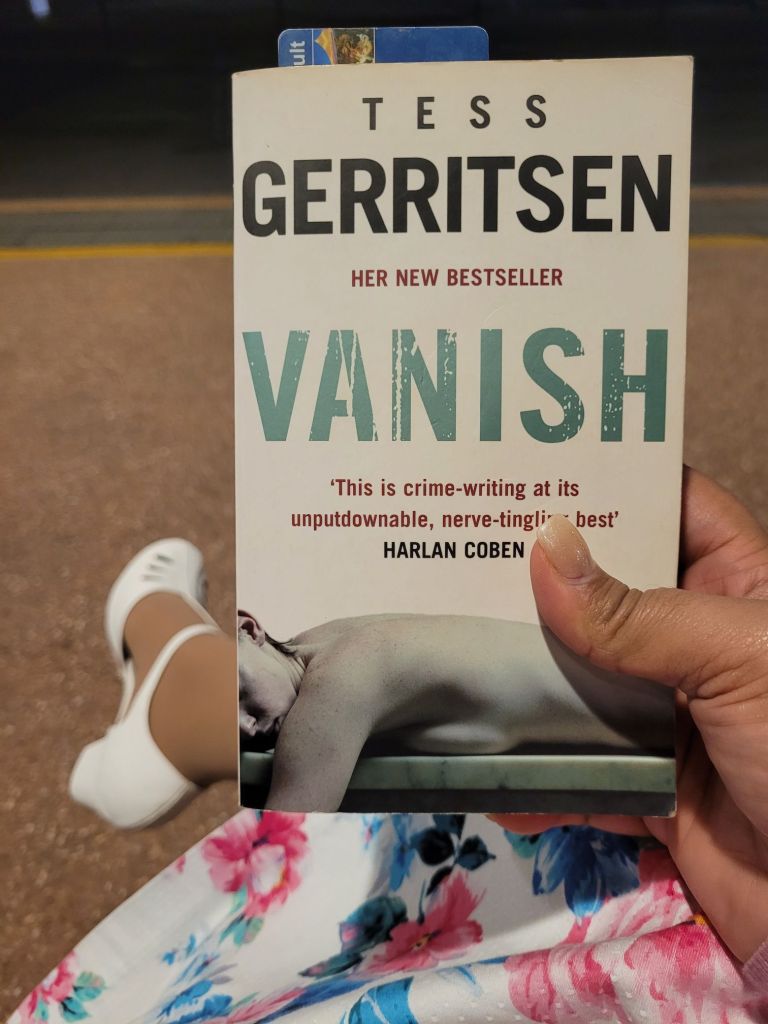
In Vanish (2005), Tess Gerritsen delivers a taut, socially conscious thriller that goes beyond the conventions of crime fiction. As the fifth instalment in her Rizzoli & Isles series, the novel showcases her signature blend of forensic realism and emotional intensity—thanks in no small part to her background as a physician and student of anthropology. That scientific lens gives the story a grounded, credible edge, especially in its depiction of evidence collection and trauma response.


The novel centres around two formidable women: Detective Jane Rizzoli and Medical Examiner Maura Isles. In a world dominated by male authority figures, these protagonists stand out not just for their competence but for their resilience and moral clarity. Gerritsen writes from two perspectives—one from the cop, the other from a mysterious victim—which adds layers of suspense and empathy to the narrative. It’s a structure that humanises the crime and gives readers a visceral sense of what’s at stake.

What makes Vanish especially compelling is its thematic ambition. Gerritsen tackles human trafficking head-on, portraying it as a deeply entrenched and horrifying reality of the 21st century. The novel also hints at the unsettling power of military-industrial entities, suggesting that these corporations can manipulate justice and policy in ways that undermine democratic institutions. It’s a bold move for a crime novel, and it pays off.

While Gerritsen’s prose may not reach the literary heights of Patricia Cornwell, her storytelling is sharp, emotionally resonant, and socially aware. In fact, Vanish gives James Patterson a serious run for his money—especially in its ability to weave action, character development, and ethical complexity into a single, gripping narrative.

If you’re looking for a crime novel that’s more than just a whodunit, Vanish is a standout. It’s a page-turner with a conscience, and it proves that thrillers can be both entertaining and enlightening.

Book Review – The Vanishing Bride

Bella Ellis’s The Vanished Bride (2019) is more than a historical mystery—it’s a poignant reflection on the constraints and quiet rebellions of women in Victorian England. Set in 1845, the novel imagines the Brontë sisters—Charlotte, Emily, and Anne—as amateur detectives, drawn into the case of a young bride who disappears under violent and mysterious circumstances. While the plot is rich with gothic suspense and clever twists, its emotional core lies in the exploration of female suffering, silencing, and survival.

This book was an unexpected surprise. I have always been a fan of Austen adaptations, but I had never really looked for other works. Then I saw this book. Just sitting on a shelf in Chermside Library…. What drew me in, pulled my eye onto a shelf filled with books, was the cover and the beguiling title – who vanished?

The vanished bride herself becomes a symbol of the countless women whose voices were erased by marriage, patriarchy, and social expectation. Her disappearance from a blood-soaked room is not just a mystery to be solved—it’s a metaphor for how women were often consumed by the institutions meant to protect them. The Brontë sisters, still unpublished and largely dismissed by society, are portrayed as fiercely intelligent and empathetic women who refuse to accept the limitations imposed on them. Their determination to uncover the truth is an act of resistance, a refusal to be passive observers in a world that demands their silence.

Ellis’s depiction of the sisters is deeply respectful of their historical reality. Each woman brings her own perspective shaped by hardship: Charlotte’s yearning for recognition, Emily’s wild defiance of convention, and Anne’s quiet moral clarity. Their investigation is not just about solving a crime—it’s about asserting their right to think, to question, and to act. In doing so, they challenge the rigid gender roles of their time, offering a glimpse into the emotional and intellectual lives of women who were often denied both agency and autonomy.

What makes The Vanished Bride especially compelling is its ability to weave these themes into a gripping narrative without ever feeling didactic. The gothic setting, the eerie clues, and the complex characters all serve to highlight the emotional toll of being a woman in a world that sees you as property, decoration, or burden. Through the Brontës’ eyes, Ellis invites readers to consider not just the mystery of a missing bride, but the deeper mystery of how women endured, resisted, and ultimately reshaped the world around them—often through the power of storytelling itself.

The Whimsical Wonder of Readathons: Reading for Joy, for Fun, for Pleasure!

Normally, my annual fundraiser is Frocktober, where for the month of October, I celebrate the gloriousness of frocks whilst fundraising for the Ovarian Cancer Research Fund. But this year, I’m mixing it up with something equally delightful and just a bit more bookish: a readathon! And not just any readathon—The World’s Coolest Readathon, hosted by the Australian Book Foundation. I saw that another wonderful Teacher Librarian Barbara from Bourke High School had signed up and then I thought… why not do it myself?

And what better way to kick things off than with a mystery? My first book for this readathon is Diabolical Bones by Sue Ellis—a Brontë Girls Mystery, borrowed from the ever-wonderful Brisbane City Council libraries. Gothic Yorkshire, clever heroines, and a touch of the macabre? Yes please.

A readathon, I’ve decided, is the perfect sequel to Book Month—like the epilogue where the characters (aka readers) get to celebrate their love of stories with wild abandon. It’s the encore performance, the bonus chapter, the literary afterparty.

Once upon a time, in a land not so far away (okay, it was my bedroom in Brisbane’s Southside), I embarked on a noble quest: the MS Readathon. Armed with a stack of books taller than my bedside lamp and a sponsorship sheet that made me feel like a literary philanthropist, I read my way through mysteries, adventures, and magical lands—all while raising money for a good cause. It was glorious.

Fast forward to today, and I find myself whispering reminders like a mantra: Read for fun. Read for joy. Read for pleasure. Because somewhere between grown-up responsibilities and inbox avalanches, the simple delight of reading can slip through the cracks.

Why Readathons Are Brilliant (and Backed by Science!) 

Readathons aren’t just nostalgic—they’re powerful tools for literacy, wellbeing, and community. Here’s why they’re so magical:

They Spark a Love of Reading: Choosing your own books makes reading feel like breathing—natural and joyful.

“Until I feared I would lose it, I never loved to read. One does not love breathing.

Harper LeeTo Kill a Mockingbird

They Boost Brains and Wellbeing: Reading for pleasure improves mental health and cognitive skills.

“Reading gives us someplace to go when we have to stay where we are.”
— Mason Cooley

They Create Lifelong Readers: Even reluctant readers get swept up in the fun.

“A reader lives a thousand lives before he dies. The man who never reads lives only one.”
— George R.R. Martin

They Build Community: Fundraising through reading turns stories into shared kindness.

“No act of kindness, no matter how small, is ever wasted.”
— Aesop

A Readathon Renaissance

Whether you’re a teacher, parent, librarian, or just a book-loving human, readathons offer a delightful way to reconnect with the joy of reading. They’re flexible, inclusive, and can be tailored to any age or interest. Plus, they’re a fabulous excuse to wear pajamas all day and call it “literary immersion.”

So if you, like me, sometimes need a nudge to read for the sheer pleasure of it, consider joining or hosting a readathon. You’ll be part of a movement that’s not just fun—it’s transformative.

And if you’re ready to dive in, check out The World’s Coolest Readathon. It’s got all the charm of the MS Readathon days, with a modern twist and a mission to make reading joyful again.

References