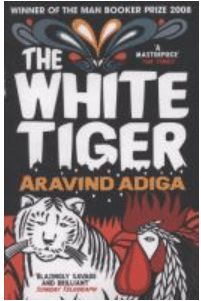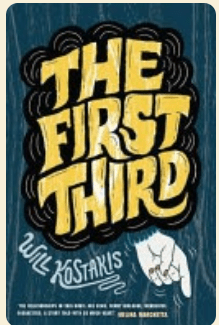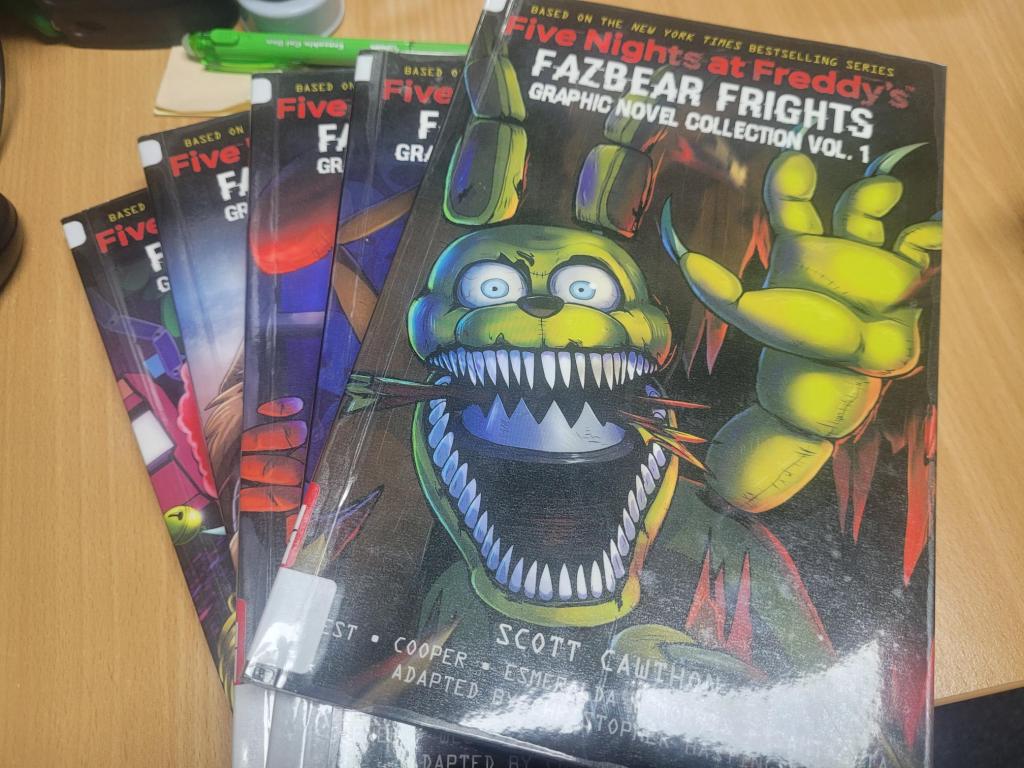
Five nights at Freddy – Fazbear frights [Graphic Novel collection].

If you’ve ever wanted to experience the joy of being chased by animatronic nightmares that look like they’ve been assembled by a slightly deranged electrician, this graphic novel is for you. Five Nights at Freddy Fazbear Frights serves up exactly what the title promises: frights, chaos, and enough creepy robots to make your childhood memories of birthday parties instantly terrifying.

The artwork is a delightful mix of “kid-friendly” cartoon and “why is that bear staring at me like it wants to eat my soul?” The story jumps between various creepy tales that all somehow revolve around the absolute worst animatronics you could imagine — and just when you think it’s safe to close the book, boom! More jump scares, more eerie grins, and more malfunctioning metal monsters lurking in the shadows.

If you enjoy your horror with a side of cheesy dialogue and characters making questionable life choices (seriously, who lets these animatronics roam free?), this graphic novel will keep you entertained—and maybe a little paranoid—until the very last page.

Final verdict:
Five nights of fun, fear, and a fresh appreciation for why animatronics should probably be banned from birthday parties forever. I would also not recommend this book for anyone who is over the age of 15! Especially not to 40+ year old women who managed to get a very twitchy eye from reading this series.

Adults

Rating: 1 out of 5.

Teens

Rating: 5 out of 5.

The Dressmaker of Yarrandarrah Prison by Meredith Jaffe

The Dressmaker of Yarrandarrah Prison is a gentle, moving novel about unlikely friendships, second chances, and the quiet power of redemption. At the center of the story is Derek—a prisoner who surprises everyone, including himself, when he volunteers to sew a wedding dress for his estranged daughter’s big day.

What unfolds is more than just the tale of a man learning to sew. It’s about rebuilding trust, finding purpose in the most unexpected places, and the way small acts of kindness can mend even the deepest wounds. The characters—both inside and outside the prison walls—are beautifully drawn, each with their own burdens and hopes, all stitched together into a story that is equal parts funny, sad, and uplifting.

Meredith Jaffe writes with compassion and warmth, turning a seemingly odd premise into something deeply human. This book reminds us that no one is ever beyond forgiveness, and that healing often begins in the most unlikely places.

Rating: 3 out of 5.

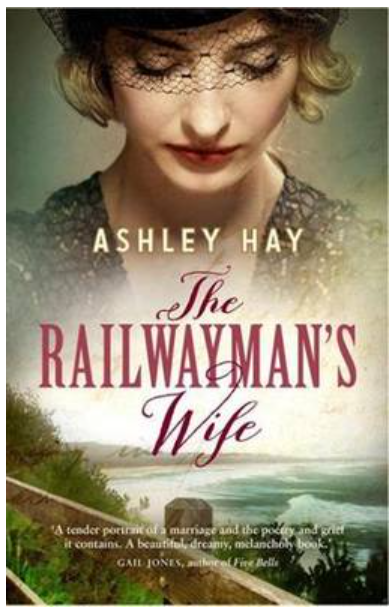
Book Review – The Railway Man’s wife by Ashley Hay

Ashley Hay’s The Railwayman’s Wife is a beautifully written, contemplative novel set in a small Australian coastal town in the aftermath of World War II. The story follows Anikka Lachlan, a librarian grappling with the sudden loss of her husband in a railway accident—a personal tragedy that echoes the broader national grief still hanging over Australia after the war.

Hay uses the quiet town of Thirroul as a microcosm of post-WWII Australia, capturing a society caught between mourning and rebuilding. Characters wrestle with physical and emotional scars, survivor’s guilt, and the search for meaning in a world forever altered by conflict. Through Ana’s growing connection to literature and community, the novel reflects how ordinary people coped with extraordinary loss during this time.

Heart warming, poignant, delicate, elegiac, and steeped in place, The Railwayman’s Wife is not just a story of personal grief, love and hope, but also, a portrait of a country learning to heal—one quiet moment at a time.

Book review – Upside down Inside out by Monica McInerney

In Upside Down Inside Out, Monica McInerney gives us the story of Eva Kennedy—a talented artist who, naturally, is stuck in a dead-end admin job and hiding from her past. When a last-minute trip to Dublin drops into her lap (as life-changing international trips so often do), she jumps at the chance to escape her carefully controlled life in Melbourne.

What follows is a whirlwind of mistaken identity, quirky new friendships, and just the right amount of romantic confusion. McInerney has a knack for blending humor and heart, and while some twists are more predictable than surprising, the charm of the characters—and the lush Irish setting—make it an enjoyable ride.

If you’ve ever wanted to abandon your job, jet off to another country, and magically stumble into self-discovery, this one’s for you.

It’s part escapist fantasy, part emotional reset, with a wink to the idea that maybe, just maybe, the universe knows what it’s doing.

Book review – Watermelon by Marion Keys

 Watermelon was the first book published by Marian Keys. To be honest, it is not my favourite book of hers as it is stilted and very cliche.  

However, it is a lovely, light hearted romance set in Ireland. Very similar to Maeve Binchy, Keyes writes about how a husband leaves his wife after the birth of their baby. The main character Claire does make you want to slap her silly, but she does eventually realise how toxic her marriage was and moves forward in her life.  

The book is predictable and occasionally nauseating but I did like how it highlights that women are gaslit in relationships and often around childbirth and motherhood.

For those interested – Last Chance Saloon is my favourite #mariankeyes novel.

Reading for Meaning: Strategies to Enhance Literacy

The use of complex texts in education is crucial, as relying solely on traditional textbooks can hinder diverse learners due to varying literacy levels. Implementing text sets alongside explicitly taught reading strategies fosters better comprehension and learning outcomes by providing multiple access points for students to engage with the material effectively.

Reading between the lines – Supporting literacy text sets and explicit instruction.

The use of complex texts for learning is a well-established pedagogical practice, and therefore, the selection of appropriate texts is an integral part of teaching and learning.  Traditionally, textbooks and single origin resources have been a staple in classrooms, but the use of a singular resource can be problematic in an environment with significant variation in literacy levels and background knowledge (Cervetti & Hiebert, 2019; Lupo et al., 2019).  This concern is because disparity between various students’ abilities can limit learning outcomes because access is an issue.  As a constructivist approach to learning and an extension of literary learning, text sets are an effective pedagogical practice that supports student learning and develops literacy capacity in a diverse classroom.  The efficacy of this classroom practice can be further supported with explicitly taught ‘reading for meaning’ strategies as it increases the number of access points students have to the text and therefore, positively impacts literacy, reading comprehension and learning outcomes.

Read more of what my presentation was centred on at the National Education Summit (Brisbane).

https://www.nationaleducationsummit.com.au/nes-blog/reading-between-the-lines
Read more: Reading for Meaning: Strategies to Enhance Literacy

Disciplinary Literacy

Disciplinary Literacy is rarely discussed in schools, and this can lead to a significant impact to learning outcomes. The skills required to read a text in Chemistry are very different than the ones required in Literature. However, most schools pigeonhole literacy into the purview of the English Department.

Shanahan & Shanahan (2012) advocate for the explicit instruction of disciplinary literacy across middle and high school classrooms. This approach clearly acknowledges the importance it is the have the ability to ‘create, communicate and use knowledge’ appropriately within each discipline.

Check this link out for more information on how to improve literacy practice in schools. https://www.shanahanonliteracy.com/upload/publications/50/pdf/Shanahan-What-is-Disciplinary-Literacy.pdf

All about me.

Hi – I am Trish and I am a teacher librarian in the ACT. I am keeping a blog because I have found that I gain deeper insights and have a greater personal development if I use the written word to consolidate my thoughts. Some would call it ‘writing for knowledge construction’. Others may refer to it as journaling or even the rants of a cranky old bird. However, I call it my thinking space for reviewing new books, critiquing professional development sessions, reflecting on my teaching practices and evaluating on my own journey as a TL. I hope you enjoy reading my musings and if you would like to subscribe or submit any of your thoughts, that would be great!

Portfolio of Learning -Part B – From theory to practice: Literacies

Literacies: Pedagogical practice for teacher librarians

Theory of Literacies: 

Literacy is an essential skill, but the definition of literacy and a literate person has changed dramatically in the past few decades.  Previously, the term literacy was categorised as the decoding and composing of print texts.  However, the advent of the information society with its technological advancements, widespread use of personal devices and the pervasiveness of the internet has led to a diversification of format and resulting in the creation of audiovisual, print, digital and multimodal texts (Ferguson, 2019).  This heterogeneity of text types means that teachers, schools and the education system need to adapt their pedagogies and practices that encompass the variety of literacies and text types in the modern world (Templeton, 2021a).  It also means that the definition of literacy needs to be redefined as the ability to interact with, engage and communicate across modalities for personal, social, economic and recreational purposes (ACARA, 2018)

TL Reality

The role of the library and teacher librarian is to support the explicit instruction of multiliteracies and resourcing of multimodal text types in a school as highlighted in ETL401 and ETL504 (ALIA & ASLA, 2004).  Whilst print literacy competency is still an essential attribute, the promotion of information, digital and visual literacies are rapidly emerging as essential 21st century skills.  

FACT:

Information literacy is the ability of a person to seek, find, access, use and evaluate information successfully for personal, educational and professional purposes (Kaplowitz, 2014; Kong, 2015).  It is essential due to the prevalence of mal-information, disinformation and misinformation.  This means that in order to navigate these perils of modern society, young people need to be adept at seeking, finding and using information.  They also need to be competent at evaluating the difference between gold and dross.     

 TL REALITY:

An intrinsic aspect of teacher librarianship is the implementation and embedding of IL skills across the curriculum (Templeton, 2021b).   This is because TLs are the traditional gatekeepers of information in schools and have the professional capacity to implicitly and explicitly instruct information literacy to the school community (Levitov, 2016).  ETL401 pointed out that inquiry learning or problem based learning is the most effective process at developing information literacy skills because the process is centred upon skill acquisition.  However, IL skills need to be integrated and structured incrementally because competency is based upon cumulative access.  

MY LEARNING:

IL has always been an essential part of TL practice and the virtual study visits highlighted its importance in Victoria University, William Angliss TAFE and University of Newcastle.  These institutions understood their students preferred synchronous sessions and therefore developed an IL framework that allowed this either in person or virtually.  Their approach was the motivation for my placement at ACU library because ACU’s Library learning and teaching sessions uses ability as a differentiation tool because their framework supports self navigation, life long learners and independent inquiry. 

FACT:

Visual literacy is rapidly becoming an essential skill in a multimodal society because it effectively broadens the parameters of traditional literacy and assists with text deconstruction and analysis, as well as builds competency in language, texts and symbols (Marsh, 2010).  

TL REALITY:

Picture books (PB) are effective at developing visual literacy because they can positively impact the academic, behavioural, developmental, cognitive development of learners.  This is because PB are polysemic, promote critical thinking, encourage reflection, support constructivist pedagogies and are also excellent tools for class discussion (Marsh, 2010).  Their value is in their ability to encourage readers to construct their own meaning from the imagery which then encourages multiple perspectives and creates opportunities for robust discussion (Marsh, 2010).

Picture books for older readers.

Sophisticated picture books.

MY LEARNING:

I was under the false assumption that PB were for young children because developing readers require the interdependency of images and texts for comprehension.  However, PB can be effectively used in secondary classrooms through literary learning, read alouds and within classroom practice.  This is because post-modern or sophisticated picture books places a higher cognitive load onto the reader and require critical thinking from the reader to decode the contradiction of text and images, or lack of text.

FACT:

Digital (Multimodal) Literacy is the ability of the user to seek, access, use, integrate and compose digital media for personal, professional, educational and recreational purposes (Lofton, 2016). Technology is constantly evolving and society needs to upskill to stay relevant (Ferguson, 2019).  Unfortunately, the digital divide interferes with this ability to upskill, leading to many students and adults lacking the necessary digital literacy skills required in modern society (Thomas et al., 2018).  This digital divide is no longer presumed to be due to a generational gap, but rather it is a strong demarcation between people who have regular access to digital technologies and those that do not.

TL REALITY:

An effective method to improve digital literacy in schools is to embed technologies into classroom practice, use explicit instruction to support its implementation and then encourage students to apply their knowledge. It is the intentional use of digital media in pedagogy that then goes on to enhance learning, improve ICT acuity, increase engagement and on a whole, improve learning outcomes.  It is not a lecture on powerpoint!

MY LEARNING:

In ETL402 and INF533 I learned about the various strategies to improve digital literacy in the classroom.  These included the inclusion of digital texts into classroom practice and innovative pedagogical practices. Some examples of these strategies are: 

Digital texts:

  White Australia Policy

The land of the Magic Flute.

YouVersion Bible App

After 6/4

Digital pedagogical strategies.

Flipped classrooms are rapidly increasing in popularity, as are augmented and virtual realities because they utilise digital technologies.  

Book trailers and book bentos (example below) are audiovisual representations of texts and are useful in promoting literary learning and multimodal literacy.  

AR and VR can be effectively used to engage students, for location or inquiry learning, and or for assessment purposes. whereas the article in Magpies Magazine points out how AR can be effectively used in libraries.

Contents of Magpies magazine.

Book Bento Example of – Angela’s Ashes

Click HERE to move to

Part B – Theory into Practice – Learning.

REFERENCES:

Australian Curriculum, Assessment and Reporting Authority. (2018). Literacy in the Australian curriculum – General capabilities. F-10 Curriculum.

Australian School Library Association & Australian Library and Information Association. (2004). Australian professional standards for teacher librarians. ALIA. https://asla.org.au/resources/Documents/Website%20Documents/Policies/TLstandards.pdf

Department of Industry, Innovation and Science. (2016). Australia’s digital economy update.  https://apo.org.au/sites/default/files/resource-files/2016/05/apo-nid66202-1210631.pdf

Ferguson, S. (2019). Digital Literacy: A Constantly Evolving Learning Landscape. Alki, 35(2), 12–13. CSU Library 

Kaplowitz, J. (2014). Designing information literacy instruction: the teaching tripod approach. Rowman & Littlefield. Ebook. CSU Library.  

Kong, S. (2014). Developing information literacy and critical thinking skills through domain knowledge learning in digital classrooms: An experience of practicing flipped classroom strategy. Computers & Education. 78, pp.160-173.  DOI https://doi.org/10.1016/j.compedu.2014.05.00

Levitov, D. (2016). School libraries, librarians and inquiry learning. Teacher Librarian 43(4), p.28. CSU Library. 

Marsh, D. (2010). The case for picture books in secondary schools. Lianza, 51(4), 27. https://doms.csu.edu.au/csu/file/f7b0a0c2-d0c5-4ba3-8644-6955ea9850b6/1/marsh-d.pdf

Miller, H. (2017). The myth of the digital native generation. E-Learning Inside. https://news.elearninginside.com/myth-digital-native-generation/

Templeton, T. (27 July, 2021a). Digital literacy and the teacher librarian – Part One. Softlink. https://www.softlinkint.com/blog/digital-literacy-and-the-teacher-librarian-part-one/

Templeton, T. (27 July, 2021b). Digital literacy and the teacher librarian – Part Two. Softlink. https://www.softlinkint.com/blog/digital-literacy-and-the-teacher-librarian-part-two/

Thomas, J., Barraket, J., Wilson, C., Cook, K., Louie, Y., Holcombe-James, I., Ewing, S., and MacDonald, T. (2018). Measuring Australia’s Digital Divide: The Australian Digital Inclusion Index 2018. RMIT University, Melbourne, DOI: https://doi.org/10.25916/5b594e4475a00

Portfolio of Learning -Part B – From theory to practice: Learning

Learning: Pedagogical practice for teacher librarians

FACT:

Libraries are intrinsically connected with learning because they have consistently preserved and shared the documented histories and cultural knowledge of society (Ryan & Swindells, 2018).  However, my time at ACU Library for my placement showed me that academic libraries differ because being an information repository is secondary to supporting their community in developing critical thinking, knowledge construction and independent inquiry (Higgins, 2017, Ch.1).  

TL REALITY:

This active assistance that academic and school libraries offer is pertinent because the way people learn has changed significantly.  From ancient times, learning was seen as a transfer of knowledge from one generation to another either through the forms of oral traditions or from written texts.  However, evidence has shown that learning is increased when a learner is able to build new knowledge upon prior learning.  This constructivist approach to learning is appropriate for diverse classrooms because the method and product is dependent on the learner’s histories and perspectives.  Additionally, constructivist pedagogies such as inquiry and literary learning promote the development of a range of ‘soft skills’ such as problem solving, communication, collaborative practice, as well as critical and creative thinking, which is ideal for a knowledge economy.  

  1. Inquiry Learning

FACT:

Inquiry learning (IL) requires students to ask questions, design investigations, research information, interpret evidence, draw conclusions and communicate their findings in a variety of formats (Dept of ESE, 2021).  As a constructivist pedagogy, IL puts the onus of knowledge construction onto the learner and in the process students learn valuable skills (Garrison & FitzGerald, 2016; Kuhlthau et al., 2015). Therefore it is clearly evident that access to information resources and sufficient information literacy skills to achieve positive learning outcomes is required.  This means that TLs are integral to IL because they are information experts and can explicitly and implicitly embed information literacy skills throughout the inquiry process (ASLA & ALIA, 2004; Levitov, 2016, p.29).  

TL REALITY:

Unfortunately there is no IL embedded within the Australian Curriculum, however there are elements of IL in Science, Geography and History key learning areas (Lupton, 2014).  But as Lupton (2014) pointed out, whilst these areas address general inquiry skills, they are not consistent between the KLAs and as such, are not a connected framework.   This clearly indicates the importance of TLs in creating and implementing an integrated framework of IL because they are able to see how inquiry is taught across the curriculum and then scaffold the skills appropriately.  

MY LEARNING:

TLs can also support IL through team teaching and collaboration with department leaders.  In 2020 I collaborated with the Year 8 Science and Year 8 English team leaders to help them implement inquiry learning in their respective disciplines.  Both team leaders were concerned about the robustness of student research questions and were concerned if it would sufficiently address the learning outcomes.  So from my prior knowledge as a science teacher and learning in ETL401, I created a reverse’ lotus chart with embedded questions to assist students in creating their inquiry questions for tasks.  The integrated questions increased critical thinking and enabled students to connect to their topic to a deeper level.  It also allowed teachers and students to visualise their learning.  The experiment worked so well that I presented my findings at ASLA’s 2021 School Library conference and the corresponding article was published in ACCESS’s Volume 35, Issue 3, September, 2021 (Check out the contents page!). 

Here is an example of another cross curricular inquiry task that I created for my school:


2. Literary learning

THEORY:

 Literary learning (LL) is the embedding of literature across the curriculum in order to convey subject specific information.  It turns students from codebreakers into participants by using texts for learning and analysing.   This means LL can be effectively used across the curriculum, in all year levels and can be adapted to suit diverse learners because literature based learning allows students to construct their own bank of knowledge from information that is more easily accessible to them.  

MY PRACTICE: 

From a personal viewpoint, I really engaged with this aspect of Teacher Librarianship.  Liz Dereout was fantastic at explaining the value of Literary Learning and I learned a great deal from ETL402 as the blogs I wrote illustrated.  It was hard to get the mind to shift from  Shifting from ‘Learning to Read’ to ‘Reading to learn’.  However, classroom teachers did come around to using Text sets, Literary Circles, Book Trailers and Book Bento Boxes.  Text sets proved to be the most useful because teachers were more willing to use extracts of text rather than whole books.  Here are some examples of my practice in the interactive below. 

Click HERE to move to

Part B – Theory into Practice – Literature.

REFERENCES

Australian School Library Association & Australian Library and Information Association. (2004). Australian professional standards for teacher librarians. ALIA. https://asla.org.au/resources/Documents/Website%20Documents/Policies/TLstandards.pdf

Cornett, C. E. (2014). Integrating the literary arts throughout the curriculum. In Creating meaning through literature and the arts: arts integration for Classroom teachers (5th ed., pp. 144-193). USA

Derewianka, B. (2015). The contribution of genre theory to literacy education in Australia. In J. Turbill, G. Barton & C. Brock (Eds.), Teaching Writing in Today’s Classrooms: Looking back to looking forward (pp. 69-86). Norwood, Australia: Australian Literary Educators’ Association. CSU Library 

Garrison, K., & Fitzgerald, L. (2016). ‘It’s like stickers in your brain’: Using the guided inquiry process to support lifelong learning skills in an Australian school library. In A School Library Built for the Digital Age  45th IASLC Conference.  CSU Library. 

Higgins, S. (2017). Managing academic libraries: Principles and practice [ebook]. Amsterdam. Chandos Publishing. CSU Library. 

Kuhthau, C., Maniotes, L., and Caspari, A. (2015). Guided inquiry: learning in the 21st century. 2nd Edition. Libraries unlimited, USA. 

Levitov, D. (2016). School libraries, librarians and inquiry learning. Teacher Librarian 43 (4), p.28. CSU Library. 

Lupton, M. (2014). Inquiry skills in the Australian Curriculum v6: a bird’s eye view. Access 28 (4) p. 8-29. http://eprints.qut.edu.au/78451/1/Lupton_ACCESS_Nov_2014_2pg.pdf

Maniotes, L. (2019). Guided Inquiry Design: Creating curious inquirers. SYBA Academy workshop. Sydney

Ryan, M., & Swindells, G. (2018). Democratic practice: Libraries and education for citizenship. Portal: Libraries and the Academy 18 (4), pp.623-628. John Hopkins University Press. CSU Library.