Reflecting on the story of the shelves.

At the end of each school day, I wander through the library and notice the gaps and blank spaces.  Why? It is because the shelves never lie about the books that are loved the most.  These are the ones that stack tall on our return trolleys.  To be fair, they are also the ones that leave with another student almost instantly.  They are the ones with worn spines, grubby covers and suspicious stains on the pages.  Yet all of them tell me a story.  They all tell me something about our school community.

Non‑fiction loans follow the interests of the boys themselves, whether it be cars, music, military equipment, or funnily enough… anatomy. These choices show me that curiosity is not confined to the classroom but stretches into the interests, curiousities, passions, and fascinations that shape their lives outside the school grounds.

The sports shelves mimic the seasons almost perfectly. Footy fades as winter ends, and suddenly, cricket biographies and fiction surge forward, especially anything tied to the upcoming Ashes. It is as if the rhythm of the sporting calendar beats through the borrowing habits of our students, reflecting not just their interests but the pulse of the wider culture around them.

The novels tell another kind of story. Fantasy sagas rarely rest long before they are whisked away again, dragons, quests and magical lands offering both escape and courage. Contemporary stories about identity and belonging circulate steadily too, often returned with dog‑eared pages. Those books feel like companions, helping students navigate questions of who they are and where they fit.

Certain authors move faster than most. This year we have seen a sharp update in request for Orwell’s works that seemed to be borrowed by students who want to think critically, because his sharp observations on society still resonating decades later. King’s novels vanish quickly from the shelves too, his blend of horror and humanity appealing to readers who crave both thrills and reflection. Griffiths brings laughter and lightness, his quirky humour and imaginative plots offering relief from the seriousness of school life. Kinney’s books are snapped up by younger readers, his diary‑style storytelling capturing the awkwardness and comedy of growing up. Walliams adds another layer of fun, his playful characters and outrageous scenarios proving irresistible to students who want a quick, joyful read. Bancks, with his Australian voice and relatable themes, connects directly to the local experience, showing students their own world reflected back at them. Heath’s stories move quickly too, often chosen by readers who enjoy adventure and fast‑paced plots. And then there is Rowling. Her magical universe remains evergreen, with titles borrowed again and again by students who want to lose themselves in a world of spells and friendship. Dashner’s dystopian tales race through the library as well, his fast‑moving plots and high stakes gripping readers who love suspense.

And then there are the comfort reads. During exam season, familiar series, lighthearted tales and joke books fly off the shelves, as if students are reaching for something steady and reassuring when stress runs high. When headlines outside the school walls grow louder, books on social issues suddenly become popular, showing me how our community is engaging with the wider world.

Over time, these borrowing trends become a mirror. They reflect curiosity, resilience, joy and sometimes vulnerability. They remind me that the library is not just a place to find information, it is a living record of what matters most to our students at any given moment. Each book borrowed is a quiet signal, a way of saying, this is what I need right now.

Together, these authors form a chorus of voices that shape the identity of our school community. Orwell challenges us to question, King dares us to feel fear and empathy, Griffiths and Kinney make us laugh, Walliams and Heath keep us entertained, Bancks grounds us in our own backyard, Rowling invites us into magic, and Dashner pushes us to imagine futures both thrilling and uncertain. Their collective presence on our shelves is more than entertainment, it is a reflection of the many ways our students seek to learn, to grow and to belong.

And as the year turns, the shelves whisper back, carrying the heartbeat of our community in every borrowed book.

Fiction is a safe place to break the rules

I recently attended the QSLA conference at the beautiful State Library of Queensland. It was a fantastic day for school informational professionals to gather, share emerging news, identify new trends and trade in good old fashioned work chit chat.

Andy Griffiths – author of the famous Treehouse series, was our keynote speaker. I have known of Andy’s work for almost a decade. Whilst I have admired his works, I hadn’t fully appreciated his philosophy until now. His words, much like his books, were playful on the surface but deeply subversive underneath. They invited us to reconsider not just how children read, but why they need stories that break the rules.

Griffiths and his co-creator, illustrator Terry Denton have created the inventive, imaginative chaos that is the Treehouse series. I found it amusing that they named the main characters after themselves. Their fictional versions live in an ever expanding treehouse that defies logic and gravity, expanding with each book to include ludicrous additions like a marshmallow machine, a tank of man-eating sharks, and even a volcano. Their adventures are reckless, absurd, and often dangerous. But that danger is never real. It’s theatrical. It’s safe. It’s fiction.

… and that is the point. It is fiction as Andy pointed out last week to a large group of educators and informational professionals.

Fiction is a safe place to break the rules.

I was mesmerised by this quote. That quote stayed with me. It echoed through the conference halls and followed me home. In an article published by the ABC in 2018, Griffiths argued that fiction as a “last frontier”, a place where children can explore worst-case scenarios without consequence. He said: “Books are the last frontier of freedom and wilderness for kids, for imagining dangerous things, for imagining craziness and worst-case scenarios” (Blau, 2018).

This was so true. In a world increasingly obsessed with safety, structure, and supervision, Griffiths’ books offer a counterbalance. They don’t just entertain their readers… they liberate them! They allow children to imagine running across six lanes of traffic or jumping into a volcano, not because they should, but because they can. In fiction, the consequences are exaggerated, the outcomes are ridiculous, and the lessons are embedded in laughter. Griffiths uses humour to engage the reader and builds into that playful sense that children have. As Griffiths said last week, “Reading is a game between the reader and the author. Authors make black marks on pages. Readers use these marks to make an image in their heads.”

I then thought about all the other books that ‘helped me break rules’. Darryl and Sally hosting midnight feasts at Mallory Towers, Matilda using her brain to solve problems, Trixie Belden and Nancy Drew resolving mysterious events. Each of these characters and books gave me option I may not have thought of previously.

Leaving the conference, I felt a renewed appreciation for the role of literature in childhood. Not just as a tool for literacy, but as a sanctuary for wild thought. Griffiths reminded us that imagination isn’t just fun. It’s vital. It’s how children rehearse life, test boundaries, and build resilience.

And maybe, just maybe, it’s how they learn to be free.

What books set you free?

Growing Up on the Page: Teaching Coming-of-Age Novels in Australian Classrooms

Coming-of-age novels have long held a central place in literature, offering rich terrain for both personal reflection and academic exploration. For educators working with adolescents, these texts are more than just stories—they are mirrors and windows into the complex journey of growing up. This post explores why coming-of-age literature resonates so deeply with teenagers, why it matters in the curriculum, and how educators can harness its potential to foster empathy, identity formation, and critical thinking.

Bildungsroman

Adolescence is a period marked by emotional intensity, identity exploration, and social upheaval. Coming-of-age novels, also known as bildungsroman, capture this liminal space with authenticity and nuance. Teen readers often see themselves reflected in protagonists who grapple with similar dilemmas: family conflict, peer pressure, romantic entanglements, and the search for purpose. These narratives validate the adolescent experience, offering reassurance that their struggles are not isolated but part of a universal human journey.

Moreover, the first-person perspective common in young adult fiction allows readers to inhabit the protagonist’s inner world. This immersive quality fosters emotional resonance and encourages teens to reflect on their own values, choices, and aspirations. As Biscontini (2024) noted, coming-of-age literature “provides young people with a relatable experience while offering adults a sense of nostalgia,” and often centres on the loss of innocence, self-discovery, and the struggle to adapt to societal expectations.

Why They Matter in the Curriculum

From a pedagogical standpoint, coming-of-age novels are invaluable tools for teaching literary analysis, thematic exploration, and cultural literacy. These texts often engage with issues such as race, gender, class, and mental health: topics that are both timely and timeless. By studying these works, students develop empathy and gain insight into diverse lived experiences.

Importantly, coming-of-age literature also supports identity development. For students from marginalised backgrounds, seeing characters who reflect their realities can be empowering. For others, these stories offer a chance to understand perspectives different from their own. As such, these novels contribute to a more inclusive and socially aware classroom environment (Federation of Egalitarian Communities, 2024).

Why Choosing the Right Text Matters—Especially for Boys.

“Puberty is merciless. Regardless of who you are,” Becky Albertalli in Simon vs. the Homo Sapiens Agenda

This sentiment that captures the emotional turbulence of adolescence with striking clarity. For boys, this period can be particularly complex, often shaped by conflicting expectations around masculinity, emotional restraint, and identity formation.

Potential reads

Choosing the right coming-of-age texts for boys is not merely about fostering a love of reading. It is about offering them tools for emotional literacy, ethical reasoning, and self-reflection. These stories help boys navigate moral ambiguity, understand the consequences of choices, and appreciate the nuances of human relationships. Crucially, they provide a safe space to explore vulnerability, fear, and belonging, which often occur before boys feel equipped to express these experiences in their own words.

Selecting texts that feature emotionally authentic male protagonists, whether they be sensitive, conflicted, resilient, or flawed; can disrupt narrow stereotypes and expand boys’ understanding of what it means to grow up. When boys see themselves reflected in literature, or encounter perspectives that challenge their assumptions, they are more likely to engage deeply and critically.

Incorporating well-chosen coming-of-age novels into the curriculum also supports literacy outcomes. The relatability of the content increases motivation, while the layered narratives encourage boys to interpret symbolism, character development, and thematic complexity. With the right texts, educators can foster not only stronger readers, but more thoughtful, empathetic young men.

How Students Socially Learn from Narrative Fiction

Recent research by Gasser, Dammert, and Murphy (2022) offers a compelling framework for understanding how children socially learn from narrative fiction. Their integrative review identifies three distinct mechanisms:

  • Getting the Lesson – where children extract and internalise explicit moral messages from the text.
  • Simulating Social Worlds – where readers imaginatively engage with fictional characters, enhancing empathy and perspective-taking.
  • Dialogic Inquiry – where students develop social reasoning through peer dialogue about complex sociomoral issues raised in fiction.

This framework is particularly relevant for educators designing literature programmes that go beyond comprehension and into the realm of ethical inquiry and emotional intelligence. It supports the use of coming-of-age novels as tools for cultivating sociomoral competencies in the classroom.

Key Texts – Australian Coming of Age stories for Boys

Australian literature offers a rich and diverse array of coming-of-age narratives that speak directly to local contexts, landscapes, and cultural tensions. There are wide range of novels that can be utilised effectively in the classroom, however, these texts are particularly valuable for fostering national literary literacy and connecting students with stories that reflect their own communities.

  • Jasper Jones by Craig Silvey
  • Boy Swallows Universe by Trent Dalton
  • I am not really here by Gary Lonesborough
  • Rowan of Rin by Emily Rodda
  • Breath by Tim Winton
  • The first third by Will Kostakis
  • Scartown by Tristan Bancks
  • The Sidekicks by Will Kostakis
  • Ready when you are by Gary Lonesborough

Key Texts: Classic Coming-of-Age Novels

These canonical works have shaped the genre and continue to offer profound insights into the human condition. They are ideal for comparative studies and historical context.

  • David Copperfield by Charles Dickens
  • The Picture of Dorian Gray by Oscar Wilde
  • The Catcher in the Rye by J.D. Salinger
  • The Adventures of Huckleberry Finn by Mark Twain
  • To Kill a Mockingbird by Harper Lee
  • The Outsiders by S. E. Hinton.

Key Texts: Modern Coming-of-Age Novels

Contemporary novels reflect the evolving challenges faced by today’s youth, including cultural identity, mental health, activism, and global conflict. These texts are especially relevant for engaging students in current social discourse.

  • The Hate U Give by Angie Thomas
  • Persepolis by Marjane Satrapi
  • Darius the Great Is Not Okay by Adib Khorram

Reference List (APA 7)

Biscontini, T. (2024). Coming of age in literature. https://www.ebsco.com/research-starters/literature-and-writing/coming-age-literature

Federation of Egalitarian Communities. (2024). What do coming-of-age novels teach us? https://www.thefec.org/news/what-do-coming-of-age-novels-teach-us/835/

Gasser, L., Dammert, Y., & Murphy, P. K. (2022). How do children socially learn from narrative fiction: Getting the lesson, simulating social worlds, or dialogic inquiry? Educational Psychology Review, 34(3), 1445–1475. https://doi.org/10.1007/s10648-022-09667-4

Sun, X. (2024). Teaching young adult literature in secondary L2 classrooms: A case study of The Outsiders reading programme. The Language Learning Journal, 52(3), 233–254. https://doi.org/10.1080/09571736.2022.2107694

The Greatest Books. (2025). The greatest coming-of-age books from 2020 to 2025. https://thegreatestbooks.org/the-greatest/coming-of-age/books/from/2020/to/2025

Book Review: Darius the Great Is Not Okay

Adib Khorram’s debut novel, Darius the Great Is Not Okay, is a beautifully crafted story that captures the emotional complexity of adolescence with rare sensitivity. At its centre is Darius Kellner, a teenage boy growing up biracial—half Persian, half white—in a world that often demands simple answers to complicated questions about identity.

Darius feels out of place in his hometown of Portland. He doesn’t speak Farsi fluently, struggles to connect with his Persian heritage, and feels alienated from both sides of his cultural background. When he travels to Iran to meet his grandparents for the first time, the story deepens into a moving exploration of belonging. Khorram doesn’t offer easy resolutions. Instead, he shows how identity can be layered, shifting, and deeply personal.

As a parent of biracial children myself, this novel struck a chord. I often worry about how my kids see themselves—whether they feel “enough” of either culture, whether they’ll be accepted, and whether they’ll find peace in the spaces between. Darius’s journey reminded me that these questions don’t always have answers, but they do deserve compassion. The book offers that in abundance.

What also makes this story so powerful is its honest portrayal of mental health. Darius lives with clinical depression, and Khorram treats this with care and authenticity. He very gently reminds the reader that mental health is often not viewed the same way across generations and cultures. I particularly found it endearing when Darius was taking his ‘medicine’ in front of his grandfather and being told that medicine is only for old people. This was said in such a matter of fact tone, you could almost hear the slightly questioning tone of a grandparent’s concern. However, Khorram keeps it calm. There’s no melodrama, just the quiet reality of what it means to live with a condition that many teenagers face but few feel safe talking about. The novel understands that mental health isn’t a side issue—it’s central to how young people experience the world and themselves.

Equally important is the novel’s emphasis on friendship. Darius’s bond with Sohrab, a boy he meets in Iran, is tender, grounding, and transformative. For teenagers, friendships are more than social connections—they’re mirrors through which they begin to see themselves. A good friend can validate your experiences, challenge your assumptions, and offer a safe space to be vulnerable. In Darius’s case, Sohrab becomes that anchor. Their friendship helps Darius feel seen—not as a collection of contradictions, but as someone worthy of love and belonging. For teens navigating identity and self-esteem, these kinds of relationships are vital.

The thing is, I never had a friend like Sohrab before. One who understood me without even trying. Who knew what it was like to be stuck on the outside because of one little thing that set you apart.

This moment captures the emotional core of the novel. For Darius, friendship isn’t just about companionship—it’s about being truly seen. Sohrab’s presence helps Darius begin to accept himself, not in spite of his differences, but because of them. It’s a reminder that for teenagers, especially those navigating identity and mental health challenges, friendship can be a lifeline

Darius the Great Is Not Okay is a fantastic coming-of-age story because it doesn’t rely on dramatic transformations. It’s about small, meaningful moments: a friendship that feels like home, a conversation that bridges generations, a glimpse of self-worth. For young readers—especially those navigating multiple cultures or mental health challenges—it’s a gentle, affirming reminder that being “not okay” doesn’t mean being broken. It means being human.

Book Review – Wednesday

If Wednesday Addams were to write her own memoir, it’d probably look a lot like Wednesday: A Novelisation of Season One. This isn’t just a book—it’s a moody, macabre mirror held up to the Netflix series, with all the gothic charm and deadpan sass you’d expect. Written by Tehlor Kay Mejia, the novel dives headfirst into Wednesday’s psyche, offering a peek behind the curtain of her stoic facade. Think of it as the show’s inner monologue, scribbled in black ink and sealed with disdain.

Published in 2024, the plot follows Wednesday’s arrival at Nevermore Academy, a school for supernatural misfits where murder mysteries are part of the curriculum and socialising is a punishable offence. While the series gave us brooding cello solos and a wardrobe that screams “funeral chic,” the book lets us crawl inside Wednesday’s mind—where sarcasm is a survival skill and feelings are best left buried. Mejia nails the tone, balancing Wednesday’s razor-sharp wit with moments of reluctant vulnerability that feel oddly touching (but SHUSHH don’t tell her that).

One of the novel’s most delicious contrasts—and let’s be honest, Wednesday thrives on contrast—is the infamous dorm room split between her and Enid Sinclair. On one side: a monochrome mausoleum of black, grey, and gloom, where even the shadows look depressed. On the other: a rainbow explosion that looks like a unicorn sneezed on a Lisa Frank catalogue. It’s less “cohabiting” and more “cold war with glitter.” The book leans into this absurdity with Wednesday’s internal commentary, which is equal parts horror and reluctant fascination. Sharing a room with Enid is like bunking with a disco ball that talks. Their room becomes a battleground of personality—and somehow, a crucible for growth. It’s eerily reminiscent of Elphaba and Galinda’s dorm at Shiz University in Wicked: one half brooding misfit, the other half pastel chaos, and somehow, against all odds (and taste), it works.

Now, let’s be honest: like most movie tie-ins, this novelisation is fairly true to the source material but ultimately feels like a watered-down echo of the show. It’s a weak parody in places—more shadow than substance. An OK read, sure, but clearly aimed at teens and readers who don’t mind their books light on literary weight. Basically, it’s all frosting and no cake: sweet, stylish, and fun to look at, but don’t expect it to nourish your soul or challenge your brain.

In short, if you loved the series but wished Wednesday would open up just a smidge (begrudgingly, of course), this book is your poison. It’s witty, weird, and wonderfully introspective—like a love letter written in invisible ink and sealed with a spider. Just don’t expect hugs. She’s still Wednesday, after all.

Book Review: Best of All Worlds by Kenneth Oppel

Kenneth Oppel’s Best of All Worlds is a young adult speculative fiction novel centred on Xavier Oak, a Canadian teenager trapped beneath an invisible dome with his father and stepmother. What begins as a short family retreat becomes years of unexplained isolation. The arrival of a second family three years later introduces ideological tension and a mild romantic subplot, consistent with genre expectations.

The narrative is straightforward, with hints of extraterrestrial involvement and surveillance. The prose is accessible, the pacing steady, and the themes—xenophobia, resilience, distrust—are presented in simplified form. The book is fairly true to the tone and structure of the Netflix adaptation it complements, though like most tie-ins, it reads as a diluted version of the original. It is an adequate read, but lacks literary substance.

Unlike Oppel’s other works, such as the Silverwing series, this novel lacks scope and is largely devoid of the symbolism that traditionally enriches his fiction. It trades allegorical depth for surface-level tension and interpersonal drama.

For readers who find classic dystopian texts too demanding, this may serve as a more approachable alternative. However, for those who do not generally enjoy young adult fiction, this novel is unlikely to change that view. It is readable, but ultimately all frosting and no cake—conceptually interesting, but light on depth.

#boybooks -Why Jack Heath Belongs in Every Boys’ School Library

If you’re looking for books that speak directly to boys—stories packed with action, danger, and emotional grit—Jack Heath is an author who delivers every time. Based in Canberra, Heath has become a standout voice in Australian young adult fiction, known for his fast-paced narratives and male protagonists who face extreme challenges and somehow manage to survive. His books aren’t just entertaining—they’re powerful tools for building resilience, especially in young readers who need to see that courage isn’t about being fearless, but about pushing through fear.

One of Heath’s most popular texts in my school library is the Minutes of Danger series. Each book features ten short stories, each unfolding in real time over ten minutes. Titles like 300 Minutes of Danger, 400 Minutes of Danger, and 500 Minutes of Danger are perfect for reluctant readers, offering bite-sized thrillers that are impossible to put down. The protagonists are often boys who are caught in life-or-death situations. They must rely on quick thinking, bravery, and resourcefulness. These stories are not only gripping but also subtly teach problem-solving and emotional regulation under pressure.

The Liars series takes a different angle, blending tech intrigue with moral complexity. It follows Jarli, a teenage inventor whose lie-detecting app turns him into a target. Across titles like The Truth App, No Survivors, and Armageddon, Jarli navigates a world where truth is dangerous and trust is hard-earned. These books explore ethical dilemmas, the consequences of innovation, and the importance of standing up for what’s right, even when it’s risky. Jarli’s journey is one of growth, resilience, and learning to think critically in a world full of deception.

Then there’s the Money series, featuring Ashley Arthur is based around a teen thief with a conscience. In Money Run and Hit List, Ashley pulls off high-stakes heists while wrestling with questions of morality and loyalty. These books are like Ocean’s Eleven for young readers, combining adrenaline-fueled action with deeper themes about risk, justice, and the blurry line between right and wrong. Ashley’s cleverness and internal compass make him a compelling role model for boys who are learning to navigate complex social dynamics.

“Thrills, Truth, and Tough Choices”

Jack Heath’s literary universe doesn’t stop at young adult fiction—it boldly steps into adult territory with the Timothy Blake series, beginning with Hangman. This marks Heath’s foray into darker, more psychologically complex storytelling, offering older teen readers a bridge into adult fiction. I have recently acquired the series for my school library because these books are perfect for boys who’ve grown up devouring his YA thrillers as they provide a natural progression into more mature narratives. With a protagonist who’s part genius, part monster, and whose moral compass is as twisted as the crimes he solves, the series channels unmistakable Thomas Harris’ Hannibal Lecter vibes, intelligent, disturbing, and impossible to look away from.

For boys’ schools and educators curating their library collections, authors like Jack Heath are essential. His stories don’t just entertain. They shape character. They help boys confront fear, wrestle with ethical decisions, and develop emotional resilience. In a world that often asks boys to be tough without teaching them how to be strong, Heath’s books offer a roadmap. They help boys grow, not just as readers, but as young men learning to navigate complexity, responsibility, and identity.

Jack Heath’s stories are more than just thrill rides. They offer boys a mirror and a map, reflecting their struggles and showing them paths through adversity. His characters don’t have superpowers, but they do have grit, intelligence, and heart. For educators and parents looking to foster resilience in boys, Heath’s books are a goldmine. They prove that strength isn’t just physical, it’s emotional, ethical, and deeply human.

Book Review – Olivia Twist by Strauss, Dalva, Vieceli and Loughridge.

Title:

Olivia Twist

Authors and Illustrators:

Darin Strauss, Adam Dalva, Emma Vieveli and Lee Loughridge.

Published by:

Dark Horse Publishers (2019).

Olivia Twist is a dystopian graphic novel parody of the Dickens classic ‘Oliver Twist” that is set in futuristic 2050 London, where society is racially divided and the politically strong have a dependence on artificial intelligence.  This particular edition is a compilation of four consecutive stories.  Fans of the Dickens narrative would be able to easily identify the several similarities between the traditional version and this text, including the inclusion of characters such as Mr Beedle, Fagin, Artful Dodger and the presence of violent street gangs.   

This GN Olivia Twist is a very complex text.  The illustrations are brilliant, and much of the storyline is coded within the visual elements.  The use of colour, line and framing causes the reader to become immersed in the storyline.  As the plot contains several twists and turns, the reader is forced to question the direction of the narrative and make predictions as to the actions of the protagonist.  The text contains several attributes that appeal to teenagers.  Obviously the predominating feature is that this is a graphic novel.  Graphic novels are very popular with children and teenagers, and their multimodality promotes the development of 21st century skills such as visual literacy, critical thinking and intertextuality (Botzakis, 2018). Furthermore, this dystopian text breaks gender stereotypes, contains elements of Bildungsroman, and promotes moral development.  

As a fan of the original version, I found it difficult to read this text without comparing it to the original novel.  Additionally, my visual literacy is still emerging so decoding the images and illustrations required more time and effort than I expected.  I had to read this GN a few times to understand it properly and to see all of its different layers.  This book would be suitable for students over the age of 14 due to the presence of swearing and frequent depictions of violence.  This GN meets English curriculum links  in years 9 and 10 and would make an excellent substitute or alternative novel study to Huxley’s Brave New World, Dashner’s Maze Runner and Collins’ Hunger Games.  

Graphic novels (GN) are an excellent addition to school library collections. When used in educational practices, GN fosters comprehension and increases recall.   As the text is supported by images, GN are ideally suited to students with developing literacy (Botzakis, 2018).  Their visual permanence means that the reader can choose their own reading pace and allows them to re-read as needed. But just reading GN does not mean that the students’ literacy levels will instinctively improve.  GN requires the reader to make inferences, which promotes high order thinking, as well as providing contextual information to the reader  (Botzakis, 2018).  Their complex nature means that educators need to teach decoding and comprehending GN the same way as they teach traditional texts (Botzakis, 2018).  

Good GN possess traditional narrative features such as an overarching theme, depth of plot, character development and use of literary devices (Gonzales, 2016).  Additionally, they also have classic film elements such as line, colour, focus, transitioning and framing (Gonzales, 2016). One of the discerning factors between a literary GN and a comic strip is the depiction of women (Gonzales, 2016).  Unlike vintage comics where the female characters resemble wasp shaped Amazons that may or may not have floss for brains, modern GN acknowledge that young girls need strong and clever female protagonists.  Olivia Twist’s twist on the Dicken’s classic has strong female characters.  An example of this strength would be the character of Fagin and her female band of misfits, code named Esthers, all of whom are fiesty women that exhibit racial and physical diversity.  

Brannen (2013) believes that teenagers like to read about characters that have personal struggles that relate to ‘coming of age’.  In this text, Olivia has lived her whole childhood starved of love and a family.  She seems unaware of her own inner strength and manages to overcome all her obstacles with determination and innate need to protect those weaker than herself.  After all, isn’t morality and ethics about ensuring all members of society are dealt with fairly? Not just the loudest and strongest, but even the small, weak and innocent.  

Whilst Olivia Twist cannot be described as a contemporary realistic fiction due to its dystopian and science fiction characteristics, there are elements of Bildungsroman present within the text. Bildungsroman is a term used to describe texts that are centralised upon the development of a youthful protagonist (Cody, 2005).  This development is usually focused on socio-cultural themes such as morality, race and class, as it provokes vigorous social discourse. 

The inclusion of these themes and following social discourse allows the adolescent reader to develop their moral compass  (Bushman & McNerny, 2004).  Olivia’s love for Pip and her determination to keep him safe ends up being the deciding factor in her survival.  Moral development in teenagers is shaped by the moral dilemmas they are exposed to.  Reading fictitious stories that have moral choices within help students to differentiate between what is right and what is wrong.  After all, as Edmund Burke famously said “The only thing necessary for the triumph of evil is for good men to do nothing” (quotationspage.com).  When considering this text’s similarity to the previously mentioned  texts by Huxley, Dashner and Collins, the similar vein in all three, is an ethical dilemma faced by the fringes of society.  

The actions by the protagonist in all of these texts could be viewed as legally wrong by the prevailing standards of their society.  The reader is able to engage with these moral and ethical dilemmas and with the help of social discourse, determine if the actions of the character were truly wrong or is the society actually at fault?  Society is not an indicator of social morality.  History has proven time and time again that what is right and what society determines is right can be two very different things.  Just look at the evolution of civil rights.  In the 1800’s, women were considered property and did not have the right to own property in their own right or vote.  Whilst this has been overturned in most nations, some cultures still inhibit women from equal participation.  In Australia, the Indigenous peoples were considered as part of the ‘flora and fauna’ till a national referendum in 1967 revoked that viewpoint and Indigenous people were then included as part of the national census.  As individuals, we all play a part in monitoring the morality of society.  

Classic young adult novels such as Olivia Twist lure the reader into the storyline with its multimodal format and then provokes them into analysing the character and their actions.  The reader is able to evaluate the actions of the protagonist and decide if the action is acceptable or not.   It is through this evaluation process that the reader develops their moral compass.  Besides addressing curriculum links within the English curriculum, the strong female protagonist in the narrative provides a positive depiction of women and this is really important for young girls.  The inclusion of good graphic novels into high school library collections meets the cognitive, behavioural and developmental needs of young adult readers.  

References:

Botzakis, S. (2018). Comics in the classroom: Using graphic novels for content learning. In D. Wooten, B. Cullinan, L. Liang & R. Allington (Eds).  Children’s literature in the reading program: Engaging young readers in the 21st century, (5th ed., pp. 140-152). Retrieved from Proquest Ebook Central.

Brannen, J. (2013). All about realistic fiction for teens. NoveList. Retrieved from https://www.ebscohost.com/uploads/novelist/pdf/Teen_RealisticFiction_GenreOutline.pdf

Bushman, J.H. & McNerny, S. (2004). Moral choices: Building a bridge between YA literature and life. ALAN Review, 32(1), 61-67. Retrieved August 2016.

Cody, D. (2005). Bildungsroman. Victorian Web – Literature, History & Culture in the age of Victoria. Retrieved from http://www.victorianweb.org/genre/bildung.html

The Quotations Page. (2018). Edmund Burke. Retrieved from http://www.quotationspage.com/quotes/Edmund_Burke/

Gonzalez, J. (2016). Graphic novels in the classroom. [Blog] Cult of Pedagogy. Retrieved from https://www.cultofpedagogy.com/teaching-graphic-novels/


Book Review – A bad boy stole my bra by Lauren Price

Title: A Bad Boy stole my Bra

Author: Lauren Price

Published: Ink Road, 2018.

Verdict: I AM TOO OLD FOR THIS BOOK!

Ok I am probably being melodramatic here!  Price’s book is funny and quirky and everything a tween or younger teen would like.

Reasons being:

  1. The title catches the eye.
  2. The language is witty and funny.
  3. The storyline is very popular with teenage girls.
  4. It is a classic YA novel.

I, on the other hand, am about a score of years too old for a book like this!!

Reasons being:

  1. The vision of waking up to a random male holding up my wired underwear is rather frightening.
  2. After being in a stable relationship for nearly fifteen years, the idea of dating is also frightening.
  3. And the only one I want holding my bra up is the person who is hanging up my washing!

I am too old to be reading books like this.

THE END.


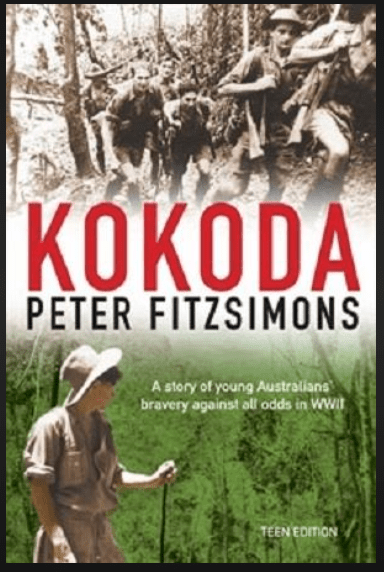
Book Review – Kokoda by Peter Fitzsimons

THE BOOK: Kokoda (Teen Edition) by Peter Fitzsimons. 

Published by Hachette Australia in 2016

Cover reproduced with permission from Kokoda: Teen edition by Peter FitzSimons, Hachette Australia, 2016.

The Summary:    Kokoda is a well written narrative non fiction book by an acclaimed Australian writer Peter Fitzsimons.  The story is about a group of young Australian men, most still teenagers, trying to make a stand against the much stronger Imperial Japanese Army in the treacherous terrain of Papua New Guinea.   The story of the Kokoda trail is eerily similar to Gallipoli, and for many people this historical event builds upon the ANZAC legend.  Aimed at readers over 12 years old, this book is ideal for teenagers to read for recreational and academic purposes.  

The Good: Fitzsimons captures the essence of the young Australian men magnificently.  His use of colloquial language and casual references to Sydney strests gives the reader confidence in the author’s authenticity and veracity.  Kokoda is a well written text that describes the events of 1942 in superb detail.  Battle scenes and forced marches are brought to life vividly.  His use of language was subtle, allowing the reader to become engaged with the story but at the same time not overwhelming them with military jargon and complex sentences.  This book’s storyline and prosaic style would suit teenage boys very well.  

The Bad: The format of the book was consistent with other expository texts with the inclusion of a contents page, maps, photographs, reference list and index. But unlike many other information texts, this book did not have any other additional resources, such as links to further reading or websites such as the Australian War Memorial Kokoda Collection.

The Interesting: It was interesting reading Fitzsimons’ perspective on the Kokoda campaign as his stance differs from the viewpoints of other war writers and journalists.  Unlike the official war reports, Fitzsimons is quite scathing of the military hierarchy’s competency.  He is very blunt in the way he points out that Australians died in New Guinea because of mismanagement.  He also points out the conflict between the celebrated MacArthur’s battle plan and Pott’s frontline perspective.  Fitzsimons is just short of scathing in the way he refers to MacArthurs’s speaking of battle tactics whilst safely ensconced in his office over 2000 km away from the jungles of New Guinea.  He also discusses the Battle of Milne and points out the manner in which MacArthur claimed the victory as part of his plan rather than the effort of Australian boots on the ground.  

The Verdict: Kokoda meets content standards within the Year 10 History Curriculum – Experiences of Australians during World War 2.  It is an excellent resource for teenagers as it contains both facts and figures, yet written in a narrative style.  This style allows the reader to become engaged with the text and have an increased recall of the information within.  Intermixing prose and factual information requires the reader to become more analytical and thus improves critical thinking skills.  The conflicting views that Fitzsimons offers about MacArther gives the reader a chance to question bias in texts.  The book also allows the reader to connect their prior knowledge of the Gallipolli digger to the story of the Kokoda trekker and build their knowledge of Australian history.  Additionally, as the book is classified as a non fiction resource, more classroom teachers are comfortable using them as resources for teaching and learning. This is because some educators have an unconscious bias towards the implementation of literature outside the language arts curriculum.  Kokoda would be an asset for high school library collections and a useful literacy resource.