As the school year wrapped up last week, I found myself reflecting on the many moments that shaped our library community in 2025. There have been challenges, yes, but also plenty of reasons to celebrate.
One of the brightest sparks has been our book clubs. What started as a simple idea, a few snacks and a chance to talk about stories, has grown into something much bigger. My secondary Book Club stands out. At the beginning of the year they were a small group, some unsure of what to read, others firmly attached to their favourite genres. Over time, though, their borrowing soared. They began exploring fantasy, contemporary fiction and graphic novels, and while one dedicated manga reader still resists branching out, the group as a whole has broadened its horizons. More importantly, they began to see reading as part of who they are. They recommend titles to each other, debate endings, and even suggest new books for the library. Watching that transformation has been a joy.
Research reminds us that this is exactly what book clubs are meant to do. They make reading social, they build confidence, and they help young people see themselves as readers. The secondary Book Club Boys proved that in the most authentic way, showing how a community of peers can turn reading from a solitary task into something shared and celebrated.
From a whole school review, borrowing levels across the school have also risen, returning to pre COVID rates. Much of this growth has come from our younger readers, whose enthusiasm has been infectious. Their excitement has created a vibrant culture of reading in the primary years, and their participation in activities has been a highlight of the year.
Of course, there are challenges we cannot ignore. Very few of our Year 10 to Year 12 students are reading recreationally, and this is concerning. Intertextuality, the ability to connect ideas across texts, is vital for analysis and for building strong cognitive connections. Without regular reading, those skills are harder to develop. We also continue to see limited engagement from Years 7 to 10 English classes, despite enthusiastic promotion. There seems to be a reluctance to lose curriculum time.
Our team dynamic has shifted too, with members coming and going. Change always brings adjustment, but it has also brought fresh perspectives and energy. We have expanded our digital resources, and while uptake has been slow, steady gains are being made as students and staff grow more comfortable with these platforms.
Perhaps the greatest success of all has been the way the library has become recognised as a social space where everyone is welcome. It is not only a place for books, but a hub for connection, collaboration and belonging. That sense of community is something we can all be proud of.
We closed the year with our Books & Bites Christmas party, a joyful celebration of new releases and Christmas treats. Each student received a reading journal with a challenge to read four books over the summer, along with handmade gifts, ornaments, bookmarks, and pen holders, sewn over the past few weeks. These tokens were a way of honouring the shared love of reading that binds us together.
As we finish the 2025 chapter, I am reminded that reading is not just about borrowing books, it is about building minds, fostering empathy and preparing students for the complexities of the world.
“As we finish this chapter and look ahead to the new year, I am reminded that Christmas is a season not only of rejoicing, but of reflection. May the joy of stories, the warmth of community, and the promise of new beginnings carry us into the year ahead.”
On Sundays, our family has a rhythm. We go to church in the morning, then its off to our local library. The kids scatter to their favourite corners, borrowing books and settling in to read whatever strikes their fancy. The only rule is, that for every book that is a re-read, there must be one you have not read before.
This week’s book haul – mine.
Whilst my children scurry to their favourite genres, I grab a coffee and wander the shelves, letting my eyes land on whatever catches my eye. My husband always chuckles at this part. “You work in a library,” he says, amused. He’s right, of course. I do. But I work in a boys’ school library, and let’s just say the collection doesn’t quite float my boat. We then settle down for 30-45min of quiet reading together, but all on individual journeys.
There’s something different about being in a space where reading is chosen, not assigned. Where stories are picked for pleasure, not performance. That contrast has been sitting with me lately, especially after reading Loh et al.’s 2025 report on the decline in volitional reading and a recent piece in The Conversation about the new Children’s Booker Prize. Both paint a sobering picture: young people are reading less, and they’re enjoying it even less than that.
Loh, C. E. et al. (2025) The Decline in Volitional Reading: Evidence-Informed Ways Forward. National Institute of Education, Nanyang Technological University, Singapore.
Loh’s recommendations to improve literacy success.
agency
access to literature
time in daily routines
reflection and connection
social interaction
developing a positive reading identity
What struck me most in Loh’s report was what wasn’t there. None of the key principles mention curriculum reform. None suggest that testing is the answer. Instead, the focus is on joy, choice, and connection. Reading for pleasure is framed not as a luxury, but as a necessity. It’s a stronger predictor of reading attainment than socioeconomic status. That’s huge. It means that if we want to close literacy gaps, we need to open up space for enjoyment.
In my school library, I see the tension. Boys who associate reading with assignments, comprehension questions, and accelerated reader points. Not with curiosity or escape. Not with laughter or awe. And I wonder: what would happen if we let go of the scaffolds and trusted them to choose? The Conversation article makes a similar point. Awards like the Children’s Booker are lovely, but they won’t shift the culture on their own. What we need is a reimagining of reading in schools. Less about outcomes, more about experience. Less about control, more about trust.
Furthermore, parents need to remember that they are their children’s first educators. Is reading and literacy your household value? One of the key findings in Loh’s research is that children need access to literature and to see it modelled by the adults around them. Do parents take their kids to the library? Do they read in front of their children? Or do they presume that schools will take care of it? Do they even ask their children how often they visit the school library? These questions matter. Because when reading is visible and valued at home, it becomes part of a child’s identity, not just a school subject.
So here’s my quiet Sunday reflection: maybe the best thing we can do as educators is to make room and provide time. Room for stories that speak to our students. Room for browsing, for borrowing, for reading without a worksheet attached. Room for libraries that float their boats and time to lie back and float away.
Because when reading becomes a choice again, it becomes a joy again. And that’s where the magic lives.
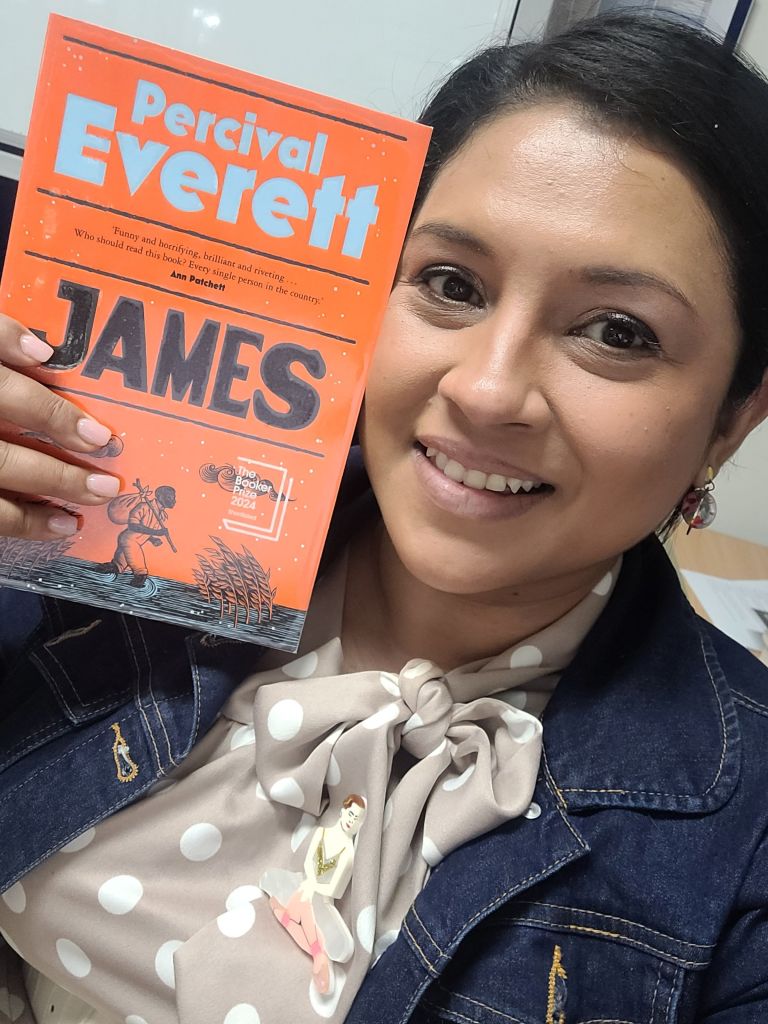
Percival Everett’s James is a profound act of literary reclamation. Shortlisted for the 2024 Booker Prize, the novel reimagines Adventures of Huckleberry Finn from the perspective of Jim—now James—a character whose voice was historically muffled by the hidden curriculum of Twain’s original novel. In Twain’s version, Jim is viewed as a sympathetic bystander, sidelined. His views filtered through Huck’s lens, his speech distorted to fit white expectations. The novel taught generations to empathise with Jim, but not to truly hear him. Because why would the slave Jim, have anything important to say?
Everett changes that. In James, the enslaved man is literate, philosophical, and quietly radical. He reads Locke and Voltaire, not as a literary flourish, but as a declaration of intellectual agency. He is articulate, intelligent and his perspicuity makes him a clear hero. James performs the dialect expected of him not because he lacks education, but because survival demands performance. Exposing his intelligence would have only led to his downfall. This inversion is powerful—it exposes the performative nature of race in literature and life and reminds us how often people of colour have been forced to speak in ways that comfort white audiences.
The novel also speaks to a broader truth: for much of literary history, the voices of people of colour have been excluded from the mainstream. The canon has long been shaped by a narrow lens—English-speaking, white, and often male. Even today, the global literature market remains dominated by English-language publishing and a WASP-centric worldview, making it difficult for diverse stories to break through. James stands out not only for its literary brilliance but for its bold challenge to that status quo. This is especially resonant in the current socio-political climate in the United States, where history itself is being rewritten based on political ideologies. School curricula are being reshaped, books banned, and narratives sanitised. In this context, Everett’s decision to retell Huckleberry Finn from James’s perspective is not just literary—it’s political.
It’s a reminder that storytelling is power, and that reclaiming voice is an act of resistance.
Everett’s prose is sharp, lyrical, and laced with irony. He doesn’t just give James a voice—he gives him agency, complexity, and dignity. James is not a corrective to Twain’s novel, but a conversation with it. It invites readers to reconsider not just the stories we read, but the structures that decide which stories are told, and which are silenced.
In every corner of a school library, stories wait to be discovered. Stories that open minds, build empathy, and reflect the rich tapestry of human experience. But what happens when those stories are missing? When shelves lack the voices of different cultures, identities, and lived experiences?
As an educator and lifelong reader, I’ve come to believe that diverse books aren’t just nice to have in a collection. But rather, that they’re essential. They shape how students see themselves and others, and they help build inclusive communities where every child feels seen and valued.
Representation Matters
Research consistently shows that representation in literature has a profound impact on students’ self-esteem, academic engagement, and social development. When children see characters who look like them, speak their language, or share their cultural background, they feel validated. And when they read about lives different from their own, they develop empathy and understanding.
A study by the Cooperative Children’s Book Center found that in 2022, only 33% of children’s books featured characters from diverse backgrounds.
According to the Australian Institute for Teaching and School Leadership, inclusive education improves student outcomes and fosters respect among peers.
The “Windows, Mirrors, and Sliding Glass Doors” framework by Dr. Rudine Sims Bishop emphasizes how books can reflect our own lives, offer insight into others’, and invite us into new worlds.
Growing up as a teen in Australia, I rarely saw characters in books who looked like me or came from my cultural background. It wasn’t until university that I encountered authors who spoke to my experience, and it was transformative. That moment of recognition made me realize how powerful literature can be in shaping identity and belonging.
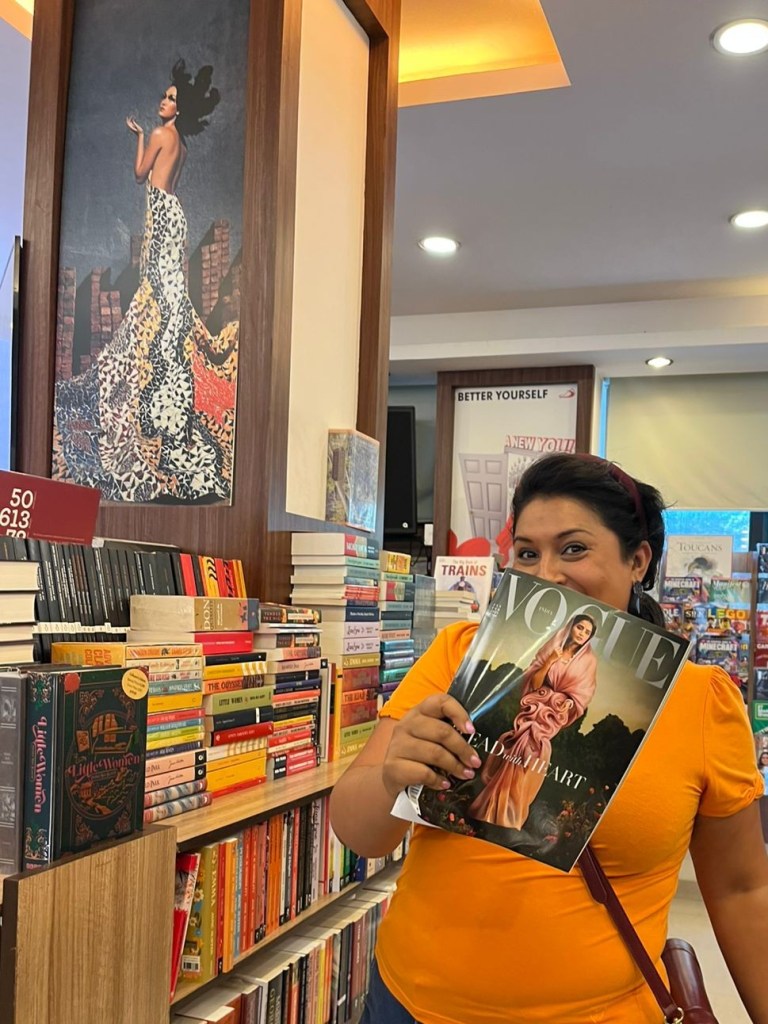
One of the most vivid memories I have of feeling truly represented was during a recent trip to Mumbai. I walked into a bookstore and saw the latest issue of India Vogue. I was drawn to it because the cover featured models who looked like me, wore traditional fabrics with pride, and radiated a beauty that felt familiar. I stood there, overwhelmed. For the first time, I saw my heritage celebrated in a way that was bold, glamorous, and unapologetically authentic. That moment reminded me how powerful visibility can be, not just in fashion, but in every form of storytelling.
Now, as a teacher, I’m committed to curating a library space that reflects the diversity of our world. I’ve seen firsthand how students light up when they find a book that resonates with them. As one Year 9 student told me earlier this year when I handed him The White Tiger by Arvind Adiga, “This book feels like it was written for me.” That’s the magic we should strive for.
🏫 What should Teacher Librarians do?
To ensure every student has access to diverse stories, Teacher Librarians and schools must:
Regularly audit their library collections for representation across race, gender, ability, and culture.
Partner with local communities and authors to source authentic voices.
Provide professional development for educators on inclusive literature.
Encourage student-led book clubs and reading initiatives that celebrate diversity.
💬 Final Thoughts
Diverse books aren’t just about ticking boxes, they’re about opening hearts and minds. They help students navigate the world with compassion, curiosity, and confidence. When we fill our shelves with stories that reflect the full spectrum of human experience, we send a powerful message: You belong here. Your story matters.
Let’s go beyond the bookshelf—and make every library a gateway to understanding.
IWD2021’s theme of #ChooseToChallenge is a call for a more inclusive society by challenging outdated ideologies. This theme suggests that we as individuals can quietly watch gender bias, discrimination and equality occur around us, or we can call it out. Our role in the Information Centre and as teacher librarians is to call out the gender bias in literature.
Literature is a reflection of society becausethe storylines, characterisationsand language of the time are captured by the author (Zanfabro, 2015). This is why Austen’s Elizabeth Bennett, Bronte’s Jane Eyre, Mitchell’s Scarlett O’Hara, Collins’ Katniss Evergreen, and Dahl’s Matilda Wormwood are so memorable. They were the rebels of their time and as such inspired other women to challenge prevailing standards and rebel against societal expectations of femininity. Literature has a great capacity to inspire, provoke and challenge the reader, but the presence of strong female protagonists is not the norm. A recent study of books published indicates that less than 30% of fiction texts have a strong female character (Green, 2018). The primary theory for this disparity is that males don’t like reading books with female protagonists, whereas females are less discriminatory about their reading material. Therefore, it is safer for publishers to print books that feature male protagonists as they have a wider appeal (Rebel Girls, 2017).
Gender bias in literature and publishing has ramifications. Strong female characters are excellent role models for both sexes (Green, 2018). Female protagonists in fiction texts normalise physically and cognitively strong women, point out that it is ok for females to have a leadership role and mostly, that strong women do not mean boys are weak (Green, 2018). Interestingly whilst strong female protagonists are found in varying forms of literature in many differing capacities, they are rarely captured as leaders, unless based upon a historical figure or a biography (Green, 2018).
Our role in the Information Centre and as teacher librarians is to curate literature that portrays strong female and male role models.We are continuously seeking to ensure our collection reflects the educational, emotional, cognitive and developmental needs of our school community… And that includes making sure our girls and boys get to read a range of texts about strong women.
We #ChooseToChallenge gender stereotypes in literature.
Magras, D. (2019). Feminist AF: Hearing Their Voices: Supporting Female Empowerment in Middle Grade Fiction for Tweens and Teens. School Library Journal.
Zanfabro, G. (2017). Gender matters: What is at stake in dealing with children’s literature? TRANS- Revue de Litterature Générale et Comparée 21. DOI : https://doi.org/10.4000/trans.1440
Pexels / Pixabay – Classroom divide – How is your classroom divided?
For a period of time, society was of the opinion that people who grew up with technology would naturally be comfortable and confident using it as it was their native ‘language’. These technically savvy individuals would require minimal instruction on digital literacy because as a cohort, they would approach digital technologies with intuitiveness and instinct.
But that assumption was WRONG!
Not just kinda wrong ..
BUT
EPICALLY WRONG!
Think
BIGGER THAN
CC BY-NC-SA 2.0
KIND OF WRONG.
But I digress…
The myth of the digital native and digital immigrant has been thoroughly debunked (Kirschner & De Bruyckere, 2017). They myth assumed that technology competence was inherent because of life long exposure to digital technologies (Frawley, 2020). This bias is based upon the common image of students permanently attached to their devices for social and personal practices, and does not translate to ICT proficiency in an educational setting (Brown & Czerniewicz, 2011).
Day (2012) suggests that the theorised cause of the previous digital divide was between those with computer access and those without. But most teachers would disagree. Many students have access to smartphones and tablets for personal use and they are still flummoxed at using technology in their schooling. It appears there is a clear lack of translation from social use of devices and technology to educational practices. This is observable in the way students are familiar with keyboards for gaming purposes, but very few are highly accomplished at touch typing (onlinetyping.org, 2020). It amazes me how some students can deftly play online games and switch their screens in milliseconds to avoid detection, but are unable to create and save a document to find at a later date. Others can create a TikTok video, but do not understand the mechanics of boolean operators to search databases. I have students that can surf the web for hours but are unable to read an article online in depth and the list just goes on…. All these examples clearly show that any correlations of age should not be translated to an assumption of digital literacy. Digital literacy, as I have expounded on before, are the psychomotor, cognitive and affective skills required to use digital technologies successfully (McMahon, 2014, p.525). Students and their parents who are technology savvy are more adept at navigating the digital world (Day, 2012).
Educational professionals around the world have realised the impact the digital divide has had on learning outcomes (Steele, 2018). In Australia, the divide was previously acknowledged in educational circles but has been brought to the forefront with the recent Coronavirus pandemic and corresponding school closures. The nation wide school closures identified numerous students and their families who lacked access to personal devices and high speed internet at home (Coughlan, 2020). Some students and families did attempt to stream online learning through mobile phone data but this method proved to be unrealistic and very costly (Coughlan, 2020). Whilst most Educational Directorates across Australia provided their disadvantaged students with laptops and internet dongles, the process was often time consuming and bogged by red tape (Duffy, 2020).
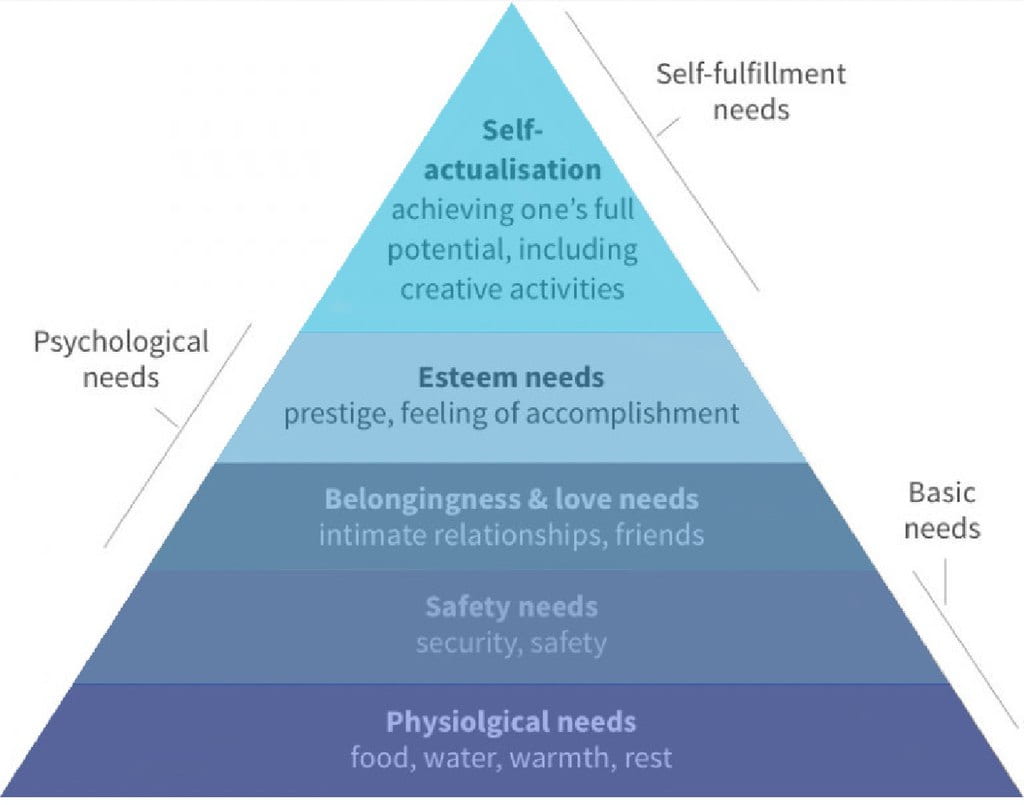
Students with a digital disadvantage often have a very different schooling experience than students who could be considered digitally elite. The digitally elite are able to study from the comfort of their couch or their bedroom, in pleasant and safe surroundings (Steele, 2018). The level of work produced by these students is higher and of better quality as they are not worrying about library opening hours, or stressed or anxious about getting home late. Whereas students who are disadvantaged may hand in poorly conducted assignments because they were unable to research under optimal conditions (Steele, 2018). Many teenagers are too embarrassed to be seen doing school work in the library when their friends are playing games, and some students who lack NBN, broadband internet and a desktop or laptop at home, persist in doing their assignments on their mobile phones, which leads to increased fatigue and eye strain. Many disadvantaged students would rather cite lack of interest in learning, or pretend to be apathetic than admit they do not have appropriate facilities at home and just stop trying to learn. When you consider Maslow’s hierarchy of needs, it is clearly obvious that a student’s self actualisation is unlikely to occur if their personal safety and security is at risk (Hopper, 2020).
Chiquo (2019) CC-BY-SA 4.0
Some critics would argue that personal devices such as smartphones are ubiquitous and allow anyone with a phone internet access. Sung (2016) points out that whilst mobile phones do offer internet access, it is not conducive for conducting research or in depth analysis of documents and as they tend to promote superficial features such as emails, social media and multimedia (Sung, 2016).
Education Magazine (2020) points out that the onus to reduce the divide are within the realm of federal and state government departments. Currently, the most common method government bodies chose to address the digital gap is to supply students with a personal device such as a laptop or tablet (Jervis-Bardy, 2020). But Steele (2018), Day (2012), and Boss (2016) all agree that bridging the divide goes beyond just supplying students with devices as simply handing each student a device does not build critical thinking and digital citizenship. But the explicit teaching of digital literacy across all learning areas, would not only have a greater impact on bridging the gap, it would also empower students to gain further digital knowledge and understanding (Steele, 2018; Lori, 2012).
Whilst teaching students digital literacy is an essential step, it is important to also involve their parents opportunities that build ICT competence and digital literacy (Wolohan, 2016; Hiefield, 2018). Wolohan (2016) suggests that when schools and communities offer digital information sessions, it affords opportunities for parents who may also have low digital literacy a chance to broaden their knowledge and learning (Boss, 2016). This then means that parents are able to assist their children with their learning at home, which improves technology integration, learning outcomes and bridges positive connections between school and home (Hiefield, 2018). These sessions could also be used to inform families of any extra facilities and services that the school offers, such as extended library hours, homework help, as well as other local facilities such as public library and other community services (Wolohan, 2016).
School libraries and teacher librarians are already involved with digital literacy pedagogical practices in numerous ways – as I have mentioned in this blog . Another engaging and innovative way to boost digital literacy are digital or coding clubs. Busteed & Sorenson (2015) suggest that lunchtime run digital clubs and programs are a fun and engaging way of teaching digital literacies and competencies at school. These clubs allow students to explore different computer programs and devices independently or in collaborative learning groups. Lunch time clubs also open the door for many students, including digitally disadvantaged students, a chance to explore emerging technologies that they may not normally get access to (Busteed & Sorenson, 2015). As these clubs are predominantly social in nature, they do not have to conform to curriculum requirements, and this means students are able to explore their own interests instead of canon. Further school based options include ensuring a bank of spare devices for students who do not have access to their own, advocating for an extension of library opening hours outside school hours to allow students time to study, as well as explicitly teaching digital literacy skills as part of teaching and learning (Education Magazine, 2020).
How to reduce the divide: Classroom based learning.
Teachers and educators should be encouraged to adapt their practices to reduce or minimise any unnecessary ‘digital’ stress on their students. Stress factors include take home assignments and feelings of overwhelm due to poor digital literacy skills. Wolohan (2016) advises teachers to get to know their cohort and understand that whilst students may appear to be confident using their devices, it is not advisable to send large assignments home unless digital literacy and ICT facilities at home are assured. Non submission of tasks could be due to lack of internet or even access to assistance from parents or caregivers, who may have low digital literacy skills and unable to assist their children with tasks (Wolohan, 2016).
The other consideration classroom teachers and teacher librarians need to make is to acknowledge that each student’s ICT ability will vary and that our learning activities need to match their competencies. This means that digital literacy needs to be differentiated the same manner as the rest of the curriculum (Wolohan, 2016). One method is to identify students’ zone of proximal development, and create learning activities that are within that zone for optimal learning (Audley, 2018). This method is far more efficient and beneficial than assuming capability or teaching at a fixed point.
CONCLUSION
Steele (2018) feels like the greatest social ramification of the digital divide is that disadvantaged students will not get the same opportunities to be creative and inventive with digital technologies. This means that the future scope of these students would be limited and possibly restricted in this new information paradigm to long term prospects of minimum wage. Whereas students on the better half of the divide have unlimited access to information in the safety and comfort of their own home, the financial stability to access emerging technologies, increased opportunities to develop interest and skills in engaging and exploring these technologies. Their long term prospects are far removed from their disadvantaged peers who often have to travel extensively to have the same access to technology and the internet. This in itself is very limiting for many students and reduces their future educational and economic prospects. As teachers and educators, we need to remember that schools are supposed to be the great equaliser, and to provide equal and equitable access to knowledge and learning. Though in reality, we all know life and education is definitely not equal. Government policies can often get influenced by political affiliations and can take time to come into effect. But we as teachers have influence in our classrooms, and our actions and practice in the classroom can make a difference to improve the digital literacy of our students, improve student learning and reduce the width and depth of the digital divide.
Brown, C., & Czerniewicz, L. (2010) Debunking the digital native beyond digital apartheid, towards digital democracy. Journal of Computer Assisted Learning (26) 5. p357-369. DOI: 10.1111/j.1365-2729.2010.00369.x
The third millennium has clearly delineated a strong demarcation between people who are confident using digital technologies and those that are not.
Prensky (2001) attributed this confidence to the time frame in which people were born, and described that those that grew up with technology are designated ‘digital native’, and those who had to be introduced to technology as ‘digital immigrants’ (Prensky, 2001; Houston, 2011). Prensky (2001) stated that the modern student is digitally savvy because of their lifetime exposure to personal devices, the internet, and therefore will be highly competent using digital technologies in their personal, social and educational domains. He predicted that ‘digital natives’ would have increased intuitiveness and competence when using digital media, and teachers need to adapt their pedagogical practices to reflect this paradigm (Prensky, 2001; Houston, 2011).
Unfortunately reality is very different. Not all modern students are competent and adept with using digital technologies, and the use of the terms native and immigrant, as well as the assumption of proficiency, has led to frustration and a deep digital divide in the classroom and the greater community.
The terms digital ‘native’ and ‘immigrant’ itself are polemical.
Brown & Czerniewicz (2010) point out that by using these titles, society is polarising itself and categorising the former is fully adept using technology and the latter, a completely maladroit luddite. The terms can also be viewed to some people as offensive, as both the words natives and immigrants have negative connotations when considered in tandem with colonisation and immigration policies in the western world (Brown & Czerniewicz, 2011). Instead it seems more sensible that ICT competency be based and assessed upon ability and capability rather than age (Brown & Czerniewicz, 2011).
The most pertinent factor that these generic terms fail to acknowledge is the impact of privilege on ICT acuity.
Not every person born during this digital age has unlimited access to technology in their personal life.
Not every household has access to multiple devices and high speed internet.
The recent online learning experience clearly illustrated that it is the combination of these factors that affect ICT competence, not age or birth year (Brown & Czerniewicz, 2011).
From a personal viewpoint it appears that ICT ability and acuity is more comparable to a continuum rather than polar opposites. Individual and collective ability will vary depending on exposure to various software programs, frequency of use, access to devices and high speed internet in the home (Houston, 2011). It is simply ludicrous to assume familiarity with one program means virtuosity over all (Frawley, 2020).
For example, I would call myself competent when I use Windows or android devices, but am a complete tech-tard when it comes to Apple and Mac products because I am unfamiliar with them. I am fluent in Facebook, Instagram and Microsoft 365, but ignorant of TikTok, Snapchat and Minecraft. I may know the intricacies of a few programs and basics of many more, I am often completely unaware of any enhanced functionalities of how these programs can be used for social or educational purposes (Kirschner & De Bruyckere, 2017, p.136). By the same benchmark, I am comfortable with using many different forms of digital literature but would flounder if asked to create a hypertext digital narrative with embedded multimodal features. By Prensky’s parameters I am classified as a digital native as I was born after the onset of the information revolution, but since I don’t know how to play minecraft, lack a TikTok account and still listen to the radio, my year 7 students think the dinosaurs were around at my birth (Prensky, 2001)…. See… continuum.
This digital divide and inequality of access has proven to be a major issue for many families and households in Australia, as it is well known that teenagers who are not actively engaged in education, employment or training are most likely to be digitally disengaged (Helsper & Smirnova, 2019). This is because most educational institutions offer their students unlimited internet access through onsite wifi.
geralt / Pixabay – Schools and libraries provide equitable access to digital technologies.
The current Coronavirus pandemic and corresponding lock down restrictions have highlighted the disparity between that socio-economic status and residential postcodes and corresponding impact on a person’s ICT competency and educational success (DIIS, 2016; Thomas et al., 2018). The shutdown of schools, libraries and other educational institutions have shown that people who live in lower SES communities, or in rural and remote areas, recent immigrants and refugees, as well as First Nations peoples are significantly more disadvantaged when it comes to access and ICT competency (DIIS, 2016; Thomas et al., 2018). Reasons cited include insufficient funds to purchase personal devices and access to high speed internet, living in shared housing or remote areas, loss of employment and lack of a fixed address (DIIS, 2016; Thomas et al., 2018).
Community leaders and social organisations are very concerned with further disenfranchisement arising from the Coronavirus pandemic and the corresponding closures of schools, libraries, governments and social organisations shopfronts (Alam & Imran, 2015). This means that socially disadvantaged individuals are even further inconvenienced by their lack of ICT knowledge and access (Alam & Imran, 2015). For young people, these closures have extended ramifications as they are conscious of their lack of access and often end up feeling marginalised and excluded, due to their inability to have an active participation in a digital society (Helsper & Smirnova, 2019). (For more information on inequalities in digital interactions click here!)
The term digital native is now considered obsolete by most reputable educational professionals (Frawley, 2017). Brown & Czerniewicz (2010) clearly indicate that age is not an indicator of ICT acuity but rather access to devices and the internet is what defines digital adroitness. Instead of using the terms ‘native’ and ‘immigrant’, Brown & Czerniewicz (2010) advocate the terms ‘elite’ and ‘stranger’, as it seems financial security is a greater indicator of digital acuity than age .
Digitally elite students have unlimited out of school access to ICT through personal devices, high speed internet, and electricity, whereas digital strangers have limited access to ICT and the internet once they are no longer on their educational or professional site (Brown & Czerniewicz, 2011). These digital strangers are often of lower socio-economic status, lack digital technology at home and rely on public services such as libraries to access the digital world (Alam & Imran, 2015; Baker, 2019). This digital disadvantage can often be exacerbated by a lack of English as they are unable to participate in community run computer courses (Alam & Imran, 2015). The combination of lack of access and an inability to communicate can increase social exclusion, inhibit full participation in society as well as lead to further marginalisation and division in society (Alam & Imran, 2015).
In conclusion – the terms digital native and immigrant are no longer valid. Digital acuity and competence is instead based upon a person’s access to digital technologies and high speed internet in their residence, which is directly correlated to financial stability and urban living. By assuming someone’s digital ability based upon their age, teachers and educators are disadvantaging their students and reducing their learning potential.
Alam, K. & Imran, S. (2015). The digital divide and social inclusion among refugee migrants; A case in regional Australia. Information Technology & People, 28(2), pp.344-365. Retrieved from https://eprints.usq.edu.au/27373/1/Alam_Imran_ITP_v28n2_AV.pdf
Houston, C. (2011). Digital Books for Digital Natives. Children & Libraries: The Journal of the Association for Library Service to Children, 9(3), 39–42.
Thomas, J., Barraket, J., Wilson, C., Cook, K., Louie, Y., Holcombe-James, I., Ewing, S., and MacDonald, T. (2018). Measuring Australia’s Digital Divide: The Australian Digital Inclusion Index 2018. RMIT University, Melbourne, DOI: https://doi.org/10.25916/5b594e4475a00
The advent of technology, the internet and plethora of personal devices has forever changed the world and in turn, the paradigm of a secondary classroom.
Whilst teenagers and society in general have embraced technology in its multiple forms for personal, social and recreational purposes, Education Departments and schools are often delayed in their digital pedagogical practices. This delay in the embedding of digital technologies and literature has exacerbated the disparity between the information literacy skills that society demands, and the ability students have when they finish school.
This digital gap is even further widened in areas of lower socio-economic success, rural and remote communities, and First Nations peoples, who lack the personal means and access to devices and reliable internet connections (DIIS, 2016).
For further information on the deepening of Australia's digital divide .. click here!
MCEETYA made a concerted effort to address this disparity by advocating for the embedding of ICT in the Melbourne Declaration on Educational Goals for Young Australians . The argument put forward by the creators of this declaration, was that ICT is an essential skill required for active citizenship in a digitally rich informationsociety (MCEETYA, 2008). Therefore ICT skills and competencies are essential to ensure each student is able to gain entry into this new paradigm. ACARA’s response to this declaration was to create curriculum learning outcomes that allow students opportunities to access, analyse, modify and create a range of hybrid, digital and multimodal tasks (ACARA, 2018). Examples of these include access to digital literature for classroom activities, explicit teaching of new literacies and assessments that require students to explore, create and analyse multimodal texts.
The simplest form to introduce students to digital literature is within classroom practice. Digital literature can be defined as texts that utilise computer technology and a device in order to access and engage with the text (Rettberg, 2012). Unfortunately this may be a limiting factor for many students and schools that lack the financial means to secure devices and internet connectivity. This issue became glaringly obvious in the recent nationwide school lock down which shifted learning to from onsite to online.
Check out this article by the ABC published back in March 2020.
The level of computation associated with the digital literature varies with the device and format. It can range from the most simple form of a scanned book on a website, to the interactive hypertext narratives with multimodal features in a mobile application (Maneti, Lipscombe & Kervin, 2018; Rettberg, 2012). The middle of this digital literature continuum contains genres or hybrid genres such as e-stories, linear e-narratives, interactive stories, hypertext narratives and electronic games narratives (Walsh, 2013).
My own knowledge of digital literature is rudimentary at best as I am strictly a user of digital content rather than being a creator – though this blog would be the only exception to the rule. Whilst I do use my kindle and am able to engage with digital texts, it is a matter of expediency rather than personal pleasure. By that token, I prefer reading digital texts rather than listening to audio-books and am completely disinclined to use digital narratives (or anything that is non linear in nature) as I find those sources too overwhelming for indepth analysis. But as a teacher librarian I need to be aware of the various formats and educate myself as to their benefits to student’s learning and literacy.
The irony is that this Masters course has caused me to test, trial and experiment with more digital media than I ever would have in my life!
Over the next few weeks I will be reviewing several different examples of digital literature that can be used in classroom practice as part of my own learning journey into literature in the digital space. Each review will discuss the source’s value to the curriculum, to learning and literacy and to digital competency.
Mantei, J., Kipscombe, K., & Kervin, L. (2018). Literature in a digital environment (Ch. 13). In L. McDonald (Ed.), A literature companion for teachers. Marrickville, NSW: Primary English Teaching Association Australia (PETAA)
Walsh, M. (2013). Literature in a digital environment (Ch. 13). In L. McDonald (Ed.), A literature companion for teachers. Marrickville, NSW: Primary English Teaching Association Austr
CONTRAINDICATIONS AND LIMITATIONS OF AUGMENTED REALITY USE IN THE CLASSROOM
There are a few issues with implementing innovative teaching practices such as AR into classrooms. These reasons include misconceptions with using ICT in the classroom, teacher reluctance and insufficient access to technology and the internet.
MISCONCEPTIONS ABOUT ICT IN THE CLASSROOM – There is a significant disinclination from some educators about the inclusion of digital technology into classroom practice. This reluctance can stem from a belief that technology causes students to become passive in their learning and that encouraging the use of personal devices increases class distractions (Wu et al., 2013). Saidin, Abd Hali & Yahaya (2015, p.1) disagree vehemently and argue that AR actually causes the learner to become more interactive with the learning content as it requires the student to think critically and be able to make meaning from their interactions. Wu et al. (2017) suggests that the use of mobile phones promotes social interactivity and student collaboration when using through networked devices.
TEACHER RELUCTANCE – Many teachers are not comfortable with emerging technologies due to their own lack of knowledge with the medium (Pope, 2018a). Wolz (2019, p.6) points out that teachers, like students, develop self efficacy from their own ability, observing others and verbal affirmation. Self efficacy of teachers and educators is essential, as there is a strong correlation between teacher competence and inclusion of digital technologies in the classroom (Wolz, 2019). Saidin, Abd Hali & Yahaya (2015, p.1) argue that all teachers should be required to continuously keep abreast of new products as part of professional learning and development. Unfortunately, requiring all teachers to be familiar and confident with emerging technologies is simply unfeasible. Many teachers are already overworked and overwhelmed with their current workloads. Therefore, it is more viable that each school has dedicated ICT teachers, or teacher librarians, that are tasked with embedding emerging technologies into classroom practice. This method allows both classroom teachers and students to improve their digital literacy skills and develop ICT acuity concurrently. For schools with a library, it makes sense to ensure the TL has self efficacy with AR/VR technology as most AR installations are sourced in their teaching and learning spaces.
DIGITAL DIVIDE – This is a significant hurdle to the implementation of digital technologies such as AR in Australian classrooms. The high cost of technology has inhibited its diffusion across classrooms, but the recent rapid advancements and price has reduced this barrier significantly (Wolz, 2019, p.2). It is not common for all students and schools to possess mobile devices and or have available data to have transactions with AR. This issue is more common in rural areas and within lower socio-economic families and schools (DIIS, 2016). The extent of the digital divide has been highlighted and under scrutiny by the recent COVID 19 school closures, where the lack of internet and device access caused many students to be unable to access home learning.
IMPLICATIONS FOR THE FUTURE
Oddone (2019) and Zak (2014) suggest that VR and AR will become mainstream technology soon and it behooves educators to equip students with the necessary skills to maintain their digital literacy. Previously access to these technologies was extremely expensive and many schools were unable to gain access due to lack of funds. However, rapid changes in technology have led to a significant price reduction, but even with the decreased costs, AR installations are still out of reach for many schools. For schools and educational institutions that can afford these emerging technologies, there are educators that lack confidence in their ability to use AR, and there are others that find the available AR content is not suited to the needs of their students (Wu et al., 2013, p.46). Whilst centralising emerging technologies into the library addresses the lack of self efficacy of teachers, it does not solve the issue of unsuitable AR content.
Hannah et al., (2019) proposes that schools create their own 3D content objects that suit their students and align to the curriculum as needed. As part of this approach, images are curated and integrated into the library management system that shares knowledge and collaboration. This method allows all the images that are created in the school by both staff and students to be stored for future use whilst acknowledging the authorship and intellectual property ownership of the images. This proposition is an extension of Zak (2014) idea of using AR in information seeking as mentioned previously. Whilst collection management is part of a librarian’s repertoire, the curation of 3D images requires new vocabulary and ontology, and requires further exploration of the relevant literature. Therefore, it makes logical sense that AR installations and its other forms of hardware and software are centralised in the library and the teacher librarian tasked with cataloging the 3D images, embedding AR and other emerging technologies across the curriculum.
Bit of a hiatus since the last post… I decided to go on holidays.
ROLE OF TEACHER LIBRARIAN
The library and the teacher librarian hold a central position in the school learning and teaching dynamic and thus are ideally positioned to engage in collaborative planning and teaching across the curriculum. Like libraries, the role of the teacher librarian has evolved in response to the metamorphosis of repository spaces to information gateways. ASLA (2016) clearly defines the foci of a modern teacher librarian to; learning and teaching, resourcing the curriculum, management of the library and its resources, providing leadership, collaborating with their peers and engaging with the school community.
Even though libraries and the role of the teacher librarian has evolved, their main purview in a school has not changed. Information seeking is the core of each school library, and the main point of the teacher in teacher librarian is information literacy and the explicit teaching of ICT (ALIA & ASLA, 2004). This teaching role extends to both staff and students, as teacher librarians are required to model good practice, and explicitly teach information seeking behaviour and information literacy to everyone in the school community (ALIA & ASLA, 2004; ALIA, 2014).
All teachers in Australia are required to integrate technology into their teaching and learning, but many classroom educators are unaware of the benefits of emerging technologies such as AR and VR (AITSL, 2017). Consequently, the task of educating staff about emerging technologies falls onto the teacher librarian. This is because teacher librarians are required by ALIA & ASLA (2014), ALIA (2014) and ASLA (2014) to be familiar with emerging technologies, provide access to and integrate them into library practice, programs as well as support the school community in using them effectively.
There are many traditional ways of introducing these technologies, such as staff emails or meetings, but there are innovative ways of introducing emerging technologies to the school community. Townsdin & Whitmer (2017) suggested AR embedded library marketing as an effective way of promoting the library and its services whilst improving information literacy, whereas Wolz (2019) points out that using AR in information seeking covertly introduces colleagues to the technology whilst they overtly search the catalogue. Pope (2018a) proposes that AR can be introduced through team building exercises, and Zak (2014) suggests the use of AR embedded resources as an effective method of introducing AR into classroom practice.
Whilst all those listed are valid methods of introducing the school community to new technologies, the most effective manner is by using AR embedded classroom resources. By using emerging technologies in teaching resources, students and staff are gaining access to high quality information that meets curriculum needs and student development. The secondary and almost furtive asset is that students gain access to these new technologies and are given opportunities to experiment in a low stakes environment. This tactic also gives classroom teachers an opportunity to experiment and play with the technology themselves, so that they can effectively use them in their classrooms (Zak, 2014). From a library management position, teacher librarians are required to regularly evaluate their strategies and services to ensure that it meets the needs of their community, and this extends to AR programming and resourcing (Zak, 2014). This evaluation must also broaden to include any mobile applications, 3D image repository or hardware that the library choses to maintain as part of their collection and digital technologies program (Zak, 2014).

















 Learning through the Library