Ten Books, One Nervous Breakdown: Reckoning with the ABC Top 100

I am a reader. Not the “I’ll grab a paperback at the airport” kind. I mean the full-blown, emotionally-attached-to-fictional-characters, rearrange-my-bookshelves-for-fun kind. So when ABC Radio National asked Australians to nominate their top 10 books of the 21st century, I did what any sane book lover would do: I spiralled.

Coming up with this list was horrendously difficult. I probably agonised over it for longer than it took to name my children, and with far more existential dread.

What if I forgot a book that changed my life?

What if I picked something too obvious?

Too obscure? Too emotionally manipulative?

Eventually, after much soul-searching, tea-drinking, and dramatic sighing, I settled on ten. I will preface it and say they may not necessarily the “best” books of the century—but they’re the ten books I think are the ‘my‘ books. My literary lifeboats. And because I clearly enjoy suffering, I’ve explained why each one made the cut.

My Brilliant Friend (2011) by Elena Ferrante

A colleague recommended this one to me back in 2019. Book one of a four-part saga that nails the messy magic of female friendship. Elena and Lila are best mates, worst rivals, and emotional sparring partners. Ferrante helped me realise that friendship isn’t always soft—it’s sharp, complicated, and utterly formative.

A Man Called Ove (2012) by Fredrik Backman

My best read of 2018—and the gateway drug to all things Backman. Grumpy old man meets chaotic neighbours, and somehow it’s a masterclass in love, loss, and chosen family. Proof that sometimes, the best family isn’t the one you’re born into—it’s the one that barges in uninvited.

The Tattooist of Auschwitz (2018) by Heather Morris

Heart-wrenching and unforgettable. Based on interviews with Holocaust survivor Lale Sokolov, this novel brings humanity to horror. It’s a story of love, resilience, and survival in the darkest of places—and it left me absolutely gutted. Furthermore, for the non-readers in my life- there is a TV series.

Wolf Hall (2009) by Hilary Mantel

Book one of Mantel’s Tudor trilogy, starring the ever-scheming Thomas Cromwell. This was another recommendation from a colleague. Wolf Hall is lyrical, slyly funny, and so well written it makes other historical fiction feel like homework. A must for history buffs—and anyone who likes their politics bloody and their prose brilliant. TV series available for the non-readers. Different note – Alison Weir just released a title called “Cardinal” based on the life of Thomas Wolsey … so will need to pop that on my list to read soon.

A Thousand Splendid Suns (2007) by Khaled Hosseini

Heartbreaking and beautiful. Set in Taliban-era Afghanistan, it follows two women whose lives collide in tragedy—and transform through love. Their bond, almost mother-daughter, is a testament to resilience, sacrifice, and the fierce power of chosen family. This was an accidental read, I found this book on a plane, left by a forgetful passenger… I still have it on my bookshelf. It has been well read and is still much loved.

Circe (2018) by Madeline Miller

I’m a sucker for Greek mythology, and this feminist retelling hit all the right notes. Circe steps out of the shadows and into her own power—witch, exile, goddess, woman. Strong female themes, lyrical prose, and a fresh perspective on ancient tales. Loved every spellbinding page. This book is far better than Song of Achilles, also by Madeline Miller. I felt like slapping Achilles more times than I could count in that novel.

Go Tell the Bees That I Am Gone (2021) by Diana Gabaldon

Book nine of the Outlander saga, and a rich tapestry of time-travelling drama. Jamie, Claire, Brianna, Roger, Lord John Grey, and William Ransom all get their moment—and it’s beautifully woven together. Such emotion. Jamie and Claire at their best. A love story for the ages. I have included this in the list because it is one of my favourite series, as I couldn’t squeeze in Cross Stitch (wrong century!), but this one carries the torch. BTW – I am waiting desperately for Book 10. Hurry up Diana!!

Burial Rites (2013) by Hannah Kent

A beautifully written fictional take on the life of Agnes Magnúsdóttir, Iceland’s last execution. It forces you to confront 19th-century prejudice, gender roles, and how reputation can be shaped more by rumour than truth. Quietly devastating—and deeply human. This was a senior text when I was teaching in the ACT and I read it as part of my curriculum planning. An absolutely brilliant novel and quite frankly, should be taught more in schools.

Hallmarked Man (2025) by Robert Galbraith (aka J K Rowling)

This one was hard as I nearly shoehorned in Harry Potter, but alas, that was from last century. Then I dithered over Deathly Hallows, but it’s book seven, and I’ve got a “book one” theme going (see Wolf Hall, My Brilliant Friend). Therefore it seemed logical that Cuckoo’s Calling made the list. But in the end, as I selected Book 9 of the Outlander series, I felt that it was OK that Hallmarked Man won out over the other 7 books in the series. Additionally, it is the best book I’ve read this year. .So, it’s in. No regrets. (Okay, maybe a few – I agonised over this one the most).

The Nightingale (2015) by Kristin Hannah

I cried buckets. This heartfelt tale of a woman risking everything to save Jewish children under the Nazi occupation of France. First it was for her best friend’s son… then it was another woman’s son…. and daughter. This book is a gut-punch of love, loss, friendship, and motherhood. It broke me, then stitched me back together.

So there you have it…

Ten books. Ten emotional rollercoasters. And one very frazzled reader. If you’re brave enough to try making your own list, I salute you. Just stock up on tea, tissues, and a sturdy spreadsheet.

Growing Up on the Page: Teaching Coming-of-Age Novels in Australian Classrooms

Coming-of-age novels have long held a central place in literature, offering rich terrain for both personal reflection and academic exploration. For educators working with adolescents, these texts are more than just stories—they are mirrors and windows into the complex journey of growing up. This post explores why coming-of-age literature resonates so deeply with teenagers, why it matters in the curriculum, and how educators can harness its potential to foster empathy, identity formation, and critical thinking.

Bildungsroman

Adolescence is a period marked by emotional intensity, identity exploration, and social upheaval. Coming-of-age novels, also known as bildungsroman, capture this liminal space with authenticity and nuance. Teen readers often see themselves reflected in protagonists who grapple with similar dilemmas: family conflict, peer pressure, romantic entanglements, and the search for purpose. These narratives validate the adolescent experience, offering reassurance that their struggles are not isolated but part of a universal human journey.

Moreover, the first-person perspective common in young adult fiction allows readers to inhabit the protagonist’s inner world. This immersive quality fosters emotional resonance and encourages teens to reflect on their own values, choices, and aspirations. As Biscontini (2024) noted, coming-of-age literature “provides young people with a relatable experience while offering adults a sense of nostalgia,” and often centres on the loss of innocence, self-discovery, and the struggle to adapt to societal expectations.

Why They Matter in the Curriculum

From a pedagogical standpoint, coming-of-age novels are invaluable tools for teaching literary analysis, thematic exploration, and cultural literacy. These texts often engage with issues such as race, gender, class, and mental health: topics that are both timely and timeless. By studying these works, students develop empathy and gain insight into diverse lived experiences.

Importantly, coming-of-age literature also supports identity development. For students from marginalised backgrounds, seeing characters who reflect their realities can be empowering. For others, these stories offer a chance to understand perspectives different from their own. As such, these novels contribute to a more inclusive and socially aware classroom environment (Federation of Egalitarian Communities, 2024).

Why Choosing the Right Text Matters—Especially for Boys.

“Puberty is merciless. Regardless of who you are,” Becky Albertalli in Simon vs. the Homo Sapiens Agenda

This sentiment that captures the emotional turbulence of adolescence with striking clarity. For boys, this period can be particularly complex, often shaped by conflicting expectations around masculinity, emotional restraint, and identity formation.

Potential reads

Choosing the right coming-of-age texts for boys is not merely about fostering a love of reading. It is about offering them tools for emotional literacy, ethical reasoning, and self-reflection. These stories help boys navigate moral ambiguity, understand the consequences of choices, and appreciate the nuances of human relationships. Crucially, they provide a safe space to explore vulnerability, fear, and belonging, which often occur before boys feel equipped to express these experiences in their own words.

Selecting texts that feature emotionally authentic male protagonists, whether they be sensitive, conflicted, resilient, or flawed; can disrupt narrow stereotypes and expand boys’ understanding of what it means to grow up. When boys see themselves reflected in literature, or encounter perspectives that challenge their assumptions, they are more likely to engage deeply and critically.

Incorporating well-chosen coming-of-age novels into the curriculum also supports literacy outcomes. The relatability of the content increases motivation, while the layered narratives encourage boys to interpret symbolism, character development, and thematic complexity. With the right texts, educators can foster not only stronger readers, but more thoughtful, empathetic young men.

How Students Socially Learn from Narrative Fiction

Recent research by Gasser, Dammert, and Murphy (2022) offers a compelling framework for understanding how children socially learn from narrative fiction. Their integrative review identifies three distinct mechanisms:

  • Getting the Lesson – where children extract and internalise explicit moral messages from the text.
  • Simulating Social Worlds – where readers imaginatively engage with fictional characters, enhancing empathy and perspective-taking.
  • Dialogic Inquiry – where students develop social reasoning through peer dialogue about complex sociomoral issues raised in fiction.

This framework is particularly relevant for educators designing literature programmes that go beyond comprehension and into the realm of ethical inquiry and emotional intelligence. It supports the use of coming-of-age novels as tools for cultivating sociomoral competencies in the classroom.

Key Texts – Australian Coming of Age stories for Boys

Australian literature offers a rich and diverse array of coming-of-age narratives that speak directly to local contexts, landscapes, and cultural tensions. There are wide range of novels that can be utilised effectively in the classroom, however, these texts are particularly valuable for fostering national literary literacy and connecting students with stories that reflect their own communities.

  • Jasper Jones by Craig Silvey
  • Boy Swallows Universe by Trent Dalton
  • I am not really here by Gary Lonesborough
  • Rowan of Rin by Emily Rodda
  • Breath by Tim Winton
  • The first third by Will Kostakis
  • Scartown by Tristan Bancks
  • The Sidekicks by Will Kostakis
  • Ready when you are by Gary Lonesborough

Key Texts: Classic Coming-of-Age Novels

These canonical works have shaped the genre and continue to offer profound insights into the human condition. They are ideal for comparative studies and historical context.

  • David Copperfield by Charles Dickens
  • The Picture of Dorian Gray by Oscar Wilde
  • The Catcher in the Rye by J.D. Salinger
  • The Adventures of Huckleberry Finn by Mark Twain
  • To Kill a Mockingbird by Harper Lee
  • The Outsiders by S. E. Hinton.

Key Texts: Modern Coming-of-Age Novels

Contemporary novels reflect the evolving challenges faced by today’s youth, including cultural identity, mental health, activism, and global conflict. These texts are especially relevant for engaging students in current social discourse.

  • The Hate U Give by Angie Thomas
  • Persepolis by Marjane Satrapi
  • Darius the Great Is Not Okay by Adib Khorram

Reference List (APA 7)

Biscontini, T. (2024). Coming of age in literature. https://www.ebsco.com/research-starters/literature-and-writing/coming-age-literature

Federation of Egalitarian Communities. (2024). What do coming-of-age novels teach us? https://www.thefec.org/news/what-do-coming-of-age-novels-teach-us/835/

Gasser, L., Dammert, Y., & Murphy, P. K. (2022). How do children socially learn from narrative fiction: Getting the lesson, simulating social worlds, or dialogic inquiry? Educational Psychology Review, 34(3), 1445–1475. https://doi.org/10.1007/s10648-022-09667-4

Sun, X. (2024). Teaching young adult literature in secondary L2 classrooms: A case study of The Outsiders reading programme. The Language Learning Journal, 52(3), 233–254. https://doi.org/10.1080/09571736.2022.2107694

The Greatest Books. (2025). The greatest coming-of-age books from 2020 to 2025. https://thegreatestbooks.org/the-greatest/coming-of-age/books/from/2020/to/2025

Book Review: Darius the Great Is Not Okay

Adib Khorram’s debut novel, Darius the Great Is Not Okay, is a beautifully crafted story that captures the emotional complexity of adolescence with rare sensitivity. At its centre is Darius Kellner, a teenage boy growing up biracial—half Persian, half white—in a world that often demands simple answers to complicated questions about identity.

Darius feels out of place in his hometown of Portland. He doesn’t speak Farsi fluently, struggles to connect with his Persian heritage, and feels alienated from both sides of his cultural background. When he travels to Iran to meet his grandparents for the first time, the story deepens into a moving exploration of belonging. Khorram doesn’t offer easy resolutions. Instead, he shows how identity can be layered, shifting, and deeply personal.

As a parent of biracial children myself, this novel struck a chord. I often worry about how my kids see themselves—whether they feel “enough” of either culture, whether they’ll be accepted, and whether they’ll find peace in the spaces between. Darius’s journey reminded me that these questions don’t always have answers, but they do deserve compassion. The book offers that in abundance.

What also makes this story so powerful is its honest portrayal of mental health. Darius lives with clinical depression, and Khorram treats this with care and authenticity. He very gently reminds the reader that mental health is often not viewed the same way across generations and cultures. I particularly found it endearing when Darius was taking his ‘medicine’ in front of his grandfather and being told that medicine is only for old people. This was said in such a matter of fact tone, you could almost hear the slightly questioning tone of a grandparent’s concern. However, Khorram keeps it calm. There’s no melodrama, just the quiet reality of what it means to live with a condition that many teenagers face but few feel safe talking about. The novel understands that mental health isn’t a side issue—it’s central to how young people experience the world and themselves.

Equally important is the novel’s emphasis on friendship. Darius’s bond with Sohrab, a boy he meets in Iran, is tender, grounding, and transformative. For teenagers, friendships are more than social connections—they’re mirrors through which they begin to see themselves. A good friend can validate your experiences, challenge your assumptions, and offer a safe space to be vulnerable. In Darius’s case, Sohrab becomes that anchor. Their friendship helps Darius feel seen—not as a collection of contradictions, but as someone worthy of love and belonging. For teens navigating identity and self-esteem, these kinds of relationships are vital.

The thing is, I never had a friend like Sohrab before. One who understood me without even trying. Who knew what it was like to be stuck on the outside because of one little thing that set you apart.

This moment captures the emotional core of the novel. For Darius, friendship isn’t just about companionship—it’s about being truly seen. Sohrab’s presence helps Darius begin to accept himself, not in spite of his differences, but because of them. It’s a reminder that for teenagers, especially those navigating identity and mental health challenges, friendship can be a lifeline

Darius the Great Is Not Okay is a fantastic coming-of-age story because it doesn’t rely on dramatic transformations. It’s about small, meaningful moments: a friendship that feels like home, a conversation that bridges generations, a glimpse of self-worth. For young readers—especially those navigating multiple cultures or mental health challenges—it’s a gentle, affirming reminder that being “not okay” doesn’t mean being broken. It means being human.

Book Review – Wednesday

If Wednesday Addams were to write her own memoir, it’d probably look a lot like Wednesday: A Novelisation of Season One. This isn’t just a book—it’s a moody, macabre mirror held up to the Netflix series, with all the gothic charm and deadpan sass you’d expect. Written by Tehlor Kay Mejia, the novel dives headfirst into Wednesday’s psyche, offering a peek behind the curtain of her stoic facade. Think of it as the show’s inner monologue, scribbled in black ink and sealed with disdain.

Published in 2024, the plot follows Wednesday’s arrival at Nevermore Academy, a school for supernatural misfits where murder mysteries are part of the curriculum and socialising is a punishable offence. While the series gave us brooding cello solos and a wardrobe that screams “funeral chic,” the book lets us crawl inside Wednesday’s mind—where sarcasm is a survival skill and feelings are best left buried. Mejia nails the tone, balancing Wednesday’s razor-sharp wit with moments of reluctant vulnerability that feel oddly touching (but SHUSHH don’t tell her that).

One of the novel’s most delicious contrasts—and let’s be honest, Wednesday thrives on contrast—is the infamous dorm room split between her and Enid Sinclair. On one side: a monochrome mausoleum of black, grey, and gloom, where even the shadows look depressed. On the other: a rainbow explosion that looks like a unicorn sneezed on a Lisa Frank catalogue. It’s less “cohabiting” and more “cold war with glitter.” The book leans into this absurdity with Wednesday’s internal commentary, which is equal parts horror and reluctant fascination. Sharing a room with Enid is like bunking with a disco ball that talks. Their room becomes a battleground of personality—and somehow, a crucible for growth. It’s eerily reminiscent of Elphaba and Galinda’s dorm at Shiz University in Wicked: one half brooding misfit, the other half pastel chaos, and somehow, against all odds (and taste), it works.

Now, let’s be honest: like most movie tie-ins, this novelisation is fairly true to the source material but ultimately feels like a watered-down echo of the show. It’s a weak parody in places—more shadow than substance. An OK read, sure, but clearly aimed at teens and readers who don’t mind their books light on literary weight. Basically, it’s all frosting and no cake: sweet, stylish, and fun to look at, but don’t expect it to nourish your soul or challenge your brain.

In short, if you loved the series but wished Wednesday would open up just a smidge (begrudgingly, of course), this book is your poison. It’s witty, weird, and wonderfully introspective—like a love letter written in invisible ink and sealed with a spider. Just don’t expect hugs. She’s still Wednesday, after all.

Boys, Biscuits, and the Book Club Revolution

There’s something quietly radical about a group of students gathering to talk about books; in a world of endless scrolls and fleeting attention, the act of sitting together, face to face, page to page, is an act of resistance; it’s also an act of connection. Book clubs are often seen as quaint or optional, but research increasingly shows they are anything but; they are lifelines, especially for boys.

“A space for boys and books is a space for possibility.”Nichols-Besel et al., 2018

Reading is, by nature, a solitary pursuit; but when we read together, when we discuss, debate, and share, we transform that solitude into community. The National Library of New Zealand (n.d.) emphasizes that social reading increases understanding, introduces diverse perspectives, and fosters authentic engagement; it’s not just about comprehension, it’s about connection. This matters deeply for boys, who often disengage from reading during adolescence. Nichols-Besel, Scharber, O’Brien, and Dillon (2018) found that boys respond positively to book clubs when given access to interest-based reading materials and male role models; their study showed that boys’ engagement and reading outcomes improved significantly in these settings. Similarly, a recent UK study trialed social book clubs across 17 school libraries and found that boys’ reading ages increased by an average of 1 year and 3 months or more than double the expected growth when reading was framed as a social, low-pressure activity (School Library Association, 2025).

“Book clubs create a space where stories become shared experiences, and readers become friends.”J.N. Polleck (2022)

One of the primary roles of the teacher librarian is to foster a love of reading; this goes beyond managing resources and catalogues, it’s about cultivating curiosity, joy, and lifelong habits. Polleck (2022) argues that youth-led book clubs, especially those facilitated by librarians, are transformative spaces that prioritize student voice, identity, and emotional safety. Book clubs provide opportunities for students to review books, select new titles for the library collection, participate in reading competitions, and model positive reading behaviour for peers; these activities not only build literacy skills but also empower students to take ownership of their reading journey (Cutrer-Párraga & Hall-Kenyon, 2024).

Facilitating book clubs and fostering a love of reading aligns directly with the Australian School Library Association’s (ASLA) Standards of Professional Excellence for Teacher Librarians. Specifically, it reflects the standard that teacher librarians “develop and promote literacy and literature programs that encourage and engage learners” (ASLA, 2004). By creating inclusive, student-led book clubs, supporting reading for pleasure, and modelling positive reading behaviours, teacher librarians demonstrate excellence in both pedagogy and leadership. These practices not only build literacy but also nurture lifelong learning and a strong reading culture within the school community.

For boys, reading can feel like a chore; a subject; a test. But in a book club, it becomes a conversation; a safe space; a place to laugh, question, and be heard. Literacy circles and book clubs allow boys to explore texts in small, student-led groups, which fosters deeper understanding and emotional connection (The Weary Educator, 2024). And yes, food helps; at our school, we’ve learned that no boy can resist a food bribe. Biscuits, humble, crumbly, and beloved, have become our secret weapon; they lure students in, but it’s the stories and the friendships that keep them coming back.

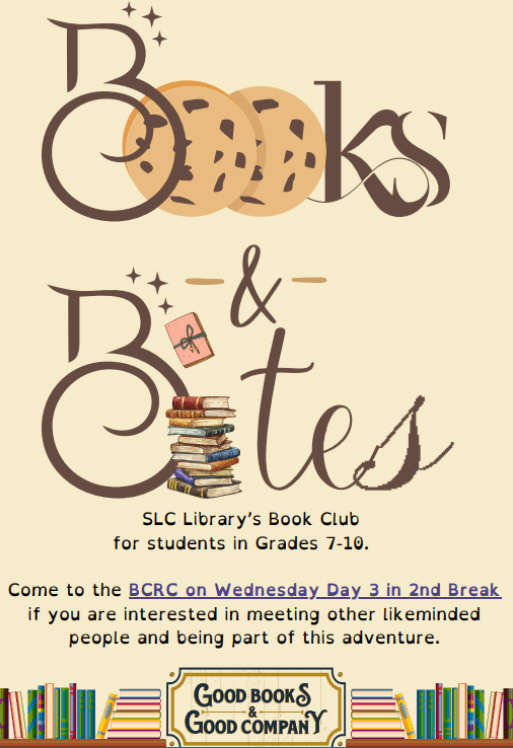
In 2024, our school launched a student book club called Books & Bites for Years 7–9; just six students came. It was small, but it was something. I bribed them with food and with this lure, they came. Now, in 2025, our Years 7–10 club has grown to 28 students; that’s 28 young minds choosing to read, choosing to talk, choosing to belong. Whilst they still come for the biscuits, they stay for the books. Therefore, I felt emboldened with such a strong uptake, and decided to start one for our younger readers. So, this August, we started a primary book club called Lauries Literature Legends. On day one, 15 students turned up. Some came for the biscuits; all stayed for the books. Even more came to the second session… apparently the lure of sitting in the library reading and eating was stronger than playing out in the quad.

Book clubs are not just about literacy; they’re about identity, empathy, and agency. They teach students to listen and to lead; they offer a space where boys can express emotions, challenge ideas, and discover who they are—not just as readers, but as people. In a time when reading is increasingly seen as a subject to learn rather than a joy to experience, book clubs remind us that stories are meant to be shared. So, we’ll keep offering biscuits; we’ll keep making space; because every book club meeting is a quiet revolution, and every student who shows up is part of it.

References

Australian School Library Association. (2004). Standards of professional excellence for teacher librarians. https://asla.org.au/resources/Documents/ASLA%20standards.pdf

Cutrer-Párraga, E. A., & Hall-Kenyon, K. M. (2024). Facilitating youth-led book clubs as transformative and inclusive spaces [Review of the book by J. N. Polleck]. UCL Press. https://journals.sagepub.com/pb-assets/cmscontent/TCZ/Book%20Reviews/2024%20Book%20Reviews/January/Facilitating%20Youth-Led%20Book%20Clubs%20as%20Transformative%20and%20Inclusive%20Spaces-1705521637.pdf

Nichols-Besel, K., Scharber, C., O’Brien, D. G., & Dillon, D. R. (2018). A space for boys and books: Guys Read book clubs. Children and Libraries, 16(2). https://journals.ala.org/index.php/cal/article/view/6682/8971

Polleck, J. N. (2022). Youth-led book clubs and the power of student voice. UCL Press.

School Library Association. (2025). New study shows positive impact of social reading spaces. https://www.sla.org.uk/Services/Public/News/Articles/2025/social-reading-spaces.aspx

The Weary Educator. (2024, July 8). Implementing literacy circles/book clubs in your classroom in 10 steps. https://thewearyeducator.com/2024/07/08/literacy-circles/

National Library of New Zealand. (n.d.). Social reading and book clubs. https://natlib.govt.nz/digital-literacy/stories/projects-to-improve-student-learning/schools/reading-engagement/strategies-to-engage-students-as-readers/book-clubs

#boybooks -Why Jack Heath Belongs in Every Boys’ School Library

If you’re looking for books that speak directly to boys—stories packed with action, danger, and emotional grit—Jack Heath is an author who delivers every time. Based in Canberra, Heath has become a standout voice in Australian young adult fiction, known for his fast-paced narratives and male protagonists who face extreme challenges and somehow manage to survive. His books aren’t just entertaining—they’re powerful tools for building resilience, especially in young readers who need to see that courage isn’t about being fearless, but about pushing through fear.

One of Heath’s most popular texts in my school library is the Minutes of Danger series. Each book features ten short stories, each unfolding in real time over ten minutes. Titles like 300 Minutes of Danger, 400 Minutes of Danger, and 500 Minutes of Danger are perfect for reluctant readers, offering bite-sized thrillers that are impossible to put down. The protagonists are often boys who are caught in life-or-death situations. They must rely on quick thinking, bravery, and resourcefulness. These stories are not only gripping but also subtly teach problem-solving and emotional regulation under pressure.

The Liars series takes a different angle, blending tech intrigue with moral complexity. It follows Jarli, a teenage inventor whose lie-detecting app turns him into a target. Across titles like The Truth App, No Survivors, and Armageddon, Jarli navigates a world where truth is dangerous and trust is hard-earned. These books explore ethical dilemmas, the consequences of innovation, and the importance of standing up for what’s right, even when it’s risky. Jarli’s journey is one of growth, resilience, and learning to think critically in a world full of deception.

Then there’s the Money series, featuring Ashley Arthur is based around a teen thief with a conscience. In Money Run and Hit List, Ashley pulls off high-stakes heists while wrestling with questions of morality and loyalty. These books are like Ocean’s Eleven for young readers, combining adrenaline-fueled action with deeper themes about risk, justice, and the blurry line between right and wrong. Ashley’s cleverness and internal compass make him a compelling role model for boys who are learning to navigate complex social dynamics.

“Thrills, Truth, and Tough Choices”

Jack Heath’s literary universe doesn’t stop at young adult fiction—it boldly steps into adult territory with the Timothy Blake series, beginning with Hangman. This marks Heath’s foray into darker, more psychologically complex storytelling, offering older teen readers a bridge into adult fiction. I have recently acquired the series for my school library because these books are perfect for boys who’ve grown up devouring his YA thrillers as they provide a natural progression into more mature narratives. With a protagonist who’s part genius, part monster, and whose moral compass is as twisted as the crimes he solves, the series channels unmistakable Thomas Harris’ Hannibal Lecter vibes, intelligent, disturbing, and impossible to look away from.

For boys’ schools and educators curating their library collections, authors like Jack Heath are essential. His stories don’t just entertain. They shape character. They help boys confront fear, wrestle with ethical decisions, and develop emotional resilience. In a world that often asks boys to be tough without teaching them how to be strong, Heath’s books offer a roadmap. They help boys grow, not just as readers, but as young men learning to navigate complexity, responsibility, and identity.

Jack Heath’s stories are more than just thrill rides. They offer boys a mirror and a map, reflecting their struggles and showing them paths through adversity. His characters don’t have superpowers, but they do have grit, intelligence, and heart. For educators and parents looking to foster resilience in boys, Heath’s books are a goldmine. They prove that strength isn’t just physical, it’s emotional, ethical, and deeply human.

Book Review – The Hallmarked Man.

Robert Galbraith’s The Hallmarked Man is a riveting addition to the Cormoran Strike series, delivering a classic whodunnit with a modern edge. Published two years after the last book in the series, avid readers (aka me) were very excited about the release. The Running Grave (Book 7) was easily the best book I read in 2023, so I was very, very excited about this new title which was released today around the world. I excitedly opened up my Kindle edition at 12.01AM and picked up my hardcopy version at 10.15am. The eBook/Kindle version may be portable, but the hardcopy will always win with me!

The story opens with a gruesome discovery—a mutilated corpse whose identity has been deliberately obscured. Strike and Robin Ellacott are tasked with unraveling not just who the victim is, but why someone went to such lengths to erase him. The mystery is layered and atmospheric, steeped in London’s underbelly and the world of antique silver, with plenty of red herrings and unexpected turns.

I found the references in the novel to the Freemasons interesting, and the novel did often allude to the role Freemasons have in public office may be compromised by their own allegiances. This theme of secret societies is rather popular and does seem to appear in several crime and thriller fiction across a range of authors.

As the investigation deepens, Strike finds himself under media scrutiny, with past indiscretions resurfacing and threatening to derail both the case and his reputation. This subplot adds tension and continuity for longtime readers, tying in threads from earlier books and forcing Strike to confront uncomfortable truths.

The novel also tugs at the heartstrings, especially when Strike reflects on the death of his beloved uncle Ted—a man he calls a “proper man”—whose quiet strength and moral compass shaped Strike’s own. In a surprising emotional turn, Strike rekindles a relationship with his estranged father, Jonny Rokeby, adding layers of vulnerability and reconciliation to the narrative.

Ellacot, meanwhile, is navigating her own emotional minefield. Her feelings for Ryan Murphy—a charismatic, Paul Newman lookalike—are complicated by her loyalty to Strike and the unresolved tension between them. She’s also forced to confront the eternal juggle between motherhood and career, a theme that’s handled with nuance and realism, reflecting the pressures many women face in balancing ambition with personal life.

The novel is rich with minor plot twists that add texture without overwhelming the central mystery. Each twist feels earned, contributing to a narrative that’s both intellectually satisfying and emotionally resonant. Galbraith doesn’t shy away from darker realities either—human trafficking of young women is woven into the case, serving as a sobering reminder that this global crisis remains urgent and unresolved.

Galbraith’s prose is sharp, the pacing tight, and the resolution deeply rewarding. The Hallmarked Man is a triumph—gritty, elegant, and impossible to put down.

Book Review – The Vanishing Bride

Bella Ellis’s The Vanished Bride (2019) is more than a historical mystery—it’s a poignant reflection on the constraints and quiet rebellions of women in Victorian England. Set in 1845, the novel imagines the Brontë sisters—Charlotte, Emily, and Anne—as amateur detectives, drawn into the case of a young bride who disappears under violent and mysterious circumstances. While the plot is rich with gothic suspense and clever twists, its emotional core lies in the exploration of female suffering, silencing, and survival.

This book was an unexpected surprise. I have always been a fan of Austen adaptations, but I had never really looked for other works. Then I saw this book. Just sitting on a shelf in Chermside Library…. What drew me in, pulled my eye onto a shelf filled with books, was the cover and the beguiling title – who vanished?

The vanished bride herself becomes a symbol of the countless women whose voices were erased by marriage, patriarchy, and social expectation. Her disappearance from a blood-soaked room is not just a mystery to be solved—it’s a metaphor for how women were often consumed by the institutions meant to protect them. The Brontë sisters, still unpublished and largely dismissed by society, are portrayed as fiercely intelligent and empathetic women who refuse to accept the limitations imposed on them. Their determination to uncover the truth is an act of resistance, a refusal to be passive observers in a world that demands their silence.

Ellis’s depiction of the sisters is deeply respectful of their historical reality. Each woman brings her own perspective shaped by hardship: Charlotte’s yearning for recognition, Emily’s wild defiance of convention, and Anne’s quiet moral clarity. Their investigation is not just about solving a crime—it’s about asserting their right to think, to question, and to act. In doing so, they challenge the rigid gender roles of their time, offering a glimpse into the emotional and intellectual lives of women who were often denied both agency and autonomy.

What makes The Vanished Bride especially compelling is its ability to weave these themes into a gripping narrative without ever feeling didactic. The gothic setting, the eerie clues, and the complex characters all serve to highlight the emotional toll of being a woman in a world that sees you as property, decoration, or burden. Through the Brontës’ eyes, Ellis invites readers to consider not just the mystery of a missing bride, but the deeper mystery of how women endured, resisted, and ultimately reshaped the world around them—often through the power of storytelling itself.

The Whimsical Wonder of Readathons: Reading for Joy, for Fun, for Pleasure!

Normally, my annual fundraiser is Frocktober, where for the month of October, I celebrate the gloriousness of frocks whilst fundraising for the Ovarian Cancer Research Fund. But this year, I’m mixing it up with something equally delightful and just a bit more bookish: a readathon! And not just any readathon—The World’s Coolest Readathon, hosted by the Australian Book Foundation. I saw that another wonderful Teacher Librarian Barbara from Bourke High School had signed up and then I thought… why not do it myself?

And what better way to kick things off than with a mystery? My first book for this readathon is Diabolical Bones by Sue Ellis—a Brontë Girls Mystery, borrowed from the ever-wonderful Brisbane City Council libraries. Gothic Yorkshire, clever heroines, and a touch of the macabre? Yes please.

A readathon, I’ve decided, is the perfect sequel to Book Month—like the epilogue where the characters (aka readers) get to celebrate their love of stories with wild abandon. It’s the encore performance, the bonus chapter, the literary afterparty.

Once upon a time, in a land not so far away (okay, it was my bedroom in Brisbane’s Southside), I embarked on a noble quest: the MS Readathon. Armed with a stack of books taller than my bedside lamp and a sponsorship sheet that made me feel like a literary philanthropist, I read my way through mysteries, adventures, and magical lands—all while raising money for a good cause. It was glorious.

Fast forward to today, and I find myself whispering reminders like a mantra: Read for fun. Read for joy. Read for pleasure. Because somewhere between grown-up responsibilities and inbox avalanches, the simple delight of reading can slip through the cracks.

Why Readathons Are Brilliant (and Backed by Science!) 

Readathons aren’t just nostalgic—they’re powerful tools for literacy, wellbeing, and community. Here’s why they’re so magical:

They Spark a Love of Reading: Choosing your own books makes reading feel like breathing—natural and joyful.

“Until I feared I would lose it, I never loved to read. One does not love breathing.

Harper LeeTo Kill a Mockingbird

They Boost Brains and Wellbeing: Reading for pleasure improves mental health and cognitive skills.

“Reading gives us someplace to go when we have to stay where we are.”
— Mason Cooley

They Create Lifelong Readers: Even reluctant readers get swept up in the fun.

“A reader lives a thousand lives before he dies. The man who never reads lives only one.”
— George R.R. Martin

They Build Community: Fundraising through reading turns stories into shared kindness.

“No act of kindness, no matter how small, is ever wasted.”
— Aesop

A Readathon Renaissance

Whether you’re a teacher, parent, librarian, or just a book-loving human, readathons offer a delightful way to reconnect with the joy of reading. They’re flexible, inclusive, and can be tailored to any age or interest. Plus, they’re a fabulous excuse to wear pajamas all day and call it “literary immersion.”

So if you, like me, sometimes need a nudge to read for the sheer pleasure of it, consider joining or hosting a readathon. You’ll be part of a movement that’s not just fun—it’s transformative.

And if you’re ready to dive in, check out The World’s Coolest Readathon. It’s got all the charm of the MS Readathon days, with a modern twist and a mission to make reading joyful again.

References

Real Men Read

Empowering Boys Through the Power of Story

The “Real Men Read” initiative, recently hosted at my school was intentionally held between Book Week and Father’s Day as a event to bring our Primary students and their male caregivers to reinforce the importance of positive male role models in improving literacy outcomes for boys. The event brought together fathers, grandfathers, and male mentors together for a pleasant evening celebrating the positive outcomes from reading. Two dads kindly volunteered to talk about how and why they read. They discussed their own role models and how they support their sons in their literacy journey. We also had a fabulous guest speaker from Brothers and Books – Dylan Conway to talk about the impact reading has on building resilience and reducing stress. The impact was immediate—students were more engaged, more curious, and more eager to pick up a book themselves. In fact, I received an email from a dad that next morning.

Thanks again for all of your efforts last night.  We are lucky to have such wonderful teachers that genuinely care for our sons.  Conor actually got up this morning and said he wants to read his new library book with me tonight.  Success!

This event powerfully demonstrated that when boys see and hear about men they value and respect reading, they begin to associate literacy with strength, intelligence, and emotional depth. In a world increasingly shaped by digital distractions and narrow stereotypes, the presence of caring, literate male figures offers boys a broader vision of what it means to be a man.

The research backs this up! A study by Merga and Ledger (2019) found that boys are more likely to engage with reading when they see male role models actively participating. Furthermore, recent findings by Smith and Taylor (2023) suggest that boys who regularly read with male caregivers demonstrate improved vocabulary acquisition, reading comprehension, and a more positive attitude toward school. These outcomes are not only academic but also social, as reading together fosters empathy and communication.

The National Literacy Trust (2025) further supports this, stating: “Fathers today are more involved in their children’s lives than ever before, and their engagement in early learning activities like playing, reading, singing, drawing and visiting parks or libraries supports children’s emotional, cognitive and educational development, as well as their early language and literacy skills.”

As Dylan Conway pointed out from the not-for-profit organisation Brothers and Books, their campaigns have shown that when boys see men reading, they begin to associate reading with strength, curiosity, and emotional intelligence. Their organisation has championed the cause, encouraging men to read and donate books across Australia.

The Real Men Read event served as a powerful reminder that literacy is not just a school responsibility—it is a community effort. When fathers and male mentors take the time to read with boys, they are investing in a future where literacy is linked to confidence, connection, and lifelong learning.

References

Merga, M., & Ledger, S. (2019). Parents’ perceptions of the importance of reading and the efficacy of reading aloud: Implications for fostering reading engagement in the home. Australian Journal of Education, 63(2), 163–178. https://doi.org/10.1177/0004944119840077

Smith, J., & Taylor, R. (2023). Male role models and literacy development in boys: A longitudinal study. Journal of Educational Research and Practice, 14(1), 45–59.

National Literacy Trust. (2025). Fathers’ engagement in early childhood literacy. https://literacytrust.org.uk

Australian Bibliotherapeutic Society. (n.d.). About us. https://bibliotherapy.org.au

Brothers and Books. (n.d.). Our mission. https://brothersandbooks.org