Celebrating Australian School Library Day: Why Every School Needs a Library and a Qualified Teacher Librarian

Today, across the country, we celebrate Australian School Library Day—a moment to shine a light on the heartbeat of our schools: the library.

This year’s theme, All the Literacies, reminds us that school libraries are not just about reading. They’re about empowering students with the full spectrum of literacies needed to thrive in a complex world. As educators, this day invites us to reflect on the transformative role libraries play in our schools and to advocate for the qualified teacher librarians who make these spaces come alive.

More Than Just Books: The Role of School Libraries

Modern school libraries are vibrant, inclusive environments that support curriculum delivery, foster independent learning, and build critical and creative thinking skills (ACT Government, 2022). When led by a qualified teacher librarian, these spaces become central to a school’s teaching and learning culture.Yet in Queensland and beyond, many schools still lack a dedicated library space or a qualified teacher librarian—especially in communities where literacy outcomes are already at risk (Queensland Teachers’ Union [QTU], 2023).

Why qualified Teacher Librarians matter?

Teacher librarians are dual-qualified professionals with expertise in both education and information science.

They:

  • Collaborate with classroom teachers to support curriculum goals.
  • Promote reading for pleasure and academic success.
  • Guide students in navigating digital and print resources.
  • Create safe, inclusive spaces that support student wellbeing.

Then there is nothing quite like seeing a student fall in love with reading for the first time. That joy is irreplaceable!

Literacy and Wellbeing: A Powerful Connection

Literacy is foundational and not just for academic achievement, but for emotional and social wellbeing. Research shows that reading and writing can significantly support children’s mental health, especially during times of stress (National Literacy Trust, 2020).

This year’s theme, All the Literacies, highlights the many ways libraries support students, from reading and information literacy to digital, cultural, and wellbeing literacy. A well-resourced library is a launchpad for lifelong learning. Emerging frameworks like wellbeing literacy emphasize the importance of teaching students how to communicate about their emotional and mental states (Oades, Robinson, Green, & Spence, 2021).

The Reading Crisis.

Merga (2017) has revealed a troubling trend: while many adolescents possess basic literacy skills, they are increasingly disengaged from reading for pleasure which is known as aliteracy. Between 2017 and 2021, the percentage of Australians who read books at least once a year dropped from 92% to 75% (Merga, 2022). This decline has serious implications for literacy development, academic performance, and future opportunities. Merga’s findings also underscore the vital role of teacher librarians in reversing this trend. By fostering reading habits and building relationships with students, they help bridge the gap between ability and motivation.

Australian School Library Day – A call to action.

Australian School Library Day was created to celebrate the incredible work of school library staff and to raise awareness of the essential role libraries play in education (Australian Library and Information Association [ALIA], 2025). It’s a day to:

Share appreciation for your library staff.

Showcase student voices and library stories.

Advocate for well-resourced libraries in every school.

If your school doesn’t yet have a qualified teacher librarian or a dedicated library space, today is the perfect time to start the conversation.

After all, every student deserves access to a library that supports all the literacies.

References

Merga, M. K. (2022). Reading engagement in Australian adolescents: Beyond ability. Springer.National Literacy Trust. (2020). Children and young people’s reading in 2020 before and during lockdown. https://literacytrust.org.uk/research-services/research-reports/children-and-young-peoples-reading-2020-before-and-during-lockdown/

Oades, L. G., Robinson, P., Green, S., & Spence, G. B. (2021). Wellbeing literacy: A capability model for wellbeing science and practice. International Journal of Wellbeing, 11(1), 1–27. https://doi.org/10.5502/ijw.v11i1.727

Queensland Teachers’ Union. (2023, May 5). Do you have a qualified teacher-librarian in your school library? Queensland Teachers’ Journal, 128(3), 22. https://www.qtu.asn.au/journal/queensland-teachers-journal-vol-128-2023/queensland-teachers-journal-vol-128-no-3/do-you-have-qualified-teacher-librarian-your-school-library

Beyond the Bookshelf: Why Diverse Stories Belong in Every School Library

In every corner of a school library, stories wait to be discovered. Stories that open minds, build empathy, and reflect the rich tapestry of human experience. But what happens when those stories are missing? When shelves lack the voices of different cultures, identities, and lived experiences?

As an educator and lifelong reader, I’ve come to believe that diverse books aren’t just nice to have in a collection. But rather, that they’re essential. They shape how students see themselves and others, and they help build inclusive communities where every child feels seen and valued.

Representation Matters

Research consistently shows that representation in literature has a profound impact on students’ self-esteem, academic engagement, and social development. When children see characters who look like them, speak their language, or share their cultural background, they feel validated. And when they read about lives different from their own, they develop empathy and understanding.

  • A study by the Cooperative Children’s Book Center found that in 2022, only 33% of children’s books featured characters from diverse backgrounds.
  • According to the Australian Institute for Teaching and School Leadership, inclusive education improves student outcomes and fosters respect among peers.
  • The “Windows, Mirrors, and Sliding Glass Doors” framework by Dr. Rudine Sims Bishop emphasizes how books can reflect our own lives, offer insight into others’, and invite us into new worlds.

Growing up as a teen in Australia, I rarely saw characters in books who looked like me or came from my cultural background. It wasn’t until university that I encountered authors who spoke to my experience, and it was transformative. That moment of recognition made me realize how powerful literature can be in shaping identity and belonging.

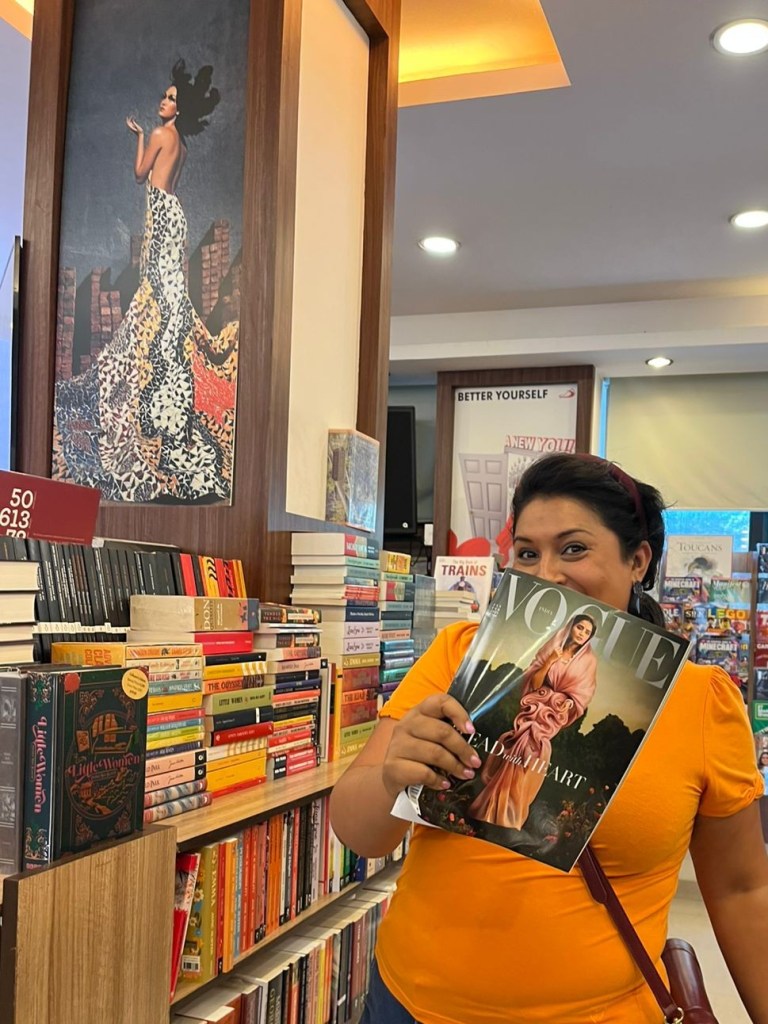
One of the most vivid memories I have of feeling truly represented was during a recent trip to Mumbai. I walked into a bookstore and saw the latest issue of India Vogue. I was drawn to it because the cover featured models who looked like me, wore traditional fabrics with pride, and radiated a beauty that felt familiar. I stood there, overwhelmed. For the first time, I saw my heritage celebrated in a way that was bold, glamorous, and unapologetically authentic. That moment reminded me how powerful visibility can be, not just in fashion, but in every form of storytelling.

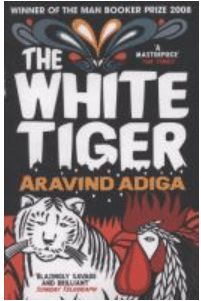
Now, as a teacher, I’m committed to curating a library space that reflects the diversity of our world. I’ve seen firsthand how students light up when they find a book that resonates with them. As one Year 9 student told me earlier this year when I handed him The White Tiger by Arvind Adiga, “This book feels like it was written for me.” That’s the magic we should strive for.

🏫 What should Teacher Librarians do?

To ensure every student has access to diverse stories, Teacher Librarians and schools must:

  • Regularly audit their library collections for representation across race, gender, ability, and culture.
  • Partner with local communities and authors to source authentic voices.
  • Provide professional development for educators on inclusive literature.
  • Encourage student-led book clubs and reading initiatives that celebrate diversity.

💬 Final Thoughts

Diverse books aren’t just about ticking boxes, they’re about opening hearts and minds. They help students navigate the world with compassion, curiosity, and confidence. When we fill our shelves with stories that reflect the full spectrum of human experience, we send a powerful message: You belong here. Your story matters.

Let’s go beyond the bookshelf—and make every library a gateway to understanding.

Book Lovers Day – August 9

“A reader lives a thousand lives before he dies. The man who never reads lives only one.”George R.R. Martin

This weekend we celebrated an unusual day. A truly inclusive day, where anyone and everyone can join in the festivities. This day celebrates the peculiar joy of falling headfirst into a story, where dragons roam, detectives brood, and friendships bloom between pages. Book Lovers Day is a gentle reminder that quality literature doesn’t just entertain the mind, rather it transforms. It tickles the imagination, sharpens the mind, and teaches us to see the world through someone else’s eyes.

“Reading is an exercise in empathy; an exercise in walking in someone else’s shoes for a while.”

Malorie Blackman

Reading fiction is more than a leisure activity as it is a cognitive and emotional exercise that cultivates empathy, enhances wellbeing, and supports lifelong development. Classic novels such as 1984, The Handmaid’s Tale, Rebecca, and The Three Musketeers exemplify how literature invites readers to inhabit diverse perspectives, a process closely linked to the development of Theory of Mind (ToM).

ToM refers to the ability to understand that others have beliefs, desires, and emotions different from one’s own. Research shows a reciprocal relationship between ToM and reading comprehension: engaging with narrative fiction improves our capacity to infer characters’ mental states, which in turn strengthens our understanding of complex texts. This cognitive skill is foundational not only to reading but to social interaction and emotional intelligence.

Moreover, (and this is the part I absolutely love!), reading fiction contributes to stress reduction and emotional regulation. Works like Life of Pi, The Scarlet Pimpernel, Gone with the Wind and Wind in the Willows offer immersive experiences that promote relaxation and introspection. As noted in The Conversation, reading also fosters curiosity—a trait linked to career success and psychological resilience.

In sum, literature nurtures the body, mind, and spirit. On Book Lovers Day, we celebrate fiction not just as art, but as a vital tool for cultivating empathy, enhancing wellbeing, and deepening our understanding of others.

Book Review – Schindler’s Ark by Thomas Keneally

Book of the Day

Schindler’s Ark by Thomas Keneally was a very dry read.  It was drier than the cheapest plonk at the pub during happy hour.  Now before anyone starts collecting rocks to stone me, I would challenge them to read the book too and then comment.  

I am not denying that the material in the book is powerful.  I definitely acknowledge that the book is filled with names, places and intense facts.  But it is not prose. Upon thinking this further, I recollect the subject of the book and wonder if there is a reason for that.  If the author, in this case Thomas Keneally was aiming for an emotive piece, it would be a character lie. By all accounts, Oskar Schindler was a hard drinking and reckless businessman who cheated on his wife with regularity (Hurvitz & Karesh, 2016).  He destroyed his family business, sought to cheat, lie and swindle his way back into a life of comfort. Quite frankly, by all tokens, this man was an immoral and wasteful character. Then Schindler went on to save almost 1300 Jews from the concentration camps during those dark days in Eastern Europe.  This man, who by the standards of his time, and now; unworthy of attention; put his own life at risk to save others. His actions have been immortalised in a book, a major Spielberg movie production and the term Schindlerjuden or Schindler’s Jews, which is still used to refer to the descendents of those that were saved.   

So when you consider all these facts, the dryness of Keneally’s “Schindler’s Ark” makes sense.  It would be a lie if the book was anything other than prosaic. Instead, its matter of fact manner of describing the main character’s traits ensures that the reader does not view him with rose framed lenses.  The reader is made fully aware of Oskar’s failings as a man and a husband. It is in viewing these failings that Schindler’s true heroism is seen. The plain language allows the reader to envision the fear hiding between the stalwart words.  Conversely, the plain language also allows readers with little imagination to read the book without being overwhelmed.  

“Schindler’s Ark” was a very dry read for someone who is a lover of prose.  As an avid reader of fiction, I found this novel to be more informative than anything else.  I also found it heartbreaking, just like the sadness I feel when the happy hour wine is just awful.  But whilst this book was a struggle for me, it would be ideal for reluctant teens who struggle with engaging with fictitious stories.  The language, style and format of the book resemble information books and thus may satisfy their need for ‘facts’.  But whilst the Guardian review suggests this book as appropriate for 8-12 year old children, I would probably restrict it to students over 14-15 years old.  This would then correlate well with the year 10 HASS’s World War 2 and Holocaust unit especially the ACDSEH025 elaboration.  It would also work well in the Biographies and memoirs unit in Year 10 English.  

 REFERENCES:

Alannahbee, (2013). Schindler’s Ark by Thomas Keneally – review. The Guardian. Retrieved 16th March, 2020 from https://www.theguardian.com/childrens-books-site/2013/sep/25/review-schindler-s-ark-by-thomas-keneally

Axelrod, A. (2013). Schindler, Oskar. In Encyclopedia of World War II, vol. 2. New York: Facts On File. Retrieved March 16, 2020, from online.infobase.com/Auth/Index?aid=19165&itemid=WE53&articleId=265017.

Hurvitz, M. M., & Karesh, S. E. (2016). Schindler, Oskar. In Encyclopedia of Judaism, Second Edition. New York: Facts On File. Retrieved March 16, 2020, from online.infobase.com/Auth/Index?aid=19165&itemid=WE53&articleId=263928.

It was the moment I fell in love…

kaboompics / Pixabay – Falling in love


I fell in love for the first time with a boy named James Winthrop Frayne II.  I was 11 years old and madly in love. He was 16 years old, tall and very smart, with red hair, green eyes and a slightly crooked smile. 

PlushDesignStudio / Pixabay – In love with books.


Unfortunately for me, James or Jim, as I lovingly referred to him, was a character in my favourite book series “Trixie Belden”. In fact, my love for Jim Frayne was so embedded into my mind that I ended up marrying another lovely redhead (he says honey-blond) who also happened to have James in his name.  And whilst I was falling in love with Jim Frayne…

I fell in love with reading books. 

Now when I say I love books, I say this as an adult who reads on a daily basis. 

I have never spent a day in my life as far as I can remember without reading or food.  In fact reading and eating are interwoven rather closely in my life. I have eaten my way through many books and I have read my way through many meals.  Even now as a mother of three, dinner table conversations are still second place to a book. So for me, books are a need, like food and water. I indulge that need with classics and new authors; old favourites and popular series.  But series fiction holds a dear spot in my heart. As a child, series fiction gave me Jim and Trixie, Harry and Hermoine, Frank and Joe, Nancy and Bess, Laura Ingalls, Anne Shirley, Lucy, Pollyanna, Heidi, George and Timmy, Darryl and Sally. As an adult series fiction brought me Doc Scarpetta, Tempe Brennan, Ayla of no people, Falco, Jamie and Claire plus many others into my life.  Whilst I have loved the classics and other stand alone titles, series fiction brought me the greatest joy.   

{silence} {crickets} {crashing cups of tea and chairs} {my career as a future TL fading into the sunset}

Yes, as an adult who is also a fledgling teacher librarian, I am voicing out loud my deep and ardent affection for serial stories.  Now, once everyone has picked themselves off the floor and righted their tea cups; I will explain my thoughts.

I acknowledge that series fiction, whether for adults or children, has often been regarded as literary rubbish.  Often viewed as the ‘Mills & Boon’ of literature, series fiction is derided for its repetitive structure, predictive plot and lack of character development (Westfahl, 2018).  Some would even argue that its presence on bookshelves is a betrayal of literary values (Westfahl, 2018). But these people are snobs! Books do not always have to be among the lexicons of literature.  Books, especially fiction books, should be able to satisfy cognitive, emotional and the developmental needs of the reader and series fiction definitely addresses the emotional needs of both fledging and proficient readers.

But before I elaborate deeply on how series fiction changed my life; I would like to clarify a few technical issues.  There are three main types of series fiction. Firstly, there is the progressive series; where a longer narrative is broken down into shorter novels and the sequence of titles is important to the reader and storyline (Wooldridge, 2015).  Then there are the successive series, where the plot repeats itself continuously and lastly, the accidental variety where the author reluctantly writes prequels and sequels to comfort the crazies.  

Rowling’s Harry Potter, Marsden’s Tomorrow when the war began, Montgomery’s Anne of Green Gables and Wilder’s Little house books are some examples of progressive series.  These book concatenations had a definite end which saw the characters grow and develop along with the reader.  I was one of those readers that grew up with Ellie and Harry. I devoured John Marsden’s series in a matter of months.  My poor high school teacher librarian was continuously pestered to get the rest of the series once I got hold of the first one. Poor man!  Lucky for him, by the time I discovered Harry, I had a job and a library membership! I was 13 when the first HP book was released and as Harry grew up, so did I.  Harry, Hermoine and Ron were more than just book characters, for me they were friends.  

Successive series examples include the famous Diary of a wimpy kid, Nancy Drew, Hardy Boys, Trixie Belden, Babysitters club, Animorphs, Famous Five, Secret Seven, and Bobbsey Twins.  These series have a foreseeable story patterns with comforting characters and obvious plots (Wooldridge, 2015).  Whilst these books may seem formulaic (they are!), it is their predictability that makes them popular. Series fiction offers children constancy and security in a world full of upheaval (Wooldridge, 2015).  Children develop a sense of trust, an affection with the character and possibly even a relationship with the author (Wooldridge, 2015). So while they themselves grow up through the tumultuous years of puberty, series fiction with its predictability offers an escape, a playdate with an old friend.  

I developed this type of relationship with Enid Blyton after being introduced to the Famous Five. The sheer joy received from reading that series led me to trust her writing style and with it I discovered Secret Seven, 5 find outers and it, Mallory Towers, Twins at St Claire’s, Wishing Chair, Enchanted Tree, Amelia Jane and so many more.  For an awkward immigrant kid with poor social skills, these books allowed me to escape to places where magic and friendship abounded.  My daughter is also a big Blyton fan. Every time she picks up a book authored by Blyton, I know that she will most likely gain the same level of emotional satisfaction that I did and so develop her love of reading.  There is also a great deal of enjoyment to share with her the books of my childhood.

The last main type of series fiction is the accidental variety.  These are books that the author only planned on one, and then somehow their popularity has meant sequels and prequels were soon requested by adoring fans.  George M Martin’s Game of Thrones is such a series, spawning an TV run that lasted several years and ended before the last book has even been published.  Diana Gabaldan’s Outlander series is currently stalled at the near publication of its 9th book and only time will tell if the tenth book will ever eventuate (especially since the first book was published almost 20 years ago!).  Other accidental series include Baum’s Wizard of Oz, Norton’s The Borrowers and P. L. Traver’s Mary Poppins.  Because these series were accidental and not planned, their storylines do not always make sense and can appear a bit jerky at times.  Sometimes they abruptly end if the author or readers lose interest.  

Series fiction has been around for a long time. As much as some literary snobs would hate to admit, there are some current classics that used to be serials.  Dicken’s Pickwick Papers and another seven of his other titles as well as Doyle’s Sherlock Holmes started off as series but then were condensed into a novel several reprints later (McGill-Franzen & Ward, 2018).  Even further back to the folklore stories such as mythical twelve tasks of Hercules; the thousand and one stories of Scherazade and adventures of the Round table are varieties of series fiction.  So to all those literary snobs that believe series fiction are rubbish… well… pffft to you.  

If you think about it from a practical viewpoint it makes sense if you have a recipe that works to use it!  Edward Strathmeyer had such a recipe back in the boom days of series fiction. He planned outlines of books and then organised cheap ghost writers to write the stories, and oh boy… did it work!  The whole Trixie Belden, Nancy Drew and Hardy Boys production is based upon this magical recipe (Westfahl, 2018).  The recipe had some key ingredients. Characters are kept the same age; have the same small town holistic upbringing; go on amazing adventures, travel the world but always come home safely to a loving family.  These books allowed children and teens (mainly aimed at Caucausian middle class Americans) an avenue of escape from their groundhog day lives. As these book characters all suffered from perennial Peter Pan syndrome, they have never lost their appeal even in its trillionth reprint nearly ninety years after the first copy (Finnian, 2013).  I will mention here that whilst racial demographics and family structure has evolved significantly since the first Stratemeyer book was published in 1927, their popularity has not changed.  The plot pattern remains the same but the settings and dilemmas have evolved with the times.  Obviously the recipe still works!

So what is the benefit of series fiction?  Besides emotional satisfaction, series fiction allows the reader to build their literacy skills.  McGill-Franzen & Ward (2018) believes that the predictable plots assist in developing word recognition which in turn boosts vocabulary and reading confidence.  The formulaic story pattern allows the reader to easily identify any explicit reading conventions present. This expanded vocabulary and confidence then allows the reader to successfully use their increased literacy skills in other areas. 

Series fiction makes it simple for readers to identify titles they are willing to read because they identify with the author.  Reluctant readers are more likely to pick a book they are familiar with by the same author; than a title by a new author. They are also more likely to try other titles by that author because of the relationship that was previously established.  A great example is John Flanagan, author of the fabulous Ranger’s apprentice series.  Teens who enjoy that series often move onto the Royal Ranger series as well as Brotherband because they trust the author. The same can be said for Rick Riordan and the plethora of books he has published.  

The impact of series fiction is clear.  Children and teens who read more books end up being more adults who read.  Remember, committed adult readers were hooked onto reading as children by series fiction (McGill-Franzen & Ward, 2018).  And whilst reading of insightful novels that provokes critical thinking complements a wide reading program, it cannot replace it.  Pushing the classics onto children and teens before they are ready is unlikely to work. But offering them an opportunity to connect with an author or a series they can engage with may put them onto the pathway towards literature.  After all, children do age out of one series and into another (McGill-Franzen & Ward, 2018). They grow from Blyton’s Magic Faraway tree to Rodda’s Rowan of Rin, to Rowling’s Harry Potter to Marsden’s Tomorrow when the war began to Davis’ Falco, Cornwall’s Scarpetta and Reichs’ Bones and Hume’s Arthur and Merlin series and eventually they reach the classics. Why do I know that?  Cos I did just that.  

I fell in love with reading as a child.  I have stayed in love with reading as an adult.  Are you in love with reading? If so, when did it happen?

REFERENCES

Finnan, Robert (2013). “Unofficial Nancy Drew Home Page”. Retrieved 14th March 2020. 

McGill-Franzen, A. & Ward, N. (2018). To develop proficiency and engagement, give series books to novice readers. In D. Wooten, B. Cullinan, L. Liang & R. Allington (Eds). Children’s literature in the reading program: Engaging young readers in the 21st century, (5th ed., pp. 153-168). Retrieved from Proquest Ebook Central.

Westfahl, G. (1999-2018). Series fiction. World of Westfahl. Retrieved from https://www.sfsite.com/gary/ww-ref-series01.htm

Woolridge, T. (2015). Series fiction and Sallly Rippin’s Billie B Brown series: The ‘Most important continuous reading children do on their own’. mETAphor, 3, 30-35. Retrieved from https://www.englishteacher.com.au/


YA – Did you ?

My knowledge of children’s literature is as extensive as my personal library. 

I have shelves groaning with ‘golden books’( a remnant of my childhood), Blyton, Nesbit, Grimm, Anderson, Wilder (another remnant), Montgomery (mine), Alcott (yes… also mine), Lewis (mine), Anh Do (definitely not mine – Child #2), Harvey, Keene, K Kenny (mine), J Kenny ( not mine – Child #1), Dixon and Rowling to just name a few authors. This is not including the shelves full of board and picture books (child #1, #2 and #3) that have appealed to my minions thus far.  But as I ponder this, and glance lovingly at my home library, I realise that I went straight from children’s books to the classics and then onto adult fiction. I had completely skipped the YA stage. 

A whole series that revolutionised children’s books.


Young adult fiction as Tyle (2014) points out are books that are written for teenagers aged between 12-18 years old and (mostly) have teen protagonists as central characters.  Compared to books aimed at children and adults, YA fiction should be able to present a teen’s perspective without sounding condescending or patronising. Pattee (2017) although prefers to call YA as emerging adult fiction or new adult fiction as she feels that this developmental phase could be more applicable to young adults between 18-25 years old.  Her reasoning for this shift in age range is based upon when confusion and conflict occurs in identity as per Erikson’s psychological theory. Pattee (2017, p.220) suggests that a true identity crisis occurs later in life than in teen years as per previous theories.  

A childhood favourite of mine


This makes sense to me.  It’s common knowledge that the brains of young people are not fully grown till their mid-twenties.  After all, due to the increased risk of rash decision making, most car insurance companies charge younger drivers a higher excess compared to their older compatriots.   Another thought to ponder is the age that modern ‘new adults’ actually start adult-ing (Pattee, 2017). With millennials delaying settling down with a partner and setting up their homes till their late 20’s and early 30’s; the time period for identity conflict and resolution is definitely being delayed.  

My first encyclopaedia


When thinking back to my earlier readings I recall that children’s literature should address the behavioural, cognitive and emotional development of children.  A good children’s book helps children grow and understand themselves and the world they live in. So a good YA novel should also do the same for young people. It should help them grow into adulthood.  It should help them deal with coming of age issues like sexuality and relationships.  

So back to my bookshelves of children’s literature.  I would be the first to agree that my knowledge of children’s books are dated.  But whilst I do feel its part of parenting that we share our favourite authors, soundtracks and movies with our children, we must also keep our minds open to them finding their own favourites.  So my children and I have an agreement. Every time we go to the library they borrow whatever books they want to read, and then I get one I have enjoyed and then read that to them. This way they share with me their favourite books, I can share my love of literature, and at the same time expand my repertoire of titles. 

Win/Win?  

I think yes.

REFERENCES

Pattee, Amy.Children’s Literature Association Quarterly; Baltimore Vol. 42, Iss. 2,  (Summer 2017): 218-230. DOI:10.1353/chq.2017.0018

Tyle, Leonie. Following the Michael L. Printz award Leonie Tyle muses on the definition of young adult fiction [online]. Magpies: Talking About Books for Children, Vol. 29, No. 4, Sep 2014: 16.

50 shades of Mr Darcy

I fell in love with Mr Darcy as a teenager. 

Colin Firth as Mr Fitzwilliam Darcy in 1995 BBC’s Pride and prejudice TV series. Courtesy of Jane Austen Centre, Bath. http://www.janeausten.co.uk


Not the Austen version of Mr Darcy, but Colin Firth version in the BBC mini-series of Pride and prejudice.  His smouldering eyes, broad shoulders and clipped accent was enough to make this girl blush and we all know I am too brown to blush!

With that started the greatest love affair I’ve ever had. 

I INHALED the TV series, read the book, devoured any adaptation,version and variation I could find.  I looked for sequels, hunted for parodies and searched for spin offs. I realised that my infatuation had gone beyond just the Austen version. I watched and read anything that remotely was associated with this book including ‘Bridget Jones’ Diary’ and the Bollywood adaptation of ‘Bride and Prejudice”.  

But this new subject of mine made me ponder how the various versions and adaptations would be organised.  Then I came across an acronym – FRBR that boggled my mind. 

FRBR – Functional requirements of bibliographic records is a conceptual model of thinking about resources that are similar (Hider, 2018).  The model seeks to separate resources on different levels depending on their relationship to the original version. As a theoretical model rather than a standard, FRBR forces the cataloger to identify the line in which a new work differs enough from its original form.  

In perfect truth, this whole concept was so puzzling to me at first.  I struggled to understand how the pieces all connected together. Then whilst on my winter break I started to read another adaptation of ‘Pride and Prejudice’ but from Mr Fitzwilliam Darcy’s point of view.  I thought that if I placed all the versions in a table, I would maybe understand it all a bit better.

IT WORKED!  

Equivalent  Derivative Descriptive 
Original  Same work Catalogued as new work 
Original  Variations or Versions Adaptations Change of Genre Reviews, criticisms, evaluations, commentaries
Pride and Prejudice by Jane Austen, 1813.  Pride and Prejudice by Jane Austen, Arawa Edition, 2016

Oxford University Press, 

Pride and Prejudice by Jane Austen 

Penguin English Library, UK Edition, ebook 

Pride and Prejudice and Zombies by Seth Grahame Smith and Jane Austen

Emoji pride & prejudice by Katherine Furman, Chuck Gonzales and Jane Austen

Darcy swipes left by Courtney Carbone and Jane Austen

Pride and Prejudice, BBC TV mini series 1995

Pride and Prejudice, film, 2005

Death comes to Pemberley by P.D. James

The Independence of Mary Bennett

By Colleen McCollough

Bride and Prejudice, film, 2004

Bridget Jones Diary, film,  2001

A study guide for Jane Austen’s Pride and Prejudice by Cengage Learning Gale, 2017. 

Pride and Prejudice SparkNotes Literature Guide by SparkNotes, 2014. 

It made sense to me, that line between original work and versions be organised under the original author’s name but adaptations, parodies and commentaries need to be catalogued with citation to the creator that did the ‘new work’.  But this is where tagging comes in use. Cataloging needs to be precise and organised so that the source can be easily identified and found. Tagging/Subject headings, when indexed, allows the user to search for similar items even though the author and or titles may vary.  For example, on the right side of this webpage, you can see the tags that are linked to various blogs on this site.  The tag allows the user to search up all related posts to that tag.  It is less specific than a title and or author search in finding a resource. 

I broke down three resources further to illustrate how the metadata varies between them.  You can see that the tags “women in England – fiction”as well as some others would be useful in finding Austen adaptations.

Title Pride and Prejudice Emoji pride & prejudice: Epic tales told in tiny texts Darcy swipes left
author Jane Austen Furman, Katherine.

Gonzales, Chuck.

Austen, Jane.

Jane Austen

Courtney Carbone

SCIS no 1534030 1838651 1838656
ISBN 9780198329961 9781631063244 9781101940532
Publisher Oxford, Oxford University Press, 2010 New York, New York, Race Point Publishing, 2016 New York, Random House Children’s Books, 2016
Publication date 2010 2016 2016
series Rollercoasters Condensed classics OMG classics!
Edition Hardback edition. 1st edition
Subject tags Women in england – fiction

Social classes – fiction

Family relations – fiction

Dating (social) – fiction

Brothers and sisters – fiction

England social life and customs – 19th century – fiction

Women in England – fiction

Austen, jane – adaptations

Austen, jane – parodies

Women in england – fiction

Brothers and sisters – fiction

Social classes – fiction

Family relations – fiction

England social life and customs – 19th century – fiction

Austen, Jane – adaptations

Austen, jane – parodies

Women in england – fiction

Brothers and sisters – fiction

Social classes – fiction

Family relations – fiction

E-books,

England -social life and customs – 19th century – fiction

This whole exercise has been very useful for me to understand this task and subject.  It also has helped me find some other versions of Mr Darcy.  I am not yet quite up to the 50 shades of Fitzwilliam Darcy, but I am definitely getting closer!


Hider, P. (2018). Information resource description: Creating and managing metadata (2nd ed.). London: Facet.

Library vibes

I’ve always taken my kids to the library.  My eldest first visited when she was six days old. I was a new nursing mum and desperate for reading materials to keep me entertained through those numerous breastfeeds.  Throughout her infancy we visited different libraries on rotation.  Some had great books.  Others had great coffee nearby.  Some had social groups that I was interested in.  Either way the local library was where I felt relaxed and welcome.

Fast forward to mothering toddlers and then preschoolers, the library was where we did ‘Rhyme time’, ‘toddler time’, and ‘storytime’. Each session was eagerly awaited by mother and enjoyed whoheartedly by child and then, children.

Now as a mum of three, my library visits are less regulated mainly cos life is busy. But I do believe that my children are thriving, because of their lifetime access to books.

I just read this amazing article about Kids and libraries do mix. 

Local libraries are more than just a warehouse of books.  They are an escape from the mundane, a breath of fresh air, and most importantly, a welcoming space.

So I dare you.  Go to a local library.  Take the kids and watch the magic happen.