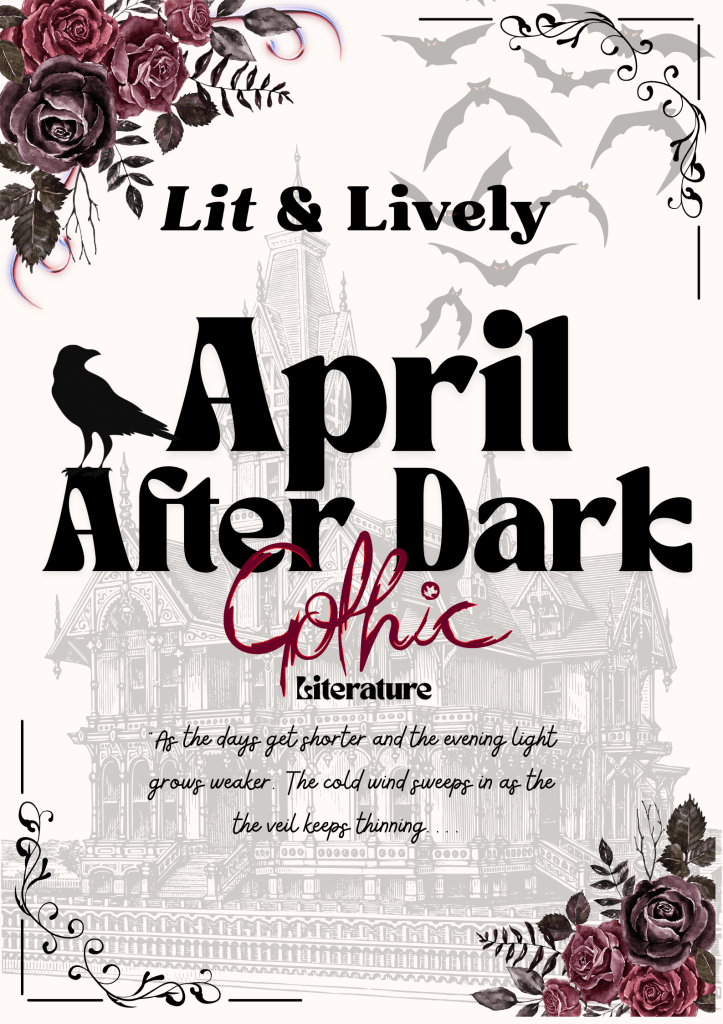
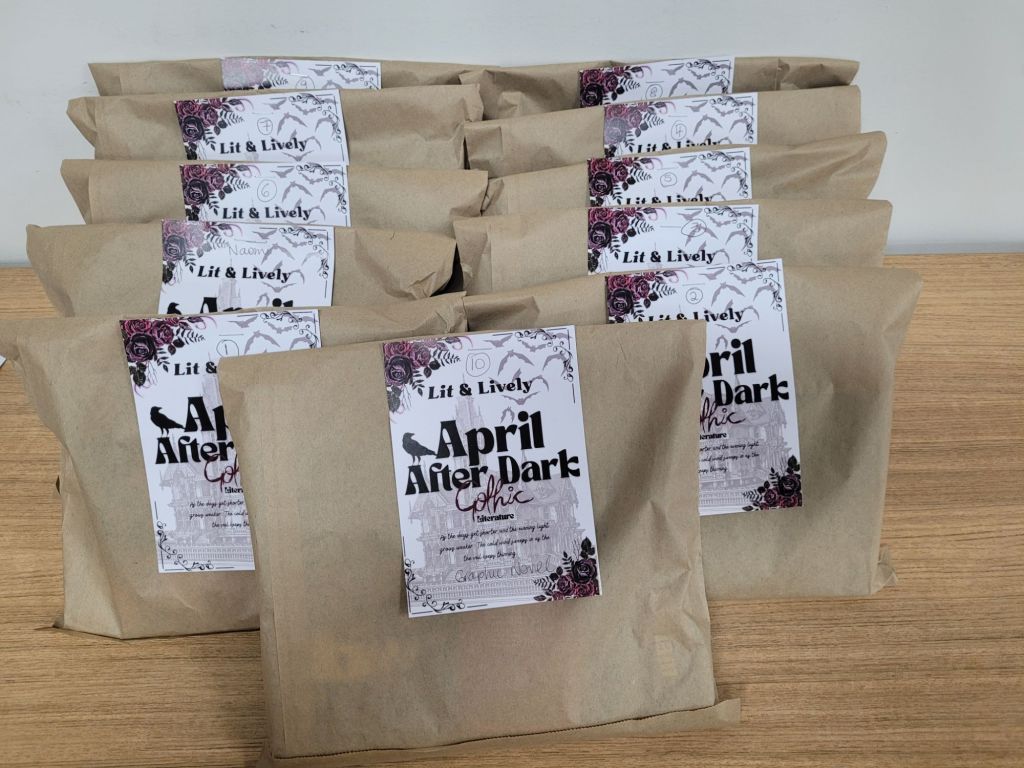
Lit & Lively, the school’s staff book club, is embracing the shadows this month with a gothic themed gathering titled April After Dark. This month’s meeting is centred around gothic literature, inviting staff to explore darker moods, mysterious settings, and stories that linger long after the final page. The format is welcoming and flexible. Staff read one shared text together, giving everyone a common starting point for discussion, before branching out into a range of gothic titles from the library collection. Each participant received a carefully prepared book pack, lovingly packed with the novels, a tea bag, and a chocolate biscuit, turning the reading experience into a small but meaningful indulgence during the autumn break.
April After Dark has also been a practical and creative way of using class sets that usually sit out of season. By repurposing these texts for staff reading, the library is reintroducing overlooked titles and highlighting how versatile the collection can be. Many participants have discovered books and genres they might never have explored without a themed invitation. It also reflects an important part of the Teacher Librarian role, which is not only to support students, but to guide and encourage staff in their own reading journeys and engagement with literature.
Through Lit & Lively, staff are gaining a deeper understanding of the breadth and depth of the school’s collection and reinforces the library as more than a curriculum support space. It is a place for curiosity, enjoyment, and reading for pleasure, modelling the reading culture we encourage in students.
There is also a strong wellbeing element. Reading for pleasure can act as a form of bibliotherapy, offering comfort, escape, and emotional renewal. Teachers often have little opportunity to read during the term, and the autumn break provides a rare pause to do so. Finally, Lit & Lively celebrates the social side of reading. Book clubs create space for conversation, shared reflection, and connection, reminding us that reading is often richest when it is shared.
As April grows darker, April After Dark reminds us that reading together can be restorative, enriching, and deeply human. Lit & Lively continues to affirm that teachers deserve time to read, reflect, and reconnect too.
There are books I return to not because I’ve forgotten the plot, but because I remember how they made me feel. Like Serena Bourke’s thoughtful reflection on why students reread the same book, I too find comfort in the familiar pages of my favourite titles. These books have become more than stories. They are companions. They are constants. They are friends.
When I’m happy, I reach for books that mirror my joy. Stories that sparkle with wit and warmth. They amplify the moment like music that makes you dance even harder. But when sadness creeps in, I turn to different titles. Not necessarily ones that cheer me up but ones that understand. Books that sit quietly with me, offering solace without demanding anything in return. They don’t fix the sadness inside, but they make it feel seen.
And when I feel unsettled, adrift in the chaos of life, I go back to books that anchor me. Their words are familiar. Their rhythms soothing. I know what’s coming next and that predictability is a balm. It’s like rewatching a movie you’ve seen a dozen times. You’re not watching it for the plot. You’re watching it to relive the feeling you had the first time. The laughter, the tears, the quiet awe. But some books have become emotional landmarks. I remember where I was when I first read them. The scent of the room. The season outside. The version of myself that turned each page. Rereading them is like visiting an old friend. You pick up right where you left off. No explanations needed.
There are specific titles I reach for depending on how I feel. I reach for something like Anne of Green Gables when I’m happy. It’s full of whimsy, imagination, and the kind of joy that makes you want to skip down a pathway and play hopscotch. When I’m sad, maybe The Little Prince or The Secret Garden. There’s something quietly profound about their simplicity, gentle wisdom, and a strong reminder that what’s essential is invisible to the eye. I read Jane Eyre when I’m feeling overwhelmed. Brontë’s classic coming-of-age novel inspires me to have faith, to persevere with hope and most of all, to believe in myself. I reread Harry Potter when I feel mischievous or want to relive some childhood nostalgia. It’s like slipping into a world that once felt limitless and magical. And when I’m ready to disappear into bygone days, I turn to The Sunne in Splendour or When Christ and His Saints Slept. These historical epics transport me to another time, another rhythm of life, where the stakes are grand and the stories rich with legacy.
Serena Bourke writes about how students reread books because they offer safety, familiarity and emotional resonance. I think that’s true for all of us. In a world that changes too fast, books stay. They wait patiently on shelves, ready to welcome us back. And each time we return, we bring a new version of ourselves to the story. The book hasn’t changed but we have. And somehow it still fits.
So yes, I reread. Not because I’ve run out of new titles but because some books are more than books. They’re friends. They’re mirrors. They’re memory keepers. And in their pages, I find pieces of myself again and again.
Annie Garthwaite’s The King’s Mother is her second book about an incredible woman, and this sequel is a masterful and emotionally resonant portrait of Cecily Neville, a woman whose strength, ambition, and heartbreak shaped the course of English history. Set against the backdrop of the Wars of the Roses, this novel brings to life a matriarch who was far more than the mother of kings; she was a strategist, a survivor, and a power in her own right.
I was first introduced to Cecily in Sharon Penman’s The Sunne in Splendour, where she stood as a dignified and commanding presence amid the chaos of civil war. Garthwaite’s novel deepens that impression, giving Cecily center stage and allowing her voice to ring out with clarity, courage and conviction. As a daughter of the royal House of Neville, cousin to the Kingmaker and wife to highest ranking Lord of York, Cecily was indeed a lady of influence—but she earned her place in history through grit, determination and sacrifice.
Garthwaite’s storytelling is rich and immersive, capturing the political intrigue and emotional toll of a woman who saw her husband, cousin, and sons die in pursuit of their house’s claim to the throne. Cecily’s love for her children is both her greatest strength and her most painful vulnerability. Her devotion to George, Duke of Clarence, is especially poignant, as his betrayal and eventual death (drowning in a butt of malmsey wine, no less) is rendered with tragic inevitability. Garthwaite doesn’t flinch from the irony or the heartbreak, and neither does Cecily.
What sets The King’s Mother apart is its portrayal of female agency in a world dominated by men. Cecily is no passive observer; she is a political operator, a negotiator, and a woman who understands power and how to wield it. Garthwaite’s prose is elegant and sharp, balancing historical detail with emotional depth. The novel doesn’t just recount events—it explores the cost of ambition, the weight of legacy, and the quiet resilience of a woman who endured more than most.
Cecily Neville emerges as a complex and unforgettable figure, proud, calculating, loyal, and deeply human. Garthwaite gives her the voice she deserves, and in doing so, reclaims a vital piece of history too often overshadowed by the men around her.
Coming-of-age novels have long held a central place in literature, offering rich terrain for both personal reflection and academic exploration. For educators working with adolescents, these texts are more than just stories—they are mirrors and windows into the complex journey of growing up. This post explores why coming-of-age literature resonates so deeply with teenagers, why it matters in the curriculum, and how educators can harness its potential to foster empathy, identity formation, and critical thinking.
Bildungsroman
Adolescence is a period marked by emotional intensity, identity exploration, and social upheaval. Coming-of-age novels, also known as bildungsroman, capture this liminal space with authenticity and nuance. Teen readers often see themselves reflected in protagonists who grapple with similar dilemmas: family conflict, peer pressure, romantic entanglements, and the search for purpose. These narratives validate the adolescent experience, offering reassurance that their struggles are not isolated but part of a universal human journey.
Moreover, the first-person perspective common in young adult fiction allows readers to inhabit the protagonist’s inner world. This immersive quality fosters emotional resonance and encourages teens to reflect on their own values, choices, and aspirations. As Biscontini (2024) noted, coming-of-age literature “provides young people with a relatable experience while offering adults a sense of nostalgia,” and often centres on the loss of innocence, self-discovery, and the struggle to adapt to societal expectations.
Why They Matter in the Curriculum
From a pedagogical standpoint, coming-of-age novels are invaluable tools for teaching literary analysis, thematic exploration, and cultural literacy. These texts often engage with issues such as race, gender, class, and mental health: topics that are both timely and timeless. By studying these works, students develop empathy and gain insight into diverse lived experiences.
Importantly, coming-of-age literature also supports identity development. For students from marginalised backgrounds, seeing characters who reflect their realities can be empowering. For others, these stories offer a chance to understand perspectives different from their own. As such, these novels contribute to a more inclusive and socially aware classroom environment (Federation of Egalitarian Communities, 2024).
Why Choosing the Right Text Matters—Especially for Boys.
“Puberty is merciless. Regardless of who you are,” Becky Albertalli in Simon vs. the Homo Sapiens Agenda
This sentiment that captures the emotional turbulence of adolescence with striking clarity. For boys, this period can be particularly complex, often shaped by conflicting expectations around masculinity, emotional restraint, and identity formation.
Potential reads
Choosing the right coming-of-age texts for boys is not merely about fostering a love of reading. It is about offering them tools for emotional literacy, ethical reasoning, and self-reflection. These stories help boys navigate moral ambiguity, understand the consequences of choices, and appreciate the nuances of human relationships. Crucially, they provide a safe space to explore vulnerability, fear, and belonging, which often occur before boys feel equipped to express these experiences in their own words.
Selecting texts that feature emotionally authentic male protagonists, whether they be sensitive, conflicted, resilient, or flawed; can disrupt narrow stereotypes and expand boys’ understanding of what it means to grow up. When boys see themselves reflected in literature, or encounter perspectives that challenge their assumptions, they are more likely to engage deeply and critically.
Incorporating well-chosen coming-of-age novels into the curriculum also supports literacy outcomes. The relatability of the content increases motivation, while the layered narratives encourage boys to interpret symbolism, character development, and thematic complexity. With the right texts, educators can foster not only stronger readers, but more thoughtful, empathetic young men.
How Students Socially Learn from Narrative Fiction
Recent research by Gasser, Dammert, and Murphy (2022) offers a compelling framework for understanding how children socially learn from narrative fiction. Their integrative review identifies three distinct mechanisms:
Getting the Lesson – where children extract and internalise explicit moral messages from the text.
Simulating Social Worlds – where readers imaginatively engage with fictional characters, enhancing empathy and perspective-taking.
Dialogic Inquiry – where students develop social reasoning through peer dialogue about complex sociomoral issues raised in fiction.
This framework is particularly relevant for educators designing literature programmes that go beyond comprehension and into the realm of ethical inquiry and emotional intelligence. It supports the use of coming-of-age novels as tools for cultivating sociomoral competencies in the classroom.
Key Texts – Australian Coming of Age stories for Boys
Australian literature offers a rich and diverse array of coming-of-age narratives that speak directly to local contexts, landscapes, and cultural tensions. There are wide range of novels that can be utilised effectively in the classroom, however, these texts are particularly valuable for fostering national literary literacy and connecting students with stories that reflect their own communities.
Jasper Jones by Craig Silvey
Boy Swallows Universe by Trent Dalton
I am not really here by Gary Lonesborough
Rowan of Rin by Emily Rodda
Breath by Tim Winton
The first third by Will Kostakis
Scartown by Tristan Bancks
The Sidekicks by Will Kostakis
Ready when you are by Gary Lonesborough
Key Texts: Classic Coming-of-Age Novels
These canonical works have shaped the genre and continue to offer profound insights into the human condition. They are ideal for comparative studies and historical context.
David Copperfield by Charles Dickens
The Picture of Dorian Gray by Oscar Wilde
The Catcher in the Rye by J.D. Salinger
The Adventures of Huckleberry Finn by Mark Twain
To Kill a Mockingbird by Harper Lee
The Outsiders by S. E. Hinton.
Key Texts: Modern Coming-of-Age Novels
Contemporary novels reflect the evolving challenges faced by today’s youth, including cultural identity, mental health, activism, and global conflict. These texts are especially relevant for engaging students in current social discourse.
Gasser, L., Dammert, Y., & Murphy, P. K. (2022). How do children socially learn from narrative fiction: Getting the lesson, simulating social worlds, or dialogic inquiry? Educational Psychology Review, 34(3), 1445–1475. https://doi.org/10.1007/s10648-022-09667-4
Sun, X. (2024). Teaching young adult literature in secondary L2 classrooms: A case study of The Outsiders reading programme. The Language Learning Journal, 52(3), 233–254. https://doi.org/10.1080/09571736.2022.2107694
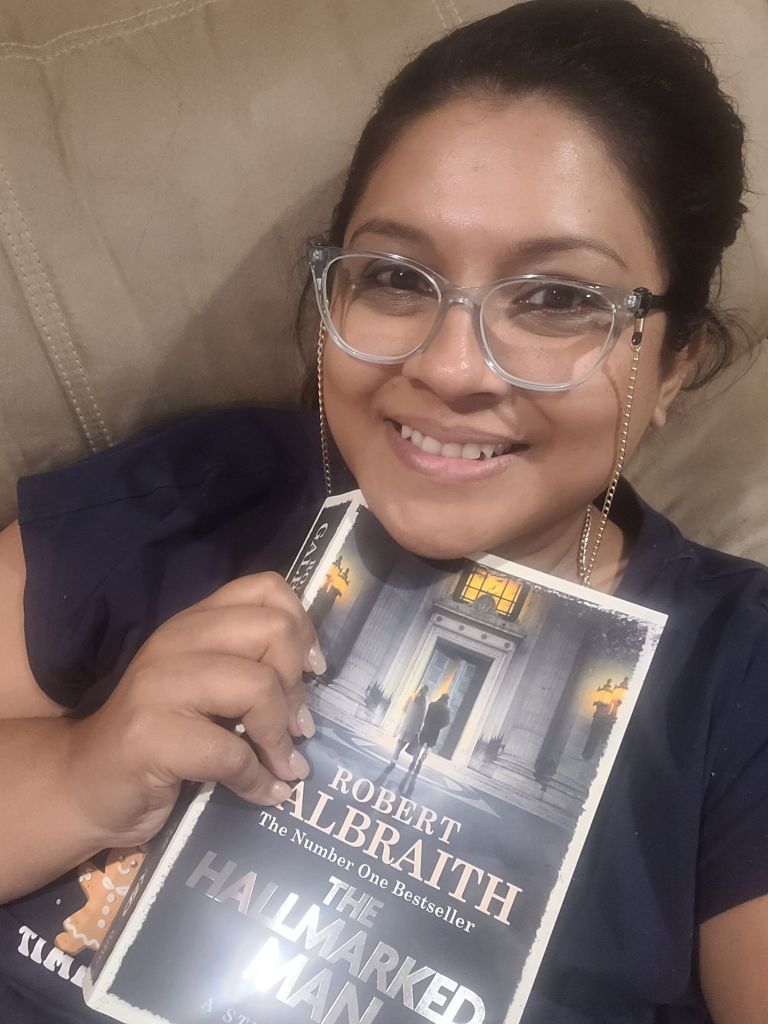
Robert Galbraith’s The Hallmarked Man is a riveting addition to the Cormoran Strike series, delivering a classic whodunnit with a modern edge. Published two years after the last book in the series, avid readers (aka me) were very excited about the release. The Running Grave (Book 7) was easily the best book I read in 2023, so I was very, very excited about this new title which was released today around the world. I excitedly opened up my Kindle edition at 12.01AM and picked up my hardcopy version at 10.15am. The eBook/Kindle version may be portable, but the hardcopy will always win with me!
The story opens with a gruesome discovery—a mutilated corpse whose identity has been deliberately obscured. Strike and Robin Ellacott are tasked with unraveling not just who the victim is, but why someone went to such lengths to erase him. The mystery is layered and atmospheric, steeped in London’s underbelly and the world of antique silver, with plenty of red herrings and unexpected turns.
I found the references in the novel to the Freemasons interesting, and the novel did often allude to the role Freemasons have in public office may be compromised by their own allegiances. This theme of secret societies is rather popular and does seem to appear in several crime and thriller fiction across a range of authors.
As the investigation deepens, Strike finds himself under media scrutiny, with past indiscretions resurfacing and threatening to derail both the case and his reputation. This subplot adds tension and continuity for longtime readers, tying in threads from earlier books and forcing Strike to confront uncomfortable truths.
The novel also tugs at the heartstrings, especially when Strike reflects on the death of his beloved uncle Ted—a man he calls a “proper man”—whose quiet strength and moral compass shaped Strike’s own. In a surprising emotional turn, Strike rekindles a relationship with his estranged father, Jonny Rokeby, adding layers of vulnerability and reconciliation to the narrative.
Ellacot, meanwhile, is navigating her own emotional minefield. Her feelings for Ryan Murphy—a charismatic, Paul Newman lookalike—are complicated by her loyalty to Strike and the unresolved tension between them. She’s also forced to confront the eternal juggle between motherhood and career, a theme that’s handled with nuance and realism, reflecting the pressures many women face in balancing ambition with personal life.
The novel is rich with minor plot twists that add texture without overwhelming the central mystery. Each twist feels earned, contributing to a narrative that’s both intellectually satisfying and emotionally resonant. Galbraith doesn’t shy away from darker realities either—human trafficking of young women is woven into the case, serving as a sobering reminder that this global crisis remains urgent and unresolved.
Galbraith’s prose is sharp, the pacing tight, and the resolution deeply rewarding. The Hallmarked Man is a triumph—gritty, elegant, and impossible to put down.
IWD2021’s theme of #ChooseToChallenge is a call for a more inclusive society by challenging outdated ideologies. This theme suggests that we as individuals can quietly watch gender bias, discrimination and equality occur around us, or we can call it out. Our role in the Information Centre and as teacher librarians is to call out the gender bias in literature.
Literature is a reflection of society becausethe storylines, characterisationsand language of the time are captured by the author (Zanfabro, 2015). This is why Austen’s Elizabeth Bennett, Bronte’s Jane Eyre, Mitchell’s Scarlett O’Hara, Collins’ Katniss Evergreen, and Dahl’s Matilda Wormwood are so memorable. They were the rebels of their time and as such inspired other women to challenge prevailing standards and rebel against societal expectations of femininity. Literature has a great capacity to inspire, provoke and challenge the reader, but the presence of strong female protagonists is not the norm. A recent study of books published indicates that less than 30% of fiction texts have a strong female character (Green, 2018). The primary theory for this disparity is that males don’t like reading books with female protagonists, whereas females are less discriminatory about their reading material. Therefore, it is safer for publishers to print books that feature male protagonists as they have a wider appeal (Rebel Girls, 2017).
Gender bias in literature and publishing has ramifications. Strong female characters are excellent role models for both sexes (Green, 2018). Female protagonists in fiction texts normalise physically and cognitively strong women, point out that it is ok for females to have a leadership role and mostly, that strong women do not mean boys are weak (Green, 2018). Interestingly whilst strong female protagonists are found in varying forms of literature in many differing capacities, they are rarely captured as leaders, unless based upon a historical figure or a biography (Green, 2018).
Our role in the Information Centre and as teacher librarians is to curate literature that portrays strong female and male role models.We are continuously seeking to ensure our collection reflects the educational, emotional, cognitive and developmental needs of our school community… And that includes making sure our girls and boys get to read a range of texts about strong women.
We #ChooseToChallenge gender stereotypes in literature.
Magras, D. (2019). Feminist AF: Hearing Their Voices: Supporting Female Empowerment in Middle Grade Fiction for Tweens and Teens. School Library Journal.
Zanfabro, G. (2017). Gender matters: What is at stake in dealing with children’s literature? TRANS- Revue de Litterature Générale et Comparée 21. DOI : https://doi.org/10.4000/trans.1440
Schindler’s Ark by Thomas Keneally was a very dry read. It was drier than the cheapest plonk at the pub during happy hour. Now before anyone starts collecting rocks to stone me, I would challenge them to read the book too and then comment.
I am not denying that the material in the book is powerful. I definitely acknowledge that the book is filled with names, places and intense facts. But it is not prose. Upon thinking this further, I recollect the subject of the book and wonder if there is a reason for that. If the author, in this case Thomas Keneally was aiming for an emotive piece, it would be a character lie. By all accounts, Oskar Schindler was a hard drinking and reckless businessman who cheated on his wife with regularity (Hurvitz & Karesh, 2016). He destroyed his family business, sought to cheat, lie and swindle his way back into a life of comfort. Quite frankly, by all tokens, this man was an immoral and wasteful character. Then Schindler went on to save almost 1300 Jews from the concentration camps during those dark days in Eastern Europe. This man, who by the standards of his time, and now; unworthy of attention; put his own life at risk to save others. His actions have been immortalised in a book, a major Spielberg movie production and the term Schindlerjuden or Schindler’s Jews, which is still used to refer to the descendents of those that were saved.
So when you consider all these facts, the dryness of Keneally’s “Schindler’s Ark” makes sense. It would be a lie if the book was anything other than prosaic. Instead, its matter of fact manner of describing the main character’s traits ensures that the reader does not view him with rose framed lenses. The reader is made fully aware of Oskar’s failings as a man and a husband. It is in viewing these failings that Schindler’s true heroism is seen. The plain language allows the reader to envision the fear hiding between the stalwart words. Conversely, the plain language also allows readers with little imagination to read the book without being overwhelmed.
“Schindler’s Ark” was a very dry read for someone who is a lover of prose. As an avid reader of fiction, I found this novel to be more informative than anything else. I also found it heartbreaking, just like the sadness I feel when the happy hour wine is just awful. But whilst this book was a struggle for me, it would be ideal for reluctant teens who struggle with engaging with fictitious stories. The language, style and format of the book resemble information books and thus may satisfy their need for ‘facts’. But whilst the Guardian review suggests this book as appropriate for 8-12 year old children, I would probably restrict it to students over 14-15 years old. This would then correlate well with the year 10 HASS’s World War 2 and Holocaust unit especially the ACDSEH025 elaboration. It would also work well in the Biographies and memoirs unit in Year 10 English.
Axelrod, A. (2013). Schindler, Oskar. In Encyclopedia of World War II, vol. 2. New York: Facts On File. Retrieved March 16, 2020, from online.infobase.com/Auth/Index?aid=19165&itemid=WE53&articleId=265017.
Hurvitz, M. M., & Karesh, S. E. (2016). Schindler, Oskar. In Encyclopedia of Judaism, Second Edition. New York: Facts On File. Retrieved March 16, 2020, from online.infobase.com/Auth/Index?aid=19165&itemid=WE53&articleId=263928.





 Learning through the Library