As the school year wrapped up last week, I found myself reflecting on the many moments that shaped our library community in 2025. There have been challenges, yes, but also plenty of reasons to celebrate.
One of the brightest sparks has been our book clubs. What started as a simple idea, a few snacks and a chance to talk about stories, has grown into something much bigger. My secondary Book Club stands out. At the beginning of the year they were a small group, some unsure of what to read, others firmly attached to their favourite genres. Over time, though, their borrowing soared. They began exploring fantasy, contemporary fiction and graphic novels, and while one dedicated manga reader still resists branching out, the group as a whole has broadened its horizons. More importantly, they began to see reading as part of who they are. They recommend titles to each other, debate endings, and even suggest new books for the library. Watching that transformation has been a joy.
Research reminds us that this is exactly what book clubs are meant to do. They make reading social, they build confidence, and they help young people see themselves as readers. The secondary Book Club Boys proved that in the most authentic way, showing how a community of peers can turn reading from a solitary task into something shared and celebrated.
From a whole school review, borrowing levels across the school have also risen, returning to pre COVID rates. Much of this growth has come from our younger readers, whose enthusiasm has been infectious. Their excitement has created a vibrant culture of reading in the primary years, and their participation in activities has been a highlight of the year.
Of course, there are challenges we cannot ignore. Very few of our Year 10 to Year 12 students are reading recreationally, and this is concerning. Intertextuality, the ability to connect ideas across texts, is vital for analysis and for building strong cognitive connections. Without regular reading, those skills are harder to develop. We also continue to see limited engagement from Years 7 to 10 English classes, despite enthusiastic promotion. There seems to be a reluctance to lose curriculum time.
Our team dynamic has shifted too, with members coming and going. Change always brings adjustment, but it has also brought fresh perspectives and energy. We have expanded our digital resources, and while uptake has been slow, steady gains are being made as students and staff grow more comfortable with these platforms.
Perhaps the greatest success of all has been the way the library has become recognised as a social space where everyone is welcome. It is not only a place for books, but a hub for connection, collaboration and belonging. That sense of community is something we can all be proud of.
We closed the year with our Books & Bites Christmas party, a joyful celebration of new releases and Christmas treats. Each student received a reading journal with a challenge to read four books over the summer, along with handmade gifts, ornaments, bookmarks, and pen holders, sewn over the past few weeks. These tokens were a way of honouring the shared love of reading that binds us together.
As we finish the 2025 chapter, I am reminded that reading is not just about borrowing books, it is about building minds, fostering empathy and preparing students for the complexities of the world.
“As we finish this chapter and look ahead to the new year, I am reminded that Christmas is a season not only of rejoicing, but of reflection. May the joy of stories, the warmth of community, and the promise of new beginnings carry us into the year ahead.”
Women, Memory and Exile: A School Library Reflection
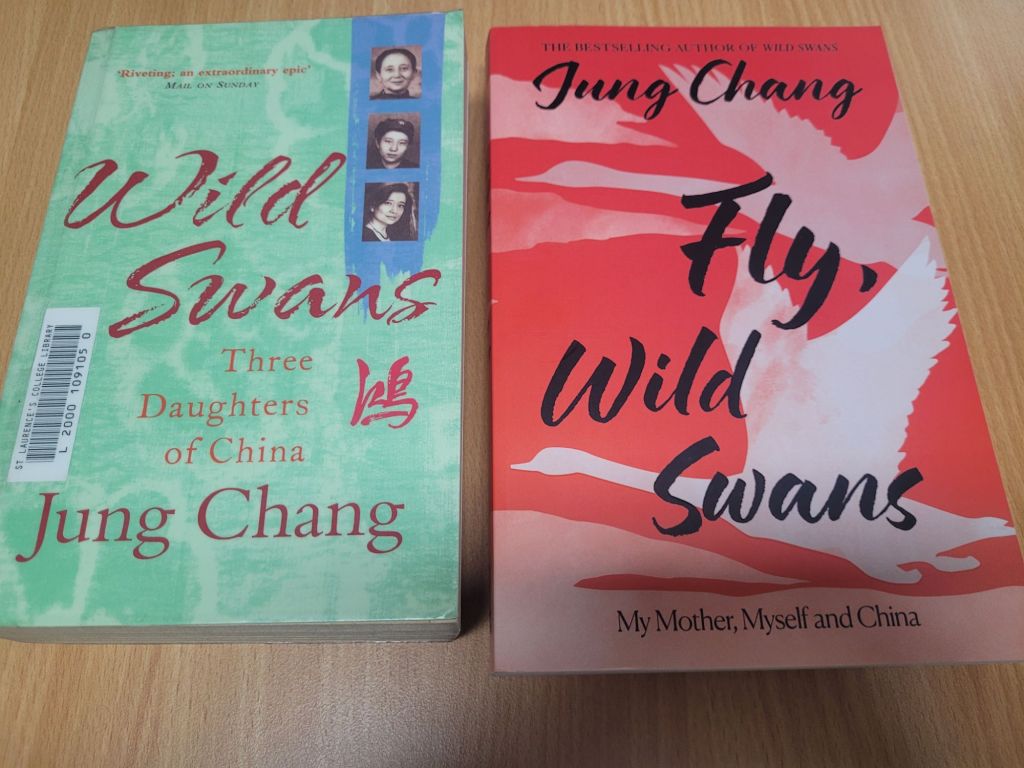
Adding Fly Wild Swans to our school library felt like a natural continuation of a legacy. Wild Swans has long stood as a canonical piece of literature, a book that captures the struggles of three generations of women against the backdrop of China’s political upheavals. In her second publication Fly Wild Swans, Jung Chang turns her gaze inward, reflecting on the cost of telling that story and the way truth can estrange a writer from her homeland. It is a pensive work that reminds us how women across centuries have shouldered familial and societal expectations, carrying memory and resilience even when nations would rather forget.
Jung Chang and her canons of literature
For students, these books are more than history. They are lessons in courage, in the power of memory and in the resilience of women who endured both familial duty and political oppression. Wild Swans explores the tension between tradition and rapid government‑driven progress. What was presented as modernisation often meant the destruction of customs and the breaking of family bonds as the Cultural Revolution tore families apart and demanded loyalty at the expense of tradition. Her story gave voice to three generations of women living through the upheavals of Mao’s China and this new work is written not only of her mother and her homeland, but of the burden of truth itself, and the cost of bearing witness when a nation would rather forget.
Fly Wild Swans reveals the aftermath of telling that truth, showing how a writer can be celebrated abroad yet silenced at home. Jung Chang turns her gaze inward, reflecting on the cost of telling that story and the way truth can estrange a writer from her homeland. Unlike Wild Swans, which focused on her mother and grandmother, this new work is more personal. It explores how writing Wild Swans changed her life, both opening doors in the West and closing them in China. There is a deep melancholy in her reflections on being unable to freely return to her birthplace. The success of Wild Swans brought her recognition abroad but estrangement at home. This tension between belonging and exclusion mirrors the broader story of women in history, who have often been celebrated for their endurance yet denied the freedom to define themselves.
I chose to buy Fly Wild Swans for my school library because it is a book that students should encounter, not only for its historical insight but also for its profound exploration of resilience, identity and the role of women in shaping and surviving history. Adding Fly Wild Swans to our collection ensures that the conversation continues, allowing readers to see how the legacy of truth‑telling reverberates across generations.
By placing both works on our shelves, we invite students to consider how politics, family and identity intersect, and how women across centuries have borne the burden of expectation while still finding ways to endure. These books remind us that literature is not static. It evolves, it questions and it carries forward the weight of generations.
There are books I return to not because I’ve forgotten the plot, but because I remember how they made me feel. Like Serena Bourke’s thoughtful reflection on why students reread the same book, I too find comfort in the familiar pages of my favourite titles. These books have become more than stories. They are companions. They are constants. They are friends.
When I’m happy, I reach for books that mirror my joy. Stories that sparkle with wit and warmth. They amplify the moment like music that makes you dance even harder. But when sadness creeps in, I turn to different titles. Not necessarily ones that cheer me up but ones that understand. Books that sit quietly with me, offering solace without demanding anything in return. They don’t fix the sadness inside, but they make it feel seen.
And when I feel unsettled, adrift in the chaos of life, I go back to books that anchor me. Their words are familiar. Their rhythms soothing. I know what’s coming next and that predictability is a balm. It’s like rewatching a movie you’ve seen a dozen times. You’re not watching it for the plot. You’re watching it to relive the feeling you had the first time. The laughter, the tears, the quiet awe. But some books have become emotional landmarks. I remember where I was when I first read them. The scent of the room. The season outside. The version of myself that turned each page. Rereading them is like visiting an old friend. You pick up right where you left off. No explanations needed.
There are specific titles I reach for depending on how I feel. I reach for something like Anne of Green Gables when I’m happy. It’s full of whimsy, imagination, and the kind of joy that makes you want to skip down a pathway and play hopscotch. When I’m sad, maybe The Little Prince or The Secret Garden. There’s something quietly profound about their simplicity, gentle wisdom, and a strong reminder that what’s essential is invisible to the eye. I read Jane Eyre when I’m feeling overwhelmed. Brontë’s classic coming-of-age novel inspires me to have faith, to persevere with hope and most of all, to believe in myself. I reread Harry Potter when I feel mischievous or want to relive some childhood nostalgia. It’s like slipping into a world that once felt limitless and magical. And when I’m ready to disappear into bygone days, I turn to The Sunne in Splendour or When Christ and His Saints Slept. These historical epics transport me to another time, another rhythm of life, where the stakes are grand and the stories rich with legacy.
Serena Bourke writes about how students reread books because they offer safety, familiarity and emotional resonance. I think that’s true for all of us. In a world that changes too fast, books stay. They wait patiently on shelves, ready to welcome us back. And each time we return, we bring a new version of ourselves to the story. The book hasn’t changed but we have. And somehow it still fits.
So yes, I reread. Not because I’ve run out of new titles but because some books are more than books. They’re friends. They’re mirrors. They’re memory keepers. And in their pages, I find pieces of myself again and again.
Coming up with this list was horrendously difficult. I probably agonised over it for longer than it took to name my children, and with far more existential dread.
What if I forgot a book that changed my life?
What if I picked something too obvious?
Too obscure? Too emotionally manipulative?
Eventually, after much soul-searching, tea-drinking, and dramatic sighing, I settled on ten. I will preface it and say they may not necessarily the “best” books of the century—but they’re the ten books I think are the ‘my‘ books. My literary lifeboats. And because I clearly enjoy suffering, I’ve explained why each one made the cut.
My Brilliant Friend (2011) by Elena Ferrante
A colleague recommended this one to me back in 2019. Book one of a four-part saga that nails the messy magic of female friendship. Elena and Lila are best mates, worst rivals, and emotional sparring partners. Ferrante helped me realise that friendship isn’t always soft—it’s sharp, complicated, and utterly formative.
A Man Called Ove (2012) by Fredrik Backman
My best read of 2018—and the gateway drug to all things Backman. Grumpy old man meets chaotic neighbours, and somehow it’s a masterclass in love, loss, and chosen family. Proof that sometimes, the best family isn’t the one you’re born into—it’s the one that barges in uninvited.
The Tattooist of Auschwitz (2018) by Heather Morris
Heart-wrenching and unforgettable. Based on interviews with Holocaust survivor Lale Sokolov, this novel brings humanity to horror. It’s a story of love, resilience, and survival in the darkest of places—and it left me absolutely gutted. Furthermore, for the non-readers in my life- there is a TV series.
Wolf Hall (2009) by Hilary Mantel
Book one of Mantel’s Tudor trilogy, starring the ever-scheming Thomas Cromwell. This was another recommendation from a colleague. Wolf Hall is lyrical, slyly funny, and so well written it makes other historical fiction feel like homework. A must for history buffs—and anyone who likes their politics bloody and their prose brilliant. TV series available for the non-readers. Different note – Alison Weir just released a title called “Cardinal” based on the life of Thomas Wolsey … so will need to pop that on my list to read soon.
A Thousand Splendid Suns (2007) by Khaled Hosseini
Heartbreaking and beautiful. Set in Taliban-era Afghanistan, it follows two women whose lives collide in tragedy—and transform through love. Their bond, almost mother-daughter, is a testament to resilience, sacrifice, and the fierce power of chosen family. This was an accidental read, I found this book on a plane, left by a forgetful passenger… I still have it on my bookshelf. It has been well read and is still much loved.
Circe (2018) by Madeline Miller
I’m a sucker for Greek mythology, and this feminist retelling hit all the right notes. Circe steps out of the shadows and into her own power—witch, exile, goddess, woman. Strong female themes, lyrical prose, and a fresh perspective on ancient tales. Loved every spellbinding page. This book is far better than Song of Achilles, also by Madeline Miller. I felt like slapping Achilles more times than I could count in that novel.
Go Tell the Bees That I Am Gone (2021) by Diana Gabaldon
Book nine of the Outlander saga, and a rich tapestry of time-travelling drama. Jamie, Claire, Brianna, Roger, Lord John Grey, and William Ransom all get their moment—and it’s beautifully woven together. Such emotion. Jamie and Claire at their best. A love story for the ages. I have included this in the list because it is one of my favourite series, as I couldn’t squeeze in Cross Stitch (wrong century!), but this one carries the torch. BTW – I am waiting desperately for Book 10. Hurry up Diana!!
Burial Rites (2013) by Hannah Kent
A beautifully written fictional take on the life of Agnes Magnúsdóttir, Iceland’s last execution. It forces you to confront 19th-century prejudice, gender roles, and how reputation can be shaped more by rumour than truth. Quietly devastating—and deeply human. This was a senior text when I was teaching in the ACT and I read it as part of my curriculum planning. An absolutely brilliant novel and quite frankly, should be taught more in schools.
Hallmarked Man (2025) by Robert Galbraith (aka J K Rowling)
This one was hard as I nearly shoehorned in Harry Potter, but alas, that was from last century. Then I dithered over Deathly Hallows, but it’s book seven, and I’ve got a “book one” theme going (see Wolf Hall, My Brilliant Friend). Therefore it seemed logical that Cuckoo’s Calling made the list. But in the end, as I selected Book 9 of the Outlander series, I felt that it was OK that Hallmarked Man won out over the other 7 books in the series. Additionally, it is the best book I’ve read this year. .So, it’s in. No regrets. (Okay, maybe a few – I agonised over this one the most).
The Nightingale (2015) by Kristin Hannah
I cried buckets. This heartfelt tale of a woman risking everything to save Jewish children under the Nazi occupation of France. First it was for her best friend’s son… then it was another woman’s son…. and daughter. This book is a gut-punch of love, loss, friendship, and motherhood. It broke me, then stitched me back together.
So there you have it…
Ten books. Ten emotional rollercoasters. And one very frazzled reader. If you’re brave enough to try making your own list, I salute you. Just stock up on tea, tissues, and a sturdy spreadsheet.
Coming-of-age novels have long held a central place in literature, offering rich terrain for both personal reflection and academic exploration. For educators working with adolescents, these texts are more than just stories—they are mirrors and windows into the complex journey of growing up. This post explores why coming-of-age literature resonates so deeply with teenagers, why it matters in the curriculum, and how educators can harness its potential to foster empathy, identity formation, and critical thinking.
Bildungsroman
Adolescence is a period marked by emotional intensity, identity exploration, and social upheaval. Coming-of-age novels, also known as bildungsroman, capture this liminal space with authenticity and nuance. Teen readers often see themselves reflected in protagonists who grapple with similar dilemmas: family conflict, peer pressure, romantic entanglements, and the search for purpose. These narratives validate the adolescent experience, offering reassurance that their struggles are not isolated but part of a universal human journey.
Moreover, the first-person perspective common in young adult fiction allows readers to inhabit the protagonist’s inner world. This immersive quality fosters emotional resonance and encourages teens to reflect on their own values, choices, and aspirations. As Biscontini (2024) noted, coming-of-age literature “provides young people with a relatable experience while offering adults a sense of nostalgia,” and often centres on the loss of innocence, self-discovery, and the struggle to adapt to societal expectations.
Why They Matter in the Curriculum
From a pedagogical standpoint, coming-of-age novels are invaluable tools for teaching literary analysis, thematic exploration, and cultural literacy. These texts often engage with issues such as race, gender, class, and mental health: topics that are both timely and timeless. By studying these works, students develop empathy and gain insight into diverse lived experiences.
Importantly, coming-of-age literature also supports identity development. For students from marginalised backgrounds, seeing characters who reflect their realities can be empowering. For others, these stories offer a chance to understand perspectives different from their own. As such, these novels contribute to a more inclusive and socially aware classroom environment (Federation of Egalitarian Communities, 2024).
Why Choosing the Right Text Matters—Especially for Boys.
“Puberty is merciless. Regardless of who you are,” Becky Albertalli in Simon vs. the Homo Sapiens Agenda
This sentiment that captures the emotional turbulence of adolescence with striking clarity. For boys, this period can be particularly complex, often shaped by conflicting expectations around masculinity, emotional restraint, and identity formation.
Potential reads
Choosing the right coming-of-age texts for boys is not merely about fostering a love of reading. It is about offering them tools for emotional literacy, ethical reasoning, and self-reflection. These stories help boys navigate moral ambiguity, understand the consequences of choices, and appreciate the nuances of human relationships. Crucially, they provide a safe space to explore vulnerability, fear, and belonging, which often occur before boys feel equipped to express these experiences in their own words.
Selecting texts that feature emotionally authentic male protagonists, whether they be sensitive, conflicted, resilient, or flawed; can disrupt narrow stereotypes and expand boys’ understanding of what it means to grow up. When boys see themselves reflected in literature, or encounter perspectives that challenge their assumptions, they are more likely to engage deeply and critically.
Incorporating well-chosen coming-of-age novels into the curriculum also supports literacy outcomes. The relatability of the content increases motivation, while the layered narratives encourage boys to interpret symbolism, character development, and thematic complexity. With the right texts, educators can foster not only stronger readers, but more thoughtful, empathetic young men.
How Students Socially Learn from Narrative Fiction
Recent research by Gasser, Dammert, and Murphy (2022) offers a compelling framework for understanding how children socially learn from narrative fiction. Their integrative review identifies three distinct mechanisms:
Getting the Lesson – where children extract and internalise explicit moral messages from the text.
Simulating Social Worlds – where readers imaginatively engage with fictional characters, enhancing empathy and perspective-taking.
Dialogic Inquiry – where students develop social reasoning through peer dialogue about complex sociomoral issues raised in fiction.
This framework is particularly relevant for educators designing literature programmes that go beyond comprehension and into the realm of ethical inquiry and emotional intelligence. It supports the use of coming-of-age novels as tools for cultivating sociomoral competencies in the classroom.
Key Texts – Australian Coming of Age stories for Boys
Australian literature offers a rich and diverse array of coming-of-age narratives that speak directly to local contexts, landscapes, and cultural tensions. There are wide range of novels that can be utilised effectively in the classroom, however, these texts are particularly valuable for fostering national literary literacy and connecting students with stories that reflect their own communities.
Jasper Jones by Craig Silvey
Boy Swallows Universe by Trent Dalton
I am not really here by Gary Lonesborough
Rowan of Rin by Emily Rodda
Breath by Tim Winton
The first third by Will Kostakis
Scartown by Tristan Bancks
The Sidekicks by Will Kostakis
Ready when you are by Gary Lonesborough
Key Texts: Classic Coming-of-Age Novels
These canonical works have shaped the genre and continue to offer profound insights into the human condition. They are ideal for comparative studies and historical context.
David Copperfield by Charles Dickens
The Picture of Dorian Gray by Oscar Wilde
The Catcher in the Rye by J.D. Salinger
The Adventures of Huckleberry Finn by Mark Twain
To Kill a Mockingbird by Harper Lee
The Outsiders by S. E. Hinton.
Key Texts: Modern Coming-of-Age Novels
Contemporary novels reflect the evolving challenges faced by today’s youth, including cultural identity, mental health, activism, and global conflict. These texts are especially relevant for engaging students in current social discourse.
Gasser, L., Dammert, Y., & Murphy, P. K. (2022). How do children socially learn from narrative fiction: Getting the lesson, simulating social worlds, or dialogic inquiry? Educational Psychology Review, 34(3), 1445–1475. https://doi.org/10.1007/s10648-022-09667-4
Sun, X. (2024). Teaching young adult literature in secondary L2 classrooms: A case study of The Outsiders reading programme. The Language Learning Journal, 52(3), 233–254. https://doi.org/10.1080/09571736.2022.2107694
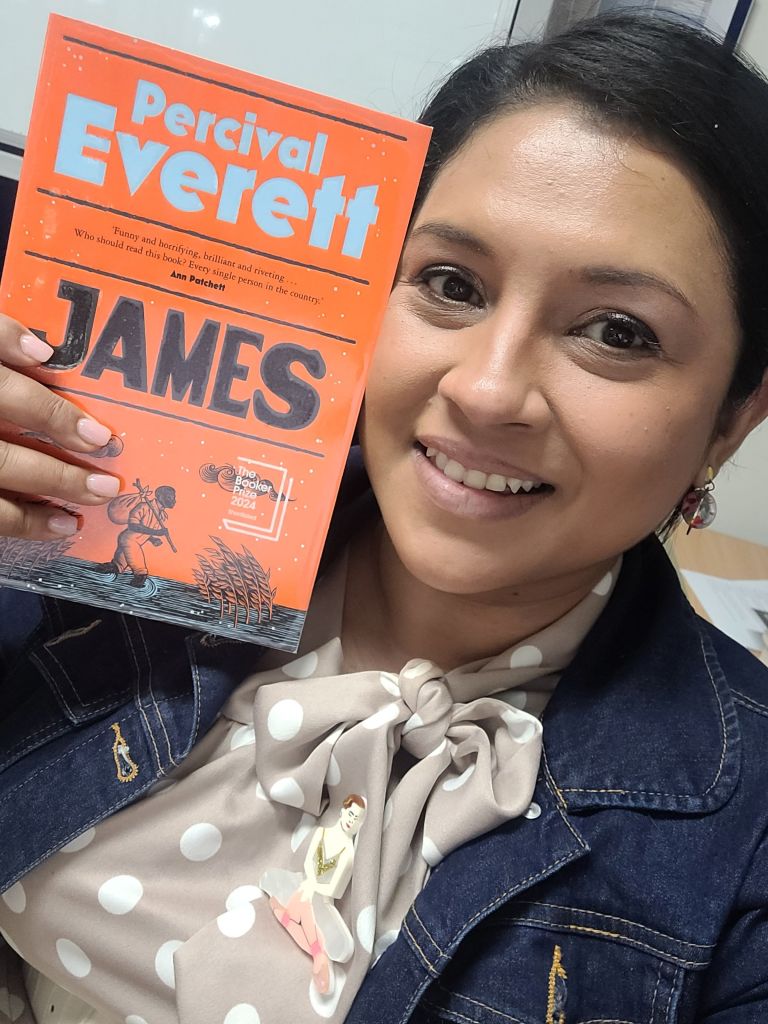
Percival Everett’s James is a profound act of literary reclamation. Shortlisted for the 2024 Booker Prize, the novel reimagines Adventures of Huckleberry Finn from the perspective of Jim—now James—a character whose voice was historically muffled by the hidden curriculum of Twain’s original novel. In Twain’s version, Jim is viewed as a sympathetic bystander, sidelined. His views filtered through Huck’s lens, his speech distorted to fit white expectations. The novel taught generations to empathise with Jim, but not to truly hear him. Because why would the slave Jim, have anything important to say?
Everett changes that. In James, the enslaved man is literate, philosophical, and quietly radical. He reads Locke and Voltaire, not as a literary flourish, but as a declaration of intellectual agency. He is articulate, intelligent and his perspicuity makes him a clear hero. James performs the dialect expected of him not because he lacks education, but because survival demands performance. Exposing his intelligence would have only led to his downfall. This inversion is powerful—it exposes the performative nature of race in literature and life and reminds us how often people of colour have been forced to speak in ways that comfort white audiences.
The novel also speaks to a broader truth: for much of literary history, the voices of people of colour have been excluded from the mainstream. The canon has long been shaped by a narrow lens—English-speaking, white, and often male. Even today, the global literature market remains dominated by English-language publishing and a WASP-centric worldview, making it difficult for diverse stories to break through. James stands out not only for its literary brilliance but for its bold challenge to that status quo. This is especially resonant in the current socio-political climate in the United States, where history itself is being rewritten based on political ideologies. School curricula are being reshaped, books banned, and narratives sanitised. In this context, Everett’s decision to retell Huckleberry Finn from James’s perspective is not just literary—it’s political.
It’s a reminder that storytelling is power, and that reclaiming voice is an act of resistance.
Everett’s prose is sharp, lyrical, and laced with irony. He doesn’t just give James a voice—he gives him agency, complexity, and dignity. James is not a corrective to Twain’s novel, but a conversation with it. It invites readers to reconsider not just the stories we read, but the structures that decide which stories are told, and which are silenced.
If you’re looking for books that speak directly to boys—stories packed with action, danger, and emotional grit—Jack Heath is an author who delivers every time. Based in Canberra, Heath has become a standout voice in Australian young adult fiction, known for his fast-paced narratives and male protagonists who face extreme challenges and somehow manage to survive. His books aren’t just entertaining—they’re powerful tools for building resilience, especially in young readers who need to see that courage isn’t about being fearless, but about pushing through fear.
One of Heath’s most popular texts in my school library is the Minutes of Danger series. Each book features ten short stories, each unfolding in real time over ten minutes. Titles like 300 Minutes of Danger, 400 Minutes of Danger, and 500 Minutes of Danger are perfect for reluctant readers, offering bite-sized thrillers that are impossible to put down. The protagonists are often boys who are caught in life-or-death situations. They must rely on quick thinking, bravery, and resourcefulness. These stories are not only gripping but also subtly teach problem-solving and emotional regulation under pressure.
The Liars series takes a different angle, blending tech intrigue with moral complexity. It follows Jarli, a teenage inventor whose lie-detecting app turns him into a target. Across titles like The Truth App, No Survivors, and Armageddon, Jarli navigates a world where truth is dangerous and trust is hard-earned. These books explore ethical dilemmas, the consequences of innovation, and the importance of standing up for what’s right, even when it’s risky. Jarli’s journey is one of growth, resilience, and learning to think critically in a world full of deception.
Then there’s the Money series, featuring Ashley Arthur is based around a teen thief with a conscience. In Money Run and Hit List, Ashley pulls off high-stakes heists while wrestling with questions of morality and loyalty. These books are like Ocean’s Eleven for young readers, combining adrenaline-fueled action with deeper themes about risk, justice, and the blurry line between right and wrong. Ashley’s cleverness and internal compass make him a compelling role model for boys who are learning to navigate complex social dynamics.
“Thrills, Truth, and Tough Choices”
Jack Heath’s literary universe doesn’t stop at young adult fiction—it boldly steps into adult territory with the Timothy Blake series, beginning with Hangman. This marks Heath’s foray into darker, more psychologically complex storytelling, offering older teen readers a bridge into adult fiction. I have recently acquired the series for my school library because these books are perfect for boys who’ve grown up devouring his YA thrillers as they provide a natural progression into more mature narratives. With a protagonist who’s part genius, part monster, and whose moral compass is as twisted as the crimes he solves, the series channels unmistakable Thomas Harris’ Hannibal Lecter vibes, intelligent, disturbing, and impossible to look away from.
For boys’ schools and educators curating their library collections, authors like Jack Heath are essential. His stories don’t just entertain. They shape character. They help boys confront fear, wrestle with ethical decisions, and develop emotional resilience. In a world that often asks boys to be tough without teaching them how to be strong, Heath’s books offer a roadmap. They help boys grow, not just as readers, but as young men learning to navigate complexity, responsibility, and identity.
Jack Heath’s stories are more than just thrill rides. They offer boys a mirror and a map, reflecting their struggles and showing them paths through adversity. His characters don’t have superpowers, but they do have grit, intelligence, and heart. For educators and parents looking to foster resilience in boys, Heath’s books are a goldmine. They prove that strength isn’t just physical, it’s emotional, ethical, and deeply human.
Mistress of Rome, published in 2010, is the first book in Kate Quinn’s Empress of Rome series. Set during the reign of Emperor Domitian—the last of the Flavian dynasty and arguably the most paranoid—the story plunges readers into a world of opulence, brutality, and political intrigue. Quinn’s Rome is vividly imagined, with strong historical elements woven throughout, though she does take artistic license, particularly in her depiction of gladiatorial combat.
At the heart of the novel are two women whose lives are inextricably linked by rivalry and fate. Thea is a slave of Judean origin, quiet and intelligent, with a traumatic past that fuels her resilience. Lepida Pollia, born into the patrician elite, is vain, manipulative, and cruel. Their relationship is marked by betrayal, jealousy, and a constant struggle for power—both personal and social. Through their contrasting journeys, Quinn explores themes of agency, survival, and revenge in a society where status can mean everything or nothing.
Violence is a dominant theme throughout the novel. From the blood-soaked sands of the gladiatorial arena to the psychological torment inflicted behind closed doors, Quinn does not shy away from the darker aspects of Roman life. These scenes are not gratuitous; rather, they serve to underscore the fragility of life and the brutal cost of ambition in a world ruled by fear and spectacle.
Domitian himself is portrayed as a chilling figure—charismatic yet unstable, capable of both charm and cruelty. His presence adds a layer of tension to the narrative, reminding readers that in Rome, even the favour of an emperor can be deadly. Quinn’s depiction of his court is rich with intrigue, paranoia, and danger, offering a compelling backdrop to the personal dramas unfolding within it.
Mistress of Rome is more than historical fiction—it’s a story of transformation, endurance, and the fight for freedom. Quinn’s prose is accessible yet evocative, and her characters are complex and emotionally resonant. As book one of a gripping series, it lays a powerful foundation for the stories that follow.
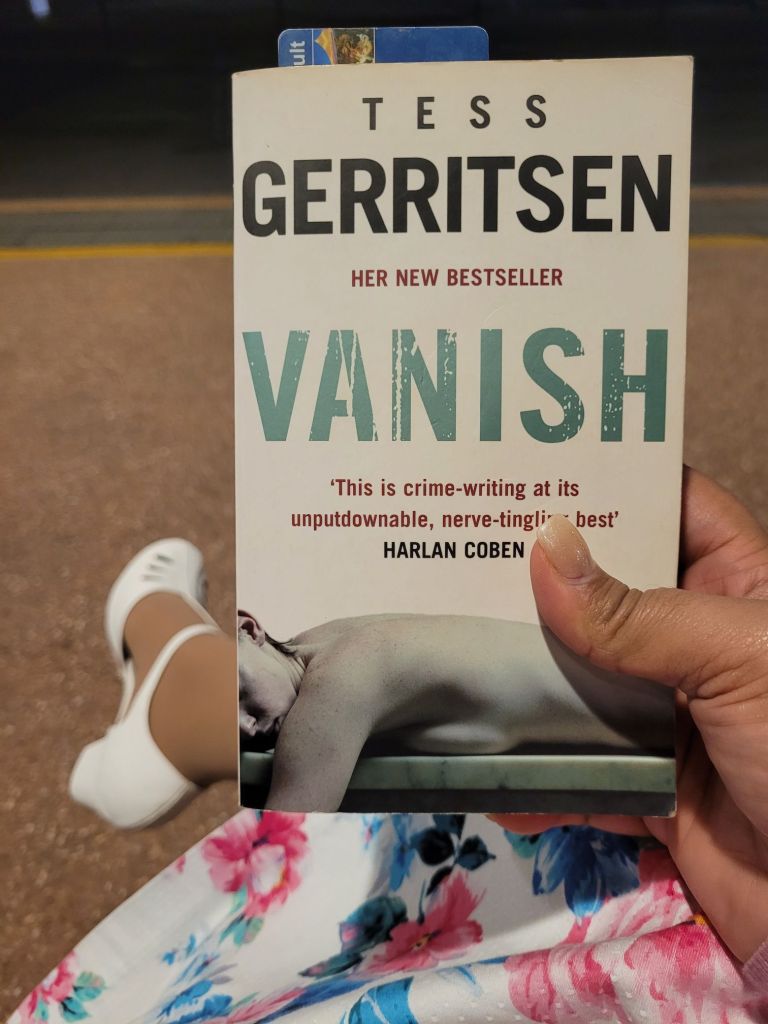
In Vanish (2005), Tess Gerritsen delivers a taut, socially conscious thriller that goes beyond the conventions of crime fiction. As the fifth instalment in her Rizzoli & Isles series, the novel showcases her signature blend of forensic realism and emotional intensity—thanks in no small part to her background as a physician and student of anthropology. That scientific lens gives the story a grounded, credible edge, especially in its depiction of evidence collection and trauma response.
The novel centres around two formidable women: Detective Jane Rizzoli and Medical Examiner Maura Isles. In a world dominated by male authority figures, these protagonists stand out not just for their competence but for their resilience and moral clarity. Gerritsen writes from two perspectives—one from the cop, the other from a mysterious victim—which adds layers of suspense and empathy to the narrative. It’s a structure that humanises the crime and gives readers a visceral sense of what’s at stake.
What makes Vanish especially compelling is its thematic ambition. Gerritsen tackles human trafficking head-on, portraying it as a deeply entrenched and horrifying reality of the 21st century. The novel also hints at the unsettling power of military-industrial entities, suggesting that these corporations can manipulate justice and policy in ways that undermine democratic institutions. It’s a bold move for a crime novel, and it pays off.
While Gerritsen’s prose may not reach the literary heights of Patricia Cornwell, her storytelling is sharp, emotionally resonant, and socially aware. In fact, Vanish gives James Patterson a serious run for his money—especially in its ability to weave action, character development, and ethical complexity into a single, gripping narrative.
If you’re looking for a crime novel that’s more than just a whodunit, Vanish is a standout. It’s a page-turner with a conscience, and it proves that thrillers can be both entertaining and enlightening.
In every corner of a school library, stories wait to be discovered. Stories that open minds, build empathy, and reflect the rich tapestry of human experience. But what happens when those stories are missing? When shelves lack the voices of different cultures, identities, and lived experiences?
As an educator and lifelong reader, I’ve come to believe that diverse books aren’t just nice to have in a collection. But rather, that they’re essential. They shape how students see themselves and others, and they help build inclusive communities where every child feels seen and valued.
Representation Matters
Research consistently shows that representation in literature has a profound impact on students’ self-esteem, academic engagement, and social development. When children see characters who look like them, speak their language, or share their cultural background, they feel validated. And when they read about lives different from their own, they develop empathy and understanding.
A study by the Cooperative Children’s Book Center found that in 2022, only 33% of children’s books featured characters from diverse backgrounds.
According to the Australian Institute for Teaching and School Leadership, inclusive education improves student outcomes and fosters respect among peers.
The “Windows, Mirrors, and Sliding Glass Doors” framework by Dr. Rudine Sims Bishop emphasizes how books can reflect our own lives, offer insight into others’, and invite us into new worlds.
Growing up as a teen in Australia, I rarely saw characters in books who looked like me or came from my cultural background. It wasn’t until university that I encountered authors who spoke to my experience, and it was transformative. That moment of recognition made me realize how powerful literature can be in shaping identity and belonging.
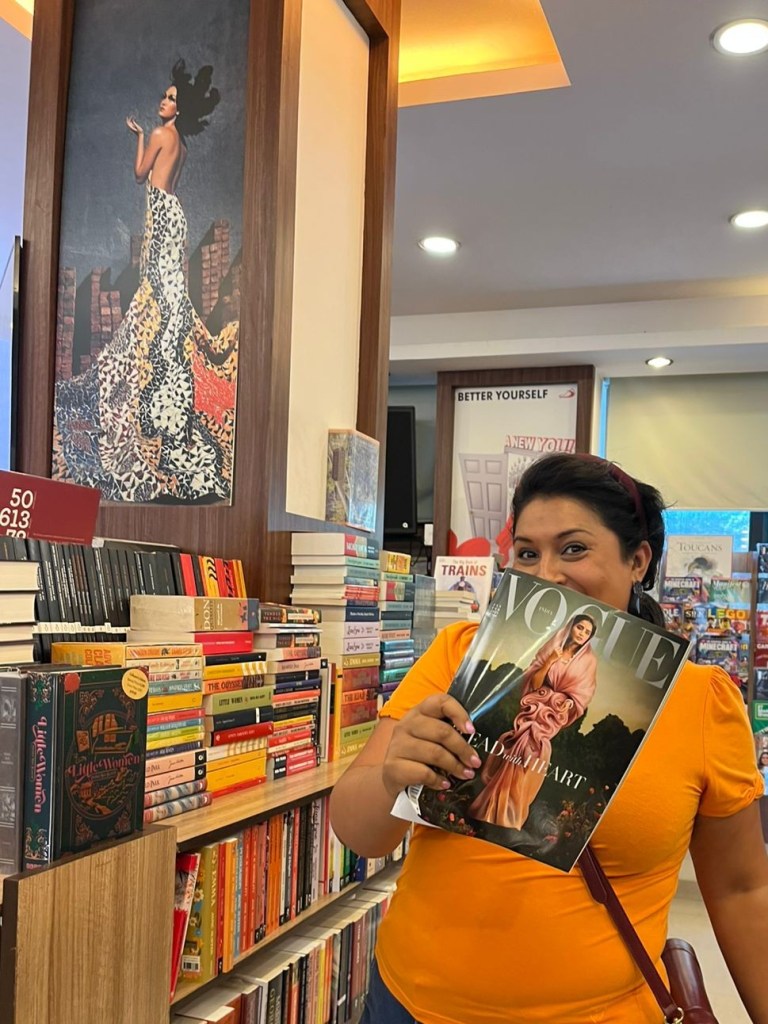
One of the most vivid memories I have of feeling truly represented was during a recent trip to Mumbai. I walked into a bookstore and saw the latest issue of India Vogue. I was drawn to it because the cover featured models who looked like me, wore traditional fabrics with pride, and radiated a beauty that felt familiar. I stood there, overwhelmed. For the first time, I saw my heritage celebrated in a way that was bold, glamorous, and unapologetically authentic. That moment reminded me how powerful visibility can be, not just in fashion, but in every form of storytelling.
Now, as a teacher, I’m committed to curating a library space that reflects the diversity of our world. I’ve seen firsthand how students light up when they find a book that resonates with them. As one Year 9 student told me earlier this year when I handed him The White Tiger by Arvind Adiga, “This book feels like it was written for me.” That’s the magic we should strive for.
🏫 What should Teacher Librarians do?
To ensure every student has access to diverse stories, Teacher Librarians and schools must:
Regularly audit their library collections for representation across race, gender, ability, and culture.
Partner with local communities and authors to source authentic voices.
Provide professional development for educators on inclusive literature.
Encourage student-led book clubs and reading initiatives that celebrate diversity.
💬 Final Thoughts
Diverse books aren’t just about ticking boxes, they’re about opening hearts and minds. They help students navigate the world with compassion, curiosity, and confidence. When we fill our shelves with stories that reflect the full spectrum of human experience, we send a powerful message: You belong here. Your story matters.
Let’s go beyond the bookshelf—and make every library a gateway to understanding.






 Learning through the Library