“A reader lives a thousand lives before he dies. The man who never reads lives only one.” – George R.R. Martin
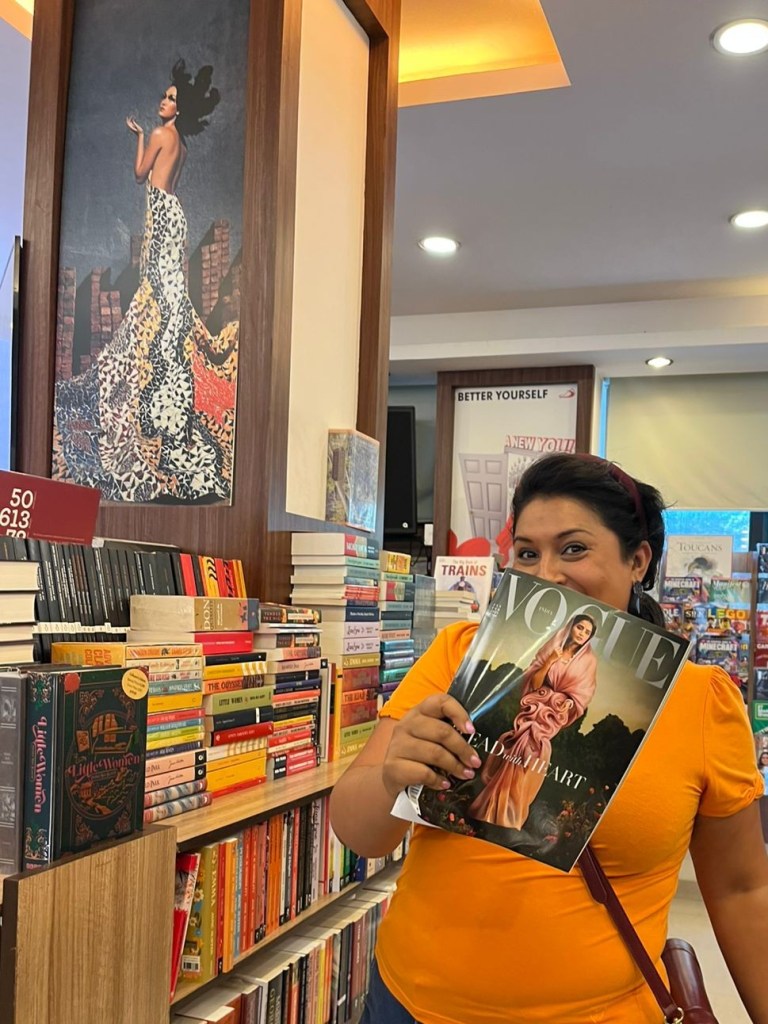
This weekend we celebrated an unusual day. A truly inclusive day, where anyone and everyone can join in the festivities. This day celebrates the peculiar joy of falling headfirst into a story, where dragons roam, detectives brood, and friendships bloom between pages. Book Lovers Day is a gentle reminder that quality literature doesn’t just entertain the mind, rather it transforms. It tickles the imagination, sharpens the mind, and teaches us to see the world through someone else’s eyes.
“Reading is an exercise in empathy; an exercise in walking in someone else’s shoes for a while.”
Malorie Blackman
Reading fiction is more than a leisure activity as it is a cognitive and emotional exercise that cultivates empathy, enhances wellbeing, and supports lifelong development. Classic novels such as 1984, The Handmaid’s Tale, Rebecca, and The Three Musketeers exemplify how literature invites readers to inhabit diverse perspectives, a process closely linked to the development of Theory of Mind (ToM).
ToM refers to the ability to understand that others have beliefs, desires, and emotions different from one’s own. Research shows a reciprocal relationship between ToM and reading comprehension: engaging with narrative fiction improves our capacity to infer characters’ mental states, which in turn strengthens our understanding of complex texts. This cognitive skill is foundational not only to reading but to social interaction and emotional intelligence.
Moreover, (and this is the part I absolutely love!), reading fiction contributes to stress reduction and emotional regulation. Works like Life of Pi, The Scarlet Pimpernel, Gone with the Wind and Wind in the Willows offer immersive experiences that promote relaxation and introspection. As noted in The Conversation, reading also fosters curiosity—a trait linked to career success and psychological resilience.
In sum, literature nurtures the body, mind, and spirit. On Book Lovers Day, we celebrate fiction not just as art, but as a vital tool for cultivating empathy, enhancing wellbeing, and deepening our understanding of others.
If you’ve ever wanted to experience the joy of being chased by animatronic nightmares that look like they’ve been assembled by a slightly deranged electrician, this graphic novel is for you. Five Nights at Freddy Fazbear Frights serves up exactly what the title promises: frights, chaos, and enough creepy robots to make your childhood memories of birthday parties instantly terrifying.
The artwork is a delightful mix of “kid-friendly” cartoon and “why is that bear staring at me like it wants to eat my soul?” The story jumps between various creepy tales that all somehow revolve around the absolute worst animatronics you could imagine — and just when you think it’s safe to close the book, boom! More jump scares, more eerie grins, and more malfunctioning metal monsters lurking in the shadows.
If you enjoy your horror with a side of cheesy dialogue and characters making questionable life choices (seriously, who lets these animatronics roam free?), this graphic novel will keep you entertained—and maybe a little paranoid—until the very last page.
Final verdict: Five nights of fun, fear, and a fresh appreciation for why animatronics should probably be banned from birthday parties forever. I would also not recommend this book for anyone who is over the age of 15! Especially not to 40+ year old women who managed to get a very twitchy eye from reading this series.
The Dressmaker of Yarrandarrah Prison is a gentle, moving novel about unlikely friendships, second chances, and the quiet power of redemption. At the center of the story is Derek—a prisoner who surprises everyone, including himself, when he volunteers to sew a wedding dress for his estranged daughter’s big day.
What unfolds is more than just the tale of a man learning to sew. It’s about rebuilding trust, finding purpose in the most unexpected places, and the way small acts of kindness can mend even the deepest wounds. The characters—both inside and outside the prison walls—are beautifully drawn, each with their own burdens and hopes, all stitched together into a story that is equal parts funny, sad, and uplifting.
Meredith Jaffe writes with compassion and warmth, turning a seemingly odd premise into something deeply human. This book reminds us that no one is ever beyond forgiveness, and that healing often begins in the most unlikely places.
Ashley Hay’s The Railwayman’s Wife is a beautifully written, contemplative novel set in a small Australian coastal town in the aftermath of World War II. The story follows Anikka Lachlan, a librarian grappling with the sudden loss of her husband in a railway accident—a personal tragedy that echoes the broader national grief still hanging over Australia after the war.
Hay uses the quiet town of Thirroul as a microcosm of post-WWII Australia, capturing a society caught between mourning and rebuilding. Characters wrestle with physical and emotional scars, survivor’s guilt, and the search for meaning in a world forever altered by conflict. Through Ana’s growing connection to literature and community, the novel reflects how ordinary people coped with extraordinary loss during this time.
Heart warming, poignant, delicate, elegiac, and steeped in place, The Railwayman’s Wife is not just a story of personal grief, love and hope, but also, a portrait of a country learning to heal—one quiet moment at a time.
In Upside Down Inside Out, Monica McInerney gives us the story of Eva Kennedy—a talented artist who, naturally, is stuck in a dead-end admin job and hiding from her past. When a last-minute trip to Dublin drops into her lap (as life-changing international trips so often do), she jumps at the chance to escape her carefully controlled life in Melbourne.
What follows is a whirlwind of mistaken identity, quirky new friendships, and just the right amount of romantic confusion. McInerney has a knack for blending humor and heart, and while some twists are more predictable than surprising, the charm of the characters—and the lush Irish setting—make it an enjoyable ride.
If you’ve ever wanted to abandon your job, jet off to another country, and magically stumble into self-discovery, this one’s for you.
It’s part escapist fantasy, part emotional reset, with a wink to the idea that maybe, just maybe, the universe knows what it’s doing.
Watermelon was the first book published by Marian Keys. To be honest, it is not my favourite book of hers as it is stilted and very cliche.
However, it is a lovely, light hearted romance set in Ireland. Very similar to Maeve Binchy, Keyes writes about how a husband leaves his wife after the birth of their baby. The main character Claire does make you want to slap her silly, but she does eventually realise how toxic her marriage was and moves forward in her life.
The book is predictable and occasionally nauseating but I did like how it highlights that women are gaslit in relationships and often around childbirth and motherhood.
For those interested – Last Chance Saloon is my favourite #mariankeyes novel.
The use of complex texts in education is crucial, as relying solely on traditional textbooks can hinder diverse learners due to varying literacy levels. Implementing text sets alongside explicitly taught reading strategies fosters better comprehension and learning outcomes by providing multiple access points for students to engage with the material effectively.
Reading between the lines – Supporting literacy text sets and explicit instruction.
The use of complex texts for learning is a well-established pedagogical practice, and therefore, the selection of appropriate texts is an integral part of teaching and learning. Traditionally, textbooks and single origin resources have been a staple in classrooms, but the use of a singular resource can be problematic in an environment with significant variation in literacy levels and background knowledge (Cervetti & Hiebert, 2019; Lupo et al., 2019). This concern is because disparity between various students’ abilities can limit learning outcomes because access is an issue. As a constructivist approach to learning and an extension of literary learning, text sets are an effective pedagogical practice that supports student learning and develops literacy capacity in a diverse classroom. The efficacy of this classroom practice can be further supported with explicitly taught ‘reading for meaning’ strategies as it increases the number of access points students have to the text and therefore, positively impacts literacy, reading comprehension and learning outcomes.
Read more of what my presentation was centred on at the National Education Summit (Brisbane).
Disciplinary Literacy is rarely discussed in schools, and this can lead to a significant impact to learning outcomes. The skills required to read a text in Chemistry are very different than the ones required in Literature. However, most schools pigeonhole literacy into the purview of the English Department.
Shanahan & Shanahan (2012) advocate for the explicit instruction of disciplinary literacy across middle and high school classrooms. This approach clearly acknowledges the importance it is the have the ability to ‘create, communicate and use knowledge’ appropriately within each discipline.
Hi – I am Trish and I am a teacher librarian in the ACT. I am keeping a blog because I have found that I gain deeper insights and have a greater personal development if I use the written word to consolidate my thoughts. Some would call it ‘writing for knowledge construction’. Others may refer to it as journaling or even the rants of a cranky old bird. However, I call it my thinking space for reviewing new books, critiquing professional development sessions, reflecting on my teaching practices and evaluating on my own journey as a TL. I hope you enjoy reading my musings and if you would like to subscribe or submit any of your thoughts, that would be great!
The role of the library and teacher librarian is to support the explicit instruction of multiliteracies and resourcing of multimodal text types in a school as highlighted in ETL401 and ETL504 (ALIA & ASLA, 2004). Whilst print literacy competency is still an essential attribute, the promotion of information, digital and visual literacies are rapidly emerging as essential 21st century skills.
FACT:
Information literacy is the ability of a person to seek, find, access, use and evaluate information successfully for personal, educational and professional purposes (Kaplowitz, 2014; Kong, 2015). It is essential due to the prevalence of mal-information, disinformation and misinformation. This means that in order to navigate these perils of modern society, young people need to be adept at seeking, finding and using information. They also need to be competent at evaluating the difference between gold and dross.
Visual literacy is rapidly becoming an essential skill in a multimodal society because it effectively broadens the parameters of traditional literacy and assists with text deconstruction and analysis, as well as builds competency in language, texts and symbols (Marsh, 2010).
TL REALITY:
Picture books (PB) are effective at developing visual literacy because they can positively impact the academic, behavioural, developmental, cognitive development of learners. This is because PB are polysemic, promote critical thinking, encourage reflection, support constructivist pedagogies and are also excellent tools for class discussion (Marsh, 2010). Their value is in their ability to encourage readers to construct their own meaning from the imagery which then encourages multiple perspectives and creates opportunities for robust discussion (Marsh, 2010).
Picture books for older readers.
Sophisticated picture books.
MY LEARNING:
I was under the false assumption that PB were for young children because developing readers require the interdependency of images and texts for comprehension. However, PB can be effectively used in secondary classrooms through literary learning, read alouds and within classroom practice. This is because post-modern or sophisticated picture books places a higher cognitive load onto the reader and require critical thinking from the reader to decode the contradiction of text and images, or lack of text.
In ETL402 and INF533 I learned about the various strategies to improve digital literacy in the classroom. These included the inclusion of digital texts into classroom practice and innovative pedagogical practices. Some examples of these strategies are:
Ferguson, S. (2019). Digital Literacy: A Constantly Evolving Learning Landscape. Alki, 35(2), 12–13. CSU Library
Kaplowitz, J. (2014). Designing information literacy instruction: the teaching tripod approach. Rowman & Littlefield. Ebook. CSU Library.
Kong, S. (2014). Developing information literacy and critical thinking skills through domain knowledge learning in digital classrooms: An experience of practicing flipped classroom strategy. Computers & Education. 78, pp.160-173. DOI https://doi.org/10.1016/j.compedu.2014.05.00
Levitov, D. (2016). School libraries, librarians and inquiry learning. Teacher Librarian 43(4), p.28. CSU Library.
Thomas, J., Barraket, J., Wilson, C., Cook, K., Louie, Y., Holcombe-James, I., Ewing, S., and MacDonald, T. (2018). Measuring Australia’s Digital Divide: The Australian Digital Inclusion Index 2018. RMIT University, Melbourne, DOI: https://doi.org/10.25916/5b594e4475a00