A Season of Reading and Reflection: A Year in Review.

As the school year wrapped up last week, I found myself reflecting on the many moments that shaped our library community in 2025. There have been challenges, yes, but also plenty of reasons to celebrate.

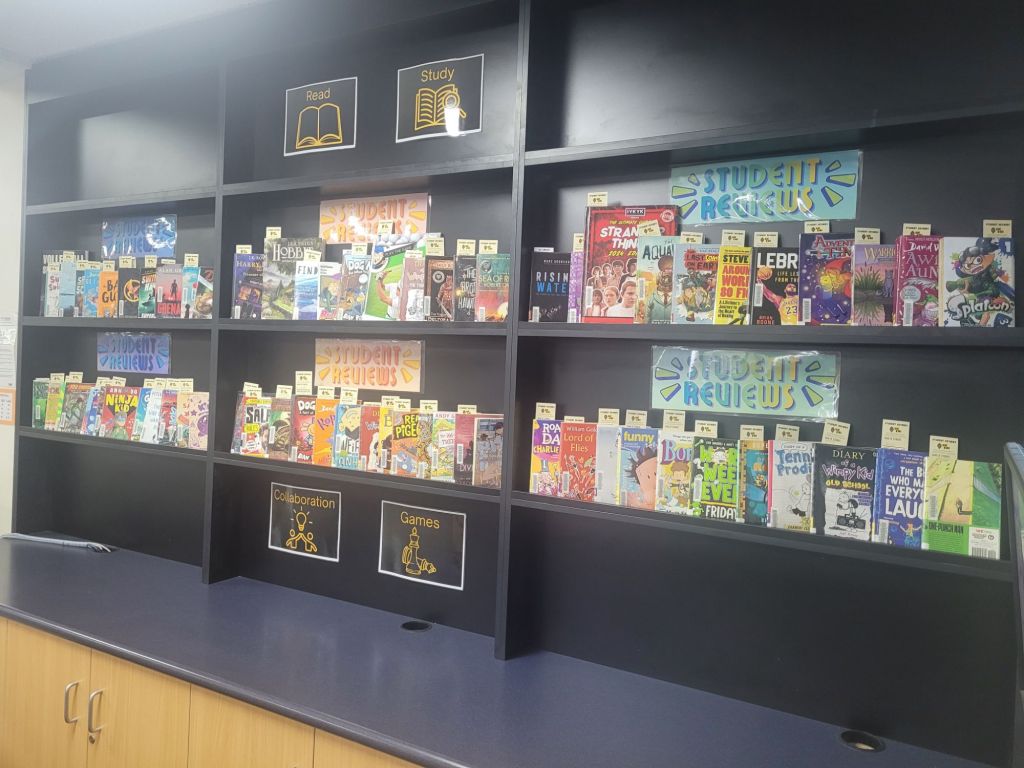
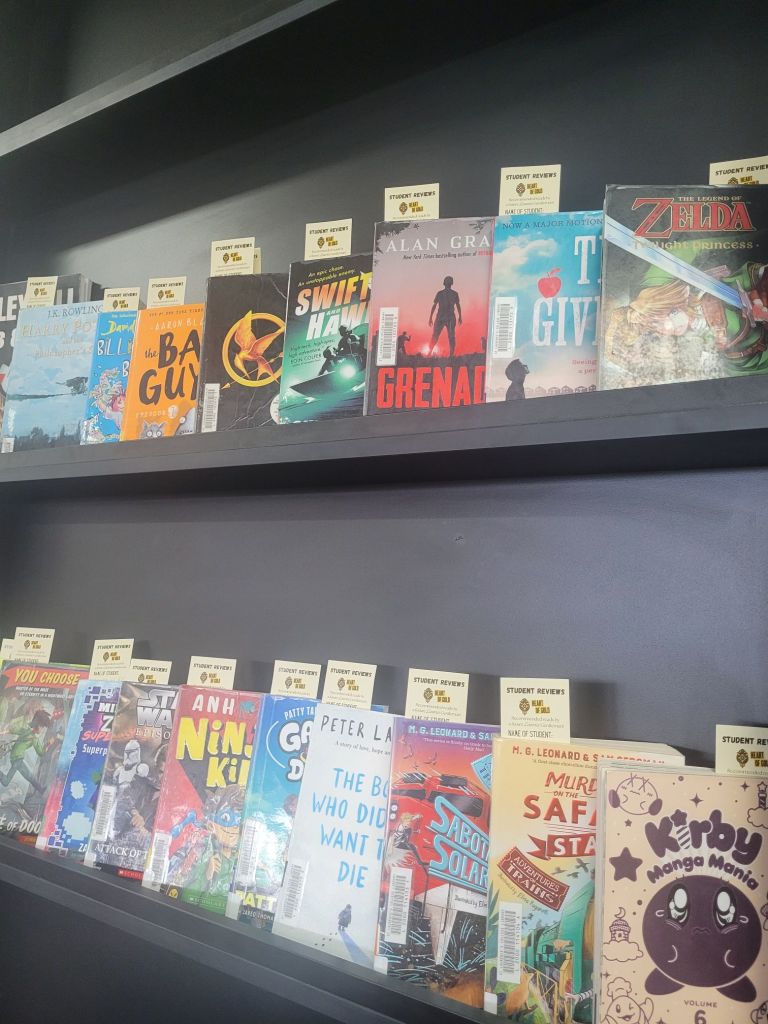
One of the brightest sparks has been our book clubs. What started as a simple idea, a few snacks and a chance to talk about stories, has grown into something much bigger. My secondary Book Club stands out. At the beginning of the year they were a small group, some unsure of what to read, others firmly attached to their favourite genres. Over time, though, their borrowing soared. They began exploring fantasy, contemporary fiction and graphic novels, and while one dedicated manga reader still resists branching out, the group as a whole has broadened its horizons. More importantly, they began to see reading as part of who they are. They recommend titles to each other, debate endings, and even suggest new books for the library. Watching that transformation has been a joy.

Research reminds us that this is exactly what book clubs are meant to do. They make reading social, they build confidence, and they help young people see themselves as readers. The secondary Book Club Boys proved that in the most authentic way, showing how a community of peers can turn reading from a solitary task into something shared and celebrated.

From a whole school review, borrowing levels across the school have also risen, returning to pre COVID rates. Much of this growth has come from our younger readers, whose enthusiasm has been infectious. Their excitement has created a vibrant culture of reading in the primary years, and their participation in activities has been a highlight of the year.

Of course, there are challenges we cannot ignore. Very few of our Year 10 to Year 12 students are reading recreationally, and this is concerning. Intertextuality, the ability to connect ideas across texts, is vital for analysis and for building strong cognitive connections. Without regular reading, those skills are harder to develop. We also continue to see limited engagement from Years 7 to 10 English classes, despite enthusiastic promotion. There seems to be a reluctance to lose curriculum time.

Our team dynamic has shifted too, with members coming and going. Change always brings adjustment, but it has also brought fresh perspectives and energy. We have expanded our digital resources, and while uptake has been slow, steady gains are being made as students and staff grow more comfortable with these platforms.

Perhaps the greatest success of all has been the way the library has become recognised as a social space where everyone is welcome. It is not only a place for books, but a hub for connection, collaboration and belonging. That sense of community is something we can all be proud of.

We closed the year with our Books & Bites Christmas party, a joyful celebration of new releases and Christmas treats. Each student received a reading journal with a challenge to read four books over the summer, along with handmade gifts, ornaments, bookmarks, and pen holders, sewn over the past few weeks. These tokens were a way of honouring the shared love of reading that binds us together.

As we finish the 2025 chapter, I am reminded that reading is not just about borrowing books, it is about building minds, fostering empathy and preparing students for the complexities of the world.

“As we finish this chapter and look ahead to the new year, I am reminded that Christmas is a season not only of rejoicing, but of reflection. May the joy of stories, the warmth of community, and the promise of new beginnings carry us into the year ahead.”

Fiction is a safe place to break the rules

I recently attended the QSLA conference at the beautiful State Library of Queensland. It was a fantastic day for school informational professionals to gather, share emerging news, identify new trends and trade in good old fashioned work chit chat.

Andy Griffiths – author of the famous Treehouse series, was our keynote speaker. I have known of Andy’s work for almost a decade. Whilst I have admired his works, I hadn’t fully appreciated his philosophy until now. His words, much like his books, were playful on the surface but deeply subversive underneath. They invited us to reconsider not just how children read, but why they need stories that break the rules.

Griffiths and his co-creator, illustrator Terry Denton have created the inventive, imaginative chaos that is the Treehouse series. I found it amusing that they named the main characters after themselves. Their fictional versions live in an ever expanding treehouse that defies logic and gravity, expanding with each book to include ludicrous additions like a marshmallow machine, a tank of man-eating sharks, and even a volcano. Their adventures are reckless, absurd, and often dangerous. But that danger is never real. It’s theatrical. It’s safe. It’s fiction.

… and that is the point. It is fiction as Andy pointed out last week to a large group of educators and informational professionals.

Fiction is a safe place to break the rules.

I was mesmerised by this quote. That quote stayed with me. It echoed through the conference halls and followed me home. In an article published by the ABC in 2018, Griffiths argued that fiction as a “last frontier”, a place where children can explore worst-case scenarios without consequence. He said: “Books are the last frontier of freedom and wilderness for kids, for imagining dangerous things, for imagining craziness and worst-case scenarios” (Blau, 2018).

This was so true. In a world increasingly obsessed with safety, structure, and supervision, Griffiths’ books offer a counterbalance. They don’t just entertain their readers… they liberate them! They allow children to imagine running across six lanes of traffic or jumping into a volcano, not because they should, but because they can. In fiction, the consequences are exaggerated, the outcomes are ridiculous, and the lessons are embedded in laughter. Griffiths uses humour to engage the reader and builds into that playful sense that children have. As Griffiths said last week, “Reading is a game between the reader and the author. Authors make black marks on pages. Readers use these marks to make an image in their heads.”

I then thought about all the other books that ‘helped me break rules’. Darryl and Sally hosting midnight feasts at Mallory Towers, Matilda using her brain to solve problems, Trixie Belden and Nancy Drew resolving mysterious events. Each of these characters and books gave me option I may not have thought of previously.

Leaving the conference, I felt a renewed appreciation for the role of literature in childhood. Not just as a tool for literacy, but as a sanctuary for wild thought. Griffiths reminded us that imagination isn’t just fun. It’s vital. It’s how children rehearse life, test boundaries, and build resilience.

And maybe, just maybe, it’s how they learn to be free.

What books set you free?

Fracturing stereotypes in literature: Using fairy tales to transfer cultural knowledge and break assumptions.

Fairy tales have long served as cultural touchstones as they passed down through generations to teach values, warn against danger, and reflect the beliefs of the societies that created them. Though often associated with bedtime reading, fairy tales are far more than simple entertainment. They are rich with symbolism, moral lessons, and cultural nuance. Across the world, these tales take many forms and espouse a range of cultural values and traditions. In West Africa, the Anansi stories feature a clever spider who uses wit and trickery to navigate challenges, often blurring the line between hero and villain. In Russia, Baba Yaga, a fearsome witch who lives in a house with chicken legs is a treated as both a threat and a source of wisdom. Japanese tales like Momotaro (Peach Boy) celebrate loyalty and courage, while Indigenous Australian Dreamtime stories embed spiritual and ecological knowledge, linking people to land, ancestry, and community.

Fairy and folk tales are shaped by the values and fears of the cultures that tell them. Take Little Red Riding Hood, for example. In the original French version by Charles Perrault, the story ends with Red being eaten. A stark warning about the dangers of naivety and talking to strangers. Two centuries later, the Grimm brothers added a huntsman who rescues her, softening the tale but still portrays Red as a naive child with no common sense that needs a man to rescue her from her own stupidity. In China’s Lon Po Po, three sisters cleverly defeat a wolf disguised as their grandmother. In West Africa’s Pretty Salma, the story is reimagined with vibrant market scenes and a trickster dog. However, in some modern versions, Red is a sweet girl who outsmarts the wolf and saves her grandmother. Each version reflects different cultural fears, values, and expectations.

Fairy tales offer insight into social norms, gender roles, and moral expectations. However, many students today encounter fairy tales primarily through Western adaptations, for example, Anderson, Perrault, Grimm and more recently, Disney. As we are all aware, the latter often simplifies complex narratives into polished versions where good triumphs, evil is vanquished, and everyone lives happily ever after. However, we all know that life is not a happily ever after scenario. We also know that many of these fairy tales have not aged well and their depictions of women and other minority groups are outdated and sometimes offensive.

Fractured fairy tales offer a powerful way to revisit these traditional stories and challenge the assumptions they carry. By twisting familiar plots, reimagining characters, and shifting perspectives, fractured tales invite students to question stereotypes and explore alternative narratives. These adaptations provide a meaningful way to integrate classic and traditional tales into the curriculum as shared cultural knowledge as these stories are familiar, accessible, and often deeply embedded in popular media and literature. By engaging with them critically, students can recognise the stereotypes they contain, such as passive heroines, villainous outsiders, or heroic princes, and begin to unpack the social messages behind them.

As mentioned previously, traditional tales often portray female characters are passive, villains are irredeemable, and heroes are defined by their ability to rescue others. Fractured versions ask: What if the princess saved herself? What if the villain had a backstory? What if the tale took place in a modern classroom, a refugee camp, or a suburban street?

Fractured fairy tales are re-imaginings of traditional fairy tales and they are more than just creative exercises. They are acts of critical literacy. Fracture tales encourage students to analyse how stories shape our understanding of identity, power, and justice. They also provide space for students to insert their own voices, experiences, and cultural perspectives into the storytelling tradition.

A compelling example is Disney’s Maleficent (2014), which reinterprets Sleeping Beauty through a postmodern lens. Rather than portraying Maleficent as a one-dimensional villain, the film gives her emotional depth and agency. It highlights the impact trauma can have on emotional stability and the ability to make future connections. Maleficent’s loss of her wings to Stefan’s violence triggers a cascade of vengeance. This violent action of Stefan gives the viewer a reason why Maleficent cursed Aurora. It was not a random event, but rather retribution for past actions. Furthermore, Aurora awakens not through a prince’s kiss, but through Maleficent’s maternal love that grew despite the hatred and anger. It assuaged her internal trauma and avoided the trope of romantic salvation. Maleficent uses intertextuality to challenge the “grand narrative” of the original tale, offering a more nuanced and inclusive version of the story.

For educators, fractured fairy tales are a rich tool for both literary analysis and creative writing. They allow students to explore genre conventions, experiment with structure, and reflect on the social messages embedded in familiar texts. By comparing global versions of tales and then reworking them with a modern lens, students learn that storytelling is not fixed. Instead it celebrates how stories continue to be fluid, diverse and deeply personal.

There are numerous fractured fairy tales that can be used effectively for academic and recreational purposes. So… why not use them for your own teaching and learning… And fracture some stereotypes along the way.

Books:

  • The True Story of the 3 Little Pigs by Jon Scieszka m- Told from the wolf’s point of view, this witty retelling flips the narrative on its head.
  • The Stinky Cheese Man and Other Fairly Stupid Tales by Jon Scieszka – A collection of absurd and hilarious twists on familiar fairy tales.
  • The Wide-Awake Princess by E.D. Bakerm – Princess Annie is immune to magic and sets out to rescue her enchanted sister, challenging traditional gender roles.
  • Peter and the Starcatchers by Dave Barry and Ridley Pearson – A prequel to Peter Pan that adds depth and adventure to the original tale.
  • The Wishing Spell (Land of Stories series) by Chris Colfer – Two siblings fall into a world where fairy tales are real—and not always as expected

Films

  • Maleficent (2014) – Reimagines Sleeping Beauty from the villain’s perspective, exploring themes of agency and maternal love.
  • Shrek (2001) – A satirical mash-up of fairy tale tropes that challenges beauty standards, heroism, and social norms.
  • Into the Woods (2014) – Intertwines multiple fairy tales with darker consequences, highlighting moral ambiguity and personal responsibility.
  • Ella Enchanted (2004) – A feminist twist on Cinderella, where the heroine fights against magical obedience and societal expectations.
  • Enchanted (2007) – A fairy tale princess lands in modern-day New York, confronting real-world complexities and stereotypes.
  • Hoodwinked! (2005) – A comedic retelling of Little Red Riding Hood as a crime investigation, with multiple unreliable narrators.

Book Review – The Impossible Fortune

Richard Osman’s fifth novel in the Thursday Murder Club series, The Impossible Fortune, kicks off with a wedding—Joyce’s daughter Joanna is finally getting married. But the celebration takes a sharp turn when best man Nick announces that someone is trying to kill him. From that moment, the familiar crew of pensioners is drawn into yet another mystery, this time involving a hidden Bitcoin fortune, a car bombing, and a tangled web of suspects. It is nice to read a novel where the main characters are not in their flush of youth.  Gives someone who is quite frankly set in their middle age, some hope for age appropriate literature.

One of the first things that stood out to me was the large print. Compared to other novels I’ve read recently, this one is an absolute breeze to get through. It’s easy on the eyes and makes for a more relaxed reading experience, especially if you’re dipping in and out over a few days. The chapters are also cleverly titled by days of the week, which helps anchor the plot and gives a sense of progression—especially useful given the shifting perspectives between characters.

The emotional tone of the book is a little more poignant than previous instalments. Elizabeth is still reeling from the loss of her husband Stephen, and Osman handles her grief with sensitivity and depth. It adds a layer of introspection to the story without slowing down the pace. Ibrahim continues to be the group’s voice of reason, offering advice to friends and foes alike, including the ever-scheming Connie Johnson, who ironically saves Ron’s bacon eventually.

Joyce remains a delight, and her relationship with Joanna is given more attention here, adding warmth and humour to the narrative. The mystery itself is well-paced, with enough twists to keep you guessing but not so many that it becomes convoluted. Osman’s trademark wit is present throughout, and the characters continue to evolve in ways that feel authentic and earned.

I particularly enjoyed the plot line of Suzi, Jason, and Ron trying to evade the evil machinations of horrid wife beating Danny.  The perspective of Kendrick reminded me once again that the biggest victims of domestic violence are children and their lost childhoods.  Osman manages  rather cleverly to use Kendrick’s internal monologue to reveal his childhood trauma to the reader.

Overall, The Impossible Fortune is a satisfying continuation of the series—accessible, emotionally resonant, and full of charm. It’s not literature by any means but rather a pleasant holiday read as it requires very little cognitive processing.  However, it is a story about friendship, ageing, and the thrill of solving a good puzzle, all wrapped up in Osman’s signature style.

Book Review: The King’s Mother

Annie Garthwaite’s The King’s Mother is her second book about an incredible woman, and this sequel is a masterful and emotionally resonant portrait of Cecily Neville, a woman whose strength, ambition, and heartbreak shaped the course of English history. Set against the backdrop of the Wars of the Roses, this novel brings to life a matriarch who was far more than the mother of kings; she was a strategist, a survivor, and a power in her own right.

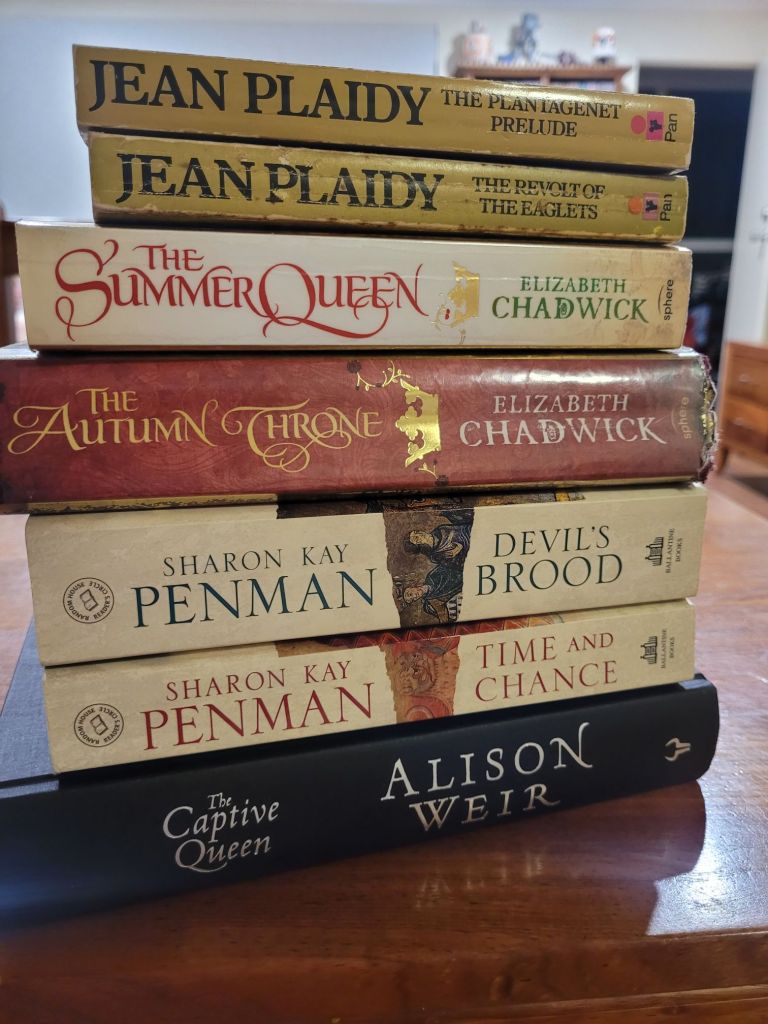
I was first introduced to Cecily in Sharon Penman’s The Sunne in Splendour, where she stood as a dignified and commanding presence amid the chaos of civil war. Garthwaite’s novel deepens that impression, giving Cecily center stage and allowing her voice to ring out with clarity, courage and conviction. As a daughter of the royal House of Neville, cousin to the Kingmaker and wife to highest ranking Lord of York, Cecily was indeed a lady of influence—but she earned her place in history through grit, determination and sacrifice.

Garthwaite’s storytelling is rich and immersive, capturing the political intrigue and emotional toll of a woman who saw her husband, cousin, and sons die in pursuit of their house’s claim to the throne. Cecily’s love for her children is both her greatest strength and her most painful vulnerability. Her devotion to George, Duke of Clarence, is especially poignant, as his betrayal and eventual death (drowning in a butt of malmsey wine, no less) is rendered with tragic inevitability. Garthwaite doesn’t flinch from the irony or the heartbreak, and neither does Cecily.

What sets The King’s Mother apart is its portrayal of female agency in a world dominated by men. Cecily is no passive observer; she is a political operator, a negotiator, and a woman who understands power and how to wield it. Garthwaite’s prose is elegant and sharp, balancing historical detail with emotional depth. The novel doesn’t just recount events—it explores the cost of ambition, the weight of legacy, and the quiet resilience of a woman who endured more than most.

Cecily Neville emerges as a complex and unforgettable figure, proud, calculating, loyal, and deeply human. Garthwaite gives her the voice she deserves, and in doing so, reclaims a vital piece of history too often overshadowed by the men around her.

Book Review: Cecily

Cecily is a bold and brilliant reimagining of one of the most overlooked power players of the Wars of the Roses, Cecily Neville, Duchess of York. In this incredible novel, Garthwaite resurrects a woman who was relegated to the margins of history and gave her a voice as commanding and complex as the times she lived through.

Kindle edition

History tells us that Cecily must have been a woman of great character. As the wife of a high ranking noble in the English court and a daughter of the house of Neville, Cecily is not merely a noblewoman, she is a strategist, a political operator, and a survivor. In a time where women were relegated to the distaff and the cradle, Cecily held her own among the peers of England and France. I love how Garthwaite has portrayed Cecily. Her use of language and semantics is unapologetically fierce. Cecily is driven, calculating, and deeply loyal to her family’s cause. She is also flawed. Her love for her sons, her only weakness and ultimately will cost her dearly.

The novel spans decades of turmoil, from the fall of her husband Richard, Duke of York, to the rise and reign of her sons Edward IV and Richard III. Through it all, Cecily remains at the heart of the action, not as a passive observer, but as a woman who shapes events from behind the scenes. Garthwaite’s prose is taut and evocative, capturing both the grandeur of court politics and the intimate griefs of a mother watching her family unravel.

What sets Cecily apart is its refusal to romanticise the brutality and heartbreak of medieval motherhood. The heartstrings are definitely pulled when youthink about the number of pregnancy losses, stillbirths and infant losses she experienced. In a time where the childbed was a path paved to the graveyard; Cecily used it to wield power. This is not a tale of damsels and chivalry—it’s a story of power, survival, and the brutal cost of ambition. Garthwaite’s Cecily is a woman of her time, but also ahead of it: she understands the game, and she plays it better than most men around her.

For readers who first met Cecily in Sharon Penman’s The Sunne in Splendour, Garthwaite’s novel offers a deeper, more personal exploration. It’s a fantastic story about a strong woman who lived through unimaginable loss—husband, cousin, sons—all sacrificed for the Yorkist cause. And while her greatest weakness may have been her love for her children, it’s also what makes her so achingly human.

Cecily is historical fiction at its finest: vivid, uncompromising, and utterly absorbing. Garthwaite doesn’t just resurrect a forgotten duchess—she reclaims her legacy.

No surprises that after I read this one, I had to read the sequel.

Ten Books, One Nervous Breakdown: Reckoning with the ABC Top 100

I am a reader. Not the “I’ll grab a paperback at the airport” kind. I mean the full-blown, emotionally-attached-to-fictional-characters, rearrange-my-bookshelves-for-fun kind. So when ABC Radio National asked Australians to nominate their top 10 books of the 21st century, I did what any sane book lover would do: I spiralled.

Coming up with this list was horrendously difficult. I probably agonised over it for longer than it took to name my children, and with far more existential dread.

What if I forgot a book that changed my life?

What if I picked something too obvious?

Too obscure? Too emotionally manipulative?

Eventually, after much soul-searching, tea-drinking, and dramatic sighing, I settled on ten. I will preface it and say they may not necessarily the “best” books of the century—but they’re the ten books I think are the ‘my‘ books. My literary lifeboats. And because I clearly enjoy suffering, I’ve explained why each one made the cut.

My Brilliant Friend (2011) by Elena Ferrante

A colleague recommended this one to me back in 2019. Book one of a four-part saga that nails the messy magic of female friendship. Elena and Lila are best mates, worst rivals, and emotional sparring partners. Ferrante helped me realise that friendship isn’t always soft—it’s sharp, complicated, and utterly formative.

A Man Called Ove (2012) by Fredrik Backman

My best read of 2018—and the gateway drug to all things Backman. Grumpy old man meets chaotic neighbours, and somehow it’s a masterclass in love, loss, and chosen family. Proof that sometimes, the best family isn’t the one you’re born into—it’s the one that barges in uninvited.

The Tattooist of Auschwitz (2018) by Heather Morris

Heart-wrenching and unforgettable. Based on interviews with Holocaust survivor Lale Sokolov, this novel brings humanity to horror. It’s a story of love, resilience, and survival in the darkest of places—and it left me absolutely gutted. Furthermore, for the non-readers in my life- there is a TV series.

Wolf Hall (2009) by Hilary Mantel

Book one of Mantel’s Tudor trilogy, starring the ever-scheming Thomas Cromwell. This was another recommendation from a colleague. Wolf Hall is lyrical, slyly funny, and so well written it makes other historical fiction feel like homework. A must for history buffs—and anyone who likes their politics bloody and their prose brilliant. TV series available for the non-readers. Different note – Alison Weir just released a title called “Cardinal” based on the life of Thomas Wolsey … so will need to pop that on my list to read soon.

A Thousand Splendid Suns (2007) by Khaled Hosseini

Heartbreaking and beautiful. Set in Taliban-era Afghanistan, it follows two women whose lives collide in tragedy—and transform through love. Their bond, almost mother-daughter, is a testament to resilience, sacrifice, and the fierce power of chosen family. This was an accidental read, I found this book on a plane, left by a forgetful passenger… I still have it on my bookshelf. It has been well read and is still much loved.

Circe (2018) by Madeline Miller

I’m a sucker for Greek mythology, and this feminist retelling hit all the right notes. Circe steps out of the shadows and into her own power—witch, exile, goddess, woman. Strong female themes, lyrical prose, and a fresh perspective on ancient tales. Loved every spellbinding page. This book is far better than Song of Achilles, also by Madeline Miller. I felt like slapping Achilles more times than I could count in that novel.

Go Tell the Bees That I Am Gone (2021) by Diana Gabaldon

Book nine of the Outlander saga, and a rich tapestry of time-travelling drama. Jamie, Claire, Brianna, Roger, Lord John Grey, and William Ransom all get their moment—and it’s beautifully woven together. Such emotion. Jamie and Claire at their best. A love story for the ages. I have included this in the list because it is one of my favourite series, as I couldn’t squeeze in Cross Stitch (wrong century!), but this one carries the torch. BTW – I am waiting desperately for Book 10. Hurry up Diana!!

Burial Rites (2013) by Hannah Kent

A beautifully written fictional take on the life of Agnes Magnúsdóttir, Iceland’s last execution. It forces you to confront 19th-century prejudice, gender roles, and how reputation can be shaped more by rumour than truth. Quietly devastating—and deeply human. This was a senior text when I was teaching in the ACT and I read it as part of my curriculum planning. An absolutely brilliant novel and quite frankly, should be taught more in schools.

Hallmarked Man (2025) by Robert Galbraith (aka J K Rowling)

This one was hard as I nearly shoehorned in Harry Potter, but alas, that was from last century. Then I dithered over Deathly Hallows, but it’s book seven, and I’ve got a “book one” theme going (see Wolf Hall, My Brilliant Friend). Therefore it seemed logical that Cuckoo’s Calling made the list. But in the end, as I selected Book 9 of the Outlander series, I felt that it was OK that Hallmarked Man won out over the other 7 books in the series. Additionally, it is the best book I’ve read this year. .So, it’s in. No regrets. (Okay, maybe a few – I agonised over this one the most).

The Nightingale (2015) by Kristin Hannah

I cried buckets. This heartfelt tale of a woman risking everything to save Jewish children under the Nazi occupation of France. First it was for her best friend’s son… then it was another woman’s son…. and daughter. This book is a gut-punch of love, loss, friendship, and motherhood. It broke me, then stitched me back together.

So there you have it…

Ten books. Ten emotional rollercoasters. And one very frazzled reader. If you’re brave enough to try making your own list, I salute you. Just stock up on tea, tissues, and a sturdy spreadsheet.

Book Review: Darius the Great Is Not Okay

Adib Khorram’s debut novel, Darius the Great Is Not Okay, is a beautifully crafted story that captures the emotional complexity of adolescence with rare sensitivity. At its centre is Darius Kellner, a teenage boy growing up biracial—half Persian, half white—in a world that often demands simple answers to complicated questions about identity.

Darius feels out of place in his hometown of Portland. He doesn’t speak Farsi fluently, struggles to connect with his Persian heritage, and feels alienated from both sides of his cultural background. When he travels to Iran to meet his grandparents for the first time, the story deepens into a moving exploration of belonging. Khorram doesn’t offer easy resolutions. Instead, he shows how identity can be layered, shifting, and deeply personal.

As a parent of biracial children myself, this novel struck a chord. I often worry about how my kids see themselves—whether they feel “enough” of either culture, whether they’ll be accepted, and whether they’ll find peace in the spaces between. Darius’s journey reminded me that these questions don’t always have answers, but they do deserve compassion. The book offers that in abundance.

What also makes this story so powerful is its honest portrayal of mental health. Darius lives with clinical depression, and Khorram treats this with care and authenticity. He very gently reminds the reader that mental health is often not viewed the same way across generations and cultures. I particularly found it endearing when Darius was taking his ‘medicine’ in front of his grandfather and being told that medicine is only for old people. This was said in such a matter of fact tone, you could almost hear the slightly questioning tone of a grandparent’s concern. However, Khorram keeps it calm. There’s no melodrama, just the quiet reality of what it means to live with a condition that many teenagers face but few feel safe talking about. The novel understands that mental health isn’t a side issue—it’s central to how young people experience the world and themselves.

Equally important is the novel’s emphasis on friendship. Darius’s bond with Sohrab, a boy he meets in Iran, is tender, grounding, and transformative. For teenagers, friendships are more than social connections—they’re mirrors through which they begin to see themselves. A good friend can validate your experiences, challenge your assumptions, and offer a safe space to be vulnerable. In Darius’s case, Sohrab becomes that anchor. Their friendship helps Darius feel seen—not as a collection of contradictions, but as someone worthy of love and belonging. For teens navigating identity and self-esteem, these kinds of relationships are vital.

The thing is, I never had a friend like Sohrab before. One who understood me without even trying. Who knew what it was like to be stuck on the outside because of one little thing that set you apart.

This moment captures the emotional core of the novel. For Darius, friendship isn’t just about companionship—it’s about being truly seen. Sohrab’s presence helps Darius begin to accept himself, not in spite of his differences, but because of them. It’s a reminder that for teenagers, especially those navigating identity and mental health challenges, friendship can be a lifeline

Darius the Great Is Not Okay is a fantastic coming-of-age story because it doesn’t rely on dramatic transformations. It’s about small, meaningful moments: a friendship that feels like home, a conversation that bridges generations, a glimpse of self-worth. For young readers—especially those navigating multiple cultures or mental health challenges—it’s a gentle, affirming reminder that being “not okay” doesn’t mean being broken. It means being human.

#boybooks -Why Jack Heath Belongs in Every Boys’ School Library

If you’re looking for books that speak directly to boys—stories packed with action, danger, and emotional grit—Jack Heath is an author who delivers every time. Based in Canberra, Heath has become a standout voice in Australian young adult fiction, known for his fast-paced narratives and male protagonists who face extreme challenges and somehow manage to survive. His books aren’t just entertaining—they’re powerful tools for building resilience, especially in young readers who need to see that courage isn’t about being fearless, but about pushing through fear.

One of Heath’s most popular texts in my school library is the Minutes of Danger series. Each book features ten short stories, each unfolding in real time over ten minutes. Titles like 300 Minutes of Danger, 400 Minutes of Danger, and 500 Minutes of Danger are perfect for reluctant readers, offering bite-sized thrillers that are impossible to put down. The protagonists are often boys who are caught in life-or-death situations. They must rely on quick thinking, bravery, and resourcefulness. These stories are not only gripping but also subtly teach problem-solving and emotional regulation under pressure.

The Liars series takes a different angle, blending tech intrigue with moral complexity. It follows Jarli, a teenage inventor whose lie-detecting app turns him into a target. Across titles like The Truth App, No Survivors, and Armageddon, Jarli navigates a world where truth is dangerous and trust is hard-earned. These books explore ethical dilemmas, the consequences of innovation, and the importance of standing up for what’s right, even when it’s risky. Jarli’s journey is one of growth, resilience, and learning to think critically in a world full of deception.

Then there’s the Money series, featuring Ashley Arthur is based around a teen thief with a conscience. In Money Run and Hit List, Ashley pulls off high-stakes heists while wrestling with questions of morality and loyalty. These books are like Ocean’s Eleven for young readers, combining adrenaline-fueled action with deeper themes about risk, justice, and the blurry line between right and wrong. Ashley’s cleverness and internal compass make him a compelling role model for boys who are learning to navigate complex social dynamics.

“Thrills, Truth, and Tough Choices”

Jack Heath’s literary universe doesn’t stop at young adult fiction—it boldly steps into adult territory with the Timothy Blake series, beginning with Hangman. This marks Heath’s foray into darker, more psychologically complex storytelling, offering older teen readers a bridge into adult fiction. I have recently acquired the series for my school library because these books are perfect for boys who’ve grown up devouring his YA thrillers as they provide a natural progression into more mature narratives. With a protagonist who’s part genius, part monster, and whose moral compass is as twisted as the crimes he solves, the series channels unmistakable Thomas Harris’ Hannibal Lecter vibes, intelligent, disturbing, and impossible to look away from.

For boys’ schools and educators curating their library collections, authors like Jack Heath are essential. His stories don’t just entertain. They shape character. They help boys confront fear, wrestle with ethical decisions, and develop emotional resilience. In a world that often asks boys to be tough without teaching them how to be strong, Heath’s books offer a roadmap. They help boys grow, not just as readers, but as young men learning to navigate complexity, responsibility, and identity.

Jack Heath’s stories are more than just thrill rides. They offer boys a mirror and a map, reflecting their struggles and showing them paths through adversity. His characters don’t have superpowers, but they do have grit, intelligence, and heart. For educators and parents looking to foster resilience in boys, Heath’s books are a goldmine. They prove that strength isn’t just physical, it’s emotional, ethical, and deeply human.

Book Review – The Hallmarked Man.

Robert Galbraith’s The Hallmarked Man is a riveting addition to the Cormoran Strike series, delivering a classic whodunnit with a modern edge. Published two years after the last book in the series, avid readers (aka me) were very excited about the release. The Running Grave (Book 7) was easily the best book I read in 2023, so I was very, very excited about this new title which was released today around the world. I excitedly opened up my Kindle edition at 12.01AM and picked up my hardcopy version at 10.15am. The eBook/Kindle version may be portable, but the hardcopy will always win with me!

The story opens with a gruesome discovery—a mutilated corpse whose identity has been deliberately obscured. Strike and Robin Ellacott are tasked with unraveling not just who the victim is, but why someone went to such lengths to erase him. The mystery is layered and atmospheric, steeped in London’s underbelly and the world of antique silver, with plenty of red herrings and unexpected turns.

I found the references in the novel to the Freemasons interesting, and the novel did often allude to the role Freemasons have in public office may be compromised by their own allegiances. This theme of secret societies is rather popular and does seem to appear in several crime and thriller fiction across a range of authors.

As the investigation deepens, Strike finds himself under media scrutiny, with past indiscretions resurfacing and threatening to derail both the case and his reputation. This subplot adds tension and continuity for longtime readers, tying in threads from earlier books and forcing Strike to confront uncomfortable truths.

The novel also tugs at the heartstrings, especially when Strike reflects on the death of his beloved uncle Ted—a man he calls a “proper man”—whose quiet strength and moral compass shaped Strike’s own. In a surprising emotional turn, Strike rekindles a relationship with his estranged father, Jonny Rokeby, adding layers of vulnerability and reconciliation to the narrative.

Ellacot, meanwhile, is navigating her own emotional minefield. Her feelings for Ryan Murphy—a charismatic, Paul Newman lookalike—are complicated by her loyalty to Strike and the unresolved tension between them. She’s also forced to confront the eternal juggle between motherhood and career, a theme that’s handled with nuance and realism, reflecting the pressures many women face in balancing ambition with personal life.

The novel is rich with minor plot twists that add texture without overwhelming the central mystery. Each twist feels earned, contributing to a narrative that’s both intellectually satisfying and emotionally resonant. Galbraith doesn’t shy away from darker realities either—human trafficking of young women is woven into the case, serving as a sobering reminder that this global crisis remains urgent and unresolved.

Galbraith’s prose is sharp, the pacing tight, and the resolution deeply rewarding. The Hallmarked Man is a triumph—gritty, elegant, and impossible to put down.