Crossing Generational Trauma- Wild Swans and Fly Wild Swans.

Women, Memory and Exile: A School Library Reflection

Adding Fly Wild Swans to our school library felt like a natural continuation of a legacy. Wild Swans has long stood as a canonical piece of literature, a book that captures the struggles of three generations of women against the backdrop of China’s political upheavals. In her second publication Fly Wild Swans, Jung Chang turns her gaze inward, reflecting on the cost of telling that story and the way truth can estrange a writer from her homeland. It is a pensive work that reminds us how women across centuries have shouldered familial and societal expectations, carrying memory and resilience even when nations would rather forget.
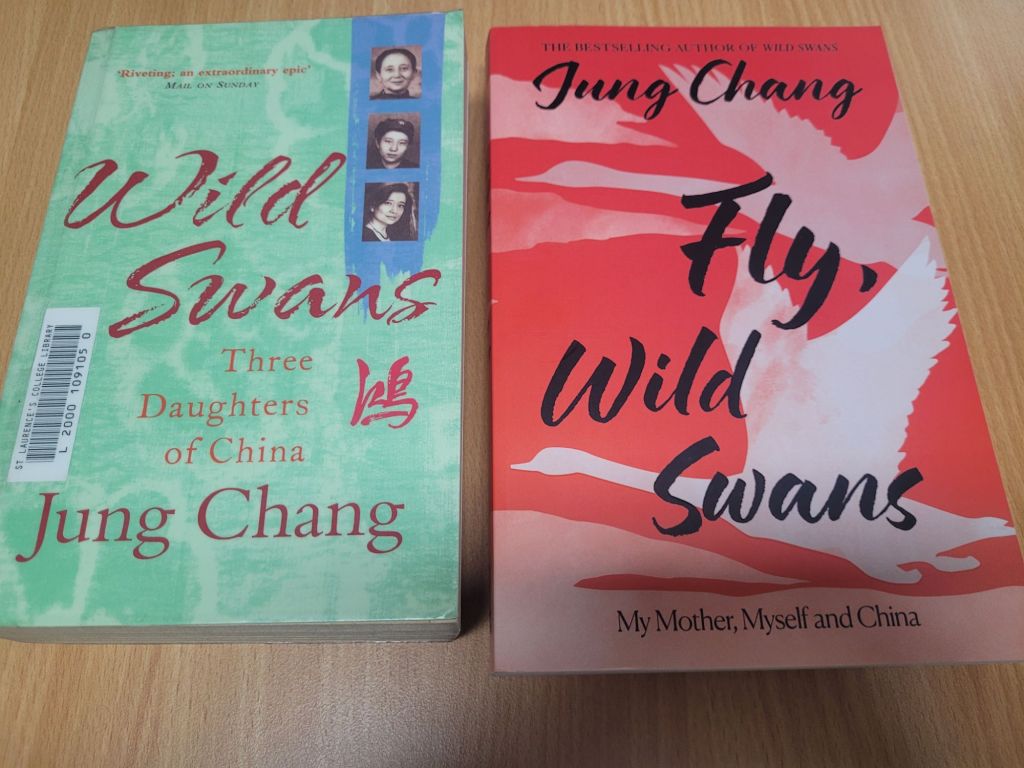
Jung Chang and her canons of literature

For students, these books are more than history. They are lessons in courage, in the power of memory and in the resilience of women who endured both familial duty and political oppression. Wild Swans explores the tension between tradition and rapid government‑driven progress. What was presented as modernisation often meant the destruction of customs and the breaking of family bonds as the Cultural Revolution tore families apart and demanded loyalty at the expense of tradition. Her story gave voice to three generations of women living through the upheavals of Mao’s China and this new work is written not only of her mother and her homeland, but of the burden of truth itself, and the cost of bearing witness when a nation would rather forget.

Fly Wild Swans reveals the aftermath of telling that truth, showing how a writer can be celebrated abroad yet silenced at home. Jung Chang turns her gaze inward, reflecting on the cost of telling that story and the way truth can estrange a writer from her homeland. Unlike Wild Swans, which focused on her mother and grandmother, this new work is more personal. It explores how writing Wild Swans changed her life, both opening doors in the West and closing them in China. There is a deep melancholy in her reflections on being unable to freely return to her birthplace. The success of Wild Swans brought her recognition abroad but estrangement at home. This tension between belonging and exclusion mirrors the broader story of women in history, who have often been celebrated for their endurance yet denied the freedom to define themselves.

I chose to buy Fly Wild Swans for my school library because it is a book that students should encounter, not only for its historical insight but also for its profound exploration of resilience, identity and the role of women in shaping and surviving history. Adding Fly Wild Swans to our collection ensures that the conversation continues, allowing readers to see how the legacy of truth‑telling reverberates across generations.

By placing both works on our shelves, we invite students to consider how politics, family and identity intersect, and how women across centuries have borne the burden of expectation while still finding ways to endure. These books remind us that literature is not static. It evolves, it questions and it carries forward the weight of generations.

Book Review – The Impossible Fortune

Richard Osman’s fifth novel in the Thursday Murder Club series, The Impossible Fortune, kicks off with a wedding—Joyce’s daughter Joanna is finally getting married. But the celebration takes a sharp turn when best man Nick announces that someone is trying to kill him. From that moment, the familiar crew of pensioners is drawn into yet another mystery, this time involving a hidden Bitcoin fortune, a car bombing, and a tangled web of suspects. It is nice to read a novel where the main characters are not in their flush of youth.  Gives someone who is quite frankly set in their middle age, some hope for age appropriate literature.

One of the first things that stood out to me was the large print. Compared to other novels I’ve read recently, this one is an absolute breeze to get through. It’s easy on the eyes and makes for a more relaxed reading experience, especially if you’re dipping in and out over a few days. The chapters are also cleverly titled by days of the week, which helps anchor the plot and gives a sense of progression—especially useful given the shifting perspectives between characters.

The emotional tone of the book is a little more poignant than previous instalments. Elizabeth is still reeling from the loss of her husband Stephen, and Osman handles her grief with sensitivity and depth. It adds a layer of introspection to the story without slowing down the pace. Ibrahim continues to be the group’s voice of reason, offering advice to friends and foes alike, including the ever-scheming Connie Johnson, who ironically saves Ron’s bacon eventually.

Joyce remains a delight, and her relationship with Joanna is given more attention here, adding warmth and humour to the narrative. The mystery itself is well-paced, with enough twists to keep you guessing but not so many that it becomes convoluted. Osman’s trademark wit is present throughout, and the characters continue to evolve in ways that feel authentic and earned.

I particularly enjoyed the plot line of Suzi, Jason, and Ron trying to evade the evil machinations of horrid wife beating Danny.  The perspective of Kendrick reminded me once again that the biggest victims of domestic violence are children and their lost childhoods.  Osman manages  rather cleverly to use Kendrick’s internal monologue to reveal his childhood trauma to the reader.

Overall, The Impossible Fortune is a satisfying continuation of the series—accessible, emotionally resonant, and full of charm. It’s not literature by any means but rather a pleasant holiday read as it requires very little cognitive processing.  However, it is a story about friendship, ageing, and the thrill of solving a good puzzle, all wrapped up in Osman’s signature style.

Book Review – Before the Coffee Gets Cold

What if you could travel back in time—but only for the duration of a single cup of coffee?

Toshikazu Kawaguchi’s Before the Coffee Gets Cold is a short novel, or novella if you wish to use that term that reminds you about regrets and how they can influence your actions. The novel is about a small, tucked-away Tokyo café where time travel is possible, but with strict rules. You can revisit the past, but you can’t change it. You must sit in a specific seat. And most importantly, you must return before your coffee gets cold. As a teacher and a parent, I am used to drinking cold coffee and how people actually drink warm coffee at work is a mystery to me!

Thank you Julia for the loan

The novel unfolds through four interconnected stories, each exploring themes of love, loss, regret, and reconciliation. The characters—a woman hoping to reconnect with a lover, a sister grieving her sibling, a mother longing for her child—are ordinary people facing emotionally charged moments. Kawaguchi’s writing is simple and understated, allowing the emotional depth of each story to shine through.

Unlike a novel I read recently (will not name names but ole Mate Danny), Kawaguchi uses provoking language and variated sentence structure to evoke emotion in the reader. This book, written with quiet clarity and emotional depth, avoids dramatic flourishes or unnecessary embellishments, instead offering a straightforward, sincere narrative that invites reflection without demanding attention.

If you could revisit a moment, not to change it, but to understand it better—would you?

Books like this remind us that stories have the power to shift our perspective. They can make us pause and reflect on our own choices, relationships, and regrets. Before the Coffee Gets Cold encourages readers to consider how they treat others, how they communicate, and what truly matters in the fleeting moments of everyday life. It’s a quiet nudge to be more present, more thoughtful, and more intentional.

Perfect for readers who enjoy reflective, character-driven stories, Before the Coffee Gets Cold is a gentle reminder that while we can’t rewrite the past, we can reshape how we carry it forward. It’s a book best read slowly, perhaps with a warm drink in hand and a quiet space to think.

Book Review – James by Percival Everett

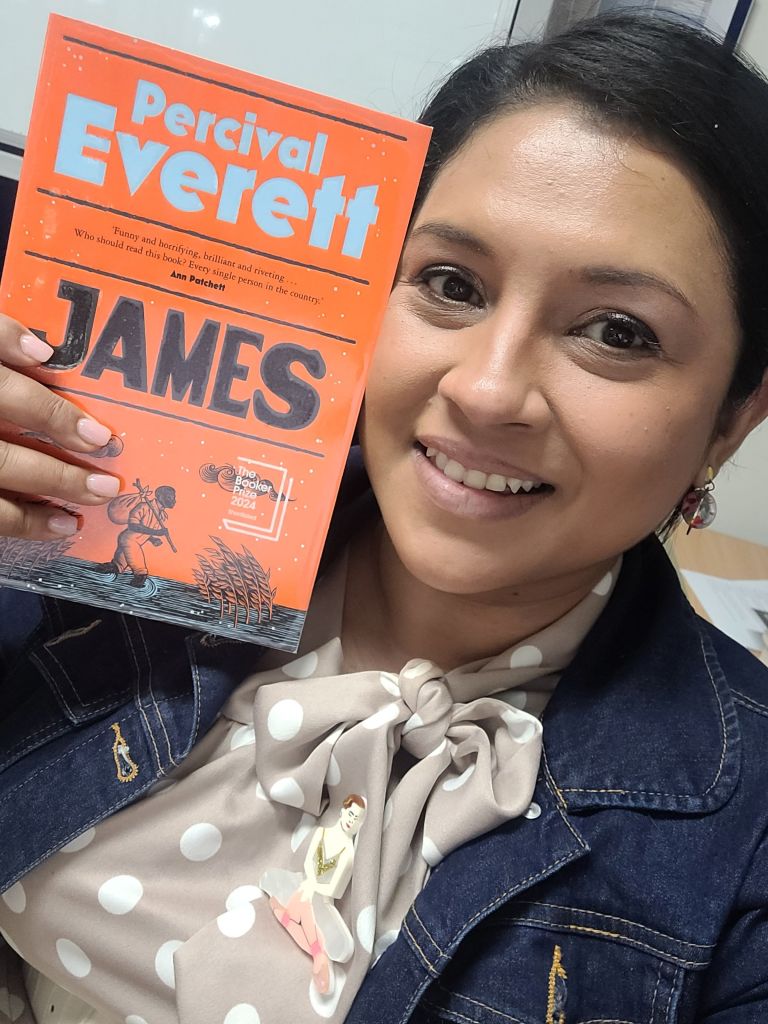
Percival Everett’s James is a profound act of literary reclamation. Shortlisted for the 2024 Booker Prize, the novel reimagines Adventures of Huckleberry Finn from the perspective of Jim—now James—a character whose voice was historically muffled by the hidden curriculum of Twain’s original novel. In Twain’s version, Jim is viewed as a sympathetic bystander, sidelined. His views filtered through Huck’s lens, his speech distorted to fit white expectations. The novel taught generations to empathise with Jim, but not to truly hear him. Because why would the slave Jim, have anything important to say?

Everett changes that. In James, the enslaved man is literate, philosophical, and quietly radical. He reads Locke and Voltaire, not as a literary flourish, but as a declaration of intellectual agency. He is articulate, intelligent and his perspicuity makes him a clear hero. James performs the dialect expected of him not because he lacks education, but because survival demands performance. Exposing his intelligence would have only led to his downfall. This inversion is powerful—it exposes the performative nature of race in literature and life and reminds us how often people of colour have been forced to speak in ways that comfort white audiences.

The novel also speaks to a broader truth: for much of literary history, the voices of people of colour have been excluded from the mainstream. The canon has long been shaped by a narrow lens—English-speaking, white, and often male. Even today, the global literature market remains dominated by English-language publishing and a WASP-centric worldview, making it difficult for diverse stories to break through. James stands out not only for its literary brilliance but for its bold challenge to that status quo. This is especially resonant in the current socio-political climate in the United States, where history itself is being rewritten based on political ideologies. School curricula are being reshaped, books banned, and narratives sanitised. In this context, Everett’s decision to retell Huckleberry Finn from James’s perspective is not just literary—it’s political.

It’s a reminder that storytelling is power, and that reclaiming voice is an act of resistance.

Everett’s prose is sharp, lyrical, and laced with irony. He doesn’t just give James a voice—he gives him agency, complexity, and dignity. James is not a corrective to Twain’s novel, but a conversation with it. It invites readers to reconsider not just the stories we read, but the structures that decide which stories are told, and which are silenced.

Book Review – The Secret of Secrets

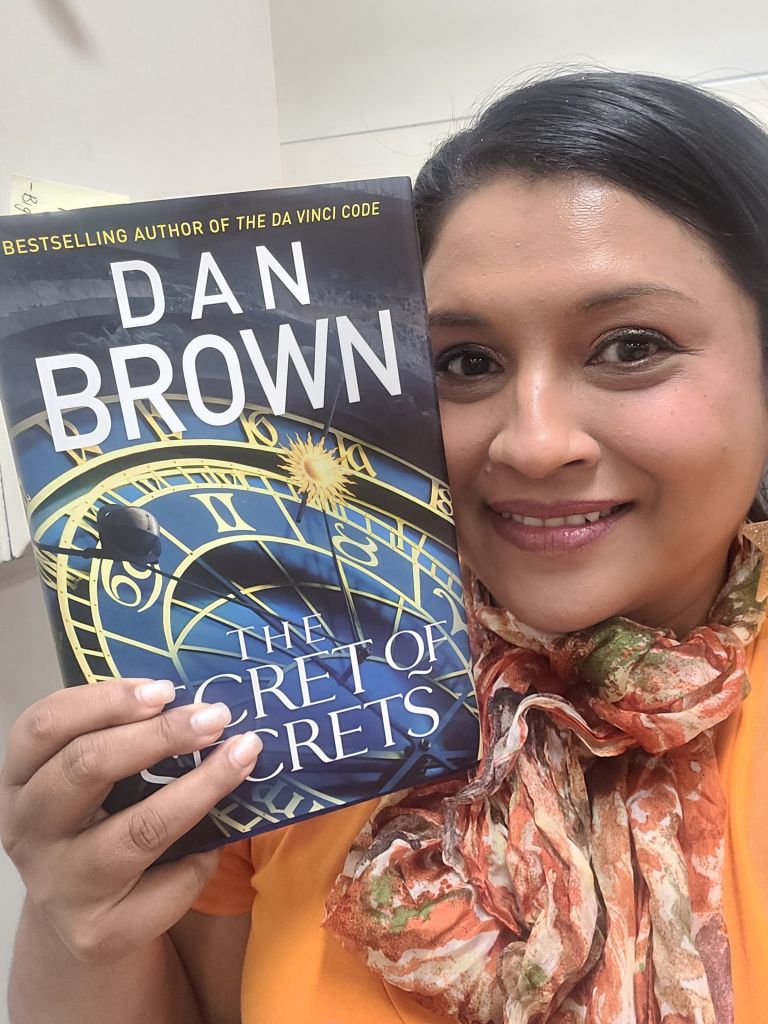
Once again… at 12.01 on the 9th of September, I downloaded the latest Dan Brown novel as I was eagerly awaiting the next installment of the Robert Langdon stories. But urgh…. I even switched to paperback at 5pm in hope that the feel of an actual book would improve the storyline. But alas, it did not. Now I am out $17 for the eBook and $30 for the physical copy with little to show for it.

Dan Brown’s The Secret of Secrets reads more like a glitzy façade than a compelling novel—an elaborate construct designed to dazzle, but lacking any real substance. It’s the literary equivalent of fake veneers: glossy, over-polished, and desperate to be taken seriously. While it promises a deep dive into consciousness and ancient mysteries, what it actually delivers is a recycled thriller dressed up in pseudo-intellectual jargon.

All Shine, No Substance

The story sees Robert Langdon once again caught up in a convoluted plot, this time involving noetic science and a missing manuscript that supposedly holds the key to unlocking human potential. But instead of genuine intrigue, we’re handed a tired formula: cryptic symbols, secret societies, and chase scenes that feel like they’ve been lifted straight from his earlier books or a poorly made James Bond (Yes Timothy Dalton, I am thinking of you!). The pacing is frantic, but not in a good way—it’s like being dragged through a trivia night hosted by someone who’s memorised the answers but lost the passion.

FYI – Noetic comes from the Greek for inner wisdom and intuition—none of which made it into this book. Honestly, I’ve had deeper thoughts staring at the Bunnings sausage sizzle queue.

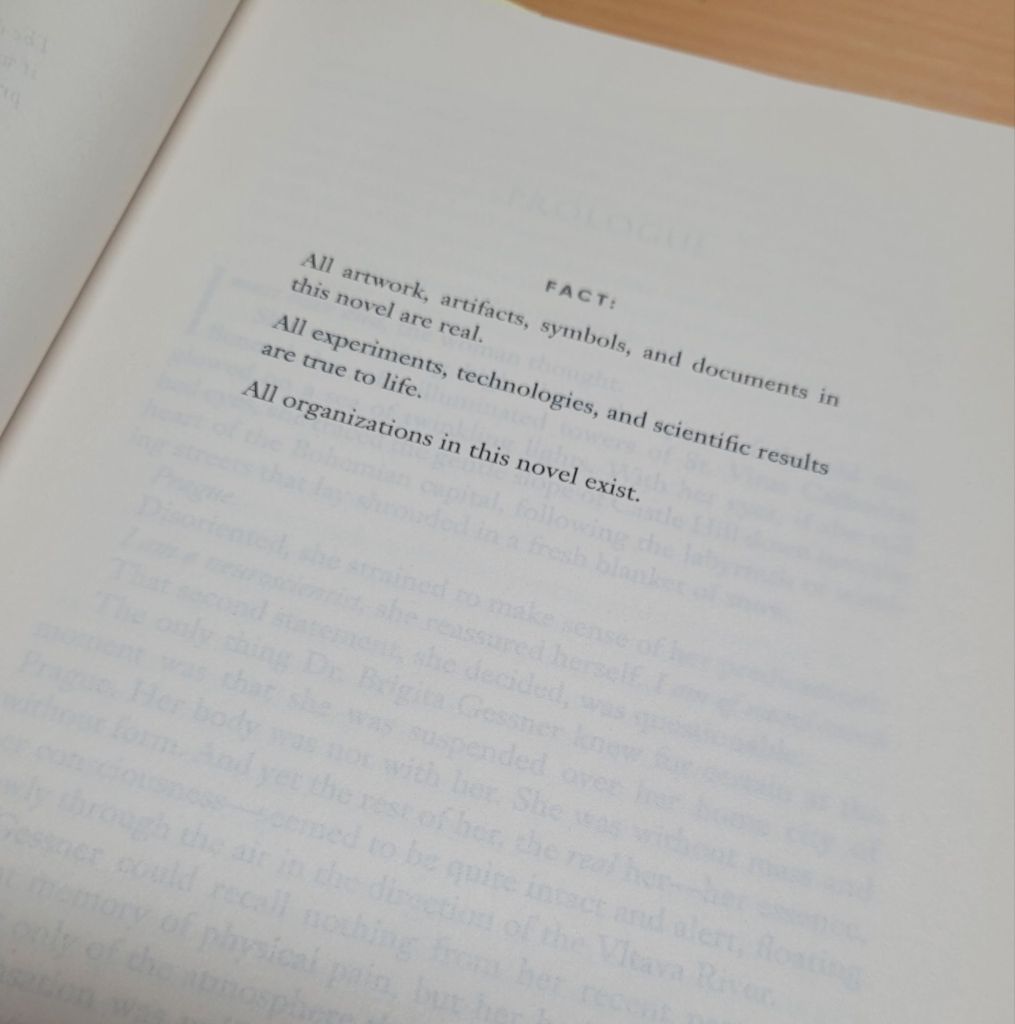
Prague, one of the novel’s main settings, should be a rich, gothic playground for mystery and intrigue. As one of the oldest cities in Europe, Brown could have leaned into its heritage and legend in a far more effective manner like he did in Angels and Demons. But Brown’s use of it in this novel feels opportunistic. The city’s legends and architecture are reduced to mere backdrop, with little emotional weight or narrative depth. It’s all surface-level spectacle, with historical references thrown in like confetti to distract from the lack of character development.

The book’s central theme—consciousness as a cosmic force—could have been fascinating. Instead, it’s treated like a buzzword, tossed around without any real exploration. The science is muddled (and stupid), the philosophy is shallow, and the dialogue often reads like a motivational seminar gone off the rails. Rather than provoking thought, it provoked a significant number of eye-rolls and venting.

Pretentious much? A bit of pomposity from Ole Mate Danny Boy.

Even Langdon, once a likeable and cerebral lead, feels like a parody of himself. His quirks—like the ever-present Mickey Mouse watch—now seem forced, and his reactions to danger border on slapstick. The villains are cartoonish, the twists are predictable, and the stakes never feel authentic.

It’s a far fall from Brown’s earlier works like Angels & Demons and The Da Vinci Code, which—while not perfect—had a sense of urgency and originality that kept readers hooked. His last truly engaging novel was Inferno, which at least attempted to grapple with real-world ethical dilemmas and global stakes. Since then, it feels like Brown has been chasing the shadow of his own success, layering spectacle over substance in hopes of recapturing the magic.

And to be fair, The Secret of Secrets had a tough benchmark to meet—Galbraith’s Hallmarked Man has officially been my best read this year. Compared to that, Brown’s latest effort feels like a pale imitation of depth and drama.

In the end, The Secret of Secrets tries to be profound but lands as pretentious. It’s a book that wants to be taken seriously, but beneath the polished surface, there’s not much going on. If you’re after a thriller that genuinely challenges your thinking, this one might leave you feeling short-changed—like you’ve been sold wisdom in a shiny wrapper, only to find it’s all gloss and no grit.

Book Review – Hangman

Hangman by Jack Heath, published in 2018, marks his first foray into adult fiction after a successful career writing young adult novels. Known for fast-paced, clever storytelling in the YA space, Heath takes a bold leap into darker territory with this gripping thriller—and he doesn’t hold back.

The novel is centred around Timothy Blake, a consultant for the FBI with a disturbingly dark secret: he’s a cannibal. Heath crafts a character who is both brilliant and deeply unsettling, challenging readers to grapple with their own sense of right and wrong. One could argue that the end justifies the means.  Others would say that the dignity of a person should always be at the forefront of any decision making.

The novel leans heavily into thriller territory, with relentless tension and a breakneck pace. However, it’s also more graphic than many traditional mysteries, featuring scenes that some readers may find unsettling or overly gory. If you’re sensitive to violence or visceral detail, this one might push your limits.

Despite the intensity, Hangman stands out for its originality and daring. It’s a bold start to a series that explores the darker edges of justice and human nature. If you can stomach the gore, it’s a compelling read that redefines what a crime thriller can be.

Chai, Cinnamon, and Childhood Summers: A Whimsical Wander Through Chai Time at Cinnamon Gardens

“The stories we tell are the temples we build. They must not be erased.”

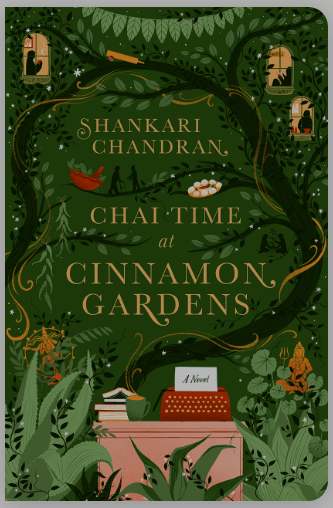
Some books feel like a warm hug. Others feel like a cup of spiced masala chai, comforting, layered, and just a little bit fiery. Shankari Chandran’s Chai Time at Cinnamon Gardens is both. It’s the kind of novel that wraps itself around your heart and whispers stories you didn’t know you needed to hear.

And for me, it was more than just a read. It was a nostalgic journey. You see, I used to spend my summer holidays in Sri Lanka as a child. The scent of cinnamon in the air, the sound of monsoon rain on tin roofs, the laughter over mangoes and mischief. It’s all etched into my memory. So when I opened this book, I wasn’t just reading. I was time-traveling.

Cinnamon Gardens: A Home Full of Stories

Set in a fictional retirement home in Western Sydney, Cinnamon Gardens is run by Shiva and Maya, Tamil immigrants who’ve built a sanctuary for elders from all walks of life. But this isn’t your average aged care facility. It’s a place where stories simmer like pots of curry on the stove. A story that is rich, complex, and full of spice.

When a racially charged attack shakes the community, Maya is forced to confront her past as a survivor of the Sri Lankan civil war. The novel dances between timelines of Sri Lanka’s turbulent history and Sydney’s multicultural present. The dance revealing how trauma, memory, and resilience are passed down like heirlooms.

Each resident has a tale to tell, and Chandran listens with compassion and clarity. It’s a reminder that behind every quiet face is a thunderstorm of experience.

Sydney’s West – A melting pot.

Image from article by Handley (2022).

Let’s talk about Western Sydney, shall we? If you’ve never been, you’re missing out on the most eclectic, electric, and downright delicious food scene in Australia. As Handley (2022) from the ABC pointed out the change that is happening in Western Sydney. One street might offer Sri Lankan hoppers, Lebanese falafel, Vietnamese pho, and Congolese grilled fish, all within walking distance.

Chandran captures this beautifully. The setting isn’t just a backdrop. Instead it’s a character in itself. Western Sydney is where cultures collide, stories unfold, and chai is served with a side of soul.

Why This Book Should Be in Every Senior English Syllabus.

If I were a senior English teacher (and let’s be honest, I’d probably assign mango-eating as homework), I’d put this book front and center in any senior English or EALD classroom. Chai Time at Cinnamon Gardens aligns beautifully with the QCAA English and EALD syllabuses, especially in its exploration of key concepts like identity, cultural perspectives, and representation. The novel’s themes of migration, intergenerational trauma, systemic racism, and the politics of memory offer rich terrain for unpacking how texts shape and reflect social and cultural contexts. Chandran’s use of narrative techniques such as flashbacks, multiple perspectives, and lyrical prose supports deep textual analysis and encourages students to consider how language constructs meaning. Most importantly, the book invites critical and creative responses to the guiding questions of the syllabus: Who gets to tell history? How do we heal through storytelling? It’s a novel that doesn’t just teach a student. It invites them to experience the journey themselves as it asks students to listen, reflect, and maybe even share their own stories, making it a perfect companion for units on perspectives and voices, narratives that shape identity, or texts that challenge social norms.

Reading Chai Time at Cinnamon Gardens felt like sitting down with an old friend over tea. One who’s lived a thousand lives and isn’t afraid to tell you the truth. It reminded me of my childhood summers in Sri Lanka, of the power of memory, and of the quiet strength found in community.

So if you’re looking for a book that’s bold, beautiful, and brimming with heart. This is it. Just don’t forget to brew a cup of chai before you dive in. Trust me, it pairs perfectly.

Rating: 4 out of 5.

Rating

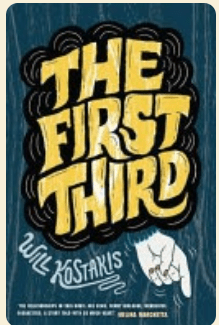
Grandparents, Migration & The First Third: A Love Letter Across Generations.

Life is made up of three parts: in The First Third, you’re embarrassed by your family; in the second, you make a family of your own; and in the end, you just embarrass the family you’ve made.

The First Third by Will Kostakis.

This year’s Grandparents’ Day hit differently. I now have only one of my four grandparents still with me. I was lucky—lucky to have strong, vivid memories of each of them, and even luckier that my children got to spend time with their great-grandparents. That kind of generational overlap feels rare and sacred, like a living bridge between past and present. And somehow, all of this came rushing back when I remembered reading The First Third by Will Kostakis—a book that, like a well-wrapped souvlaki, is stuffed with heart, humour, and a generous helping of cultural chaos.

It reminded me strongly of my maternal grandmother. A force to be reckoned with. Even now, in her wheelchair, she manages to orchestrate family life like a seasoned general—issuing orders with a raised eyebrow, summoning grandchildren with a single beckoning finger, and somehow getting everyone to do her bidding without ever raising her voice. Her presence is magnetic, her will unshakable, and her love—though sometimes disguised as criticism—is the glue that holds generations together.

📖 The First Third: A Souvlaki of Feels

Will Kostakis’ The First Third is a YA gem that manages to be hilarious, heartfelt, and culturally rich without ever feeling preachy. It follows Billy Tsiolkas, a Greek-Australian teen whose grandmother hands him a “bucket list” of family fixes to complete before she dies. No pressure, right?

Billy’s voice is sharp, self-deprecating, and painfully relatable. He’s caught between being a good grandson and a confused teenager, between Greek traditions and Aussie adolescence. The book is a masterclass in balancing humor with emotional depth—like when you laugh so hard you forget you’re crying.

Why It Resonates:

  • The family dynamics are loud, loving, and layered—just like mine.
  • The cultural identity struggle is real: trying to be two things at once and feeling like you’re failing at both.
  • The grandmother character is the emotional anchor, reminding us that love often comes wrapped in unsolicited advice and home-cooked meals.

👵 My Grandmother: The Matriarch in Motion

Reading Billy’s story brought back some very vivid memories of my own grandmother. My Nana didn’t hand me a bucket list, but she did hand me wisdom—sometimes in words, sometimes in silence, mostly in food. And she did it all with the commanding presence of someone who never needed to stand to be heard.

She’s the kind of woman who could host a feast, direct the seating arrangement, critique the seasoning, and still find time to remind you that your shirt needs ironing. Her strength isn’t just physical—it’s woven into the fabric of our family.

🌍 A Migration of Love

Unlike many who migrated in their youth, my grandmother moved overseas in her seventies. She gave up everything and everyone she knew—her home, her lifelong friends, her familiar rhythms—so she could continue supporting her children and grandchildren. It wasn’t a move for opportunity or adventure. It was a move for love.

What She Gave Up—and What She Gave Us:

  • Her homeland: Leaving behind the place where she’d spent most of her life.
  • Her community: Saying goodbye to friends she’d known for decades.
  • Her independence: Adapting to a new country, new customs, and a new pace of life.

And yet, she never stopped giving. She offered good advice (whether you asked for it or not), gentle admonishments (often not so gentle), and an abundance of love. Her presence became the emotional compass of our family—steady, wise, and always just a little bit intimidating.

She didn’t just migrate; she transformed our home into a sanctuary of tradition, resilience, and unconditional care.

💌 A Tribute Across Pages and Generations

The First Third isn’t just a book—it’s a tribute. To grandmothers who held families together with their bare hands. To those who sacrificed comfort for connection. To the messy, beautiful process of growing up between cultures and generations.

So this Grandparents’ Day, I’m not just remembering my grandmother—I’m honouring her. Through stories, through laughter, through the parts of her that live on in me.

And maybe, just maybe, that’s the final third: carrying forward the love that built us.