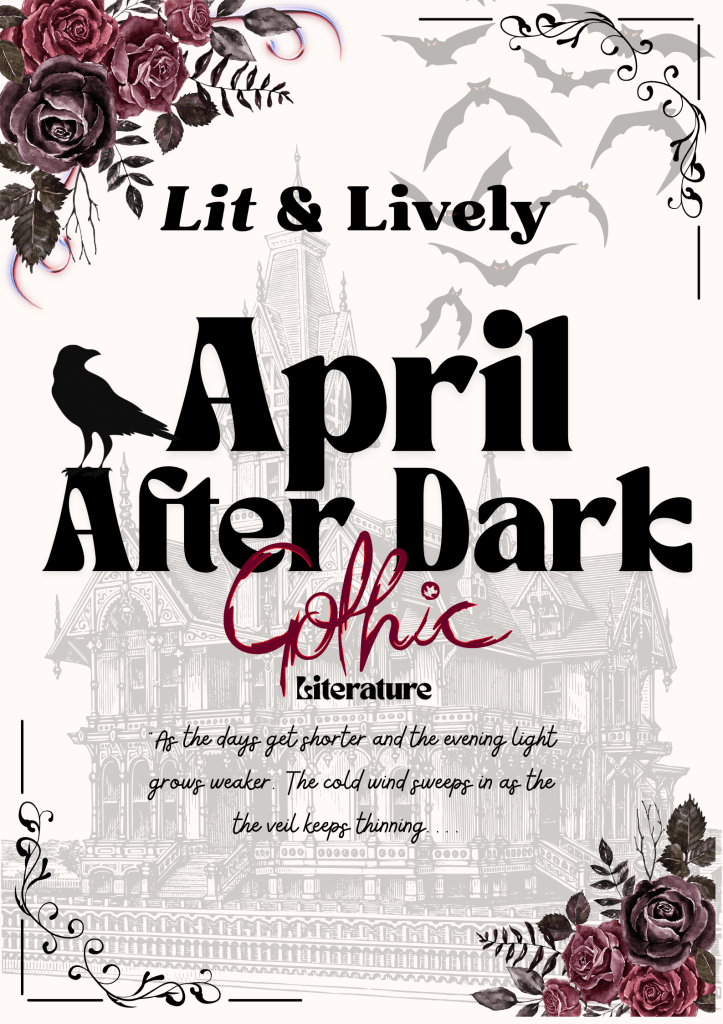
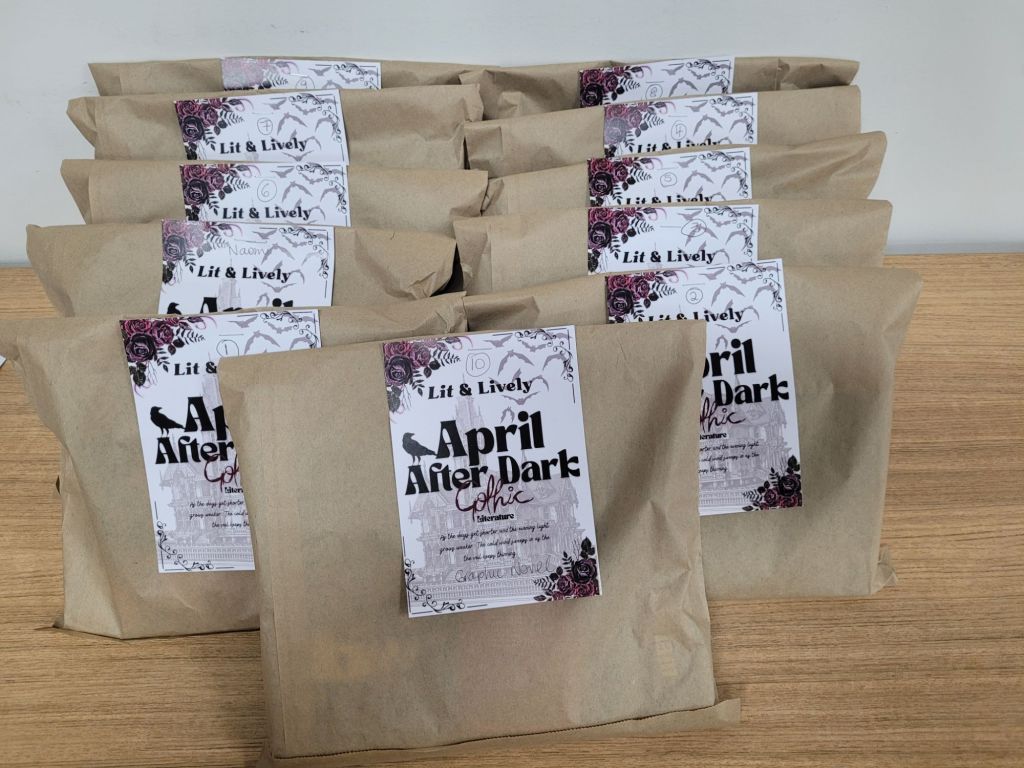
Lit & Lively, the school’s staff book club, is embracing the shadows this month with a gothic themed gathering titled April After Dark. This month’s meeting is centred around gothic literature, inviting staff to explore darker moods, mysterious settings, and stories that linger long after the final page. The format is welcoming and flexible. Staff read one shared text together, giving everyone a common starting point for discussion, before branching out into a range of gothic titles from the library collection. Each participant received a carefully prepared book pack, lovingly packed with the novels, a tea bag, and a chocolate biscuit, turning the reading experience into a small but meaningful indulgence during the autumn break.
April After Dark has also been a practical and creative way of using class sets that usually sit out of season. By repurposing these texts for staff reading, the library is reintroducing overlooked titles and highlighting how versatile the collection can be. Many participants have discovered books and genres they might never have explored without a themed invitation. It also reflects an important part of the Teacher Librarian role, which is not only to support students, but to guide and encourage staff in their own reading journeys and engagement with literature.
Through Lit & Lively, staff are gaining a deeper understanding of the breadth and depth of the school’s collection and reinforces the library as more than a curriculum support space. It is a place for curiosity, enjoyment, and reading for pleasure, modelling the reading culture we encourage in students.
There is also a strong wellbeing element. Reading for pleasure can act as a form of bibliotherapy, offering comfort, escape, and emotional renewal. Teachers often have little opportunity to read during the term, and the autumn break provides a rare pause to do so. Finally, Lit & Lively celebrates the social side of reading. Book clubs create space for conversation, shared reflection, and connection, reminding us that reading is often richest when it is shared.
As April grows darker, April After Dark reminds us that reading together can be restorative, enriching, and deeply human. Lit & Lively continues to affirm that teachers deserve time to read, reflect, and reconnect too.
Reading is widely recognised as a critical skill for young people, supporting the development of strong cognition, mental health and empathy. A growing body of research consistently shows that recreational reading in particular is linked with academic achievement, improved emotional regulation and more nuanced interpersonal understanding. Building a culture of reading, therefore, is not a peripheral task for schools. It lies at the heart of nurturing thoughtful, resilient and socially capable young people.
Yet despite these well established benefits, many children and teenagers do not naturally turn to teachers or teacher librarians for book recommendations (Merga, 2012). To be blunt, young people do not necessarily see adults as cool. Recommendations from teachers, no matter how well intentioned, may lack what adolescents consider to be genuine social credibility. The street cred factor is real, and it is powerful.
Further evidence comes from the work of Dr Margaret Merga, a well respected Australian researcher in literacy and reading engagement. In a mixed methods program examining the influence of social attitudes on reading behaviours, Merga (2012) noted that “perceived friends’ attitudes can have a more significant influence on boys than girls, [therefore] making books socially acceptable for boys should be a priority for educators.” This underscores the idea that book talk among peers is not merely casual chit chat. It is a mechanism of social permission. When books gain traction within a peer group, they gain legitimacy and ethos (Merga, 2012; Merga 2014).
Australia Reads similarly emphasises the importance of social engagement in building sustainable reading habits. Its principles highlight that young people need “positive social reading experiences” and opportunities to “recommend, discuss and share books and other texts in ways that are personally enjoyable and relevant”. In other words, reading thrives when it is relational.
At Lauries, we see these principles in action every day. While staff recommendations certainly have their place, it is peer driven reading culture that most reliably sparks curiosity, especially among reluctant readers. This is why we actively encourage students to reflect on and review the books they read. Their voices matter. Their opinions shape the reading landscape for others. The broader research base supports this emphasis on social recommendation and discussion as a driver of voluntary reading.
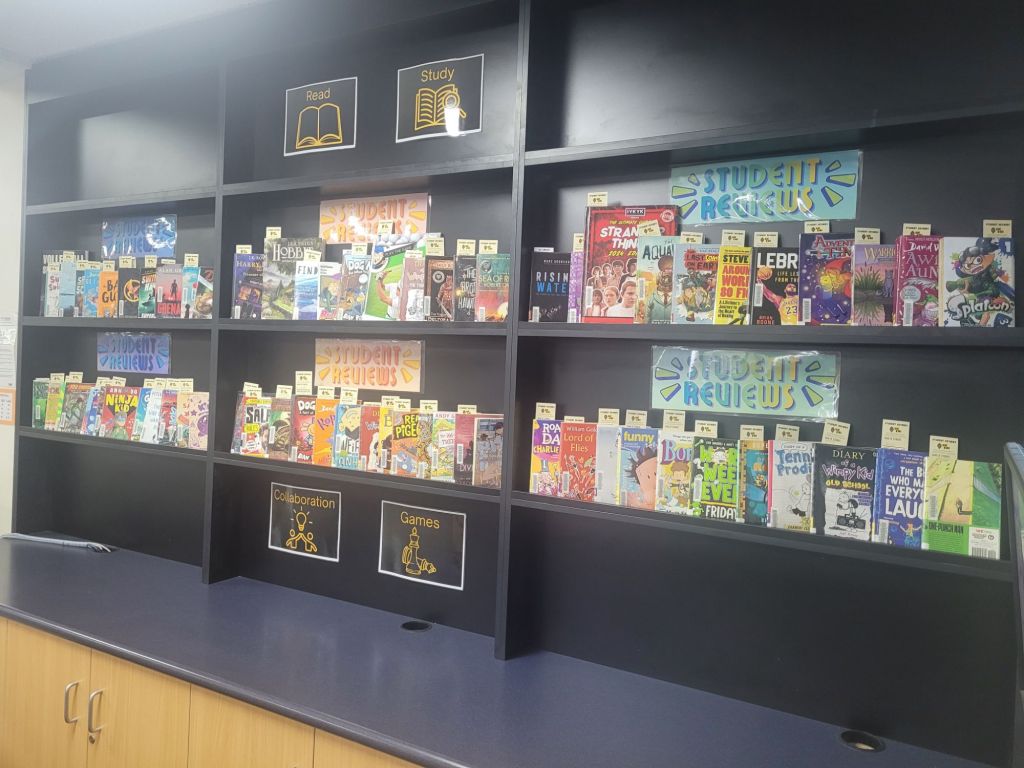
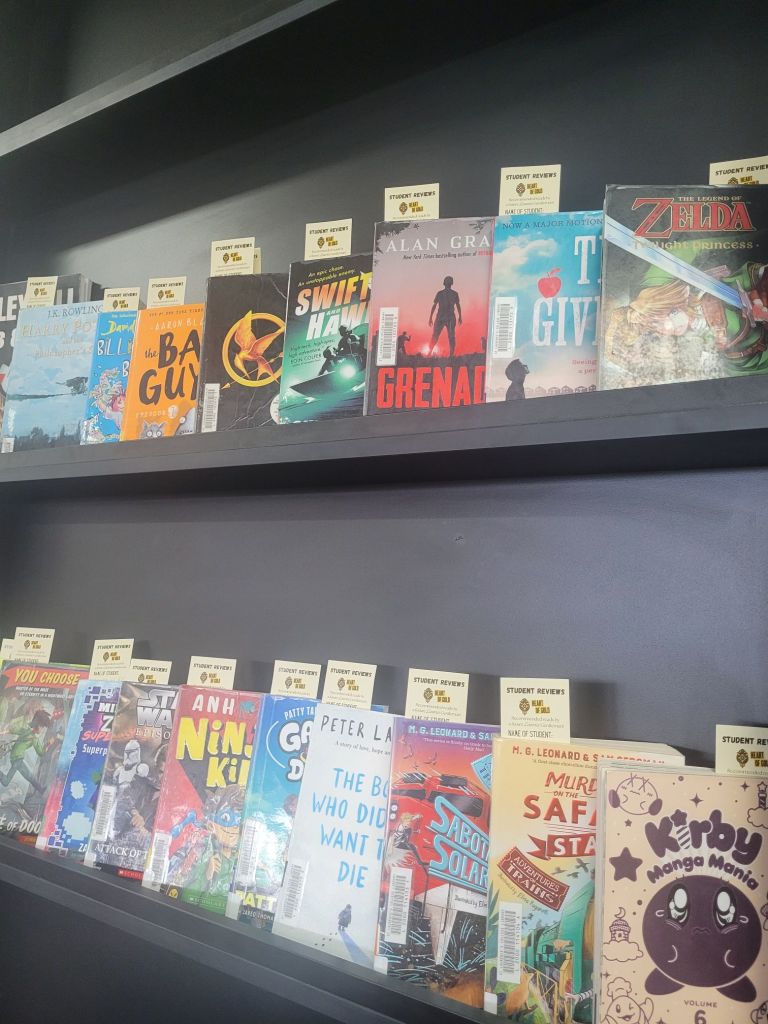
A visible expression of this culture is our wall of Lauries Lads Lit Picks. This growing collection showcases books that our students have personally endorsed. We often see reluctant readers wandering over, flicking through the displayed reviews until they discover a familiar name. That moment of recognition is powerful. When a friend or respected peer has enjoyed a book, the barrier to entry drops dramatically. The book becomes not just a text but a shared experience waiting to happen. The pattern aligns with evidence that peer attitudes and friend recommendations play an outsized role in adolescent book choice.
Cultivating a socially rich reading environment therefore requires more than simply providing access to books. It involves elevating student voice, valuing peer influence and creating spaces where reading is openly shared, discussed and celebrated. The evidence is unequivocal. When young people are given opportunities to recommend books to one another, their engagement deepens and their confidence as readers grows. Reading becomes woven not only into their academic lives but into their friendships, identities and everyday conversations.
By continuing to champion peer driven discovery, we support our students not only to read more but to read with curiosity, connection and purpose. That is a foundation that benefits them far beyond the walls of the library
Rutherford, L., Singleton, A., Reddan, B., Johanson, K., & Dezuanni, M. (2024). Discovering a Good Read: Exploring Book Discovery and Reading for Pleasure Among Australian Teens. Deakin University. https://eprints.qut.edu.au/247629/[eprints.qut.edu.au]
History is often presented as a clean line of dates and deeds, with women’s voices muted or missing. Yet when I read historical fiction, I hear those voices rise. It is in the imagined conversations, the textured inner lives and the careful stitching of research to narrative that women like Eleanor of Aquitaine step out from the margins and take their rightful place at the centre of the story. Historical fiction does not replace the archive. It complements it. It gives shape to the silences and lets Her story speak.
Eleanor of Aquitaine has captivated me for years. She was queen of France, then queen of England, duchess in her own right, patron of culture and mother to kings. Even through the writings of men who often judged powerful women harshly, she still appears intelligent, beautiful, strong of will and frequently labelled as wilful. That tension between what the record says and what it leaves unsaid is exactly where historical fiction does its best work. Through fiction, we can inhabit the rooms where the clerks did not sit, hear the words no chronicler bothered to write, and feel the force of a woman who shaped her world.
Because I am fascinated by Eleanor, I have read widely across authors who approach her life from different angles over my last summer holidays. Each one balances fact and imagination to reveal a fuller portrait. In their hands, Eleanor becomes more than a figure on a timeline. She becomes a person, with agency, complexity and heart. Reading these books has reminded me again and again that history is not only his story. It is also her story, and it deserves to be heard.
Why Historical Fiction Lets Her Story Speak
Historical fiction gives us the space to ask human questions that sources do not answer. What did courage feel like to a woman whose decisions could alter a dynasty. How did she manage loyalty and love in a world that traded both for advantage. What language did she use for her ambitions, her fears and her hopes. Novelists use careful research and responsible imagination to explore these questions. They do not invent the past. They interpret it with empathy, so that readers can understand lives very different from our own.
For women, this matters deeply. The written record often reflects the priorities of men who held the pen. Fiction can step into the gaps and consider the private sphere where much of women’s labour and influence took place. It can restore friendships, mentorships, rivalries and choices that formal chronicles overlook. Reading such stories changes how we see the past. It prompts us to look again at the sources, to notice what was omitted and to seek out voices that were ignored.
This is why I keep returning to Eleanor of Aquitaine through fiction as well as history. Each book adds texture to the tapestry. Each author brings a new hue to the same thread. Together they create a portrait that feels whole. In listening to these imagined yet carefully grounded voices, we are not abandoning truth. We are widening it. We are acknowledging that history is a chorus, and that Her story deserves to sing just as clearly.
Her life reminds us that the past belongs to all of us. Reading and sharing these novels is one way to make sure that our understanding of history includes the women who shaped it. His story has been told for a long time. It is time for Her story to be heard alongside it, fully and without apology.
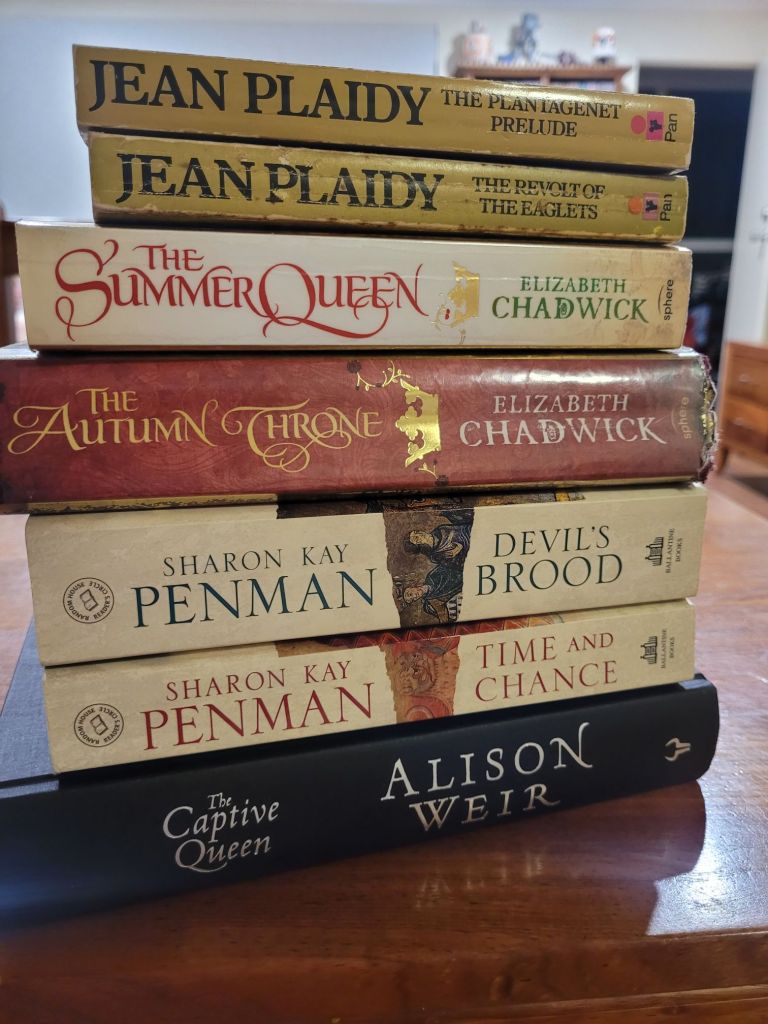
So if you would like to know a bit about Her-Story, here are some of the amazing authors who wrote about Eleanor:
Books by Elizabeth Chadwick featuring Eleanor of Aquitaine The Summer Queen The Winter Crown The Autumn Throne
Books by Jean Plaidy featuring Eleanor of Aquitaine The Courts of Love Eleanor of Aquitaine: The Young Queen Eleanor of Aquitaine: The Rebel Queen
Books by Sharon Penman featuring Eleanor of Aquitaine When Christ and His Saints Slept Time and Chance Devil’s Brood Lionheart A King’s Ransom
Books by Alison Weir featuring Eleanor of Aquitaine Eleanor of Aquitaine: By the Wrath of God, Queen of England (non fiction) Captive Queen (fiction)
Language and learning are inextricably linked because the latter is hard to achieve without knowledge of the former. Language consists of words used in a structural and conventional way which is the principal method or system of communication communities use to engage with each other and the world (Britannica, 2026; Winch et al., 2020, p. 12). Language can be spoken, written or gestural and its effective use is a fundamental principle underlying a person’s ability to actively engage with their society. Therefore, by this definition and in conjunction with the cognitive model of reading, learning, and literacy by extension, can only occur if a person is competent in using language in its different fields, tenors and modes (Winch et al., 2020, p. 13). The role of the teacher librarian and the library in literacy development is to support language, literacy and learning across the curriculum through the broadening and deepening of student vocabulary by improving semantic understanding of key vocabulary and building background knowledge with quality resources.
Winch et al., (2020) point out that language is an identifiable way for cultures to share meaning with each other and to achieve a common purpose and as such is influenced by context. One subset of language influenced in this way is vocabulary because it is the knowledge of words that exist in a particular language or subject and or the total volume of words known by a particular person (Cambridge, 2026). Therefore it can be inferred that a person’s breadth and depth of vocabulary knowledge is based upon their experience and exposure to a variety of texts (Winch et al., 2020; Lewis & Strong, 2021, p5). A person that reads or is exposed to a wide range of vocabulary through various genres will be highly receptive to new terminology. However, that does not translate into an expressive capacity unless they are able to practice it sufficiently.
Vocabulary can also be perceived to be a bridge between the written and spoken modalities because readers need to be efficacious in their ability to predict and build mental images from the text (Winch et al., 2020, p. 20). This perception is consistent with the constructivist approach to reading because text comprehension is the result of a reader’s ability to combine what is known, with what is presented in the text in order to arrive at new knowledge and understanding (Graves et al., 2019; Winch et al., 2020, p.91; Spence & Mitra, 2023). Competent readers have the additional advantage when it comes to informational texts because they are able to determine the genre and purpose of a text by making predictions based on their knowledge of text structure and the language or vocabulary within the text.
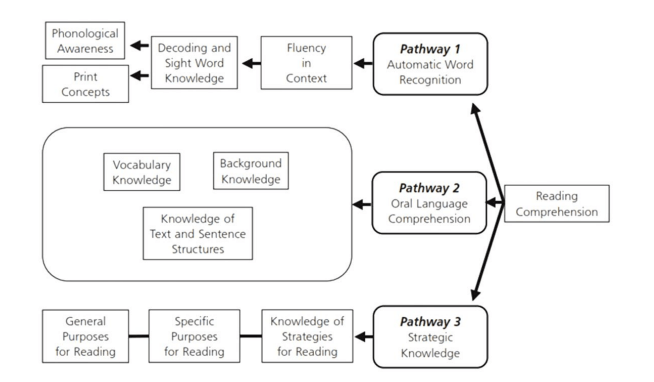
McKenna & Stahl, 2009 – Cognitive Model of Reading.
The cognitive model of reading is centred on a reader’s ability to comprehend language because vocabulary acts like a conduit between the working and long term memory impacting ability to effectively comprehend a text (Graves et al., 2019; McKenna & Stahl, 2009; Winch et al., 2020, p82; Spence & Mitra, 2023). A person with a high vocabulary is more likely to have increased success in reading comprehension because their capacity to understand and connect to the text is greater than someone with a limited vocabulary (Winch et al., 2020, p21). This in turn fuels their ability and capacity to read more, further increasing their capacity. This efficacy, as Lewis & Strong (2021) point out, confirms the commonly known Matthews effect as students learn 15% of new words in contextual reading and that they need greater than twelve encounters with a particular term or phrase to even think of including it into their knowledge schemas. However, even confident readers may be confronted when exposed to factual or informative texts because of the leap in cognition required as each discipline will have their own structure, grammar and specialised vocabulary (Spence & Mitra, 2023). This means both experienced and inexperienced readers will require explicit instruction in semantic knowledge to effectively decode and encode text of increasing complexity (Winch et al., 2020, p.110; Lewis & Strong, 2021, p.7).
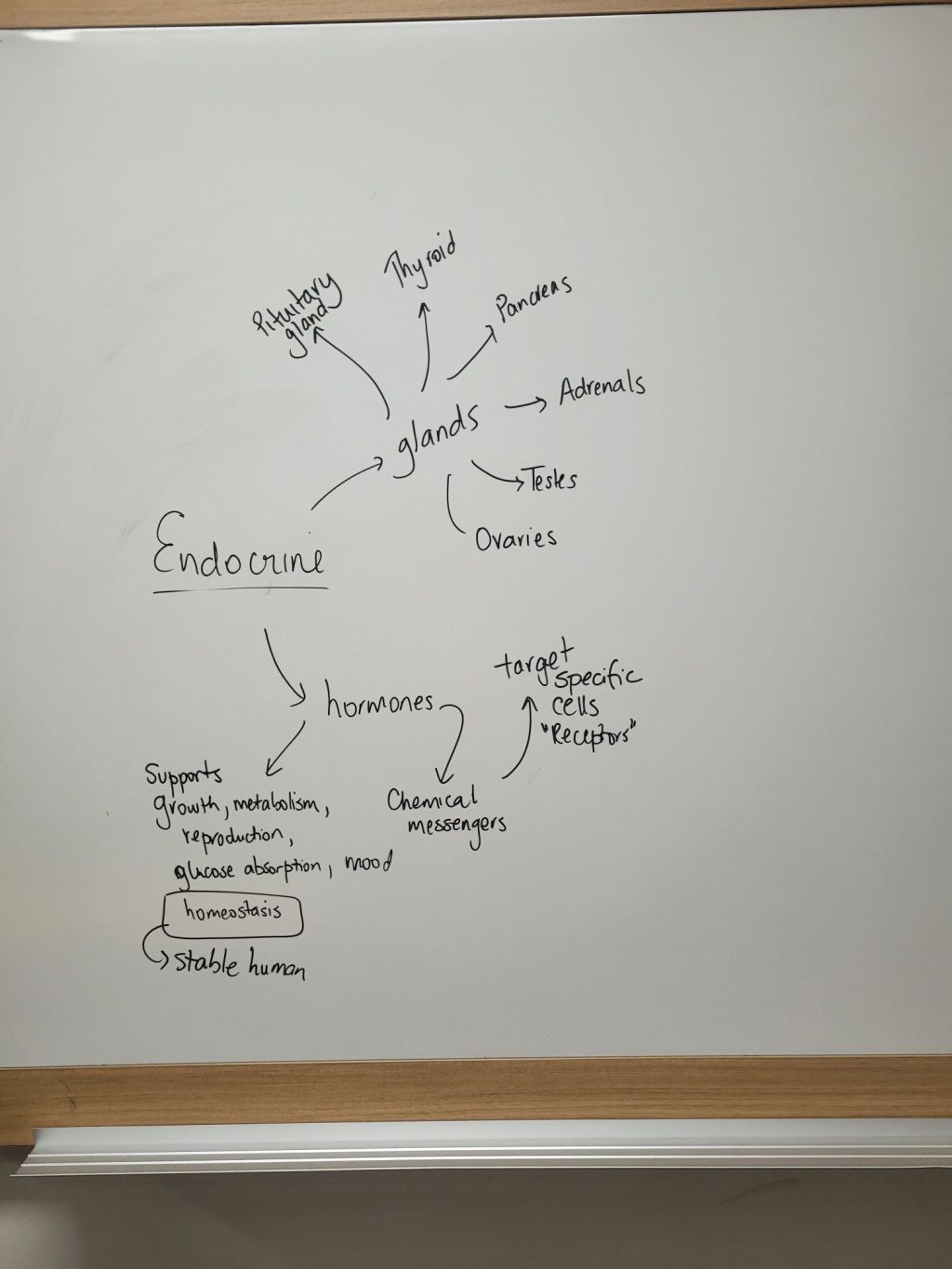
Year 9 Science – Semantic mapping
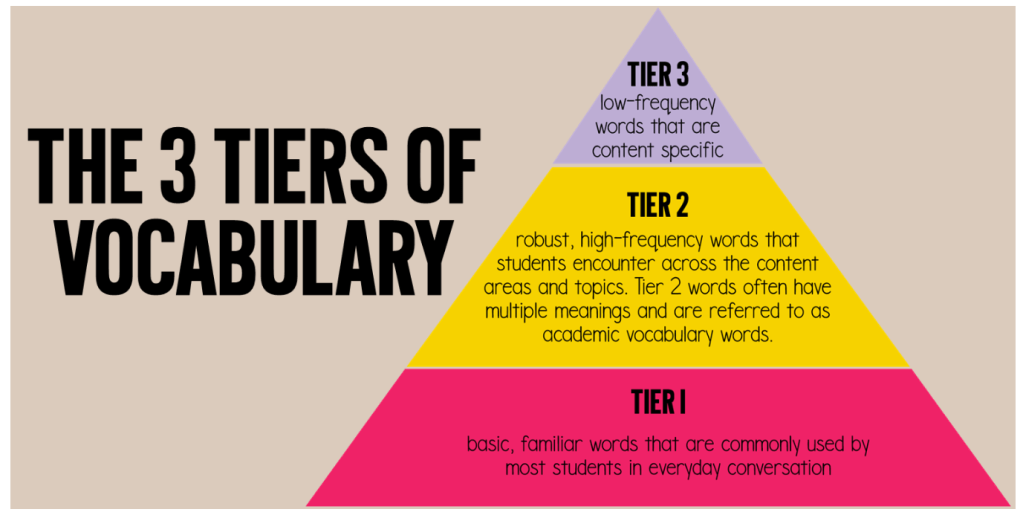
Reading comprehension skills can be supported across the curriculum by increasing a student’s semantic knowledge and background understanding of a topic prior to close reading (Lewis & Strong, 2021). Several pedagogical practices including semantic mapping of tier three vocabulary, the use of text sets to bolster background knowledge as well as explicit modelling of reading strategies can be used effectively to improve reading comprehension and build student capacity (Lewis & Strong, 2021; Spence & Mitra, 2023) However, caution must be used when deciding what text to use in teaching and learning because the use of text can be a limiting factor if infantile resources are used as it limits student capability and capacity (Winch et al., 2020, p114, Lewis & Strong, 2021, pg. 10). Spence & Mitra (2023) point out that it is preferable to scaffold students to complex texts than to provide resources that are age and stage inappropriate.
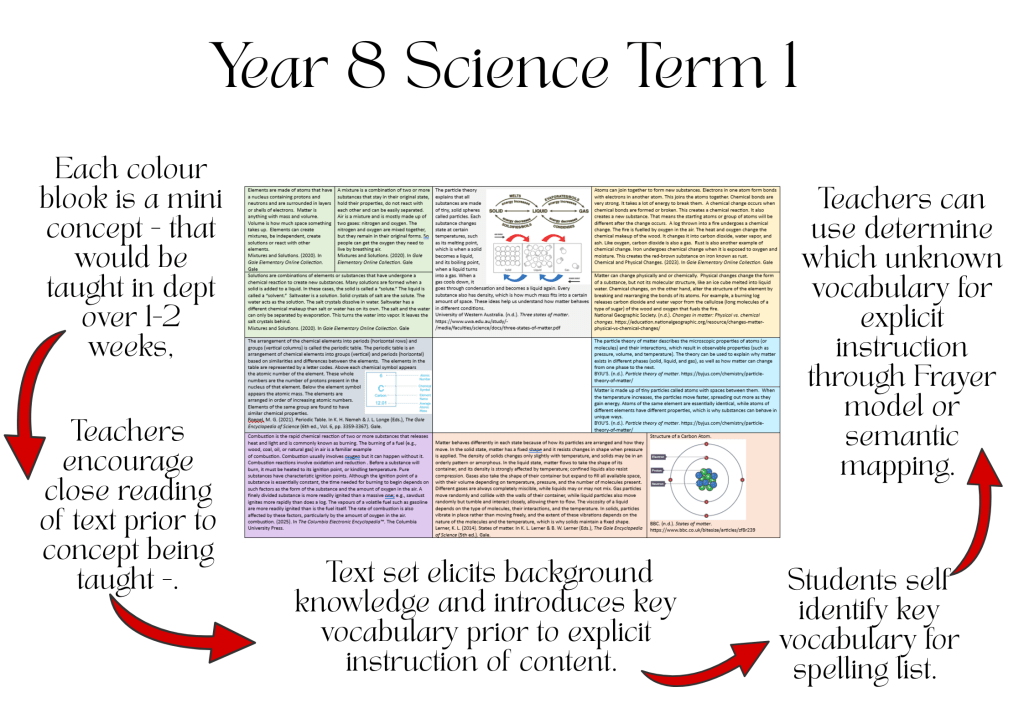
Text sets are an effective pedagogical strategy to improve vocabulary in a classroom because they encourage students to interact with a wide range of quality, genre specific texts throughout a unit of work. These text sets were specifically curated to improve vocabulary and by extension, reading comprehension. Students were able to engage with short extracts of text that have been appropriately levelled prior to the unit commencing and then were able to re-engage with this text intermittently through the term. This ‘dipping’ in and out of the content allowed students to activate their prior knowledge as well as exposed them to tier two and three terminologies at smaller and more regular intervals. This intermittent exposure is ideal for spaced retrieval practice as teachers are able to regularly gauge the level of background knowledge and understanding the students already have on the topic and as well check for understanding. Furthermore, these vocabulary text sets can be effectively used as text exemplars because they can be formatted to meet the disciplinary genre requirements.
The teacher librarian and library play pivotal roles in supporting language, literacy and learning across the curriculum. Firstly, teacher librarians are well placed to source texts that build semantic and background knowledge. They are able to create and curate text sets, lib-guides, reading lists and book boxes that meet the language and literacy needs of the students. Text sets can be very effectively used to build background knowledge and can be used across classrooms, cohorts and units of work. They can be paper or digitally based; extracts of texts or whole articles; picture books, novels or biographies. They can also be used to explicitly teach vocabulary in discipline specific genres. Teacher librarians can also use their central role in the school to replicate reading strategies across the curriculum, sharing similarly structured resources through various faculties or disciples for a more concerted and systemic approach to literacy and learning. Lastly, teacher librarians are the curators of their collection, and their role is essential to ensure that high quality literature and resources continue to be available to staff and students.
Graves, M. F., Elmore, J., & Fitzgerald, J. (2019). The vocabulary of core reading programs. The Elementary School Journal, 119(3), 386–416. https://doi.org/10.1086/701653
Hiebert, E. H. (2020). The core vocabulary: The foundation of proficient comprehension. The Reading Teacher, 73(6), 757–768.
Lewis, W. E., & Strong, J. Z. (2021). Literacy instruction with disciplinary texts: Strategies for grades 6–12. Guilford Publications. New York
McKenna, M. C., & Stahl, S. A. (2009). Assessment for reading instruction (2nd ed.). Guildford Press
Mitra, A., & Spence, L. (2023). Educational neuroscience for literacy teachers: Research‑backed methods and practices for effective reading instruction. Routledge. New York.
Winch, G., et al. (2020). Literacy: Reading, writing and children’s literature. Oxford University Press. Docklands, Australia.
A term in the life of a teacher librarian is never a simple, steady journey. It rises and falls in energy and pace, shifting between calm stretches, intense bursts of activity and a mid term crescendo that only those who have stood behind a circulation desk during second break truly understand. Teacher librarians do not just follow the rhythm of the school term. We breathe it, support it and often hold it together with a blend of planning, flexibility and a genuine love of learning.
The beginning of the term often appears calm on the surface, but behind the scenes it is a hive of thoughtful planning and collaboration. This early period is spent mapping out programs, updating units, preparing resources and scheduling literacy and information literacy lessons across the curriculum. It is the time for meetings with teachers who bring new ideas for research tasks, nurturing fledging literacy programs or supporting disciplinary literacy through explicit vocabulary instruction. These conversations help shape the curriculum support that will run throughout the term and ensure that every lesson and library experience has purpose and structure. It is also the time for deeper discussions with Heads of Curriculum to align expectations, strengthen research skill development and embed digital and information literacy meaningfully across year levels. The work may be quiet, but it forms the foundation for everything that follows.
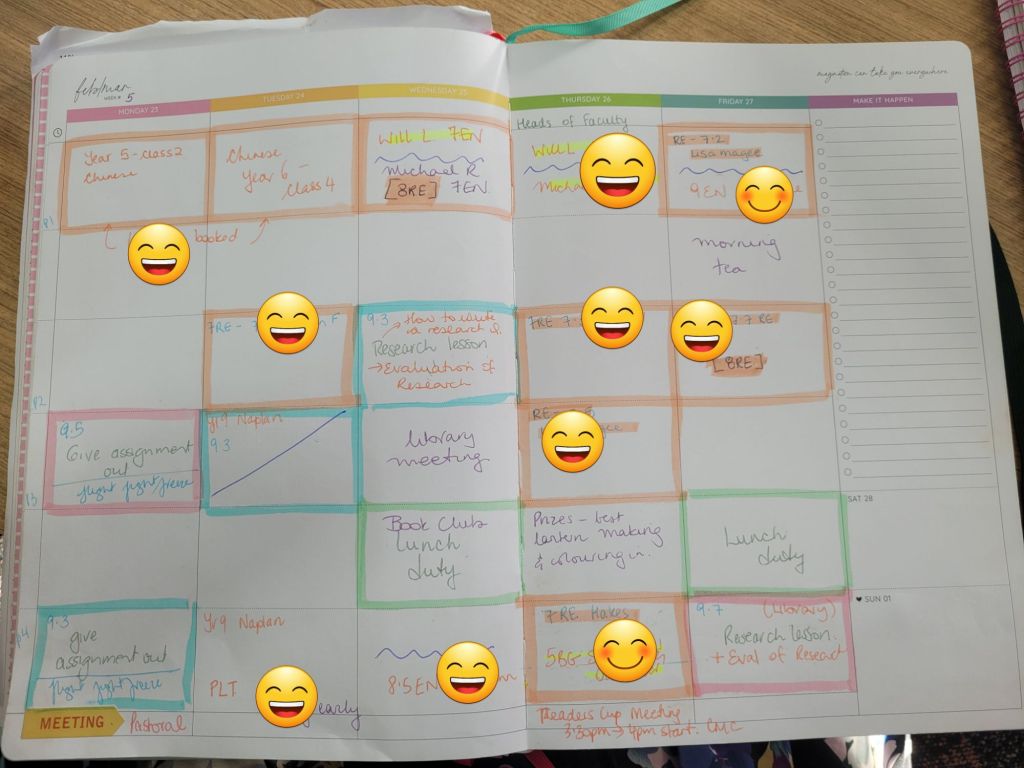
By the time the middle of the term arrives, the calm has vanished completely. The library becomes a vibrant and sometimes chaotic hub of constant movement. Students flood through the doors needing books, recommendations or support with upcoming assessments. Borrowing sessions become lively and energetic as classes arrive with armfuls of returns and requests. This is also the busiest teaching period of the term, when the carefully prepared information literacy sessions come to life. Research skills, digital literacy, source evaluation, referencing, note taking and inquiry support all happen at a rapid pace. Teacher librarian roles expand and overlap as we teach back to back lessons, guide students through tasks, troubleshoot technology and support teachers in real time as units unfold.
Amid the flurry, collaboration continues in more practical and immediate ways. Teachers pop in needing quick resources, task sheets are updated on the go and reading groups or book clubs meet regularly. Displays evolve to match what is happening across the school and the flow of students keeps the space buzzing. Moments of humour, curiosity and connection appear constantly, whether it is a student searching for a book they can remember only by its colour or one who is unsure whether reading ten pages a night officially qualifies them as a reader. It is busy and demanding, but it is also the most rewarding time of the term.
As assessment deadlines pass and the term moves into its later weeks, the pace softens again. Students return to the library in search of quiet corners for study, calm spaces for reading or simply a break from the noise of the school day. This slower period allows time to catch up on the larger ongoing projects that were temporarily buried beneath the mid-term rush. There is even the rare moment where a cup of chai stays warm long enough to be enjoyed.
By the final couple of weeks, the library takes on a different kind of energy. Lost books mysteriously reappear from lockers and school bags when billing invoices get sent home. Teachers arrive with last minute requests for resources or holiday reading suggestions. Then there is my own teaching practice, my own classes I have to teach, assess and report on.
Despite the peaks, troughs and everything in between, there is a satisfying sense of purpose in the ebb and flow of library life. Teacher librarians witness students discover stories that inspire them, questions that challenge them and skills that will carry them far beyond the classroom. These moments make every busy break, every full borrowing session and every packed week of information literacy worth it.
This week we celebrate Queensland School Library Week and this year’s theme, School Libraries Light the Way, perfectly captures what our library aims to do every day. School libraries illuminate pathways to learning, belonging, curiosity and joy. They guide students in reading, research, creativity and personal growth while promoting equity and inclusivity for every learner.
Here is how our library is commenced lighting the way in the first few weeks of 2026.
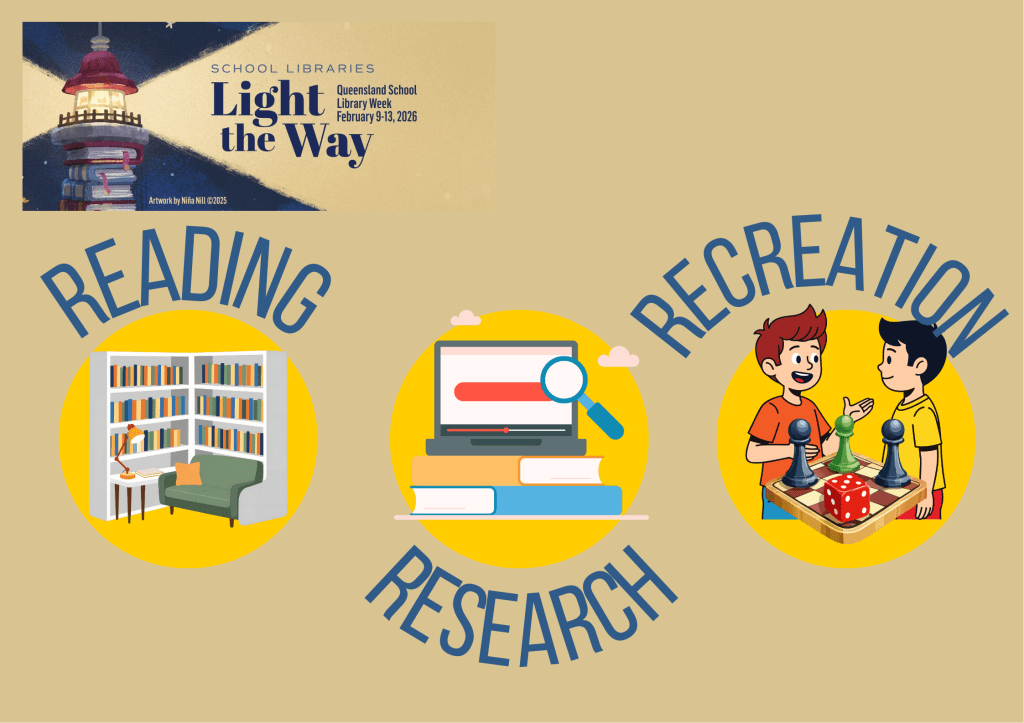
Lighting the Way for Reading, Research and Recreation
Book Clubs in Full Swing: Our book clubs for primary and secondary students have been meeting since Week 2 and the enthusiasm has been wonderful to see. These groups give students opportunities to read for pleasure, discuss ideas and connect with other readers across the school.
Sharing New Books: We continue to promote new books to staff and students. Whether it is a fresh fantasy adventure, a gripping nonfiction title or the newest young adult novel, we work hard to help every reader find something they will enjoy.
Supporting Teacher Professional Learning: We are also lighting the way for staff by ensuring our digital access to teacher journals is current, reliable and easy to use. We share these resources across school networks so that teachers can stay informed, inspired and connected to current practice.
Library Lessons for Years 5 to 8: Our library lessons support student interest and reading engagement. These sessions are planned to build student efficacy in navigating their own reading journey.
Information Literacy for Years 7 and 8: I collaborated with classroom teachers to deliver information literacy instruction that is authentic and practical. Students are learning to locate information, evaluate sources and use material ethically, which helps prepare them for success in school and beyond.
Lighting the Way for Equity and Inclusivity
Lunar New Year Activities: From this week we will offer Lunar New Year activities during language classes and at lunchtime. These activities build cultural understanding and celebrate the rich diversity of our school community so that every student feels valued and represented.
The Happy Book Dragon: Our library is also home to its resident happy book dragon (aka ME) who lives and breathes book trivia and reading joy. Sometimes lighting the way simply means sharing enthusiasm and creating a space where curiosity thrives.
Lighting the way together
Queensland School Library Week is a reminder of the powerful role a school library plays in the life of a community. From nurturing readers to supporting staff and celebrating cultural diversity, our library is proud to be a guiding light in our school.
Here is to a bright and book filled week and to the many ways libraries continue to light the way every day.
Last week I went back to work. It was very difficult to swap my afternoon naps for faculty meetings and my long lunches for a quick bite on the go. It was also very difficult to not indulge in my favourite early evening activity of a cocktail with a book.
Like with many people returning to work, the common question was..
“how was your break?” Or “what did you do?”.
Well… at first, I mentioned hanging with my family, visiting friends, travelling for Christmas. But the reality, the actual reality of my holidays was that I read books.
I read a lot of books.
I read every spare moment I had. Between lunch dates, on the bus, in the car, waiting for friends at coffee shops. I even had my book with me on late nights out for my 2.30am bus ride home. I stayed up late and woke up early just to finish my latest novel. At one point, my husband was getting frustrated with my late nights… but to no avail. I needed to read! As Maverick and Goose once said in a quote that I am going to appropriate…
I feel the need, the need to read…
January Reads
As teachers we know it is very hard to read what we want during the term. We are often reading class novels, essays, assignments, emails and meeting notes that should have been emails. I knew, that to fill my bucket of prose, I needed to read till my heart was full before I started the new academic year.
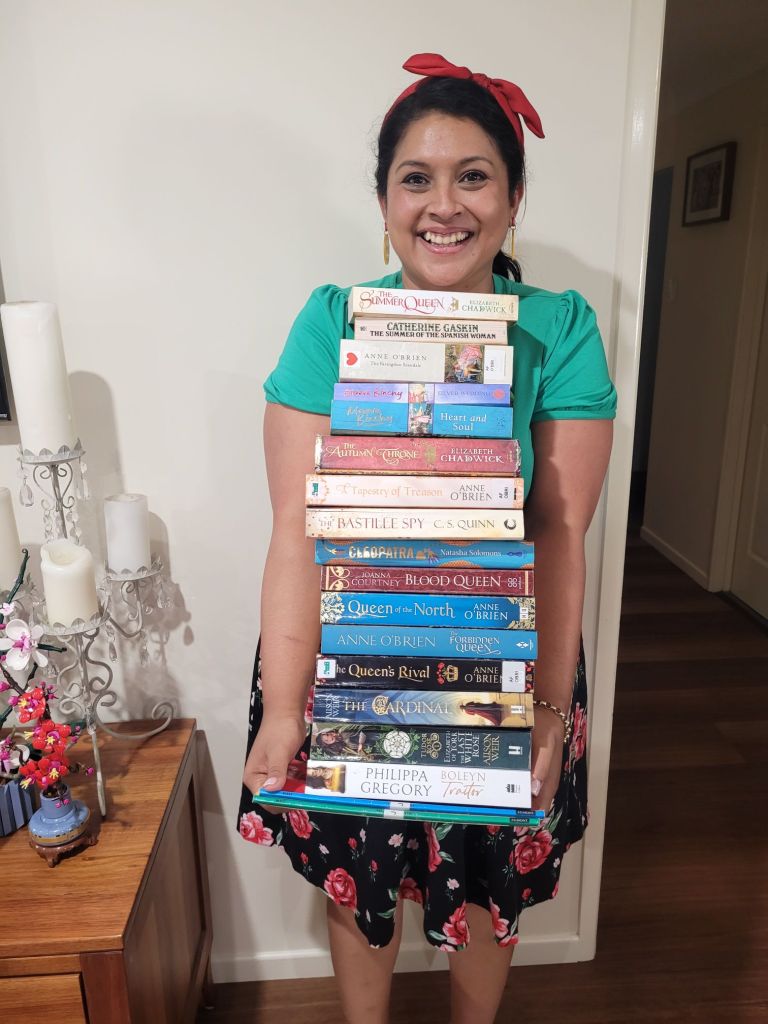
So, over the six weeks of summer holidays I did just that- I read 34 physical books, 4 eBooks and 2 comics. I am still on the mission to finish the rest of the Tintin series over the next few weeks – but for now, this particular book dragon is exceedingly happy.
As the scholastic year draws to a close, children and teenagers eagerly anticipate the long summer holidays filled with play, family time and relaxation. While this break is important for wellbeing, research consistently shows that it can also lead to what is known as the summer reading slump. This phenomenon refers to the decline in literacy skills that many children experience during extended school breaks. Studies have found that children can lose up to a month of learning over summer, particularly in reading and spelling, with the effect most pronounced among children from lower socio-economic backgrounds who may have limited access to books and literacy-rich environments (National Library of New Zealand, n.d.).
Evidence from New Zealand highlights the importance of structured literacy teaching in preventing this decline. A study published in the New Zealand Journal of Educational Studies determined that the impact of explicit phonics, phoneme awareness and decoding strategies can embed foundational skills deeply enough to withstand the summer gap (Vosslamber, Walker, Millar-Swan, Motha, & Gillon, 2025). This reinforces the idea that strong classroom instruction can provide a buffer against learning loss.
Alongside structured teaching, regular reading at level is critical. When children engage with texts that match their ability, they reinforce vocabulary, comprehension and decoding skills while building confidence and motivation. Reading at level prevents cognitive decline associated with long breaks from literacy activities. Research also shows that children who participate in summer reading programs are more likely to maintain or improve their literacy skills. Benefits include increased motivation, improved comprehension and stronger connections between home and school learning (Reading Eggs, n.d.).
Governments and councils are aware of the risks posed by summer learning loss, which is why many have invested in free summer reading programs. These initiatives encourage children to keep reading for pleasure and skill development during the holidays. The Brisbane City Council Summer Reading Program, for example, offers fun challenges, rewards and community engagement to keep children motivated throughout the break (Brisbane City Council, n.d.). Programs like these not only support literacy but also foster a love of reading that lasts well beyond the summer months.
At my school, we have taken this one step further by setting up a summer reading challenge for both staff and students in the form of bookmarks. Students were given bookmarks that encouraged them to read a funny book, a book with a hero, a book by an Australian author and a book with an animal character.
Staff were challenged to read a book that made them laugh, one that made them cry, a book that gave hope and one recommended by a friend. This shared challenge not only promotes literacy but also builds a sense of community, with staff and students alike engaging in conversations about their reading choices and discovering new perspectives together.
The summer holidays should be a time of joy, but they do not have to mean a setback in learning. With structured teaching approaches, regular reading at level, community programs that make books accessible and fun, and school-based initiatives like reading challenges, children and adults alike can return to school inspired and ready to thrive. The evidence is clear: consistent engagement with reading is one of the most effective ways to prevent the summer slump and ensure that literacy skills continue to grow.
Suggestions for Teachers and Parents
Encourage children to read daily, even for short periods, with books that match their reading level.
Provide access to a variety of texts, including humorous stories, adventure tales, and culturally relevant works.
Model reading behaviour by sharing your own reading experiences and discussing books together.
Participate in local library programs or community reading initiatives to maintain motivation.
Create family reading routines, such as bedtime stories or shared reading times, to embed literacy into everyday life.
Celebrate reading achievements with small rewards or recognition to sustain enthusiasm.
Vosslamber, A., Walker, J., Millar-Swan, A., Motha, J., & Gillon, G. (2025). The impact of Better Start Literacy Approach teaching on the retention of children’s early literacy skills over the summer holidays. New Zealand Journal of Educational Studies, 60(3), 435–449. https://doi.org/10.1007/s40841-025-00405-2
As the school year wrapped up last week, I found myself reflecting on the many moments that shaped our library community in 2025. There have been challenges, yes, but also plenty of reasons to celebrate.
One of the brightest sparks has been our book clubs. What started as a simple idea, a few snacks and a chance to talk about stories, has grown into something much bigger. My secondary Book Club stands out. At the beginning of the year they were a small group, some unsure of what to read, others firmly attached to their favourite genres. Over time, though, their borrowing soared. They began exploring fantasy, contemporary fiction and graphic novels, and while one dedicated manga reader still resists branching out, the group as a whole has broadened its horizons. More importantly, they began to see reading as part of who they are. They recommend titles to each other, debate endings, and even suggest new books for the library. Watching that transformation has been a joy.
Research reminds us that this is exactly what book clubs are meant to do. They make reading social, they build confidence, and they help young people see themselves as readers. The secondary Book Club Boys proved that in the most authentic way, showing how a community of peers can turn reading from a solitary task into something shared and celebrated.
From a whole school review, borrowing levels across the school have also risen, returning to pre COVID rates. Much of this growth has come from our younger readers, whose enthusiasm has been infectious. Their excitement has created a vibrant culture of reading in the primary years, and their participation in activities has been a highlight of the year.
Of course, there are challenges we cannot ignore. Very few of our Year 10 to Year 12 students are reading recreationally, and this is concerning. Intertextuality, the ability to connect ideas across texts, is vital for analysis and for building strong cognitive connections. Without regular reading, those skills are harder to develop. We also continue to see limited engagement from Years 7 to 10 English classes, despite enthusiastic promotion. There seems to be a reluctance to lose curriculum time.
Our team dynamic has shifted too, with members coming and going. Change always brings adjustment, but it has also brought fresh perspectives and energy. We have expanded our digital resources, and while uptake has been slow, steady gains are being made as students and staff grow more comfortable with these platforms.
Perhaps the greatest success of all has been the way the library has become recognised as a social space where everyone is welcome. It is not only a place for books, but a hub for connection, collaboration and belonging. That sense of community is something we can all be proud of.
We closed the year with our Books & Bites Christmas party, a joyful celebration of new releases and Christmas treats. Each student received a reading journal with a challenge to read four books over the summer, along with handmade gifts, ornaments, bookmarks, and pen holders, sewn over the past few weeks. These tokens were a way of honouring the shared love of reading that binds us together.
As we finish the 2025 chapter, I am reminded that reading is not just about borrowing books, it is about building minds, fostering empathy and preparing students for the complexities of the world.
“As we finish this chapter and look ahead to the new year, I am reminded that Christmas is a season not only of rejoicing, but of reflection. May the joy of stories, the warmth of community, and the promise of new beginnings carry us into the year ahead.”
Women, Memory and Exile: A School Library Reflection
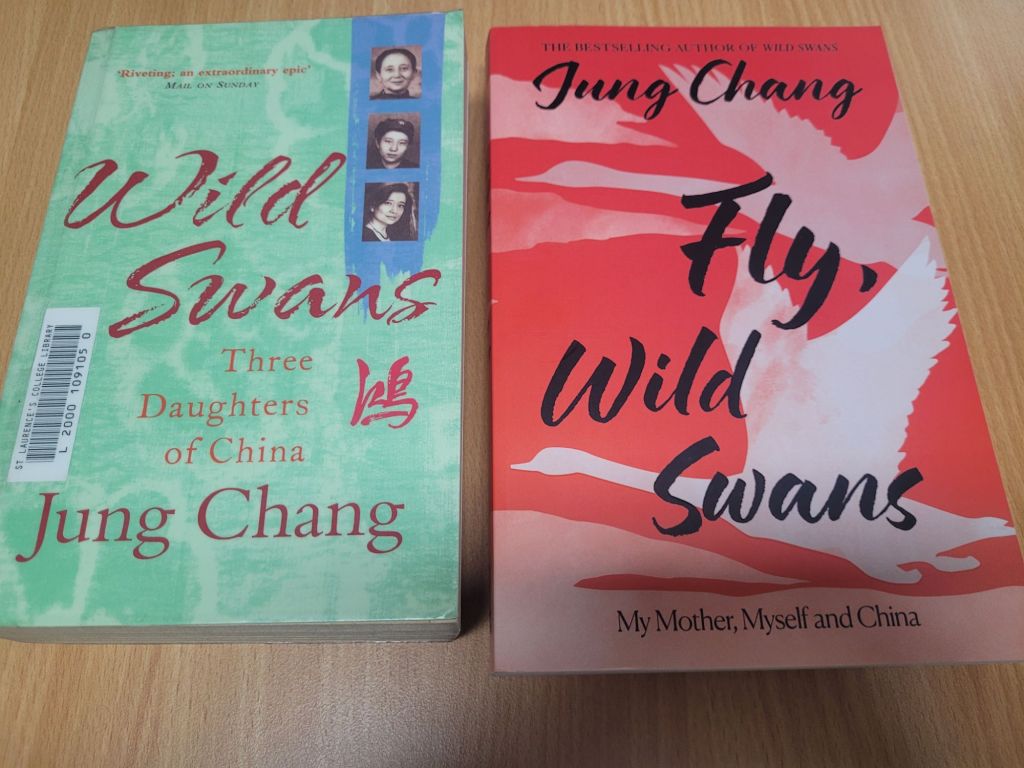
Adding Fly Wild Swans to our school library felt like a natural continuation of a legacy. Wild Swans has long stood as a canonical piece of literature, a book that captures the struggles of three generations of women against the backdrop of China’s political upheavals. In her second publication Fly Wild Swans, Jung Chang turns her gaze inward, reflecting on the cost of telling that story and the way truth can estrange a writer from her homeland. It is a pensive work that reminds us how women across centuries have shouldered familial and societal expectations, carrying memory and resilience even when nations would rather forget.
Jung Chang and her canons of literature
For students, these books are more than history. They are lessons in courage, in the power of memory and in the resilience of women who endured both familial duty and political oppression. Wild Swans explores the tension between tradition and rapid government‑driven progress. What was presented as modernisation often meant the destruction of customs and the breaking of family bonds as the Cultural Revolution tore families apart and demanded loyalty at the expense of tradition. Her story gave voice to three generations of women living through the upheavals of Mao’s China and this new work is written not only of her mother and her homeland, but of the burden of truth itself, and the cost of bearing witness when a nation would rather forget.
Fly Wild Swans reveals the aftermath of telling that truth, showing how a writer can be celebrated abroad yet silenced at home. Jung Chang turns her gaze inward, reflecting on the cost of telling that story and the way truth can estrange a writer from her homeland. Unlike Wild Swans, which focused on her mother and grandmother, this new work is more personal. It explores how writing Wild Swans changed her life, both opening doors in the West and closing them in China. There is a deep melancholy in her reflections on being unable to freely return to her birthplace. The success of Wild Swans brought her recognition abroad but estrangement at home. This tension between belonging and exclusion mirrors the broader story of women in history, who have often been celebrated for their endurance yet denied the freedom to define themselves.
I chose to buy Fly Wild Swans for my school library because it is a book that students should encounter, not only for its historical insight but also for its profound exploration of resilience, identity and the role of women in shaping and surviving history. Adding Fly Wild Swans to our collection ensures that the conversation continues, allowing readers to see how the legacy of truth‑telling reverberates across generations.
By placing both works on our shelves, we invite students to consider how politics, family and identity intersect, and how women across centuries have borne the burden of expectation while still finding ways to endure. These books remind us that literature is not static. It evolves, it questions and it carries forward the weight of generations.





 Learning through the Library